

 My Starred Hymns
 My FlexScores
 My Hymnals
 My Purchased Files
Planning worship?
Check out our sister site, ZeteoSearch.org,
for 20+ additional resources related to your search.
- |
User Links
Person Results
Henry Baker
1835 - 1910 Topics: The Kingdom of God on Earth World Friendship and Peace Composer of "QUEBEC" in The Hymnal Henry Baker, Mus. Bac., son of the Rev. James Baker, Chancellor of the diocese of Durham; born at Nuneham, Oxfordshire; educated at Winchester School; graduated Bachelor in Music at the University of Oxford in 1867. He also worked as a civil engineer.
Scottish Church Music, its composers and sources by James Love; William Blackwwod and Sons, Edinburgh and London, 1891
Henry Baker
G. K. Chesterton
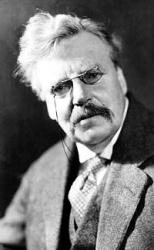
1874 - 1936 Person Name: Gilbert K. Chesterton Topics: The Kingdom of God on Earth The Nation Author of "O God of earth and altar" in The Hymnal Chesterton, Gilbert Keith, son of Edward Chesterton, was b. May 29, 1874, at Campden Hill, Kensington. London; and is a well-known journalist and author, now (1906) residing at Battersea Park, London. He contributed to The English Hymnal, 1906, a vigorous lyric beginning, "O God of earth and altar"(Prayer for the Nation). [Rev. James Mearns, M.A.]
--John Julian, Dictionary of Hymnology, New Supplement (1907)
=================
Gilbert Keith Chesterton was born in London, England on the 29th of May, 1874. Though he considered himself a mere "rollicking journalist," he was actually a prolific and gifted writer in virtually every area of literature. A man of strong opinions and enormously talented at defending them, his exuberant personality nevertheless allowed him to maintain warm friendships with people--such as George Bernard Shaw and H. G. Wells--with whom he vehemently disagreed.
Chesterton had no difficulty standing up for what he believed. He was one of the few journalists to oppose the Boer War. His 1922 Eugenics and Other Evils attacked what was at that time the most progressive of all ideas, the idea that the human race could and should breed a superior version of itself. In the Nazi experience, history demonstrated the wisdom of his once "reactionary" views. His poetry runs the gamut from the comic "The Logical Vegetarian" to dark and serious ballads.
Though not written for a scholarly audience, his biographies of authors and historical figures like Charles Dickens and St. Francis of Assisi often contain brilliant insights into their subjects. His "Father Brown" mystery stories, written between 1911 and 1936, are still being read and adapted for television.
His politics fitted with his deep distrust of concentrated wealth and power of any sort. Along with his friend Hilaire Belloc and in books like the 1910 What's Wrong with the World he advocated a view called "Distributism" that is best summed up by his expression that every man ought to be allowed to own "three acres and a cow." Though not known as a political thinker, his political influence has circled the world. Some see in him the father of the "small is beautiful" movement and a newspaper article by him is credited with provoking Gandhi to seek a "genuine" nationalism for India. Orthodoxy belongs to yet another area of literature at which Chesterton excelled. A fun-loving and gregarious man, he was nevertheless troubled in his adolescence by thoughts of suicide. In Christianity he found the answers to the dilemmas and paradoxes he saw in life. Other books in that same series include his 1905 Heretics and its sequel Orthodoxy and his 1925 The Everlasting Man.
Chesterton died on the 14th of June, 1936 in Beaconsfield, Buckinghamshire. During his life he published 69 books and at least another ten have been published after his death. Many of those books are still in print.
--www.ccel.org/ccel/
G. K. Chesterton
Daniel March
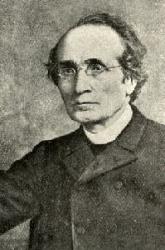
1816 - 1909 Person Name: Daniel March, 1816-1909 Topics: Kingdom of God on Earth Missions Author of "Hark! the Voice of Jesus Calling" in African Methodist Episcopal Church Hymnal March, Daniel, D.D., an American Congregational minister, b. July 21, 1816, has published Night Scenes in the Bible, and other works. His hymn "Hark, the voice of Jesus crying [calling]. Who will go," &c. (Missions), is given in the American Methodist Episcopal Hymnal, 1878, in 2 stanzas; in Sankey's Sacred Songs & Solos, 1878, in 6 stanzas; and in the Scottish Hymnal 1884, in 5 stanzas; in each case of 8 lines. It was written in 1863. (See Nutter's Hymn Studies, 1884, p. 236.)
--John Julian, Dictionary of Hymnology, Appendix, Part II (1907)
===============
March, D., p. 1578, ii. The following details concerning Dr. March's hymn, "Hark ! the voice of Jesus crying," have been furnished us by himself:—
"It was written at the impulse of the moment to follow a sermon I was to preach in Clinton St. Church to the Philadelphia Christian Association on the text Is. vi. 8. That was some time in 1868."
The original text in full is in The Hymnal, (Presb.), Phila., 1895, No. 361. Dr. March declines to accept the interpolations which have been made in this hymn. We must note also that the incident given in Brownlie's Hymns and Hymnwriters of the Church Hymnary (Scottish), p. 303, relative to this hymn and President Lincoln, is incorrect. It relates to Mrs. E. Gates's " If you cannot on the ocean," p. 1565, i. 5. [Rev. L. F. Benson, D.D.]
--John Julian, Dictionary of Hymnology, New Supplement (1907)
Daniel March
Rudyard Kipling
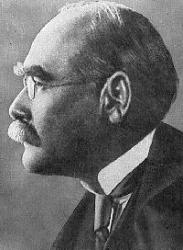
1865 - 1936 Person Name: Rudyard Kipling, 1865-1936 Topics: The Kingdom of God on Earth The Nation, Peace Author of "Lest we forget" in The Hymnal Born: December 30, 1865, Bombay (now Mumbai), India.
Died: January 18, 1936, London, England.
Buried: Westminster Abbey, London, England.
Kipling, Rudyard, the well-known poet and story-teller, was born at Bombay, India, Dec. 30, 1865, and now (1906) lives at Burwash in Sussex. His noble poem, "The Recessional," was written in 1897 at the time of the Diamond Jubilee of Queen Victoria, contributed to the Times for July 17, 1897, and first published by the author in his The Five Nations, 1903, p. 214, beginning "God of our fathers, known of old" (National). It has passed into Sursum Corda, Phil., 1898, The English Hymnal, 1906. [Rev. James Mearns, M.A.]
--John Julian, Dictionary of Hymnology, New Supplement (1907)
Rudyard Kipling
Henry Ware
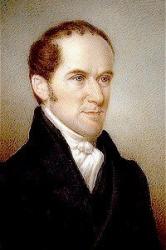
1794 - 1843 Person Name: Henry Ware, the Younger, 1794-1843 Topics: The Kingdom of God on Earth Home, Marriage, Parents Author of "Happy the home when God is there" in The Hymnal Ware, Henry, D.D., son of Dr. H. Ware, pastor of the Unitarian congregation at Hingham, Massachusetts, and afterward Hollis Professor of Divinity at Cambridge, U.S.A., was born at Hingham, April 21, 1794. Before going to Harvard College, in 1808, he was under the care of Dr. Allyn, at Duxbury, and then of Judge Ware, at Cambridge. He graduated at Harvard in high honours, in 1812; and was then for two years an assistant teacher in Exeter Academy. He was licensed to preach by the Boston Unitarian Association, July 31, 1815; and ordained pastor of the Second Church of that city, Jan. 1, 1817. In 1829, in consequence of his ill health, he received the assistance of a co-pastor in the person of Ralph Waldo Emerson. In the same year Ware was appointed Professor of Pulpit Eloquence and Pastoral Care in the Cambridge Theological School. He entered upon his duties in 1830, and resigned in 1842. He removed to Framingham, and died there, Sept. 25, 1843. His D.D. degree was conferred upon Memoir, published by his brother John Ware, M.D., were numerous and on a variety of topics. He edited the Christian Disciple, which was established in 1813, and altered in title to the Christian Examiner in 1824, for some years before the change of title, and gave it his assistance subsequently. The Rev. Chandler Robbins collected his works and published them in four volumes, in 1847. His hymns, many of which are of more than usual excellence, are given in vol. i. Of these the following are in common use:
1. All nature's works His praise declare. Opening of an Organ. Dated Nov. 9, 1822. It is in Horder's English Congregational Hymns, 1884.
2. Around the throne of God The host angelic throngs. Universal Praise. Dated 1823, and printed in the Christian Disciple, vol. v., and in Putnam, 1874. A fine hymn of praise.
3. Father of earth and heaven, Whose arm upholds creation. Thanksgiving for Divine Mercies. Appeared in Cheever's American Common Place Book, 1831; and in Lyra Sacra Americana, 1868.
4. Father, Thy gentle chastisement. In Sickness. Dated March, 1836; and in Lyra Sacra Americana, 1868.
5. Great God, the followers of Thy Son. Ordination. Written for the Ordination of Jared Sparks, the historian, as pastor of the Unitarian Church, Baltimore,
1819. Given in Lyra Sacra Americana, 1868, and Putnam, 1874.
6. In this glad hour when children meet. Family Gatherings. Dated Aug. 20, 1835. In Lyra Sac. Americana, 1868, and Putnam, 1874.
7. Lift your glad voices in triumph on high. Easter. Dated 1817, and was published in the Christian Disciple of that year, in 2 stanzas of 8 lines. It is in Lyra Sac. Americana, 1868; Putnam, 1874, and numerous hymnbooks. Sometimes stanza ii. is given separately as, "Glory to God, in full anthems of joy."
8. Like Israel's hosts to exile driven. American National Hymn. Written for the Centennial Celebration of the Boston Thursday Lecture, Oct. 17,1833, and given in Lyra Sac. Americana, 1868, and Putnam, 1874. It is a quasi American National Hymn in praise of the Pilgrim Fathers.
9. 0 Thou in Whom alone is found. Laying Foundation Stone of a Place of Worship. In Lyra Sacra Americana, 1868, and Thring's English Collection, 1882.
10. 0 Thou Who on Thy chosen Son. Ordination. Written for an Ordination, March, 1829. In Putnam, 1874, and Dale's English Hymn Book, 1874.
11. Oppression shall not always reign. Against Slavery. "This was Mr. Ware's last composition in verse. It bears date March 15, 1843. In its original form it is longer than as presented here [in 3 stanzas of 8 lines], and is unsuited to a church-book. The following stanzas, taken from one of the Collections [stanzas i., ii. are in Longfellow and Johnson's Book of Hymns, 1848] are a part of the original, altered and transposed, and thus adapted to sacred worship."
12. To prayer, to prayer; for the morning breaks. Prayer. This poem of 10 stanzas of 6 lines is dated 1826, and is given in Lyra Sac. Americana, 1868, and Putnam, 1874. Two centos therefrom are in common use The first begins with stanza i., adapting it for Morning, and the second with stanza ii., "To prayer, for the glorious sun is gone," for Evening.
13. We rear not a temple, like Judah of old. Dedication of a Place of Worship. This is dated 1839, and is given in Putnam, 1874.
14. With praise and prayer our gifts we bring. Opening of a Place of Worship. In Dale's English Hymn Book. 1874.
With American Unitarians Dr. Ware ranks very high, and by them his hymns are widely used. [Rev. F. M. Bird, M.A.]
-- John Julian, Dictionary of Hymnology (1907)
==================
Ware, H., p. 1233, i. Another of his hymns in common use is "Great King of all, our nation's God" (National Humiliation). His hymn "To prayer, to prayer," is in Cheever's American Common-Place Book of Poetry, 1831.
--John Julian, Dictionary of Hymnology, Appendix, Part II (1907)
==================
Henry Ware was born in Hingham, Massachusetts, in 1793. His father was a Unitarian minister; afterwards a Professor in Harvard College. Young Ware graduated at Harvard, studied theology, and became minister of the Second Unitarian Society, in Boston, in 1817. After a ministry of twelve years, he made a foreign tour, and on his return was elected "Parkman Professor of Pulpit Eloquence and Pastoral Theology" in Harvard College. In this position he obtained eminence. He died in September, 1843. His collected works in four volumes, were edited after his death, by the Rev. Chandler Robbins.
--Annotations of the Hymnal, Charles Hutchins, M.A., 1872
Henry Ware
W. Howard Doane
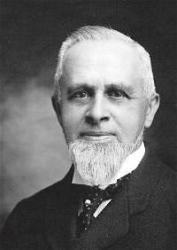
1832 - 1915 Person Name: William H. Doane Topics: Kingdom of God on Earth, The Missions Composer of "VISION" in The Hymnbook An industrialist and philanthropist, William H. Doane (b. Preston, CT, 1832; d. South Orange, NJ, 1915), was also a staunch supporter of evangelistic campaigns and a prolific writer of hymn tunes. He was head of a large woodworking machinery plant in Cincinnati and a civic leader in that city. He showed his devotion to the church by supporting the work of the evangelistic team of Dwight L. Moody and Ira D. Sankey and by endowing Moody Bible Institute in Chicago and Denison University in Granville, Ohio. An amateur composer, Doane wrote over twenty-two hundred hymn and gospel song tunes, and he edited over forty songbooks.
Bert Polman
============
Doane, William Howard, p. 304, he was born Feb. 3, 1832. His first Sunday School hymn-book was Sabbath Gems published in 1861. He has composed about 1000 tunes, songs, anthems, &c. He has written but few hymns. Of these "No one knows but Jesus," "Precious Saviour, dearest Friend," and "Saviour, like a bird to Thee," are noted in Burrage's Baptist Hymn Writers. 1888, p. 557.
--John Julian, Dictionary of Hymnology, Appendix, Part II (1907)
===================
Doane, W. H. (William Howard), born in Preston, Connecticut, 1831, and educated for the musical profession by eminent American and German masters. He has had for years the superintendence of a large Baptist Sunday School in Cincinnati, Ohio, where he resides. Although not a hymnwriter, the wonderful success which has attended his musical setting of numerous American hymns, and the number of his musical editions of hymnbooks for Sunday Schools and evangelistic purposes, bring him within the sphere of hymnological literature. Amongst his collections we have:—
(1) Silver Spray, 1868; (2) Pure Gold, 1877; (3) Royal Diadem, 1873; (4) Welcome Tidings, 1877; (5) Brightest and Best, 1875; (6) Fountain of Song; (7) Songs of Devotion, 1870; (8) Temple Anthems, &c.
His most popular melodies include "Near the Cross," "Safe in the Arms of Jesus," "Pass me Not," "More Love to Thee," "Rescue the Perishing," "Tell me the Old, Old Story," &c.
- John Julian, Dictionary of Hymnology (1907)
W. Howard Doane
R. B. Y. Scott
1899 - 1987 Topics: The Kingdom of God on Earth The Nation, Peace Author of "O day of God, draw nigh" in The Hymnal Scott, Robert Balgarnie Young. (Toronto, Ontario, July 18, 1899--November 1, 1987). United Church. University of Toronto, B.A., 1922; M.A., 1924; Ph.D., 1928. Pastorate at Long Branch, Ont., 1926-1928; professor of Old Testament at Union College (Vancouver), 1928-1931; United Theological College (Montreal), 1931-1955; Princeton University, 1955-1968; also dean of divinity at McGill University (Montreal), 1945-1955. Published many translations of, and commentaries on, Old Testament material, as well as on the Dead Sea Scrolls. Most of his hymns date from his years in Montreal.
--Hugh D. McKellar, DNAH Archives
R. B. Y. Scott
Albert Midlane
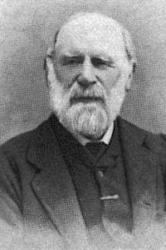
1825 - 1909 Person Name: Albert Midlane, 1825-1909 Topics: The Kingdom of God on Earth Missions and World Fellowship Author of "Revive thy work, O Lord" in The Hymnal Midlane, Albert, was born at Newport, Isle of Wight, Jan. 23, 1825, and was engaged in business in that town for many years. To his Sunday school teacher he ascribes the honour of prompting him to poetic efforts: and the same teacher did much to shape his early life. His first printed hymn, "Hark! in the presence of our God," was written in September, 1842, at Carisbrooke Castle, and printed in the Youth’s Magazine in November of the same year. Since then he has written over 300, and of these a large proportion are in common use. They appeared in magazines and small mission hymn-books, including:—
(1) The Youth's Magazine; (2) The British Messenger; (3) The London Messenger; (4) Trotter's Evangelical Hymn Book, 1860; (5) The Ambassador's Hymn Book, 1861; (6) Second edition of the same, 1868; (7)Hymn Book for Youth; (8) Good News for the Little Ones, 1860; (9) William Carter's Gospel Hymn Book, 1862; and several other works of a similar kind.
In addition to several small works in prose, Mr. Midlane has gathered his verse together from time to time and published it as:—
(1) Poetry addressed to Sabbath School Teachers, 1844; (2) Vecta Garland, 1850; (3) Leaves from Olivet, 1864; (4) Gospel Echoes, 1865; (5) Above the Bright Blue Sky, 1867; (6) Early Lispings, 1880.
Of the hymns contained in these works nearly 200 have been in common use from 1861 to 1887, the most popular being "There's a Friend for little children." The hymn-books, however, in which many of them are found are usually very small, are used in what are commonly known as Gospel Missions, and have gradually given way to other and more important collections. We therefore append only those hymns which are at the present time in use in official or quasi-official hymn-books, or such collections as have a wide circulation. Those hymns which are omitted from the following list may be found in the works given above, and especially in the Gospel Echoes. The bracketed dates below are those of the composition of the hymns.
i. Given in Trotter's Evangelical Hymn Book, 1860.
1. How sweet the cheering words. (Aug. 1860.) The Gospel.
2. Lord Jesus, save! (July 1860.) Lent.
ii. Given in The Ambassador's Hymn Book, 1861.
3. Angels rejoice o'er sinners saved. (Aug. 1860.) Joy in Heaven over Repenting Sinners.
4. Come to the royal feast. (Aug. 1860.) The Gospel Feast.
5. Father, bless the heavenly message. (Aug. 1860.) Divine blessing implored.
6. How vast, how full, how free. (Aug. 1860.) Divine Mercy.
7. I am not told to labour. (June 25, 1860.) Salvation by Faith.
8. Jesus died upon the tree. (Aug. 13, 1860.) Good Friday.
9. Lord, prepare the hearts of sinners. (Aug. 28, 1861.) Preparation of the heart.
10. Not all the gold of all the world. Peace through Jesus.
11. Now we'll render to the Saviour. (Sept. 1, 1861.) Praise for Salvation.
12. O what a gift the Father gave. (Aug. 22, 1860.) The Gift of The Son.
13. O what a Saviour is Jesus the Lord. (Aug. 29, 1861.) Jesus the Saviour.
14. Passing onward, quickly passing. (Sept. 10, 1861.) Prepared?
15. Salvation, Lord, is Thine. (Aug., 1860.) Salvation through Jesus.
16. Sinner, where is room for doubting? (Sept., 1861.) Expostulation.
17. Soft the voice of mercy sounded. Grace.
18. The perfect righteousness of God. (Sept. 21, 1861.) God our Righteousness.
19. There is a throne of grace. (Sept. 14, 1860.) The Throne of Grace.
20. We speak of the mercy of God. (Sept. 19, 1861.) Divine Mercy.
iii. Given in W. Carter's Gospel Hymn Book, 1863.
21. Can any say, I do believe ? (Aug., 1860.) Assurance in Christ.
22. If Jesus came to seek and save. (Oct., 1861.) Salvation in Jesus.
iv. Given in Leaves from Olivet, 1864.
23. See the blessed Saviour dying. (Oct. 5, 1860.) Good Friday.
24. Sweet the theme of Jesus' love. (April 22, 1862.) The Love of Jesus.
v. Given in Gospel Echoes, 1865.
25. Come and welcome to the Saviour. (June 8, 1862) Invitation.
26. God be gracious to a sinner. (May 21, 1861.) Lent.
27. God speaks from heaven; in love He speaks. (July, 1860.) Love and Mercy of God.
28. Hark! the cry, Behold He cometh. (June 8, 1862.) Advent.
29. He saves because He will. (April 20, 1862.) The "I Wills" of Jesus.
30. How solemn are the words. (Aug. 1, 1865.) The New Birth.
31. Himself He could not save. (Sept. 1861.) Good Friday.
32. I once was bound in Satan's chains. Pardon.
33. Jesus lived. He lived for sinners. (Jan. 4, 1862.) Easter.
34. Jesus never answered "Nay." (May 13, 1862.) Jesus always the same.
35. Jesus the blessed centre is. (June 8, 1862). Father glorified in the Son.
36. Jesus, the risen Saviour. (July 31, 1862.) Easter.
37. Jesus, the soul that trusts in Thee. (May 7, 1864.) Salvation through Jesus.
38. Look, poor sinner, look to Calvary. Good Friday.
39. Lord, when I think upon the love. (Oct. 1, 1860.) The Love of Jesus.
40. Peace with God ! How great a treasure (Oct. 18, 1861.) Peace.
41. Salvation! What a precious word. (Nov. 22, 1861.) Salvation.
42. Scripture says Where sin abounded. (March 3, 1862.) Abounding Grace.
43. Shall Jesus' love be spoken? (May 4, 1862.) Love of Jesus.
44. The Lamb was slain, the blood was brought. (Aug. 24,1862.) The Passover.
45. The silver trumpets sounding. (May 7, 1862.) The Year of Jubilee.
46. There is a rest for weary souls. (Dec. 4, 1863.) Rest. Peace in Jesus.
47. 'Tis the voice of mercy calls thee. (Nov. 5, 1861.) Mercy.
48. When the Saviour said "'Tis finished" (Oct. 1861.) Good Friday.
49. When God begins His gracious work. (Dec. 27, 1860.) God Unchangeable.
50. Who can praise the blessed God ? (Oct. 1861.) Praise for Salvation.
51. Why those fears, poor trembling sinner. Safety in Jesus.
vi. Given in the Ambassador's Hymn Book, 2nd ed., 1868.
52. Life from the dead, eternal life. (Oct. 11, 1867.) Work of the Holy Spirit.
53. Stern justice cries for blood. (March 2, 1867.) The Atonement.
vii. Various.
54. Apart from every worldly care. (June 1866.) Prayer Meetings. Written for Spurgeon's Our Own Hymn Book 1866.
55. Be not weary, toiling Christian. (Feb. 1857.) Encouragement. In the British Messenger, Sept. 1857.
56. Eighteen hundred years ago. (Aug. 1859.) Fulness of Time. In the London Messenger, April, 1861.
57. Father, for Thy promised blessing. (Feb. 20, 1860.) Outpouring of the Spirit desired. In The Revival, July, 1860.
58. God bless our Sunday School. Sunday School Anniversary. First printed in the Baptist Children's Magazine, July, 1844. It has passed into numerous collections for children, but usually st. ii. is omitted, thus reducing it to 3 st.
59. He comes! He comes! the Bridegroom comes. (Sept. 9, 1850.) Advent. In The Present Testimony, 1851.
60. Kept by the power of God. (May 6 ,1858.) Security in God. In the London Messenger, Sept., 1860.
61. Let the waves of blessing roll. (Jan. 6, 1868.) Missions. In the Enlarged London Hymn Book, 1873.
62. Lord, 'our waiting spirits bow. (June, 1866.) Prayer Meetings. Written for Spurgeon's Our Own Hymn Book 1866.
63. Love us freely, blessed Jesus. (July 2, 1858.) Lent. In the Churchman's Penny Magazine. Oct., 1858.
64. Never perish! words of mercy. Mercy in Christ. Printed in the monthly Girdle, June, 1857, and in the British Messenger, Aug. 1857, in 4 double st. In the collections it is reduced to the first two stanzas.
65. No separation, O my soul. (May 6, 1863.) Perseverance. In the British Herald, Aug., 1863.
66. Nought but the voice of God can speak. (Jan. 29, 1863.) All things are of God. In the 1873 Appendix to Snepp's Songs of Grace & Glory.
67. Now, O joy, my sins are pardoned. Pardon and Peace. (Nov. 9, 1860). Printed in the London Messenger, March, 1861, then in the Gospel Echoes, 1865; and then in several hymn-books. The original began, "Once I sang, but not in earnest." Usually st. ii., iii., of 8 l, are given as "Now, O joy, &c."
68. O art thou an heir of glory? (June 4, 1861.) Cautions. In Hymn Book for Youth, 1862.
69. O what a glorious truth is this. (Aug. 3, 1860.) Jesus Died. In the London Messenger, Sept., 1860.
70. Once it was mine, the cup of wrath. (Aug. 8, 1860.) Wrath and Pardon. In the London Messenger, Oct., 1861.
71. Onward, upward, heavenward. (Feb. 7, 1860.) Pressing Onward. In the London Messenger, March, 186l.
72. Perennial spring of pure delight. (March 17, 1864.) Jesus All in All. In the London Messenger, Jan., 1865.
73. Sheltered by the [Thy] sprinkled blood. (Sept. 23, 1863.) Safety in Jesus. In the London Messenger, Feb. 1864.
74. Showers of blessing, gracious promise. (April 19, 1862.) Missions. In the London Messenger, Aug., 1862, and Leaves from Olivet, 1864.
75. The Church of God, amazing, precious thought. (July 6, 1857.) The Church. In The Present Testimony, 1858, and Leaves from Olivet, 1864.
76. The whispers of Thy love divine. (May 3, 1868.) Love of God. In the Island Greeting, Oct., 1872.
77. Though billows round me roll. (April 2, 1853.) Trust. In Food for Christ's Flock, 1853.
78. 'Tis finished, cried the dying Lamb. (Feb. 21, 1850.) Good Friday. In the Baptist Children's Magazine, 1850).
79. Tis heaven where Jesus is. (Oct. 23, 1862.) Joy and Peace in Jesus. In the Enlarged London Hymn Book, 1873.
80. Together all things work for good. (Aug. 14, 1860.) All work for Good. In the Enlarged London Hymn Book, 1813.
81. Waiting for Jesus, and loving while waiting. (Jan. 9, 1872.) Second Advent desired. In the 1873 Appendix to Snepp's Songs of Grace & Glory.
82. Without a cloud between. (Mar. 18,1862.) Jesus, Face to Face. In the London Messenger, June, 1862.
83. Yet awhile; how sweet the thought. (Dec, 1864.) Second Advent desired. In theLondon Messenger, 1865.
The collections in which these hymns are mainly found are Spurgeon's Our Own Hymn Book, 1866; Snepp's Songs of Grace & Glory, 1872-3; Hurditch's Enlarged London Hymn Book, 1873, and smaller books for Evangelical mission work. Of Mr. Midlane's hymns as a whole, Miher's estimate that "His hymns are full of spiritual thought, careful in their wording, and often very pleasing without reaching the highest form of poetical excellence " (Singers and Songs, p. 572), is just. A marked feature of these hymns is the constant and happy use of Scripture phraseology.
--John Julian, Dictionary of Hymnology (1907)
========================
Midlane, A., p. 733, ii. Mr. Midlane published in 1901 The Bright Blue Sky Hymn Book, of 315 of his hymns, and the same year The Gospel Hall Hymn Book, for use in the Gospel Hall, Newport, I.W., with 218 additional, making 533 original compositions. A broad-sheet of seven special hymns for Jewish children, in connection with the Mildmay Mission to the Jews, was also issued in December, 1904. Other publications previously noticed give, with these, over 800 hymns to Mr. Midlane as his contribution to the hymnody of the Church.
--John Julian, Dictionary of Hymnology, New Supplement (1907)
Albert Midlane
John Sullivan Dwight

1813 - 1893 Person Name: John S. Dwight, 1813-1893 Topics: The Kingdom of God on Earth The Nation, Peace Author of "God bless our native land" in The Hymnal John Sullivan Dwight, born, in Boston, May 13, 1813, was a virtuoso in music, and an enthusiastic student of the art and science of tonal harmony. He joined a Harvard musical club known as "The Pierian Sodality" while a student at the University, and after his graduation became a prolific writer on musical subjects. Six years of his life were passed in the "Brook Farm Community." He was best known by his serial magazine, Dwight's Journal of Music, which was continued from 1852 to 1881. His death occurred in 1893.
The Story of the Hymns and Tunes, Brown & Butterworth, 1906.
=====================
Dwight, John Sullivan, son of Timothy Dwight (p. 316, ii.), was born at Boston, U.S.A., May 13, 1812, and educated at Harvard, and at the Cambridge Theological College. He laboured in the ministry for six years, and then devoted himself to literary work. For nearly 30 years he was editor of a Journal of Music. His connection with hymnody is very slight. (See "God bless our native land," p. 1566, i.)
--John Julian, Dictionary of Hymnology, Appendix, Part II (1907)
John Sullivan Dwight
Michael Haydn
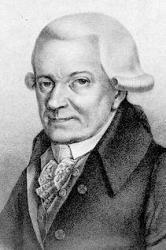
1737 - 1806 Person Name: J. Michael Haydn (1737-1806) Topics: Kingdom of God on Earth, The Brotherhood Composer (ascribed to) of "GREENLAND" in The Hymnbook Johann Michael Haydn Austria 1737-1806. Born at Rohrau, Austria, the son of a wheelwright and town mayor (a very religious man who also played the harp and was a great influence on his sons' religious thinking), and the younger brother of Franz Joseph Haydn, he became a choirboy in his youth at the Cathedral of St. Stephen in Vienna, as did his brother, Joseph, an exceptional singer. For that reason boys both were taken into the church choir. Michael was a brighter student than Joseph, but was expelled from music school when his voice broke at age 17. The brothers remained close all their lives, and Joseph regarded Michael's religious works superior to his own. Michael played harpsichord, violin, and organ, earning a precarious living as a freelance musician in his early years. In 1757 he became kapellmeister to Archbishop, Sigismund of Grosswardein, in Hungary, and in 1762 concertmaster to Archbishop, Hieronymous of Salzburg, where he remained the rest of his life (over 40 years), also assuming the duties of organist at the Church of St. Peter in Salzburg, presided over by the Benedictines. He also taught violin at the court. He married the court singer, Maria Magdalena Lipp in 1768, daughter of the cathedral choir-master, who was a very pious women, and had such an affect on her husband, trending his inertia and slothfulness into wonderful activity. They had one daughter, Aloysia Josepha, in 1770, but she died within a year. He succeeded Wolfgang Amadeus Mozart, an intimate friend, as cathedral organist in 1781. He also taught music to Carl Maria von Weber. His musical reputation was not recognized fully until after World War II. He was a prolific composer of music, considered better than his well-known brother at composing religious works. He produced some 43 symphonies,12 concertos, 21 serenades, 6 quintets, 19 quartets, 10 trio sonatas, 4 due sonatas, 2 solo sonatas, 19 keyboard compositions, 3 ballets, 15 collections of minuets (English and German dances), 15 marches and miscellaneous secular music. He is best known for his religious works (well over 400 pieces), which include 47 antiphons, 5 cantatas, 65 canticles, 130 graduals, 16 hymns, 47 masses, 7 motets, 65 offertories, 7 oratorios, 19 Psalms settings, 2 requiems, and 42 other compositions. He also composed 253 secular vocals of various types. He did not like seeing his works in print, and kept most in manuscript form. He never compiled or cataloged his works, but others did it later, after his death. Lothar Perger catalogued his orchestral works in 1807 and Nikolaus Lang did a biographical sketch in 1808. In 1815 Anton Maria Klafsky cataloged his sacred music. More complete cataloging has been done in the 1980s and 1990s by Charles H Sherman and T Donley Thomas. Several of Michael Haydn's works influenced Mozart. Haydn died at Salzburg, Austria.
John Perry
Michael Haydn
Pages