

 My Starred Hymns
 My FlexScores
 My Hymnals
 My Purchased Files
Planning worship?
Check out our sister site, ZeteoSearch.org,
for 20+ additional resources related to your search.
- |
User Links
Person Results
Caroline Gilman
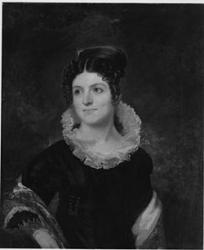
1794 - 1888 Author of "Lord, may thy truth upon the heart" in Christian Science Hymnal Mrs. Caroline Gilman was born in Boston, in 1794. She married the Rev. Samuel Gilman, a Unitarian minister, in 1819. Soon after, they removed to Charleston, South Carolina. Mrs. Gilman has written considerable prose and some poetry.
--Annotations of the Hymnal, Charles Hutchins, M.A., 1872.
==================
Gilman, Caroline, née Howard, daughter of Samuel Howard, and wife of Dr. S. Gilman (q.v.), was b. at Boston, U. S., in 1794, and married to Dr. Gilman in 1819. After Dr. Gilman's death in 1858, she resided for a time at Cambridge, U. S., and subsequently at Tiverton, Long Island. Mrs. Gilman is the author of several tales, ballads, and poems, and of the following hymns:—
1. Is there a lone and dreary hour? Providence. Contributed to Sewall's Unitarian Collection, N. York, 1820, in 4 stanzas of 4 lines, In 1867 Mrs. Gilman added a stanza thereto for the Charlestown Services & Hymns. The original hymn is in extensive use amongst the Unitarians in Great Britain and America.
2. We bless Thee for this sacred day. Sunday. Also contributed to Sewall's Collection, 1820, in 4 stanzas of 4 lines, to which another was added by Mrs, Gilman, for the Charlestown Services & Hymns, 1867. In extensive use. [Rev. F. M. Bird, M.A.]
--John Julian, Dictionary of Hymnology (1907)
=================
Gilman, Caroline (Howard). (Boston, Massachusetts, October 8, 1794--September 18, 1888, Washington, D.C.) Unitarian. She married Rev. Samuel Gilman on October 14, 1819, and after his death in 1858 lived for a time in Cambridge, Mass., and later in Tiverton, Long Island, New York. She began to write stories and poems at an early age, many of which were published in The Rosebud, later called The Southern Rose, a juvenile weekly paper published in Charleston, South Carolina, which she edited for several years, beginning in 1832. Her book entitled Verses of a Lifetime was published in 1854, as were a number of other books which gave her a considerable reputation as an author. Five of her poems are included in Putnam's Singers and Songs, etc.
--Henry Wilder Foote, DNAH Archives
Caroline Gilman
George Augustus Warburton
1869 - 1929 Person Name: George A. Warburton Alterer of "O Thou, Whose Glory Shone Like Fire" in The Cyber Hymnal Warburton, George Augustus, b. in 1859, is the author of the dedication hymn of a place of worship. “O Thou Whose glory shone like fire," in Stryker's College Hymnal, 1904.
--John Julian, Dictionary of Hymnology, New Supplement (1907)
George Augustus Warburton
Emily Greene Balch
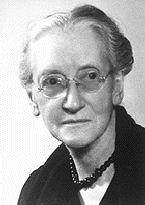
1867 - 1961 Person Name: Emily Greene Blanch Author of "Now let us all arise and sing" in Hymnal of the Society of the Companions of the Holy Cross Emily Greene Balch was born near Boston. She graduated from Bryn Mawr in 1889, focusing on economics. She began a teaching career at Wellesley College in 1896 focusing on the economic roles of women, immigration and consumption. She was a longtime pacifist, supporting conscientious objectors. She became a leader in the international peace movement and won the Nobel Peace Prize in 1946 for her work with the Women's International League for Peace and Freedom (WILPF).
Dianne Shapiro
Emily Greene Balch
Herman H. Brueckner
1866 - 1942 Person Name: H. Brueckner Translator of "The Morning Sun Illumes The Skies" in American Lutheran Hymnal Born: March 11, 1866, Grundy County, Iowa (birth name: Herman Heinrich Moritz Brueckner).
Died: January 25, 1942, Hebron, Nebraska (funeral held in Beatrice, Nebraska).
Buried: St. Paul’s Lutheran Cemetery, Waverly, Iowa.
After ordination in 1888, Brueckner pastored in Illinois, Michigan, Kentucky, and Wisconsin. He later moved to Iowa City, Iowa, and received his Bachelor of Arts degree from Iowa State University in 1917. In 1926, he joined the faculty of Hebron College in Nebraska. In 1938, Wartburg Seminary, Dubuque, Iowa, conferred an honorary Doctor of Divinity degree on him. He retired as professor emeritus from Hebron College in 1941.
Sources:
Erickson, p. 254
Findagrave, accessed 14 Nov 2016
Hustad, p. 213
Stulken, p. 325
© The Cyber Hymnal™. Used by permission. (www.hymntime.com)
Herman H. Brueckner
Henrietta Ten Harmsel
Paraphraser of "Psalm 114" in Hymns and Devotions for Daily Worship Henrietta Ten Harmsel (b. Hull, IA, 1921; d. Grand Rapids, MI, March 16, 2012) versified this psalm in 1985 for the Psalter Hymnal. Ten Harmsel attended Calvin College, Grand Rapids, Michigan, and the University of Michigan in Ann Arbor. From 1949 to 1957 she taught English at Western Christian High School in Hull, Iowa, and from 1960 until retirement in 1985 was a member of the English department at Calvin College. Many factors contributed to Ten Harmsel's interest in the psalms. As a child she learned Dutch from her parents, and they instilled in her a love for the Dutch Psalter. Later J. W. Schulte Nordholt, poet, hymnologist, and professor of American history at the University of Leiden, became a great promoter of her interest in Dutch language and literature and her translation work. Ten Harmsel's translations from Dutch include Jacobus Revius: Dutch Metaphysical Poet (1968) and two collections of children's poems: Pink Lemonade (1981) and Good Friday (1984). In 1984 Ten Harmsel was awarded the Martinus Nijhoff translation award.
Bert Polman
Henrietta Ten Harmsel
Phillip Melanchthon
1497 - 1560 Person Name: Philip Melanchton Author of "Our thanks and praise to Thee be given" in The Lutheran Hymnary Melanchthon, Philipp, son of Georg Schwarzert, armourer to the Elector Philipp of the Palatinate, was born at Bretten, near Carlsruhe, Feb. 16, 1497. From 1507 to 1509 he attended the Latin school at Pforzheim, and here he was already, by Johann Reuchlin, called Melanchthon (the Greek form of "Black Earth," his German surname). In October, 1509, he entered the University of Heidelberg (B.A. 1511), and on Sept. 17, 1512, matriculated at Tubingen, where he graduated M.A., Jan. 25, 1514, and where he remained till 1518 as private lecturer in the philosophical faculty. On Aug. 29, 1518, he was appointed professor of Greek at the University of Wittenberg, and in January, 1526, also Professor of theology. He died at Wittenberg, April 19, 1560 (Allgemeine Deutsche Biographie, xxi. 268, &c). Melanchthon is best known as one of the leaders of the German Reforma¬tion; as a theologian (Loci communes, 1521, &c.); and as the framer of the famous Confession presented to the Diet of Augsburg in 1530, and still accepted as a standard by all the sections of Lutheranism in Germany, America, and elsewhere. His poems and hymns were written in Latin, and exercised no appreciable influence on the development of German hymnody. They were edited by Grathusen in 1560, Vincent 1563, Major 1575, &c.; the most complete edition being that by O. G. Bretschneider, at Halle, 1842 (Corpus Reformatorum, vol. x.). A number of his hymns are translated by Miss Fry in her Echoes of Eternity, 1859. [Rev. James Mearns, M.A.]
-- John Julian, Dictionary of Hymnology (1907)
Phillip Melanchthon
Salīm Abdel Ahad
? - 1960 Person Name: سليم عبد الأحد Author of "يا ملك ادخل راكبا" in كتاب الترانيم الروحية للكنائس الإنجيلية سليم عبد الأحد
Salīm Abdel Ahad
John Hay
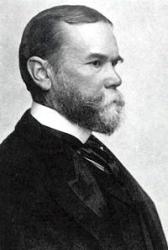
1838 - 1905 Author of "Defend Us, Lord, from Every Ill" in Worship and Song. (Rev. ed.) Hay, John, diplomat and author, born at Salem, Ind., Oct. 8, 1838; graduated at Brown University 1858; admitted to the 111. Bar; was private secretary to Pres. Lincoln; served in the Civil War; member of the Legation at Paris, Madrid, and Vienna, and Ambassador at the Court of St. James. In 1879-81 he was First Assistant Sec. of State, and from 1898 Sec. of State in the Cabinets of Presidents McKinley and Roosevelt, to his death July 1, 1905. His publications included Castilian Days, 1871; and, with J. G. Nicolay, Abraham Lincoln: A History, 10 vols., 1887, &c. In 1871 he also published Pike County Ballads, and in 1890 Poems. Of his poems the following are in common use as hymns:—
1. From Sinai's cloud of darkness. [Law and the Gospel.] This begins with st. ii. of his poem, “Sinai and Calvary," in Poems, 1890, p. 152. Asked for its date and origin, Mr. Hay said: "I wrote the hymn several years ago, because I felt like it. I can say nothing more intelligible than that." It was included iu the New Laudes Domini, N.Y., 1892.
2. Lord, from far-severed climes we come. [Work on for God.] In the summer of 1895, at his summer home at Lake Sunapee, Mr. Hay was asked to write a hymn for the opening of the 15th International Christian Endeavour Convention, at Washington, the following year, but declined on the ground that his verse-writing days were past. But in the following spring he sent this hymn, with the statement that there was no obligation to use it. In his manuscript it is entitled "An Invocation." It was sung at the opening of the Convention of 1896, and again at the Convention on July 4, 1905, when the opening exercises assumed the form of a memorial service, as his body was being borne to the grave. It is in several American collections. In The Methodist Hymnal, N.Y., 1905, it opens with st. ii., “Defend us, Lord, from every ill." The original is in 4 stanzas of 4 lines.
3. Not in dumb resignation. [Submission.] Appeared in 3 stanzas of 8 lines in Harper's New Monthly Magazine, Oct. 1891, and entitled "Thy will be done." Given with alterations in Dr. L. Abbott's Plymouth Hymnal, N.Y., 1894.
Mr. Hay was for some time an office-bearer in the Presbyterian Church of the Covenant, Washington, D.C. [Rev. L. F. Benson, D.D.]
--John Julian, Dictionary of Hymnology, New Supplement (1907)
John Hay
William Horn
1839 - 1917 Person Name: W. Horn Translator of "Komm, sprich zu mir, du Geist des Herrn" in Gesangbuch der Evangelischen Gemeinschaft Horn, William. (Germany, May 1, 1839--April 27, 1917). Evangelical. Come to United States in 1855, settled in Wisconsin. Licensed in 1861, ordained elder 1866, presiding elder 1871, bishop 1891. Editor of various Evangelical German-language publications, including Das Evangelische Magazin and Christliche Kinderfreund. Editor of German weekly of the Evangelical Association, 1883, Christliche Botschafter.
Editor of Evangelisches Gesangbuch, 1877, for which he supplied a number of hymns. His most famous hymn was "Pure and free from all corruption." He wrote 24 hymns in all, and has been called one of the greatest of the German writers in America. Translated many English hymns into German.
Retired as bishop in 1915.
--Robert S. Wilson, DNAH Archives
--Ellen Jane Lorenz, DNAH Archives
William Horn was born in Germany May 1, 1839. He died in 1917. He came to U.S. in 1855 and settled in Wisconsin. Licensed in 1861, he rose through the ranks of ordained elder and bishop. He retired as Bishop in 1915 and died April 27, 1917.
He was the editor of various Evangelical German-lanuage publications
including EVANGELISCHES GESANGBUCH of 1877, for which he supplied a number of hymns.
Of his twenty-four hymns the most famous, according to Ellen J. Lorenz, was "Pure and free from all corruption". He also translated many English hymns into German.
—Mary L. VanDyke for Dictionary of American Hymnology, Oberlin College Library (14 December 2003)
William Horn
Pages




