

 My Starred Hymns
 My FlexScores
 My Hymnals
 My Purchased Files
Planning worship?
Check out our sister site, ZeteoSearch.org,
for 20+ additional resources related to your search.
- |
User Links
Person Results
Edward Husband
1843 - 1908 Topics: Worship Delightful to Saints Composer of "ST. EDITH" in The Psalter Husband, Edward was educated at St. Aidan's College, Birkenhead. Taking Holy Orders in 1866, he was successively Curate of Atherstone and Folkestone; and in 1878 Vicar of St. Michael and All Angels, Folkestone. In 1874 Mr. Husband published The Mission Hymnal, in which appeared his hymns as follows:—
1. Alas! poor world, I loved thee long. Rest in Jesus.
2. And dost Thou ask me, dearest Lord. Christ's Invitation, " Follow Me."
3. I must have Jesus only. Jesus only desired
4. Sweet Blood, dear ransom of our souls. The Blood of Jesus.
These hymns are very simple, earnest, and impassioned: and bear a great resemblance to Facer's compositions.
--John Julian, Dictionary of Hymnology (1907)
Edward Husband
W. O. Perkins
1831 - 1902 Person Name: William O. Perkins Topics: Worship Delightful to Saints Composer of "GUERNSEY" in The Psalter William Oscar Perkins DMus USA 1831-1902. Born at Stockbridge, VT, older brother of Henry, and the son of musical parents (both singers) he was trained musically, primarly by his father. He attended the Kimball Union Academy, Meriden, NH, then studied music in Boston, MA, London, England, and Milan, Italy. He settled in Boston, MA, and founded a music academy, where he taught music. He published a number of hymnals in Boston, then moved to New York City. He was awarded an honorary doctorate of music degree in 1879 by Hamilton College. He wrote 19 books (1861-1897), including a history of the war in South Africa (1900). He published 33 hymnals 1859-1882). In 1870 he published ”The Chorister”, his 400-page music collection for choirs, schools, and conventions. He was an author, composer, editor, compiler, and originator. He died at Boston, MA.
John Perry
W. O. Perkins
George W. Frazer
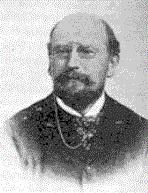
1830 - 1896 Person Name: G. W. Frazer Topics: Christian Experience Delight in Christ Author of "I Praise, I Bless the Lamb" in Hymns of Grace and Truth George West Frazer
George W. Frazer
Ernest R. Kroeger

1862 - 1934 Topics: Worship Delightful to Saints Composer of "GAIRNEY BRIDGE" in The Psalter Born: August 10, 1862, St. Louis, Missouri.
Died: April 7, 1934, St. Louis, Missouri.
Buried: Bellefontaine Cemetery, St. Louis, Missouri.
Kroeger was a charter member of the American Guild of Organists; member the National Institute of Arts of Letters; conductor of the Amphion Male Chorus in St. Louis (1883-84); organist at the Unitarian Church of the Messiah, St. Louis (1886); director of the College of Music at Forest Park University (1887); president of the Music Teachers’ National Association (1896-97); president of the Missouri State Music Teachers’ Association (1897-99); instrumental adjudicator at the annual Kansas Jubilee (1900-03); master of programs in the Bureau of Music at the St. Louis World’s Fair, 1904; adjudicator at the Welsh Eisteddfod in Canton, Ohio (1906); and director of the music department at Washington University, St. Louis (1925-34). He also ran the Kroeger School of Music in St. Louis (1904-34).
--www.hymntime.com/tch/
============
Successful American composer and teacher; born at St. Louis, Mo. He began studying violin and piano when he was five years old, and received his entire musical education in this country, principally in St. Louis, where he is located at present, and holds a prominent position as a teacher, pianist and composer. He is director of the College of Music at the Forest Park University for Women and is concert pianist of the Kroeger School of Music. Was president of the Music Teachers' National Association from 1895 to 1896, and of the Missouri State Music Teachers' Association from 1897 to 1899. Is a fellow of the American Guild of Organists and was master of programs of the Bureau of Music at the St. Louis Exposition in 1904. He has written a great many different kinds of music, and is one of a very few Americans who have published fugues. Mr. Kroeger says that some of his ideas are entirely musical, while others are attempts to illustrate poems in tones, such as his symphony, a suite, and overtures on Endymion, Thanatopis, Sardanapalus and Hiawatha. He has also published a very clever group of sonnets, on various themes; Twelve Concert Studies, which Hughes says "show the influence of Chopin upon a composer who writes with a strong German accent;" an etude, Castor and Pollux; a Romanze; and other studies. A Danse Negre and Caprice Negre resemble similar works of Gottschalk; and his Dance of the Elves is dedicated to Mme. Rive-King.
--grandemusica.net/musical-biographies
Ernest R. Kroeger
John Taylor
1750 - 1826 Person Name: J. Taylor Topics: Worship delight in Author of "Far from mortal cares retreating" in Hymns for Christian Devotion Taylor, John, born July 30, 1750, was the son of Richard Taylor, of Norwich, and grandson of Dr. John Taylor (1694-1761, the eminent Hebrew scholar, who was for many years minister of the Octagon Chapel, Norwich, and afterwards Divinity tutor at the Warrington Academy. Dr. Taylor published A Collection of Tunes in Various Airs, one of the first collections of its kind, and his grandson was one of the most musical of Unitarian hymn-writers). Young Taylor, after serving his apprenticeship in his native place, was for two years in a banking house in London, at which time he was an occasional poetical contributor to the Morning Chronicle. In 1773 he returned to Norwich, where he spent the rest of his life, first as a manufacturer, and afterwards as a wool and yarn factor. For nearly fifty years he was a deacon at the Octagon Chapel. At the time of the French Revolution he joined in the support of The Cabinet, a periodical brought out by the Liberals of Norwich, in conjunction with Dr. Enfield, William Taylor, Miss Alderson (Mrs. Opie), and others, and, as a "poet of the olden time," he contributed five poems thereto. These, and other political songs and poems relating to family events, &c, together with 50 hymns, were collected in Hymns and Miscellaneous Poems, Reprinted for Private Distribution, 1863, with a Memoir taken from the Monthly Repository of Sept. 1826, by his son, Edward Taylor, then Gresham Professor of Music. An earlier and less complete edition, containing 43 hymns, he had himself caused to be printed by his sons, Richard and Arthur Taylor, London, 1818. He died June 23, 1826. Of his hymns the following 9 were contributed to Dr. Enfield's Selection of Hymns for Social Worship, Norwich, 1795:—
1. Far from mortal cares retreating. Divine Worship.
2. Father divine, before Thy view. Divine Providence.
3. Father of our feeble race. Christian Love. This begins in Horder's Congregational Hymns, 1884, and others, with st. ii., "Lord, what offering shall we bring?"
4. Glory be to God on high. Divine glories celebrated. The first stanza is by C. Wesley, and the rest are by Taylor.
5. God of mercy, God of love [grace], Hear our sad repentant song. Penitence.
6. 0 sing to the Lord a new song. Praise to the Supreme Ruler and Judge.
7. Praise to God, the great Creator. Praise to the Father. The hymn "Saints with pious zeal attending" in Hatfield's Church Hymns, &c.,N.Y., 1872, begins with line 4 of stanza i. of this hymn.
8. Raise your voice and joyful sing. Praise.
9. Rejoice, the Lord is King. Providence acknowledged in the Seasons. The first stanza and 11. 5 and 6 of all are by C. Wesley, and the rest are by Taylor.
J. Taylor edited Hymns intended to be used at the Commencement of Social Worship, London, 1802. To that collection he contributed 10 hymns, including:—
10. At the portals of Thy house. Divine Worship. In a few American collections a cento from this hymn is given as, "Lord, before thy presence come."
11. Blessed Sabbath of our [the] Lord. Sunday.
12. 0 how delightful is the road. Divine Worship.
13. Supreme o'er all Jehovah reigns.. Divine Worship. All the foregoing, except No. 8, were re-published in the Norwich Collectionof 1814. That edition contained 33 of Taylor's hymns. To the 2nd ed., 1826, he added 9 more. To R. Aspland's Selection of Psalms and Hymns for Unitarian Worship, Hackney, 1810, he contributed 26 hymns, old and new, including :—
14. Like shadows gliding o'er the plain. Time and Eternity.
15. The Mighty God who rolls [rules] the spheres. God the Preserver of Man.
These 15 are the best known of Taylor's hymns, and are largely found in Unitarian collections. See especially Dr. Martineau's Hymns, &c, of 1840, and of 1873. [Rev. Valentine D. Davis, B.A.]
-- John Julian, Dictionary of Hymnology (1907)
John Taylor
William Gardiner
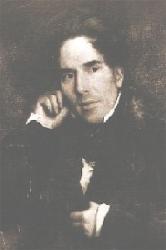
1770 - 1853 Topics: Delight in God and His Service Composer of "BELMONT" in Book of Worship with Hymns and Tunes William Gardiner (b. Leicester, England, 1770; d. Leicester, 1853) The son of an English hosiery manufacturer, Gardiner took up his father's trade in addition to writing about music, composing, and editing. Having met Joseph Haydn and Ludwig van Beethoven on his business travels, Gardiner then proceeded to help popularize their compositions, especially Beethoven's, in England. He recorded his memories of various musicians in Music and Friends (3 volumes, 1838-1853). In the first two volumes of Sacred Melodies (1812, 1815), Gardiner turned melodies from composers such as Haydn, Mozart, and Beethoven into hymn tunes in an attempt to rejuvenate the singing of psalms. His work became an important model for American editors like Lowell Mason (see Mason's Boston Handel and Haydn Collection, 1822), and later hymnbook editors often turned to Gardiner as a source of tunes derived from classical music.
Bert Polman
William Gardiner
Miss C. A. Wellesley
Topics: Christian Experience Delight in Christ Author of "Satisfied With Thee, Lord Jesus" in Hymns of Grace and Truth
Miss C. A. Wellesley
Roy Hopp

Topics: Delight Composer of "OLD DOMINION" in Psalms for All Seasons Roy Hopp (b. 1951) is the Director of Music at Woodlawn Christian Reformed Church in Grand Rapids, MI and Adjunct Professor of Choral Music at Calvin Theological Seminary, where he directs the Calvin Theological Seminary Choir.
Hopp graduated from Calvin College with a Bachelor’s Degree in Music Education and from Michigan State University with a Master’s Degree in Choral Conducting. He did further studies in church music and composition with Richard Hillert at Concordia University in River Forest, IL. He has served as a Director of Music in churches in West Michigan and Colorado for the past twenty years.
His choral compositions have appeared in the catalogues of AugsburgFortress, earthsongs, GIA Publications, Inc., Kjos, MorningStar, and Selah and his hymn tunes have been published in hymnals and collections in the United States, Canada, England, Wales and Scotland.
Emily Brink
Roy Hopp
Samuel Stennett
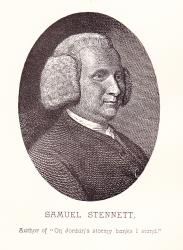
1727 - 1795 Person Name: Rev. Samuel Stennet (1727-1795) Topics: Lord's Day and Worship Delight in Author of "Our Redeemer worshipped" in Songs of Praise with Tunes Samuel Stennett was born at Exeter, in 1727. His father was pastor of a Baptist congregation in that city; afterwards of the Baptist Chapel, Little Wild Street, London. In this latter pastorate the son succeeded the father in 1758. He died in 1795. Dr. Stennett was the author of several doctrinal works, and a few hymns.
--Annotations of the Hymnal, Charles Hutchins, M.A. 1872.
======================
Stennett, Samuel, D.D., grandson of Joseph Stennett, named above, and son of the Rev. Joseph Stennett, D.D., was born most pro;bably in 1727, at Exeter, where his father was at that time a Baptist minister. When quite young he removed to London, his father having become pastor of the Baptist Church in Little Wild Street, Lincoln's Inn Fields. In 1748, Samuel Stennett became assistant to his father in the ministry, and in 1758 succeeded him in the pastoral office at Little Wild Street. From that time until his death, on Aug. 24, 1795, he held a very prominent position among the Dissenting ministers of London. He was much respected by some of the statesmen of the time, and used his influence with them in support of the principles of religious freedom. The celebrated John Howard was a member of his congregation and an attached friend. In 1763, the University of Aberdeen conferred on him the degree of D.D. Dr. S. Stennett's prose publications consist of volumes of sermons, and pamphlets on Baptism and on Nonconformist Disabilities. He wrote one or two short poems, and contributed 38 hymns to the collection of his friend, Dr. Rippon (1787). His poetical genius was not of the highest order, and his best hymns have neither the originality nor the vigour of some of his grandfather's. The following, however, are pleasing in sentiment and expression, and are in common use more especially in Baptist congregations:—
1. And have I, Christ, no love for Thee? Love for Christ desired.
2. And will the offended God again? The Body the Temple of the Holy Ghost.
3. As on the Cross the Saviour hung. The Thief on the Cross.
4. Behold the leprous Jew. The healing of the Leper.
5. Come, every pious heart. Praise to Christ.
6. Father, at Thy call, I come. Lent.
7. Great God, amid the darksome night. God, a Sun.
8. Great God, what hosts of angels stand. Ministry of Angels.
9. Here at Thy Table, Lord, we meet. Holy Communion.
10. How charming is the place. Public Worship.
11. How shall the sons of men appear? Acceptance through Christ alone.
12. How soft the words my [the] Saviour speaks. Early Piety.
13. How various and how new. Divine Providence.
14. Not all the nobles of the earth. Christians as Sons of God.
15. On Jordan's stormy banks I stand. Heaven anticipated.
16. Prostrate, dear Jesus, at thy feet. Lent. Sometimes, "Dear Saviour, prostrate at Thy feet."
17. Should bounteous nature kindly pour. The greatest of these is Love. From this, "Had I the gift of tongues," st. iii., is taken.
18. Thy counsels of redeeming grace. Holy Scripture. From "Let avarice, from shore to shore."
19. Thy life 1 read, my dearest Lord. Death in Infancy. From this "'Tis Jesus speaks, I fold, says He."
20. 'Tis finished! so the Saviour cried. Good Friday.
21. To Christ, the Lord, let every tongue. Praise of Christ. From this,"Majestic sweetness sits enthroned," st. iii., is taken.
22. To God, my Saviour, and my King. Renewing Grace.
23. To God, the universal King. Praise to God.
24. What wisdom, majesty, and grace. The Gospel. Sometimes, “What majesty and grace."
25. Where two or three with sweet accord. Before the Sermon.
26. Why should a living man complain? Affliction. From this, "Lord, see what floods of sorrow rise," st. iii., is taken.
27. With tears of anguish I lament. Lent.
28. Yonder amazing sight I see. Good Friday.
All these hymns, with others by Stennett, were given in Rippon's Baptist Selection, 1787, a few having previously appeared in A Collection of Hymns for the use of Christians of all Denominations, London. Printed for the Booksellers, 1782; and No. 16, in the 1778 Supplement to the 3rd edition of the Bristol Baptist Selection of Ash and Evans. The whole of Stennett's poetical pieces and hymns were included in vol. ii. of his Works, together with a Memoir, by W. J. Jones. 4 vols., 1824. [Rev. W. R. Stevenson, M.A.]
--John Julian, Dictionary of Hymnology (1907)
Samuel Stennett
John Needham
? - 1786 Topics: Delight in God and His Service Author of "Holy and reverend is the name" in Book of Worship with Hymns and Tunes Needham, John, was the son of John Needham, Baptist Minister, of Hitchin, Herts, but the date of his birth is unknown. He would doubtless be educated by his father, who was a tutor and in repute as a learned man. In 1750 Needham became co-pastor with John Beddome at the Baptist meetinghouse in the Pithay, Bristol; but, two years later, Beddome having retired through age, a violent controversy arose in the Church with regard to a continuance of the plan of co-pastorship. As the result, Needham and a number of his friends removed to a Baptist meetinghouse in Callowhill Street, where a Mr. Foot was pastor. For a time the two societies used the same builing at different hours, but in 1755 they were united, with Mr. Needham and Mr. Foot as co-pastors. It is known that up to 1774 this arrangement continued, and it is also known that in 1787, both Mr. Needham and Mr. Foot having died, the Callowhill Street Church became extinct, but which of the two pastors was the survivor is not known. The date of Needham's death is unknown. It was probably circa 1786. In 1768 he published Hymns Devotional and Moral on various Subjects, collected chiefly from the Holy Scriptures, &c, Bristol, S. Farley, 1768. These hymns are 263 in all, and whilst none of them possess great excellence, yet several are of a pleasing and useful character. During the past 120 years several have appeared in Nonconformist hymnbooks, and specially in those of the Baptists. Of these the following are still in common use:—
1. Ashamed of Christ! my soul disdains. Not ashamed of Christ.
2. Awake, my tongue, thy tribute bring. The Divine Perfections.
3. Glory to God, Who reigns above. Jesus, the Messiah.
4. Great author of the immortal mind. Imitation of God's Moral Perfections. From "flow matchless, Lord, Thy glories are."
5. Happy the man whose cautious steps. Christian Moderation.
6. Holy and reverend is the Name. Reverence in Worship.
7. Kind are the words that Jesus speaks. Christ the Strengthener.
8. Lord,ere [Now Lord] the heavenly seed is sown. Parable of the Sower.
9. Methinks the last great day is come. The Judgment.
10. Rise, O my soul, pursue the path. The Example of the Saints.
11. See how the little toiling ant. Youth for Christ.
12. Thou art, O God, a Spirit pure. God a Spirit.
13. To praise the ever bounteous Lord. Harvest.
14. When some kind shepherd from his fold. The Lost Sheep. From this “O how divine, how sweet the joy," in Hatfield's Church Hymn Book, New York, 1872, is taken. [Rev. W. R. Stevenson, M.A.]
--John Julian, Dictionary of Hymnology (1907)
John Needham
Pages