

 My Starred Hymns
 My FlexScores
 My Hymnals
 My Purchased Files
Planning worship?
Check out our sister site, ZeteoSearch.org,
for 20+ additional resources related to your search.
- |
User Links
Person Results
Valeria A. Foster
Person Name: Valeria Foster Topics: Funeral Sacraments; Eternal Life; Grace; Holiness; Journey, Pilgrimage; Life in Christ, Christian Life; Love of God for Us; Strength Arranger of "[Lord, keep me day by day]" in Lead Me, Guide Me (2nd ed.)
Valeria A. Foster
Michael Perry
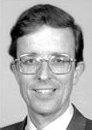
1942 - 1996 Topics: Biblical Names and Places Massah; Biblical Names and Places Meribah; Church Year Christ the King; Daily Prayer Morning Prayer; Disciples / Calling; Earth; Elements of Worship Call to Worship; Elements of Worship Gathering; Elements of Worship Praise and Adoration; Elements of Worship Prayer for Illumination; Enthronement Psalms; Faith; God Light from; God Obedience to; God Trust in; God as Refuge; God as Shepherd; God as Creator; God as King; God's Reigning; God's Sovereignty; God's Anger; God's People (flock, sheep); God's Power; God's Presence; God's Promise of Redemption; God's Strength; God's Way; Grace; Hymns of Praise; Idols and Idolatry; Joy; Obedience; Occasional Services Christian Marriage; Peace; Prayer; Processions; Remembering; Rest; Ten Commandments 2nd Commandment (do not make graven emages); The Creation; Unity and Fellowship; Worship; Year A, Lent, 3rd Sunday; Year A, Reign of Christ, November 20-26 Author of "Come, Worship God" in Psalms for All Seasons Initially studying mathematics and physics at Dulwich College, Michael A. Perry (b. Beckenham, Kent, England, 1942; d. England, 1996) was headed for a career in the sciences. However, after one year of study in physics at the University of London, he transferred to Oak Hill College to study theology. He also studied at Ridley Hall, Cambridge, and received a M.Phil. from the University of Southhampton in 1973. Ordained a priest in the Church of England in 1966, Perry served the parish of St. Helen's in Liverpool as a youth worker and evangelist. From 1972 to 1981 he was the vicar of Bitterne in Southhampton and from 1981 to 1989, rector of Eversley in Hampshire and chaplain at the Police Staff College. He then became vicar of Tonbridge in Kent, where he remained until his death from a brain tumor in 1996. Perry published widely in the areas of Bible study and worship. He edited Jubilate publications such as Hymns far Today's Church (1982), Carols for Today (1986), Come Rejoice! (1989), and Psalms for Today (1990). Composer of the musical drama Coming Home (1987), he also wrote more than two hundred hymns and Bible versifications.
Bert Polman
Michael Perry
Jacobus Fabricius
1593 - 1654 Person Name: Jacob Fabricius Topics: Christ Captain of Salvation; Christians Conquerors through Christ; Christians Warfare of; Church God the strength of; Church Militant; Gratitude; Saints Victorious; Satan Adversary; Soldiers, Christian; Trust In Providence Author of "Battle-hymn of the Reformation" in Hymnal of the Methodist Episcopal Church Fabricius, Jacob, a chaplain in the army of Gustavus Adolphus, was born in 1593, and died in 1654. There is some doubt as to the authorship of the hymn here credited to him. Some hymnologists have attributed it to Johann Michael Altenburg (1584-1640), a preacher, teacher, and musician of Erfurt, and others attribute it to Gustavus Adolphus. "Fear not, O little flock, the foe." 445
Hymn Writers of the Church, 1911 by Charles Nutter
=================
Born: July 19, 1593 - Köslin (Pommern)
Died: August 11, 1654 - Stettin
The Lutheran theologian, Jakob Fabricius, was a son of a shoemaker.
Since 1620 Fabricius was the preacher of the Duke Bogislaw XIV von Pommern. In 1626 he attained a doctorate in theology in Greifswald. In January 1631 the Duke Gustav Adolf appointed Fabricius as his preacher. As a preacher and a priest Fabricius accompanied the King Gustav Adolf on his travels in Germany. After the death of the King in November 16, 1632, in the battle with Lützen, Fabricius stepped again into the service of the Duke of Pommern and became in 1634 Superintendent for Eastern Pomerania.
Disputed is the question whether Fabricius or Michael Altenburg were the poet of the song "Verzage nicht, du Häuflein klein!".
--www.bach-cantatas.com/
Jacobus Fabricius
Frederick C. Maker
1844 - 1927 Topics: Afflictions Comfort under; Afflictions Many and Severe; Afflictions Prayer in; Afflictions Refuge in; Afflictions Watchfulness in; Aspirations For Christ; Aspirations For Grace; Aspirations For Holiness; Aspirations For the Holy Spirit; Christ Minstry of; Christ The Saviour; Christians Saved by Grace; Comfort in Trials; Enemies Many and Mighty; Faith Act of; Faith Walking by; God Faithfulness of; God Our Teacher; Gospel Sanctifying and Saving; Grace Growth in; Heart God the Strength of; The Holy Spirit; Home Life; Meditation; Mercy of God Prayer for; Morning Psalms; The Past; Penitence; Prayer For Christ's Sake; Prayer For Deliverance from Enemies; Prayer For Deliverance from Trouble; Prayer For Grace and Salvation; Prayer Importunity in ; Prayer Pleas in; Revival; Royalty of Christ Universal Domain of; Sin Conviction of; Spiritual Darkness; Trust in God Expression of Composer of "INVITATION" in The Psalter Frederick C. Maker (b. Bristol, England, August 6, 1844; d. January 1, 1927) received his early musical training as a chorister at Bristol Cathedral, England. He pursued a career as organist and choirmaster—most of it spent in Methodist and Congregational churches in Bristol. His longest tenure was at Redland Park Congregational Church, where he was organist from 1882-1910. Maker also conducted the Bristol Free Church Choir Association and was a long-time visiting professor of music at Clifton College. He wrote hymn tunes, anthems, and a cantata, Moses in the Bulrushes.
Bert Polman
Frederick C. Maker
Hal H. Hopson
1933 - 2025 Topics: Biblical Names and Places Jacob; Biblical Names and Places Jacob; Blessing; Church Year Lent; Church Year Transfiguration; Desiring God; Discipleship; Doubt; Elements of Worship Baptism; Elements of Worship Gathering; Elements of Worship Lord's Supper; Elements of Worship Praise and Adoration; Fear; God Desire for; God Trust in; God as Refuge; God as Shield; God's Armor; God's Deeds; God's Face; God's House; God's Love; God's Name; God's People (flock, sheep); God's Promise of Redemption; God's Strength; God's Way; Grace; Hymns of Praise; Jesus Christ Incarnation; Joy; Longing for God; Occasional Services Christian Marriage; Occasional Services Dedication / Consecration / Anniversary; Occasional Services Funerals; Occasional Services Ordination and/or Installation; Pain; Peace; People of God / Church Citizens of Heaven; Prayer; Rest; Songs of Zion; Sorrow; Suffering; Temple; Temptation And Trial; The Fall; The Incarnation; Trust; Unity and Fellowship; Year A, B, C, Presentation of the Lord, February 2; Year B, Ordinary Time after Pentecost, August 21-27; Year C, Ordinary Time after Pentecost, October 23-29 Composer of "MERLE'S TUNE" in Psalms for All Seasons Hal H. Hopson (b. Texas, 1933) is a prolific composer, arranger, clinician, teacher and promoter of congregational song, with more than 1300 published works, especially of hymn and psalm arrangements, choir anthems, and creative ideas for choral and organ music in worship. Born in Texas, with degrees from Baylor University (BA, 1954), and Southern Baptist Seminary (MSM, 1956), he served churches in Nashville, TN, and most recently at Preston Hollow Presbyterian Church in Dallas, Texas. He has served on national boards of the Presbyterian Association of Musicians and the Choristers Guild, and taught numerous workshops at various national conferences. In 2009, a collection of sixty four of his hymn tunes were published in Hymns for Our Time: The Collected Tunes of Hal H. Hopson.
Emily Brink
Hal H. Hopson
Justin Heinrich Knecht
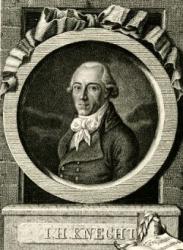
1752 - 1817 Person Name: Justin H. Krecht Topics: Biblical Names and Places Jacob; Biblical Names and Places Zion; Blessing; Church Year Lent; Church Year Transfiguration; Desiring God; Discipleship; Doubt; Elements of Worship Baptism; Elements of Worship Gathering; Elements of Worship Lord's Supper; Elements of Worship Praise and Adoration; Fear; God Desire for; God Trust in; God as Refuge; God as Shield; God's Armor; God's Deeds; God's Face; God's House; God's Love; God's Name; God's People (flock, sheep); God's Promise of Redemption; God's Strength; God's Way; Grace; Hymns of Praise; Jesus Christ Incarnation; Joy; Longing for God; Occasional Services Christian Marriage; Occasional Services Dedication / Consecration / Anniversary; Occasional Services Funerals; Occasional Services Ordination and/or Installation; Pain; Peace; People of God / Church Citizens of Heaven; Prayer; Rest; Songs of Zion; Sorrow; Suffering; Temple; Temptation And Trial; The Fall; The Incarnation; Trust; Unity and Fellowship; Year A, B, C, Presentation of the Lord, February 2; Year B, Ordinary Time after Pentecost, August 21-27; Year C, Ordinary Time after Pentecost, October 23-29 Composer of "ST. EDITH" in Psalms for All Seasons Justin Heinrich Knecht Germany 1752-1817. Born at Biberach Baden-Wurttemberg, Germany, he attended a Lutheran college in Esslingen am Neckar from 1768-1771. Having learned the organ, keyboard, violin and oratory, he became a Lutheran preceptor (professor of literature) and music director in Biberach. It was a free imperial city until 1803 and had a rich cultural life. He became organist of St. Martin’s Church in 1792, used by both Lutherans and Catholics, and was there for many years. He led an energetic, busy musical life, composing for both the theatre and church, organizing subscription concerts, teaching music theory, acoustics, aesthetics, composition, and instruments at the Gymnasium, affiliated to the Musikschule in 1806. He went to Stuttgart in 1806 in hopes of a post there as Kapellmeister, serving two years as Konzertmeister, but he was appointed Direktor Beim Orchester by the King of Wurttemberg in 1807. However, he returned to his former life in 1808 and remained there the rest of his life. He died at Biberach. He wrote 10 vocals, 11 opera and stage works, one symphony, 3 chamber music instrumentals, 7 organ works, 4 piano works, and 6 music theories. He was an author composer, editor, contributor, musician, compiler, and lyricist.
John Perry
Justin Heinrich Knecht
Marcus Hong
Topics: Assurance; Biblical Names and Places Israel; Comfort and Encouragement; Daily Prayer Evening Prayer; Daily Prayer Midday Prayer; Disciples / Calling; Elements of Worship Sending; Endurance; Evil; God as Refuge; God as Shepherd; God as Creator; God's Will; God's Armor; God's Love; God's Majesty; God's Nearness; God's People (flock, sheep); God's Presence; God's Protection; God's Strength; New Creation; Occasional Services Christian Marriage; Occasional Services Funerals; Peace; People of God / Church Citizens of Heaven; People of God / Church Family of God; Prayer; Songs of Zion; Year A, Lent, 2nd Sunday; Year C, Ordinary Time after Pentecost, October 16-22; Texts in Languages Other than English Spanish Arranger of "[Lift your eyes up to the mountains]" in Psalms for All Seasons Marcus A. Hong, originally from Salt Lake City, graduated from Alma College in Michigan in religious studies, where he also served as a Student Ministry Coordinator, developing the student worship program; he then studied at Princeton Theological Seminary, receiving both an M.Div. and MA in Christian Education program in 2011, and then began a PhD program in Christian Education and Formation. He served as a chaplain from 2011-2015 in Koinonia, the fellowship for Princeton Seminary’s PhD students. He is co-author of UWorship (2014) and several of his musical arrangements were included in Psalms for All Seasons (2012).
Emily Brink
Marcus Hong
Ralph Vaughan Williams
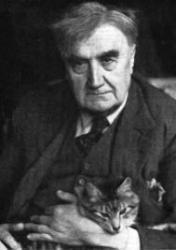
1872 - 1958 Person Name: Ralph Vaughan Williams, 1872-1958 Topics: Biblical Names and Places Jacob; Biblical Names and Places Jacob; Blessing; Church Year Lent; Church Year Transfiguration; Desiring God; Discipleship; Doubt; Elements of Worship Baptism; Elements of Worship Gathering; Elements of Worship Lord's Supper; Elements of Worship Praise and Adoration; Fear; God Desire for; God Trust in; God as Refuge; God as Shield; God's Armor; God's Deeds; God's Face; God's House; God's Love; God's Name; God's People (flock, sheep); God's Promise of Redemption; God's Strength; God's Way; Grace; Hymns of Praise; Jesus Christ Incarnation; Joy; Longing for God; Occasional Services Christian Marriage; Occasional Services Dedication / Consecration / Anniversary; Occasional Services Funerals; Occasional Services Ordination and/or Installation; Pain; Peace; People of God / Church Citizens of Heaven; Prayer; Rest; Songs of Zion; Sorrow; Suffering; Temple; Temptation And Trial; The Fall; The Incarnation; Trust; Unity and Fellowship; Year A, B, C, Presentation of the Lord, February 2; Year B, Ordinary Time after Pentecost, August 21-27; Year C, Ordinary Time after Pentecost, October 23-29 Composer of "SINE NOMINE" in Psalms for All Seasons Through his composing, conducting, collecting, editing, and teaching, Ralph Vaughan Williams (b. Down Ampney, Gloucestershire, England, October 12, 1872; d. Westminster, London, England, August 26, 1958) became the chief figure in the realm of English music and church music in the first half of the twentieth century. His education included instruction at the Royal College of Music in London and Trinity College, Cambridge, as well as additional studies in Berlin and Paris. During World War I he served in the army medical corps in France. Vaughan Williams taught music at the Royal College of Music (1920-1940), conducted the Bach Choir in London (1920-1927), and directed the Leith Hill Music Festival in Dorking (1905-1953). A major influence in his life was the English folk song. A knowledgeable collector of folk songs, he was also a member of the Folksong Society and a supporter of the English Folk Dance Society. Vaughan Williams wrote various articles and books, including National Music (1935), and composed numerous arrangements of folk songs; many of his compositions show the impact of folk rhythms and melodic modes. His original compositions cover nearly all musical genres, from orchestral symphonies and concertos to choral works, from songs to operas, and from chamber music to music for films. Vaughan Williams's church music includes anthems; choral-orchestral works, such as Magnificat (1932), Dona Nobis Pacem (1936), and Hodie (1953); and hymn tune settings for organ. But most important to the history of hymnody, he was music editor of the most influential British hymnal at the beginning of the twentieth century, The English Hymnal (1906), and coeditor (with Martin Shaw) of Songs of Praise (1925, 1931) and the Oxford Book of Carols (1928).
Bert Polman
Ralph Vaughan Williams
Stephen P. Starke
b. 1955 Topics: Biblical Names and Places Jacob; Biblical Names and Places Jacob; Blessing; Church Year Lent; Church Year Transfiguration; Desiring God; Discipleship; Doubt; Elements of Worship Baptism; Elements of Worship Gathering; Elements of Worship Lord's Supper; Elements of Worship Praise and Adoration; Fear; God Desire for; God Trust in; God as Refuge; God as Shield; God's Armor; God's Deeds; God's Face; God's House; God's Love; God's Name; God's People (flock, sheep); God's Promise of Redemption; God's Strength; God's Way; Grace; Hymns of Praise; Jesus Christ Incarnation; Joy; Longing for God; Occasional Services Christian Marriage; Occasional Services Dedication / Consecration / Anniversary; Occasional Services Funerals; Occasional Services Ordination and/or Installation; Pain; Peace; People of God / Church Citizens of Heaven; Prayer; Rest; Songs of Zion; Sorrow; Suffering; Temple; Temptation And Trial; The Fall; The Incarnation; Trust; Unity and Fellowship; Year A, B, C, Presentation of the Lord, February 2; Year B, Ordinary Time after Pentecost, August 21-27; Year C, Ordinary Time after Pentecost, October 23-29 Author of "Almighty Lord, How Lovely Is That Place" in Psalms for All Seasons Rev. Stephen P. Starke has always had a heart for hymns. At a young age, Starke played hymns out of The Lutheran Hymnal and read through the hymnal to pass the time before Sunday services.
Pastor Starke graduated from Concordia University Chicago with a BA. While completing his MDiv from Concordia Theological Seminary, Fort Wayne, Indiana, he attempted his first hymn text and was encouraged to write more. Since that time, he has written more than 175 hymns inspired by music and the Scriptures. He has been commissioned to write hymns for special occasions, including the 125th anniversary of Concordia University Wisconsin, as well as his daughter’s wedding.
Because of his extensive work as a hymnwriter, Pastor Starke received an honorary doctor of letters degree from Concordia University, Irvine, California, and an honorary doctor of divinity degree from Concordia University Wisconsin in Mequon.
It is through the medium of hymns that Pastor Starke desires to preserve and pass on the truths of the Gospel for generations to come.
Stephen P. Starke
Louis Bourgeois
1510 - 1561 Person Name: Louis Bourgeois, ca. 1510-1561 Topics: Biblical Names and Places Abraham; Biblical Names and Places Jacob; Church Year Ascension of the Lord; Church Year Baptism of the Lord; Church Year Christ the King; Church Year Pentecost; Earth; Elements of Worship Call to Worship; Elements of Worship Praise and Adoration; Enemies; Enthronement Psalms; God Trust in; God as Shield; God as King; God's Reigning; God's Sovereignty; God's Armor; God's Strength; Hymns of Praise; Jesus Christ Incarnation; Joy; Mercy; Mission; Music and Musicians; Musical Instruments; Occasional Services Commissioning; People of God / Church Witnessing; Rejoicing; Rulers; Suffering; The Incarnation; Worship; Year A, B, C, Easter, Ascension of the Lord, Ascention Day (Thursday or 7th Sunday of Easter) Composer of "GENEVAN 47" in Psalms for All Seasons Louis Bourgeois (b. Paris, France, c. 1510; d. Paris, 1561). In both his early and later years Bourgeois wrote French songs to entertain the rich, but in the history of church music he is known especially for his contribution to the Genevan Psalter. Apparently moving to Geneva in 1541, the same year John Calvin returned to Geneva from Strasbourg, Bourgeois served as cantor and master of the choristers at both St. Pierre and St. Gervais, which is to say he was music director there under the pastoral leadership of Calvin. Bourgeois used the choristers to teach the new psalm tunes to the congregation.
The extent of Bourgeois's involvement in the Genevan Psalter is a matter of scholarly debate. Calvin had published several partial psalters, including one in Strasbourg in 1539 and another in Geneva in 1542, with melodies by unknown composers. In 1551 another French psalter appeared in Geneva, Eighty-three Psalms of David, with texts by Marot and de Beze, and with most of the melodies by Bourgeois, who supplied thirty four original tunes and thirty-six revisions of older tunes. This edition was republished repeatedly, and later Bourgeois's tunes were incorporated into the complete Genevan Psalter (1562). However, his revision of some older tunes was not uniformly appreciated by those who were familiar with the original versions; he was actually imprisoned overnight for some of his musical arrangements but freed after Calvin's intervention. In addition to his contribution to the 1551 Psalter, Bourgeois produced a four-part harmonization of fifty psalms, published in Lyons (1547, enlarged 1554), and wrote a textbook on singing and sight-reading, La Droit Chemin de Musique (1550). He left Geneva in 1552 and lived in Lyons and Paris for the remainder of his life.
Bert Polman
Louis Bourgeois
Pages