

 My Starred Hymns
 My FlexScores
 My Hymnals
 My Purchased Files
Planning worship?
Check out our sister site, ZeteoSearch.org,
for 20+ additional resources related to your search.
- |
User Links
Person Results
Joachim Neander
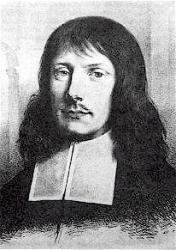
1650 - 1680 Topics: Christian year--Advent; Christian year--Reign of Christ; Christian year--Return of Christ Composer of "UNSER HERRSCHER, UNSER KÖNIG" in Moravian Book of Worship Neander, Joachim, was born at Bremen, in 1650, as the eldest child of the marriage of Johann Joachim Neander and Catharina Knipping, which took place on Sept. 18, 1649, the father being then master of the Third Form in the Paedagogium at Bremen. The family name was originally Neumann (Newman) or Niemann, but the grandfather of the poet had assumed the Greek form of the name, i.e. Neander. After passing through the Paedagogium he entered himself as a student at the Gymnasium illustre (Academic Gymnasium) of Bremen in Oct. 1666. German student life in the 17th century was anything but refined, and Neander seems to have been as riotous and as fond of questionable pleasures as most of his fellows. In July 1670, Theodore Under-Eyck came to Bremen as pastor of St. Martin's Church, with the reputation of a Pietist and holder of conventicles. Not long after Neander, with two like-minded comrades, went to service there one Sunday, in order to criticise and find matter of amusement. But the earnest words of Under-Eyck touched his heart; and this, with his subsequent conversations with Under-Eyck, proved the turning-point of his spiritual life. In the spring of 1671 he became tutor to five young men, mostly, if not all, sons of wealthy merchants at Frankfurt-am-Main, and accompanied them to the University of Heidelberg, where they seem to have remained till the autumn of 1673, and where Neander learned to know and love the beauties of Nature. The winter of 1673-74 he spent at Frankfurt with the friends of his pupils, and here he became acquainted with P. J. Spener (q.v.) and J. J. Schütz (q.v.) In the spring of 1674 he was appointed Rector of the Latin school at Düsseldorf (see further below). Finally, in 1679, he was invited to Bremen as unordained assistant to Under-Eyck at St. Martin's Church, and began his duties about the middle of July. The post was not inviting, and was regarded merely as a stepping stone to further preferment, the remuneration being a free house and 40 thalers a year, and the Sunday duty being a service with sermon at the extraordinary hour of 5 a.m. Had he lived, Under-Eyck would doubtless have done his best to get him appointed to St. Stephen's Church, the pastorate of which became vacant in Sept., 1680. But meantime Neander himself fell into a decline, and died at Bremen May 31, 1680 (Joachim Neander, sein Leben und seine Lieder. With a Portrait. By J. F. Iken, Bremen, 1880; Allgemeine Deutsche Biographie, xxiii. 327, &c.)
Neander was the first important hymn-writer of the German Reformed Church since the times of Blaurer and Zwick. His hymns appear to have been written mostly at Düsseldorf, after his lips had been sealed to any but official work. The true history of his unfortunate conflict has now been established from the original documents, and may be summarized thus.
The school at Düsseldorf was entirely under the control of the minister and elders of the Reformed Church there. The minister from about July, 1673, to about May, 1677, was Sylvester Lürsen (a native of Bremen, and only a few years older than Neander), a man of ability and earnestness, but jealous, and, in later times at least, quarrelsome. With him Neander at first worked harmoniously, frequently preaching in the church, assisting in the visitation of the sick, &c. But he soon introduced practices which inevitably brought on a conflict. He began to hold prayer meetings of his own, without informing or consulting minister or elders; he began to absent himself from Holy Communion, on the ground that he could not conscientiously communicate along with the unconverted, and also persuaded others to follow this example; and became less regular in his attendance at the ordinary services of the Church. Besides these causes of offence he drew out a new timetable for the school, made alterations on the school buildings, held examinations and appointed holidays without consulting any one. The result of all this was a Visitation of the school on Nov. 29, 1676, and then his suspension from school and pulpit on Feb. 3, 1677. On Feb. 17 he signed a full and definite declaration by which "without mental reservations" he bound himself not to repeat any of the acts complained of; and thereupon was permitted to resume his duties as rector but not as assistant minister. The suspension thus lasted only 14 days, and his salary was never actually stopped. The statements that he was banished from Düsseldorf, and that he lived for months in a cave in the Neanderthal near Mettmann are therefore without foundation. Still his having had to sign such a document was a humiliation which he must have felt keenly, and when, after Lürsen's departure, the second master of the Latin school was appointed permanent assistant pastor, this feeling would be renewed.
Neander thus thrown back on himself, found consolation in communion with God and Nature, and in the composition of his hymns. Many were without doubt inspired by the scenery of the Neanderthal (a lovely valley with high rocky sides, between which flows the little river Düssel); and the tradition is probable enough that some of them were composed in a cave there. A number were circulated among his friends at Düsseldorf in MS., but they were first collected and published after his removal to Bremen, and appeared as:—
A und Ώ, Joachimi Neandri Glaub-und Liebesübung: — auffgemuntert durch ein fällige Bundes Lieder und Danck-Psalmen, Bremen, Hermann Brauer, 1680; 2nd ed. Bremen, 1683 ; 3rd ed. Bremen, 1687; 4th ed. Frankfurt, 1689. These editions contain 57 hymns. In the 5th ed., Frankfurt and Leipzig, 1691, edited by G. C. Strattner, eight hymns were added as being also by Neander. [The whole of these eds. are in the Royal Library, Berlin. The so-called 3rd. ed. at Wesel, 1686, also found in Berlin, was evidently pirated.] Other editions rapidly followed till we find the complete set (i.e. 57 or 58) formally incorporated as part of a hymnbook, e.g. in the Marburg Reformed Gesang-Buch, 1722, where the first part consists of Lobwasser's Psalter, the second of Neander's Bundeslieder, and the third of other hymns. Neander's Bundeslieder also form a division of the Lemgo Reformed Gesang-Buch, 1722; and of a favourite book used in the meetings conducted by G. Tersteegen, which in the 5th ed., Solingen, 1760, has the title Gott-geheiligtes Harfen-Spiel der Kinder Zion; bestehend in Joachimi Neandri sämtlichen Bundes-Liedern, &c. In this way, especially in the district near Düsseldorf and on the Ruhr, Neander's name was honoured and beloved long after it had passed out of memory at Bremen.
Many of Neander's hymns were speedily received into the Lutheran hymnbooks, and are still in universal use. The finest are the jubilant hymns of Praise and Thanksgiving, such as his "Lobe den Herren”, and those setting forth the Majesty of God in His works of beauty and wonder in Nature, such as his "Himmel, Erde", and "Unbegreiflich Gut"; while some of his hymns of Penitence, such as his "Sieh hier bin ich, Ehrenkönig" (q.v.), are also very beautiful. Many are of a decidedly subjective cast, but for this the circumstances of their origin, and the fact that the author did not expect them to be used in public worship, will sufficiently account. Here and there there are doubtless harshnesses, and occasionally imagery which is rather jarring; and naturally enough the characteristic expressions and points of view of German 17th cent. Pietism and of the "Covenant Theology" are easily enough detected. But the glow and sweetness of his better hymns, their firm faith, originality, Scripturalness, variety and mastery of rhythmical forms, and genuine lyric character fully entitled them to the high place they hold.
Of the melodies in the original edition of 1680 there are 19 by Neander himself, the best known being those to Nos. viii. and xi. below.
The hymns by Neander which have passed into English, and have not already been referred to, are:—
Hymns in English common use:
i. Meine Hoffnung stehet feste. Thanksgiving. Founded on 1 Tim. vi. 17. 1680 as above, p. 115, in 5 stanzas of 7 lines, entitled "Grace after meat." In the Unverfälschter Liedersegen, 1851, No. 712. Translated as:—
All my hope is grounded surely. A full and good translation by Miss Winkworth, as No. 8 in her Chorale Book for England, 1863.
Another translation is: "All my Hope is fix'd and grounded." By J. C. Jacobi, 1720, p. 17, repeated in his ed., 1732, p. 64, altered and beginning, "All my Hope is firmly grounded."
ii. Unbegreiflich Gut, wahrer Gott alleine. Summer. According to tradition this was written in the summer of 1677, in a cave in the Neanderthal near Düsseldorf, while Neander was in enforced absence from his school duties (Koch, vi. 20). It is founded on Ps. civ. 24. 1680, p. 165, in 12 stanzas of 6 lines, and entitled, "The Joys of Summer and Autumn in Field and Forest." The following note shows that the "Feeling for Nature" is not entirely modern.
“It is also a travelling hymn in summer or autumn for those who, on their way to Frankfurt on the Main, go up and down the river Rhine, where between Cologne and Mainz, mountains, cliffs, brooks and rocks are to be beheld with particular wonder; also in the district of Berg in the rocky region [the ‘Gestein' now called the Neanderthal], not far from Düsseldorf."
The hymn is in Knapp's Evangelischer Lieder-Schatz 1850, No. 2163 (1865, No. 2231), omitting st. x. Translated as:-—
0 Thou true God alone. A very good translation, omitting st. x., by Miss Winkworth, in her Christian Singers, 1869, p. 286. Her translation of st. i., iii.-v. altered in metre, and beginning "Thou true God alone," are No. 53 in M. W. Stryker's Christian Chorals, 1885.
Hymns not in English common use:——
iii. Auf, auf, mein Geist, erhebe dich zum Himmel. Holy Communion. Founded on Ps. xxiii. 6. 1860, as above, p. 27, in 5 stanzas, entitled, "The soul strengthened and refreshed. After the reception of the Holy Communion." In Porst's Gesang-Buch, ed. 1855, No. 218. In the Moravian London Gesang-Buch, 1753, No. 697, it begins, "Den Himmels-Vorschmack hab' ich auf der Erde," and in the Brüder Gesang-Buch, 1778, No. 1178, it was further recast (by C. Gregor?) and altered to "hab'ich schon hinieden." Translated as "Heav'n's foretaste I may here already have." By F W. Foster & J. Miller, as No. 596, in the Moravian Hymn Book, 1789. In the 1801 ed. (1849, No. 1003) it begins, “Since Jesus dy'd, my guilty soul to save."
iv. Der Tag ist hin, mein Jesu, bei mir bleibe. Evening. Founded on St. Luke xxiv. 29. 1680, p. 15, in 6 stanzas entitled, "The Christian returning thanks at eventide." In the Unverfälschter Liedersegen, 1851, No. 512. The translations are: (1) "The Day is gone, come Jesu my Protector." In the Supplement to German Psalmody, ed. 1765, p. 72. (2) "The day is past, Thou Saviour dear, still dwell my breast within." By H. J. Buckoll, 1842, p. 82. (3) "The day is gone, abide with me tonight." By E. Massie, 1867, p. 192. (4) "The day is gone, abide with me, 0 Jesus." By R. Massie, in the Day of Rest, 1877.
v. Grosser Prophete, mein Herze begehret. Love to Christ. Founded on 1 Cor. xvi. 22. 1680, p. 191, in 4 stanzas. Translated as “Heavenly Prophet, my Heart is desiring." By J. C. Jacobi, 1720, p. 40.
vi. Jehovah ist mein Licht und Gnadensonne. God's Perfections. Founded on 1 John i. 7. 1680, p. 19 in 4 stanzas, entitled, "Walking in the Light." Translated as, "Jehovah is my light, salvation showing." By Dr. H. Mills, 1845 (1856, p. 6).
vii. 0 allerhöchster Menschenhüter. Morning. A hymn of praise to our Almighty Preserver. 1680, p. 11, in 6 stanzas, founded on Ps. lix. 16; and entitled, "The Christian singing at Morning." Translated as, "O Thou Most Highest! Guardian of mankind." By Miss Winkworth, 1858, p. 72.
viii. Unser Herrscher, unser König. Thanksgiving. Founded on Acts
viii. 2. 1680, p. 147, in 6 stanzas, entitled, "The glorious Jehovah." In the Unverfälschter Liedersegen 1851, No. 344. The well-known melody (in the Society for Promoting Christian Knowledge Church Hymns called Munich) is also by Neander, and appeared along with the hymn. Translated as, "Sovereign Ruler, King victorious," in the British Herald, Dec, 1865, p. 185, and Reid's Praise Book, 1872.
ix. Wie fleucht dahin der Menschenzeit. For the Dying. A powerful hymn on the vanity of the earthly, founded on Ps. xc. 12. 1680, p. 174, in 7 stanzas, entitled, "He that counts his days." In the Unverfälschter Liedersegen, 1851, No. 845. The translations are: (1) "This life is like a flying dream" (beginning with st. ii. "Das Leben ist gleich wie ein Traum"). By Mrs. Findlater, in Hymns from the Land of Luther, 1858, p. 24 (1884, p. 146). (2) "Though hastening onward to the grave." By E. Massie, 1867, p. 36.
x. Wo soil ich hin? wer helfet mir? Lent. Founded on Romans vii. 24. 1680, p. 51, in 5 st. entitled “The distressed one longing for Redemption." In the Unverfälschter Liedersegen, 1851, No. 393. The translations are: (1) "For help, O whither shall I flee." By Dr. H. Mills, 1845 (1856, p. 146). (2) "How shall I get there? who will aid?" By Miss Warner, 1858, p. 52.
xi. Wunderbarer König. Thanksgiving. Founded on Ps. cl. 6. 1680, p. 159, in 4 stanzas, entitled, "Inciting oneself to the Praise of God." In the Unverfälschter Liedersegen, 1851, No. 787. The melody, a very fine one (called by Mr. Mercer Groningen), is also by Neander, and appeared along with the hymn. The translations are: (1) "Wonderful Creator." By J. C. Jacobi, 1722, p. 88. (2) "Wonderful and blessed." By J. D. Burns in his Memoir and Remains, 1869, p. 230. (3) "Wondrous King Almighty." By N. L. Frothingham, 1870, p. 266. [Rev. James Mearns, M.A.]
--John Julian, Dictionary of Hymnology (1907)
Joachim Neander
Rowland Hugh Prichard

1811 - 1887 Person Name: Rowland H. Prichard, 1811-1887 Topics: Christian Hope; Christian Hope; Christian Life Composer of "HYFRYDOL" in Lutheran Book of Worship Rowland H. Prichard (sometimes spelled Pritchard) (b. Graienyn, near Bala, Merionetshire, Wales, 1811; d. Holywell, Flintshire, Wales, 1887) was a textile worker and an amateur musician. He had a good singing voice and was appointed precentor in Graienyn. Many of his tunes were published in Welsh periodicals. In 1880 Prichard became a loom tender's assistant at the Welsh Flannel Manufacturing Company in Holywell.
Bert Polman
Rowland Hugh Prichard
James Clifford
1872 - 1936 Person Name: J. C. Topics: Christian Service Translator of "Estad por Cristo firmes" in Culto Cristiano Argentina
James Clifford
Folliott Sandford Pierpoint
1835 - 1917 Person Name: Folliett S. Pierpoint Topics: Christians Graces; Graces, Christian; Christians Graces; Graces, Christian Author of "Gratitude" in Laudes Domini In the spring of 1863, Folliott S. Pierpoint (b. Bath, Somerset, England, 1835; d. Newport, Monmouthshire, England, 1917) sat on a hilltop outside his native city of Bath, England, admiring the country view and the winding Avon River. Inspired by the view to think about God's gifts in creation and in the church, Pierpont wrote this text. Pierpont was educated at Queen's College, Cambridge, England, and periodically taught classics at Somersetshire College. But because he had received an inheritance, he did not need a regular teaching position and could afford the leisure of personal study and writing. His three volumes of poetry were collected in 1878; he contributed hymns to The Hymnal Noted (1852) and Lyra Eucharistica (1864). "For the Beauty of the Earth" is the only Pierpont hymn still sung today.
Bert Polman
==================
Pierpoint, Folliott Sandford, M.A., son of William Home Pierpoint of Bath, was born at Spa Villa, Bath, Oct. 7, 1835, and educated at Queen's College, Cambridge, graduating in classical honours in 1871. He has published The Chalice of Nature and Other Poems, Bath, N.D. This was republished in 1878 as Songs of Love, The Chalice of Nature, and Lyra Jesu. He also contributed hymns to the Churchman's Companion (London Masters), the Lyra Eucharistica, &c. His hymn on the Cross, "0 Cross, O Cross of shame," appeared in both these works. He is most widely known through:—
"For the beauty of the earth." Holy Communion, or Flower Service. This was contributed to the 2nd edition of Orby Shipley's Lyra Eucharistica, 1864, in 8 stanzas of 6 lines, as a hymn to be sung at the celebration of Holy Communion. In this form it is not usually found, but in 4, or sometimes in 5, stanzas, it is extensively used for Flower Services and as a Children's hymn.
--John Julian, Dictionary of Hymnology (1907)
Folliott Sandford Pierpoint
William T. Sleeper
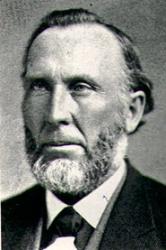
1819 - 1904 Person Name: W. T. Sleeper Topics: The Christian Life Repentance Author of "Out of My Bondage" in The New Christian Hymnal Sleeper, W. T. is given in I. D. Sankey’s Sacred Songs & Solos, 1881, as the author of “A ruler once came to Jesus by night” (Need for the New Birth).
--John Julian, Dictionary of Hymnology, Appendix, Part II (1907)
===============
William T. Sleeper (1819-1904)]
Born: February 9, 1819, Danbury, New Hampshire.
Died: September 24, 1904, Wellesley, Massachusetts.
Sleeper attended Phillips-Exeter Academy, the University of Vermont, and the Andover Theological Seminary. After ordination, he conducted home ministry work in Massachusetts and Maine. He later became pastor of the Summer Street Congregational Church in Worcester, Massachusetts, where he served over 30 years. His works include:
The Rejected King, and Hymns of Jesus, 1883.
-- www.hymntime.com
William T. Sleeper
Priscilla Jane Owens
1829 - 1907 Person Name: Priscilla J. Owens, 1829-1907 Topics: The Gospel in the Christian Life Christian Life, Discipleship Author of "Jesus Saves!" in One Lord, One Faith, One Baptism Owens, Priscilla Jane, was born July 21, 1829, of Scotch and Welsh descent, and is now (1906) resident at Baltimore, where she is engaged in public-school work. For 50 years Miss Owen has interested herself in Sunday-school work, and most of her hymns were written for children's services. Her hymn in the Scotch Church Hymnary, 1898, "We have heard a joyful sound" (Missions), was written for a Sunday-school Mission Anniversary, and the words were adapted to the chorus "Vive le Roi" in the opera The Huguenots. [Rev. James Bonar, M.A.]
--John Julian, Dictionary of Hymnology, Appendix II (1907)
=========================
Owens, Priscilla Jane. (July 21, 1829--December 5, 1907). Of Scottish and Welsh ancestry, she spent her entire life in Baltimore. She was a public school teacher there for 49 years. She was a member of the Union Square Methodist Church and took particular interest in its Sunday School.
Her literary efforts, both in prose and poetry, appeared in such religious periodicals as the Methodist Protestant and the Christian Standard.
--William J. Reynolds, DNAH Archives
Priscilla Jane Owens
James Oren Thompson
1834 - 1917 Person Name: J. O. Thompson Topics: Christian Work Author of "Far and Near the Fields Are Teeming" in Psalter Hymnal (Red) Born June 9, 1834 in Waldo, ME. He was a minister before joining the army and fighting in the Civil War. After the war he joined the Methodist Episcopal Maine Conference in 1866. He transferred to the Providence, RI conference and retired in 1886. He moved to Keyser, WV and edited The Mountain Echo. He then moved to Charleston, WV and served as secretary of the Agriculture. In 1905 he moved to St. Petersburg, FL where he was the minister at the First Ave. Methodist Church. He died Sept. 28, 1917.
From Hymn Studies http://homeschoolblogger.com/hymnstudies/
James Oren Thompson
Heinrich S. Oswald
1751 - 1834 Topics: Christian Experience Aspiration Author of "O let him, whose sorrow no relief can find" in The Hymnal Oswald, Heinrich Siegmund, son of Johann Heinrich Oswald or Osswald, of Nimmersatt, near Liegnitz, in Silesia, was born at Nimmersatt, June 30, 1751. After passing through the school at Schmiedeberg he was for seven years clerk in a public office at Breslau. In 1773 he became Secretary to the Landrath von Prittwitz at Glatz, with whom he remained two years, and was thereafter in business at Hamburg and at Breslau. Through J. D. Hermes, Oberconsistorialrath at Potsdam, whose daughter he married, he became acquainted with King Friedrich Wilhelm II. of Prussia, and in 1791 was appointed reader to the king. He accordingly removed to Potsdam, and was in 1791 appointed also Geheimrath. After the king's death, on Nov. 16, 1797, Oswald received a pension, and retired first to Hirschberg, and then to Breslau, where he died Sept. 8, 1834. (Allgemeine Deutsche Biographie xxiv. 528; Miller's Singers & Songs, 1869, p. 303; extracts from the Breslauer Zeitung, Sept. 12, 1834, and the Schlesische Provinzialblätter, 1835, p. 289, kindly communicated by Dr. Markgraf of the Breslau Stadt Bibliothek, &c.)
Oswald's hymns, over 100 in all, appeared principally in his (1) Unterhaltungen für gläubige Seelen, Berlin, 1792. (2) Gedichte und Lieder fürs Herz, Berlin, 1793. (3) Letzten Mittheilungen meiner der Wahrheit und Religion geweihter Muse, Breslau, 1826. (4) Schwanengesänge, Breslau, n.d. (preface Aug. 1827).
Three or four of Oswald's hymns have passed into German hymnbooks. One has been translated into English, viz.:—
Wem in Leidenstagen. For Mourners. In his Letzte Mittheilungen, 1826, p. 42, in 14 stanza of 4 lines, and entitled "An exhortation to Tranquillity. To the Suffering. Psalm 50, v. 15." Bunsen, in his Versuch, 1833, No. 813 (Allgemeine Gesangbuche, 1846, No. 333), selects st. i.-iii., x., xii.-xir. The singing of this beautiful hymn (in Miss Cox's version) formed an impressive part of the service in the church at Edensor at the funeral of Lord Frederick Cavendish, May 11, 1882. Translated as:—
1. 0! Let him whose sorrow. A very good translation from Bunsen's text, by Miss Cox, in her Sacred Hymns from the German, 1841… included in Alford's Psalms & Hymns, 1844, and others…. Another translation is: "When in thine hours of grief," by Lady E. Fortescue, 1843, p. 71. [Rev. James Mearns, M.A.]
--Excerpts from John Julian, Dictionary of Hymnology (1907)
Heinrich S. Oswald
George Hunt Smyttan
1822 - 1870 Topics: The Christian Year Lent; Christian Year Ash Wednesday; Christian Year Lent Author of "Forty Days and Forty Nights" in Voices United George Hunt Smyttan studied at Corpus Christi College, Cambridge, and graduated B.A. 1845. He was ordained Deacon in 1848, Priest in 1849, and appointed Rector of Hawksworth in 1850. He has published some small volumes of poetry.
--Annotations of the Hymnal, Charles Hutchins, M.A., 1872
==============================
Smyttan, George Hunt, B.A., son of Dr. Smyttan, of the Bombay Medical Board, was born circa 1825, and educated at Corpus Christi College, Cambridge, B.A. 1845. He took holy orders in 1848, and in 1850 was preferred to the Rectory of Hawksworth, Notts, where he died in 1870. He published Thoughts in Verse for the Afflicted, 1849; Mission Songs and Ballads, 1860; and Florum Sacra, n.d. He was the author of the well-known hymn, "Forty days, and forty nights" (p. 384, i.), and of a second which is found in several collections, "Jesu, ever present with Thy Church below" (Holy Communion), which appeared in the 2nd edition of Lyra Eucharistica, 1864.
--John Julian, Dictionary of Hymnology (1907)
========================
Smyttan, G. H., p. 1064, ii., b. in 1822; resigned the Rectory of Hawksworth, 1859, and died suddenly at Frankfort-on-the-Main, Feb. 21, 1870. The Rev. G. W. Mackenzie, Chaplain at Frankfort, has supplied us, under date of April 16, 1902, with the following pathetic details respecting the death and burial-place of Mr. Smyttan:—
He was buried, not in Frankfort great Cemetery, but in a newer one on the other side of the river Main. Having died suddenly, and being entirely unknown here, no relatives being with him, and there being no possibility of communicating with them, he was entered simply as Smyttan, England, and buried amongst the poor in an unpurchased grave. I stood before the spot to-day, but all record of him has disappeared. Another cross covers it to the memory of one who died about twenty-five years afterwards, and who is buried above Mr. Smyttan. I was informed that in (I think) sixty years hence, all traces of the various occupants will be entirely cleared away. My informant knew nothing about the cross, if any, which covered Mr. Smyttan's remains. He thought that if there were one it would have been utilised for someone else."
We may add that in Lyra Eucharistica there are three hymns by Smyttan in addition to "Jesu, ever present," p. 1064, ii. [Rev. James Mearns, M.A.]
--John Julian, Dictionary of Hymnology, New Supplement (1907)
George Hunt Smyttan
Eduard Niemeyer
1800 - 1900 Topics: The Christian Home The Family Composer of "O SELIG HAUS" in The Lutheran Hymnal
Eduard Niemeyer
Pages




