You help make Hymnary.org possible. More than 10 million people from 200+ countries found hymns, liturgical resources and encouragement on Hymnary.org in 2025, including you. Every visit affirms the global impact of this ministry.

If Hymnary has been meaningful to you this year, would you take a moment today to help sustain it? A gift of any size—paired with a note of encouragement if you wish—directly supports the server costs, research work and curation that keep this resource freely available to the world.

Give securely online today, or mail a check to:
Hymnary.org
Calvin University
3201 Burton Street SE
Grand Rapids, MI 49546

Thank you for your partnership, and may the hope of Advent fill your heart.

Person Results

Text Identifier:"^like_noahs_weary_dove$"
In:people

Planning worship? Check out our sister site, ZeteoSearch.org, for 20+ additional resources related to your search.
Showing 1 - 10 of 19Results Per Page: 102050

Anonymous

Person Name: Anon. Author of "Like Noah's weary dove" in A Collection of Hymns, for the use of the United Brethren in Christ In some hymnals, the editors noted that a hymn's author is unknown to them, and so this artificial "person" entry is used to reflect that fact. Obviously, the hymns attributed to "Author Unknown" "Unknown" or "Anonymous" could have been written by many people over a span of many centuries.

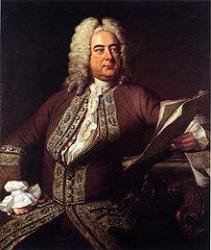
George Frideric Handel

1685 - 1759 Person Name: George F. Handel Composer of "ST. THOMAS" in Hymn and Tune Book of the Methodist Episcopal Church, South (Round Note Ed.) George Frideric Handel (b. Halle, Germany, 1685; d. London, England, 1759) became a musician and composer despite objections from his father, who wanted him to become a lawyer. Handel studied music with Zachau, organist at the Halle Cathedral, and became an accomplished violinist and keyboard performer. He traveled and studied in Italy for some time and then settled permanently in England in 1713. Although he wrote a large number of instrumental works, he is known mainly for his Italian operas, oratorios (including Messiah, 1741), various anthems for church and royal festivities, and organ concertos, which he interpolated into his oratorio performances. He composed only three hymn tunes, one of which (GOPSAL) still appears in some modern hymnals. A number of hymnal editors, including Lowell Mason, took themes from some of Handel's oratorios and turned them into hymn tunes; ANTIOCH is one example, long associated with “Joy to the World.” Bert Polman

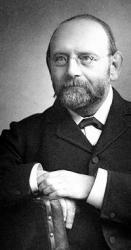
Joseph Barnby

1838 - 1896 Composer of "ST. ANDREW" in Hymns of the Faith with Psalms Joseph Barnby (b. York, England, 1838; d. London, England, 1896) An accomplished and popular choral director in England, Barnby showed his musical genius early: he was an organist and choirmaster at the age of twelve. He became organist at St. Andrews, Wells Street, London, where he developed an outstanding choral program (at times nicknamed "the Sunday Opera"). Barnby introduced annual performances of J. S. Bach's St. John Passion in St. Anne's, Soho, and directed the first performance in an English church of the St. Matthew Passion. He was also active in regional music festivals, conducted the Royal Choral Society, and composed and edited music (mainly for Novello and Company). In 1892 he was knighted by Queen Victoria. His compositions include many anthems and service music for the Anglican liturgy, as well as 246 hymn tunes (published posthumously in 1897). He edited four hymnals, including The Hymnary (1872) and The Congregational Sunday School Hymnal (1891), and coedited The Cathedral Psalter (1873). Bert Polman

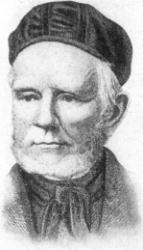
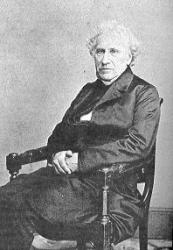
William Augustus Muhlenberg

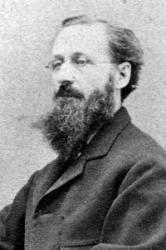
1796 - 1877 Author of "Like Noah's weary dove" in Church Book Mühlenberg, William Augustus, D.D., son of the Rev. Dr. Mühlenberg, and grandson of Henry Melchior Mühlenberg, the patriarch of Lutheranism in America, was born in Philadelphia Sept. 16, 1796. He graduated at the University of Pennsylvania in 1814. Entering Holy Orders in 1817, he was successively Assistant Rector of St. James's Lancaster, 1823; Rector of the Church of the Holy Communion, New York, 1843; St. Paul's College, Flushing (1828); St. Luke's Hospital, New York (1855); St. John's and Long Island (1865), were established by him. He died April 6, 1877. His poetical gift was genuine, but not largely used. In 1826 he contributed four hymns to the Prayer Book Collection (of which he was one of the Committee). His Poems appeared in 1859. He had previously published Church Poetry, 1823; and The People's Psalter, 1858. I would not live alway followed in 1859 (revised in 1871). This last contains 26 pieces, the hymns in the Prayer Book Collection, 1826, with the exception of "I would not live alway," being omitted. The following are his principal lyrics:— 1. Carol, brothers, carol. Christmas Carol. "Made for the boys of St. Paul's College—-the Chorus adapted from one of the Rev.[Bishop] A.C. Coxe's Christian Ballads"-—in 1840. 2. How short the race our friend has run. Death of a Young Person. Contributed to the Prayer Book Collection, 1826. 3. I would not live alway. Eternal rest desired. Four texts of this poem are extant: 1st the Original; 2nd the version given in the Prayer Book Collection, 1826; 3rd the author's revised version of 1859; and 4th his rewritten text of 1871, the second of these being that known to the hymnbooks. The history of the poem is somewhat complicated. We quote it here as given by us in the History of the American Episcopal Church, 1885, p.637, as we have nothing further to add thereto:-— "The most famous of these (Dr. Mühlenberg's hymns) was probably first written. 'I will not live alway' has an intricate history, which was not simplified by the author's lapse of memory in his later years. In his brief ‘story of the hymn,' printed with its ‘evangelized’ text in 1871, every date is wrong by two or three years; and his assertion, ‘The legend that it was written on an occasion of private grief is a fancy,' hardly agrees with the clear and minute recollections of persons of the highest character, still living, and who knew the circumstances thoroughly. The date of composition assigned, 1824, is probably (not certainly) correct; it was written at Lancaster, in a lady's album, and began:— I would not live alway; no, no, holy man, Not a day, not an hour, should lengthen my span.' In this shape it seems to have had six eight-line stanzas. The album was still extant in 1876, at Pottstown, Pa., and professed to contain the original manuscript. Said the owner's sister, ‘It was au impromptu. He had no copy, and, wanting it for some occasion, he sent for the album.' In 1826 he entrusted his copy to a friend, who called on him on the way from Harrisburg to Philadelphia, to carry to the Episcopal Recorder, and in that paper it appeared June 3, 1826 (not 1824). For these facts we have the detailed statement of Dr. John B. Clemson, of Claymont, Del., the Ambassador mentioned, who also chances to have preserved that volume of the paper. Thus appearing (without name) it was adopted by the sub-committee [of the Prayer Book Collection, 1826]. When their report was presented to the entire committee in 1826—-not 1829, as Dr. Mühlenberg had it—-'each of the hymns was passed upon. When this came up one of the members remarked that it was very sweet and pretty, but rather sentimental, upon which it was unanimously thrown out. Not suspected as the author, I voted against myself. That, I supposed, was the end of it.’ The committee, which sat until late at night at the house of Bishop White, agreed upon their report to the Convention, and adjourned. But the next morning Dr. Onderdonk (who was not one of their number, but who, on invitation, had acted with the sub-committee, which in fact consisted of him and myself), called on me to inquire what had been done. Upon my telling him that among the rejected hymns was this one of mine, he said, 'That will never do,' and went about among the members of the committee soliciting them to restore the hymn in their report, which accordingly they did; so that to him is due the credit of giving it to the Church.' As thus adopted it was a small and altered selection from the original lines, made by Dr. Onderdonk ‘with some revision' by the author. He was never satisfied with these texts, but revised the poem in 1859, and re¬wrote it in 1871….The authorship of this, as of many another popular lyric, has been disputed. The claim of Henry Ward, a printer of Lichfield, Conn., has been vehemently urged, and revived but a few years ago. Of course it is unsupported by adequate evidence. When Dr. Mühlenberg was asked to assure ‘some of his brethren, editors of Church papers,' of his paternity, his manly reply was, ‘If they thought I was capable of letting the work of another pass for so many years as my own, they would not be sure of anything I might say.'" 4. Jesus' Name shall ever be. The Holy Name, Jesus. This is entitled "The Blessed Name of Jesus. An Evangelical Rosary." It was written in 1842, and revised for Schaff's Christ in Song in Aug., 1868. 5. King of kings, and wilt Thou deign. Submission to Jesus. Appeared in his Poems, 1859. 6. Like Noah's weary dove. The Ark of the Church. Contributed to the Prayer Book Collection, 1826, No. 24, in 5 st. of 4 1. It sometimes begins with st. ii., "0 cease, my wandering soul;" and again with st. in., "Behold the Ark of God." 7. Saviour, Who Thy flock art feeding. Holy Baptism. This is the most widely known of Dr. Mühlenberg's hymns. It was contributed to the Prayer Book Collection, 1826, No. 86, in 4 st. of 4 1. It is sometimes given as "Jesus, Who Thy flock art feeding." 8. Shout the glad tidings, exultingly sing. Christmas. Contributed to the Prayer Book Collection, 1826, No. 46, in 3 st. of 4 1., with the chorus :— "Shout the glad tidings, exultingly sing, Jerusalem triumphs, Messiah is King;" the opening lines, followed by the first stanza, and a repetition of the chorus, and so on to the end. Sometimes the hymn opens with st. i.: "Zion, the marvellous story be telling," or as “Sion the marvellous story be telling," instead of the chorus. Dr. Mühlenberg says that the hymn was written— "at the particular request of Bishop Hobart, who wanted something that would go to the tune by Avison, then popular, to the words of Moore, ‘Sound the loud timbrel,' &c. He liked the verses I made so well that he had them struck off before the hymns (Prayer Book Collection] were published, and sung in Trinity Church on Christmas day." 9. Since o'er Thy footstool here below. Earth and Heaven. Appeared in the Episcopal Register, 1824, and in his Poems, 1859. 10. The mellow eve is gliding. Evening. Dated 1825 (?) and published in his Poems, 1859. 11. The throne of his glory—-as snow it is white. Advent. Dated 1839, and published in his Poems, 1859. 12. Thine handmaid,Saviour, can it be? Admission of a Nursing Sister. Written on the words, "Come, follow me," for the reception of a Sister at St. Luke's Hospital, New York, 1859. [Rev. F. M. Bird, M.A.] --John Julian, Dictionary of Hymnology (1907) See also in: Hymn Writers of the Church

Lowell Mason

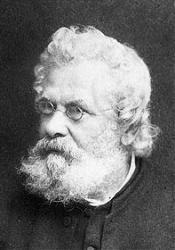
1792 - 1872 Composer of "BOYLSTON" in The Otterbein Hymnal Dr. Lowell Mason (the degree was conferred by the University of New York) is justly called the father of American church music; and by his labors were founded the germinating principles of national musical intelligence and knowledge, which afforded a soil upon which all higher musical culture has been founded. To him we owe some of our best ideas in religious church music, elementary musical education, music in the schools, the popularization of classical chorus singing, and the art of teaching music upon the Inductive or Pestalozzian plan. More than that, we owe him no small share of the respect which the profession of music enjoys at the present time as contrasted with the contempt in which it was held a century or more ago. In fact, the entire art of music, as now understood and practiced in America, has derived advantage from the work of this great man. Lowell Mason was born in Medfield, Mass., January 8, 1792. From childhood he had manifested an intense love for music, and had devoted all his spare time and effort to improving himself according to such opportunities as were available to him. At the age of twenty he found himself filling a clerkship in a banking house in Savannah, Ga. Here he lost no opportunity of gratifying his passion for musical advancement, and was fortunate to meet for the first time a thoroughly qualified instructor, in the person of F. L. Abel. Applying his spare hours assiduously to the cultivation of the pursuit to which his passion inclined him, he soon acquired a proficiency that enabled him to enter the field of original composition, and his first work of this kind was embodied in the compilation of a collection of church music, which contained many of his own compositions. The manuscript was offered unavailingly to publishers in Philadelphia and in Boston. Fortunately for our musical advancement it finally secured the attention of the Boston Handel and Haydn Society, and by its committee was submitted to Dr. G. K. Jackson, the severest critic in Boston. Dr. Jackson approved most heartily of the work, and added a few of his own compositions to it. Thus enlarged, it was finally published in 1822 as The Handel and Haydn Society Collection of Church Music. Mason's name was omitted from the publication at his own request, which he thus explains, "I was then a bank officer in Savannah, and did not wish to be known as a musical man, as I had not the least thought of ever making music a profession." President Winchester, of the Handel and Haydn Society, sold the copyright for the young man. Mr. Mason went back to Savannah with probably $500 in his pocket as the preliminary result of his Boston visit. The book soon sprang into universal popularity, being at once adopted by the singing schools of New England, and through this means entering into the church choirs, to whom it opened up a higher field of harmonic beauty. Its career of success ran through some seventeen editions. On realizing this success, Mason determined to accept an invitation to come to Boston and enter upon a musical career. This was in 1826. He was made an honorary member of the Handel and Haydn Society, but declined to accept this, and entered the ranks as an active member. He had been invited to come to Boston by President Winchester and other musical friends and was guaranteed an income of $2,000 a year. He was also appointed, by the influence of these friends, director of music at the Hanover, Green, and Park Street churches, to alternate six months with each congregation. Finally he made a permanent arrangement with the Bowdoin Street Church, and gave up the guarantee, but again friendly influence stepped in and procured for him the position of teller at the American Bank. In 1827 Lowell Mason became president and conductor of the Handel and Haydn Society. It was the beginning of a career that was to win for him as has been already stated the title of "The Father of American Church Music." Although this may seem rather a bold claim it is not too much under the circumstances. Mr. Mason might have been in the average ranks of musicianship had he lived in Europe; in America he was well in advance of his surroundings. It was not too high praise (in spite of Mason's very simple style) when Dr. Jackson wrote of his song collection: "It is much the best book I have seen published in this country, and I do not hesitate to give it my most decided approbation," or that the great contrapuntist, Hauptmann, should say the harmonies of the tunes were dignified and churchlike and that the counterpoint was good, plain, singable and melodious. Charles C. Perkins gives a few of the reasons why Lowell Mason was the very man to lead American music as it then existed. He says, "First and foremost, he was not so very much superior to the members as to be unreasonably impatient at their shortcomings. Second, he was a born teacher, who, by hard work, had fitted himself to give instruction in singing. Third, he was one of themselves, a plain, self-made man, who could understand them and be understood of them." The personality of Dr. Mason was of great use to the art and appreciation of music in this country. He was of strong mind, dignified manners, sensitive, yet sweet and engaging. Prof. Horace Mann, one of the great educators of that day, said he would walk fifty miles to see and hear Mr. Mason teach if he could not otherwise have that advantage. Dr. Mason visited a number of the music schools in Europe, studied their methods, and incorporated the best things in his own work. He founded the Boston Academy of Music. The aim of this institution was to reach the masses and introduce music into the public schools. Dr. Mason resided in Boston from 1826 to 1851, when he removed to New York. Not only Boston benefited directly by this enthusiastic teacher's instruction, but he was constantly traveling to other societies in distant cities and helping their work. He had a notable class at North Reading, Mass., and he went in his later years as far as Rochester, where he trained a chorus of five hundred voices, many of them teachers, and some of them coming long distances to study under him. Before 1810 he had developed his idea of "Teachers' Conventions," and, as in these he had representatives from different states, he made musical missionaries for almost the entire country. He left behind him no less than fifty volumes of musical collections, instruction books, and manuals. As a composer of solid, enduring church music. Dr. Mason was one of the most successful this country has introduced. He was a deeply pious man, and was a communicant of the Presbyterian Church. Dr. Mason in 1817 married Miss Abigail Gregory, of Leesborough, Mass. The family consisted of four sons, Daniel Gregory, Lowell, William and Henry. The two former founded the publishing house of Mason Bros., dissolved by the death of the former in 1869. Lowell and Henry were the founders of the great organ manufacturer of Mason & Hamlin. Dr. William Mason was one of the most eminent musicians that America has yet produced. Dr. Lowell Mason died at "Silverspring," a beautiful residence on the side of Orange Mountain, New Jersey, August 11, 1872, bequeathing his great musical library, much of which had been collected abroad, to Yale College. --Hall, J. H. (c1914). Biography of Gospel Song and Hymn Writers. New York: Fleming H. Revell Company.

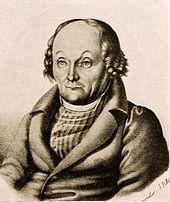
Hans G. Nägeli

1773 - 1836 Person Name: Nageli Composer of "DENNISON" in Familiar Hymns Johann G. Nageli (b. Wetzikon, near Zurich, Switzerland, 1773; d. Wetzikon, 1836) was an influential music educator who lectured throughout Germany and France. Influenced by Johann Pestalozzi, he published his theories of music education in Gangbildungslehre (1810), a book that made a strong impact on Lowell Mason. Nageli composed mainly" choral works, including settings of Goethe's poetry. He received his early instruction from his father, then in Zurich, where he concentrated on the music of. S. Bach. In Zurich, he also established a lending library and a publishing house, which published first editions of Beethoven’s piano sonatas and music by Bach, Handel, and Frescobaldi. Bert Polman

John E. Gould

1821 - 1875 Person Name: John Edgar Gould Composer of "ADRIAN" in The Cyber Hymnal John Edgar Gould USA 1821-1875. Born in Bangor, ME, he became a musician. He managed music stores in New York City and Philadelphia, PA., the latter with composer partner, William Fischer. He married Josephine Louisa Barrows, and they had seven children: Blanche, Marie, Ida, John, Josephine, Josephine, and Augusta. He compiled eight religious songbooks from 1846 thru 1869. He died while traveling in Algiers, Africa, and was buried in Philadelphia, PA. John Perry

Peter Abelard

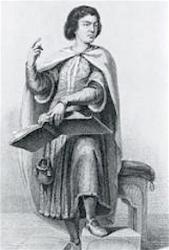
1079 - 1142 Person Name: Peter Aberlard (?) Composer of "AUGUSTINE" in Worship Song Abelard, Peter, born at Pailais, in Brittany, 1079. Designed for the military profession, he followed those of philosophy and theology. His life was one of strange chances and changes, brought about mainly through his love for Heloise, the niece of one Fulbert, a Canon of the Cathedral of Paris, and by his rationalistic views. Although a priest, he married Heloise privately. He was condemned for heresy by the Council of Soissons, 1121, and again by that of Sens, 1140; died at St. Marcel, near Chalons-sur-Saône, April 21, 1142. For a long time, although his poetry had been referred to both by himself and by Heloise, little of any moment was known except the Advent hymn, Mittit ad Virginem, (q.v.). In 1838 Greith published in his Spicihgium Vaticanum, pp. 123-131, six poems which had been discovered in the Vatican. Later on, ninety-seven hymns were found in the Royal Library at Brussels, and pub. in the complete edition of Abelard's works, by Cousin, Petri Abelardi Opp., Paris, 1849. In that work is one of his best-known hymns, Tuba Domini, Paule, maxima (q.v.). Trench in his Sacra Latina Poetry, 1864, gives his Ornarunt terram germina (one of a series of poems on the successive days' work of the Creation), from Du Meril's Poesies Popul. Lat. du Moyen Age, 1847, p. 444. -John Julian, Dictionary of Hymnology (1907)

John H. Hopkins

1820 - 1891 Person Name: John H. Hopkins, Jr. Composer of "[Like Noah's weary dove]" in Hymnal John Henry Hopkins, Jr MA USA 1820-1891. Born in Pittsburgh, PA, having 12 siblings, the son of pioneer parents (his father from Dublin, his mother from Hamburg) he became an ecclesiologist. His father had been an ironmaster, school teacher, lawyer, priest and second Episcopal Bishop of Vermont, (becoming presiding bishop in 1865). When his father founded the Vermont Episcopal Institute, he needed an assistant to help run it, so he picked his son to become a tutor and disciplinarian. The younger Hopkins played the flute and bugle in the school orchestra and also taught Sunday school. John Henry reflected the artistic talents of both parents in music, poetry, and art. After graduating from the University of Vermont in 1839, he returned to help his father with the school, but a financial crisis hit that year and the school had to close. He worked as a reported in New York City while studying law. He developed a throat ailment and went south to be in a warmer climate. From 1842-1844 he tutored the children of Episcopal Bishop Elliott of Savannah, GA, returning to take his M.A. from Vermont in 1845. He graduated from General Theological Seminary in 1850 and was ordained a deacon, serving as first instructor in church music at the Seminary. He founded and edited the “Church Journal” from 1853 to 1868. Interested in New York’s Ecclesiological Society, his artistic talents were apparent in designing stained-glass windows, episcopal seals, and a variety of other church ornaments. At the same time, his musical talents led to the writing and composing of a number of fine hymns and tunes, as well as anthems and services. He was ordained a priest in 1872, and was Rector of Trinity Church, Plattsburg, NY, from 1872-1876, then of Christ Episcopal Church in Williamsport, PA, from 1876-1887. He helped get the building debt paid off by 1879 with(in 10 years of its construction). During his time there a Sunday school building was also erected, having steam heat and a tiled floor. He designed some of the church furniture and bishop periphernalia as well as wrought iron tombs in Wildwood Cemetery. He also helped design two other church buildings in the area. A man of many talents, he was much beloved as a scholar, writer, preacher, controvertialist, musician, poet, and artist, excelling in all that he did. Totally devoted to his parish people, he especially loved children and was kind to anyone in need. He was considered very down-to-earth. He delivered the eulogy at the funeral of President Usysses S Grant in 1885. He was considered a great developer of hymnody in the Episcopal Church in the mid-19th century. His “Carols, hymns, and songs,”, published in 1863, had a 4th edition in 1883. In 1887 he edited “Great hymns of the church”. He wrote a biography of his father (the life of John Henry Hopkins, S.T.D.) He never married. He died at Hudson, NY. John Perry ======================= Hopkins, John Henry, D.D., Jun., son of J. H. Hopkins, sometime Bishop of Vermont, was born at Pittsburg, Pa., Oct. 28, 1820, educated at the University of Vermont, ordained in 1850, Rector of Christ's Church, Williamsport, Pa., 1876, and died at Troy, New York, Aug. 13, 1891. He published Poems by the Wayside written during more than Forty Years, N.Y., James Pott, 1883; and Carols, Hymns, and Songs, 1862; 3rd ed. 1882. Of his hymns the following are in common use: 1. Blow on, thou [ye] mighty Wind. Missions. 2. Come with us, O blessed Jesus. Holy Communion. 3. Glory to God the Father be. (Dated 1867.) Holy Trinity. 4. God hath made the moon whose beam. (Dated 1840.) Duty. 5. Lord, now round Thy Church behold. (Dated 1867.) For the Reunion of Christendom. These hymns are in his Poems by the Wayside, 1883. In the same volume there are translations of the O Antiphons. --John Julian, Dictionary of Hymnology, Appendix, Part II (1907) ============== Hopkins, J. H., p. 1571, ii. The following additional hymns by him are in the American Hymnal, revised and enlarged .... Protestant Episcopal Church. . . U.S.A., 1892:— 1. God of our fathers, bless this our land. National Hymn. 2. When from the east the wise men came. Epiphany. --John Julian, Dictionary of Hymnology, New Supplement (1907)

Thoro Harris

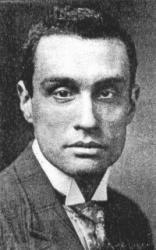
1874 - 1955 Composer of "MUHLENBERG" in Echoes of Paradise Born: March 31, 1874, Washington, DC. Died: March 27, 1955, Eureka Springs, Arkansas. Buried: International Order of Odd Fellows Cemetery, Eureka Springs, Arkansas. After attending college in Battle Creek, Michigan, Harris produced his first hymnal in Boston, Massachusetts, in 1902. He then moved to Chicago, Illinois at the invitation of Peter Bilhorn, and in 1932, to Eureka Springs, Arkansas. He composed and compiled a number of works, and was well known locally as he walked around with a canvas bag full of handbooks for sale. His works include: Light and Life Songs, with William Olmstead & William Kirkpatrick (Chicago, Illinois: S. K. J. Chesbro, 1904) Little Branches, with George J. Meyer & Howard E. Smith (Chicago, Illinois: Meyer & Brother, 1906) Best Temperance Songs (Chicago, Illinois: The Glad Tidings Publishing Company, 1913) (music editor) Hymns of Hope (Chicago, Illinois: Thoro Harris, undated, circa 1922) --www.hymntime.com/tch

Pages


Export as CSV
It looks like you are using an ad-blocker. Ad revenue helps keep us running. Please consider white-listing Hymnary.org or getting Hymnary Pro to eliminate ads entirely and help support Hymnary.org.