

 My Starred Hymns
 My FlexScores
 My Hymnals
 My Purchased Files
Planning worship?
Check out our sister site, ZeteoSearch.org,
for 20+ additional resources related to your search.
- |
User Links
Person Results
Catherine Winkworth
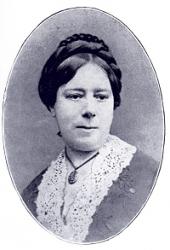
1827 - 1878 Person Name: Catherine Winkworth 1827-78 Translator of "Liebster Jesu, wir sind hier" in The Australian Hymn Book with Catholic Supplement Catherine Winkworth (b. Holborn, London, England, 1827; d. Monnetier, Savoy, France, 1878) is well known for her English translations of German hymns; her translations were polished and yet remained close to the original. Educated initially by her mother, she lived with relatives in Dresden, Germany, in 1845, where she acquired her knowledge of German and interest in German hymnody. After residing near Manchester until 1862, she moved to Clifton, near Bristol. A pioneer in promoting women's rights, Winkworth put much of her energy into the encouragement of higher education for women. She translated a large number of German hymn texts from hymnals owned by a friend, Baron Bunsen. Though often altered, these translations continue to be used in many modern hymnals. Her work was published in two series of Lyra Germanica (1855, 1858) and in The Chorale Book for England (1863), which included the appropriate German tune with each text as provided by Sterndale Bennett and Otto Goldschmidt. Winkworth also translated biographies of German Christians who promoted ministries to the poor and sick and compiled a handbook of biographies of German hymn authors, Christian Singers of Germany (1869).
Bert Polman
========================
Winkworth, Catherine, daughter of Henry Winkworth, of Alderley Edge, Cheshire, was born in London, Sep. 13, 1829. Most of her early life was spent in the neighbourhood of Manchester. Subsequently she removed with the family to Clifton, near Bristol. She died suddenly of heart disease, at Monnetier, in Savoy, in July, 1878. Miss Winkworth published:—
Translations from the German of the Life of Pastor Fliedner, the Founder of the Sisterhood of Protestant Deaconesses at Kaiserworth, 1861; and of the Life of Amelia Sieveking, 1863.
Her sympathy with practical efforts for the benefit of women, and with a pure devotional life, as seen in these translations, received from her the most practical illustration possible in the deep and active interest which she took in educational work in connection with the Clifton Association for the Higher Education of Women, and kindred societies there and elsewhere. Our interest, however, is mainly centred in her hymnological work as embodied in her:—
(1) Lyra Germanica, 1st Ser., 1855. (2) Lyra Germanica, 2nd Ser., 1858. (3) The Chorale Book for England (containing translations from the German, together with music), 1863; and (4) her charming biographical work, the Christian Singers of Germany, 1869.
In a sympathetic article on Miss Winkworth in the Inquirer of July 20, 1878, Dr. Martineau says:—
"The translations contained in these volumes are invariably faithful, and for the most part both terse and delicate; and an admirable art is applied to the management of complex and difficult versification. They have not quite the fire of John Wesley's versions of Moravian hymns, or the wonderful fusion and reproduction of thought which may be found in Coleridge. But if less flowing they are more conscientious than either, and attain a result as poetical as severe exactitude admits, being only a little short of ‘native music'"
Dr. Percival, then Principal of Clifton College, also wrote concerning her (in the Bristol Times and Mirror), in July, 1878:—
"She was a person of remarkable intellectual and social gifts, and very unusual attainments; but what specially distinguished her was her combination of rare ability and great knowledge with a certain tender and sympathetic refinement which constitutes the special charm of the true womanly character."
Dr. Martineau (as above) says her religious life afforded "a happy example of the piety which the Church of England discipline may implant.....The fast hold she retained of her discipleship of Christ was no example of ‘feminine simplicity,' carrying on the childish mind into maturer years, but the clear allegiance of a firm mind, familiar with the pretensions of non-Christian schools, well able to test them, and undiverted by them from her first love."
Miss Winkworth, although not the earliest of modern translators from the German into English, is certainly the foremost in rank and popularity. Her translations are the most widely used of any from that language, and have had more to do with the modern revival of the English use of German hymns than the versions of any other writer.
-- John Julian, Dictionary of Hymnology (1907)
============================
See also in:
Hymn Writers of the Church
Catherine Winkworth
Anonymous
Person Name: Unknown Translator (st. 4) of "Blessed Jesus, at Thy Word" in Evangelical Lutheran Hymnary In some hymnals, the editors noted that a hymn's author is unknown to them, and so this artificial "person" entry is used to reflect that fact. Obviously, the hymns attributed to "Author Unknown" "Unknown" or "Anonymous" could have been written by many people over a span of many centuries.
Anonymous
Johann Sebastian Bach
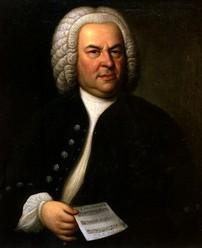
1685 - 1750 Person Name: J. S. Bach, 1685-1750 Harmonizer of "LIEBSTER JESU" in Hymnbook for Christian Worship Johann Sebastian Bach was born at Eisenach into a musical family and in a town steeped in Reformation history, he received early musical training from his father and older brother, and elementary education in the classical school Luther had earlier attended.
Throughout his life he made extraordinary efforts to learn from other musicians. At 15 he walked to Lüneburg to work as a chorister and study at the convent school of St. Michael. From there he walked 30 miles to Hamburg to hear Johann Reinken, and 60 miles to Celle to become familiar with French composition and performance traditions. Once he obtained a month's leave from his job to hear Buxtehude, but stayed nearly four months. He arranged compositions from Vivaldi and other Italian masters. His own compositions spanned almost every musical form then known (Opera was the notable exception).
In his own time, Bach was highly regarded as organist and teacher, his compositions being circulated as models of contrapuntal technique. Four of his children achieved careers as composers; Haydn, Mozart, Beethoven, Mendelssohn, Schumann, Brahms, and Chopin are only a few of the best known of the musicians that confessed a major debt to Bach's work in their own musical development. Mendelssohn began re-introducing Bach's music into the concert repertoire, where it has come to attract admiration and even veneration for its own sake.
After 20 years of successful work in several posts, Bach became cantor of the Thomas-schule in Leipzig, and remained there for the remaining 27 years of his life, concentrating on church music for the Lutheran service: over 200 cantatas, four passion settings, a Mass, and hundreds of chorale settings, harmonizations, preludes, and arrangements. He edited the tunes for Schemelli's Musicalisches Gesangbuch, contributing 16 original tunes. His choral harmonizations remain a staple for studies of composition and harmony. Additional melodies from his works have been adapted as hymn tunes.
--John Julian, Dictionary of Hymnology (1907)
Johann Sebastian Bach
Brian A. Wren
b. 1936 Person Name: Brian Wren Author of "Christ, upon the Mountain Peak" in The United Methodist Hymnal Brian Wren (b. Romford, Essex, England, 1936) is a major British figure in the revival of contemporary hymn writing. He studied French literature at New College and theology at Mansfield College in Oxford, England. Ordained in 1965, he was pastor of the Congregational Church (now United Reformed) in Hockley and Hawkwell, Essex, from 1965 to 1970. He worked for the British Council of Churches and several other organizations involved in fighting poverty and promoting peace and justice. This work resulted in his writing of Education for Justice (1977) and Patriotism and Peace (1983). With a ministry throughout the English-speaking world, Wren now resides in the United States where he is active as a freelance lecturer, preacher, and full-time hymn writer. His hymn texts are published in Faith Looking Forward (1983), Praising a Mystery (1986), Bring Many Names (1989), New Beginnings (1993), and Faith Renewed: 33 Hymns Reissued and Revised (1995), as well as in many modern hymnals. He has also produced What Language Shall I Borrow? (1989), a discussion guide to inclusive language in Christian worship.
Bert Polman
Brian A. Wren
Christopher Walker
b. 1947 Person Name: Christopher Walker, b. 1947 Arranger of "LIEBSTER JESU" in Journeysongs (3rd ed.)
Christopher Walker
John Newton
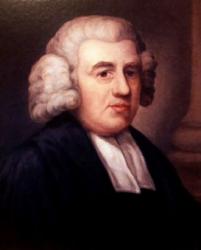
1725 - 1807 Person Name: J. Newton (1725-1807) Author of "Once I thought my mountain strong" in The Academic Hymnal John Newton (b. London, England, 1725; d. London, 1807) was born into a Christian home, but his godly mother died when he was seven, and he joined his father at sea when he was eleven. His licentious and tumultuous sailing life included a flogging for attempted desertion from the Royal Navy and captivity by a slave trader in West Africa. After his escape he himself became the captain of a slave ship. Several factors contributed to Newton's conversion: a near-drowning in 1748, the piety of his friend Mary Catlett, (whom he married in 1750), and his reading of Thomas à Kempis' Imitation of Christ. In 1754 he gave up the slave trade and, in association with William Wilberforce, eventually became an ardent abolitionist. After becoming a tide-surveyor in Liverpool, England, Newton came under the influence of George Whitefield and John and Charles Wesley and began to study for the ministry. He was ordained in the Church of England and served in Olney (1764-1780) and St. Mary Woolnoth, London (1780-1807). His legacy to the Christian church includes his hymns as well as his collaboration with William Cowper (PHH 434) in publishing Olney Hymns (1779), to which Newton contributed 280 hymns, including “Amazing Grace.”
Bert Polman
==================
Newton, John, who was born in London, July 24, 1725, and died there Dec. 21, 1807, occupied an unique position among the founders of the Evangelical School, due as much to the romance of his young life and the striking history of his conversion, as to his force of character. His mother, a pious Dissenter, stored his childish mind with Scripture, but died when he was seven years old. At the age of eleven, after two years' schooling, during which he learned the rudiments of Latin, he went to sea with his father. His life at sea teems with wonderful escapes, vivid dreams, and sailor recklessness. He grew into an abandoned and godless sailor. The religious fits of his boyhood changed into settled infidelity, through the study of Shaftesbury and the instruction of one of his comrades. Disappointing repeatedly the plans of his father, he was flogged as a deserter from the navy, and for fifteen months lived, half-starved and ill-treated, in abject degradation under a slave-dealer in Africa. The one restraining influence of his life was his faithful love for his future wife, Mary Catlett, formed when he was seventeen, and she only in her fourteenth year. A chance reading of Thomas à Kempis sowed the seed of his conversion; which quickened under the awful contemplations of a night spent in steering a water-logged vessel in the face of apparent death (1748). He was then twenty-three. The six following years, during which he commanded a slave ship, matured his Christian belief. Nine years more, spent chiefly at Liverpool, in intercourse with Whitefield, Wesley, and Nonconformists, in the study of Hebrew and Greek, in exercises of devotion and occasional preaching among the Dissenters, elapsed before his ordination to the curacy of Olney, Bucks (1764).
The Olney period was the most fruitful of his life. His zeal in pastoral visiting, preaching and prayer-meetings was unwearied. He formed his lifelong friendship with Cowper, and became the spiritual father of Scott the commentator. At Olney his best works—-Omicron's Letters (1774); Olney Hymns (1779); Cardiphonia, written from Olney, though published 1781—were composed. As rector of St. Mary Woolnoth, London, in the centre of the Evangelical movement (1780-1807) his zeal was as ardent as before. In 1805, when no longer able to read his text, his reply when pressed to discontinue preaching, was, "What, shall the old African blasphemer stop while he can speak!" The story of his sins and his conversion, published by himself, and the subject of lifelong allusion, was the base of his influence; but it would have been little but for the vigour of his mind (shown even in Africa by his reading Euclid drawing its figures on the sand), his warm heart, candour, tolerance, and piety. These qualities gained him the friendship of Hannah More, Cecil, Wilberforce, and others; and his renown as a guide in experimental religion made him the centre of a host of inquirers, with whom he maintained patient, loving, and generally judicious correspondence, of which a monument remains in the often beautiful letters of Cardiphonia. As a hymnwriter, Montgomery says that he was distanced by Cowper. But Lord Selborne's contrast of the "manliness" of Newton and the "tenderness" of Cowper is far juster. A comparison of the hymns of both in The Book of Praise will show no great inequality between them. Amid much that is bald, tame, and matter-of-fact, his rich acquaintance with Scripture, knowledge of the heart, directness and force, and a certain sailor imagination, tell strongly. The one splendid hymn of praise, "Glorious things of thee are spoken," in the Olney collection, is his. "One there is above all others" has a depth of realizing love, sustained excellence of expression, and ease of development. "How sweet the name of Jesus sounds" is in Scriptural richness superior, and in structure, cadence, and almost tenderness, equal to Cowper's "Oh! for a closer walk with God." The most characteristic hymns are those which depict in the language of intense humiliation his mourning for the abiding sins of his regenerate life, and the sense of the withdrawal of God's face, coincident with the never-failing conviction of acceptance in The Beloved. The feeling may be seen in the speeches, writings, and diaries of his whole life. [Rev. H. Leigh Bennett, M.A.]
A large number of Newton's hymns have some personal history connected with them, or were associated with circumstances of importance. These are annotated under their respective first lines. Of the rest, the known history of which is confined to the fact that they appeared in the Olney Hymns, 1779, the following are in common use:—
1. Be still, my heart, these anxious cares. Conflict.
2. Begone, unbelief, my Saviour is near. Trust.
3. By the poor widow's oil and meal. Providence.
4. Chief Shepherd of Thy chosen sheep. On behalf of Ministers.
5. Darkness overspreads us here. Hope.
6. Does the Gospel-word proclaim. Rest in Christ.
7. Fix my heart and eyes on Thine. True Happiness.
8. From Egypt lately freed. The Pilgrim's Song.
9. He Who on earth as man was Known. Christ the Rock.
10. How blest are they to whom the Lord. Gospel Privileges.
11. How blest the righteous are. Death of the Righteous.
12. How lost was my [our] condition. Christ the Physician.
13. How tedious and tasteless the hours. Fellowship with Christ.
14. How welcome to the saints [soul] when pressed. Sunday.
15. Hungry, and faint, and poor. Before Sermon.
16. In mercy, not in wrath, rebuke. Pleading for Mercy.
17. In themselves, as weak as worms. Power of Prayer.
18. Incarnate God, the soul that knows. The Believer's Safety.
19. Jesus, Who bought us with His blood. The God of Israel. "Teach us, 0 Lord, aright to plead," is from this hymn.
20. Joy is a [the] fruit that will not grow. Joy.
21. Let hearts and tongues unite. Close of the Year. From this "Now, through another year," is taken.
22. Let us adore the grace that seeks. New Year.
23. Mary to her [the] Saviour's tomb. Easter.
24. Mercy, 0 Thou Son of David. Blind Bartimeus.
25. My harp untun'd and laid aside. Hoping for a Revival. From this "While I to grief my soul gave way" is taken.
26. Nay, I cannot let thee go. Prayer. Sometimes, "Lord, I cannot let Thee go."
27. Now may He Who from the dead. After Sermon.
28. 0 happy they who know the Lord, With whom He deigns to dwell. Gospel Privilege.
29. O Lord, how vile am I. Lent.
30. On man in His own Image made. Adam.
31. 0 speak that gracious word again. Peace through Pardon.
32. Our Lord, Who knows full well. The Importunate Widow. Sometimes altered to "Jesus, Who knows full well," and again, "The Lord, Who truly knows."
33. Physician of my sin-sick soul. Lent.
34. Pleasing spring again is here. Spring.
35. Poor, weak, and worthless, though I am. Jesus the Friend.
36. Prepare a thankful song. Praise to Jesus.
37. Refreshed by the bread and wine. Holy Communion. Sometimes given as "Refreshed by sacred bread and wine."
38. Rejoice, believer, in the Lord. Sometimes “Let us rejoice in Christ the Lord." Perseverance.
39. Salvation, what a glorious plan. Salvation.
40. Saviour, shine and cheer my soul. Trust in Jesus. The cento "Once I thought my mountain strong," is from this hymn.
41. Saviour, visit Thy plantation. Prayer for the Church.
42. See another year [week] is gone. Uncertainty of Life.
43. See the corn again in ear. Harvest.
44. Sinner, art thou still secure? Preparation for the Future.
45. Sinners, hear the [thy] Saviour's call. Invitation.
46. Sovereign grace has power alone. The two Malefactors.
47. Stop, poor sinner, stop and think. Caution and Alarm.
48. Sweeter sounds than music knows. Christmas.
49. Sweet was the time when first I felt. Joy in Believing.
50. Ten thousand talents once I owed. Forgiveness and Peace.
51. The grass and flowers, which clothe the field. Hay-time.
52. The peace which God alone reveals. Close of Service.
53. Thy promise, Lord, and Thy command. Before Sermon.
54. Time, by moments, steals away. The New Year.
55. To Thee our wants are known. Close of Divine Service.
56. We seek a rest beyond the skies. Heaven anticipated.
57. When any turn from Zion's way. Jesus only.
58. When Israel, by divine command. God, the Guide and Sustainer of Life.
59. With Israel's God who can compare? After Sermon.
60. Yes, since God Himself has said it. Confidence.
61. Zion, the city of our God. Journeying Zionward.
-- John Julian, Dictionary of Hymnology (1907)
=================
Newton, J., p. 803, i. Another hymn in common use from the Olney Hymns, 1779, is "Let me dwell on Golgotha" (Holy Communion).
--John Julian, Dictionary of Hymnology, Appendix, Part II (1907)
-----
John Newton was born in London, July 24, 1725. His mother died when he was seven years old. In his eleventh year he accompanied his father, a sea captain, on a voyage. For several years his life was one of dissipation and crime. He was disgraced while in the navy. Afterwards he engaged in the slave trade. Returning to England in 1748, the vessel was nearly wrecked in a storm. This peril forced solemn reflection upon him, and from that time he was a changed man. It was six years, however, before he relinquished the slave trade, which was not then regarded as an unlawful occupation. But in 1754, he gave up sea-faring life, and holding some favourable civil position, began also religious work. In 1764, in his thirty-ninth year, he entered upon a regular ministry as the Curate of Olney. In this position he had intimate intercourse with Cowper, and with him produced the "Olney Hymns." In 1779, Newton became Rector of S. Mary Woolnoth, in London, in which position he became more widely known. It was here he died, Dec. 21, 1807, His published works are quite numerous, consisting of sermons, letters, devotional aids, and hymns. He calls his hymns "The fruit and expression of his own experience."
--Annotations of the Hymnal, Charles Hutchins, M.A. 1872
See also in:
Hymn Writers of the Church
=======================
John Newton
Josiah Conder
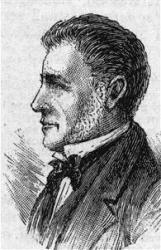
1789 - 1855 Person Name: J. Conder ( —1855) Author of "O thou God who hearest prayer" in The Academic Hymnal Josiah Conder was born in London, in 1789. He became a publisher, and in 1814 became proprietor of "The Eclectic Review." Subsequently to 1824, he composed a series of descriptive works, called the "Modern Traveller," which appeared in thirty volumes. He also published several volumes of poems and hymns. He was the author of the first "Congregational Hymn Book" (1836). He died in 1855.
--Annotations of the Hymnal, Charles Hutchins, M.A. 1872.
==========================
Conder, Josiah, fourth son of Thomas Conder, engraver and bookseller, and grandson of the Rev. John Conder, D.D., first Theological Tutor of Homerton College, was born in Falcon Street (City); London, Sept. 17, 1789, and died Dec. 27, 1855. As author, editor and publisher he was widely known. For some years he was the proprietor and editor of the Eclectic Review, and also editor of the Patriot newspaper. His prose works were numerous, and include:—
The Modern Traveller, 1830; Italy, 1831; Dictionary of Ancient and Modern Geography, 1834; Life of Bunyan, 1835; Protestant Nonconformity, 1818-19; The Law of the Sabbath, 1830; Epistle to the Hebrews (a translation), 1834; Literary History of the New Testament, 1845, Harmony of History with Prophecy, 1849, and others.
His poetical works are:—
(1) The Withered Oak,1805; this appeared in the Athenceum. (2) The Reverie, 1811. (3) Star in the East, 1824. (4) Sacred Poems, Domestic Poems, and Miscellaneous Poems, 1824. (5) The Choir and the Oratory; or, Praise and Prayer, 1837. Preface dated Nov. 8, 1836. (6) Hymns of Praise, Prayer, and Devout Meditation, 1856. This last work was in the press at the time of his death, and was revised and published by his son, the Rev. E. R. Conder, M.A. He also contributed many pieces to the magazines and to the Associated Minstrels, 1810, under the signature of " C." In 1838, selections from The Choir and Oratory were published with music by Edgar Sanderson, as Harmonia Sacra. A second volume was added in 1839. To Dr. Collyer’s (q.v.) Hymns, &c, he contributed 3 pieces signed "C"; and to Dr. Leifchild's Original Hymns, 1843, 8 hymns.
As a hymn-book editor he was also well known. In 1836 he edited The Congregational Hymn Book: a Supplement to Dr. Watts’s Psalms and Hymns (2nd ed. 1844). To this collection he contributed fifty-six of his own hymns, some of which had previously appeared in The Star in the East, &c. He also published in 1851 a revised edition of Dr. Watts's Psalms and Hymns, and in the game year a special paper on Dr. Watte as The Poet of the Sanctuary, which was read before the Congregational Union at Southampton. The value of his work as Editor of the Congregational Hymn Book is seen in the fact that eight out of every ten of the hymns in that collection are still in use either in Great Britain or America.
As a hymn writer Conder ranks with some of the best of the first half of the present century. His finest hymns are marked by much elevation of thought expressed in language combining both force and beauty. They generally excel in unity, and in some the gradual unfolding of the leading idea is masterly. The outcome of a deeply spiritual mind, they deal chiefly with the enduring elements of religion. Their variety in metre, in style, and in treatment saves them from the monotonous mannerism which mars the work of many hymn writers. Their theology, though decidedly Evangelical, is yet of a broad and liberal kind. Doubtless Conder's intercourse with many phases of theological thought as Editor of the Eclectic Review did much to produce this catholicity, which was strikingly shewn by his embodying many of the collects of the Book of Common Prayer, rendered into verse, in his Choir and Oratory. Of his versions of the Psalms the most popular are "How honoured, how dear" (84th), and "O be joyful in the Lord" (100th). His hymns in most extensive use are," Bread of heaven, on Thee I feed; " “Beyond, beyond that boundless sea;" "The Lord is King, lift up thy voice" (this last is one of his best); "Day by day the manna fell;" "How shall I follow him I serve;" "Heavenly Father, to whose eye" (all good specimens of his subdued and pathetic style); and "O shew me not my Saviour dying." This last is full of lyric feeling, and expresses the too often forgotten fact that the Church has a living though once crucified Lord. The popularity of Conder's hymns may be gathered from the fact that at the present time more of them are in common use in Great Britain and America than those of any other writer of the Congregational body, Watts and Doddridge alone excepted. [Rev. W. Garrett Horder]
In addition to the hymns named above and others which are annotated under their respective first lines, the following, including two already named (4,16), are also in common use:—
i. From Dr. Collyer's Hymns, &c, 1812.
1. When in the hours of lonely woe. Lent.
ii. From The Star in the East, &c, 1824.
2. Be merciful, O God of grace. Ps. lxvii.
3. For ever will I bless the Lord. Ps. xxxiv.
4. How honoured, how dear. Ps. lxxxiv.
5. Now with angels round the throne. Doxology.
6. O Thou God, Who hearest prayer. Lent. Dated Sept. 1820. Usually abbreviated.
iii. From The Congregational Hymn Book, 1836.
7. Blessed be God, He is not strict. Longsuffering of God.
8. Followers of Christ of every name. Communion of Saints.
9. Grant me, heavenly Lord, to feel. Zeal in Missions desired.
10. Grant, 0 Saviour, to our prayers. Collect 5th S. after Trinity.
11. Head of the Church, our risen Lord. Church Meetings.
12. Holy, holy, holy Lord, in the highest heaven, &c. Praise to the Father.
13. Jehovah's praise sublime. Praise.
14. Leave us not comfortless. Holy Communion.
15. Lord, for Thv Name's sake! such the plea. In National Danger.
16. O be joyful in the Lord. Ps. c.
17. 0 breathe upon this languid frame. Baptism of Holy Spirit desired.
18. 0 give thanks to Him Who made. Thanksgiving for Daily Mercies.
19. 0 God, Protector of the lowly. New Year.
20. 0 God, to whom the happy dead. Burial.
21. 0 God, Who didst an equal mate. Holy Matrimony.
22. 0 God, Who didst Thy will unfold. Holy Scriptures.
23. 0 God, Who dost Thy sovereign might. Prayer Meetings.
24. 0 how shall feeble flesh and blood. Salvation through Christ.
25. 0 how should those be clean who bear. Purity desired for God's Ministers.
26. 0 say not, think not in thy heart. Pressing Onward.
27. 0 Thou divine High Priest. Holy Communion.
28. 0 Thou Who givest all their food. Harvest.
29. 0 Thou Whose covenant is sure. Holy Baptism.
30. Praise on Thee, in Zion-gates. Sunday.
31. Praise the God of all creation. Doxology
32. See the ransomed millions stand. Praise to Christ.
33. The heavens declare His glory. Ps. xix.
34. Thou art the Everlasting Word. Praise to Christ.
35. Thy hands have made and fashioned me. Thanks for Daily Mercies.
36. To all Thy faithful people, Lord. For Pardon.
37. To His own world He came. Ascension.
38. To our God loud praises give. Ps. cxxxvi.
39. Upon a world of guilt and night. Purification of B.V.M.
40. Welcome, welcome, sinner, hear. Invitation to Christ.
41. Wheresoever two or three. Continued Presence of Christ desired.
iv. From The Choir and the Oratory, 1837.
42. Baptised into our Saviour's death. Holy Baptism.
43. In the day of my [thy] distress. Ps. xx.
44. 0 comfort to the dreary. Christ the Comforter.
v. From Leifchild's Original Hymns, 1843.
45. I am Thy workmanship, 0 Lord. God the Maker and Guardian.
46. 0 Lord, hadst Thou been here! But when. The Resurrection of Lazarus.
47. 'Tis not that I did choose Thee. Chosen of God. This is altered in the Church Praise Book, N. Y., 1882, to “Lord, 'tis not that I did choose Thee," thereby changing the metre from 7.6 to 8.5.
vi. From Hymns of Praise, Prayer, &c, 1856.
48. Comrades of the heavenly calling. The Christian race.
When to these 48 hymns those annotated under their respective first lines are added, Conder’s hymns in common use number about 60 in all.
--John Julian, Dictionary of Hymnology (1907)
===================
Conder, Josiah, p. 256, i. Other hymns are:—
1. O love beyond the reach of thought. The love of God.
2. O Thou, our Head, enthroned on high. Missions.
3. Son of David, throned in light. Divine Enlightenment desired.
4. Thou Lamb of God for sinners slain. Christ the Head of the Church. From "Substantial Truth, 0 Christ, Thou art."
These hymns are all from his Hymns of Praise, &c, 1856.
--John Julian, Dictionary of Hymnology, Appendix, Part II (1907)
Josiah Conder
Mrs. Barbauld
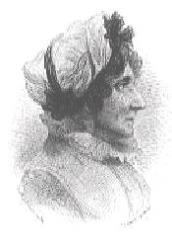
1743 - 1825 Person Name: Anna L. Barbauld Author of "Praise to God, immortal praise" in The Hymnal of Praise Barbauld, Anna Laetitia, née Aikin, daughter of the Rev. John Ailrin, D.D., a dissenting minister, was b. at Kibworth-Harcourt, Leicestershire, June 20, 1743. In 1753 Dr. Aikin became classical tutor at a dissenting academy at Warrington. During her residence there she contributed five hymns to Dr. W. Enfield's Hymns for Public Worship, &c, Warrington, 1772. In the following year these were included in her Poems, Lond., J. Johnson, 1773. In May, 1774, Miss Aikin was married to the Rev. Rochemont Barbauld, a descendant of a French Protestant family, and a dissenting minister. For some years Mr. Barbauld conducted, in addition to his pastoral work, a boarding school at Palgrave, Suffolk. From this he retired in 1785. In 1786 he undertook the charge of a small congregation at Hampstead, and from thence he passed to the dissenting chapel (formerly Dr. Price's) at Newington Green, in 1802. He d. Nov. 11, 1808. Mrs. Barbauld continued to reside in the neighbourhood until her death, March 9, 1825. In the latter part of the same year her niece published The Works of Anna Laetitia Barbauld, with Memoir, by Lucy Aikin, 2 vols., Lond., Longman, 1825. As a writer of hymns Mrs. Barbauld was eminently successful. Their use, however, with the exception of five contributed to Dr. W. Enfield's collection, is almost exclusively confined to the Unitarian hymnals of Great Britain and America. Including these hymnals, the whole of her hymns are still in common use. These hymns appeared thus:—
i. In Dr. W. Enfield's Hymns, &c., 1772.
1. Again the Lord of life and light. Easter.
2. Awake, my soul, lift up thine eyes. Conflict.
3. Behold, where breathing love divine. Christian Charity.
4. Jehovah reigns, let every nation hear. God's Dominion. A part of this was given in Collyer's Sel., 1812, No. 586, as:—
5. This earthly globe, the creature of a day.
6. Praise to God, Immortal praise. Harvest.
ii. Poems, 1773 (Preface dated Dec. 1, 1772). The whole of the above, and also:—
7. God of my life and author of my days. To God the Father. This is an “Address to the Deity," in 80 1. It is given in Martineau's Collection, 1840 and 1873. From it the following centos were given in Collyer's Selection> 1812:—
8. God, our kind Master, merciful as just.
9. If friendless in the vale of tears I stray.
iii. Poems revised 1792.
10. Come, said [says] Jesus' sacred voice. Invitation.
11. How blest the sacred tie that binds. Christian Fellowship.
12. Lo where a crowd of pilgrims toil. Pilgrimage of Life. From this is taken:—
13. Our country is Immanuel's ground [land].
iv. Leisure Hour Improved (Ironbridge), 1809.
14. Sweet is the scene when virtue dies. Death.
v. Supplement to the Unitarian Coll. of Kippis, Bees, and others, 1807.
15. When as returns the solemn day. Sunday.
16. Sleep, sleep to day, tormenting cares. Sunday.
17. How may earth and heaven unite. Worship.
vi. Works, with Memoir, 1825.
In vol. i. most of the above are reprinted, and the following are added :—
18. Joy to the followers of the Lord. Joy. (c. 1820.)
19. Pure spirit, O where art thou now. Bereavement. This is dated 1808.
20. Salt of the earth, ye virtuous few. Salt of the Earth.
21. When life as opening buds is sweet. Death. This is dated " November, 1814."
The more important of these hymns are annotated in this Dictionary under their first lines. Mrs. Barbauld's Hymns in Prose for Children, originally published in 1781, were long popular and have been translated into French, Italian, Spanish, and other languages.
-- John Julian, Dictionary of Hymnology (1907)
===================
Barbauld, Anna L., p. 113, ii. No. 18 on p. 114, i.,should be dated circa 1820. Another hymn in common use from Mrs. Barbauld's Works, &c, 1825, is, "O Father! though the anxious fear" (E. Taylor, p. 1117, in error).
--John Julian, Dictionary of Hymnology, Appendix, Part II (1907)
See also in:
Hymn Writers of the Church
Mrs. Barbauld
Percy Dearmer
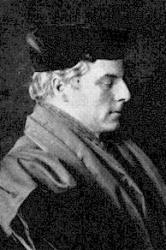
1867 - 1936 Person Name: Percy Dearmer, 1867-1936 Author of "Book of Books, Our People's Strength" in Hymnal of the Church of God Dearmer, Percy, M.A., son of Thomas Dearmer, was born in London, Feb. 27, 1867, and educated at Westminster School and at Christ Church, Oxford (B.A. 1890, M.A. 1896). He was ordained D. 1891, P. 1892, and has been since 1901 Vicar of S. Mary the Virgin, Primrose Hill, London. He has been Secretary of the London Branch of the Christian Social Union since 1891, and is the author of The Parson's Handbook, 1st edition, 1899, and other works. He was one of the compilers of the English Hymnal, 1906, acting as Secretary and Editor, and contributed to it ten translations (38, 95, 150, 160, 165, 180, 215, 237, 352, 628) and portions of two others (242, 329), with the following originals:—
1. A brighter dawn is breaking. Easter. Suggested by the Aurora lucis, p. 95, but practically original.
2. Father, Who on man dost shower. Temperance.
3. God, we thank Thee, not in vain. Burial.
4. Holy God, we offer here. Holy Communion.
5. Jesu, good above all other. For Children.
6. Lord, the wind and sea obey Thee. For those at Sea.
7. The winter's sleep was long and deep. St. Philip and St. James. [Rev. James Mearns, M.A.]
--John Julian, Dictionary of Hymnology, New Supplement (1907)
Percy Dearmer
James Quinn
1919 - 2010 Person Name: James Quinn, SJ, b. 1919 Author of "Word of God, Come Down on Earth" in With One Voice James Quinn (b. Glasgow, Scotland, April 21, 1919; d. Edinburgh, Scotland, April 8, 2010) was a Roman Catholic Jesuit priest who was ordained in 1950. As a consultant for the International Commission on English in the Liturgy, sparked by Vatican II, he has exerted influence far beyond his native Scotland. A collection of his hymn texts is available from Selah Publishing company.
Sing a New Creation
James Quinn
Pages