You help make Hymnary.org possible. More than 10 million people from 200+ countries found hymns, liturgical resources and encouragement on Hymnary.org in 2025, including you. Every visit affirms the global impact of this ministry.

If Hymnary has been meaningful to you this year, would you take a moment today to help sustain it? A gift of any size—paired with a note of encouragement if you wish—directly supports the server costs, research work and curation that keep this resource freely available to the world.

Give securely online today, or mail a check to:
Hymnary.org
Calvin University
3201 Burton Street SE
Grand Rapids, MI 49546

Thank you for your partnership, and may the hope of Advent fill your heart.

Person Results

Tune Identifier:"^st_fulbert_gauntlett$"
In:people

Planning worship? Check out our sister site, ZeteoSearch.org, for 20+ additional resources related to your search.
Showing 1 - 10 of 59Results Per Page: 102050

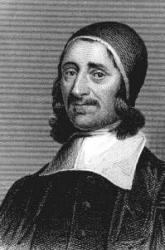
Richard Baxter

1615 - 1691 Person Name: Richard Baxter, 1615-91 Author of "Lord, It Belongs Not to My Care" in Lutheran Service Book Baxter, Richard. Only s. of Richard Baxter, yeoman, Eaton Constantine, Shropshire, b. at Rowton, Shropshire, Nov. 12,1615. He was educated at Wroxeter School, and for a time held the Mastership of the Dudley Grammar School. On taking Holy Orders, he became, in 1640, Ourate of Kidderminster. Subsequently he was for some time chaplain to one of Cromwell's regiments. Through weakness he had to take an enforced rest, during which he wrote his Saints’ Everlasting Rest. On regaining his health he returned to Kidderminster, where he remained until 1660, when he removed to London. At the Restoration he became chaplain to Charles II and was offered the bishopric of Hereford, which he refused. On the passing of the Act of Uniformity, he retired from active duty as a Minister of the Church of England. In or about 1673 he took out a licence as a Nonconformist Minister and commenced lecturing in London. He d. Dec. 8, 1691. His prose works are very numerous. His poetical are :— (1) Poetical Fragments: Heart Imployment with God and Itself; The Concordant Discord of a Broken-healed Heart, tendon, Printed by T. Snowdon for B. Simmons, at the 3 Golden Cocks, &c, 1681 (2nd ed. 1689; 3rd ed. 1699). It consists of accounts of his religious experiences in verse, and is dated "London, at the Door of Eternity; Rich. Baxter, Aug. 1, 1681." (2) Additions to the Poetical Fragments of Rich. Baxter, written for himself, and Communicated to such as are more for serious Verse than smooth, London, Printed for B. Simmons at the Three Golden Cocks at the Westend of St. Pauls, 1683. (3) A Paraphrase on the Psalms, With other Hymns Left fitted for the Press, pub. the year following his death (1692). [Early English Hymnody, x., and English Psalters, 6 xii.] The Poetical Fragments were republished by Pickering, Lond., 1821. From this work his well-known hymn, " Now [Lord] it belongs not to my care," is taken (see "My whole, though broken, heart, O Lord.") -John Julian, Dictionary of Hymnology (1907) See also in: Hymn Writers of the Church

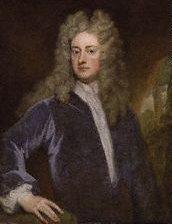
Joseph Addison

1672 - 1719 Author of "When all Thy mercies, O my God" in Common Service Book of the Lutheran Church Addison, Joseph, born at Milston, near Amesbury, Wiltshire, May 1, 1672, was the son of the Rev. Lancelot Addison, sometime Dean of Lichfield, and author of Devotional Poems, &c, 1699. Addison was educated at the Charterhouse, and at Magdalen College, Oxford, graduating B.A. 1691 and M.A. 1693. Although intended for the Church, he gave himself to the study of law and politics, and soon attained, through powerful influence, to some important posts. He was successively a Commissioner of Appeals, an Under Secretary of State, Secretary to the Lord Lieutenant of Ireland, and Chief Secretary for Ireland. He married, in 1716, the Dowager Countess of Warwick, and died at Holland House, Kensington, June 17, 1719. Addison is most widely known through his contributions to The Spectator, The Toiler, The Guardian, and The Freeholder. To the first of these he contributed his hymns. His Cato, a tragedy, is well known and highly esteemed. Addison's claims to the authorship of the hymns usually ascribed to him, or to certain of them, have been called in question on two occasions. The first was the publication, by Captain Thompson, of certain of those hymns in his edition of the Works of Andrew Marvell, 1776, as the undoubted compositions of Marvell; and the second, a claim in the Athenaeum, July 10th, 1880, on behalf of the Rev. Richard Richmond. Fully to elucidate the subject it will be necessary, therefore, to give a chronological history of the hymns as they appeared in the Spectator from time to time. i. The History of the Hymns in The Spectator. This, as furnished in successive numbers of the Spectator is :— 1. The first of these hymns appeared in the Spectator of Saturday, July 26, 1712, No. 441, in 4 stanzas of 6 lines. The article in which it appeared was on Divine Providence, signed “C." The hymn itself, "The Lord my pasture shall prepare," was introduced with these words:— "David has very beautifully represented this steady reliance on God Almighty in his twenty-third psalm, which is a kind of pastoral hymn, and filled with those allusions which are usual in that kind of writing As the poetry is very exquisite, I shall present my readers with the following translation of it." (Orig. Broadsheet, Brit. Mus.) 2. The second hymn appeared in the Spectator on Saturday, Aug. 9, 1712, No. 453, in 13 st. of 4 1., and forms the conclusion of an essay on " Gratitude." It is also signed " C," and is thus introduced:— “I have already obliged the public with some pieces of divine poetry which have fallen into my hands, and as they have met with the reception which they deserve, I shall, from time to time, communicate any work of the same nature which has not appeared in print, and may be acceptable to my readers." (Orig. Broadsheet, British Museum) Then follows the hymn:—"When all Thy mercies, 0 my God." 3. The number of the Spectator for Tuesday, Aug. 19, 1712, No. 461, is composed of three parts. The first is an introductory paragraph by Addison, the second, an unsigned letter from Isaac Watts, together with a rendering by him of Ps. 114th; and the third, a letter from Steele. It is with the first two we have to deal. The opening paragraph by Addison is:— “For want of time to substitute something else in the Boom of them, I am at present obliged to publish Compliments above my Desert in the following Letters. It is no small Satisfaction, to have given Occasion to ingenious Men to employ their Thoughts upon sacred Subjects from the Approbation of such Pieces of Poetry as they have seen in my Saturday's papers. I shall never publish Verse on that Day but what is written by the same Hand; yet shall I not accompany those Writings with Eulogiums, but leave them to speak for themselves." (Orig. Broadsheet, British Museum

Anonymous

Author of "My God, I Love Thee" in The Cyber Hymnal In some hymnals, the editors noted that a hymn's author is unknown to them, and so this artificial "person" entry is used to reflect that fact. Obviously, the hymns attributed to "Author Unknown" "Unknown" or "Anonymous" could have been written by many people over a span of many centuries.

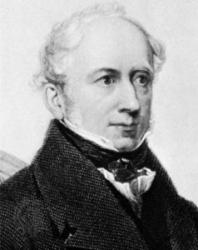
James Montgomery

1771 - 1854 Author of "Almighty God, in humble prayer" in Services for Congregational Worship. The New Hymn and Tune Book James Montgomery (b. Irvine, Ayrshire, Scotland, 1771; d. Sheffield, Yorkshire, England, 1854), the son of Moravian parents who died on a West Indies mission field while he was in boarding school, Montgomery inherited a strong religious bent, a passion for missions, and an independent mind. He was editor of the Sheffield Iris (1796-1827), a newspaper that sometimes espoused radical causes. Montgomery was imprisoned briefly when he printed a song that celebrated the fall of the Bastille and again when he described a riot in Sheffield that reflected unfavorably on a military commander. He also protested against slavery, the lot of boy chimney sweeps, and lotteries. Associated with Christians of various persuasions, Montgomery supported missions and the British Bible Society. He published eleven volumes of poetry, mainly his own, and at least four hundred hymns. Some critics judge his hymn texts to be equal in quality to those of Isaac Watts and Charles Wesley . Many were published in Thomas Cotterill's Selection of Psalms and Hymns (1819 edition) and in Montgomery's own Songs of Zion (1822), Christian Psalmist (1825), and Original Hymns (1853). Bert Polman ======================== Montgomery, James, son of John Montgomery, a Moravian minister, was born at Irvine, Ayrshire, Nov. 4, 1771. In 1776 he removed with his parents to the Moravian Settlement at Gracehill, near Ballymena, county of Antrim. Two years after he was sent to the Fulneck Seminary, Yorkshire. He left Fulneck in 1787, and entered a retail shop at Mirfield, near Wakefield. Soon tiring of that he entered upon a similar situation at Wath, near Rotherham, only to find it quite as unsuitable to his taste as the former. A journey to London, with the hope of finding a publisher for his youthful poems ended in failure; and in 1792 he was glad to leave Wath for Shefield to join Mr. Gales, an auctioneer, bookseller, and printer of the Sheffield Register newspaper, as his assistant. In 1794 Mr. Gales left England to avoid a political prosecution. Montgomery took the Sheffield Register in hand, changed its name to The Sheffield Iris, and continued to edit it for thirty-one years. During the next two years he was imprisoned twice, first for reprinting therein a song in commemoration of "The Fall of the Bastille," and the second for giving an account of a riot in Sheffield. The editing of his paper, the composition and publication of his poems and hynms, the delivery of lectures on poetry in Sheffield and at the Royal Institution, London, and the earnest advocacy of Foreign Missions and the Bible Society in many parts of the country, gave great variety but very little of stirring incident to his life. In 1833 he received a Royal pension of £200 a year. He died in his sleep, at the Mount, Sheffield, April 30, 1854, and was honoured with a public funeral. A statue was erected to his memory in the Sheffield General Cemetery, and a stained glass window in the Parish Church. A Wesleyan chapel and a public hall are also named in his honour. Montgomery's principal poetical works, including those which he edited, were:— (1) Prison Amusements, 1797; (2) The Wanderer of Switzerland, 1806; (3) The West Indies, 1807; (4) The World before the Flood, 1813; (5) Greenland and Other Poems, 1819; (6) Songs of Zion, 1822; (7) The Christian Psalmist, 1825; (8) The Christian Poet, 1825; (9) The Pelican Island, 1828; (10) The Poet’s Portfolio, 1835; (11) Original Hymns for Public, Private, and Social Devotion, 1853. He also published minor pieces at various times, and four editions of his Poetical Works, the first in 1828, the second in 1836, the third in 1841, and the fourth in 1854. Most of these works contained original hymns. He also contributed largely to Collyer's Collection, 1812, and other hymnbooks published during the next 40 years, amongst which the most noticeable was Cotterill's Selections of 1819, in which more than 50 of his compositions appeared. In his Christian Psalmist, 1825, there are 100 of his hymns, and in his Original Hymns, 1853, 355 and 5 doxologies. His Songs of Zion, 1822, number 56. Deducting those which are repeated in the Original Hymns, there remain about 400 original compositions. Of Montgomery's 400 hymns (including his versions of the Psalms) more than 100 are still in common use. With the aid of Montgomery's MSS. we have given a detailed account of a large number. The rest are as follows:— i. Appeared in Collyer's Collection, 1812. 1. Jesus, our best beloved Friend. Personal Dedication to Christ. 2. When on Sinai's top I see. Sinai, Tabor, and Calvary. ii. Appeared in Cotterill's Selection, 1819. 3. Come to Calvary's holy mountain. The Open Fountain. 4. God in the high and holy place. God in Nature. The cento in Com. Praise, 1879, and others, "If God hath made this world so fair," is from this hymn. 5. Hear me, O Lord, in my distress. Ps. cxliii. 6. Heaven is a place of rest from sin. Preparation for Heaven. 7. I cried unto the Lord most just. Ps. cxlii. 8. Lord, let my prayer like incense rise. Ps. cxxxix. 9. O bless the Lord, my soul! His grace to thee proclaim. Ps. ciii. 10. Out of the depths of woe. Ps. cxxx. Sometimes "When from the depths of woe." 11. The world in condemnation lay. Redemption. 12. Where are the dead? In heaven or hell? The Living and the Dead. iii. Appeared in his Songs of Zion, 1822. 13. Give glory to God in the highest. Ps. xxix. 14. Glad was my heart to hear. Ps. cxxii. 15. God be merciful to me. Ps. lxix. 16. God is my strong salvation. Ps. xxvii. 17. Hasten, Lord, to my release. Ps. lxx. 18. Have mercy on me, O my God. Ps. li. 19. Hearken, Lord, to my complaints. Ps. xlii. 20. Heralds of creation cry. Ps. cxlviii. 21. How beautiful the sight. Ps. cxxxiii. 22. How precious are Thy thoughts of peace. Ps. cxxxix. 23. I love the Lord, He lent an ear. Ps. cxvi. 24. In time of tribulation. Ps. lxxvii. 25. Jehovah is great, and great be His praise. Ps. xlviii. Sometimes, "0 great is Jehovah, and great is His Name." 26. Judge me, O Lord, in righteousness. Ps. xliii. 27. Lift up your heads, ye gates, and wide. Ps.xxiv. 28. Lord, let me know mine [my] end. Ps. xxxi. 29. Of old, 0 God, Thine own right hand. Ps. lxxx. 30. O God, Thou art [my] the God alone. Ps. lxiii. 31. 0 Lord, our King, how excellent. Ps. viii. Sometimes, "0 Lord, how excellent is Thy name." 32. O my soul, with all thy powers. Ps. ciii. 33. One thing with all my soul's desire. Ps. xxvii. From this, "Grant me within Thy courts a place." 34. Searcher of hearts, to Thee are known. Ps. cxxxix. 35. Thank and praise Jehovah's name. Ps. cvii. 36. Thee will I praise, O Lord in light. Ps. cxxxviii. 37. The Lord is King; upon His throne. Ps. xciii. 38. The Lord is my Shepherd, no want shall I know. Ps. xxiii. 39. The tempter to my soul hath said. Ps. iii. 40. Thrice happy he who shuns the way. Ps. i. 41. Thy glory, Lord, the heavens declare. Ps. xix. 42. Thy law is perfect, Lord of light. Ps. xix. 43. Who make the Lord of hosts their tower. Ps. cxxv. 44. Yea, I will extol Thee. Ps. xxx. iv. Appeared in his Christian Psalmist. 1825. 45. Fall down, ye nations, and adore. Universal adoration of God desired. 46. Food, raiment, dwelling, health, and friends. The Family Altar. 47. Go where a foot hath never trod. Moses in the desert. Previously in the Leeds Congregational Collection, 1822. 48. Green pastures and clear streams. The Good Shepherd and His Flock. 49. Less than the least of all. Mercies acknowledged. 50. Not to the mount that burned with fire [flame]. Communion of Saints. 51. On the first Christian Sabbath eve. Easter Sunday Evening. 52. One prayer I have: all prayers in one. Resignation. 53. Our heavenly Father hear. The Lord's Prayer. 54. Return, my soul, unto thy rest. Rest in God. 55. Spirit of power and might, behold. The Spirit's renewing desired. 56. The Christian warrior, see him stand. The Christian Soldier. Sometimes, "Behold the Christian warrior stand." 57. The days and years of time are fled. Day of Judgment. 58. The glorious universe around. Unity. 59. The pure and peaceful mind. A Children's Prayer. 60. This is the day the Lord hath made (q. v.). Sunday. 61. Thy word, Almighty Lord. Close of Service. 62. What secret hand at morning light ? Morning. 63. While through this changing world we roam. Heaven. 64. Within these walls be peace. For Sunday Schools. v. Appeared in his Original Hymns, 1853. 65. Behold yon bright array. Opening a Place of Worship. 66. Behold the book whose leaves display. Holy Scriptures. 67. Come ye that fear the Lord. Confirmation. 68. Home, kindred, friends, and country, these. Farewell to a Missionary. 69. Let me go, the day is breaking. Jacob wrestling. 70. Not in Jerusalem alone. Consecration of a Church. 71. Praise the high and holy One. God the Creator. In common with most poets and hymnwriters, Montgomery strongly objected to any correction or rearrangement of his compositions. At the same time he did not hesitate to alter, rearrange, and amend the productions of others. The altered texts which appeared in Cotterill's Selections, 1819, and which in numerous instances are still retained in some of the best hymnbooks, as the "Rock of Ages," in its well-known form of three stanzas, and others of equal importance, were made principally by him for Cotterill's use. We have this confession under his own hand. As a poet, Montgomery stands well to the front; and as a writer of hymns he ranks in popularity with Wesley, Watts, Doddridge, Newton, and Cowper. His best hymns were written in his earlier years. In his old age he wrote much that was unworthy of his reputation. His finest lyrics are "Angels from the realms of glory," "Go to dark Gethsemane," "Hail to the Lord's Anointed," and "Songs of praise the angels sang." His "Prayer is the soul's sincere desire," is an expanded definition of prayer of great beauty; and his "Forever with the Lord" is full of lyric fire and deep feeling. The secrets of his power as a writer of hymns were manifold. His poetic genius was of a high order, higher than most who stand with him in the front rank of Christian poets. His ear for rhythm was exceedingly accurate and refined. His knowledge of Holy Scripture was most extensive. His religious views were broad and charitable. His devotional spirit was of the holiest type. With the faith of a strong man he united the beauty and simplicity of a child. Richly poetic without exuberance, dogmatic without uncharitableness, tender without sentimentality, elaborate without diffusiveness, richly musical without apparent effort, he has bequeathed to the Church of Christ wealth which could onlv have come from a true genius and a sanctified! heart. --John Julian, Dictionary of Hymnology (1907)

Robert Campbell

1814 - 1868 Translator of "Ye choirs of new Jerusalem" in The Book of Common Praise Robert Campbell was an advocate residing in Edinburgh. He is not much known as an author, but some of his hymns have been adopted in several hymnals. He was Roman Catholic. His death occurred in 1868. --Annotations of the Hymnal, Charles Hutchins, M.A. 1872. ==================== Campbell, Robert. Advocate, of Sherrington, Scotland, was born at Trochmig, Ayrshire, Dec. 19, 1814. When quite a boy he attended the University of Glasgow. Though showing from his earliest years a strong predilection for Theological studies, eventually he fixed upon the Scottish law as a profession. To this end he entered the Law Classes of the University of Edinburgh, and in due course entered upon the duties of an advocate. Originally a Presbyterian, at an early age he joined the Episcopal Church of Scotland. He became a zealous and devoted Churchman, directing his special attention to the education of the children of the poor. His classical attainments were good, and his general reading extensive. In 1848 he began a series of translations of Latin hymns. These he submitted to Dr. Neale, Dr. Mills of Ely, and other competent judges. In 1850, a selection therefrom, together with a few of his original hymns, and a limited number from other writers, was published as Hymns and Anthems for Use in the Holy Services of the Church within the United Diocese of St. Andrews, Dunkeld, and Dunblane. Edinburgh, R. Lendrum & Co. This collection, known as the St. Andrews Hymnal, received the special sanction of Bishop Torry, and was used throughout the Diocese for some years. Two years after its publication he joined the Roman Catholic Church. During the next sixteen years he devoted much time to the young and poor. He died at Edinburgh, Dec. 29, 1868. From his collection of 1850, four translations were given in Hymns Ancient & Modern, 1861, "At the Lamb's high feast we sing;" “Come, pure hearts, in sweetest measures;" "Ye Choirs of New Jerusalem;" " Ye servants of a martyr'd God" (altered). Attention was thereby directed to his translations. They are smooth, musical, and well sustained. A large number, not included in his 1850 collection, were left by him in manuscript. From these Mr. O.Shipley has printed several in his Annus Sanctus, 1884. (C. MSS.) --John Julian, Dictionary of Hymnology (1907)

William Cowper

1731 - 1800 Author of "The Spirit Breathes Upon the Word" in Redemption Hymnal William Cowper (pronounced "Cooper"; b. Berkampstead, Hertfordshire, England, 1731; d. East Dereham, Norfolk, England, 1800) is regarded as one of the best early Romantic poets. To biographers he is also known as "mad Cowper." His literary talents produced some of the finest English hymn texts, but his chronic depression accounts for the somber tone of many of those texts. Educated to become an attorney, Cowper was called to the bar in 1754 but never practiced law. In 1763 he had the opportunity to become a clerk for the House of Lords, but the dread of the required public examination triggered his tendency to depression, and he attempted suicide. His subsequent hospitalization and friendship with Morley and Mary Unwin provided emotional stability, but the periods of severe depression returned. His depression was deepened by a religious bent, which often stressed the wrath of God, and at times Cowper felt that God had predestined him to damnation. For the last two decades of his life Cowper lived in Olney, where John Newton became his pastor. There he assisted Newton in his pastoral duties, and the two collaborated on the important hymn collection Olney Hymns (1779), to which Cowper contributed sixty-eight hymn texts. Bert Polman ============ Cowper, William, the poet. The leading events in the life of Cowper are: born in his father's rectory, Berkhampstead, Nov. 26, 1731; educated at Westminster; called to the Bar, 1754; madness, 1763; residence at Huntingdon, 1765; removal to Olney, 1768; to Weston, 1786; to East Dereham, 1795; death there, April 25, 1800. The simple life of Cowper, marked chiefly by its innocent recreations and tender friendships, was in reality a tragedy. His mother, whom he commemorated in the exquisite "Lines on her picture," a vivid delineation of his childhood, written in his 60th year, died when he was six years old. At his first school he was profoundly wretched, but happier at Westminster; excelling at cricket and football, and numbering Warren Hastings, Colman, and the future model of his versification. Churchill, among his contemporaries or friends. Destined for the Bar, he was articled to a solicitor, along with Thurlow. During this period he fell in love with his cousin, Theodora Cowper, sister to Lady Hesketh, and wrote love poems to her. The marriage was forbidden by her father, but she never forgot him, and in after years secretly aided his necessities. Fits of melancholy, from which he had suffered in school days, began to increase, as he entered on life, much straitened in means after his father's death. But on the whole, it is the playful, humorous side of him that is most prominent in the nine years after his call to the Bar; spent in the society of Colman, Bonnell Thornton, and Lloyd, and in writing satires for The Connoisseur and St. James's Chronicle and halfpenny ballads. Then came the awful calamity, which destroyed all hopes of distinction, and made him a sedentary invalid, dependent on his friends. He had been nominated to the Clerkship of the Journals of the House of Lords, but the dread of appearing before them to show his fitness for the appointment overthrew his reason. He attempted his life with "laudanum, knife and cord,"—-in the third attempt nearly succeeding. The dark delusion of his life now first showed itself—a belief in his reprobation by God. But for the present, under the wise and Christian treatment of Dr. Cotton (q. v.) at St. Albans, it passed away; and the eight years that followed, of which the two first were spent at Huntingdon (where he formed his lifelong friendship with Mrs. Unwin), and the remainder at Olney in active piety among the poor, and enthusiastic devotions under the guidance of John Newton (q. v.), were full of the realisation of God's favour, and the happiest, most lucid period of his life. But the tension of long religious exercises, the nervous excitement of leading at prayer meetings, and the extreme despondence (far more than the Calvinism) of Newton, could scarcely have been a healthy atmosphere for a shy, sensitive spirit, that needed most of all the joyous sunlight of Christianity. A year after his brother's death, madness returned. Under the conviction that it was the command of God, he attempted suicide; and he then settled down into a belief in stark contradiction to his Calvinistic creed, "that the Lord, after having renewed him in holiness, had doomed him to everlasting perdition" (Southey). In its darkest form his affliction lasted sixteen months, during which he chiefly resided in J. Newton's house, patiently tended by him and by his devoted nurse, Mrs. Unwin. Gradually he became interested in carpentering, gardening, glazing, and the tendance of some tame hares and other playmates. At the close of 1780, Mrs. Unwin suggested to him some serious poetical work; and the occupation proved so congenial, that his first volume was published in 1782. To a gay episode in 1783 (his fascination by the wit of Lady Austen) his greatest poem, The Task, and also John Gilpin were owing. His other principal work was his Homer, published in 1791. The dark cloud had greatly lifted from his life when Lady Hesketh's care accomplished his removal to Weston (1786): but the loss of his dear friend William Unwin lowered it again for some months. The five years' illness of Mrs. Unwin, during which his nurse of old became his tenderly-watched patient, deepened the darkness more and more. And her death (1796) brought “fixed despair," of which his last poem, The Castaway, is the terrible memorial. Perhaps no more beautiful sentence has been written of him, than the testimony of one, who saw him after death, that with the "composure and calmness" of the face there “mingled, as it were, a holy surprise." Cowper's poetry marks the dawn of the return from the conventionality of Pope to natural expression, and the study of quiet nature. His ambition was higher than this, to be the Bard of Christianity. His great poems show no trace of his monomania, and are full of healthy piety. His fame as a poet is less than as a letter-writer: the charm of his letters is unsurpassed. Though the most considerable poet, who has written hymns, he has contributed little to the development of their structure, adopting the traditional modes of his time and Newton's severe canons. The spiritual ideas of the hymns are identical with Newton's: their highest note is peace and thankful contemplation, rather than joy: more than half of them are full of trustful or reassuring faith: ten of them are either submissive (44), self-reproachful (17, 42, 43), full of sad yearning (1, 34), questioning (9), or dark spiritual conflict (38-40). The specialty of Cowper's handling is a greater plaintiveness, tenderness, and refinement. A study of these hymns as they stood originally under the classified heads of the Olney Hymns, 1779, which in some cases probably indicate the aim of Cowper as well as the ultimate arrangement of the book by Newton, shows that one or two hymns were more the history of his conversion, than transcripts of present feelings; and the study of Newton's hymns in the same volume, full of heavy indictment against the sins of his own regenerate life, brings out the peculiar danger of his friendship to the poet: it tends also to modify considerably the conclusions of Southey as to the signs of incipient madness in Cowper's maddest hymns. Cowper's best hymns are given in The Book of Praise by Lord Selborne. Two may be selected from them; the exquisitely tender "Hark! my soul, it is the Lord" (q. v.), and "Oh, for a closer walk with God" (q. v.). Anyone who knows Mrs. Browning's noble lines on Cowper's grave will find even a deeper beauty in the latter, which is a purely English hymn of perfect structure and streamlike cadence, by connecting its sadness and its aspiration not only with the “discord on the music" and the "darkness on the glory," but the rapture of his heavenly waking beneath the "pathetic eyes” of Christ. Authorities. Lives, by Hayley; Grimshaw; Southey; Professor Goldwin Smith; Mr. Benham (attached to Globe Edition); Life of Newton, by Rev. Josiah Bull; and the Olney Hymns. The numbers of the hymns quoted refer to the Olney Hymns. [Rev. H. Leigh Bennett, M.A.] --John Julian, Dictionary of Hymnology (1907) ================ Cowper, W. , p. 265, i. Other hymns are:— 1. Holy Lord God, I love Thy truth. Hatred of Sin. 2. I was a grovelling creature once. Hope and Confidence. 3. No strength of nature can suffice. Obedience through love. 4. The Lord receives His highest praise. Faith. 5. The saints should never be dismayed. Providence. All these hymns appeared in the Olney Hymns, 1779. --John Julian, Dictionary of Hymnology, Appendix, Part II (1907) ===================== Cowper, W., p. 265, i. Prof. John E. B. Mayor, of Cambridge, contributed some letters by Cowper, hitherto unpublished, together with notes thereon, to Notes and Queries, July 2 to Sept. 24, 1904. These letters are dated from Huntingdon, where he spent two years after leaving St. Alban's (see p. 265, i.), and Olney. The first is dated "Huntingdon, June 24, 1765," and the last "From Olney, July 14, 1772." They together with extracts from other letters by J. Newton (dated respectively Aug. 8, 1772, Nov. 4, 1772), two quotations without date, followed by the last in the N. & Q. series, Aug. 1773, are of intense interest to all students of Cowper, and especially to those who have given attention to the religious side of the poet's life, with its faint lights and deep and awful shadows. From the hymnological standpoint the additional information which we gather is not important, except concerning the hymns "0 for a closer walk with God," "God moves in a mysterious way," "Tis my happiness below," and "Hear what God, the Lord, hath spoken." Concerning the last three, their position in the manuscripts, and the date of the last from J. Newton in the above order, "Aug. 1773," is conclusive proof against the common belief that "God moves in a mysterious way" was written as the outpouring of Cowper's soul in gratitude for the frustration of his attempted suicide in October 1773. --John Julian, Dictionary of Hymnology, New Supplement (1907)

William Hiley Bathurst

1796 - 1877 Person Name: William H. Bathurst Author of "Faith and the Future" in Laudes Domini Bathurst, William Hiley , M.A., son of the Rt. Hon. Charles Bragge (afterwards Bathurst) some time M.P. for Bristol, born at Clevedale, near Bristol, Aug. 28, 1796, and educated at Winchester, and Christ Church, Oxford, graduating B.A. in 1818. From 1820 to 1852 he held the Rectory of Barwick-in-Elmet, near Leeds. Resigning the Rectory in the latter year, through his inability to reconcile his doctrinal views with the Book of Common Prayer, he retired into private life, and died at Lydney Park, Gloucestershire, Nov. 25, 1877. His works include, The Georgics of Virgil: Translated by W. H. B., 1849; Metrical Musings; or, Thoughts on Sacred Subjects in Verse, 1849; and Psalms and Hymns for Public and Private Use, 1831 (2nd ed. 1842). This last contains 141 versions of Psalms, and 206 hymns. All the latter, and many of the former are original. Of his hymns, those in most extensive use are, "Hark! the distant isles proclaim," "Holy Spirit from on high,” "Jesus, Thy Church with longing eyes,” "Eternal Spirit, by whose power," "O for a faith that will not shrink” and “O Saviour, may we never rest." In addition to these and a few others (all of which are annotated under their first lines), the following are in common use, but mainly in America:— 1. Before Thy cross, my dying Lord. Faith. 2. Before Thy mercy-seat, O Lord. Holy Scriptures. 3. Behold what unspeakable love. Heaven. 4. Does the Lord of Glory speak? Holy Scripture. 5. Ere the world with light invested. Holy Spirit. 6. Except the Lord our labours bless. Ps. cxxvii. 1. Full of weakness and of sin. The Creator Spirit desired. 8. Glory to the Almighty Father. Praise. 9. Holy Lord, our hearts prepare. Preparation for Prayer. 10. Holy Spirit from on high. Holy Spirit's direction implored. 11. How blest are they who feel the weight. Repentance. 12. How strange that souls whom Jesus feeds. Conflict. 13. How sweet it is in early youth. Youthful Piety. 14. How sweet the hour of closing day. Death. 15. Led by a Father's gentle hand. Communion of Saints 16. Lord, a better heart bestow. Lent. 17. Lord, bid the light arise. To the Holy Spirit. 18. Lord, shed Thy glory as of old. Whitsuntide. 19. Lord, what blessed consolation. Safety of the Church. 20. Lord, when our offerings we present. Offertory. 21. 0 for a beam of heavenly light. Lent. 22. 0 for that flame of living tire. Holy Spirit. 23. 0 give thanks unto the Lord. Ps. cv. 24. Shepherd of Israel, from above. On behalf of Children. 25. This day the Lord hath called His own. Sunday. 26. When the world my heart is rending. Heaven. 27. Why search ye in the narrow tomb? Ascension. 28. Ye servants of the living God. Praise. All these hymns were given in his Psalms & Hymns , &c, 1831 (Preface dated November 15th, 1830), and repeated, without alteration, in the 2nd ed., 1842. They are characterized by simplicity of language, and directness of aim; but do not in any instance rise above the ordinary level of passable hymn-writing. In some American collections Bathurst's name is contracted to "Bath," and this is regarded either as a complete surname or as a Bath Collection. The contraction was given by Bickersteth in his Christian Psalmody, 1833. --John Julian, Dictionary of Hymnology (1907) =================== Bathurst, William H., p. 117, ii. Additional hymns from his Psalms & Hymns, 1831, are in common use as follows:— 1. Great God, when I approach Thy throne. Redemption. 2. How bright a day was that which saw. The First Sabbath. 3. How frail and fallible I am. Jesus Unchangeable. 4. In Jesus' name with one accord. Divine Worship. 5. Lord, I claim Thee for my own. Ps. lxiii. 6. Lord shew Thy glory as of old. This is not "Lord shed Thy glory, &c," as stated at p. 118, i., 18. 7. Lord, when I lift my voice to Thee. Ps. ci. 8. O Lord, defend us as of old. Ps. lxxiv. 9. O Lord, how long shall heathens hold. Ps. lxxix. 10. 0 Lord, look down with pitying eye. Intercession for the Jews. Begins with st. iv. of “0 how is Zion's glory gone." 11. Praise God, O my soul. Ps. cxlvi. 12. Saviour, at Thy feet we bow. United Prayer. 13. 'Tis past, that agonizing hour. Ascension. 14. The Lord look'd all around. Universal Corruption. 15. To the Source of every blessing. Praise to the Father. 16. What can relieve the troubled soul? Christ the Comforter. --John Julian, Dictionary of Hymnology, Appendix, Part II (1907)

Omer Westendorf

1916 - 1997 Paraphraser of "Where charity and love prevail" in A New Hymnal for Colleges and Schools Omer Westendorf, one of the earliest lyricists for Roman Catholic liturgical music in English, died on October 22, 1997, at the age of eighty-one. Born on February 24, 1916, Omer got his start in music publishing after World War II, when he brought home for his parish choir in Cincinnati some of the Mass settings he had discovered in Holland. Interest in the new music being published in Europe led to his creation of the World Library of Sacred Music, initially a music-importing firm that brought much of this new European repertoire to U.S. parishes. Operating out of a garage in those early years, Omer often joked about the surprised expressions of visitors who stopped by and found a wide range of sheet music in various states of “storage” (read disarray). Later, as World Library Publications, the company began publishing some of its own music, including new works with English texts by some of those same Dutch composers, for example, Jan Vermulst. In 1955 World Library published the first edition of The Peoples Hymnal, which would become the People's Mass Book in 1964, one of the first hymnals to reflect the liturgical reforms proposed by Vatican II. Omer also introduced the music of Lucien Deiss to Catholic parishes through the two volumes of Biblical Hymns and Psalms. Using his own name and several pen names, Omer composed numerous compositions for liturgical use, though his best-known works may be the texts for the hymns “Where Charity and Love Prevail,” “Sent Forth by God’s Blessing,” and especially “Gift of Finest Wheat.” As he lay dying, his family and friends gathered around his bed to sing his text “Shepherd of Souls, in Love, Come, Feed Us.” NPM honored Omer as its Pastoral Musician of the Year in 1985. --liturgicalleaders.blogspot.com/2008 =========================== Pseudonyms: Paul Francis Mark Evans J. Clifford Evers --Letter from Tom Smith, Executive Director of The Hymn Society, to Leonard Ellinwood, 6 February 1980. DNAH Archives.

Nicolaus Ludwig, Graf von Zinzendorf

1700 - 1760 Person Name: Nicolaus Ludwig von Zinzendorf Author of "Glory to God, whose witness train" in The New Laudes Domini Zinzendorf, Count Nicolaus Ludwig, the founder of the religious community of Herrnhut and the apostle of the United Brethren, was born at Dresden May 26, 1700. It is not often that noble blood and worldly wealth are allied with true piety and missionary zeal. Such, however, was the case with Count Zinzendorf. In 1731 Zinzendorf resigned all public duties and devoted himself to missionary work. He traveled extensively on the Continent, in Great Britain, and in America, preaching "Christ, and him crucified," and organizing societies of Moravian brethren. John Wesley is said to have been under obligation to Zinzendorf for some ideas on singing, organization of classes, and Church government. Zinzendorf was the author of some two thousand hymns. Many of them are of little worth, but a few are very valuable, full of gospel sweetness and holy fervor. He died at Herrnhut May 6, 1760. —Hymn Writers of the Church by Charles Nutter ================ Zinzendorf, Nicolaus Ludwig, Count von, was born at Dresden, May 26, 1700; was educated at the Paedagogium at Halle (1710-1716), and at the University of Wittenberg (1716-1719); became Hof-und Justizrath at the Saxon court at Dresden in the autumn of 1721; received a license to preach from the Theological Faculty of the University of Tubingen in 1734; was consecrated Bishop of the Moravian Brethren's Unity at Berlin, May 10, 1737; and died at Herrnhut, May 9, 1760. An adequate sketch of the life and labours of this remarkable man would far exceed the limits of our space. The details of his life are fully given in his Leben, by A. G. Spangenberg, 8 vols., Barby, 1772-75 (English version, abridged, by Samuel Jackson, London, 1838); and good sketches, with references to the fuller biographies, will be found in Koch, v. 248, Herzog's Real-Encyklopädie, xvii. 513, &c. The English reader may also consult T. Kübler's Historical Notes to the Lyra Germanica, 1865, p. 107; Josiah Miller's Singers and Songs, 1869, p. 160; Miss Winkworth's Christian Singers of Germany, 1869, p. 305, &c. It is impossible to speak of Zinzendorf apart from the religious Communion of which he was the Second Founder. Zinzendorf's first hymn was written at Halle in 1712, and his last at Herrnhut, May 4, 1760. Between these dates he wrote more than 2000 hymns. He himself published an edition of his poems as his Teutsche Gedichte at Herrnhut, 1735 (2nd ed., Barby, 1766), but this only contains 128 hymns. The fullest representation of them is in Albert Knapp's Geistliche Gedichte des Graf en von Zinzendorf, published at Stuttgart in 1845 (hereafter, in this article, referred to as Knapp, 1845). This contains 770 pieces, arranged in three books, with an introduction and a biographical sketch by Knapp. In preparing this edition Knapp had access to much unpublished material in the archives at Herrnhut, and found there many of the hymns in Zinzendorf's autograph. But too much of the labour he bestowed thereon was spent in endeavouring, not so much to reconstruct the text from the original sources, as to modernise it. In various instances the hymns are altogether rewritten, so that the form in which they appear is not that in which, as a matter of fact, Zinzendorf did write them, but that in which he might have written them had he been Albert Knapp, and lived in the year of grace 1845. So much is this the case, that comparatively few of the hymns are given in Knapp's edition in their original form. If not altered they are often either abridged or else combined with others. The keynote of Zinzendorf's hymns, and of his religious character, was a deep and earnest personal devotion to and fellowship with the crucified Saviour. This is seen even in his worst pieces, where it is his perverted fervour that leads him into objectionable familiarity with sacred things both in thought and in expression. If his self-restraint had been equal to his imaginative and productive powers, he would have ranked as one of the greatest German hymnwriters. As it is, most even of his best pieces err in some way or other, for if they are reverent and in good taste, they are apt to lack concentration and to be far too diffuse. His best hymns, and those which have been most popular in German and English beyond the Moravian connection, are those of the period prior to 1734. Among the characteristically Moravian hymns of the period 1734 to 1742 there are also, various noble pieces. The later productions, especially from 1743 to 1750, are as a rule one-sided, unreal, and exaggerated in sentiment, and debased in style; exemplifying a tendency inherited from Scheffler, and suffered to run to riot. Without doubt he wrote too much (especially considering the limited range of subjects treated of in his hymns), and gave too little care to revision and condensation. Yet many of his hymns are worthy of note, and are distinguished by a certain noble simplicity, true sweetness, lyric grace, unshaken faith in the reconciling grace of Christ, entire self-consecration, willingness to spend and be spent in the Master's service, and fervent brotherly love. The more important hymnbooks in which Zinzendorf’s productions mainly appeared may for convenience be briefly noted here, as follows:— (1) Sammlung geistlicher und lieblicher Lieder, Leipzig, 1725, with 889 hymns. The 2nd edition was published circa 1728, and contains anAnhäng with Nos. 890-1078 [Berlin Library, Ei. 2017]; while some copies have a Zugabe with Nos. 1079-1149 [Berlin, Ei. 2016], and others have also an Andere Zugabe, circa 1730, with hymns 1-44, bound up with them [Berlin, Ei, 2014, and British Museum]. The 3rd edition, with 1416 hymns in all, was published at Görlitz in 1731. A copy of this, now in the Hamburg Library, has bound up with Nachlese einiger geistlicher Lieder, dated 1733. (2) Herrnhut Gesang-Buch 1735 (Das Gesang-Buch der Gemeine in Herrn-Huth) with its various Anhange and Zugaben up to 1748. (3) London Gesang-Buch 1753-54 (Etwas vom Liede Mosis ... das ist: Alt- und neuer Brüder-Gesang, &c), published at London, vol. i. 1753, ii. 1754. (4) Brüder Gesang-Buch 1778 (Gesangbuch zum Gebrauch der evangelischen Brüdergemeinen), published at Barby in 1778. Zinzendorf's hymns passed into German non-Moravian use mainly through the Ebersdorf Gesang-Buch, 1742 (Evangelisches Gesangbuch in einen hinlänglichen Auszug der Alten, Neuern und Neuesten Lieder, &c), and in recent times through Knapp's Evangelischer Lieder-Schatz, 1837-1865. Comparatively few are found in non-Moravian English hymnbooks prior to 1840, save in the versions made by John Wesley. The translations made by the English Moravians have been very little used by others, except by those who were connected by birth with the Moravians, such as James Montgomery (through whose influence several were included in Mercer's Church Psalter & Hymn Book, 1855 and 1857), J. A. Latrobe and C. H. Bateman. The versions made by English non-Moravians since 1840 have been mostly of hymns which the Moravians themselves had not thought good to translate. In the larger edition of the English Moravian Hymn Book of 1886, hymns which are by Zinzendorf may easily be traced, his name being added to them, and the first line of the original German prefixed. The others which have passed into use outside the Moravian connection, or have been translated by non-Moravians, are here noted as follows:— i. Ach Bein von meinen Beinen. Longing for Heaven. Written circa 1750 (Knapp, 1845, p. 176). Included in the Kleine Brüder Gesang-Buch, 2nd ed. Barby, 1761, No. 2110, in 2 stanzas of 8 lines; repeated, altered, in the Brüder Gesang-Buch,1778. No. 1681. Translated as:— 1. The seasons, Lord! are Thine—how soon. A free version as No. 479 in J. A. Latrobe's Psalms & Hymns, 1841. 2. How soon, exalted Jesus. This is No. 838 in the Moravian Hymn Book, 1789 (1886, No. 1233). ii. Ach! mein verwundter Fürste. Union with Christ. Written Aug. 1737 (Knapp, 1845, p. 125). First published in Appendix viii., circa 1738, to the Herrnhut Gesang-Buch as No. 1197, and in 4 stanzas of 6 lines. In the Brüder Gesang-Buch, 1778, No. 774, stanza iv. was omitted. The translation in common use is of stanzas i., ii. Another translation is, "My wounded Prince enthron'd on high," by C. Kinchen, as No. 85 in the Moravian Hymn Book, 1742. In the 1808 and later editions(1886, No. 352), stanza iii. altered to "Lord, take my sinful, worthless heart "is continued. iii. Der Gott von unserm Bunde. Supplication. Written in 1737 ( Knap , 1845, p. 231). First published in Appendix vii., circa 1738, to the Herrnhut Gesang-Buch, as No. 1201, in 5 stanzas of 6 lines, entitled, "Hymn for the Hours of Prayer." In the Brüder Gesang-Buch, 1778, No. 1474. The translation in common use is based on stanza i., ii. Other translations are (1) "The God to whom we homage pay." This is No. 97 in pt. iii. 1748 of the Moravian Hymn Book. (2) "O may the God of mercies." This is No. 592 in the Moravian Hymn Book, 1801. In the ed. of 1886, No. 706, it begins with stanza iii., "Lord, our High Priest and Saviour." iv. Die Bäume blühen ab. Autumn . In the Teutsche Gedichte, 1735, No. 12, dated Autumn, 1721, and entitled "Comforting thoughts on Death." It is in Knapp, 1845, p. 17. Further noted under "Wie wird mir einst doch sein". v. Du Vater aller Kreatur. Work for Christ. Written 1722 (Knapp, 1845, p. 26). First published in Appendix. vi., circa 1737, to the Herrnhut Gesang-Buch, as No. 1159, and in 13 stanzas of 4 lines. In the Brüder Gesang-Buch, 1778, No. 1717 consists of stanza viii.-xiii. beginning, "Des Lebens abgestecktes Ziel." Translated as:— Whether the period of this life. This is a translation of stanza viii.-x. as No. 847 in the Moravian Hymn Book, 1789. To this in later eds. (1886, No. 1235) No. 848 was added. This is "Lord may 1 live to Thee by faith," and is a translation of an anonymous 17th century stanza, "Herr Jesu! dir leb ich," which is No. 1686 in the Brüder Gesang-Buch, 1778. The full form is in J. A. Latrobe's Psalms & Hymns, 1841. vi. Geschwister! wir geben uns Herzen und Hände. Christian Work. Written 1737 (Knap p, 1845, p. 234). First published in Appendix vii., circa 1738, to the Herrnhut Gesang-Buch as No. 1217, and in 8 stanzas of 4 lines. In the Brüder Gesang-Buch, 1778, No. 1391, it is united, as in Knapp, with "Gesinde des Heilands". Translated as:— Grace! how good, how cheap, how free. This is a translation, by C. Kinchen, of stanza v., as No. 28 in the Moravian Hymn Book, 1742. Included in Spurgeon's Our Own Hymn Book, 1866. vii. Glanz der Ewigkeit. Morning. In the Teutsche Gedichte, 1735, p. 13, dated Berlin, May, 1721. First published as No. 470 in the Sammlung, 1725, in 15 stanzas of 6 lines. In Knapp, 1845, p. 16. The only stanza translated into English is stanza xi. as part of "Jesu, geh' voran”. viii. Grosser Bundes-Engel. Ascensiontide. Written for Ascension Day (his birthday), 1740 (Knapp, 1845, p. 144, dated May 26, 1740). First published in Appendix xi., circa 1741, to the Herrnhut Gesang-Buch as No. 1426, in 27 stanzas of 8 lines. In the Brüder Gesang-Buch, 1778, No. 603. Translated as:— Lord, when Thou saidst, So let it be. This is a translation, by C. G. Clemens, of stanza iii., as No. 156 in the Moravian Hymn Book , 1789 (1849, No. 190). Included in the Congregational Hymn Book, 1836, and in Dr. Martineau's Hymns, 1840 and 1873. ix. Heiliger, heiliger, heiliger Herr Zebaoth. Eternal Life. Heaven Anticipated. The Rev. J. T. Müller, of Herrnhut, informs me that this was written in 1723 on the occasion of the birthday (Oct.6) of Zinzendorf s grandmother, H. C. von Gersdorf. Knapp, 1845, p. 193, dates it Oct. 18, 1723. First published as No. 1078 (2) in the 2nd ed., circa 1728, of the Sammlung in 7 stanzas of 7 lines, entitled, Closing Hymn. In the Brüder Gesang-Buch, 1778, stanza ii., iii., beginning "Hatten wir," are included as stanzas i., ii., of No. 1739. Translated as:— Had we nought, had we nought. This is a translation of stanzas ii., iii., by W. O. Keley, as No. 1189 in the 1808 Supplement to the Moravian Hymn Book, 1801 (1849, No. 1186), and repeated in J. A. Latrobe's Psalms & Hymns, 1841, No. 475. x. Ich bin ein kleines Kindelein. Children. This is No. 1022 in the 3rd ed., 1731, of the Sammlung, in 13 stanzas of 4 lines. In the Brüder Gesang-Buch, 1778, No. 1214, and in the Hist. Nachricht thereto (1835, p. 188) marked as a catechetical hymn for children, and dated 1723. Knapp, 1845, p. 40, dates it June, 1723, and alters it to "Ich bin ein Kindlein, arm und klein." It is a simple and beautiful hymn, and is contained in a number of recent German non-Moravian collections, e.g. in the Berlin Geistliche Lieder, ed. 1863, No. 1408. Translated as:— 1. Saviour, who didst from Heaven come down. This is a free translation of stanzas ii.,iii., v., made by James Bullivant Tomalin in 1860, and contributed to Lord Selborne's Book of Praise, ed. 1866, Appendix, No. 27, with the note at p. 500, "I am indebted for this to the kindness of the translator." Repeated in S. D. Major's Book of Praise for Home & School, 1869, and in America in the Baptist Service of Song, 1871, &c. In M. W. Stryker's Christian Chorals, 1885, and Church Song, 1889, it is altered, beginning, "O Saviour, Who from Heav'n came down." 2. I am a little child you see. By C. Kinchen, as No. 49 in the Moravian Hymn Book 1742. This form is followed in the edition of 1886, No. 1038, and in the Bible Hymn Book, 1845. In the Moravian Hymn Book, 1789, it begins with stanza ii., "Thou, gracious Saviour, for my good;" and this form altered to, "My Saviour dear, Thou for my good," is in Montgomery's Christian Psalmist, 1825. xi. Kommt, Sünder, und blicket dem ewigen Sohne. Repentance or Lent. Mr. Müller informs me that this was written in Aug. 1736, at , 1845, p. 130, dates it Nov. 22,1738. First published in Appendix viii., circa 1739, to the Herrnhut Gesang-Buch as No. 1308, in 9 stanzas of 4 lines. In the Brüder Gesang-Buch 1778, No. 321. Translated as:— Sinners! come; the Saviour see. This a good and full translation by C. Kinchen, as No. 120, in the Moravian Hymn Book, 1742. Of this stanzas i., ii. are included in Spurgeon's Our Own Hymn Book, 1866. Other forms are (1) "Are you formed a creature new" (stanza vi.). In the Moravian Hymn Book, 1769 (1886, No. 1280), Montgomery's Christian Psalmist, 1825, &c. (2) "Rise, go forth to meet the Lamb" (stanza viii. alt.). In J. A. Latrobe's Psalms & Hymns, 1852, No. 457. xii. Kron' und Lohn behertzter Ringer. The Beatitudes. Founded on St. Matt. v. 3-12. In his Teutsche Gedichte, 1735. p. 41, dated, Sept. 7, 1722 (his marriage day), and entitled, "Thoughts on my own marriage." First published as No. 700 in the Sammlung, 1725, in 16 stanzas of 12 lines. In Knapp, 1845, p. 30. In the Brüder Gesang-Buch, 1778, No. 513, beginning, "Jesu, der du uns erworben." Translated as:— Jesu! Lord so great and glorious. This, omitting stanzas xiv., xv., is No. 226 in pt. ii. of the Moravian Hymn Book, 1754, as "Jesus, Lord most great and glorious"). The versions of stanzas i., ix., xvi., from the Moravian Hymn Book, 1789, were included in the Dalston Hospital Hymn Book, 1848. xiii. Naht heran, ihr lieben Glieder. Holy Communion. Written in 1731 (Knapp, 1845, p. 212). 1st published in the 3rd ed., 1731, of the Sammlung as No. 1416 in 16 stanzas of 4 lines. Also in the Brüder Gesang-Buch 1778, No. 1148. Translated as:— 1. Friends in Jesus, now draw near. This is a free translation, omitting stanza v., vi., viii.-x.,xiv., by Miss Borthwick in Hymns from the Land of Luther, 4th ser., 1862, p. 57, the German being quoted as "Kommt herein, ihr lieben Glieder." This translation is repeated in full in Lyra Eucharistica, 1863, p. 34, and abridged in G. S. Jellicoe's Collection 1867, Windle, No. 480, and Harland, 1876, No. 451. 2. Come, approach to Jesu's table. This is No. 556 in the Moravian Hymn Book, 1789 (1849, No. 965), xiv. 0 du Hüter Ephraim. Supplication for Grace. In his Teutsche Gedichte, 1735,p. 158, dated 1728,entitled, "On his wife's 28th birthday " (she was born Nov. 7, 1700), and with the note, "This poem was written for the birthday festival of the Countess, was sung by a company or coterie of friends, each member of which was indicated according to their circumstances at the time." It had previously appeared, without the first stanza, and this form, which begins, "Herz der göttlichen Natur". xv. Rath, Kraft, und Held, und Wunderbar. Christmas. Founded on Is. ix. 6. In his Teutsche Gedichte, 1735, p. 25, in 9 stanzas of 6 lines, entitled, "Christmas Thoughts," and dated 1721; and in the Herrnhut Gesang-Buch,1735, No. 827. In Knapp, 1845, p. 21. In the Brüder Gesang-Buch, 1778, No. 488, it begins with stanza vi., "Mein alles! mehr als alle Welt." Translated as:— My all things more than earth and sky. This is a translation of stanza vi., by C. G. Clemens, as No. 306 in the Moravian Hymn Book, 1789. In 1801 altered to "My all in all, my faithful Friend;" and to this in 1826, trs. of stanzas ii., vii.-ix.,by P. Latrobe, were added (1886.No. 399). From this form a cento in 5 stanzas of L. M., beginning, "O Lord! Thou art my rock, my guide," was included in Dr. Martineau's Hymns, 1840. xvi. Ruht aus von eurer Mühe. Christian Church. Written in 1737 (Knapp 1845, p. 232, as Du gestern und auch heute). First published in Appendix vi., circa 1737, to the Herrnhut Gesang-Buch, as No. 1183, in 8 stanzas of 8 lines, entitled, "Hymn of the witnesses." In the Brüder Gesang-Buch, 1778, stanza iv. is given as No. 1042. Translated as:— 0 Jesus Christ, most holy. This is a translation of stanza iv. by C. G. Clemens, as No. 487 in the Moravian Hymn Book, 1789 (1849, No. 807 ; 1886, No. 795, beginning, "Lord Jesus Christ") Included in Spurgeon's Our Own Hymn Book, 1866. xvii. Seligs Volk der Zeugenwolk. Holy Communion. Written in 1739 (Knapp, 1845, p. 138, beginning, "Christi Blut, Die Segensfluth," and p. 256, "Selig Volk.") First published in Appendix viii., circa 1739, to the Herrnhut Gesang-Buch, as No. 1340, in 14 stanzas of 8 lines, entitled, "Hymn at the Feast of Love." In the Brüder Gesang-Buch, 1778, as Nos. 1127 and 1422, the latter beginning, "Werther Tod und Wunden roth; " and including stanza xi. ("Wisst ihr was? So heisst der Pass"), xiii., xiv. Translated as:— 1. Would the world our passport see. This is a translation of stanza xi., xiii. as No. 1152 in the 1808 Supplement to the Moravian Hymn Book of 1801 (1886, No. 895). Included as No. 212 in J. A. Latrobe's Psalms & Hymns, 1841. 2. Flock of Grace, ye Witnesses. This is No. 40 in pt. iii. 1748 of the Moravian Hymn Book. 3. Happy race of witnesses. By C. Kinchen as No. 551 in the Moravian Hymn Book, 1789. In 1886 four stanzas are given as No. 951, and the other two beginning, "Eat and rest at this great feast" (stanza viii.) as No. 1022. xviii. Was hatten wir für Freude oder Ehre . Repentance. Written in 1739 (Knapp, 1845, p. 139). First published in Appendix viii., circa 1739, to the Herrnhut Gesang-Buch as No. 1349, and in 48 stanza of 2 lines. In the Brüder Gesang-Buch, 1778, No. 396, reduced to 19 stanzas. Translated as:— What Joy or Honour could we have. In full as No. 161 in the Moravian Hymn Book, 1742; abridged in 1789 to 12, and in 1801 to 7 stanzas. The 1801 version, which represents stanzas i.-iv., viii., ix., xi. was included in Montgomery's Christian Psalmist, 1825; and with the trs. of stanzas iii., xi. omitted, and a hortatory stanza added, as No. 268 in J. A. Latrobe's Psalms & Hymns, 1841. In the Moravian Hymn Book, 1886, No. 322, it begins with the translation of stanza iii., "None is so holy, pure, and just." xix. Wenn sich die Kinder freuen. Christian Work. Written about 1752 (Knapp, 1845, p. 179, as "Wenn wir uns kindlich freuen"). Included as No. 2101 in the London Gesang-Buch (Etwas vom Liede Mosis, &c), 1753, in 15 stanzas of 4 lines. In the Brüder Gesang-Buch, 1778, No. 490 consists of stanzas i.—iii., vi., ix., xiii.-xv. beginning, "Wenu wir uns kindlich freuen." Translated as:— 1. When we seek with loving heart. By Miss Borthwick, in full from the 1778 (with an original stanza as stanza ix.) in the Family Treasury, 1861, pt. ii., p. 112, and in Hymns from the Land of Luther, 1862, p. 89 (1884, p. 250). Repeated, abridged, in E. T. Prust's Supplemental Hymn Book, 1869. 2. When the children joyful are. This is No. 312 in pt. ii. of the Moravian Hymn Book, 1754. 3. When children are rejoicing . This is at p. 373 of pt. ii. in the Moravian Hymn Book, 1754. xx. Wir sind nur dazu. Christian Warfare. Written in 1734 (Knapp, 1845, p. 113). First published in Appendix iii., circa 1737, to the Herrnhut Gesang-Buch, as No. 1073, and in 21 stanzas of 6 lines. In the Brüder Gesang-Buch, 1778, No. 1330 has 13 stanzas; while stanza xvii. ("Die Streitertreue") is given as stanza v. of No. 1394. Translated as:— Warrior, on thy station stand. This is a translation of stanza xvii. as No. 1161 in the 1808 Supplement to the Moravian Hymn Book, 1801 (1886, No. 896). Adopted by Dr. Martineau in his Hymns, 1840 and 1873, altered to "Warrior! to thy duty stand." Hymns not in English common use:— xxi. Auf, auf, es ist geschehe. Holy Communion. This is No. 166 in the Sammlung, 1725, in 12 stanzas of 4 lines, and in the Teutsche Gedichte, 1735, p. 2. In the Brüder Gesang-Buch, 1778, No. 1188 it begins, "Ich eil in Jesu Armen" (5 stanzas being added, and stanzas viii., xi. omitted), and in the Hist. Nachricht thereto (ed. 1851, p. 188) is marked as written on the occasion of his first communion in 1714. In Knapp, 1845, p. 6, it begins, "Ist's ja, es ist geschehen," Translated as "Happy, thrice happy hour of grace." By L. T. Nyberg, of stanzas i., xii., as No. 693 in the Moravian Hymn Book, 1789 (1886, No. 1021) ; repeated in C. H. Bateman's Congregational Psalmist, 1846. xxii. Christen sind ein göttlich Volk. Christian Life. In the Teutsche Gedichte, 1735, p. 231, dated 1731, and entitled, "Hymn for a Royal Princess-apparent," viz. for Charlotte Amelia, daughter of King Christian VI. of Denmark. It had appeared in the Nachlese of 1733 to Knapp, 1845, p. 97, and in the Brüder Gesang-Buch, 1778, No. 491. Translated as “Christians are a holy band, Gathered by the Saviour's hand." This is by Dr. J. F. Hurst in his translation of K. R. Hagenbach's History of the Church in the 18th and 19th Centuries, N. Y., 1869, vol. i., p. 434. xxiii. Das äussre Schifflein wälgert sich. For those at Sea. First published in the Zugabe, circa 1744, to Appendix xi. to the Herrnhut Gesang-Buch as No. 1855, in 16 stanzas of 4 lines entitled, "Hymn for the ship's company, February, 1743." Written during a stormy passage from America to Germany. In Knapp, 1845, p. 164. The translations are: (1) "Our ship upon the surging sea." In the British Herald, Aug. 1866, p. 313, repeated in Reid's Praise Book, 1872. (2) "Our little bark, it rocks itself." In L. Rehfuess's Church at Sea, 1868, p. 18. xxiv. Die Christen gehn von Ort zu Ort. Burial of the Dead. In the Teutsche Gedichte, 1735, p. 113, as part of No. 45, which is entitled "Over the grave of the grandmother" (Henriette Catharine von Gersdorf. She died March 6, 1726), and dated March, 1726. The hymn itself is entitled, "Air after the funeral rites." It had appeared in the Andere Zugabe, circa 1730, to the Sammlung as No. 6 (ed. 1731, No. 1246), in 3 stanzas of 8 lines entitled, “Funeral Hymn." In Knapp, 1845, p. 72, and in the Brüder Gesang-Buch, 1778, No. 1701. The translations are : 1) "Believers go from place to place." By Dr. J. Hunt in his Spiritual Songs of Martin Luther, 1853, p. 146. (2) "Through scenes of woe, from place to place." By Dr. G. Walker, 1860, p. 50. (3) "From place to place the Christian goes." By J. D. Burns in his Memoir & Remains, 1869, p. 263. (4) “From land to land the Christian goes." This is No. 1251 in the Moravian Hymn Book, 1886. xxv. Du innig geliebter Erloser der Sünder. Readiness to serve Christ. Written in 1735 (Knapp, 1845, p. 222). First published in Appendix iv., circa 1737, to the Herrnhut Gesang-Buch, as No. 1080, and in 6 stanzas of 4 lines. In the Brüder Gesang-Buch, 1778, No. 1335. Translated as "Sinners' Redeemer whom we only love." This is a translation of stanzas i., iv., v., by C. Kinchen, as No. 121 in the Moravian Hymn Book, 1742. In the 1789 and later editions (1886, No. 861), it begins, "Sinners' Redeemer, gracious Lamb of God." The text of 1742, slightly altered, is No. 206 in Lady Huntingdon's Selection, 1780. xxvi. Du Vater aller Geister. Evening. In the Teutsche Gedichte, 1735, p. 15, entitled, "Evening Thoughts," and dated Oct. 1721. It is No. 497 in the Sammlung, 1725, in 6 stanzas of 8 lines. In Knapp, 1845, p. 16, and in the Brüder Gesang-Buch, 1778, No. 235. Translated as “Father of living Nature." By H. J. Buckoll, 1842, p. 102. xxvii. Gesinde des Heilands des seligen Gottes. Christian Work. Written in 1737 (Knapp, 1845, p. 234), first published in Appendix vii., circa 1738, to the Herrnhut Gesang-Buch as No. 1216, and in 10 stanzas of 4 lines. In the Brüder Gesang-Buch, 1778, No. 1391. Translated as "Ye blest Domestics of the slaughter'd Lamb." In full as No. 178 in the Moravian Hymn Book, 1742 (1754, pt. ii., No. 250). Repeated, abridged, in the Bible Hymn Book, 1845, No. 286. xxviii. Ich bitt dich, herzliches Gottes-Lamm! Love to Christ. Written in Oct. 1741 (Knapp, 1845, p. 152, as "Ein selig Herze führt diese Sprach"). First published in Appendix xi., circa 1743, to the Herrnhut Gesang-Buch, as No. 1724, and in 12 stanzas of 5 lines, In the Brüder Gesang-Buch, 1778, No. 704, it begins, with stanza ii., altered to "Ein selges Herze führt diese Sprach." Translated as "When heavenwards my best affections move." By Miss Borthwick (from the 1778), dated April, 1861, in the Family Treasury , 1861, p. 328. In Hymns from the Land of Luther, 4th ser., 1862, p. 60 (1884, p. 223), altered to "When towards heaven." xxix. 0 du Hüter Ephraim. Burial of the Dead. This is included at p. 10 in the Nachlese of 1733 to the 3rd ed. 1731 of the Sammlung, and is in 8 stanzas of 8 lines, entitled, "Of departure to the Father;" and in the Teutsche Gedichte, 1735, p. 256, entitled, "In the name of the community." Included as No. 695 in the Herrnhut Gesang-Buch, 1735, beginning with stanza ii. altered to "Tödten ist dem Herrn erlaubt." In the Brüder Gesang-Buch, 1778, No. 1715, it begins with stanza iii., "Ehmals sollts gestorben sein," and in the Hist. Nachricht thereto (1835, p. 190) is marked as written on the death of Matthaus Linner in 1732. In Knapp, 1845, p. 101. Translated as "Once the sentence justly sounded." By Miss Borthwick in Hymns from the Land of Luther, 1862, p. 92 (1884, p. 252). xxx. 0 Liebe, die in fremde Noth. On Unity. In the Teutsche Gedichte, 1735, p. 94, dated 1725, and entitled, "On the Saviour's faithfulness." First published as No. 198 (b) in the 1725 Sammlung, in 18 stanzas of 4 lines. In the London Gesang-Buch, 1753, No. 1764, stanzas ix., x., beginning, " Der du noch in der letzten Nacht," were given as a separate hymn; and this form is repeated in the Brüder Gesang-Buch, 1778, No. 714, the Berlin Geistliches Lieder, ed. 1863, No. 1037, &c. In Knapp, 1845, p. 70. The translations, all of stanza ix., x., are: (1) "Lord Jesus, who that very night." By P. H. Molther, as stanzas ii., iii. of No. 387 in the Moravian Hymn Book, 1789 (1886, No. 477, beginning, "Lord Jesus, in that"). (2) "Thou Who didst die for all and each." By Miss Cox, 1841, p. 147. (3) "O Thou, Who with Thy latest breath." By Lady E. Fortescue, 1843, p. 66. (4) "Thou who in that bitter night." By Miss Warner, 1858, p. 436. (5) "Thou who in that last sad night." By Miss Fry, 1859, p. 151. (6) "Thou who upon that last sad night." In the Family Treasury, 1859, p. 200. (7) "O Thou who didst on that last night." By R. Massie in the British Herald, Feb. 1865, p. 28. (8) "O Thou, who on that last sad eve." By E. Massie, 1866, p. 69. xxxi. O wie so gliicklich waren wir. Love to Christ. On the blessedness of union with Christ. First published in Appendix vii., circa 1738, to the Herrnhut Gesang-Buch as No. 1237, and in 8 stanzas of 8 lines. In the Brüder Gesang-Buch, 1778, No. 829, and in the Hist. Nachricht thereto (1835, p. 186) marked as written for J. A. Rothe (p. 978, i.), and dated 1737. In Knapp, 1845, p. 236. Translated as "How full our cup of joy would be." By Miss Burlingham in the British Herald, Sept. 1865, p. 131, and in Reid's Praise Book, 1872. xxxii. Reiner Bräutgam meiner Seelen. Desire for Holiness. Written in 1721 (Knapp, 1845, p. 21). Included in the 2nd edition, circa 1728, of the Sammlung as No. 1001, and in the Christ-Catholisches Singe- und Bet-Büchlein, 1727, p. 133, in 30 stanzas of 4 lines. In the Brüder Gesang-Buch, 1778, No. 798. Translated as "Jesu, to Thee my heart I bow." This is a free translation of stanzas i., x.-xii., xvi., xvii., by J. Wesley in Psalms & Hymns, Charlestown, 1736-7, and Hymns and Sacred Poems, 1739 (Poetical Works 1868-72, vol i., p. 109). Repeated in the Wesley Hymns & Spiritual Songs, 1753, Moravian Hymn Book, 1754, Bayley's Selection, Manchester, 1789, Bateman's Congregational Psalmist, 1846. xxxiii. Schau von deinem Thron. Supplication. Written in 1720 (Knapp, 1845, p. 14), and founded on the Lord's Prayer. In the Sammlung, 1725, No. 443, in 6 stanzas of 6 lines. Translated as "All glory to the Eternal Three." By J. Wesley in Hymns & Sacred Poems, 1739 (Poetical Works, 1868-72, vol. i., p. 130). xxxiv. Solche Leute will der König küssen. Humility. First published in Appendix vii., circa 1738, to the Herrnhut Gesang-Buch, as No. 1241, and in 4 stanzas of 4 lines. Mr. Müller informs me that it was written in 1738, and was dedicated to Eva Maria Immig née Ziegelbauer, who on March 5,1740, became the wife of A. G. Spangenberg. In the Brüder Gesang-Buch, 1778, No. 842, stanzas ii., iii. are stanzas i., iv. of this Knapp, 1845, p. 89 dates it 1728. The translations are:—(1) "To such the King will give a kiss of Love." This is No. 154 in the Moravian Hymn Book, 1742 (1754, pt. ii., No. 62). (2) "His loving kindness those shall richly share." This is No. 508 in the Moravian Hymn Book, 1801. (3) "Such the King will stoop to and embrace." By Miss Winkworth, 1869, p. 310. xxxv. Verliebter in die Sünderschaft. Love to Christ. First published in Appendix iii., circa 1737, to the Herrnhut Gesang-Buch, as No. 1072, in 4 stanzas of 8 lines. In the Brüder Gesang-Buch

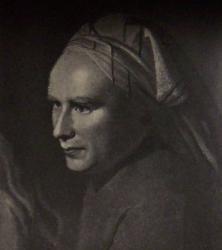
Dorothy A. Thrupp

1779 - 1847 Person Name: Dorothy A. Thrupp, 1799-1847 Author of "A Little Ship Was on the Sea" in The Children's Hymnbook Dorothy Ann Thrupp was born in London, June 10, 1779. She contributed some hymns, under the pseudonym of "Iota," to W. Carus Wilson's Friendly Visitor and his Children's Friend. Other hymns by her, signed "D.A.T.," appeared in Mrs. Herbert Mayo's Selection of Hymns and Poetry for the Use of Infant Schools and Nurseries, 1838. She was also the editor of Hymns for the Young, c. 1830, in which all the hymns were given anonymously. She died in London on December 15, 1847. --The Hymnal 1940 Companion ================================ Thrupp, Dorothy Ann, daughter of Joseph Thrupp, of Paddington Green, was born at London, June 20, 1779 and died there on Dec. 14, 1847. Her hymns, a few of which have come into extensive use, were contributed to the Rev. W. Carus Wilson's Friendly Visitor and his Children's Friend, under the nom de plume of Iota; to Mrs. Herbert Mayo's Selection of Hymns and Poetry for the use of Infant Schools and Nurseries, 1838 (3rd ed. 1846, with change of title to A Sel. . . . of Infant and Juvenile Schools and Families), in which her signature is "D.A.T."; and also to the Hymns for the Young, which she herself edited for the Religious Tract Society circa 1830, 4th ed., 1836. In 1836 and 1837 she also published Thoughts for the Day (2nd series), in which she embodied many hymns which previously appeared in the Friendly Visitor. In addition to her hymns, which are annotated under their respective first lines there are also in common use:— 1. Come, Holy Spirit, come, 0 hear an infant's prayer. Child's Prayer. Appeared in Mrs. Mayo's Selection of Hymns and Poetry, 1838, No. 14, and signed "D.A.T." 2. God loves the little child that prays. God's love for Children. Given in Miss Thrupp's Hymns for the Young, 4th ed., 1836; and again in Mrs. Mayo's Selection of Hymns and Poetry&c, 2nd ed., 1840, and signed " D.A.T." It is sometimes given as "God loves the child that humbly prays." 3. Have you read the wondrous story? Life and Death of Jesus. This appeared anonymously in Miss Thrupp's Hymns for the Young, R. T. S., 1830, No. 12, in 5 stanzas of 4 lines. In Miss Thrupp's later publications this hymn is omitted, a fact which suggests that it was not her composition, but possibly that of a friend. It is in theLeeds Sunday School Union Hymn Book, 1833-78. 4. Let us sing with one accord. Praise of Jesus. This hymn is usually associated with Miss Thrupp's name, but on insufficient evidence. We find it in the 4th edition of her Hymns for the Young, 1836, and again in the 3rd ed. of Mrs. H. Mayo's Selection of Hymns and Poetry for the Use of Infant and Juvenile Schools, &c, 1846, and in both instances without signature. We know of no evidence which justifies us in ascribing the authorship with certainty to Miss Thrupp. The hymn is in the Leeds S. S. Union Hymn Book, 1833-78, and several others. 5. Poor and needy though I be. Divine Providence. Appeared in Miss Thrupp's Hymns for the Young, 4th ed., 1836, No. 22; and again in Mrs. Mayo's Selection of Hymns and Poetry>, &c, 2nd ed., 1840, and signed "D.A.T." 6. See, my child, the mighty ocean. Love of God compared to the Sea. Given in the R. T. S.'s Hymns for the Young, 4th ed., 1836, No. 26, and in Mrs. Mayo's Selection of Hymns and Poetry, &c, 1st ed., 1838, and signed "D.A. T." In Kennedy, 1863, it begins "Have you seen the mighty ocean." 7. Thou Guardian of my earliest days. Jesus the Children's Friend. This hymn we have traced to her Hymns for the Young, 4th ed., 1836. It is sometimes given as “Thou Guardian of our earliest days." 8. What a strange and wondrous story. Life and Death of Jesus. This hymn is found without signature in her Hymns for the Young, 4th ed., 1836, and again in Mrs. H. Mayo's Selection of Hys. and Poetry, 1838, No. 173, in 4 st. of 4 1, We have found no authority for ascribing it to Miss Thrupp. 9. What led the Son of God? Love of God in Christ. This appeared anonymously in her Hymns for the Young, 1830, and again in the Leeds S. S. Union Hymn Book, 1833. In modern collections it is attributed to Miss Thrupp, on the ground that it is found in the Hys. for the Young, which she edited. 10. Who are they in heaven who stand? All Saints. Published in Mrs. Mayo's Selection of Hys. and Poetry, 3rd ed., 1846, No. 64, in 5 stanzas of 4 lines, and signed A. D.T." It is in the Prim. Methodist Sunday School Hymn Book, 1879, and others. Several additional hymns to those named above have also been attributed to Miss Thrupp on insufficient authority. This has probably arisen out of the fact that all the hymns in the Hymns for the Young, including her own, were given anonymously. -- Excerpts from John Julian, Dictionary of Hymnology (1907)

Pages


Export as CSV
It looks like you are using an ad-blocker. Ad revenue helps keep us running. Please consider white-listing Hymnary.org or getting Hymnary Pro to eliminate ads entirely and help support Hymnary.org.