

 My Starred Hymns
 My FlexScores
 My Hymnals
 My Purchased Files
Planning worship?
Check out our sister site, ZeteoSearch.org,
for 20+ additional resources related to your search.
- |
User Links
Person Results
‹ Return to hymnal
Export as CSV
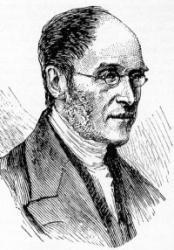
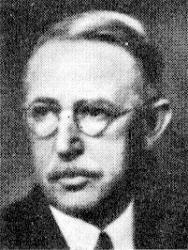
John H. Stockton
1813 - 1877 Person Name: J. H. S. Hymnal Number: 210 Author of "Only Trust Him" in World Wide Revival Songs No. 2 Stockton, John Hart, a Methodist minister, was born in 1813, and died in 1877. He was a member of the New Jersey Annual Conference of the Methodist Episcopal Church, and the successive pastoral charges that he filled as a member of that Conference are found in the Conference Journal. He was not only a preacher, but a musician and composer of tunes, as well as hymn writer. He published two gospel song books: Salvation Melodies, 1874, and Precious Songs, 1875.
Hymn Writers of the Church by Charles Nutter, 1911
===============
Stockton, John Hart, b. April 19, 1813, and d. March 25, 1877, was the author of "Come, every soul by sin oppressed" (Invitation), in I.D. Sankey's Sacred Songs and Solos, 1878, and of "The Cross, the Cross, the blood¬stained Cross" (Good Friday) in the same collection.
--John Julian, Dictionary of Hymnology, Appendix, Part II (1907)
===============
Stockton, John Hart. (New Hope, Pennsylvania, April 19, 1813--March 25, 1877). Born of Presbyterian parents, he was converted at a Methodist camp meeting in 1838, being received into full membership in the New Jersey Conference in 1857. Because of ill health he twice took the "supernumerary relations." He withdrew from actual pastoral work in 1874 and engaged in compiling and publishing gospel hymn books, issuing Salvation Melodies that year and Precious Songs in 1875, writing both words and music for a number of the songs. He died suddenly after attending a Sunday morning service at Arch Street Church, Philadelphia. Our Hymnody, McCutchan, has, perhaps, the fullest account of him readily available.
--Robert G. McCutchan, DNAH Archives
John H. Stockton
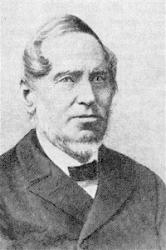
Henry Francis Lyte
1793 - 1847 Person Name: Henry F. Lyte Hymnal Number: 228 Author of "Jesus, I My Cross Have Taken" in World Wide Revival Songs No. 2 Lyte, Henry Francis, M.A., son of Captain Thomas Lyte, was born at Ednam, near Kelso, June 1, 1793, and educated at Portora (the Royal School of Enniskillen), and at Trinity College, Dublin, of which he was a Scholar, and where he graduated in 1814. During his University course he distinguished himself by gaining the English prize poem on three occasions. At one time he had intended studying Medicine; but this he abandoned for Theology, and took Holy Orders in 1815, his first curacy being in the neighbourhood of Wexford. In 1817, he removed to Marazion, in Cornwall. There, in 1818, he underwent a great spiritual change, which shaped and influenced the whole of his after life, the immediate cause being the illness and death of a brother clergyman. Lyte says of him:—
"He died happy under the belief that though he had deeply erred, there was One whose death and sufferings would atone for his delinquencies, and be accepted for all that he had incurred;"
and concerning himself he adds:—
"I was greatly affected by the whole matter, and brought to look at life and its issue with a different eye than before; and I began to study my Bible, and preach in another manner than I had previously done."
From Marazion he removed, in 1819, to Lymington, where he composed his Tales on the Lord's Prayer in verse (pub. in 1826); and in 1823 he was appointed Perpetual Curate of Lower Brixham, Devon. That appointment he held until his death, on Nov. 20, 1847. His Poems of Henry Vaughan, with a Memoir, were published in 1846.
His own Poetical works were:—
(1) Poems chiefly Religious 1833; 2nd ed. enlarged, 1845. (2) The Spirit of the Psalms, 1834, written in the first instance for use in his own Church at Lower Brixham, and enlarged in 1836; (3) Miscellaneous Poems (posthumously) in 1868. This last is a reprint of the 1845 ed. of his Poems, with "Abide with me" added. (4) Remains, 1850.
Lyte's Poems have been somewhat freely drawn upon by hymnal compilers; but by far the larger portion of his hymns found in modern collections are from his Spirit of the Psalms. In America his hymns are very popular. In many instances, however, through mistaking Miss Auber's (q. v.) Spirit of the Psalms, 1829, for his, he is credited with more than is his due. The Andover Sabbath Hymn Book, 1858, is specially at fault in this respect. The best known and most widely used of his compositions are "Abide with me, fast falls the eventide;” “Far from my heavenly home;" "God of mercy, God of grace;" "Pleasant are Thy courts above;" "Praise, my soul, the King of heaven;" and "There is a safe and secret place." These and several others are annotated under their respective first lines: the rest in common use are:—
i. From his Poems chiefly Religious, 1833 and 1845.
1. Above me hangs the silent sky. For Use at Sea.
2. Again, 0 Lord, I ope mine eyes. Morning.
3. Hail to another Year. New Year.
4. How good, how faithful, Lord, art Thou. Divine care of Men.
5. In tears and trials we must sow (1845). Sorrow followed by Joy.
6. My [our] rest is in heaven, my [our] rest is not here. Heaven our Home.
7. 0 Lord, how infinite Thy love. The Love of God in Christ.
8. Omniscient God, Thine eye divine. The Holy Ghost Omniscient.
9. The leaves around me falling. Autumn.
10. The Lord hath builded for Himself. The Universe the Temple of God.
11. Vain were all our toil and labour. Success is of God.
12. When at Thy footstool, Lord, I bend. Lent.
13. When earthly joys glide swift away. Ps. cii.
14. Wilt Thou return to me, O Lord. Lent.
15. With joy we hail the sacred day. Sunday.
ii. From his Spirit of the Psalms, 1834.
16. Be merciful to us, O God. Ps. lvii.
17. Blest is the man who knows the Lord. Ps. cxii.
18. Blest is the man whose spirit shares. Ps. xli.
19. From depths of woe to God I cry. Ps. cxxxx.
20. Gently, gently lay Thy rod. Ps. vi.
21. Glorious Shepherd of the sheep. Ps. xxiii.
22. Glory and praise to Jehovah on high. Ps. xxix.
23. God in His Church is known. Ps. lxxvi.
24. God is our Refuge, tried and proved. Ps. xlvi.
25. Great Source of my being. Ps. lxxiii.
26. Hear, O Lord, our supplication. Ps. lxiv.
27. How blest the man who fears the Lord. Ps.cxxviii.
28. Humble, Lord, my haughty spirit. Ps. cxxxi.
29. In this wide, weary world of care. Ps. cxxxii.
30. In vain the powers of darkness try. Ps.lii.
31. Jehovah speaks, let man be awed. Ps. xlix.
32. Judge me, O Lord, and try my heart. Ps. xxvi.
33. Judge me, O Lord, to Thee I fly. Ps. xliii.
34. Lord, I have sinned, but O forgive. Ps. xli.
35. Lord, my God, in Thee I trust. Ps. vii.
36. Lord of the realms above, Our Prophet, &c. Ps.xlv.
37. Lone amidst the dead and dying. Ps. lxii.
38. Lord God of my salvation. Ps. lxxxviii.
39. Lord, I look to Thee for all. Ps. xxxi.
40. Lord, I would stand with thoughtful eye. Ps. lxix.
41. Lord, my God, in Thee I trust. Ps. vii.
42. My God, my King, Thy praise I sing. Ps. cviii.
43. My God, what monuments I see. Ps. xxxvi.
44. My spirit on [to] Thy care. Ps. xxxi.
45. My trust is in the Lord. Ps. xi.
46. Not unto us, Almighty Lord [God]. Ps. cxv.
47. O God of glory, God of grace. Ps. xc.
48. O God of love, how blest are they. Ps. xxxvii.
49. O God of love, my God Thou art. Ps. lxiii.
50. O God of truth and grace. Ps. xviii.
51. O had I, my Saviour, the wings of a dove. Ps. lv.
52. O how blest the congregation. Ps. lxxxix.
53. O how safe and [how] happy he. Ps. xci.
54. O plead my cause, my Saviour plead. Ps. xxxv.
55. O praise the Lord, 'tis sweet to raise. Ps. cxlvii.
56. O praise the Lord; ye nations, pour. Ps. cxvii.
57. O praise ye the Lord With heart, &c. Ps. cxlix.
58. O that the Lord's salvation. Ps. xiv.
59. O Thou Whom thoughtless men condemn. Ps. xxxvi.
60. Of every earthly stay bereft. Ps. lxxiv.
61. Our hearts shall praise Thee, God of love. Ps. cxxxviii.
62. Pilgrims here on earth and strangers. Ps. xvi.
63. Praise for Thee, Lord, in Zion waits. Ps. lxv.
64. Praise to God on high be given. Ps. cxxxiv.
65. Praise ye the Lord, His servants, raise. Ps. cxiii.
66. Redeem'd from guilt, redeem'd from fears. Ps. cxvi.
67. Save me by Thy glorious name. Ps. liv.
68. Shout, ye people, clap your hands. Ps. xlvii.
69. Sing to the Lord our might. Ps. lxxxi.
70. Strangers and pilgrims here below. Ps. cix.
71. Sweet is the solemn voice that calls. Ps. cxxii.
72. The Church of God below. Ps. lxxxvii.
73. The Lord is King, let earth be glad. Ps. xcvii.
74. The Lord is on His throne. Ps. xciii.
75. The Lord is our Refuge, the Lord is our Guide. Ps. xlvii.
76. The mercies of my God and King. Ps. lxxxix.
77. The Lord Who died on earth for men. Ps. xxi.
78. Tis a pleasant thing to fee. Ps. cxxxiii.
79. Thy promise, Lord, is perfect peace. Ps. iii.
80. Unto Thee I lift mine [my] eyes. Ps. cxxiii.
81. Whom shall [should] we love like Thee? Ps. xviii.
Lyte's versions of the Psalms are criticised where their sadness, tenderness and beauty are set forth. His hymns in the Poems are characterized by the same features, and rarely swell out into joy and gladness.
--John Julian, Dictionary of Hymnology (1907)
==================
Lyte, Henry Francis, p. 706, i. Additional versions of Psalms are in common use:--
1. Lord, a thousand foes surround us. Psalms lix.
2. Praise, Lord, for Thee in Zion waits. Psalms lxv.
3. The Christian like his Lord of old. Psalms cxl.
4. The Lord of all my Shepherd is. Psalms xxiii.
5. The Lord of heaven to earth is come. Psalms xcviii.
6. Thy mercy, Lord, the sinner's hope. Psalms xxxvi.
7. To Thee, O Lord, in deep distress. Psalms cxlii. Sometimes given as "To God I turned in wild distress."
8. Uphold me, Lord, too prone to stray. Psalms i.
9. When Jesus to our [my] rescue came. Psalms cxxvi. These versions appeared in the 1st edition of Lyte's Spirit of the Psalms, 1834. It must be noted that the texts of the 1834, the 1836, and the 3rd ed., 1858, vary considerably, but Lyte was not responsible for the alterations and omissions in the last, which was edited by another hand for use at St. Mark's, Torquay.
Lyte's version of Psalms xxix., "Glory and praise to Jehovah on high" (p. 706, ii., 22), first appeared in his Poems, 1st ed., 1833, p. 25. Read also No. 39 as "Lord, I look for all to Thee."
--John Julian, Dictionary of Hymnology, Appendix, Part II (1907)
Henry Francis Lyte
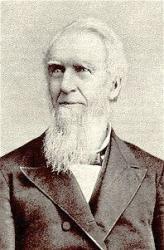
Samuel Francis Smith
1808 - 1895 Person Name: S. F. Smith Hymnal Number: 248 Author of "America" in World Wide Revival Songs No. 2 Smith, Samuel Francis, D.D., was born in Boston, U.S.A., Oct. 21, 1808, and graduated in arts at Harvard, and in theology at Andover. He entered the Baptist ministry in 1832, and became the same year editor of the Baptist Missionary Magazine. He also contributed to the Encyclopaedia Americana. From 1834 to 1842 he was pastor at Waterville, Maine, and Professor of Modern Languages in Waterville College. In 1842 he removed to Newton, Massachusetts, where he remained until 1854, when he became the editor of the publications of the Baptist Missionary Union. With Baron Stow he prepared the Baptist collection known as The Psalmist, published in 1843, to which he contributed several hymns. The Psalmist is the most creditable and influential of the American Baptist collections to the present day. Dr. Smith also published Lyric Gems, 1854, Rock of Ages, 1870, &c. A large number of his hymns are in use in America, and several have passed into some of the English collections. Taking his hymns in common use in alphabetical order, we have the following:—
1. And now the solemn deed is done. Ordination. Given in The Psalmist, 1843, No. 954. In Dr. Hatfield's Church Hymn Book, N. Y., 1872, it is altered to "The solemn service now is done."
2. As flows the rapid river. Life Passing Away. In Christian Psalmody, 1833, No. 33; the Hymns for the Vestry and Fireside, Boston, 1841; and The Psalmist, 1843, No. 1059. Found in a few English hymn-books, and in Lyra Sacra Americana, 1868.
3. Auspicious morning, hail. American National Anniversary. Written for July 4th, 1841, and published in The Psalmist, 1843, No. 1007.
4. Beyond where Cedron's waters flow. Gethsemane. In L. Bacon's Appendix, 1833; the Psalmist, 1843, No. 220, and later collections.
5. Blest is the hour when cares depart. Divine Worship. In The Psalmist, 1843, No. 947, and others.
6. Constrained by love we follow where. Holy Baptism. Appeared in the Baptist edition of the Plymouth Hymn Book, 1857.
7. Down to the sacred wave. Holy Baptism. Contributed to Winchell's Additional Hymns added to his Collection of 1817, in 1832, No. 510; repeated in The Psalmist, 1843, No. 818, and in several collections. Also in Lyra Sacra Americana, 1868.
8. Hail! ye days of solemn meeting. Public Worship. An altered form of No. 26 below, in Spurgeon's Our Own Hymn Book, 1866, as an "American Hymn, 1840."
9. How blest the hour when first we gave. Holy Baptism. Appeared in the Baptist edition of thePlymouth Hymn Book, 1857, No. 1468.
10. How calmly wakes the hallowed morn. Holy Baptism. Given in The Psalmist, 1843, No. 810, in later collections, and in Lyra Sacra Americana, 1868.
11. Jesus, Thou hast freely saved us. Salvation. In Winchell's Additional Hymns, 1832, No. 503, and others.
12. Meekly in Jordan's Holy Stream. Holy Baptism. Contributed to The Psalmist, 1843, No. 808.
13. My country, 'tis of thee. National Hymn. "Written in 1832, and first sung at a children's Fourth of July celebration in Park Street church, Boston." Included in The Psalmist, 1843, No. 1000, and found in a large number of American hymn-books, but not in use in Great Britain. It is one of the most popular of Dr. Smith's compositions. Text, with note in Lyra Sacra Americana, 1868.
14. 0 not my own these verdant hills. Bought with a Price. Appeared in Nason's Congregational Hymn Book, 1857, and given inLaudes Domini, 1884.
15. Onward speed thy conquering flight. Missions. Appeared in The Psalmist, 1843, No. 892, and is found in several modern collections in Great Britain and America. Also in Lyra Sac. Americana, 1868.
16. Planted in Christ, the living Vine. Christian Fellowship; or, For Unity. Given in The Psalmist, 1843, No. 929, inLyra Sacra Americana, 1868, and several hymn-books. Of the hymns contributed by Dr. Smith to The Psalmist this is the best, and one of the most popular.
17. Remember thy Creator. Youthful Piety Enforced. In Christian Psalmody, 1832, No. 32; the Hymns for the Vestry and Fireside, 1841; The Psalmist, 1843, No. 778; Lyra Sac. Americana, 1868, and other collections.
18. Sister, thou wast mild and lovely. Death and Burial. Written on the death of Miss J. M. C. of Mount Vernon School, Boston, July 13,1833, and published in The Psalmist, 1843, No. 1096.
19. Softly fades the twilight ray. Sunday Evening. Written in 1832, and included in The Psalmist, 1843, No. 56. Also in Lyra Sacra Americana, and several hymn-books.
20. Spirit of holiness, descend. Whitsuntide. Appeared in the Hymns for the Vestry and Fireside, 1841, No. 295, and again in The Psalmist, 1843, No. 384. In the Unitarian Hymns for the Church of Christ, Boston, 1853. St. ii., iii., iv. were given as "Spirit of God, Thy churches wait." This form of the text and the original are both in modern hymn-books.
21. Spirit of peace and holiness. Institution of a Minister. Appeared in The Psalmist, 1843, No. 953, and Hatfield's Church Hymn Book, 1872.
22. The morning light is breaking. Missions. Written in 1832, and included in Hastings's Spiritual Songs, 1832-33, No. 253; and The Psalmist, 1843, No. 912. This hymn is very popular and has been translated into several languages. Dr. Smith says of it that “it has been a great favourite at missionary gatherings, and I have myself heard it sung in five or six different languages in Europe and Asia. It is a favourite with the Burmans, Karens, and Telegus in Asia, from whose lips I have heard it repeatedly.”
23. The Prince of Salvation in triumph is riding. Missions. Given in Hastings and Mason's Spiritual Songs, 1832-33, No. 274; The Psalmist, 1843, and later collections.
24. Tis done, the [important] solemn act is done. Ordination. Appeared in The Psalmist 1843, No. 951, and later hymn-books.
25. Today the Saviour calls. Invitation. First sketch by Dr. Smith, the revised text, as in Hastings and Mason's Spiritual Songs, No. 176, and The Psalmist, No. 453, by Dr. T. Hastings (p. 495, i. 19).
26. Welcome, days of solemn meeting. Special Devotional Services. Written in 1834, and given in Dr. Hatfield's Church Hymn Book, 1872. See No. 8.
27. When shall we meet again ? Parting. This is a cento. The first stanza is from Alaric A. Watts's Poetical Sketches, &c, 1822, p. 158 ; and st. ii.-iv. are by Dr. Smith. In this form it was published in L. Bacon's Supplement to Dwight, 1833, No. 489. It is in several American hymn-books; and also the English Baptist Psalms & Hymns, 1858, &c.
28. When the harvest is past and the summer is gone. Close of Worship. Contributed to Hastings and Mason's Spiritual Songs, 1831, No. 244; and repeated in the Fuller and Jeter Supplement to The Psalmist, 1847, No. 22, and later collections.
29. When thy mortal life is fled. The Judgment. Contributed to Winchell's Additional Hymns, 1832, No. 379, and repeated in The Psalmist, 1843, No. 455, and later hymn-books. Also in Lyra Sacra Americana, 1868.
30. While in this sacred rite of Thine. Holy Baptism. Appeared in The Psalmist, 1843, No. 803: Lyra Sacra Americana, 1868, &c.
31. With willing hearts we tread. Holy Baptism. In The Psalmist, 1843, No. 798; and again in the Baptist Praise Book, 1871.
32. Yes, my native land, I love thee. A Missionary's Farewell. Contributed to Winchell's Additional Hymns, 1832, No. 445, and found in later collections. Also in Lyra Sacra Americana, 1868. [Rev. F. M. Bird, M.A.]
--John Julian, Dictionary of Hymnology (1907)
Samuel Francis Smith
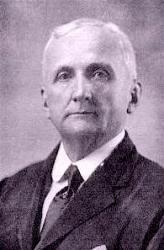
A. J. Showalter
1858 - 1924 Hymnal Number: 13 Composer of "[What a fellowship, what a joy divine]" in World Wide Revival Songs No. 2 Anthony Johnson Showalter USA 1858-1924/ Born in Cherry Grove, VA, he became an organist, gospel music composer, author, teacher, editor, and publisher. He was taught by his father and in 1876 received training at the Ruebush-Kieffer School of Music, Dayton, VA. He also attended George Root’s National Normal school at Erie, PA, and Dr Palmer’s International Normal at Meadville, PA. He was teaching music in shape note singing schools by age 14. He taught literary school at age 19, and normal music schools at age 22, when he also published his first book. In 1881 he married Lucy Carolyn (Callie) Walser of TX, and they had seven children: Tennie, Karl, Essie, Jennie, Lena, Margaret, and Nellie. At age 23 he published his “Harmony & composition” book, and years later his “Theory of music”. In 1884 he moved to Dalton, GA, and in 1890 formed the Showalter Music Company of Dalton. His company printed and published hymnals, songbooks, schoolbooks, magazines, and newspapers, and had offices in Texarkana, AR, and Chattanooga, TN. In 1888 he became a member of the M T N A (Music Teachers National Association) and was vice-president for his state for several years. In 1895 he went abroad to study methods of teachers and conductors in Europe. He held sessions of his Southern Normal Music Institute in a dozen or more states. He edited “The music teacher & home magazine” for 20 years. In 1895 he issued his “New harmony & composition” book. He authored 60+ books on music theory, harmony, and song. He published 130+ music books that sold over a million copies. Not only was he president of the A J Showalter Music Company of Dalton, GA, but also of the Showalter-Patton Company of Dallas, TX, two of the largest music publishing houses in the American south. He was a choir leader and an elder in the First Presbyterian Church in Dalton (and his daughter, Essie, played the organ there). He managed his fruit farm, looking after nearly 20,000 trees , of which 15,000 are the famous Georgia Elberta peaches, the rest being apples, plums, pecans, and a dozen other varieties of peaches. He was also a stockholder and director of the Cherokee Lumber Company of Dalton, GA, furnishing building materials to a large trade in many southern, central and eastern states. He died in Chattanooga, TN, and is buried in Dalton, GA. He loved hymns, and kept up with many of his students over the years, writing them letters of counsel and encouragement. In 2000 Showalter was inducted into the Southern Gospel Music Hall of Fame.
Note: Showalter received two letters one evening from former music students, both of who were grieving over the death of their wives. He had heard a sermon about the arms of Moses being held up during battle, and managed to form a tune and refrain for a hymn, but struggled to find words for the verses that fit. He wrote to his friend in OH, Rev Elisha Hoffman, who had already composed many hymns and asked if he could write some lyrics, which he gladly did.
John Perry
A. J. Showalter
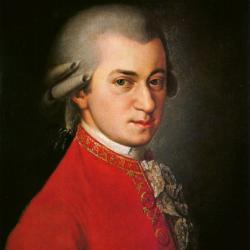
Wolfgang Amadeus Mozart
1756 - 1791 Person Name: Mozart Hymnal Number: 228 Composer of "[Jesus, I my cross have taken]" in World Wide Revival Songs No. 2 Wolfgang Amadeus Mozart Austria 1756-1791. Born at Salzburg, Austria, the son of Leopold Mozart, a minor composer and violinist, and youngest of seven children, he showed amazing ability on violin and keyboard from earliest childhood, even starting to compose music at age four when his father would play a piece and Mozart would play it exactly as did his father. At five, he composed some of his own music, which he played to his father, who wrote it down. When Mozart was eight, he wrote his first symphony, probably transcribed by his father. In his early years his father was his only teacher, teaching his children languages and academic subjects, as well as fundamentals of their strict Catholic faith. Some of his early compositions came as a surprise to his father, who eventually gave up composing himself when he realized how talented his son was. His family made several European journeys and he and his sister, Nanneri, performed as child prodigies, at the court of Prince-elector Maximillian II of Bavaria in Munich, and at the Imperial Courts in Vienna and Prague. A long concert tour followed, for 3.5 years, taking the family to courts in Munich, Mannheim, Paris, London, Dover, The Hague, Amsterdam, Utrecht, Mechelen, and again to Paris, and back home via Zurich, Donaueschingen, and Munich. During these trips Mozart met many musicians, acquainting himself with the works of other composers. He met Johann Christian Bach in London in 1764. Family trips were challenging, and travel conditions were primitive. They had to wait for invitations and reimbursements from nobility, and they endured long, near-fatal illnesses far from home. First Leopold (1764) got sick, then both children (1765). They traveled again to Vienna in 1767 and stayed there over a year. After a year back in Salzburg, Leopold and Wolfgang went to Italy (1769-1771), Leopold wished to display his son’s abilities as a performer and maturing composer. In Bologna, Italy, Wolfgang was accepted as a member of the famous Academia Filamonica. In Rome he heard Gregorio Allegri’s Miserere twice in performance. Back in the Sistine Chapel, Mozart wrote the whole performance out from memory, thus producing the first unauthorized copy of this closely guarded property of the Vatican. In the next few years Mozart wrote several operas performed with success in Italy, but his father’s hopes of securing a professional appointment for his son were not realized. At age 17 he was engaged as a musician at the Salzburg court, but grew restless and traveled in search of a better position. After returning to Salzburg, Mozart was employed as a court musician by the ruler of Salzburg, Prince Archbishop Hieronymus Colloredo. This gave Mozart ample opportunity to develop relationships with other musicians and his admirers, resulting in his development of new symphonies, sonatas, string quartets, masses, serenades, and some minor operas. In 1775 he wrote his only violin concertos, five in all. Again, he was discontent with work in Salzburg and traveled to find more opportunity to write operas. He and his father again visited Munich and Vienna, but neither visit was successful with the exception of his opera ‘La finta giardiniera’ in Munich. In 1777 he resigned his Salzburg position and went to Augsburg, Mannheim, Paris, and Munich again. In Mannheim he met and fell in love with Aloysia Weber, one of four daughters of a musical family. He could find no real employment there and left for Paris in 1778. He might have had a position as organist at Versailles, but he was not interested in that. He fell into debt and started pawning valuables. During these events his mother died. Meanwhile his father was still trying to find him a position in Salzburg. After checking out several other European cities and Munich, he again encountered Aloysia, but she was no longer interested in him, so he returned to Salzburg, having written another symphony, concerto, and piano sonata, and took the new appointment his father had found. However, he was still in discontent. Visiting Vienna in 1781, he was dismissed from his Salzburg position. He wrote another opera, ‘Idomeneo’, in 1781, that was successful in Munich. Two months later he was summoned to Vienna, where his employer, Archbishop Colloredo, wanted him around due to his notoriety. Mozart wished to meet the emperor and perform for him, and finally got that opportunity. It resulted in a part-time position and substantial commissions. Colloredo became a nemesis to Mozart’s career, finally releasing Mozart from his employ with a literal kick in the pants, much against his father’s wishes. However, he was now independent. Mozart then decided to settle in Vienna as a free lance performer and composer. He lived with the Fridolin Weber family, who had moved from Mannheim to Vienna. Fridolin, the father, had died, and they were taking in lodgers to make ends meet. His career there went well, and he performed as a pianist before the Emperor, establishing himself as the finest keyboard player in Vienna. He wrote another opera in 1782, again achieving success. Mozart had now become a prolific and influential composer of the Classical period and was known throughout Europe. Aloysia was now married to actor, Joseph Lange, and Mozart’s interest shifted to her sister, Constanze. In 1782 he married Constanze Weber Mozart Nissen. The marriage started out with a brief separation, and there was a problem getting Mozart’s father’s permission, which finally came. They had six children, but only two survived infancy: Carl and Franz. He lived in Vienna and achieved some notoriety, composing many of his best-known symphonies, concertos, and operas. In 1782-83 he became intimately acquainted with Johann Sebastian Bach and George Friederic Handel, as his friend, Gottfried van Swieten, owned many manuscripts of the Baroque masters, which Mozart studied intently. He altered his style of composition as a result. That year Mozart and his wife visited his father and sister, and he composed a liturgical piece, a Mass, with a singing part for his wife. He also met Joseph Hadyn in Vienna in 1784 and they became friends. They even played together in a string quartet from time to time. Mozart wrote six quartets dedicated to Hadyn. In 1785 Hadyn told Leopold Mozart, “Your son is the greatest composer known to me by person and repute, he has taste, and what is more, the greatest skill in composition”. Over the next several years Mozart booked several piano concertos in various places as a sole performer to delighted audiences, making substantial remuneration for his work. He and his wife then adopted a more luxurious lifestyle. They moved to an expensive apartment and he bought a fine fortepiano and billiard table. They sent their son, Karl, to an expensive boarding school and also kept servants. In 1784 Mozart became a Freemason and even composed Masonic music. Over the next several years he did little operatic writing and focused on his career as a piano soloist and writer of concertos. He again began operatic collaboration in 1785, creating ‘The marriage of Figaro’, then ‘Don Giovanni’ in 1787. That year his father died. Also that year he obtained a steady post under Emperor Joseph II as his chamber composer. This was part-time employment that was important when hard times arrived. However, Joseph aimed at keeping Mozart from leaving Vienna for better work. The Austrio-Turkish War made life difficult for musicians, and his aristocracy support had declined. He moved to save on expenses, but that did not help much, and he was reduced to borrowing funds from his friends, and pleading for loans. During this period he produced his last three symphonies. In 1789 he then set up on a journey to Leipzig, Dresden, and Berlin hoping to improve his fortunes. In 1790 he was highly productive, producing concertos, an opera, ‘The magic flute’, a series of string quintets, a motet, and an (unfinished) Requiem. Finances began to improve and he begin paying back his debts. Public reaction to his works also brought him great satisfaction. In 1791, while in Prague for the premiere of his opera, ‘La clemenza di Tito’, he fell ill. He continued professional functions for a short time, but had to go home and be nursed by his wife over the next couple of months. He died at Vienna, Austria, at the age of 35, a small thin man with undistinguishing characteristics. He was buried in a modest grave, having had a small funeral. Beethoven composed his early works in the shadow of Mozart, and Joseph Hadyn wrote “posterity will not see such a talent (as Mozart) again in 100 years”. 600+ works. Side note: Mozart enjoyed billiards, dancing, and had a pet canary, a starling, a dog, and a horse for recreational riding. He liked off-color humor. He wore elegant clothing when performing and had a modest tenor voice.
John Perry
Wolfgang Amadeus Mozart
Louisa M. R. Stead
1850 - 1917 Person Name: Mrs. Louisa M. R. Stead Hymnal Number: 294 Author of "'Tis So Sweet to Trust in Jesus" in World Wide Revival Songs No. 2 Louisa (Louise) Maria Rouse Stead Wodehouse
b. Dover, Kent, 1 February 1846 [registered Louisa Maria Rouse, but often known as Louise]
d. Penkridge, Southern Rhodesia, 18 January 1917
She grew up in England, in Kent and Sussex, becoming governess to a family in Lyminge, Kent, before emigrating to America, c. 1871. While living in Cincinnati, Ohio, she attended a camp meeting in Urbana, Ohio, and wrote her first hymn, ‘Precious Saviour, thou hast saved me’, which was published in Winnowed Hymns, 1873, with music by Dora Boole. In September 1873 she married George Stead, of Hempstead, Long Island, at St Paul Methodist Episcopal Church, Cincinnati, and moved to Hempstead. Her verses, ‘Saved from the power and the bondage of sin’ were published in The Advocate of Christian Holiness, August 1875. She was apparently in England from April to July 1876, with their infant daughter, Louise, when her husband drowned in Hempstead Bay in May 1876, while saving the life of his little boy (a son from his previous marriage). In 1880, she was still living in Hempstead with Louise (aged 5), but shortly afterwards went to South Africa, where she married Robert Wodehouse in Port Elizabeth in January 1882. Her best known-hymn, ‘Tis so sweet to trust in Jesus’, with music by William J. Kirkpatrick, was published in Songs of Triumph, 1882. They served as missionaries in Africa for about 15 years, before returning to Long Island, USA, where he was pastor of the Methodist Episcopal Church at East Meadow for several years. They returned to Africa in January 1901, to work in Umtali, Rhodesia. After retiring in 1911, she lived near Mutambara mission station, fifty miles from Umtali. Her daughter Louise (sometimes known as Lillie), followed her mother to Africa, where she married the Rev. David A. Carson, and was able to care for her mother in her later years.
Gordon Taylor (research for Companion to the 2015 Song Book of the Salvation Army)
Louisa M. R. Stead
C. Austin Miles
1868 - 1946 Person Name: C. A. M. Hymnal Number: 32 Author of "Dwelling in Beulah Land" in World Wide Revival Songs No. 2 Charles Austin Miles USA 1868-1946. Born at Lakehurst, NJ, he attended the Philadelphia College of Pharmacy and the University of PA. He became a pharmacist. He married Bertha H Haagen, and they had two sons: Charles and Russell. In 1892 he abandoned his pharmacy career and began writing gospel songs. At first he furnished compositions to the Hall-Mack Publishing Company, but soon became editor and manager, where he worked for 37 years. He felt he was serving God better in the gospel song writing business, than as a pharmacist. He published the following song books: “New songs of the gospel” (1900), “The service of praise” (1900), “The voice of praise” (1904), “The tribute of song” (1904), “New songs of the gospel #2” (1905), “Songs of service” (1910), “Ideal Sunday school hymns” (1912). He wrote and/or composed 400+ hymns. He died in Philadelphia, PA.
John Perry
C. Austin Miles
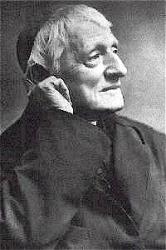
John Henry Newman
1801 - 1890 Person Name: J. H. Newman Hymnal Number: 235 Author of "Lead, Kindly Light" in World Wide Revival Songs No. 2 Newman, John Henry , D.D. The hymnological side of Cardinal Newman's life and work is so small when compared with the causes which have ruled, and the events which have accompanied his life as a whole, that the barest outline of biographical facts and summary of poetical works comprise all that properly belongs to this work. Cardinal Newman was the eldest son of John Newman, and was born in London, Feb. 21, 1801. He was educated at Ealing under Dr. John Nicholas, and at Trinity College, Oxford, where he graduated in honours in 1820, and became a Fellow of Oriel in 1822. Taking Holy Orders in 1824, he was for a short time Vice-Principal of St. Alban's Hall, and then Tutor of Oriel. His appointment to St. Mary's, Oxford, was in the spring of 1828. In 1827 he was Public Examiner, and in 1830 one of the Select University Preachers. His association with Keble, Pusey, and others, in what is known as "The Oxford Movement," together with the periodical publication of the Tracts for the Times, are matters of history. It is well known how that Tract 90, entitled Bernards on Certain Passages in the Thirty-nine Articles, in 1841, was followed by his retirement to Littlemore; his formal recantation, in February, 1843, of all that he had said against Rome; his resignation in September of the same year of St. Mary's and Littlemore; and of his formal application to be received into the communion of the Church of Rome, Oct. 8, 1845. In 1848 he became Father Superior of the Oratory of St. Philip Neri, at Birmingham; in 1854 Rector of the newly founded Roman Catholic University at Dublin; and in 1858 he removed to the Edgbaston Oratory, Birmingham. In 1879 he was created a Cardinal, and thus received the highest dignity it is in the power of the Pope to bestow. Cardinal Newman's prose works are numerous, and his Parochial Sermons especially being very popular. His Apologia pro Vita Sua, 1864, is a lucid exposition and masterly defence of his life and work.
Cardinal Newman's poetical work began with poems and lyrical pieces which he contributed to the British Magazine, in 1832-4 (with other pieces by Keble and others), under the title of Lyra Apostolica. In 1836 these poems were collected and published under the same title, and Greek letters were added to distinguish the authorship of each piece, his being δ. Only a few of his poems from this work have come into use as hymns. The most notable is, "Lead, kindly Light". His Tract for the Times, No. 75, On the Roman Breviary, 1836, contained translations of 14 Latin hymns. Of these 10 were repeated in his Verses on Religious Subjects, 1853, and his Verses on Various Occasions, 1865, and translations of 24 additional Latin hymns were added. Several of these translations are in common use, the most widely known being "Nunc Sancte nobis" ("Come, Holy Ghost, Who ever One"). His collection of Latin hymns from the Roman and Paris Breviaries, and other sources was published as Hymni Ecclesiae, in 1838, and again in 1865. His Dream of Gerontius, a poem from which his fine hymn, "Praise to the Holiest in the height," is taken, appeared in his Verses on Various Occasions, in 1868. Cardinal Newman's influence on hymnology has not been of a marked character. Two brilliant original pieces, and little more than half a dozen translations from the Latin, are all that can claim to rank with his inimitable prose.
--John Julian, Dictionary of Hymnology (1907)
=================
Newman, John Henry, p. 822, ii. He died at Edgbaston, Birmingham, Aug. 11, 1890.
--John Julian, Dictionary of Hymnology, Appendix, Part II (1907)
==============
Newman, Card. J. H., pp. 802, ii.; 1581, ii. The following are also in use at the present time, but, except No. 13, almost exclusively in R. C. collections. The dates in brackets are those given in Newman's Verses, 1868; all thus marked were composed in the Birmingham Oratory at these dates:—
i. In the Rambler, 1850.
1. In the far North our lot is cast. [S. Philip Neri.] (1850.) March, 1850, p. 250. In the Birmingham Oratory Hymn Book, 1857 and 1906, it begins, " On Northern coasts," and in the Parochial Hymn Book, 1880, with st. ii. " Founder and Sire! to mighty Rome."
2. The Angel-lights of Christmas morn. [Candlemas.] (1849.) March, 1850, p. 251.
3. There sat a Lady all on the ground. [B. V. M.] (1849.) May, 1850, p. 425.
ii. Verses, 1853.
4. All is Divine which the Highest has made. [For an inclement May.] (1850.) 1853, p. 128.
5. Green are the leaves, and sweet the flowers. [May.] (1850.) 1853, p. 125.
6. My oldest friend, mine from the hour. [Guardian Angel] (1853.) 1853, p. 12.
7. The holy monks conceal'd from men. [S. Philip Neri.] (1850.) 1853, p. 134.
8. The one true Faith, the ancient Creed. [The Catholic Faith.] 1853, p. 140.
9. This is the saint of sweetness and compassion. [S. Philip Neri.] 1853, p. 136. Rewritten (1857) as "This is the saint of gentleness and kindness" in the Birmingham Oratory Hymn Book, 1857, No. 49.
iii. Birmingham Oratory Hymn Book, 1857.
10. Help, Lord, the souls which Thou hast made. [The Faithful Departed.] (1857.) 1857, No. 76.
iv. Birmingham Oratory H. Book, 1862.
11. I ask not for fortune, for silken attire. [S. Philip Neri.] (1857.) 1862, No. 54.
12. Thou champion high. [S. Michael.] (1862.) 1862, No. 41.
v. Dream of Gerontius, 1866.
13. Firmly I believe and truly. [The Faith of a Christian.] 1866, p. 9; Verses, 1868, p. 318; The English Hymnal 1906. [Rev. James Mearns, M.A.]
--John Julian, Dictionary of Hymnology, New Supplement (1907)
-----
John Henry Newman was born in London, in 1801. He studied at Trinity College, Oxford, graduating B.A. in 1820, and was subsequently Fellow of Oriel College. In 1825, he became Vice Principal of S. Alban's Hall, and was Tutor of his college for several years. In 1828, he became incumbent of S. Mary's, Oxford, with the chaplaincy of Littlemore. In 1842, he went to preside over a Brotherhood he had established at Littlemore. He was the author of twenty-four of the "Tracts for the Times," amongst them the celebrated Tract No. 90, which brought censure upon its author. In 1845, he left the Church of England and entered the Church of Rome. He was appointed Father Superior of the Oratory of S. Philip Neri, at Birmingham, and in 1854, Rector of the new Roman Catholic University at Dublin, an office he filled till 1858. He has published a large number of works.
--Annotations of the Hymnal, Charles Hutchins, M.A. 1872.
====================
John Henry Newman
Hugh Wilson
1766 - 1824 Hymnal Number: 226 Composer of "[Alas! and did my Savior bleed]" in World Wide Revival Songs No. 2 Hugh Wilson (b. Fenwick, Ayrshire, Scotland, c. 1766; d. Duntocher, Scotland, 1824) learned the shoemaker trade from his father. He also studied music and mathematics and became proficient enough in various subjects to become a part-time teacher to the villagers. Around 1800, he moved to Pollokshaws to work in the cotton mills and later moved to Duntocher, where he became a draftsman in the local mill. He also made sundials and composed hymn tunes as a hobby. Wilson was a member of the Secession Church, which had separated from the Church of Scotland. He served as a manager and precentor in the church in Duntocher and helped found its first Sunday school. It is thought that he composed and adapted a number of psalm tunes, but only two have survived because he gave instructions shortly before his death that all his music manuscripts were to be destroyed.
Bert Polman
Hugh Wilson
T. C. O'Kane
1830 - 1912 Hymnal Number: 55 Composer of "[Behold a Stranger at the door]" in World Wide Revival Songs No. 2 O'Kane, Tullius Clinton, an American writer, born March 10, 1830, is the author of "O sing of Jesus, Lamb of God" (Redemption); and "Who, who are these beside the chilly wave?" (Triumph in Death), in I. D. Sankey's Sacred Songs and Solos, 1878 and 1881.
--John Julian, Dictionary of Hymnology, Appendix, Part II (1907)
===========================
Tullius Clinton O'Kane was born in Fairfield County, Ohio, March 10, 1830. He resided with his parents in this vicinity until the spring of 1849, when he went to Delaware, Ohio, and entered the Ohio Wesleyan University, from which he graduated in 1852, with the degree A. B., and received his A. M. degree three years later from his Alma Mater.
Immediately upon his graduation, he was tendered a position in the Faculty as Tutor of Mathematics, which he accepted and successfully filled for five years. The students always called him "Professor," by which title he is known to the present day.
His musical abilities were early recognized in the University, and for years he was the musical precentor in the daily chapel devotions. He organized and maintained a Choral Society in the College, and was the first musical instructor in the Ohio Wesleyan Female College, which a few years ago was incorporated into the University.
In 1857 he was elected to a principalship in the Cincinnati public schools, and served in that capacity until 1861, when he resigned his position to accept a place in the piano establishment of Philip Phillips & Co. He remained with this house until its removal to New York City in 1867, when, although urged to be transferred with the house to that city, he preferred to remove with his family back to Delaware, Ohio.
For the ensuing six years he traveled over the state of Ohio as the general agent for the Smith American Organ Co., of Boston, Mass. During this time he visited conferences, Sunday-school conventions, both State and County, introducing his Sunday-school singing books, and in this way became well known throughout his native state, and quite extensively in some of the adjoining states.
His musical compositions were first published in Philip Phillips' Musical Leaves, in 1865, and since then but few Sunday-school singing books have appeared without one or more of his compositions.
His first music book, Fresh Leaves, was issued in 1868. This was followed at intervals by Dew Drops, Songs of Worship, Every Sabbath, Jasper and Gold, Redeemer's Praise, Glorious Things and Morning Stars. In connection with his son, Edward T. O'Kane, who is himself a most excellent composer and a very skillful organist, in 1882 he issued Selected Anthems, a book designed for use by the more advanced choirs. In association with J. R. Sweney and "Chaplain" McCabe, he issued Joy to the World, a song book for prayer-meetings, and the same editors, with the addition of W. J. Kirkpatrick, compiled Songs of Redeeming Love, No. 1, in 1882, and No. 2 in 1884. He also issued Songs of Praises, Unfading Treasures and Forward Songs.
Some of Professor O'Kane's best known songs are Glorious Fountain, The Home Over There, On Jordan's Stormy Banks, Say, are You Ready? and many others. With Mr. O'Kane, music and musical composition have ever been a recreation, rather than a profession. He is an excellent leader of choirs, but his forte seems to be in leading large congregations, Sunday-schools and social religious meetings in sacred song. He sings "with the spirit and the understanding also " — with a due appreciation of both words and music — and very naturally infuses his enthusiasm into his audiences so that they cannot "keep from singing." In his music he endeavors to catch the spirit of the hymn, and then give it expression in the music he composes for it. This sometimes seems to have been almost an inspiration, and could be illustrated by a reference to the circumstances under which many of his compositions have been made.
One of his earlier and more widely known pieces is that entitled, Over There. He says he cut this hymn out of some newspaper and put it with others in his portfolio, intending some time when he felt like it to give it a musical setting. One Sunday afternoon, after studying his lesson for the next session of his Sunday-school, he opened his portfolio, and turning over the selections, found these words, and something seemed to say, "Now's your time." He sat down at the organ, studied the hymn intently for a few moments, and then, as his fingers touched the keys of the instrument, melody and harmony were in every movement, and when the stanza was ended, melody and harmony found their expression in the chorus, and Over There was finished.
Another of his well known songs is Sweeping Through the Gates. One cold, blustery day he had occasion to go from his residence to the railroad depot, about a mile distant, and in his route had to cross the river on a suspension foot-bridge. As he came down to the bridge, he thought of the "river of death," so cold, with no bridge, and then the words of the dying Cookman came to his mind, and he exclaimed to himself:
'Who, who are these beside the chilly wave? "
Words, melody and refrain seemed to come all at once and all together, so that by the time he arrived back at his home, the composition was complete.
Professor O'Kane is a genial, modest Christian gentleman, who carries sunshine wherever he goes. His greatest joy comes from the consciousness that his music has cheered and comforted the hearts of Christian people all over the world, and has been the means of winning thousands from the pleasures of the world to the higher enjoyments of the Christian religion. His song, Sweeping Through the Gates, will be sung till all the ransomed are gathered Over There.
-Hall, J. H. (c1914). Biographies of Gospel Song and Hymn Writers. New York: Fleming H. Revell Company.
========================
O'Kane, Tullius Clinton. Died 10 February 1912, Delaware, Ohio. Buried in Oak Grove Cemetery, Delaware, Ohio.
--DNAH Archives
T. C. O'Kane
Pages