

 My Starred Hymns
 My Hymnals
 My Purchased Files
Planning worship?
Check out our sister site, ZeteoSearch.org,
for 20+ additional resources related to your search.
- |
User Links
Search Results


The Lutheran Hymnary

Publication Date: 1913 Publisher: Augsburg Publishing House Publication Place: Minneapolis, Minn. Editors: Augsburg Publishing House
The Lutheran Hymnary


Ah, holy Jesus, how hast Thou offended
Author: J. Heermann Meter: 11.11.11.5 Appears in 148 hymnals Lyrics: 1 Ah, holy Jesus, how hast Thou offended,
That man to judge Thee hath in hate pretended?
By foes derided, by Thine own rejected,
O most afflicted!
2 Who was the guilty? Who brought this upon Thee?
Alas, my treason, Jesus, hath undone Thee!
’Twas I, Lord Jesus, I it was denied Thee:
I crucified Thee.
3 Lo, the good Shepherd for the sheep is offered;
The slave hath sinnéd, and the Son hath suffered;
For man’s atonement, while he nothing heedeth,
God intercedeth.
4 For me, kind Jesus, was Thy incarnation,
Thy mortal sorrow, and Thy life’s oblation;
Thy death of anguish and Thy bitter passion,
For my salvation.
5 Therefore, kind Jesus, since I cannot pay Thee,
I do adore Thee, and will ever pray Thee:
Think on Thy pity and Thy love unswerving,
Not my deserving. Topics: The Church Year Lent and Passion Week; The Church Year Lent and Passion Week; Jesus Christ Our Shepherd Used With Tune: [Ah, holy Jesus, host Thou offended]
Ah, holy Jesus, how hast Thou offended
Glorious things of thee are spoken
Author: J. Newton Appears in 1,349 hymnals Lyrics: 1 Glorious things of thee are spoken,
Zion, city of our God;
He, whose word cannot be broken,
Formed thee for His own abode,
On the Rock of Ages founded,
What can shake thy sure repose!
With salvation's walls surrounded,
Thou may'st smile at all thy foes.
2 See the streams of living waters
Springing from eternal love,
Well supply thy sons and daughters,
And all fear of want remove.
Who can faint while such a river
Ever flows their thirst to assuage?
Grace, which like the Lord, the giver,
Never fails from age to age.
3 Round each habitation hovering,
See the cloud and fire appear,
For a glory and a covering
Showing that the Lord is near.
Thus they march, the pillar leading,
Light by night and shade by day:
Daily on the manna feeding
Which He gives them when they pray.
4 Savior, if of Zion's city
I, through grace, a member am,
Let the world deride or pity,
I will glory in Thy name.
Fading is the worldling's pleasure,
All his boasted pomp and show;
Solid joys and lasting treasure
None but Zion's children know. Topics: The Church Its Strength and Permanence; The Church Its Strength and Permanence; Church of Christ Used With Tune: [Glorious things of thee are spoken]
Glorious things of thee are spoken
God bless our native land!
Author: C. T. Brooks ; J. S. Dwight Appears in 674 hymnals Lyrics: 1 God bless our native land!
Firm may she ever stand,
Through storm and night;
When the wild tempests rave,
Ruler of wind and wave,
Do Thou our country save
By Thy great might.
2 For her our prayers shall rise
To God above the skies;
On Him we wait:
Thou who art ever nigh,
Guarding with watchful eye,
To Thee aloud we cry,
God save the state! Topics: Various Occasions National ; Various Occassions National Used With Tune: [God bless our native land!]
God bless our native land!


[Guide me, O Thou great Jehovah]
Meter: 8.7.8.7.4.7 Appears in 68 hymnals Composer and/or Arranger: J. Filitz, 1804—1876 Tune Key: E Major Incipit: 13556 54334 51321 Used With Text: Guide me, O Thou great Jehovah
[Guide me, O Thou great Jehovah]
[O happy day, that stays my choice]
Meter: 8.8.8.8 Appears in 195 hymnals Composer and/or Arranger: Ralph Harrision, 1748—1810 Tune Key: B Flat Major Incipit: 55435 11271 32232 Used With Text: O happy day, that stays my choice
[O happy day, that stays my choice]
[Fierce raged the tempest o'er the deep]
Meter: 8.8.8.4 Appears in 71 hymnals Composer and/or Arranger: J. B. Dykes, 1823—76 Tune Key: E Flat Major Incipit: 55555 66513 21766 Used With Text: Fierce raged the tempest o'er the deep
[Fierce raged the tempest o'er the deep]


To God, the Father, Son
Hymnal: LHPN1913 #D1 (1913) Meter: 6.6.8.6 Lyrics: To God, the Father, Son,
And Spirit, ever blest,
The One in Three, the Three in One,
Be endless praise addressed.
To God, the Father, Son
To Father, Son, and Holy Ghost
Hymnal: LHPN1913 #D2 (1913) Meter: 8.6.8.6 Lyrics: To Father, Son, and Holy Ghost,
The God whom we adore,
Be glory, as it was, and is,
And shall be evermore.
To Father, Son, and Holy Ghost
Now to the holy Three in One
Hymnal: LHPN1913 #D3 (1913) Meter: 8.7.8.7.8.8.7 Lyrics: Now to the holy Three in One,
Who o'er creation reigneth,
Be everlasting honor done,
To whom all praise pertaineth.
All blessing be to God Most High,
All glory to His majesty,
Who all the world sustaineth.
Now to the holy Three in One


Charlotte Elliott
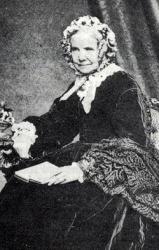
1789 - 1871 Hymnal Number: 238 Author of "Thy will be done" in The Lutheran Hymnary Elliott, Charlotte, daughter of Charles Elliott, of Clapham and Brighton, and granddaughter of the Rev. H. Venn, of Huddersfield, was born March 18, 1789. The first 32 years of her life were spent mostly at Clapham. In 1823 she removed to Brighton, and died there Sept. 22, 1871. To her acquaintance with Dr. C. Malan, of Geneva, is attributed much of the deep spiritual-mindedness which is so prominent in her hymns. Though weak and feeble in body, she possessed a strong imagination, and a well-cultured and intellectual mind. Her love of poetry and music was great, and is reflected in her verse. Her hymns number about 150, a large percentage of which are in common use. The finest and most widely known of these are, "Just as I am” and "My God, my Father, while I stray." Her verse is characterized by tenderness of feeling, plaintive simplicity, deep devotion, and perfect rhythm. For those in sickness and sorrow she has sung as few others have done. Her hymns appeared in her brother's Psalms & Hymns and elsewhere as follows:—
(1) Psalms and Hymns for Public, Private, and Social Worship; selected by the Rev. H. V. Elliott, &c., 1835-48. In this Selection her signature is "C. E." (2) The Christian Remembrancer Pocket Book. This was originally edited by Miss Kiernan, of Dublin. Miss Elliott undertook the editorship in 1834. (3) The Invalid's Hymn Book. This was originally compiled by Miss Kiernan, but before publication was re-arranged by Miss Elliott, who also added 23 hymns in the first edition., 1834. These were increased in the following edition to the sixth in 1854, when her contributions amounted to 112. From that date no change was made in the work. (4) Hours of Sorrow Cheered and Comforted; or, Thoughts in Verse, 1836. (5) Morning and Evening Hymns for a Week, printed privately in 1839 for sale for a benevolent institution in Brighton, and published in 1842. (6) Thoughts in Verse on Sacred Subjects, 1869.
Miss Elliott's Poems were published, with a Memoir by her sister, Mrs. Babington, in 1873, and an additional volume of Leaves from her unpublished Journals and Poems, also appeared in 1870.
In addition to her more important hymns, which are annotated under their respective first lines, there are in common use:—
i. From The Invalid's Hymn-book, 1834-1841:—
1. Clouds and darkness round about thee. (1841.) Resignation.
2. Not willingly dost Thou afflict [reject]. (1841.) Divine Chastisement.
3. O God, may I look up to Thee. (1841.) Teach us to Pray.
4. This is enough; although 'twere sweet. (1834.) On being debarred from Divine Worship.
5. With tearful eyes I look around. (1841.) The Invitation "Come Unto Me."
ii. From H. V. Elliott's Psalms & Hymns, 1835-1839:—
6. Glorious was that primal light. Christmas.
7. Hail, holy day, most blest, most dear. Easter.
8. My only Saviour, when I feel. Jesus His people's Rest.
9. Now let our heavenly plants and flowers. Monday Morning.
10. The Sabbath-day has reached its close. Sunday Evening.
iii. From Miss Elliott's Hours of Sorrow, 1836:—
11. Father, when Thy child is dying. Prayer for a Departing Spirit.
12. Leaning on Thee, my Guide, my Friend. Death Anticipated.
13. My God, is any hour so sweet? The Hour of Prayer.
14. O faint and feeble-hearted. Resignation enforced.
15. There is a holy sacrifice. The Contrite Heart.
iv. From her Hymns for a Week, 1839:—
16. Guard well thy lips; none, none can know. Thursday Morning.
17. There is a spot of consecrated ground. Pt. i.
18. This is the mount where Christ's disciples see. Pt. ii. Monday Evening.
19. This is the day to tune with care. Saturday Morning.
v. From Thoughts in Verse on Sacred Subjects, 1869:—
20. As the new moons of old were given. On a Birthday.
21. I need no other plea. Pt. i.
22. I need no prayers to saints. Pt. ii. Christ, All in All.
23. Jesus, my Saviour, look on me. Christ, All in All.
Several of the earlier of these hymns were repeated in the later works, and are thus sometimes attributed to the wrong work. [Rev. James Davidson, B.A.]
-- John Julian, Dictionary of Hymnology (1907)
================
Elliott, Charlotte, p. 328, i. Other hymns are:—
1. O how I long to reach my home. Heaven desired. From the Invalid's Hymn Book, 1834.
2. The dawn approaches, golden streaks. Second Advent. From Thoughts in Verse, &c, 1869.
Of her hymns noted on p. 328, Nos. 6, 7, 8, 9, 10,11, and 13, all appeared in the 1st edition of Elliott's Psalms & Hymns, 1835.
--John Julian, Dictionary of Hymnology, Appendix, Part II (1907)
========================
Elliott, Charlotte, pp. 328, i.; 1561, ii. Further research enables us to give amended dates to some of her hymns as follows:—
1. With tearful eyes I look around (No. 5). This is in the 1835 Appendix to The Invalid's Hymn Book.
2. My only Saviour, when I feel (No. 8). Also in the 1835 Appendix.
3. Father, when Thy child is dying (No. 11). In the 1833 Appendix.
4. I want that adorning divine, p. 559, i. In the Christian Remembrancer 1848, p. 22.
--John Julian, Dictionary of Hymnology, New Supplement (1907)
Charlotte Elliott
Alexander Robert Reinagle
1799 - 1877 Person Name: A. R. Reinagle Hymnal Number: 417 Composer of "[How sweet the name of Jesus sounds]" in The Lutheran Hymnary Alexander Robert Reinagle United Kingdom 1799-1877. Born at Brighton, Sussex, England, gf Austrian descent, he came from a family of musicians, studying music with his father (a cellist), then with Raynor Taylor in Edinburgh, Scotland. Reinagle became a well-known organ teacher. He became organist at St Peter’s Church, Oxford (1823-1853). He was also a theatre musician. He wrote Teaching manuals for stringed instruments as well. He also compiled books of hymn tunes, one in 1830: “Psalm tunes for the voice and the pianoforte”, the other in 1840: “A collection of Psalm and hymn tunes”. He also composed waltzes. In 1846 he married Caroline Orger, a pianist, composer, and writer in her own right. No information found regarding children. In the 1860s he was active in Oxford music-making and worked with organist, John Stainer, then organist at Magdalen College. Reinagle also composed a piano sonata and some church music. At retirement he moved to Kidlington, Oxfordshire, England. He died at Kidlington.
John Perry
Alexander Robert Reinagle
Robert Schumann
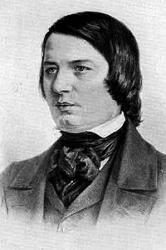
1810 - 1856 Person Name: R. Schumann, 1810—1856 Hymnal Number: 65 Arranger of "[O bless the Lord, my soul]" in The Lutheran Hymnary Robert Alexander Schumann DM Germany 1810-1856. Born at Swickau, Saxony, Germany, the last child of a novelist, bookseller, and publisher, he began composing music at age seven. He received general music instruction at the local high school and worked to create his own compositions. Some of his works were considered admirable for his age. He even composed music congruent to the personalities of friends, who took note of the anomaly. He studied famous poets and philosophers and was impressed with the works of other famous composers of the time. After his father’s death in 1826, he went to Leipzig to study law (to meet the terms of his inheritance). In 1829 he continued law studies in Heidelberg, where he became a lifelong member of Corps Saxo-Borussia Heidelberg. In 1830 he left the study of law to return to music, intending to pursue a career as a virtuoso pianist. His teacher, Friedrich Wieck, assured him he could become the finest pianist in Europe, but an injury to his right hand (from a practicing method) ended that dream. He then focused his energies on composition, and studied under Heinrich Dorn, a German composer and conductor of the Leipzig opera. Schumann visited relatives in Zwickau and Schneeberg and performed at a concert given by Clara Wieck, age 13 at the time. In 1834 he published ‘A new journal for music’, praising some past composers and deriding others. He met Felix Mendelssohn at Wieck’s house in Leigzig and lauded the greatness of his compositions, along with those of Johannes Brahms. He also wrote a work, hoping to use proceeds from its sale towards a monument for Beethoven, whom he highly admired. He composed symphonies, operas, orchestral and chamber works, and also wrote biographies. Until 1840 he wrote strictly for piano, but then began composing for orchestra and voice. That year he composed 168 songs. He also receive a Doctorate degree from the University of Jena that year. An aesthete and influential music critic, he was one of the most regarded composers of the Romantic era. He published his works in the ‘New journal for music’, which he co-founded. In 1840, against the wishes of his father, he married Clara Wieck, daughter of his former teacher, and they had four children: Marie, Julie, Eugenie, and Felix. Clara also composed music and had a considerable concert career, the earnings from which formed a substantial part of her father’s fortune. In 1841 he wrote 2 of his 4 symphonies. In 1843 he was awarded a professorship in the Conservatory of Music, which Mendelssohn had founded in Leipzig that same year, When he and Clara went to Russia for her performances, he was questioned as to whether he also was a musician. He harbored resentment for her success as a pianist, which exceeded his ability as a pianist and reputation as a composer. From 1844-1853 he was engaged in setting Goethe’s Faust to music, but he began having persistent nervous prostration and developed neurasthenia (nervous fears of things, like metal objects and drugs). In 1846 he felt he had recovered and began traveling to Vienna, Prague, and Berlin, where he was received with enthusiasm. His only opera was written in 1848, and an orchestral work in 1849. In 1850 he succeeded Ferdinand Hiller as musical director at Dusseldorf, but was a poor conductor and soon aroused the opposition of the musicians, claiming he was impossible on the platform. From 1850-1854 he composed a wide variety of genres, but critics have considered his works during this period inferior to earlier works. In 1851 he visited Switzerland, Belgium, and returned to Leipzig. That year he finished his fourth symphony. He then went to Dusseldorf and began editing his complete works and making an anthology on the subject of music. He again was plagued with imaginary voices (angels, ghosts or demons) and in 1854 jumped off a bridge into the Rhine River, but was rescued by boatmen and taken home. For the last two years of his life, after the attempted suicide, Schumann was confined to a sanitarium in Endenich near Bonn, at his own request, and his wife was not allowed to see him. She finally saw him two days before he died, but he was unable to speak. He was diagnosed with psychotic melancholia, but died of pneumonia without recovering from the mental illness. Speculations as to the cause of his late term maladies was that he may have suffered from syphilis, contracted early in life, and treated with mercury, unknown as a neurological poison at the time. A report on his autopsy said he had a tumor at the base of the brain. It is also surmised he may have had bipolar disorder, accounting for mood swings and changes in his productivity. From the time of his death Clara devoted herself to the performance and interpretation of her husband’s works.
John Perry
Robert Schumann