You help make Hymnary.org possible. More than 10 million people from 200+ countries found hymns, liturgical resources and encouragement on Hymnary.org in 2025, including you. Every visit affirms the global impact of this ministry.

If Hymnary has been meaningful to you this year, would you take a moment today to help sustain it? A gift of any size—paired with a note of encouragement if you wish—directly supports the server costs, research work and curation that keep this resource freely available to the world.

Give securely online today, or mail a check to:
Hymnary.org
Calvin University
3201 Burton Street SE
Grand Rapids, MI 49546

Thank you for your partnership, and may the hope of Advent fill your heart.

Search Results

Text Identifier:"^as_helpless_as_a_child_who_clings$"

Planning worship? Check out our sister site, ZeteoSearch.org, for 20+ additional resources related to your search.

Texts

text icon
Text authorities
Page scans

As Helpless as a Child

Author: J. D. Burns Appears in 44 hymnals First Line: As helpless as a child who clings Used With Tune: WARWICK

Tunes

tune icon
Tune authorities
Page scansAudio

WARWICK

Appears in 283 hymnals Incipit: 13516 56532 13561 Used With Text: As Helpless as a Child
Page scansAudio

HERZOG

Appears in 136 hymnals Composer and/or Arranger: Anon. Incipit: 55431 76665 35435 Used With Text: As helpless as a child who clings
Audio

CHRISTMAS CAROL

Meter: 8.6.8.6 D Appears in 24 hymnals Composer and/or Arranger: H. Walford Davies, 1869-1941 Tune Key: G Major Incipit: 32313 23136 53213 Used With Text: As helpless as a child who clings

Instances

instance icon
Published text-tune combinations (hymns) from specific hymnals
Page scan

As Helpless as a Child Who Clings

Author: James D. Burns, (1823-1864) Hymnal: The New Alleluia #72 (1886) First Line: As helpless as a child, who clings fast to his father's arm Languages: English Tune Title: [As helpless as a child, who clings fast to his father's arm]
Page scan

As helpless as a child who clings

Author: J. D. Burns Hymnal: Songs of Worship #163 (1887) Languages: English Tune Title: [As helpless as a child who clings]
Page scan

As helpless as a child who clings

Author: Rev. James D. Burns Hymnal: The School Hymnal #183 (1899) Languages: English Tune Title: [As helpless as a child who clings]

People

person icon
Authors, composers, editors, etc.

Anonymous

Person Name: Anon. Composer of "HERZOG" in Carmina for the Sunday School and Social Worship In some hymnals, the editors noted that a hymn's author is unknown to them, and so this artificial "person" entry is used to reflect that fact. Obviously, the hymns attributed to "Author Unknown" "Unknown" or "Anonymous" could have been written by many people over a span of many centuries.

James Drummond Burns

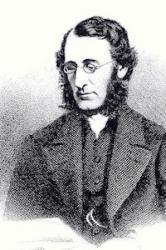
1823 - 1864 Person Name: J. D. Burns Author of "As Helpless as a Child" in Hymns of the Christian Life No. 2 Burns, James Drummond, M.A., was born at Edinburgh, February 18, 1823. He studied and graduated M.A. at the University of Edinburgh. In 1845 he became Free Church minister of Dunblane, but resigned through failing health, in 1848, and took charge of the Presbyterian Church at Funchal, Madeira. In 1855 he became minister of Hampstead Presbyterian Church, London. Died at Mentone, Nov. 27, 1864, and was buried in Highgate Cemetery, London. His hymns appeared in:— (l) The Vision of Prophecy: and other Poems (Edin., Edmonston and Douglas). This was originally published in 1854, and enlarged in 1858. The Poems are distinguished by vivid colouring and poetic imagination, along with directness, delicacy of execution, pensive sweetness, and tenderness. They have never however become widely popular. Included are 29 "Hymns and Meditations," many of which rank among the very best of our modern hymns for beauty, simplicity of diction, and depth of religious feeling. (2) The Evening Hymn (Lond., T. Nelson & Sons), 1857. This consists of an original hymn and an original prayer for every evening in the month— 31 in all. The Hymns and Prayers alike are characterised by reverence, beauty, simplicity, and pathos. Some of the hymns in this volume are now well known; e.g. "Still with Thee, 0 my God," "Hushed was the evening hymn," "As helpless as a child who clings." (3) Memoir and Remains of the late Rev. James D. Burns, M.A., of Hampstead. By the late Rev. James Hamilton, D.D. (London, J. Nisbet & Co.), 1869. Besides 13 Sermons and the Memoir, this work includes 40 “Hymns and Miscellaneous Pieces." A number of these had appeared in periodicals. Some of them are very good though not equal to those previously published. Also 39 translations of German hymns, which appeared in the Family Treasury, &c., are rendered exactly in the metres of the originals and many had not previously been translated. The translations are generally very good. (4) Burns also wrote the article Hymn in the 8th edition of the Encyclopedia Britannica. [Rev. James Mearns, M.A.] -- John Julian, Dictionary of Hymnology (1907) ===================== Burns, James Drummond, p, 197, i. Additional hymns in common use are:— 1. Not, Lord, unto that mount of dread. Safety in Christ. From Vision of Prophecy, 1st ed., 1854, p. 266. 2. O Thou whose tender [sacred] feet have trod. Resignation. From Vision of Prophecy, 1st ed., 1854, p. 227. 3. Thou, Lord, art love, and everywhere. Divine Love. From Vision of Prophecy, 2nd ed., 1858, p. 275. --John Julian, Dictionary of Hymnology, Appendix, Part II (1907) See also in: Hymn Writers of the Church

Henry Thomas Smart

1813 - 1879 Person Name: Henry Smart Composer of "[As helpless as a child who clings fast to his father's arm]" in The Calvary Hymnal Henry Smart (b. Marylebone, London, England, 1813; d. Hampstead, London, 1879), a capable composer of church music who wrote some very fine hymn tunes (REGENT SQUARE, 354, is the best-known). Smart gave up a career in the legal profession for one in music. Although largely self taught, he became proficient in organ playing and composition, and he was a music teacher and critic. Organist in a number of London churches, including St. Luke's, Old Street (1844-1864), and St. Pancras (1864-1869), Smart was famous for his extemporiza­tions and for his accompaniment of congregational singing. He became completely blind at the age of fifty-two, but his remarkable memory enabled him to continue playing the organ. Fascinated by organs as a youth, Smart designed organs for impor­tant places such as St. Andrew Hall in Glasgow and the Town Hall in Leeds. He composed an opera, oratorios, part-songs, some instrumental music, and many hymn tunes, as well as a large number of works for organ and choir. He edited the Choralebook (1858), the English Presbyterian Psalms and Hymns for Divine Worship (1867), and the Scottish Presbyterian Hymnal (1875). Some of his hymn tunes were first published in Hymns Ancient and Modern (1861). Bert Polman
It looks like you are using an ad-blocker. Ad revenue helps keep us running. Please consider white-listing Hymnary.org or getting Hymnary Pro to eliminate ads entirely and help support Hymnary.org.