You help make Hymnary.org possible. More than 10 million people from 200+ countries found hymns, liturgical resources and encouragement on Hymnary.org in 2025, including you. Every visit affirms the global impact of this ministry.

If Hymnary has been meaningful to you this year, would you take a moment today to help sustain it? A gift of any size—paired with a note of encouragement if you wish—directly supports the server costs, research work and curation that keep this resource freely available to the world.

Give securely online today, or mail a check to:
Hymnary.org
Calvin University
3201 Burton Street SE
Grand Rapids, MI 49546

Thank you for your partnership, and may the hope of Advent fill your heart.

Search Results

Text Identifier:"^come_unto_me_ye_weary_and_i_will_dix$"

Planning worship? Check out our sister site, ZeteoSearch.org, for 20+ additional resources related to your search.

Texts

text icon
Text authorities

'Come unto Me, ye weary'

Author: William Chatterton Dix, 1837 - 1898 Meter: 7.6.7.6 D Appears in 261 hymnals Topics: The Gospel Call Used With Tune: COME UNTO ME

Tunes

tune icon
Tune authorities
Page scansAudio

LLANGLOFFAN

Appears in 191 hymnals Tune Sources: Welsh hymn melody; David Evans, Hymnau a Thonau,, 1865 Tune Key: g minor Incipit: 51122 32114 43325 Used With Text: Come unto Me, Ye Weary
Page scansAudio

ANTHES

Meter: 7.6.7.6.7.6.7.6 Appears in 23 hymnals Composer and/or Arranger: Friedrich K. Anthes, 1812-after 1857 Tune Key: A Flat Major Incipit: 51712 31164 3215 Used With Text: Come unto Me, Ye Weary
Page scansAudio

BENTLEY

Meter: 7.6.7.6 D Appears in 154 hymnals Composer and/or Arranger: John Hullah Tune Key: D Flat Major Incipit: 32346 65175 46533 Used With Text: "Come Unto Me, Ye Weary"

Instances

instance icon
Published text-tune combinations (hymns) from specific hymnals
TextAudio

Come unto Me, Ye Weary (Dix)

Author: William Dix Hymnal: The Cyber Hymnal #1006 Meter: 7.6.7.6 D First Line: Come unto Me, ye weary Lyrics: 1. Come unto Me, ye weary, and I will give you rest. O blessèd voice of Jesus, which comes to hearts oppressed! It tells of benediction, of pardon, grace and peace, Of joy that hath no ending, of love which cannot cease. 2. Come unto Me, dear children, and I will give you light. O loving voice of Jesus, which comes to cheer the night! Our hearts are filled with sadness, and we had lost our way; But He hath brought us gladness a nd songs at break of day. 3. Come unto Me, ye fainting, and I will give you life. O cheering voice of Jesus, which comes to aid our strife! The foe is stern and eager, the fight is fierce and long; But Thou hast made us mighty and stronger than the strong. 4. And whosoever cometh I will not cast him out. O welcome voice of Jesus, which drives away our doubt, Which calls us, very sinners, unworthy though we be Of love so free and boundless, to come, dear Lord, to Thee. Languages: English Tune Title: BENTLEY
TextPage scanAudio

Come Unto Me, Ye Weary

Author: William C. Dix Hymnal: Elmhurst Hymnal #141 (1921) Meter: 7.6.7.6 irregular Lyrics: 1 “Come unto Me, ye weary, And I will give you rest.” O blessed voice of Jesus, Which comes to hearts oppressed! Which comes to hearts oppressed! It tells of benediction, Of pardon, grace and peace, Of joy that hath no ending, Of love which cannot cease; Of joy that hath no ending, Of love, of love which cannot cease. 2 “Come unto Me, ye wand’rers, And I will give you light.” O loving voice of Jesus, Which comes to cheer the night! Which comes to cheer the night! Our hearts were filled with sadness, And we had lost our way; But morning brings us gladness And songs, the break of day; But morning brings us gladness And songs, and songs the break of day. 3 “Come unto Me, ye fainting, And I will give you life.” O cheering voice of Jesus, Which comes to aid our strife! Which comes to aid our strife! The foe is stern and eager, The fight is fierce and long; But Thou hast made us mighty And stronger than the strong; But Thou hast made us mighty And stronger, and stronger than the strong. 4 “And whosoever cometh I will not cast him out.” O welcome voice of Jesus Which drives away our doubt! Which drives away our doubt! Which calls us, very sinners, Unworthy though we be Of love so free and boundless, To come, dear Lord, to Thee; Of love so free and boundless, To come, to come, dear Lord, to Thee. Topics: Christ Invitation, to Weary; Comfort; Communion Holy; Call and Response Languages: English Tune Title: MESSIAH
TextPage scan

Come unto Me, Ye Weary

Author: W. C. Dix Hymnal: Hymnal for Church and Home #279 (1927) Lyrics: 1 "Come unto Me, ye weary, And I will give you rest." O blessed voice of Jesus, Which comes to hearts oppress'd; It tells of benediction, Of pardon, grace, and peace, Of joy that hath no ending, Of love which cannot cease. 2 "Come unto Me, ye wand'rers, And I will give you light." 0 loving voice of Jesus, Which comes to cheer the night; Our hearts were fill'd with sadness, And we had lost our way; But morning brings us gladness, And songs the break of day. 3 "Come unto Me, ye fainting, And I will give you life." 0 cheering voice of Jesus, Which comes to aid our strife; The foe is stern and eager, The fight is fierce and long; But Thou hast made us mighty, And stronger than the strong. 4 "And whosoever cometh, I will not cast him out." O patient love of Jesus, Which drives away our doubt; Which, tho' we be unworthy Of love so great and free, Invites us very sinners To come, dear Lord, to Thee. Topics: Spiritual Songs The Call Languages: English Tune Title: [Come unto Me, ye weary]

People

person icon
Authors, composers, editors, etc.

W. Chatterton Dix

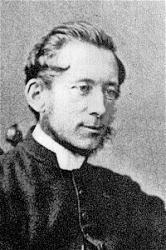
1837 - 1898 Person Name: William C. Dix Author of "Come unto Me, Ye Weary" in Trinity Hymnal (Rev. ed.) Most British hymn writers in the nineteenth century were clergymen, but William C. Dix (b. Bristol, England, 1837; d. Cheddar, Somerset, England, 1898) was a notable exception. Trained in the business world, he became the manager of a marine insurance company in Glasgow, Scotland. Dix published various volumes of his hymns, such as Hymns of Love and Joy (1861) and Altar Songs: Verses on the Holy Eucharist (1867). A number of his texts were first published in Hymns Ancient and Modern (1861). Bert Polman ======================== Dix, William Chatterton, son of John Dix, surgeon, of Bristol, author of the Life of Chatterton; Local Legends, &c, born at Bristol, June 14, 1837, and educated at the Grammar School of that city. Mr. Chatterton Dix's contributions to modern hymnody are numerous and of value. His fine Epiphany hymn, "As with gladness men of old,” and his plaintive ”Come unto Me, ye weary," are examples of his compositions, many of which rank high amongst modern hymns. In his Hymns of Love and Joy, 1861, Altar Songs, Verses on the Holy Eucharist, 1867; Vision of All Saints, &c, 1871; and Seekers of a City, 1878, some of his compositions were first published. The greater part, however, were contributed to Hymns Ancient & Modern; St. Raphaels Hymnbook, 1861; Lyra Eucharidica, 1863; Lyra Messianica, 1864; Lyra Mystica, 1865; The People's Hymns, 1867; The Hymnary, 1872; Church Hymns, 1871, and others. Many of his contributions are renderings in metrical form of Dr. Littledale's translation from the Greek in his Offices . . . of the Holy Eastern Church, 1863; and of the Rev. J. M. Rodwell's translation of hymns of the Abyssinian Church. These renderings of the "songs of other Churches" have not received the attention they deserve, and the sources from whence they come are practically unknown to most hymnal compilers. Mr. Dix has also written many Christmas and Easter carols, the most widely known of which is "The Manger Throne."   In addition to detached pieces in prose and verse for various magazines, he has published two devotional works, Light; and The Risen Life, 1883; and a book of instructions for children entitled The Pattern Life, 1885. The last-named contains original hymns by Mr. Dix not given elsewhere. In addition to the more important of Mr. Dix's hymns which are annotated under their respective first lines, the following are also in common use:- 1. God cometh, let the heart prepare.  Advent. In his Vision of All Saints, &c, 1871.      2. Holy, holy, holy, to Thee our vows we pay.  Holy Communion.   Published in his Altar Songs, 1867, in 6 stanzas of 6 lines, and headed "Eucharistic Processional for Dedication Feast."    In the Society for Promoting Christian Knowledge Church Hymns, 1871, and others in an abridged form.      3. How long, O Lord, how long, we ask.   Second Advent.   Appeared in the Appendix to the Society for Promoting Christian Knowledge Psalms & Hymns, 1869, and repeated in several collections.        4. In our work and in our play.    Children's Hymn. Published in his Hymns and Carols for Children, 1869, and is largely adopted  in  children's  hymnbooks, as  Mrs. Brock's Children's Hymnbook, 1881, and others.   Also in the Society for Promoting Christian Knowledge Church Hymns, 1871.      5.  In the hollow of Thine hand.   For Fair Weather. Appeared in the People's Hymns, 1867, and repeated in several others.      6.  Joy fills our inmost heart today.    Christmas. Printed in the Church Times, and  then on a Flysheet by Gr. J. Palmer, as the third of Four Joyful Hymns for Christmas, circa 1865. It is in the Society for Promoting Christian Knowledge Church Hymns, 1871, and other hymnals. It is also one of Mr. Dix's Christmas Customs & Christmas Carols, not dated.      7. Lift up your songs, ye thankful.   St. Ambrose. Contributed to the People's Hymns, 1867.  8. Now in numbers softly flowing.    St. Cecilia. Contributed to the People's Hymns, 1867.    9.  Now, our Father, we adore Thee.   Praise to the Father.   Appeared in the Appendix to the S. P. C. K. Psalms & Hymns, 1869.   10.  O Christ, Thou Son of Mary.   St. Crispin.   First printed in the Union Review, Sept., 1866, and thence into the People's Hymns, 1887.   11. O Cross which only canst allay.   Glorying and Trusting in the Cross.   Published in the People's Hymns, 1867.   12. O Thou the Eternal Son of God.   Good Friday. Appeared in Lyra Messianica, 1864; the author's Hymns and Carols for Children, 1869; the S. P. C. K. Church Hymns, 1871, &c.   13. On the waters dark and drear.   For use at Sea. Published in Hymns for Public Worship, &c. (St. Raphael's, Bristol), 1861; the S. P. C. K. Church Hymns, 1871, &c.   14. Only one prayer to-day.   Ash Wednesday.   Contributed to the People's Hymns, 1867.   15. Sitting at receipt of custom.  St. Matthew.  Appeared in the People's Hymns, 1867.   16. The Cross is on thy brow.   Confirmation.   In the 1869 Appendix to the S. P. C. K. Psalms & Hymns.   17.  The stars above our head.   Work and Humility. In the 1869 Appendix to the S. P. C. K. Psalms & Hymns.  18. When the shades of night are falling.   Evening Hymn to the Good Shepherd.   In the author's Seekers of a City, &c. [1878]. Most of Mr. Dix's best-known hymns, and also some of those named above, are in common use in America and other English-speaking countries. In Great Britain and America from 30 to 40 are in common use.  He died Sept. 9, 1898. -- John Julian, Dictionary of Hymnology (1907) ====================== Dix, William Chatterton, p. 302, ii. Additional hymns by Mr. Dix now in common use are:— 1. Lift up your songs, ye angel choirs. Ascension. 2. Now, my soul rehearse the story. Christ Feeding the Multitude. 3. Within the temple's hallowed courts. Blessed Virgin Mary. These hymns are from his Altar Songs, 1867. --John Julian, Dictionary of Hymnology, Appendix, Part II (1907)

John Bacchus Dykes

1823 - 1876 Person Name: John B. Dykes Composer of "COME UNTO ME" in The Hymnal As a young child John Bacchus Dykes (b. Kingston-upon-Hull' England, 1823; d. Ticehurst, Sussex, England, 1876) took violin and piano lessons. At the age of ten he became the organist of St. John's in Hull, where his grandfather was vicar. After receiving a classics degree from St. Catherine College, Cambridge, England, he was ordained in the Church of England in 1847. In 1849 he became the precentor and choir director at Durham Cathedral, where he introduced reforms in the choir by insisting on consistent attendance, increasing rehearsals, and initiating music festivals. He served the parish of St. Oswald in Durham from 1862 until the year of his death. To the chagrin of his bishop, Dykes favored the high church practices associated with the Oxford Movement (choir robes, incense, and the like). A number of his three hundred hymn tunes are still respected as durable examples of Victorian hymnody. Most of his tunes were first published in Chope's Congregational Hymn and Tune Book (1857) and in early editions of the famous British hymnal, Hymns Ancient and Modern. Bert Polman

Felix Mendelssohn-Bartholdy

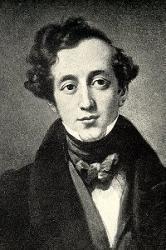
1809 - 1847 Person Name: F. Mendelssohn Composer of "[Come unto me, ye weary]" in Northfield Hymnal Felix Mendelssohn-Bartholdy (b. Hamburg, Germany, 1809; d. Leipzig, Germany, 1847) was the son of banker Abraham Mendelssohn and the grandson of philosopher Moses Mendelssohn. His Jewish family became Christian and took the Bartholdy name (name of the estate of Mendelssohn's uncle) when baptized into the Lutheran church. The children all received an excellent musical education. Mendelssohn had his first public performance at the age of nine and by the age of sixteen had written several symphonies. Profoundly influenced by J. S. Bach's music, he conducted a performance of the St. Matthew Passion in 1829 (at age 20!) – the first performance since Bach's death, thus reintroducing Bach to the world. Mendelssohn organized the Domchor in Berlin and founded the Leipzig Conservatory of Music in 1843. Traveling widely, he not only became familiar with various styles of music but also became well known himself in countries other than Germany, especially in England. He left a rich treasury of music: organ and piano works, overtures and incidental music, oratorios (including St. Paul or Elijah and choral works, and symphonies. He harmonized a number of hymn tunes himself, but hymnbook editors also arranged some of his other tunes into hymn tunes. Bert Polman
It looks like you are using an ad-blocker. Ad revenue helps keep us running. Please consider white-listing Hymnary.org or getting Hymnary Pro to eliminate ads entirely and help support Hymnary.org.