You help make Hymnary.org possible. More than 10 million people from 200+ countries found hymns, liturgical resources and encouragement on Hymnary.org in 2025, including you. Every visit affirms the global impact of this ministry.

If Hymnary has been meaningful to you this year, would you take a moment today to help sustain it? A gift of any size—paired with a note of encouragement if you wish—directly supports the server costs, research work and curation that keep this resource freely available to the world.

Give securely online today, or mail a check to:
Hymnary.org
Calvin University
3201 Burton Street SE
Grand Rapids, MI 49546

Thank you for your partnership, and may the hope of Advent fill your heart.

Search Results

Text Identifier:"^glory_be_to_the_father_and_to_the_son$"

Planning worship? Check out our sister site, ZeteoSearch.org, for 20+ additional resources related to your search.

Texts

text icon
Text authorities
FlexScoreFlexPresent

Gloria Patri

Author: Anonymous Appears in 1,079 hymnals First Line: Glory be to the Father and to the Son Text Sources: Gloria Patri, the Lesser Doxology, 2nd cent

Tunes

tune icon
Tune authorities
FlexScoreAudio

MEINEKE

Meter: Irregular Appears in 243 hymnals Composer and/or Arranger: Charles Meineke Tune Key: G Major Incipit: 11111 22225 22217 Used With Text: Glory Be to the Father
FlexScoreAudio

GREATOREX

Meter: Irregular Appears in 249 hymnals Composer and/or Arranger: Henry W. Greatorex Tune Key: E Flat Major Incipit: 11111 17125 55567 Used With Text: Glory Be to the Father
Page scansFlexScore

Glory Be to the Father (Avery and Marsh)

Appears in 3 hymnals Composer and/or Arranger: Donald S. Marsh; Richard K. Avery Tune Key: F Major Incipit: 15665 12333 Used With Text: Glory Be to the Father

Instances

instance icon
Published text-tune combinations (hymns) from specific hymnals
TextPage scan

Glory Be to the Father (Gloria Patri)

Hymnal: Lutheran Worship #3 (1982) First Line: Glory be to the Father and to the Son Lyrics: Glory be to the Father and to the Son and to the Holy Ghost; as it was in the beginning, is now, and ever shall be, world without end. Amen. Alleluia. Topics: Canticles and Chants Scripture: Romans 16:27 Languages: English Tune Title: [Glory be to the Father and to the Son]
Page scan

Glory be to the Father, and to the Son

Hymnal: Gospel Hymns Nos. 1 to 6 #614 (1894) Languages: English Tune Title: [Glory be to the Father, and to the Son]
Text

Glory Be to the Father

Hymnal: Revival Hymns and Choruses #Front 4 (1970) First Line: Glory be to the Father and to the Son and to the Holy Ghost Lyrics: Glory be to the Father, and to the Son, and to the Holy Ghost; As it was in the beginning, is now, and ever shall be, world without end. Amen. Amen. Languages: English Tune Title: [Glory be to the Father and to the Son and to the Holy Ghost]

People

person icon
Authors, composers, editors, etc.

Anonymous

Author of "Glory Be to the Father" in Psalter Hymnal (Blue) In some hymnals, the editors noted that a hymn's author is unknown to them, and so this artificial "person" entry is used to reflect that fact. Obviously, the hymns attributed to "Author Unknown" "Unknown" or "Anonymous" could have been written by many people over a span of many centuries.

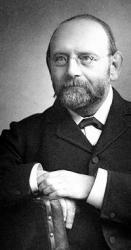
Joseph Barnby

1838 - 1896 Composer of "[Glory be to the Father] (Barnby)" in The Hymnal Joseph Barnby (b. York, England, 1838; d. London, England, 1896) An accomplished and popular choral director in England, Barnby showed his musical genius early: he was an organist and choirmaster at the age of twelve. He became organist at St. Andrews, Wells Street, London, where he developed an outstanding choral program (at times nicknamed "the Sunday Opera"). Barnby introduced annual performances of J. S. Bach's St. John Passion in St. Anne's, Soho, and directed the first performance in an English church of the St. Matthew Passion. He was also active in regional music festivals, conducted the Royal Choral Society, and composed and edited music (mainly for Novello and Company). In 1892 he was knighted by Queen Victoria. His compositions include many anthems and service music for the Anglican liturgy, as well as 246 hymn tunes (published posthumously in 1897). He edited four hymnals, including The Hymnary (1872) and The Congregational Sunday School Hymnal (1891), and coedited The Cathedral Psalter (1873). Bert Polman

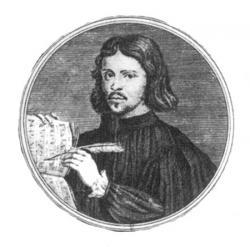
Thomas Tallis

1505 - 1585 Person Name: Tallis Arranger of "[Glory be to the Father] (Tallis)" in The Hymnal Thomas Tallis (b. Leicestershire [?], England, c. 1505; d. Greenwich, Kent, England 1585) was one of the few Tudor musicians who served during the reigns of Henry VIII: Edward VI, Mary, and Elizabeth I and managed to remain in the good favor of both Catholic and Protestant monarchs. He was court organist and composer from 1543 until his death, composing music for Roman Catholic masses and Anglican liturgies (depending on the monarch). With William Byrd, Tallis also enjoyed a long-term monopoly on music printing. Prior to his court connections Tallis had served at Waltham Abbey and Canterbury Cathedral. He composed mostly church music, including Latin motets, English anthems, settings of the liturgy, magnificats, and two sets of lamentations. His most extensive contrapuntal work was the choral composition, "Spem in alium," a work in forty parts for eight five-voice choirs. He also provided nine modal psalm tunes for Matthew Parker's Psalter (c. 1561). Bert Polman
It looks like you are using an ad-blocker. Ad revenue helps keep us running. Please consider white-listing Hymnary.org or getting Hymnary Pro to eliminate ads entirely and help support Hymnary.org.