

 My Starred Hymns
 My FlexScores
 My Hymnals
 My Purchased Files
Planning worship?
Check out our sister site, ZeteoSearch.org,
for 20+ additional resources related to your search.
- |
User Links
Search Results


How Precious Is the Book Divine
Author: Rev. John Fawcett Meter: 8.6.8.6 Appears in 653 hymnals Topics: Scriptures Used With Tune: ARMAH
How Precious Is the Book Divine


CAMPMEETING
Appears in 372 hymnals Composer and/or Arranger: Dale Scott Tune Sources: Early American melody Incipit: 17222 13332 34653 Used With Text: How Wonderful That Book Divine
CAMPMEETING


How Precious Is the Book (The Precious Book Divine)
Author: John Fawcett; Lloyd O. Sanderson Hymnal: Praise for the Lord (Expanded Edition) #249 (1997) First Line: How precious is the Book divine Topics: Bible Scripture: Psalm 119:105 Languages: English Tune Title: [How precious is the Book divine]
How Precious Is the Book (The Precious Book Divine)
How Precious is the Book Divine
Author: Rev. John Fawcett Hymnal: Sunday School Hymns No. 1 #60 (1903) Refrain First Line: Oh precious book of light and life Topics: Bible Languages: English Tune Title: [How precious is the book divine]
How Precious is the Book Divine
How Precious Is the Book Divine
Author: J. Fawcett Hymnal: Glad Tidings #117 (1899) Languages: English Tune Title: [How precious is the book divine]
How Precious Is the Book Divine


George Frideric Handel
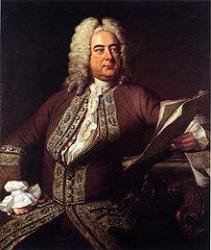
1685 - 1759 Person Name: G. F. Handel, 1685-1759 Composer of "SIROË" in Evangelical Lutheran Hymnary George Frideric Handel (b. Halle, Germany, 1685; d. London, England, 1759) became a musician and composer despite objections from his father, who wanted him to become a lawyer. Handel studied music with Zachau, organist at the Halle Cathedral, and became an accomplished violinist and keyboard performer. He traveled and studied in Italy for some time and then settled permanently in England in 1713. Although he wrote a large number of instrumental works, he is known mainly for his Italian operas, oratorios (including Messiah, 1741), various anthems for church and royal festivities, and organ concertos, which he interpolated into his oratorio performances. He composed only three hymn tunes, one of which (GOPSAL) still appears in some modern hymnals. A number of hymnal editors, including Lowell Mason, took themes from some of Handel's oratorios and turned them into hymn tunes; ANTIOCH is one example, long associated with “Joy to the World.”
Bert Polman
George Frideric Handel
Arthur Sullivan
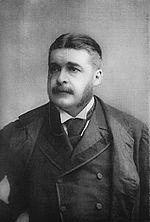
1842 - 1900 Person Name: Sir Arthur Sullivan (1842- ) Composer of "BETHLEHEM" in Carmina for the Sunday School and Social Worship Arthur Seymour Sullivan (b Lambeth, London. England. 1842; d. Westminster, London, 1900) was born of an Italian mother and an Irish father who was an army bandmaster and a professor of music. Sullivan entered the Chapel Royal as a chorister in 1854. He was elected as the first Mendelssohn scholar in 1856, when he began his studies at the Royal Academy of Music in London. He also studied at the Leipzig Conservatory (1858-1861) and in 1866 was appointed professor of composition at the Royal Academy of Music. Early in his career Sullivan composed oratorios and music for some Shakespeare plays. However, he is best known for writing the music for lyrics by William S. Gilbert, which produced popular operettas such as H.M.S. Pinafore (1878), The Pirates of Penzance (1879), The Mikado (1884), and Yeomen of the Guard (1888). These operettas satirized the court and everyday life in Victorian times. Although he composed some anthems, in the area of church music Sullivan is best remembered for his hymn tunes, written between 1867 and 1874 and published in The Hymnary (1872) and Church Hymns (1874), both of which he edited. He contributed hymns to A Hymnal Chiefly from The Book of Praise (1867) and to the Presbyterian collection Psalms and Hymns for Divine Worship (1867). A complete collection of his hymns and arrangements was published posthumously as Hymn Tunes by Arthur Sullivan (1902). Sullivan steadfastly refused to grant permission to those who wished to make hymn tunes from the popular melodies in his operettas.
Bert Polman
Arthur Sullivan
Richard Redhead
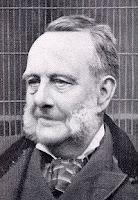
1820 - 1901 Person Name: R. Redhead Composer of "WOLVERHAMPTON" in Christian Hymns Richard Redhead (b. Harrow, Middlesex, England, 1820; d. Hellingley, Sussex, England, 1901) was a chorister at Magdalen College, Oxford. At age nineteen he was invited to become organist at Margaret Chapel (later All Saints Church), London. Greatly influencing the musical tradition of the church, he remained in that position for twenty-five years as organist and an excellent trainer of the boys' choirs. Redhead and the church's rector, Frederick Oakeley, were strongly committed to the Oxford Movement, which favored the introduction of Roman elements into Anglican worship. Together they produced the first Anglican plainsong psalter, Laudes Diurnae (1843). Redhead spent the latter part of his career as organist at St. Mary Magdalene Church in Paddington (1864-1894).
Bert Polman
Richard Redhead





