You help make Hymnary.org possible. More than 10 million people from 200+ countries found hymns, liturgical resources and encouragement on Hymnary.org in 2025, including you. Every visit affirms the global impact of this ministry.

If Hymnary has been meaningful to you this year, would you take a moment today to help sustain it? A gift of any size—paired with a note of encouragement if you wish—directly supports the server costs, research work and curation that keep this resource freely available to the world.

Give securely online today, or mail a check to:
Hymnary.org
Calvin University
3201 Burton Street SE
Grand Rapids, MI 49546

Thank you for your partnership, and may the hope of Advent fill your heart.

Search Results

Text Identifier:"^jesus_thy_saving_name_i_bless$"

Planning worship? Check out our sister site, ZeteoSearch.org, for 20+ additional resources related to your search.

Texts

text icon
Text authorities
TextAudio

Jesus, Thy Saving Name I Bless

Author: Charles Wesley Meter: 8.8.8.6.8.6 Appears in 2 hymnals Lyrics: 1 Jesus, Thy saving name I bless, Delivered out of my distress, Thy faithfulness I prove; I magnify Thy mercy’s power; My refuge in the trying hour Was Thy almighty love. 2 Snatched from the rage of cruel men, Brought up out of the lion’s den, And thro’ the burning flame: Jesus, Thine outstretched hand I see, Might, wisdom, strength ascribe to Thee, And bless Thy saving name. 3 Hereby Thou favorest me, I know, Because Thou wouldst not let the foe My hunted soul destroy; Better than life Thy favor is, ’Tis pure delight, and perfect bliss, And everlasting joy. 4 Saved by a miracle of grace, Lord, I with thankful heart embrace The token of Thy love: This, this, the comfortable sign, That I the first born church shall join, And bless Thy name above. Used With Tune: FRANCES Text Sources: Hymns and Sacred Poems, 1749, Vol. I

Tunes

tune icon
Tune authorities
Audio

FRANCES

Meter: 8.8.8.6.8.6 Appears in 25 hymnals Composer and/or Arranger: James McGranahan Tune Key: A Major Incipit: 51215 34513 43567 Used With Text: Jesus, Thy Saving Name I Bless

Instances

instance icon
Published text-tune combinations (hymns) from specific hymnals
TextAudio

Jesus, Thy Saving Name I Bless

Author: Charles Wesley Hymnal: The Cyber Hymnal #10900 Meter: 8.8.8.6.8.6 Lyrics: 1 Jesus, Thy saving name I bless, Delivered out of my distress, Thy faithfulness I prove; I magnify Thy mercy’s power; My refuge in the trying hour Was Thy almighty love. 2 Snatched from the rage of cruel men, Brought up out of the lion’s den, And thro’ the burning flame: Jesus, Thine outstretched hand I see, Might, wisdom, strength ascribe to Thee, And bless Thy saving name. 3 Hereby Thou favorest me, I know, Because Thou wouldst not let the foe My hunted soul destroy; Better than life Thy favor is, ’Tis pure delight, and perfect bliss, And everlasting joy. 4 Saved by a miracle of grace, Lord, I with thankful heart embrace The token of Thy love: This, this, the comfortable sign, That I the first born church shall join, And bless Thy name above. Languages: English Tune Title: FRANCES
Page scan

Jesus, thy saving name I bless

Hymnal: A New Selection of Hymns; designed for the use of conference meetings, private circles, and congregations, as a supplement to Dr. Watts' Psalms and Hymns #278 (1812) Languages: English

People

person icon
Authors, composers, editors, etc.

Charles Wesley

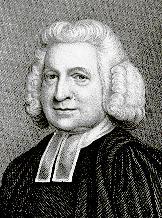
1707 - 1788 Author of "Jesus, Thy Saving Name I Bless" in The Cyber Hymnal Charles Wesley, M.A. was the great hymn-writer of the Wesley family, perhaps, taking quantity and quality into consideration, the great hymn-writer of all ages. Charles Wesley was the youngest son and 18th child of Samuel and Susanna Wesley, and was born at Epworth Rectory, Dec. 18, 1707. In 1716 he went to Westminster School, being provided with a home and board by his elder brother Samuel, then usher at the school, until 1721, when he was elected King's Scholar, and as such received his board and education free. In 1726 Charles Wesley was elected to a Westminster studentship at Christ Church, Oxford, where he took his degree in 1729, and became a college tutor. In the early part of the same year his religious impressions were much deepened, and he became one of the first band of "Oxford Methodists." In 1735 he went with his brother John to Georgia, as secretary to General Oglethorpe, having before he set out received Deacon's and Priest's Orders on two successive Sundays. His stay in Georgia was very short; he returned to England in 1736, and in 1737 came under the influence of Count Zinzendorf and the Moravians, especially of that remarkable man who had so large a share in moulding John Wesley's career, Peter Bonier, and also of a Mr. Bray, a brazier in Little Britain. On Whitsunday, 1737, [sic. 1738] he "found rest to his soul," and in 1738 he became curate to his friend, Mr. Stonehouse, Vicar of Islington, but the opposition of the churchwardens was so great that the Vicar consented that he "should preach in his church no more." Henceforth his work was identified with that of his brother John, and he became an indefatigable itinerant and field preacher. On April 8, 1749, he married Miss Sarah Gwynne. His marriage, unlike that of his brother John, was a most happy one; his wife was accustomed to accompany him on his evangelistic journeys, which were as frequent as ever until the year 1756," when he ceased to itinerate, and mainly devoted himself to the care of the Societies in London and Bristol. Bristol was his headquarters until 1771, when he removed with his family to London, and, besides attending to the Societies, devoted himself much, as he had done in his youth, to the spiritual care of prisoners in Newgate. He had long been troubled about the relations of Methodism to the Church of England, and strongly disapproved of his brother John's "ordinations." Wesley-like, he expressed his disapproval in the most outspoken fashion, but, as in the case of Samuel at an earlier period, the differences between the brothers never led to a breach of friendship. He died in London, March 29, 1788, and was buried in Marylebone churchyard. His brother John was deeply grieved because he would not consent to be interred in the burial-ground of the City Road Chapel, where he had prepared a grave for himself, but Charles said, "I have lived, and I die, in the Communion of the Church of England, and I will be buried in the yard of my parish church." Eight clergymen of the Church of England bore his pall. He had a large family, four of whom survived him; three sons, who all became distinguished in the musical world, and one daughter, who inherited some of her father's poetical genius. The widow and orphans were treated with the greatest kindness and generosity by John Wesley. As a hymn-writer Charles Wesley was unique. He is said to have written no less than 6500 hymns, and though, of course, in so vast a number some are of unequal merit, it is perfectly marvellous how many there are which rise to the highest degree of excellence. His feelings on every occasion of importance, whether private or public, found their best expression in a hymn. His own conversion, his own marriage, the earthquake panic, the rumours of an invasion from France, the defeat of Prince Charles Edward at Culloden, the Gordon riots, every Festival of the Christian Church, every doctrine of the Christian Faith, striking scenes in Scripture history, striking scenes which came within his own view, the deaths of friends as they passed away, one by one, before him, all furnished occasions for the exercise of his divine gift. Nor must we forget his hymns for little children, a branch of sacred poetry in which the mantle of Dr. Watts seems to have fallen upon him. It would be simply impossible within our space to enumerate even those of the hymns which have become really classical. The saying that a really good hymn is as rare an appearance as that of a comet is falsified by the work of Charles Wesley; for hymns, which are really good in every respect, flowed from his pen in quick succession, and death alone stopped the course of the perennial stream. It has been the common practice, however for a hundred years or more to ascribe all translations from the German to John Wesley, as he only of the two brothers knew that language; and to assign to Charles Wesley all the original hymns except such as are traceable to John Wesley through his Journals and other works. The list of 482 original hymns by John and Charles Wesley listed in this Dictionary of Hymnology have formed an important part of Methodist hymnody and show the enormous influence of the Wesleys on the English hymnody of the nineteenth century. -- Excerpts from John Julian, Dictionary of Hymnology (1907) ================== Charles Wesley, the son of Samuel Wesley, was born at Epworth, Dec. 18, 1707. He was educated at Westminster School and afterwards at Christ Church, Oxford, where he graduated M.A. In 1735, he took Orders and immediately proceeded with his brother John to Georgia, both being employed as missionaries of the S.P.G. He returned to England in 1736. For many years he engaged with his brother in preaching the Gospel. He died March 29, 1788. To Charles Wesley has been justly assigned the appellation of the "Bard of Methodism." His prominence in hymn writing may be judged from the fact that in the "Wesleyan Hymn Book," 623 of the 770 hymns were written by him; and he published more than thirty poetical works, written either by himself alone, or in conjunction with his brother. The number of his separate hymns is at least five thousand. --Annotations of the Hymnal, Charles Hutchins, M.A., 1872.

James McGranahan

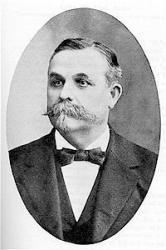
1840 - 1907 Composer of "FRANCES" in The Cyber Hymnal James McGranahan USA 1840-1907. Born at West Fallowfield, PA, uncle of Hugh McGranahan, and son of a farmer, he farmed during boyhood. Due to his love of music his father let him attend singing school, where he learned to play the bass viol. At age 19 he organized his first singing class and soon became a popular teacher in his area of the state. He became a noted musician and hymns composer. His father was reluctant to let him pursue this career, but he soon made enough money doing it that he was able to hire a replacement farmhand to help his father while he studied music. His father, a wise man, soon realized how his son was being used by God to win souls through his music. He entered the Normal Music School at Genesco, NY, under William B Bradbury in 1861-62. He met Miss Addie Vickery there. They married in 1863, and were very close to each other their whole marriage, but had no children. She was also a musician and hymnwriter in her own right. For a time he held a postmaster’s job in Rome, PA. In 1875 he worked for three years as a teacher and director at Dr. Root’s Normal Music Institute. He because well-known and successful as a result, and his work attracted much attention. He had a rare tenor voice, and was told he should train for the operatic stage. It was a dazzling prospect, but his friend, Philip Bliss, who had given his wondrous voice to the service of song for Christ for more than a decade, urged him to do the same. Preparing to go on a Christmas vacation with his wife, Bliss wrote McGranahan a letter about it, which McGranahan discussed with his friend Major Whittle. Those two met in person for the first time at Ashtubula, OH, both trying to retrieve the bodies of the Bliss’s, who died in a bridge-failed train wreck. Whittle thought upon meeting McGranahan, that here is the man Bliss has chosen to replace him in evangelism. The men returned to Chicago together and prayed about the matter. McGranahan gave up his post office job and the world gained a sweet gospel singer/composer as a result. McGranahan and his wife, and Major Whittle worked together for 11 years evangelizing in the U.S., Great Britain, and Ireland. They made two visits to the United Kingdom, in 1880 and 1883, the latter associated with Dwight Moody and Ira Sankey evangelistic work. McGranahan pioneered use of the male choir in gospel song. While holding meetings in Worcester, MA, he found himself with a choir of only male voices. Resourcefully, he quickly adapted the music to those voices and continued with the meetings. The music was powerful and started what is known as male choir and quartet music. Music he published included: “The choice”, “Harvest of song”, “Gospel Choir”,, “Gospel hymns #3,#4, #5, #6” (with Sankey and Stebbins), “Songs of the gospel”, and “Male chorus book”. The latter three were issued in England. In 1887 McGranahan’s health compelled him to give up active work in evangelism. He then built a beautiful home, Maplehurst, among friends at Kinsman, OH, and settled down to the composition of music, which would become an extension of his evangelistic work. Though his health limited his hours, of productivity, some of his best hymns were written during these days. McGranahan was a most lovable, gentle, modest, unassuming, gentleman, and a refined and cultured Christian. He loved good fellowship, and often treated guests to the most delightful social feast. He died of diabetes at Kinsman, OH, and went home to be with his Savior. John Perry
It looks like you are using an ad-blocker. Ad revenue helps keep us running. Please consider white-listing Hymnary.org or getting Hymnary Pro to eliminate ads entirely and help support Hymnary.org.