

 My Starred Hymns
 My FlexScores
 My Hymnals
 My Purchased Files
Planning worship?
Check out our sister site, ZeteoSearch.org,
for 20+ additional resources related to your search.
- |
User Links
Search Results

The King, O God, his heart to thee upraiseth
Author: F. R. Tailour Appears in 11 hymnals Used With Tune: DONNE SECOURS
The King, O God, his heart to thee upraiseth


DONNE SECOURS
Appears in 86 hymnals Tune Sources: Psalm 12 in the Genevan Psalter, 1551 Incipit: 53457 53432 15545 Used With Text: The King, O God, his heart to thee upraiseth
DONNE SECOURS
DEUS REFUGIUM NOSTRUM
Appears in 1 hymnal Composer and/or Arranger: Ernest Campbell MacMillan (1893- ) Incipit: 13455 67125 51732 Used With Text: The King, O God, his heart to thee upraiseth
DEUS REFUGIUM NOSTRUM

The Queen, O God, her heart to Thee upraiseth
Hymnal: The Hymnary of the United Church of Canada #518 (1930) Meter: 11.10.11.10 Topics: National and International Life Languages: English Tune Title: DONNE SECOURS
The Queen, O God, her heart to Thee upraiseth
The Queen, O God, her heart to Thee upraiseth
Hymnal: The Hymnary #518 (1936) Meter: 11.10.11.10 Topics: National and International Life Languages: English Tune Title: DONNE SECOURS
The Queen, O God, her heart to Thee upraiseth
The Queen, O God, her heart
Hymnal: Songs of Praise #324 (1926) Meter: 11.10.11.10
The Queen, O God, her heart


Louis Bourgeois
1510 - 1561 Composer of "[The king, O God, his heart to Thee upraiseth]" in Hymns Louis Bourgeois (b. Paris, France, c. 1510; d. Paris, 1561). In both his early and later years Bourgeois wrote French songs to entertain the rich, but in the history of church music he is known especially for his contribution to the Genevan Psalter. Apparently moving to Geneva in 1541, the same year John Calvin returned to Geneva from Strasbourg, Bourgeois served as cantor and master of the choristers at both St. Pierre and St. Gervais, which is to say he was music director there under the pastoral leadership of Calvin. Bourgeois used the choristers to teach the new psalm tunes to the congregation.
The extent of Bourgeois's involvement in the Genevan Psalter is a matter of scholarly debate. Calvin had published several partial psalters, including one in Strasbourg in 1539 and another in Geneva in 1542, with melodies by unknown composers. In 1551 another French psalter appeared in Geneva, Eighty-three Psalms of David, with texts by Marot and de Beze, and with most of the melodies by Bourgeois, who supplied thirty four original tunes and thirty-six revisions of older tunes. This edition was republished repeatedly, and later Bourgeois's tunes were incorporated into the complete Genevan Psalter (1562). However, his revision of some older tunes was not uniformly appreciated by those who were familiar with the original versions; he was actually imprisoned overnight for some of his musical arrangements but freed after Calvin's intervention. In addition to his contribution to the 1551 Psalter, Bourgeois produced a four-part harmonization of fifty psalms, published in Lyons (1547, enlarged 1554), and wrote a textbook on singing and sight-reading, La Droit Chemin de Musique (1550). He left Geneva in 1552 and lived in Lyons and Paris for the remainder of his life.
Bert Polman
Louis Bourgeois
H. Ellis Wooldridge
1845 - 1917 Person Name: H. E. W. Arranger of "[The king, O God, his heart to Thee upraiseth]" in Hymns b. 3/28/1845, Winchester; d. 2/13/17, London; English music scholar
LOC Name Authority File
H. Ellis Wooldridge
Sir Ernest MacMillan
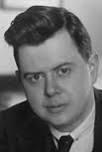
1893 - 1973 Person Name: Ernest Campbell MacMillan (1893- ) Composer of "DEUS REFUGIUM NOSTRUM" in The University Hymn Book Ernest MacMillan (Conductor)
Born: August 18, 1893 - Mimico, Canada
Died: May 6, 1973 - Toronto, Canada
The eminent Canadian conductor and composer, Sir Ernest (Alexander Campbell) MacMillan, began his organ studies with Arthur Blakeley in Toronto at age 8, making his public debut at 10. He continued his organ studies with A. Hollins in Edinburgh from 1905 to 1908, where he was also admitted to the classes of F. Niecks and W.B. Ross at the University.
Ernest MacMillan was made an associate (1907) and a fellow (1911) of London’s Royal College of Organists, and in 1911 received the extramural Bachelor of Music degree from the University of Oxford. He studied modern history at the University of Toronto from 1911 to 1914, before receiving piano instruction from Therese Chaigneau in Paris in 1914. In 1914 he attended the Bayreuth Festival, only to be interned as an enemy alien at the outbreak of World War I. While being held at the Ruhleben camp near Berlin, he gained experience as a conductor. He was awarded the B.A. degree in absentia by the University of Toronto in 1915. His ode, England, submitted through the Prisoners of War Education Committee to the University of Oxford, won him his Doctor of Music degree in 1918.
After his release, Ernest MacMillan returned to Toronto as organist and choirmaster of Timothy Eaton Memorial Church from 1919 to 1925. In 1920 he joined the staff of the Canadian Academy of Music, and remained with it when it became the Toronto Conservatory of Music, serving from 1926 to 1942 as its principal. He was also dean of music faculty at the University of Toronto from 1927 to 1952.
Ernest MacMillan was conductor of the Toronto Symphony Orchestra from 1931 to 1956, and of the Mendelssohn Choir there from 1942 to 1957. He also appeared as guest conductor in North and South America, Europe, and Australia. He served as president of the Canadian Music Council from 1947 to 1966, and of the Canadian Music Centre from 1959 to 1970. In 1935 he was the first Canadian musician to be knighted, an honour conferred upon him by King George V. He also received honorary doctorates from Canadian and USA institutions. He conducted many works new to his homeland, both traditional and contemporary.
--www.bach-cantatas.com/
Sir Ernest MacMillan





