

 My Starred Hymns
 My FlexScores
 My Hymnals
 My Purchased Files
Planning worship?
Check out our sister site, ZeteoSearch.org,
for 20+ additional resources related to your search.
- |
User Links
Search Results


What If the Master Should Come?
Author: Rev. J. E. Rankin, D.D., LL.D. Appears in 3 hymnals First Line: What if the Master should come tonight Refrain First Line: What if the Master should come tonight Used With Tune: [What if the Master should come tonight]
What If the Master Should Come?

[What if the Master should come tonight]
Appears in 2 hymnals Composer and/or Arranger: Chas. H. Gabriel Incipit: 55556 71117 65432 Used With Text: What If the Master Should Come?
[What if the Master should come tonight]

What If the Master Should Come?
Author: Rev. J. E. Rankin, D.D., LL.D. Hymnal: Epworth Songs #20 (1893) First Line: What if the Master should come tonight Refrain First Line: What if the Master should come tonight Languages: English Tune Title: [What if the Master should come tonight]
What If the Master Should Come?
If the Master Should Come To-night
Author: J. E. Rankin Hymnal: Pentecostal Hymns Nos. 5 and 6 Combined #130 (1911) First Line: What if the Master should come tonight Topics: Coming of Christ; Duet; Evening; Warning Languages: English Tune Title: [What if the Master should come tonight]
If the Master Should Come To-night
What if the Master should come tonight
Author: Jeremiah Eames Rankin Hymnal: Vineyard Songs #d133 (1892)
What if the Master should come tonight

Chas. H. Gabriel
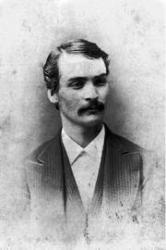
1856 - 1932 Composer of "[What if the Master should come tonight]" in Pentecostal Hymns Nos. 5 and 6 Combined Pseudonyms: C. D. Emerson, Charlotte G. Homer, S. B. Jackson, A. W. Lawrence, Jennie Ree
=============
For the first seventeen years of his life Charles Hutchinson Gabriel (b. Wilton, IA, 1856; d. Los Angeles, CA, 1932) lived on an Iowa farm, where friends and neighbors often gathered to sing. Gabriel accompanied them on the family reed organ he had taught himself to play. At the age of sixteen he began teaching singing in schools (following in his father's footsteps) and soon was acclaimed as a fine teacher and composer. He moved to California in 1887 and served as Sunday school music director at the Grace Methodist Church in San Francisco. After moving to Chicago in 1892, Gabriel edited numerous collections of anthems, cantatas, and a large number of songbooks for the Homer Rodeheaver, Hope, and E. O. Excell publishing companies. He composed hundreds of tunes and texts, at times using pseudonyms such as Charlotte G. Homer. The total number of his compositions is estimated at about seven thousand. Gabriel's gospel songs became widely circulated through the Billy Sunday-Homer Rodeheaver urban crusades.
Bert Polman
Chas. H. Gabriel
Jeremiah Eames Rankin
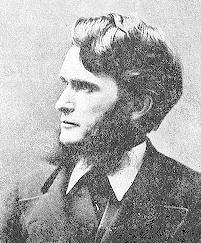
1828 - 1904 Author of "What if the Master should come tonight" in Vineyard Songs Pseudonym: R. E. Jeremy.
Rankin, Jeremiah Eames, D.D., was born at Thornton, New Haven, Jan. 2, 1828, and educated at Middleburg College, Vermont, and at Andover. For two years he resided at Potsdam, U.S. Subsequently he held pastoral charges as a Congregational Minister at New York, St. Albans, Charlestown, Washington ( District of Columbia), &c. In 1878 he edited the Gospel Temperance Hymnal, and later the Gospel Bells. His hymns appeared in these collections, and in D. E. Jones's Songs of the New Life, 1869. His best known hymn is "Labouring and heavy laden" (Seeking Christ). This was "written [in 1855] for a sister who was an inquirer," was first printed in the Boston Recorder, and then included in Nason's Congregational Hymn Book, 1857. Another of his hymns is "Rest, rest, rest, brother rest." He died in 1904. [Rev. F. M. Bird, M.A.]
--John Julian, Dictionary of Hymnology (1907)
========================
Rankin, J. 33., p. 951, ii. Dr. Rankin, b. in N. H. (not New Haven), and received his D.D. 1869, LL.D. 1889 from his Alma Mater. He was President for several years of Howard University, Washington, D.C. His publications included several volumes of Sermons, German-English Lyrics, Sacred and Secular, 1897; 2nd ed. 1898, &c. In addition to his hymns noted on p. 951, ii., he has written and published mainly in sheet form many others, the most important and best-known being:—
1. God be with you till we meet again. [Benediction.] Dr. Rankin's account of this hymn, supplied to us, in common with Mr. Brownlie, for his Hymns and H. Writers of The Church Hymnary, 1899, is: "It was written as a Christian good-bye, and first sung in the First Congregational Church, of which I was minister for fifteen years. We had Gospel meetings on Sunday nights, and our music was intentionally of the popular kind. I wrote the first stanza, and sent it to two gentlemen for music. The music which seemed to me to best suit the words was written by T. G. Tomer, teacher of public schools in New Jersey, at one time on the staff of General 0. 0. Howard. After receiving the music (which was revised by Dr. J. W. Bischoff, the organist of my church), I wrote the other stanzas." The hymn became at once popular, and has been translated into several languages. In America it is in numerous collections; and in Great Britain, in The Church Hymnary, 1898, Horder's Worship Song, 1905, The Methodist Hymn Book, 1904, and others. It was left undated by Dr. Rankin, but I.D. Sankey gives it as 1882.
2. Beautiful the little hands. [Little ones for Jesus.] Given without date in Gloria Deo, New York, 1900.
Dr. Rankin's translations include versions of German, French, Latin, and Welsh hymns. His contributions to the periodical press have been numerous.
--John Julian, Dictionary of Hymnology, New Supplement (1907)
Jeremiah Eames Rankin