

 My Starred Hymns
 My FlexScores
 My Hymnals
 My Purchased Files
Planning worship?
Check out our sister site, ZeteoSearch.org,
for 20+ additional resources related to your search.
- |
User Links
Person Results
Robert Robinson
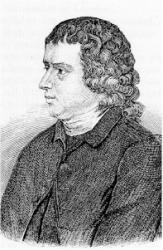
1735 - 1790 Person Name: Robert Robinson, 1735-1790 Topics: God the Redeemer Author of "Come, Thou Fount of Every Blessing" in The Covenant Hymnal Robert Robinson was born at Swaffham, Norfolk, in 1735. In 1749, he was apprenticed to a hairdresser, in Crutched Friars, London. Hearing a discourse preached by Whitefield on "The Wrath to Come," in 1752, he was deeply impressed, and after a period of much disquietude, he gave himself to a religious life. His own peculiar account of this change of life is as follows:--"Robertus Michaelis Marineque Robinson filius. Natus Swaffhami, comitatu Norfolciae, Saturni die Sept. 27, 1735. Renatus Sabbati die, Maii 24, 1752, per predicationem potentem Georgii Whitefield. Et gustatis doloribus renovationis duos annos mensesque septem, absolutionem plenam gratuitamque, per sanguinem pretiosum i secula seculorum. Amen." He soon after began to preach, and ministered for some time in connection with the Calvinistic Methodists. He subsequently joined the Independents, but after a short period preferred the Baptist connection. In 1761, he became pastor of a Baptist congregation at Cambridge. About the year 1780, he began to incline towards Unitarianism, and at length his people deemed it essential to procure his resignation. While arrangements for this purpose were in progress he died suddenly at Bingham, in June 1790. He wrote and published a good many works of ability.
--Annotations of the Hymnal, Charles Hutchins, M.A. 1872.
=============================
Robinson, Robert, the author of "Come, Thou fount of every blessing," and "Mighty God, while angels bless Thee," was born at Swaffham, in Norfolk, on Sept. 27, 1735 (usually misgiven, spite of his own authority, as Jan. 8), of lowly parentage. Whilst in his eighth year the family migrated to Scarning, in the same county. He lost his father a few years after this removal. His widowed mother was left in sore straits. The universal testimony is that she was a godly woman, and far above her circumstances. Her ambition was to see her son a clergyman of the Church of England, but poverty forbade, and the boy (in his 15th year) was indentured in 1749 to a barber and hairdresser in London. It was an uncongenial position for a bookish and thoughtful lad. His master found him more given to reading than to his profession. Still he appears to have nearly completed his apprenticeship when he was released from his indentures. In 1752 came an epoch-marking event. Out on a frolic one Sunday with like-minded companions, he joined with them in sportively rendering a fortune-telling old woman drunk and incapable, that they might hear and laugh at her predictions concerning them. The poor creature told Robinson that he would live to see his children and grandchildren. This set him a-thinking, and he resolved more than ever to "give himself to reading”. Coincidently he went to hear George Whitefield. The text was St. Matthew iii. 7, and the great evangelist's searching sermon on "the wrath to come" haunted him blessedly. He wrote to the preacher six years later penitently and pathetically. For well nigh three years he walked in darkness and fear, but in his 20th year found "peace by believing." Hidden away on a blank leaf of one of his books is the following record of his spiritual experience, the Latin doubtless having been used to hold it modestly private:—
"Robertus, Michaelis Mariseque Robinson filius. Natus Swaffhami, comitatu Norfolciae, Saturni die Sept. 27, 1735. Renatus Sabbati die, Maii 24,1752, per predicationem potentem Georgii Whitefield. Et gustatis doloribus renovationis duos annosque septem absolutionem plenam gratuitamque, per sanguinem pretiosum Jesu Christi, inveni (Tuesday, December 10, 1755) cui sit honor et gloria in secula seculorum. Amen."
Robinson remained in London until 1758, attending assiduously on the ministry of Gill, Wesley, and other evangelical preachers. Early in this year he was invited as a Calvinistic Methodist to the oversight of a chapel at Mildenhall, Norfolk. Thence he removed within the year to Norwich, where he was settled over an Independent congregation. In 1759, having been invited by a Baptist Church at Cambridge (afterwards made historically famous by Robert Hall, John Foster, and others) he accepted the call, and preached his first sermon there on Jan. 8, 1759, having been previously baptized by immersion. The "call" was simply "to supply the pulpit," but he soon won such regard and popularity that the congregation again and again requested him to accept the full pastoral charge. This he acceded to in 1761, alter persuading the people to "open communion." In 1770 he commenced his abundant authorship by publishing a translation from Saurin's sermons, afterwards completed. In 1774 appeared his masculine and unanswerable Arcana, or the Principles of the Late Petitioners to Parliament for Relief in the matter of Subscription. In 1776 was published A Plea for the Divinity of our Lord Jesus Christ in a Pastoral Letter to a Congregation of Protestant Dissenters at Cambridge. Dignitaries and divines of the Church of England united with Nonconformists in lauding this exceptionally able, scholarly, and pungently written book. In 1777 followed his History and Mystery of Good Friday. The former work brought him urgent invitations to enter the ministry of the Church of England, but he never faltered in his Nonconformity. In 1781 he was asked by the Baptists of London to prepare a history of their branch of the Christian Church. This resulted, in 1790, in his History of Baptism and Baptists, and in 1792, in his Ecclesiastical Researches. Other theological works are included in the several collective editions of his writings. He was prematurely worn out. He retired in 1790 to Birmingham, where he was somehow brought into contact with Dr. Priestley, and Unitarians have made much of this, on exceedingly slender grounds. He died June 9, 1790.
His Life has been fully written by Dyer and by William Robinson respectively, both with a bias against orthodoxy. His three changes of ecclesiastical relationship show that he was somewhat unstable and impulsive. His hymns are terse yet melodious, evangelical but not sentimental, and on the whole well wrought. His prose has all…that vehement and enthusiastic glow of passion that belongs to the orator. (Cf. Dyer and Robinson as above, and Gadsby's Memoirs of Hymn-Writers(3rd ed., 1861); Belcher's Historical Sketches of Hymns; Millers Singers and Songs of the Church; Flower's Robinson's Miscellaneous Works; Annual Review, 1805, p. 464; Eclectic Review, Sept. 1861. [Rev. A. B. Grosart, D.D., LL.D.]
--John Julian, Dictionary of Hymnology (1907)
Robert Robinson
Frances Elizabeth Cox
1812 - 1897 Person Name: Frances E. Cox, 1812-1897 Topics: God the Redeemer Translator of "Sing Praise to God Who Reigns Above" in The Covenant Hymnal Cox, Frances Elizabeth, daughter of Mr. George V. Cox, born at Oxford, is well known as a successful translator of hymns from the German. Her translations were published as Sacred Hymns from the German, London, Pickering. The 1st edition, pub. 1841, contained 49 translations printed with the original text, together with biographical notes on the German authors. In the 2nd edition, 1864, Hymns from the German, London, Rivingtons, the translations were increased to 56, those of 1841 being revised, and with additional notes. The 56 translations were composed of 27 from the 1st ed. (22 being omitted) and 29 which were new. The best known of her translations are "Jesus lives! no longer [thy terrors] now" ; and ”Who are these like stars appearing ?" A few other translations and original hymns have been contributed by Miss Cox to the magazines; but they have not been gathered together into a volume.
-- John Julian, Dictionary of Hymnology (1907)
Frances Elizabeth Cox
Frederick William Faber
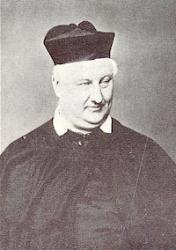
1814 - 1863 Person Name: Fredrick W. Faber, 1814-1863 Topics: God the Redeemer Author of "There's a Wideness in God's Mercy" in The Covenant Hymnal Raised in the Church of England, Frederick W. Faber (b. Calverly, Yorkshire, England, 1814; d. Kensington, London, England, 1863) came from a Huguenot and strict Calvinistic family background. He was educated at Balliol College, Oxford, and ordained in the Church of England in 1839. Influenced by the teaching of John Henry Newman, Faber followed Newman into the Roman Catholic Church in 1845 and served under Newman's supervision in the Oratory of St. Philip Neri. Because he believed that Roman Catholics should sing hymns like those written by John Newton, Charles Wesley, and William Cowpe, Faber wrote 150 hymns himself. One of his best known, "Faith of Our Fathers," originally had these words in its third stanza: "Faith of Our Fathers! Mary's prayers/Shall win our country back to thee." He published his hymns in various volumes and finally collected all of them in Hymns (1862).
Bert Polman
=================
Faber, Frederick William, D.D., son of Mr. T. H. Faber, was born at Calverley Vicarage, Yorkshire, June 28, 1814, and educated at Balliol College, Oxford, graduating B.A. in 1836. He was for some time a Fellow of University College, in the same University. Taking Holy Orders in 1837, he became Rector of Elton, Huntingdonshire, in 1843, but in 1846 he seceded to the Church of Rome. After residing for some time at St. Wilfrid's, Staffordshire, he went to London in 1849, and established the London "Oratorians," or, "Priests of the Congregation of St. Philip Neri," in King William Street, Strand. In 1854 the Oratory was removed to Brompton. Dr. Faber died Sept. 26, 1863. Before his secession he published several prose works, some of which were in defence of the Church of England; and afterwards several followed as Spiritual Conferences, All for Jesus, &c. Although he published his Cherwell Waterlily and Other Poems, 1840; The Styrian Lake, and Other Poems, 1842; Sir Lancelot, 1844; and The Rosary and Other Poems, 1845; and his Lives of the Saints, in verse, before he joined the Church of Rome, all his hymns were published after he joined that communion. They were included in his:—
(1) A small book of eleven Hymns1849, for the School at St. Wilfrid's, Staffordshire. (2) Jesus and Mary: or, Catholic Hymns for Singing and Reading, London 1849. In 1852 the 2nd edition was published with an addition of 20 new hymns. (3) Oratory Hymns, 1854; and (4) Hymns, 1862, being a collected edition of what he had written and published from time to time.
Dr. Faber's account of the origin of his hymn-writing is given in his Preface to Jesus & Mary. After dwelling on the influence, respectively, of St. Theresa, of St. Ignatius, and of St. Philip Neri, on Catholicism; and of the last that "sanctity in the world, perfection at home, high attainments in common earthly callings…was the principal end of his apostolate," he says:—
“It was natural then that an English son of St. Philip should feel the want of a collection of English Catholic hymns fitted for singing. The few in the Garden of the Soul were all that were at hand, and of course they were not numerous enough to furnish the requisite variety. As to translations they do not express Saxon thought and feelings, and consequently the poor do not seem to take to them. The domestic wants of the Oratory, too, keep alive the feeling that something of the sort was needed: though at the same time the author's ignorance of music appeared in some measure to disqualify him for the work of supplying the defect. Eleven, however, of the hymns were written, most of them, for particular tunes and on particular occasions, and became very popular with a country congregation. They were afterwards printed for the Schools at St. Wilfrid's, and the very numerous applications to the printer for them seemed to show that, in spite of very glaring literary defects, such as careless grammar and slipshod metre, people were anxious to have Catholic hymns of any sort. The manuscript of the present volume was submitted to a musical friend, who replied that certain verses of all or nearly all of the hymns would do for singing; and this encouragement has led to the publication of the volume."
In the same Preface he clearly points to the Olney Hymns and those of the Wesleys as being the models which for simplicity and intense fervour he would endeavour to emulate. From the small book of eleven hymns printed for the schools at St. Wilfrid's, his hymn-writing resulted in a total of 150 pieces, all of which are in his Hymns, 1862, and many of them in various Roman Catholic collections for missions and schools. Few hymns are more popular than his "My God, how wonderful Thou art," "O come and mourn with me awhile," and "Sweet Saviour, bless us ere we go." They excel in directness, simplicity, and pathos. "Hark, hark, my soul, angelic songs are swelling," and "O Paradise, O Paradise," are also widely known. These possess, however, an element of unreality which is against their permanent popularity. Many of Faber's hymns are annotated under their respective first lines; the rest in common use include:—
i. From his Jesus and Mary, 1849 and 1852.
1. Fountain of love, Thyself true God. The Holy Ghost.
2. How shalt thou bear the Cross, that now. The Eternal Years.
3. I come to Thee, once more, O God. Returning to God.
4. Joy, joy, the Mother comes. The Purification.
5. My soul, what hast thou done for God? Self-Examination
6. O how the thought of God attract. Holiness Desired.
7. O soul of Jesus, sick to death. Passiontide. Sometimes this is divided into two parts, Pt. ii. beginning, “My God, my God, and can it be."
ii. From his Oratory Hymns, 1854.
8. Christians, to the war! Gather from afar. The Christian Warfare.
9. O come to the merciful Saviour that calls you. Divine Invitation. In many collections.
10. O God, Thy power is wonderful. Power and Eternity of God.
11. O it is sweet to think, Of those that are departed. Memory of the Dead.
12. O what are the wages of sin? The Wages of Sin.
13. O what is this splendour that beams on me now? Heaven.
14. Saint of the Sacred Heart. St. John the Evangelist.
iii. From his Hymns, 1862.
15. Father, the sweetest, dearest Name. The Eternal Father.
16. Full of glory, full of wonders, Majesty Divine. Holy Trinity.
17. Hark ! the sound of the fight. Processions.
18. How pleasant are thy paths, 0 death. Death Contemplated.
19. O God, Whose thoughts are brightest light. Thinking no Evil.
20. O why art thou sorrowful, servant of God? Trust in God.
21. Souls of men, why will ye scatter? The Divine Call.
22. The land beyond the sea. Heaven Contemplated.
23. The thought of God, the thought of thee. Thoughts of God.
24. We come to Thee, sweet Saviour. Jesus, our Rest.
In addition to these there are also several hymns in common use in Roman Catholic hymn-books which are confined to those collections. In the Hymns for the Year, by Dr. Rawes, Nos. 77, 110, 112, 117, 120, 121, 122, 125, 127, 128, 131, 140, 152, 154,169, 170, 174, 179, 180, 192, 222, 226, 230, 271, 272, are also by Faber, and relate principally to the Blessed Virgin Mary. Several of these are repeated in other Roman Catholic collections.
--John Julian, Dictionary of Hymnology (1907
==================
Faber, Frederick William, p. 361, i. To this article the following additions have to be made:—
1. Blood is the price of heaven. Good Friday. (1862.)
2. Exceeding sorrowful to death. Gethsemane. This in the Scottish Ibrox Hymnal, 1871, is a cento from "O soul of Jesus, sick to death," p. 362, i., 7.
3. From pain to pain, from woe to woe. Good Friday. (1854.)
4. I wish to have no wishes left. Wishes about death. (1862.)
5. Why is thy face so lit with smiles? Ascension. (1849.)
The dates here given are those of Faber's works in which the hymns appeared. In addition to these hymns there are also the following in common use:—
6. Dear God of orphans, hear our prayer. On behalf of Orphans. This appeared in a miscellaneous collection entitled A May Garland, John Philip, n.d. [1863], No. 1, in 7 stanzas of 4 lines. In the Roman Catholic Parochial Hymn Book, 1880, it begins, "O God of orphans, hear our prayer."
7. Sleep, sleep my beautiful babe. Christmas Carol. This carol we have failed to trace.
8. By the Archangel's word of love. Pt. i. Life of our Lord. This, and Pt. ii., “By the blood that flowed from Thee"; Pt. iii., "By the first bright Easter day"; also, "By the word to Mary given"; "By the name which Thou didst take"; in The Crown Hymn Book and other Roman Catholic collections, we have seen ascribed to Dr. Faber, but in the Rev. H. Formby's Catholic Hymns, 1853, they are all signed "C. M. C," i.e. Cecilia M. Caddell (p. 200, i.).
--John Julian, Dictionary of Hymnology, Appendix, Part II (1907)
======================
Faber, F. W., pp. 361, i.; 1562, ii. We are informed by members of Dr. Faber's family that his father was Mr. Thomas Henry Faber, sometime Lay Secretary of the Bishop of Durham. In addition to his hymns already noted in this Dictionary, the following are found in various Roman Catholic collections, viz.:—
i. From St. Wilfrid's Hymns, 1849:—
1. Dear Father Philip, holy Sire. S. Philip Neri.
2. Hail, holy Joseph, hail. S. Joseph.
3. Mother of Mercy, day by day. Blessed Virgin Mary.
ii. Jesus and Mary, 1849:—
4. Ah ! dearest Lord! I cannot pray. Prayer.
5. Dear Husband of Mary. S. Joseph.
6. Dear Little One, how sweet Thou art. Christmas.
7. Father and God! my endless doom. Predestination.
8. Hail, holy Wilfrid, hail. S. Wilfrid.
9. O Jesus, if in days gone by. Love of the World.
10. O turn to Jesus, Mother, turn. B. V. M.
11. Sing, sing, ye angel bands. Assum. B. V. M.
iii. Jesus and Mary, 1852:—
12. All ye who love the ways of sin. S. Philip Neri.
13. Day set on Rome! its golden morn. S. Philip Neri.
14. Hail, bright Archangel! Prince of heaven. S. Michael.
15. Hail, Gabriel, hail. S. Gabriel.
16. O Flower of Grace, divinest Flower. B. V. M.
17. Saint Philip! 1 have never known. S. Philip Neri.
18. Sweet Saint Philip, thou hast won us. S. Philip Neri. Previously in the Rambler, May, 1850, p. 425.
iv. Oratory Hymns, 1854:—
19. Day breaks on temple roofs and towers. Expect. of B. V. M.
20. How gently flow the silent years. S. Martin and S. Philip.
21. How the light of Heaven is stealing. Grace.
22. Like the dawning of the morning. Expect. of B. V. M.
23. Mother Mary ! at thine altar. For Orphans.
24. My God! Who art nothing but mercy and kindness. Repentance.
25. O blessed Father! sent by God. S. Vincent of Paul.
26. O do you hear that voice from heaven? Forgiveness.
27. The chains that have bound me. Absolution.
28. The day, the happy day, is dawning. B. V. M.
29. The moon is in the heavens above. B. V. M.
30. Why art thou sorrowful, servant of God? Mercy.
v. Hymns, 1862:—
31. At last Thou art come, little Saviour. Christmas.
32. By the spring of God's compassions. S. Raphael.
33. Fair are the portals of the day. B. V. M.
34. Father of many children. S. Benedict.
35. From the highest heights of glory. S. Mary Magdalene.
36. Like the voiceless starlight falling. B. V. M.
37. Mary! dearest mother. B. V. M.
38. Mother of God, we hail thy heart. B. V. M.
39. O Anne! thou hadst lived through those long dreary years. S. Anne. Previously in Holy Family Hymns, 1860.
40. O balmy and bright as moonlit night. B. V. M.
41. O Blessed Trinity! Thy children. Holy Trinity.
42. O dear Saint Martha, busy saint. S. Martha
43. O Mother, will it always be. B. V. M.
44. O vision bright. B. V. M.
45. Summer suns for ever shining. B. V. M.
46. There are many saints above. S. Joseph. Previously in Holy Family Hymns, 1860.
vi. Centos and altered forms:—
47. Confraternity men to the fight. From "Hark the sound of the fight," p. 362, i.
48. Hail, sainted Mungo, hail. From No. 8.
49. I bow to Thee, sweet will of God. From "I worship Thee," p. 559, ii.
50. They whom we loved on earth. From "0 it is sweet to think," p. 362, i.
51. Vincent! like Mother Mary, thou. From No. 25.
When Dr. Faber's hymns which are in common use are enumerated, the total falls little short of one hundred. In this respect he outnumbers most of his contemporaries. [Rev. James Mearns]
--John Julian, Dictionary of Hymnology, New Supplement (1907)
--------------
See also in:
Hymn Writers of the Church
Frederick William Faber
Henry Francis Lyte
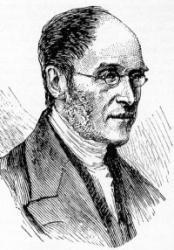
1793 - 1847 Person Name: Henry Francis Lyte, 1793-1847 Topics: God the Redeemer Author of "Praise, My Soul, the King of Heaven" in The Covenant Hymnal Lyte, Henry Francis, M.A., son of Captain Thomas Lyte, was born at Ednam, near Kelso, June 1, 1793, and educated at Portora (the Royal School of Enniskillen), and at Trinity College, Dublin, of which he was a Scholar, and where he graduated in 1814. During his University course he distinguished himself by gaining the English prize poem on three occasions. At one time he had intended studying Medicine; but this he abandoned for Theology, and took Holy Orders in 1815, his first curacy being in the neighbourhood of Wexford. In 1817, he removed to Marazion, in Cornwall. There, in 1818, he underwent a great spiritual change, which shaped and influenced the whole of his after life, the immediate cause being the illness and death of a brother clergyman. Lyte says of him:—
"He died happy under the belief that though he had deeply erred, there was One whose death and sufferings would atone for his delinquencies, and be accepted for all that he had incurred;"
and concerning himself he adds:—
"I was greatly affected by the whole matter, and brought to look at life and its issue with a different eye than before; and I began to study my Bible, and preach in another manner than I had previously done."
From Marazion he removed, in 1819, to Lymington, where he composed his Tales on the Lord's Prayer in verse (pub. in 1826); and in 1823 he was appointed Perpetual Curate of Lower Brixham, Devon. That appointment he held until his death, on Nov. 20, 1847. His Poems of Henry Vaughan, with a Memoir, were published in 1846.
His own Poetical works were:—
(1) Poems chiefly Religious 1833; 2nd ed. enlarged, 1845. (2) The Spirit of the Psalms, 1834, written in the first instance for use in his own Church at Lower Brixham, and enlarged in 1836; (3) Miscellaneous Poems (posthumously) in 1868. This last is a reprint of the 1845 ed. of his Poems, with "Abide with me" added. (4) Remains, 1850.
Lyte's Poems have been somewhat freely drawn upon by hymnal compilers; but by far the larger portion of his hymns found in modern collections are from his Spirit of the Psalms. In America his hymns are very popular. In many instances, however, through mistaking Miss Auber's (q. v.) Spirit of the Psalms, 1829, for his, he is credited with more than is his due. The Andover Sabbath Hymn Book, 1858, is specially at fault in this respect. The best known and most widely used of his compositions are "Abide with me, fast falls the eventide;” “Far from my heavenly home;" "God of mercy, God of grace;" "Pleasant are Thy courts above;" "Praise, my soul, the King of heaven;" and "There is a safe and secret place." These and several others are annotated under their respective first lines: the rest in common use are:—
i. From his Poems chiefly Religious, 1833 and 1845.
1. Above me hangs the silent sky. For Use at Sea.
2. Again, 0 Lord, I ope mine eyes. Morning.
3. Hail to another Year. New Year.
4. How good, how faithful, Lord, art Thou. Divine care of Men.
5. In tears and trials we must sow (1845). Sorrow followed by Joy.
6. My [our] rest is in heaven, my [our] rest is not here. Heaven our Home.
7. 0 Lord, how infinite Thy love. The Love of God in Christ.
8. Omniscient God, Thine eye divine. The Holy Ghost Omniscient.
9. The leaves around me falling. Autumn.
10. The Lord hath builded for Himself. The Universe the Temple of God.
11. Vain were all our toil and labour. Success is of God.
12. When at Thy footstool, Lord, I bend. Lent.
13. When earthly joys glide swift away. Ps. cii.
14. Wilt Thou return to me, O Lord. Lent.
15. With joy we hail the sacred day. Sunday.
ii. From his Spirit of the Psalms, 1834.
16. Be merciful to us, O God. Ps. lvii.
17. Blest is the man who knows the Lord. Ps. cxii.
18. Blest is the man whose spirit shares. Ps. xli.
19. From depths of woe to God I cry. Ps. cxxxx.
20. Gently, gently lay Thy rod. Ps. vi.
21. Glorious Shepherd of the sheep. Ps. xxiii.
22. Glory and praise to Jehovah on high. Ps. xxix.
23. God in His Church is known. Ps. lxxvi.
24. God is our Refuge, tried and proved. Ps. xlvi.
25. Great Source of my being. Ps. lxxiii.
26. Hear, O Lord, our supplication. Ps. lxiv.
27. How blest the man who fears the Lord. Ps.cxxviii.
28. Humble, Lord, my haughty spirit. Ps. cxxxi.
29. In this wide, weary world of care. Ps. cxxxii.
30. In vain the powers of darkness try. Ps.lii.
31. Jehovah speaks, let man be awed. Ps. xlix.
32. Judge me, O Lord, and try my heart. Ps. xxvi.
33. Judge me, O Lord, to Thee I fly. Ps. xliii.
34. Lord, I have sinned, but O forgive. Ps. xli.
35. Lord, my God, in Thee I trust. Ps. vii.
36. Lord of the realms above, Our Prophet, &c. Ps.xlv.
37. Lone amidst the dead and dying. Ps. lxii.
38. Lord God of my salvation. Ps. lxxxviii.
39. Lord, I look to Thee for all. Ps. xxxi.
40. Lord, I would stand with thoughtful eye. Ps. lxix.
41. Lord, my God, in Thee I trust. Ps. vii.
42. My God, my King, Thy praise I sing. Ps. cviii.
43. My God, what monuments I see. Ps. xxxvi.
44. My spirit on [to] Thy care. Ps. xxxi.
45. My trust is in the Lord. Ps. xi.
46. Not unto us, Almighty Lord [God]. Ps. cxv.
47. O God of glory, God of grace. Ps. xc.
48. O God of love, how blest are they. Ps. xxxvii.
49. O God of love, my God Thou art. Ps. lxiii.
50. O God of truth and grace. Ps. xviii.
51. O had I, my Saviour, the wings of a dove. Ps. lv.
52. O how blest the congregation. Ps. lxxxix.
53. O how safe and [how] happy he. Ps. xci.
54. O plead my cause, my Saviour plead. Ps. xxxv.
55. O praise the Lord, 'tis sweet to raise. Ps. cxlvii.
56. O praise the Lord; ye nations, pour. Ps. cxvii.
57. O praise ye the Lord With heart, &c. Ps. cxlix.
58. O that the Lord's salvation. Ps. xiv.
59. O Thou Whom thoughtless men condemn. Ps. xxxvi.
60. Of every earthly stay bereft. Ps. lxxiv.
61. Our hearts shall praise Thee, God of love. Ps. cxxxviii.
62. Pilgrims here on earth and strangers. Ps. xvi.
63. Praise for Thee, Lord, in Zion waits. Ps. lxv.
64. Praise to God on high be given. Ps. cxxxiv.
65. Praise ye the Lord, His servants, raise. Ps. cxiii.
66. Redeem'd from guilt, redeem'd from fears. Ps. cxvi.
67. Save me by Thy glorious name. Ps. liv.
68. Shout, ye people, clap your hands. Ps. xlvii.
69. Sing to the Lord our might. Ps. lxxxi.
70. Strangers and pilgrims here below. Ps. cix.
71. Sweet is the solemn voice that calls. Ps. cxxii.
72. The Church of God below. Ps. lxxxvii.
73. The Lord is King, let earth be glad. Ps. xcvii.
74. The Lord is on His throne. Ps. xciii.
75. The Lord is our Refuge, the Lord is our Guide. Ps. xlvii.
76. The mercies of my God and King. Ps. lxxxix.
77. The Lord Who died on earth for men. Ps. xxi.
78. Tis a pleasant thing to fee. Ps. cxxxiii.
79. Thy promise, Lord, is perfect peace. Ps. iii.
80. Unto Thee I lift mine [my] eyes. Ps. cxxiii.
81. Whom shall [should] we love like Thee? Ps. xviii.
Lyte's versions of the Psalms are criticised where their sadness, tenderness and beauty are set forth. His hymns in the Poems are characterized by the same features, and rarely swell out into joy and gladness.
--John Julian, Dictionary of Hymnology (1907)
==================
Lyte, Henry Francis, p. 706, i. Additional versions of Psalms are in common use:--
1. Lord, a thousand foes surround us. Psalms lix.
2. Praise, Lord, for Thee in Zion waits. Psalms lxv.
3. The Christian like his Lord of old. Psalms cxl.
4. The Lord of all my Shepherd is. Psalms xxiii.
5. The Lord of heaven to earth is come. Psalms xcviii.
6. Thy mercy, Lord, the sinner's hope. Psalms xxxvi.
7. To Thee, O Lord, in deep distress. Psalms cxlii. Sometimes given as "To God I turned in wild distress."
8. Uphold me, Lord, too prone to stray. Psalms i.
9. When Jesus to our [my] rescue came. Psalms cxxvi. These versions appeared in the 1st edition of Lyte's Spirit of the Psalms, 1834. It must be noted that the texts of the 1834, the 1836, and the 3rd ed., 1858, vary considerably, but Lyte was not responsible for the alterations and omissions in the last, which was edited by another hand for use at St. Mark's, Torquay.
Lyte's version of Psalms xxix., "Glory and praise to Jehovah on high" (p. 706, ii., 22), first appeared in his Poems, 1st ed., 1833, p. 25. Read also No. 39 as "Lord, I look for all to Thee."
--John Julian, Dictionary of Hymnology, Appendix, Part II (1907)
Henry Francis Lyte
Walter C. Smith
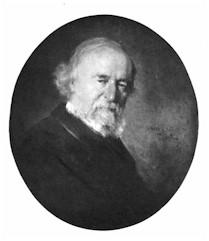
1824 - 1908 Person Name: Walter Chalmers Smith, 1824-1908 Topics: God the Redeemer Author of "Immortal, Invisible, God Only Wise" in The Covenant Hymnal Smith, Walter Chalmer, D.D., was born at Aberdeen Dec. 5, 1824, and educated at the Grammar School and University of that City. He pursued his Theological studies at Edinburgh, and was ordained Pastor of the Scottish Church in Chad well Street, Islington, London, Dec. 25, 1850. After holding several pastorates he became, in 1876, Minister of the Free High Church, Edinburgh. His contributions to poetical literature have been many and of great merit. His principal works are:—
(1) The Bishop's Walk, 1860; (2) Olrig Grange, 1872; (3) Borland Hall, 1874; (4) Hilda among the Broken Gods, 1878; (5) North Country Folk, 1883; (6) Kildrostan, 1884; (7) Hymns of Christ and Christian Life, 1876.
From his Hymns of Christ, &c, 1876, the following, after revision, were included in Horder's Congregational Hymns, 1884 :—
1. Immortal, Invisible, God only wise. God, All in All.
2. Lord, God, Omnipotent. Omnipotence.
3. Our portion is not here. Treasure in Heaven.
4. There is no wrath to be appeased. God is Love. In Horder's Congregational Hymns a new opening stanza was added to this hymn by Dr. Smith at the request of the editor, and in that collection the hymn begins "I vexed me with a troubled thought."
Dr. Smith's hymns are rich in thought and vigorous in expression. They deserve and probably will receive greater notice than hitherto at the hands of hymnal compilers. [Rev. W. Garrett Horder]
--John Julian, Dictionary of Hymnology (1907)
=================
Smith, W. C., p. 1064, i. The following additional hymns by Dr. Smith have come into common use, mainly through The Baptist Church Hymnal, 1900:—
1. Earth was waiting, spent and restless. Christmas.
2. Faint and weary Jesus stood. Our Lord's Temptation.
3. If any to the feast have come. Holy Communion.
4. The Lord hath hid His face from us. Providence.
5. To me to live is Christ. Union with Christ.
These hymns appeared in his Hymns of Christ and the Christian Life, 1867, pp. Ill, 122, 241, 10, and 36, respectively. A collected ed. of his Poetical Works (not including his hymns) appeared in 1902. Other hymns that have come into use are:—
1. Gird your loins about with truth. Manliness.
2. Jesus, unto Whom we pray. Christ the Way.
3. One thing I of the Lord desire. Consecration.
Nos. 1, 3 are from his Thoughts and Fancies for Sunday Evenings, 1887, pp. 3, 84. No. 2 is from his Hymns of Christ, 1867, p. 31.
--John Julian, Dictionary of Hymnology, New Supplement (1907)
Walter C. Smith
W. Howard Doane
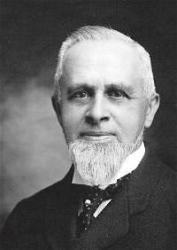
1832 - 1915 Person Name: William H. Doane, 1832-1915 Topics: God the Redeemer Composer of "TO GOD BE THE GLORY" in The Covenant Hymnal An industrialist and philanthropist, William H. Doane (b. Preston, CT, 1832; d. South Orange, NJ, 1915), was also a staunch supporter of evangelistic campaigns and a prolific writer of hymn tunes. He was head of a large woodworking machinery plant in Cincinnati and a civic leader in that city. He showed his devotion to the church by supporting the work of the evangelistic team of Dwight L. Moody and Ira D. Sankey and by endowing Moody Bible Institute in Chicago and Denison University in Granville, Ohio. An amateur composer, Doane wrote over twenty-two hundred hymn and gospel song tunes, and he edited over forty songbooks.
Bert Polman
============
Doane, William Howard, p. 304, he was born Feb. 3, 1832. His first Sunday School hymn-book was Sabbath Gems published in 1861. He has composed about 1000 tunes, songs, anthems, &c. He has written but few hymns. Of these "No one knows but Jesus," "Precious Saviour, dearest Friend," and "Saviour, like a bird to Thee," are noted in Burrage's Baptist Hymn Writers. 1888, p. 557.
--John Julian, Dictionary of Hymnology, Appendix, Part II (1907)
===================
Doane, W. H. (William Howard), born in Preston, Connecticut, 1831, and educated for the musical profession by eminent American and German masters. He has had for years the superintendence of a large Baptist Sunday School in Cincinnati, Ohio, where he resides. Although not a hymnwriter, the wonderful success which has attended his musical setting of numerous American hymns, and the number of his musical editions of hymnbooks for Sunday Schools and evangelistic purposes, bring him within the sphere of hymnological literature. Amongst his collections we have:—
(1) Silver Spray, 1868; (2) Pure Gold, 1877; (3) Royal Diadem, 1873; (4) Welcome Tidings, 1877; (5) Brightest and Best, 1875; (6) Fountain of Song; (7) Songs of Devotion, 1870; (8) Temple Anthems, &c.
His most popular melodies include "Near the Cross," "Safe in the Arms of Jesus," "Pass me Not," "More Love to Thee," "Rescue the Perishing," "Tell me the Old, Old Story," &c.
- John Julian, Dictionary of Hymnology (1907)
W. Howard Doane
Marty Nystrom

Person Name: Martin Nystrom, twentieth century Topics: God the Redeemer Author of "As the Deer" in The Covenant Hymnal Martin J. Nystrom, a songwriter, was born in 1956 in Seattle, Washington, to a mother who grew up in the Christian Reformed Church; his father was brought up in the Evangelical Covenant Church. After graduating from Oral Roberts University with a degree in music education, Nystrom worked as a music director for the New York branch of Christ for the Nations. More recently he has served as a song development manager for Integrity Music, for whom he has written more than seventy songs. Nystrom is featured as worship leader on five Integrity "Hosanna" tapes. He also gives presentations at numerous conferences throughout the world.
--www.reformedworship.org
Marty Nystrom
Johann Jakob Schütz
1640 - 1690 Person Name: Johann J. Schütz, 1640-1690 Topics: God the Redeemer Author of "Sing Praise to God Who Reigns Above" in The Covenant Hymnal Schütz, Johann Jakob, was born Sept. 7, 1640, at Frankfurt am Main. After studying at Tübingen (where he became a licentiate in civil and canon law), he began to practise as an advocate in Frankfurt, and in later years with the title of Rath. He seems to have been a man of considerable legal learning as well as of deep piety. He was an intimate friend of P. J. Spener; and it was, in great measure, at his suggestion, that Spener began his famous Collegia Pietatis. After Spener left Frankfurt, in 1686, Schütz came under the influence of J. W. Petersen; and carrying out Petersen's prin¬ciples to their logical conclusion, he became a Separatist, and ceased to attend the Lutheran services or to communicate. He died at Frankfurt, May 22, 1690 (Koch, iv. 220; Blätter fur Hymnologie, Feb. 1883).
Schütz is known as an author by two tractates; one being his Christliche Lebensregeln, Frankfurt, 1677; the other, that which contains his hymns, Christliches Gedenckbüchlein, zu Beforderung eines anfangenden neuen Lebens, &c, Frankfurt am Main, 1675 [Library of the Predigerministerium at Frankfurt]. This work includes 5 hymns, in a separate section, which is headed, “Hierauf folgen etliche Gesänge." These hymns are:—
i. Die Wollust dieser Welt.
ii. Was inich auf dieser Welt betrübt.
iii. So komm, geliebte Todes-Stund.
iv. Scheuet ihr, ihr matten Glieder.
v. Sei Lob und Ehr dem höchsten Gut.
Of these No. v. is undoubtedly by Schütz, and the other four exhibit much the same style of thought as, and frequent parallels to, the prose portions of the work. None of these have been traced earlier than 1675; and until this has been done, it is pretty safe to ascribe them all to Schütz.
Three of these hymns have passed into English, viz.:—
i. Sei Lob und Ehr dem höchsten Gut. Praise and Thanksgiving. First published in 1675, as above, No. v. It is founded on Deut. xxxii. 3; entitled, "Hymn of Thanksgiving ;" and is in 9 stanzas of 6 lines, and the refrain, "Gebt unserm Gott die Ehre”.
Koch, iv. 220, speaks of this hymn as "outweighing many hundred others; and a classical hymn, which, from its first appearance, attracted unusual attention." And Lauxmann, in Koch, viii. 334-339, relates how delighted J. J. Moser was, when, on entering church the first Sunday after his captivity at Hohentwiel, he heard this hymn, and how heartily he joined in it; how it comforted the dying G. C. Rieger, of Stuttgart, on Tuesday, in Easter Week, 1743, and many other incidents.
Translations in common use:—
1. All Glory to the Sov'reign Good. This is a full and good translation by J. OJacobi, in his Psalter Germanica, 2nd ed., 1732, p. 151, where it is entitled, "The Malabarian Hymn."
2. All glory be to God most high. A good translation by A. T. Russell, of st. i., iv., viii., for the Dalston Hospital Hymn Book, 1848, No. 59.
3. All praise and thanks to God most high. This is a good tr., omitting st. ix., by Miss Winkworth, in her Lyra Germanica, 2nd Ser., 1858, p. 146.
4. Sing praise to God Who reigns above. A good tr., omitting st. ix., contributed by Miss Cox to Lyra Eucharistica, 1864, p. 33, and included in her Hymns from the German, 1864, p. 235.
5. To God a joyful anthem raise. A good tr. of st. i., ii., iv., v., viii., by J. M. Sloan, as No. 314, in J. H. Wilson's Service of Praise, 1865.
The following are also translated into English:—
ii. So komm, geliebte Todes-Stund. For the Dying. First published in 1675, as above, No. iii., in 11 st. of 8 1., entitled, "The thoughts on Death of a Royal Princess, after the usual interpretation of Job xix. 25." This Princess was Sophie Elisabethe. daughter of Duke Philipp Ludwig, of Holstein-Sonderburg (b. at Homburg vor der Hohe, May 4, 1653; married, in 1676. to Duke Moritz, of Sachse-Zeitz; d. at Schleusingen, Aug. 19, 1684), who had been a regular attender at Spener's conferences at Frankfurt, and thus associated with Schütz. This hymn has often been ascribed to her; and she had already chosen Job xix. 25, as the text of her funeral sermon. But it is more probable that both hymns were written by Schütz for her use, or in her honour. The trs. are :—(1) "Come, happy hour of death, and close." By Dr. G. Walker, 1860, p. 56. (2) "O come, delightful hour of death." By Dr. G. Walker, 1860, p. 106.
iii. Was mich auf dieser Welt betriibt. Earthly Vanities. This hymn, on Renunciation of the World, first appeared in 1675, as above, No. ii., in 4 st. of 10 1., and entitled "From the World to God." It has sometimes been erroneously ascribed to Michael Franck. It is tr. as "The woes that weigh my body down." By Miss Manington, 1863, p. 32. [Rev. James Mearns, M.A.]
--Excerpts from John Julian, Dictionary of Hymnology (1907)
Johann Jakob Schütz
Rowland Hugh Prichard

1811 - 1887 Person Name: Rowland Hugh Prichard, 1811-1887 Topics: Call to Worship; Christ the Redeemer; God the Creator; God's Majesty and Power; Praise; Salvation; Trust; Victory Composer of "HYFRYDOL" in Hymns of the Saints Rowland H. Prichard (sometimes spelled Pritchard) (b. Graienyn, near Bala, Merionetshire, Wales, 1811; d. Holywell, Flintshire, Wales, 1887) was a textile worker and an amateur musician. He had a good singing voice and was appointed precentor in Graienyn. Many of his tunes were published in Welsh periodicals. In 1880 Prichard became a loom tender's assistant at the Welsh Flannel Manufacturing Company in Holywell.
Bert Polman
Rowland Hugh Prichard
Carolina Sandell
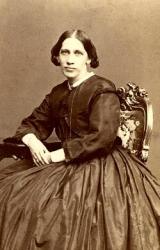
1823 - 1903 Person Name: Lina Sandell, 1832-1903 Topics: God the Redeemer Author of "Children of the Heavenly Father" in The Covenant Hymnal Caroline W. Sandell Berg (b. Froderyd, Sweden, 1832; d. Stockholm, Sweden, 1903), is better known as Lina Sandell, the "Fanny Crosby of Sweden."
"Lina" Wilhelmina Sandell Berg was the daughter of a Lutheran pastor to whom she was very close; she wrote hymns partly to cope with the fact that she witnessed his tragic death by drowning. Many of her 650 hymns were used in the revival services of Carl O. Rosenius, and a number of them gained popularity particularly because of the musical settings written by gospel singer Oskar Ahnfelt. Jenny Lind, the famous Swedish soprano, underwrote the cost of publishing a collection of Ahnfelt's music, Andeliga Sänger (1850), which consisted mainly of Berg's hymn texts.
Bert Polman
Carolina Sandell
Pages