

 My Starred Hymns
 My Hymnals
 My Purchased Files
Planning worship?
Check out our sister site, ZeteoSearch.org,
for 20+ additional resources related to your search.
- |
User Links
Search Results


The Heav'ns declare thy Glory, LORD
Appears in 1 hymnal Topics: Songs of Praise to God the Creation and Providence Lyrics: 1 The Heav'ns declare thy Glory, LORD,
Which that, and that alone can fill;
The Firmament and Stars express
their great Creator's wond'rous Skill:
Each Dawn fresh Beams of Knowledge brings,
From ev'ry Night Instruction springs.
2 Their pow'rful Language to no Space,
Or Realm, or Region is confin'd;
'Tis Nature's universal Voice,
And understood by all Mankind:
The Sun their Doctrines doth display,
Where-e'er he darts his genial Ray.
3 No Bridegroom for his Nuptials dress'd,
Can shew a more enliven'd Face;
No Giant does like him rejoice,
To run with Strength his glorious Race;
In one unwearied Round he goes,
And Light and Heat on all bestows.
Part II
4 GOD's perfect Law converts the Soul,
Reclaims the Heart from false Desires;
With sacred Wisdom his pure Word
The Weak and Ignorant inspires;
The Statutes bring sincere Delight;
His Word assists the feeblest Sight.
5 The Fear of GOD most perfect is,
And shall for evermore endure;
The Judgments of the LORD are true,
Most just and altogether pure;
More precious than fine Gold they are,
And sweeter than the Honey far.
6 My trusty Counsellors they are,
To me they friendly Warnings give:
Divine Rewards attend on those,
Who by thy Precepts live.
But who can all his Errors see?
From secret Faults, LORD, cleanse thou me!
7 Let no presumptuous Sin, O LORD!
Obtain Dominion over me;
That, by thy Grace preserv'd, I may
Far from the great Transgression flee;
So shall my Pray'r by thee be bless'd,
And I in GOD my Saviour rest. Scripture: Psalm 19 Used With Tune: [The heavens declare thy glory, Lord]
The Heav'ns declare thy Glory, LORD
Let all the Just with one Consent
Appears in 1 hymnal Topics: Songs of Praise to God the Creation and Providence Lyrics: 1 Let all the Just with one Consent,
To GOD their chearful Voices raise;
For well the Righteous it becomes
To sing before him Songs of Praise.
2 Let Harps and Psalteries and Lutes
At once in joyful Concert meet;
And new-made Songs of loud Applause,
The heav'nly Harmony complete.
3 For faithful is the Word of GOD,
His wond'rous Works with Truth abound;
He Justice loves, and all the Earth
Is with his tender Mercy crown'd.
4 By his Almighty Word, at first,
The glorious Arch of Heav'n was rear'd;
And all the beauteous Hosts of Light,
At his Command at once appear'd.
5 The swelling Floods, together roll'd,
He makes in mountain Heaps to lie;
And lays, as in a Store-house strong,
His wat'ry Treasures safely by.
6 Let Earth, and all that dwell therein,
Before his Presence trembling stand;
For when he spake the Word, 'twas done,
'Twas fix'd by his supreme Command.
7 He, when the Heathen closely plot,
Their secret Counsels undermines;
His Wisdom ineffectual makes,
The foolish Peopl'es rash Designs.
8 Whate'er the mighty LORD decrees,
Shall doubtless stand for ever sure;
The settled Purpose of his Heart
To endless Ages shall endure.
Part II
9 How happy then, are they, to whom
The LORD supreme, for GOD is known;
Whom he, from all the World besides,
Has chosen out to be his own!
10 He all the Nations of the Earth,
From Heav'n his lofty Throne surveys;
He views their Works, and knows their Thoughts,
For by his Pow'r their Hearts were made.
11 No King is safe by num'rous Hosts,
Their boasted Strength the Strong deceives;
No manag'd Horse by Force or Speed,
His gallant war-like Rider saves.
12 'Tis GOD, who those that trust in him,
Beholds with ever gracious Eyes;
He frees their Souls from Death; their Wants,
In Times of Famine, he supplies.
13 Our Souls on GOD with Patience, wait,
Our Help and only Shield is he;
Then, LORD, let still our Hearts rejoice,
Because our Trust is plac'd in thee!
14 The Riches of thy Mercy, LORD,,
To us, thy Servants still extend!
As we, for all our various wants,
On thee, our GOD, alone depend. Scripture: Psalm 33 Used With Tune: [Let all the just with one consent]
Let all the Just with one Consent
O give Thanks unto the LORD
Appears in 1 hymnal Topics: Songs of Praise to God the Creation and Providence Lyrics: 1 O give Thanks unto the LORD,
To his Name due Praise afford!
For he proves our constant Friend,
And his Love shall never end.
2 To the LORD your Homage pay,
Whom all other GODS obey;
For he proves our constant Friend,
And his Love shall never end.
3 Who the Heav'ns in Wisdom made,
And the Earth on Waters laid,
For he proves our constant Friend,
And his Love shall never end.
4 Yon bright Orb he did display,
Giving him to rule the Day;
For he proves our constant Friend,
And his Love shall never end.
5 He, the Stars of feebler Light,
Gave the Moon to gild the Night,
For he proves our constant Friend,
And his Love shall never end.
6 GOD, with his almighty Hand,
Smote the Hopes of Egypt's Land;
For he proves our constant Friend,
And his Love shall never end.
7 And with his resistless Arm,
Brought out Israel safe from Harm;
For he proves our constant Friend,
And his Love shall never end.
8 He the Red Sea did divide,
Israel passing through the Tide;
For he proves our constant Friend,
And his Love shall never end.
9 But proud Pharaoh and his Host,
They were in the Billows lost;
For he proves our constant Friend,
And his Love shall never end.
10 Safe he led his chosen Seed,
And for them made Monarchs bleed;
For he proves our constant Friend,
And his Love shall never end.
11 Og and Sihon he destroy'd,
Whilst his Saints their Land enjoy'd;
For he proves our constant Friend,
And his Love shall never end.
12 He, dispersing all our Foes,
Rescu'd us from heavy Woes;
For he proves our constant Friend,
And his Love shall never end.
13 GOD doth Food to all supply;
Praise the LORD, who reigns on high;
For he proves our constant Friend,
And his Love shall never end. Scripture: Psalm 136 Used With Tune: [O give Thanks unto the Lord]
O give Thanks unto the LORD

[The fullness which the world affords]
Appears in 14 hymnals Topics: Songs of Praise to God On bringing up the Ark to the Place prepared for it Tune Key: g minor Incipit: 15344 32113 45766 Used With Text: The Fullness which the World affords
[The fullness which the world affords]

LIEBSTER JESU
Meter: 7.8.7.8.8.8 Appears in 291 hymnals Composer and/or Arranger: Johann Rudolph Ahle; George Herbert Palmer Topics: The Church at Worship Scripture; liturgical Songs of Illumination; Baptism; Bible; Church Education; God House, Home; Holy Spirit Illumination; Jesus Christ Lord of Life; Jesus Christ Prophet; Jesus Christ Teacher/Teachings; Light; Opening Hymns; Praise; Service Music Gathering, Call to Worship, Greeting; Service Music Prayer for Illumination; Service Music Litany Prayer; Word of God; Epiphany 3 Year A; Proper 9 Year A; Epiphany 2 Year B; Lent 4 Year B; Proper 21 Year B; Epiphany 2 Year C; Easter 3 Year C Tune Sources: melody alt. Das grosse Cantional oder Kirchen-Gesangbuch1687 Tune Key: G Major Incipit: 31253 12176 12321 Used With Text: Blessed Jesus, at Your Word
LIEBSTER JESU
[Praise God in that bless'd Place]
Appears in 2 hymnals Topics: Songs of Praise to God his Majesty and Attributes; Songs of Praise to God the Creation and Providence Tune Key: F Major Incipit: 13234 51323 45365 Used With Text: Praise God in that bless'd Place
[Praise God in that bless'd Place]


Praise God in that bless'd Place
Hymnal: The Psalms of David #CL (1767) Topics: Songs of Praise to God his Majesty and Attributes; Songs of Praise to God the Creation and Providence Lyrics: 1 Praise GOD in that bless'd Place,
From whence his Goodness flows,
In Heav'n, where he his Face
Unveil'd in Glory shows.
Praise him, for with the mighty Acts
Which he for us hath done,
Our Praise should equal run.
His Kindness this Return exacts.
2 Let the shrill Trumpet's Voice
Make Rocks his Praise resound;
Praise him with Harp's sweet Noise,
And Psaltries Silver sound.
Let graceful Virgins lead the Dance,
And sprightly Timbrels bring;
Let ev'ry warbling String,
With Organs join'd, his Praise advance.
3 Let them who Hymns compose,
To Cymbals set their Praise,
Of common Use, and those
That sound on solemn Days.
The Breath he does to them afford,
Let them who Life enjoy,
In Songs of Praise employ,
LET EV'RY CREATURE PRAISE THE LORD! Scripture: Psalm 150 Languages: English Tune Title: [Praise God in that bless'd Place]
Praise God in that bless'd Place
To thee, my GOD and King
Hymnal: The Psalms of David #CXLV (1767) Topics: Songs of Praise to God his Majesty and Attributes; Songs of Praise to God the Creation and Providence Lyrics: 1 To thee, my GOD and King,
Perpetual Praise I'll sing,
Ev'ry Day I'll bless thy Name.
High is thy Greatness rais'd,
And worthy to be prais'd,
And thy Glory's still the same.
2 Thy Greatness and thy Pow'r
Shall future Times adore,
Of thy Worship I will tell;
above our Knowledge rais'd.
Whilst Men their Songs prepare,
Thy Wonders to declare,
On thy Greatness I will dwell.
3 Thy Kindness shall be shown,
Thy Righteousness be known,
Songs of Praise shall reach the Skies.
Thy Wrath does slowly move;
But thy forgiving Love
On the Wings of Mercy flies.
4 Thy Works in thee are bless'd,
Thy Love's to all express'd,
And thy Saints, with Zeal inspir'd,
Thy Glory shall adore,
And talk of thy great Pow'r,
'Till by all it is admir'd.
5 Thus shall thy Works be known,
And thus thy Glory shown,
For thy Splendor still shall last;
Thy Throne from Changes free,
Which doth no Period see,
Shall remain forever fast.
Part II
6 The LORD helps those that fall,
On him his Creatures call,
Daily Food he doth supply;
Whate'er their Wants require,
He give at their Desire,
Nor doth any Good deny.
7 He's just in all his Ways,
Whoe'er devoutly prays,
Him shall find for ever night;
When they his Aid implore,
And humbly him adore,
He will hearken to their Cry.
8 The LORD will sure protect
Those who his Name respect,
But the Wicked shall destroy;
My Mouth shall speak his Praise,
And let all Mankind raise
One loud Song of gen'ral Joy. Scripture: Psalm 145 Languages: English Tune Title: [To thee, my God, and King]
To thee, my GOD and King
Praise ye the LORD, our GOD to praise
Hymnal: The Psalms of David #CXI (1767) Topics: Songs of Praise to God his Covenant of Grace with his Church; Songs of Praise to God the Creation and Providence Lyrics: 1 Praise ye the LORD, our GOD to praise,
My Soul her utmost Pow'r shall raise;
With private Friends, and in the Throng
Of Saints, his Praise shall be my Song:
Great are his Works, and sought aright
By those, who in them take Delight.
2 His Works are all of matchless Fame,
And universal Glory claim;
His Truth, confirm'd, through Ages past,
Shall to eternal Ages last.
The gracious LORD hath us enjoin'd,
To keep his wond'rous Works in Mind.
3 His Bounty, like a flowing Tide,
Has all his Servants Wants supply'd;
And he will ever keep in Mind,
His Cov'nant with our Fathers sign'd:
For us he did his Pow'r display,
To us the Heathen Lands convey.
4 Just are the Dealings of his Hands,
Immutable are his Commands;
He set his Saints from Bondage free,
And then establish'd his Decree,
For ever to remain the same;
Holy and Rev'rend is his Name!
5 Who Wisdom's sacred Prize would win,
Must with the Fear of GOD begin;
Good Understanding, heav'nly Skill
Have they, who know and do his Will:
The Praise thereof is fixed sure,
And shall for evermore endure. Scripture: Psalm 111 Languages: English Tune Title: [Praise ye the Lord, our God to praise]
Praise ye the LORD, our GOD to praise


Philip Doddridge

1702 - 1751 Topics: Gratitude; Heaven Songs of ; Praise To God; Seraphs Author of "God's praises crown eternity" in Hymnal of the Methodist Episcopal Church Philip Doddridge (b. London, England, 1702; d. Lisbon, Portugal, 1751) belonged to the Non-conformist Church (not associated with the Church of England). Its members were frequently the focus of discrimination. Offered an education by a rich patron to prepare him for ordination in the Church of England, Doddridge chose instead to remain in the Non-conformist Church. For twenty years he pastored a poor parish in Northampton, where he opened an academy for training Non-conformist ministers and taught most of the subjects himself. Doddridge suffered from tuberculosis, and when Lady Huntington, one of his patrons, offered to finance a trip to Lisbon for his health, he is reputed to have said, "I can as well go to heaven from Lisbon as from Northampton." He died in Lisbon soon after his arrival. Doddridge wrote some four hundred hymn texts, generally to accompany his sermons. These hymns were published posthumously in Hymns, Founded on Various Texts in the Holy Scriptures (1755); relatively few are still sung today.
Bert Polman
========================
Doddridge, Philip, D.D., was born in London, June 26, 1702. His grandfather was one of the ministers under the Commonwealth, who were ejected in 1662. His father was a London oilman. He was offered by the Duchess of Bedford an University training for ordination in the Church of England, but declined it. He entered Mr. Jennings's non-conformist seminary at Kibworth instead; preached his first sermon at Hinckley, to which Mr. Jennings had removed his academy. In 1723 he was chosen pastor at Kibworth. In 1725 he changed his residence to Market Harborough, still ministering at Kibworth. The settled work of his life as a preceptor and divine began in 1729, with his appointment to the Castle Hill Meeting at Northampton, and continued till in the last stage of consumption. He sailed to Lisbon, in 1751, where he died October 26, the same year. Two hundred pupils in all, gathered from England, Scotland and Holland, were prepared in his seminary, chiefly for the dissenting ministry, but partly for professions. The wide range of subjects, including daily readings in Hebrew and Greek, Algebra, Trigonometry, Watts' Logic, outline of Philosophy, and copious Divinity, is itself a proof of Doddridge's learning. He was presented with his D.D. degree by the University of Aberdeen. His fame as a divine, combined with his wide sympathies and gentle, unaffected goodness, won for him the friendship of Watts, Col. Gardiner and Hervey, and the esteem of Seeker and Warburton. He welcomed the work of Wesley and Whitefield, and entertained the latter on his visit to Northampton. His Rise and Progress of Religion in the Soul and The Family Expositor both did good work in their day. For criticism of his hymns see English Hymnody, Early, § XIV. [Rev. H. Leigh Bennett, M.A.]
After Dr. Doddridge's death his hymns were published by his friend Job Orton, in 1755, as:—
"Hymns founded on Various Texts in the Holy Scriptures. By the late Reverend Philip Doddridge, D.D. Published from the Author's Manuscript by Job Orton . . . Salop. Printed by J. Eddowes and J. Cotton, &c.
MDCCLV."
Concerning the text of the hymns, Orton says in his Preface:—
"There may perhaps be some improprieties, owing to my not being able to read the author's manuscript in particular places, and being obliged, without a poetical genius, to supply those deficiencies, whereby the beauty of the stanza may be greatly defaced, though the sense is preserved."
The 1st edition contained 370 hymns; the 2nd, 1759, 374; and the 3rd, 1766, and later editions, 375. In 1839 Doddridge's great-grandson re-edited the hymns from the original manuscript and published the same as:—
Scriptural Hymns by the Rev. Philip Doddridge, D.D. New and corrected edition containing many hymns never before printed. Edited from the Original Documents by the Author's great-grandson, John Doddridge Humphreys, Esq. Lond. Darton & Clark, 1839.
This work contains 22 additional hymns. The text differs in many instances from Orton's, but these changes have not come into common use. In addition to the manuscript used by Orton and J. D. Humphreys, another containing 100 hymns (five of which are not in any edition of the Hymns), all in the author's handwriting, and most of them dated, is referred to in this Dictionary as the "D. Manuscripts." It is the property of Mr. W. S. Booker and family. A manuscript, not in Doddridge's handwriting, of 77 "Hymns by P. Doddridge, Mar. 16, 1739/1740," is in the possession of Mr. W. T. Brooke. The existence of these manuscripts is accounted for from the fact that Doddridge's hymns were freely circulated in manuscript during his lifetime. It is from his correspondence with R. Blair (q.v.) that the few compositions traceable to him in the Scottish Trans. & Paraphrases were derived.
The hymns by Doddridge which have attained to the greatest popularity are:— “Awake, my soul, stretch every nerve"; " Do not I love Thee, O my Lord? " "Grace 'tis a charming sound”; " Hark, the glad sound, the Saviour comes"; "My God, and is Thy table spread?" "O happy day, that fixed my choice"; "O God of Jacob [Bethel], by Whose hand”; " See Israel's gentle Shepherd stand"; "Ye servants of the Lord." These hymns, with many besides, are annotated under their respective first lines. Of the rest, taken from the Hymns, &c, 1755, the following are also in common use:—
1. Behold the gloomy vale. Death anticipated.
2. Behold the Great Physician stands. Christ the Physician.
3. Captives of Israel, hear. Spiritual Deliverance.
4. Eternal God, our wondering souls. Enoch's Piety and Translation.
5. Eternal Source of life and thought. Subjection to the Father.
G. Exalted Prince of Life, we own. Christ the Prince and Saviour.
7. Father Divine, the Saviour cried. Christ's Submission to the Father.
8. Father Divine, Thy piercing eye. Secret Prayer.
9. Father of mercies, send Thy grace. Sympathy. The Good Samaritan.
10. Go, saith the Lord, proclaim my grace. Forgiveness.
11. God of Eternity, from Thee. Redeeming the Time.
12. God of my life, through all its [my] days. Praising God continually.
13. God. of salvation, we adore. Praise to God for Redemption.
14. Great Father of mankind. Gentiles brought into the Church.
15. Great God, we sing that mighty hand. The New Tear.
16. Great Leader of Thine Israel's host. During Persecution.
17. Great Lord of angels, we adore. Ordination.
18. Great Spirit of immortal love. Purity of Heart desired.
19. Great Teacher of Thy Church, we own. The Divine Precepts.
20. Hail, everlasting Prince of Peace. Sympathy.
21. Hail to the Prince of life and peace. Praise to Christ.
22. Hear, gracious [Saviour] Sovereign, from Thy throne. The Blessings of the Holy Spirit desired.
23. How gentle God's commands. God's Care of His Own.
24. How rich Thy favours, God of grace. God and His Living Temple.
25. How swift the torrent flows [rolls]. Our Fathers, where are they?
26. Jesus the Lord, our souls adore. Christ the Forerunner.
27. Jesus, we own Thy Sovereign hand. Christ to be fully known hereafter.
28. Loud let the tuneful trumpet sound. Gospel Jubilee.
29. My gracious Lord, I own Thy right. Life in Jesus.
30. My [Dear] Saviour, I am [we are] Thine. Joined to Christ through the Spirit.
31. My soul, with all thy waking powers. The Choice of Moses.
32. Now let our voices join. Singing in the ways of God.
33. 0 injured Majesty of heaven. Lent.
34. 0 Zion, tune thy voice. Glory of the Church of Christ.
35. Peace, 'tis the Lord Jehovah's hand. Resignation.
36. Praise the Lord of boundless might. The Father of Lights.
37. Praise to Thy Name, Eternal God. Growth in Grace desired.
38. Remark, my soul, the narrow bounds. The New Year.
39. Repent, the Voice celestial cries. Lent.
40. Return, my roving heart, return. Heart communing.
41. Salvation, O melodious sound. God our Salvation.
42. Saviour of men, and Lord of love. Ministry and Death of Christ.
43. Searcher of hearts, before Thy face. Peter to Simon Magus.
44. Shepherd of Israel, Thou dost keep. Induction or Settlement of a Minister.
45. Shine forth, eternal Source of light. Knowledge of God desired.
46. Shine on our souls, eternal God. Sunday.
47. Sing, ye redeemed of the Lord. Joy on the Homeward Way.
48. Sovereign of life, before Thine eye. Life and Death in God's hands.
49. The darkened sky, how thick it lours. Sorrow followed by Joy.
50. The day approacheth, O my soul. Judgment anticipated.
51. The King of heaven His table spreads. The Gospel Feast.
52. The promises I sing. The unchanging promises of God.
53. The swift-declining day. Walk in the Light.
54. These mortal joys, how soon they fade. Treasures, Perishable and Eternal.
55. Thy judgments cry aloud. Retributive Providence.
56. Thy presence, Everlasting God. Omnipresence of the Father.
57. 'Tis mine, the covenant of His grace. Death anticipated.
58. To Thee, my God; my days are known. Life under the eye of God.
59. Tomorrow, Lord, is Thine. Uncertainty of Life.
60. Triumphant Lord, Thy goodness reigns. The Divine Goodness.
61. Triumphant Zion, lift thy head. The Church Purified and Guarded.
62. Unite my roving thoughts, unite. Peace.
63. What mysteries, Lord, in Thee combine. Christ, the First and Last.
64. While on the verge of life I stand. Death anticipated with Joy.
65. With ecstacy of Joy. Christ the Living Stone.
66. Ye golden lamps of heaven, farewell. Heaven opening.
67. Ye hearts with youthful vigour warm. The Young encouraged.
68. Ye humble souls, that seek the Lord. Easter.
69. Ye sons of men, with joy record. Praise of the Works of God.
70. Yes, the Redeemer rose. Easter
In Dr. Hatfield's Church HymnBook, N. Y., 1872, Nos. 9, 12, 14, 15, 21, 23, 25, 29, 30, 32, 34, 35, 39, 40, 44, 47, 51, 61, 64, 65, 67, 69, 70, as above, are dated 1740. What authority there may be for this date we cannot say, these hymns not being in any “D. MSS." with which we are acquainted, and no dates are given in the Hymns, &c, 1755. Some later American editors have copied this date from Dr. Hatfield.
Doddridge's hymns are largely used by Unitarians both in Great Britain and America. As might be expected, the Congregationalists also draw freely from his stores. The Baptists come next. In the hymnals of the Church of England the choicest, only are in use. Taken together, over one-third of his hymns are in common usage at the present time.
-- John Julian, Dictionary of Hymnology (1907)
================
Doddridge, Philip, D.D. At p. 305 an account is given of a manuscript volume of Doddridge's Hymns, which is the property of the Rooker family. Since that article was written another manuscript vol. has been found. It was the property of Lady Frances Gardiner, née Erskine, an intimate friend of Doddridge, and wife of Col. Gardiner. It is a copy of the Rooker manuscipt, with the revised text, as in the margin of that ms., and is in Doddridge's hand¬writing. It was from this manuscript that the Doddridge hymns were taken for the Scottish Translationsand Paraphrases, 1745. Additional hymns by Dr. Doddridge still in common use include:—
1. My God, how cheerful is the sound. All in Christ.
2. My Saviour, let me hear Thy voice. Pardon desired.
3. My soul, triumphant in the Lord. Divine Guidance assured.
4. No «iore, ye wise, your wisdom boast. Glorying in God alone. From Hymns, No. 128.
5. Now be that Sacrifice survey'd. Christ our Sacrifice.
6. 0 Israel, blest beyond compare. Happiness of God's Israel.
7. Our fathers, where are they? Considering the Past. From Hymns, No. 164.
8. Praise to the Lord on high. Missions.
9. Praise to the radiant Source of bliss. Praise for Divine Guidance.
10. Return, my soul, and seek thy rest. Rest in Jesus.
11. Salvation doth to God belong. National Thanksgiving.
12. Sovereign of Life, I own Thy hand. On Recovery from Sickness.
13. The sepulchres, how thick they stand. Burial.
14. There is a Shepherd kind and strong. The Good Shepherd. From Hymns, No. 216.
15. Wait on the Lord, ye heirs of hope. Waiting on God.
16. We bless the eternal Source of light. Christ's care of the Church.
17. With transport, Lord, our souls proclaim. Immutability of Christ.
18. Ye mourning saints, whose streaming tears. Death and Burial.
These all appeared in Dr. Doddridge's Hymns, 1755.
--John Julian, Dictionary of Hymnology, Appendix, Part II (1907)
Philip Doddridge
Catherine Winkworth
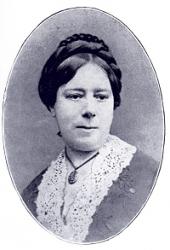
1827 - 1878 Topics: The Church at Worship Scripture; liturgical Songs of Illumination; Baptism; Bible; Church Education; God House, Home; Holy Spirit Illumination; Jesus Christ Lord of Life; Jesus Christ Prophet; Jesus Christ Teacher/Teachings; Light; Opening Hymns; Praise; Service Music Gathering, Call to Worship, Greeting; Service Music Prayer for Illumination; Service Music Litany Prayer; Word of God; Epiphany 3 Year A; Proper 9 Year A; Epiphany 2 Year B; Lent 4 Year B; Proper 21 Year B; Epiphany 2 Year C; Easter 3 Year C Translator of "Blessed Jesus, at Your Word" in Voices United Catherine Winkworth (b. Holborn, London, England, 1827; d. Monnetier, Savoy, France, 1878) is well known for her English translations of German hymns; her translations were polished and yet remained close to the original. Educated initially by her mother, she lived with relatives in Dresden, Germany, in 1845, where she acquired her knowledge of German and interest in German hymnody. After residing near Manchester until 1862, she moved to Clifton, near Bristol. A pioneer in promoting women's rights, Winkworth put much of her energy into the encouragement of higher education for women. She translated a large number of German hymn texts from hymnals owned by a friend, Baron Bunsen. Though often altered, these translations continue to be used in many modern hymnals. Her work was published in two series of Lyra Germanica (1855, 1858) and in The Chorale Book for England (1863), which included the appropriate German tune with each text as provided by Sterndale Bennett and Otto Goldschmidt. Winkworth also translated biographies of German Christians who promoted ministries to the poor and sick and compiled a handbook of biographies of German hymn authors, Christian Singers of Germany (1869).
Bert Polman
========================
Winkworth, Catherine, daughter of Henry Winkworth, of Alderley Edge, Cheshire, was born in London, Sep. 13, 1829. Most of her early life was spent in the neighbourhood of Manchester. Subsequently she removed with the family to Clifton, near Bristol. She died suddenly of heart disease, at Monnetier, in Savoy, in July, 1878. Miss Winkworth published:—
Translations from the German of the Life of Pastor Fliedner, the Founder of the Sisterhood of Protestant Deaconesses at Kaiserworth, 1861; and of the Life of Amelia Sieveking, 1863.
Her sympathy with practical efforts for the benefit of women, and with a pure devotional life, as seen in these translations, received from her the most practical illustration possible in the deep and active interest which she took in educational work in connection with the Clifton Association for the Higher Education of Women, and kindred societies there and elsewhere. Our interest, however, is mainly centred in her hymnological work as embodied in her:—
(1) Lyra Germanica, 1st Ser., 1855. (2) Lyra Germanica, 2nd Ser., 1858. (3) The Chorale Book for England (containing translations from the German, together with music), 1863; and (4) her charming biographical work, the Christian Singers of Germany, 1869.
In a sympathetic article on Miss Winkworth in the Inquirer of July 20, 1878, Dr. Martineau says:—
"The translations contained in these volumes are invariably faithful, and for the most part both terse and delicate; and an admirable art is applied to the management of complex and difficult versification. They have not quite the fire of John Wesley's versions of Moravian hymns, or the wonderful fusion and reproduction of thought which may be found in Coleridge. But if less flowing they are more conscientious than either, and attain a result as poetical as severe exactitude admits, being only a little short of ‘native music'"
Dr. Percival, then Principal of Clifton College, also wrote concerning her (in the Bristol Times and Mirror), in July, 1878:—
"She was a person of remarkable intellectual and social gifts, and very unusual attainments; but what specially distinguished her was her combination of rare ability and great knowledge with a certain tender and sympathetic refinement which constitutes the special charm of the true womanly character."
Dr. Martineau (as above) says her religious life afforded "a happy example of the piety which the Church of England discipline may implant.....The fast hold she retained of her discipleship of Christ was no example of ‘feminine simplicity,' carrying on the childish mind into maturer years, but the clear allegiance of a firm mind, familiar with the pretensions of non-Christian schools, well able to test them, and undiverted by them from her first love."
Miss Winkworth, although not the earliest of modern translators from the German into English, is certainly the foremost in rank and popularity. Her translations are the most widely used of any from that language, and have had more to do with the modern revival of the English use of German hymns than the versions of any other writer.
-- John Julian, Dictionary of Hymnology (1907)
============================
See also in:
Hymn Writers of the Church
Catherine Winkworth
Isaac Watts
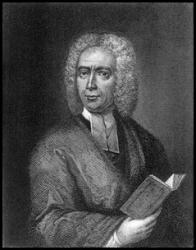
1674 - 1748 Person Name: Dr. Isaac Watts, 1674-1748 Topics: Adoration Of God; God Adoration of; Christ Redeemer; The Godhead Adoration and Praise; God Love of; God Omnipotent; God Wisdom of; Wisdom God's; Trust, in God ; Providence; Praise To God; Praise Songs of ; Praise Unceasing; Redeemer, the; Love Of God; Omnipotence of God; King God our; To-day; Songs Everlasting; Songs Of Praise; Power Of God; Protection, Divine; Recognition in Heaven Author of "To God the only wise" in Methodist Hymn and Tune Book Isaac Watts was the son of a schoolmaster, and was born in Southampton, July 17, 1674. He is said to have shown remarkable precocity in childhood, beginning the study of Latin, in his fourth year, and writing respectable verses at the age of seven. At the age of sixteen, he went to London to study in the Academy of the Rev. Thomas Rowe, an Independent minister. In 1698, he became assistant minister of the Independent Church, Berry St., London. In 1702, he became pastor. In 1712, he accepted an invitation to visit Sir Thomas Abney, at his residence of Abney Park, and at Sir Thomas' pressing request, made it his home for the remainder of his life. It was a residence most favourable for his health, and for the prosecution of his literary labours. He did not retire from ministerial duties, but preached as often as his delicate health would permit.
The number of Watts' publications is very large. His collected works, first published in 1720, embrace sermons, treatises, poems and hymns. His "Horae Lyricae" was published in December, 1705. His "Hymns" appeared in July, 1707. The first hymn he is said to have composed for religious worship, is "Behold the glories of the Lamb," written at the age of twenty. It is as a writer of psalms and hymns that he is everywhere known. Some of his hymns were written to be sung after his sermons, giving expression to the meaning of the text upon which he had preached. Montgomery calls Watts "the greatest name among hymn-writers," and the honour can hardly be disputed. His published hymns number more than eight hundred.
Watts died November 25, 1748, and was buried at Bunhill Fields. A monumental statue was erected in Southampton, his native place, and there is also a monument to his memory in the South Choir of Westminster Abbey. "Happy," says the great contemporary champion of Anglican orthodoxy, "will be that reader whose mind is disposed, by his verses or his prose, to imitate him in all but his non-conformity, to copy his benevolence to men, and his reverence to God." ("Memorials of Westminster Abbey," p. 325.)
--Annotations of the Hymnal, Charles Hutchins, M.A., 1872.
=================================
Watts, Isaac, D.D. The father of Dr. Watts was a respected Nonconformist, and at the birth of the child, and during its infancy, twice suffered imprisonment for his religious convictions. In his later years he kept a flourishing boarding school at Southampton. Isaac, the eldest of his nine children, was born in that town July 17, 1674. His taste for verse showed itself in early childhood. He was taught Greek, Latin, and Hebrew by Mr. Pinhorn, rector of All Saints, and headmaster of the Grammar School, in Southampton. The splendid promise of the boy induced a physician of the town and other friends to offer him an education at one of the Universities for eventual ordination in the Church of England: but this he refused; and entered a Nonconformist Academy at Stoke Newington in 1690, under the care of Mr. Thomas Rowe, the pastor of the Independent congregation at Girdlers' Hall. Of this congregation he became a member in 1693.
Leaving the Academy at the age of twenty, he spent two years at home; and it was then that the bulk of the Hymns and Spiritual Songs (published 1707-9) were written, and sung from manuscripts in the Southampton Chapel. The hymn "Behold the glories of the Lamb" is said to have been the first he composed, and written as an attempt to raise the standard of praise. In answer to requests, others succeeded. The hymn "There is a land of pure delight" is said to have been suggested by the view across Southampton Water. The next six years of Watts's life were again spent at Stoke Newington, in the post of tutor to the son of an eminent Puritan, Sir John Hartopp; and to the intense study of these years must be traced the accumulation of the theological and philosophical materials which he published subsequently, and also the life-long enfeeblement of his constitution.
Watts preached his first sermon when he was twenty-four years old. In the next three years he preached frequently; and in 1702 was ordained pastor of the eminent Independent congregation in Mark Lane, over which Caryl and Dr. John Owen had presided, and which numbered Mrs. Bendish, Cromwell's granddaughter, Charles Fleetwood, Charles Desborough, Sir John Hartopp, Lady Haversham, and other distinguished Independents among its members. In this year he removed to the house of Mr. Hollis in the Minories. His health began to fail in the following year, and Mr. Samuel Price was appointed as his assistant in the ministry. In 1712 a fever shattered his constitution, and Mr. Price was then appointed co-pastor of the congregation which had in the meantime removed to a new chapel in Bury Street. It was at this period that he became the guest of Sir Thomas Abney, under whose roof, and after his death (1722) that of his widow, he remained for the rest of his suffering life; residing for the longer portion of these thirty-six years principally at the beautiful country seat of Theobalds in Herts, and for the last thirteen years at Stoke Newington. His degree of D.D. was bestowed on him in 1728, unsolicited, by the University of Edinburgh. His infirmities increased on him up to the peaceful close of his sufferings, Nov. 25, 1748. He was buried in the Puritan restingplace at Bunhill Fields, but a monument was erected to him in Westminster Abbey.
His learning and piety, gentleness and largeness of heart have earned him the title of the Melanchthon of his day. Among his friends, churchmen like Bishop Gibson are ranked with Nonconformists such as Doddridge. His theological as well as philosophical fame was considerable. His Speculations on the Human Nature of the Logos, as a contribution to the great controversy on the Holy Trinity, brought on him a charge of Arian opinions. His work on The Improvement of the Mind, published in 1741, is eulogised by Johnson. His Logic was still a valued textbook at Oxford within living memory. The World to Come, published in 1745, was once a favourite devotional work, parts of it being translated into several languages. His Catechisms, Scripture History (1732), as well as The Divine and Moral Songs (1715), were the most popular text-books for religious education fifty years ago. The Hymns and Spiritual Songs were published in 1707-9, though written earlier. The Horae Lyricae, which contains hymns interspersed among the poems, appeared in 1706-9. Some hymns were also appended at the close of the several Sermons preached in London, published in 1721-24. The Psalms were published in 1719. The earliest life of Watts is that by his friend Dr. Gibbons. Johnson has included him in his Lives of the Poets; and Southey has echoed Johnson's warm eulogy. The most interesting modern life is Isaac Watts: his Life and Writings, by E. Paxton Hood. [Rev. H. Leigh Bennett, M.A.]
A large mass of Dr. Watts's hymns and paraphrases of the Psalms have no personal history beyond the date of their publication. These we have grouped together here and shall preface the list with the books from which they are taken.
(l) Horae Lyricae. Poems chiefly of the Lyric kind. In Three Books Sacred: i.To Devotion and Piety; ii. To Virtue, Honour, and Friendship; iii. To the Memory of the Dead. By I. Watts, 1706. Second edition, 1709. (2) Hymns and Spiritual Songs. In Three Books: i. Collected from the Scriptures; ii. Composed on Divine Subjects; iii. Prepared for the Lord's Supper. By I. Watts, 1707. This contained in Bk i. 78 hymns; Bk. ii. 110; Bk. iii. 22, and 12 doxologies. In the 2nd edition published in 1709, Bk. i. was increased to 150; Bk. ii. to 170; Bk. iii. to 25 and 15 doxologies. (3) Divine and Moral Songs for the Use of Children. By I. Watts, London, 1715. (4) The Psalms of David Imitated in the Language of the New Testament, And apply'd to the Christian State and Worship. By I. Watts. London: Printed by J. Clark, at the Bible and Crown in the Poultry, &c, 1719. (5) Sermons with hymns appended thereto, vol. i., 1721; ii., 1723; iii. 1727. In the 5th ed. of the Sermons the three volumes, in duodecimo, were reduced to two, in octavo. (6) Reliquiae Juveniles: Miscellaneous Thoughts in Prose and Verse, on Natural, Moral, and Divine Subjects; Written chiefly in Younger Years. By I. Watts, D.D., London, 1734. (7) Remnants of Time. London, 1736.
454 Hymns and Versions of the Psalms, in addition to the centos are all in common use at the present time.
--Excerpts from John Julian, Dictionary of Hymnology (1907)
==================================
Watts, I. , p. 1241, ii. Nearly 100 hymns, additional to those already annotated, are given in some minor hymn-books.
--John Julian, Dictionary of Hymnology, Appendix, Part II (1907)
=================
Watts, I. , p. 1236, i. At the time of the publication of this Dictionary in 1892, every copy of the 1707 edition of Watts's Hymns and Spiritual Songs was supposed to have perished, and all notes thereon were based upon references which were found in magazines and old collections of hymns and versions of the Psalms. Recently three copies have been recovered, and by a careful examination of one of these we have been able to give some of the results in the revision of pp. 1-1597, and the rest we now subjoin.
i. Hymns in the 1709 ed. of Hymns and Spiritual Songs which previously appeared in the 1707 edition of the same book, but are not so noted in the 1st ed. of this Dictionary:—
On pp. 1237, L-1239, ii., Nos. 18, 33, 42, 43, 47, 48, 60, 56, 58, 59, 63, 75, 82, 83, 84, 85, 93, 96, 99, 102, 104, 105, 113, 115, 116, 123, 124, 134, 137, 139, 146, 147, 148, 149, 162, 166, 174, 180, 181, 182, 188, 190, 192, 193, 194, 195, 197, 200, 202.
ii. Versions of the Psalms in his Psalms of David, 1719, which previously appeared in his Hymns and Spiritual Songs, 1707:—
On pp. 1239, U.-1241, i., Nos. 241, 288, 304, 313, 314, 317, 410, 441.
iii. Additional not noted in the revision:—
1. My soul, how lovely is the place; p. 1240, ii. 332. This version of Ps. lxiv. first appeared in the 1707 edition of Hymns & Spiritual Songs, as "Ye saints, how lovely is the place."
2. Shine, mighty God, on Britain shine; p. 1055, ii. In the 1707 edition of Hymns & Spiritual Songs, Bk. i., No. 35, and again in his Psalms of David, 1719.
3. Sing to the Lord with [cheerful] joyful voice, p. 1059, ii. This version of Ps. c. is No. 43 in the Hymns & Spiritual Songs, 1707, Bk. i., from which it passed into the Ps. of David, 1719.
A careful collation of the earliest editions of Watts's Horae Lyricae shows that Nos. 1, 7, 9, 10, 11, 12, 14, 16, p. 1237, i., are in the 1706 ed., and that the rest were added in 1709. Of the remaining hymns, Nos. 91 appeared in his Sermons, vol. ii., 1723, and No. 196 in Sermons, vol. i., 1721. No. 199 was added after Watts's death. It must be noted also that the original title of what is usually known as Divine and Moral Songs was Divine Songs only.
--John Julian, Dictionary of Hymnology, New Supplement (1907)
===========
See also in:
Hymn Writers of the Church
Isaac Watts