

 My Starred Hymns
 My Hymnals
 My Purchased Files
Planning worship?
Check out our sister site, ZeteoSearch.org,
for 20+ additional resources related to your search.
- |
User Links
Search Results


God moves in a mysterious way
Author: Cowper Meter: 8.6.8.6 Appears in 1,167 hymnals Used With Tune: DEVIZES
God moves in a mysterious way
Come, let us use the grace divine
Author: Charles Wesley Appears in 156 hymnals Used With Tune: DEVIZES
Come, let us use the grace divine
Come, let us join with one accord
Author: Charles Wesley Appears in 143 hymnals Used With Tune: DEVIZES
Come, let us join with one accord


El nombre más caro
Author: Juan Newton Hymnal: Himnario de la Iglesia Metodista Episcopal #27 (1881) First Line: ¡Cuán dulce el nombre de Jesus Languages: Spanish Tune Title: DEVIZES
El nombre más caro
God moves in a mysterious way
Author: Cowper Hymnal: African Methodist Episcopal hymn and tune book #28 (1898) Meter: 8.6.8.6 Languages: English Tune Title: DEVIZES
God moves in a mysterious way
O for a thousand seraph tongues
Author: C. Wesley Hymnal: African Methodist Episcopal hymn and tune book #29 (1898) Meter: 8.6.8.6 Languages: English Tune Title: DEVIZES
O for a thousand seraph tongues


William Cowper
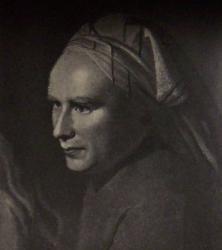
1731 - 1800 Person Name: Cowper Author of "God moves in a mysterious way" in African Methodist Episcopal hymn and tune book William Cowper (pronounced "Cooper"; b. Berkampstead, Hertfordshire, England, 1731; d. East Dereham, Norfolk, England, 1800) is regarded as one of the best early Romantic poets. To biographers he is also known as "mad Cowper." His literary talents produced some of the finest English hymn texts, but his chronic depression accounts for the somber tone of many of those texts. Educated to become an attorney, Cowper was called to the bar in 1754 but never practiced law. In 1763 he had the opportunity to become a clerk for the House of Lords, but the dread of the required public examination triggered his tendency to depression, and he attempted suicide. His subsequent hospitalization and friendship with Morley and Mary Unwin provided emotional stability, but the periods of severe depression returned. His depression was deepened by a religious bent, which often stressed the wrath of God, and at times Cowper felt that God had predestined him to damnation.
For the last two decades of his life Cowper lived in Olney, where John Newton became his pastor. There he assisted Newton in his pastoral duties, and the two collaborated on the important hymn collection Olney Hymns (1779), to which Cowper contributed sixty-eight hymn texts.
Bert Polman
============
Cowper, William, the poet. The leading events in the life of Cowper are: born in his father's rectory, Berkhampstead, Nov. 26, 1731; educated at Westminster; called to the Bar, 1754; madness, 1763; residence at Huntingdon, 1765; removal to Olney, 1768; to Weston, 1786; to East Dereham, 1795; death there, April 25, 1800.
The simple life of Cowper, marked chiefly by its innocent recreations and tender friendships, was in reality a tragedy. His mother, whom he commemorated in the exquisite "Lines on her picture," a vivid delineation of his childhood, written in his 60th year, died when he was six years old. At his first school he was profoundly wretched, but happier at Westminster; excelling at cricket and football, and numbering Warren Hastings, Colman, and the future model of his versification. Churchill, among his contemporaries or friends. Destined for the Bar, he was articled to a solicitor, along with Thurlow. During this period he fell in love with his cousin, Theodora Cowper, sister to Lady Hesketh, and wrote love poems to her. The marriage was forbidden by her father, but she never forgot him, and in after years secretly aided his necessities. Fits of melancholy, from which he had suffered in school days, began to increase, as he entered on life, much straitened in means after his father's death. But on the whole, it is the playful, humorous side of him that is most prominent in the nine years after his call to the Bar; spent in the society of Colman, Bonnell Thornton, and Lloyd, and in writing satires for The Connoisseur and St. James's Chronicle and halfpenny ballads. Then came the awful calamity, which destroyed all hopes of distinction, and made him a sedentary invalid, dependent on his friends. He had been nominated to the Clerkship of the Journals of the House of Lords, but the dread of appearing before them to show his fitness for the appointment overthrew his reason. He attempted his life with "laudanum, knife and cord,"—-in the third attempt nearly succeeding. The dark delusion of his life now first showed itself—a belief in his reprobation by God. But for the present, under the wise and Christian treatment of Dr. Cotton (q. v.) at St. Albans, it passed away; and the eight years that followed, of which the two first were spent at Huntingdon (where he formed his lifelong friendship with Mrs. Unwin), and the remainder at Olney in active piety among the poor, and enthusiastic devotions under the guidance of John Newton (q. v.), were full of the realisation of God's favour, and the happiest, most lucid period of his life. But the tension of long religious exercises, the nervous excitement of leading at prayer meetings, and the extreme despondence (far more than the Calvinism) of Newton, could scarcely have been a healthy atmosphere for a shy, sensitive spirit, that needed most of all the joyous sunlight of Christianity. A year after his brother's death, madness returned. Under the conviction that it was the command of God, he attempted suicide; and he then settled down into a belief in stark contradiction to his Calvinistic creed, "that the Lord, after having renewed him in holiness, had doomed him to everlasting perdition" (Southey). In its darkest form his affliction lasted sixteen months, during which he chiefly resided in J. Newton's house, patiently tended by him and by his devoted nurse, Mrs. Unwin. Gradually he became interested in carpentering, gardening, glazing, and the tendance of some tame hares and other playmates. At the close of 1780, Mrs. Unwin suggested to him some serious poetical work; and the occupation proved so congenial, that his first volume was published in 1782. To a gay episode in 1783 (his fascination by the wit of Lady Austen) his greatest poem, The Task, and also John Gilpin were owing. His other principal work was his Homer, published in 1791. The dark cloud had greatly lifted from his life when Lady Hesketh's care accomplished his removal to Weston (1786): but the loss of his dear friend William Unwin lowered it again for some months. The five years' illness of Mrs. Unwin, during which his nurse of old became his tenderly-watched patient, deepened the darkness more and more. And her death (1796) brought “fixed despair," of which his last poem, The Castaway, is the terrible memorial. Perhaps no more beautiful sentence has been written of him, than the testimony of one, who saw him after death, that with the "composure and calmness" of the face there “mingled, as it were, a holy surprise."
Cowper's poetry marks the dawn of the return from the conventionality of Pope to natural expression, and the study of quiet nature. His ambition was higher than this, to be the Bard of Christianity. His great poems show no trace of his monomania, and are full of healthy piety. His fame as a poet is less than as a letter-writer: the charm of his letters is unsurpassed. Though the most considerable poet, who has written hymns, he has contributed little to the development of their structure, adopting the traditional modes of his time and Newton's severe canons. The spiritual ideas of the hymns are identical with Newton's: their highest note is peace and thankful contemplation, rather than joy: more than half of them are full of trustful or reassuring faith: ten of them are either submissive (44), self-reproachful (17, 42, 43), full of sad yearning (1, 34), questioning (9), or dark spiritual conflict (38-40). The specialty of Cowper's handling is a greater plaintiveness, tenderness, and refinement. A study of these hymns as they stood originally under the classified heads of the Olney Hymns, 1779, which in some cases probably indicate the aim of Cowper as well as the ultimate arrangement of the book by Newton, shows that one or two hymns were more the history of his conversion, than transcripts of present feelings; and the study of Newton's hymns in the same volume, full of heavy indictment against the sins of his own regenerate life, brings out the peculiar danger of his friendship to the poet: it tends also to modify considerably the conclusions of Southey as to the signs of incipient madness in Cowper's maddest hymns. Cowper's best hymns are given in The Book of Praise by Lord Selborne. Two may be selected from them; the exquisitely tender "Hark! my soul, it is the Lord" (q. v.), and "Oh, for a closer walk with God" (q. v.). Anyone who knows Mrs. Browning's noble lines on Cowper's grave will find even a deeper beauty in the latter, which is a purely English hymn of perfect structure and streamlike cadence, by connecting its sadness and its aspiration not only with the “discord on the music" and the "darkness on the glory," but the rapture of his heavenly waking beneath the "pathetic eyes” of Christ.
Authorities. Lives, by Hayley; Grimshaw; Southey; Professor Goldwin Smith; Mr. Benham (attached to Globe Edition); Life of Newton, by Rev. Josiah Bull; and the Olney Hymns. The numbers of the hymns quoted refer to the Olney Hymns. [Rev. H. Leigh Bennett, M.A.]
--John Julian, Dictionary of Hymnology (1907)
================
Cowper, W. , p. 265, i. Other hymns are:—
1. Holy Lord God, I love Thy truth. Hatred of Sin.
2. I was a grovelling creature once. Hope and Confidence.
3. No strength of nature can suffice. Obedience through love.
4. The Lord receives His highest praise. Faith.
5. The saints should never be dismayed. Providence. All these hymns appeared in the Olney Hymns, 1779.
--John Julian, Dictionary of Hymnology, Appendix, Part II (1907)
=====================
Cowper, W., p. 265, i. Prof. John E. B. Mayor, of Cambridge, contributed some letters by Cowper, hitherto unpublished, together with notes thereon, to Notes and Queries, July 2 to Sept. 24, 1904. These letters are dated from Huntingdon, where he spent two years after leaving St. Alban's (see p. 265, i.), and Olney. The first is dated "Huntingdon, June 24, 1765," and the last "From Olney, July 14, 1772." They together with extracts from other letters by J. Newton (dated respectively Aug. 8, 1772, Nov. 4, 1772), two quotations without date, followed by the last in the N. & Q. series, Aug. 1773, are of intense interest to all students of Cowper, and especially to those who have given attention to the religious side of the poet's life, with its faint lights and deep and awful shadows. From the hymnological standpoint the additional information which we gather is not important, except concerning the hymns "0 for a closer walk with God," "God moves in a mysterious way," "Tis my happiness below," and "Hear what God, the Lord, hath spoken." Concerning the last three, their position in the manuscripts, and the date of the last from J. Newton in the above order, "Aug. 1773," is conclusive proof against the common belief that "God moves in a mysterious way" was written as the outpouring of Cowper's soul in gratitude for the frustration of his attempted suicide in October 1773.
--John Julian, Dictionary of Hymnology, New Supplement (1907)
William Cowper
John Fawcett
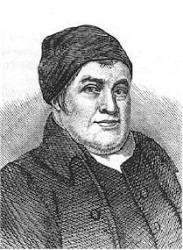
1740 - 1817 Author of "How precious is the book divine" in The Otterbein Hymnal An orphan at the age of twelve, John Fawcett (b. Lidget Green, Yorkshire, England, 1740; d. Hebden Bridge, Yorkshire, 1817) became apprenticed to a tailor and was largely self-educated. He was converted by the preaching of George Whitefield at the age of sixteen and began preaching soon thereafter. In 1765 Fawcett was called to a small, poor, Baptist country church in Wainsgate, Yorkshire. Seven years later he received a call from the large and influential Carter's Lane Church in London, England. Fawcett accepted the call and preached his farewell sermon. The day of departure came, and his family's belongings were loaded on carts, but the distraught congregation begged him to stay. In Singers and Songs of the Church (1869), Josiah Miller tells the story associated with this text:
This favorite hymn is said to have been written in 1772, to commemorate the determination of its author to remain with his attached people at Wainsgate. The farewell sermon was preached, the wagons were loaded, when love and tears prevailed, and Dr. Fawcett sacrificed the attraction of a London pulpit to the affection of his poor but devoted flock.
Fawcett continued to serve in Wainsgate and in the nearby village of Hebden Bridge for the remainder of his active ministry.
Bert Polman
===============
Fawcett, John, D.D., was born Jan. 6, 1739 or 1740, at Lidget Green, near Bradford, Yorks. Converted at the age of sixteen under the ministry of G. Whitefield, he at first joined the Methodists, but three years later united with the Baptist Church at Bradford. Having begun to preach he was, in 1765, ordained Baptist minister at Wainsgate, near Hebden Bridge, Yorks. In 1772 he was invited to London, to succeed the celebrated Dr. J. Gill, as pastor of Carter's Lane; the invitation had been formally accepted, the farewell sermon at Wainsgate had been preached and the wagons loaded with his goods for removal, when the love and tears of his attached people prevailed and he decided to remain. In 1777 a new chapel was built for him at Hebden Bridge, and about the same time he opened a school at Brearley Hall, his place of residence. In 1793 he was invited to become President of the Baptist Academy at Bristol, but declined. In 1811 he received from America the degree of D.D., and died in 1817, at the age of 78. Dr. Fawcett was the author of a number of prose works on Practical Religion, several of which attained a large circulation. His poetical publications are:—
(1) Poetic Essays, 1767; (2) The Christian's Humble Plea, a Poem, in answer to Dr. Priestley against the Divinity of our Lord Jesus Christ, 1772; (3) Three hymns, in the Gospel Magazine, 1777; (4) The Death of Eumenio, a Divine Poem, 1779; (5) Another poem, suggested by the decease of a friend, The Reign of Death, 1780; and (6) Hymns adapted to the circumstances of Public Worship and Private Devotion, Leeds, G. Wright & Son. 1782. They are 166 in number, and were mostly composed to be sung after sermons by the author.
Whilst not attaining a high degree of excellence as poetry, they are "eminently spiritual and practical," and a number of them are found in all the Baptist and Congregational hymn-books that have appeared during the last 100 years. The best known of these are, “Infinite excellence is Thine;" "How precious is the Book divine;" "Thus far my God hath led me on;" "Religion is the chief concern;" "Blest be the tie that binds;" “I my Ebenezer raise;" and "Praise to Thee, Thou great Creator." These hymns, together with others by Fawcett, are annotated under their respective first lines. [Rev. W. R. Stevenson, M.A.]
In addition the following hymns, also by Fawcett, but of less importance, are in common use:
1. Behold the sin-atoning Lamb. Passiontide. No. 60 of his Hymns, 1782, in 7 stanzas of 4 lines. In several hymnals in Great Britain and America.
2. I my Ebenezer raise. Birthday. No. 102 of his Hymns, in 10 stanzas of 4 lines. Usually given in an abbreviated form.
3. Infinite excellence is Thine. Jesus the Desire of Nations. No. 42 of his Hymns, in 12 stanzas of 4 lines. In several hymn-books in Great Britain and America in an abridged form.
4. Jesus, the heavenly Lover, gave. Redemption in Christ. No. 10 of his Hymns, &c., 1782, in 7 stanzas of 4 lines, and headed, "The marriage between Christ and the Soul." In Snepp's Songs of Grace & Glory, 1872, it reads, “Jesus, the heavenly Bridegroom, gave," and stanza v. is omitted.
5. Lord, hast Thou made me know Thy ways? Perseverance. No. 122 of his Hymns, &c., 1782, in 8 stanza of 4 lines. In the Baptist Hymnal, 1879, No. 451, stanzas iv.-vii. are omitted.
6. 0 God, my Helper, ever near. New Year. No. 108 of his Hymns, &c., 1782, in 6 stanzas of 4 lines. The New Congregational Hymn Book, 1859-69 omits st. vi.
7. 0, my soul, what means this sadness? Sorrow turned to Joy. No. 111 of his Hymns, &c., 1782, in 5 stanzas of 6 lines, and based upon the words, "Why art Thou cast down, O my soul?" &c. It is in common use in America, and usually with the omission of stanza ii. as in Dr. Hatfield's Church Hymn Book, 1872.
8. Sinners, the voice of God regard. Invitation to Repentance. No. 63 of his Hymns, &c., 1782, in 7 stanzas of 4 lines on Isaiah lv. 7, "Let the wicked forsake his way," &c. It is in common use in America, but usually in an abbreviated form.
9. Thy presence, gracious God, afford. Before Sermon. No 165 in his Hymns, &c., in 4 stanzas of 4 lines, and a chorus of two lines. In Dr. Hatfield's Church Hymnbook, 1872, No. 126, the chorus is omitted. Fawcett has another hymn on the same subject (No. 79) and beginning, "Thy blessing, gracious God, afford," but this is not in common use.
10. Thy way, 0 God, is in the sea. Imperfect Knowledge of God. No. 66 in his Hymns, &c., 1782, in 7 stanzas of 4 lines on 1 Corinthians xiii. 9, "We know in part," &c. It is in several American collections, usually abbreviated, and sometimes as, "Thy way, O Lord, is in the sea." In this form it is in The Sabbath Hymn Book, 1858, &c.
11. With humble heart and tongue. Prayer for Guidance in Youth. No. 86 in his Hymns, &c., 1782, in 7 stanzas of 4 lines on Psalms cxix. 9. "Wherewith shall a young man cleanse his way." It is No. 954 in the Baptist Psalms and Hymns, 1858-80.
About 20 of Fawcett's hymns are thus still in common use. Two hymns which have been ascribed to him from time to time, but concerning which there are some doubts, are fully annotated under their respective first lines. These are," Humble souls that seek salvation," and "Lord, dismiss us with Thy blessing."
-- John Julian, Dictionary of Hymnology (1907)
John Fawcett
James Montgomery
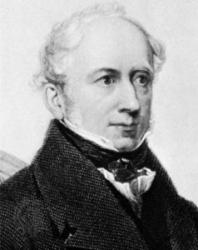
1771 - 1854 Author of "Prayer is the soul's sincere desire" in The Otterbein Hymnal James Montgomery (b. Irvine, Ayrshire, Scotland, 1771; d. Sheffield, Yorkshire, England, 1854), the son of Moravian parents who died on a West Indies mission field while he was in boarding school, Montgomery inherited a strong religious bent, a passion for missions, and an independent mind. He was editor of the Sheffield Iris (1796-1827), a newspaper that sometimes espoused radical causes. Montgomery was imprisoned briefly when he printed a song that celebrated the fall of the Bastille and again when he described a riot in Sheffield that reflected unfavorably on a military commander. He also protested against slavery, the lot of boy chimney sweeps, and lotteries. Associated with Christians of various persuasions, Montgomery supported missions and the British Bible Society. He published eleven volumes of poetry, mainly his own, and at least four hundred hymns. Some critics judge his hymn texts to be equal in quality to those of Isaac Watts and Charles Wesley . Many were published in Thomas Cotterill's Selection of Psalms and Hymns (1819 edition) and in Montgomery's own Songs of Zion (1822), Christian Psalmist (1825), and Original Hymns (1853).
Bert Polman
========================
Montgomery, James, son of John Montgomery, a Moravian minister, was born at Irvine, Ayrshire, Nov. 4, 1771. In 1776 he removed with his parents to the Moravian Settlement at Gracehill, near Ballymena, county of Antrim. Two years after he was sent to the Fulneck Seminary, Yorkshire. He left Fulneck in 1787, and entered a retail shop at Mirfield, near Wakefield. Soon tiring of that he entered upon a similar situation at Wath, near Rotherham, only to find it quite as unsuitable to his taste as the former. A journey to London, with the hope of finding a publisher for his youthful poems ended in failure; and in 1792 he was glad to leave Wath for Shefield to join Mr. Gales, an auctioneer, bookseller, and printer of the Sheffield Register newspaper, as his assistant. In 1794 Mr. Gales left England to avoid a political prosecution. Montgomery took the Sheffield Register in hand, changed its name to The Sheffield Iris, and continued to edit it for thirty-one years. During the next two years he was imprisoned twice, first for reprinting therein a song in commemoration of "The Fall of the Bastille," and the second for giving an account of a riot in Sheffield. The editing of his paper, the composition and publication of his poems and hynms, the delivery of lectures on poetry in Sheffield and at the Royal Institution, London, and the earnest advocacy of Foreign Missions and the Bible Society in many parts of the country, gave great variety but very little of stirring incident to his life. In 1833 he received a Royal pension of £200 a year. He died in his sleep, at the Mount, Sheffield, April 30, 1854, and was honoured with a public funeral. A statue was erected to his memory in the Sheffield General Cemetery, and a stained glass window in the Parish Church. A Wesleyan chapel and a public hall are also named in his honour. Montgomery's principal poetical works, including those which he edited, were:—
(1) Prison Amusements, 1797; (2) The Wanderer of Switzerland, 1806; (3) The West Indies, 1807; (4) The World before the Flood, 1813; (5) Greenland and Other Poems, 1819; (6) Songs of Zion, 1822; (7) The Christian Psalmist, 1825; (8) The Christian Poet, 1825; (9) The Pelican Island, 1828; (10) The Poet’s Portfolio, 1835; (11) Original Hymns for Public, Private, and Social Devotion, 1853. He also published minor pieces at various times, and four editions of his Poetical Works, the first in 1828, the second in 1836, the third in 1841, and the fourth in 1854. Most of these works contained original hymns. He also contributed largely to Collyer's Collection, 1812, and other hymnbooks published during the next 40 years, amongst which the most noticeable was Cotterill's Selections of 1819, in which more than 50 of his compositions appeared. In his Christian Psalmist, 1825, there are 100 of his hymns, and in his Original Hymns, 1853, 355 and 5 doxologies. His Songs of Zion, 1822, number 56. Deducting those which are repeated in the Original Hymns, there remain about 400 original compositions.
Of Montgomery's 400 hymns (including his versions of the Psalms) more than 100 are still in common use. With the aid of Montgomery's MSS. we have given a detailed account of a large number. The rest are as follows:—
i. Appeared in Collyer's Collection, 1812.
1. Jesus, our best beloved Friend. Personal Dedication to Christ.
2. When on Sinai's top I see. Sinai, Tabor, and Calvary.
ii. Appeared in Cotterill's Selection, 1819.
3. Come to Calvary's holy mountain. The Open Fountain.
4. God in the high and holy place. God in Nature. The cento in Com. Praise, 1879, and others, "If God hath made this world so fair," is from this hymn.
5. Hear me, O Lord, in my distress. Ps. cxliii.
6. Heaven is a place of rest from sin. Preparation for Heaven.
7. I cried unto the Lord most just. Ps. cxlii.
8. Lord, let my prayer like incense rise. Ps. cxxxix.
9. O bless the Lord, my soul! His grace to thee proclaim. Ps. ciii.
10. Out of the depths of woe. Ps. cxxx. Sometimes "When from the depths of woe."
11. The world in condemnation lay. Redemption.
12. Where are the dead? In heaven or hell? The Living and the Dead.
iii. Appeared in his Songs of Zion, 1822.
13. Give glory to God in the highest. Ps. xxix.
14. Glad was my heart to hear. Ps. cxxii.
15. God be merciful to me. Ps. lxix.
16. God is my strong salvation. Ps. xxvii.
17. Hasten, Lord, to my release. Ps. lxx.
18. Have mercy on me, O my God. Ps. li.
19. Hearken, Lord, to my complaints. Ps. xlii.
20. Heralds of creation cry. Ps. cxlviii.
21. How beautiful the sight. Ps. cxxxiii.
22. How precious are Thy thoughts of peace. Ps. cxxxix.
23. I love the Lord, He lent an ear. Ps. cxvi.
24. In time of tribulation. Ps. lxxvii.
25. Jehovah is great, and great be His praise. Ps. xlviii. Sometimes, "0 great is Jehovah, and great is His Name."
26. Judge me, O Lord, in righteousness. Ps. xliii.
27. Lift up your heads, ye gates, and wide. Ps.xxiv.
28. Lord, let me know mine [my] end. Ps. xxxi.
29. Of old, 0 God, Thine own right hand. Ps. lxxx.
30. O God, Thou art [my] the God alone. Ps. lxiii.
31. 0 Lord, our King, how excellent. Ps. viii. Sometimes, "0 Lord, how excellent is Thy name."
32. O my soul, with all thy powers. Ps. ciii.
33. One thing with all my soul's desire. Ps. xxvii. From this, "Grant me within Thy courts a place."
34. Searcher of hearts, to Thee are known. Ps. cxxxix.
35. Thank and praise Jehovah's name. Ps. cvii.
36. Thee will I praise, O Lord in light. Ps. cxxxviii.
37. The Lord is King; upon His throne. Ps. xciii.
38. The Lord is my Shepherd, no want shall I know. Ps. xxiii.
39. The tempter to my soul hath said. Ps. iii.
40. Thrice happy he who shuns the way. Ps. i.
41. Thy glory, Lord, the heavens declare. Ps. xix.
42. Thy law is perfect, Lord of light. Ps. xix.
43. Who make the Lord of hosts their tower. Ps. cxxv.
44. Yea, I will extol Thee. Ps. xxx.
iv. Appeared in his Christian Psalmist. 1825.
45. Fall down, ye nations, and adore. Universal adoration of God desired.
46. Food, raiment, dwelling, health, and friends. The Family Altar.
47. Go where a foot hath never trod. Moses in the desert. Previously in the Leeds Congregational Collection, 1822.
48. Green pastures and clear streams. The Good Shepherd and His Flock.
49. Less than the least of all. Mercies acknowledged.
50. Not to the mount that burned with fire [flame]. Communion of Saints.
51. On the first Christian Sabbath eve. Easter Sunday Evening.
52. One prayer I have: all prayers in one. Resignation.
53. Our heavenly Father hear. The Lord's Prayer.
54. Return, my soul, unto thy rest. Rest in God.
55. Spirit of power and might, behold. The Spirit's renewing desired.
56. The Christian warrior, see him stand. The Christian Soldier. Sometimes, "Behold the Christian warrior stand."
57. The days and years of time are fled. Day of Judgment.
58. The glorious universe around. Unity.
59. The pure and peaceful mind. A Children's Prayer.
60. This is the day the Lord hath made (q. v.). Sunday.
61. Thy word, Almighty Lord. Close of Service.
62. What secret hand at morning light ? Morning.
63. While through this changing world we roam. Heaven.
64. Within these walls be peace. For Sunday Schools.
v. Appeared in his Original Hymns, 1853.
65. Behold yon bright array. Opening a Place of Worship.
66. Behold the book whose leaves display. Holy Scriptures.
67. Come ye that fear the Lord. Confirmation.
68. Home, kindred, friends, and country, these. Farewell to a Missionary.
69. Let me go, the day is breaking. Jacob wrestling.
70. Not in Jerusalem alone. Consecration of a Church.
71. Praise the high and holy One. God the Creator.
In common with most poets and hymnwriters, Montgomery strongly objected to any correction or rearrangement of his compositions. At the same time he did not hesitate to alter, rearrange, and amend the productions of others. The altered texts which appeared in Cotterill's Selections, 1819, and which in numerous instances are still retained in some of the best hymnbooks, as the "Rock of Ages," in its well-known form of three stanzas, and others of equal importance, were made principally by him for Cotterill's use. We have this confession under his own hand.
As a poet, Montgomery stands well to the front; and as a writer of hymns he ranks in popularity with Wesley, Watts, Doddridge, Newton, and Cowper. His best hymns were written in his earlier years. In his old age he wrote much that was unworthy of his reputation. His finest lyrics are "Angels from the realms of glory," "Go to dark Gethsemane," "Hail to the Lord's Anointed," and "Songs of praise the angels sang." His "Prayer is the soul's sincere desire," is an expanded definition of prayer of great beauty; and his "Forever with the Lord" is full of lyric fire and deep feeling. The secrets of his power as a writer of hymns were manifold. His poetic genius was of a high order, higher than most who stand with him in the front rank of Christian poets. His ear for rhythm was exceedingly accurate and refined. His knowledge of Holy Scripture was most extensive. His religious views were broad and charitable. His devotional spirit was of the holiest type. With the faith of a strong man he united the beauty and simplicity of a child. Richly poetic without exuberance, dogmatic without uncharitableness, tender without sentimentality, elaborate without diffusiveness, richly musical without apparent effort, he has bequeathed to the Church of Christ wealth which could onlv have come from a true genius and a sanctified! heart.
--John Julian, Dictionary of Hymnology (1907)
James Montgomery


Small Church Music
Editors: Charles Wesley Description:
History
The SmallChurchMusic site was launched in 2006, growing out of the requests from those struggling
to provide suitable music for their services and meetings. Rev. Clyde McLennan was ordained in mid
1960’s and was a pastor in many small Australian country areas, and therefore was acutely aware of
this music problem. Having also been trained as a Pipe Organist, recordings on site (which are a subset
of the smallchurchmusic.com site) are all actually played by Clyde, and also include piano and piano
with organ versions.
About the Recordings All recordings are in MP3 format.
Churches all around the world use the recordings, with downloads averaging over 60,000 per
month.
The recordings normally have an introduction, several verses and a slowdown on the last verse.
Users are encouraged to use software: Audacity (http://www.audacityteam.org) or Song Surgeon (http://songsurgeon.com) to adjust the MP3 number of verses, tempo and pitch to suit their local needs.
Mobile App
We have partnered with the developer of the popular NetTracks mobile app to offer the Small Church Music collection as a convenient mobile app. Experience the beloved Small Church Music collection through this iOS app featuring nearly 10,000 high-quality hymn recordings that can be organized into custom setlists and downloaded for offline use—ideal for worship services without musicians, congregational practice, and personal devotion. The app requires a small fee to cover maintenance costs. Please note: While Hymnary.org hosts this music collection, technical support for the app is provided exclusively by the app developer, not by Hymnary.org staff.
LicensingCopyright notice: Rev. Clyde McLennan, performer in this collection, has assigned his performer rights in this collection to Hymnary.org. Non-commercial use of these recordings is permitted. For permission to use them for any other purposes, please contact manager@hymnary.org.
Home/Music(smallchurchmusic.com)
List SongsAlphabetically
List Songsby Meter
List Songs byTune Name
About
Small Church Music
New Hymn and Tune Book

Publication Date: 1889 Publisher: A.M.E. Z. Book Concern Publication Place: New York
New Hymn and Tune Book




