

 My Starred Hymns
 My FlexScores
 My Hymnals
 My Purchased Files



Hymns and Psalms #667a
Display Title: Begone, unbelief First Line: Begone, unbelief Tune Title: OLD 104TH Author: John Newton Date: 1983
Hymns and Psalms #667a
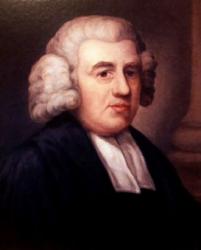 John Newton (b. London, England, 1725; d. London, 1807) was born into a Christian home, but his godly mother died when he was seven, and he joined his father at sea when he was eleven. His licentious and tumultuous sailing life included a flogging for attempted desertion from the Royal Navy and captivity by a slave trader in West Africa. After his escape he himself became the captain of a slave ship. Several factors contributed to Newton's conversion: a near-drowning in 1748, the piety of his friend Mary Catlett, (whom he married in 1750), and his reading of Thomas à Kempis' Imitation of Christ. In 1754 he gave up the slave trade and, in association with William Wilberforce, eventually became an ardent abolitionist. After becoming a tide… Go to person page >