
 My Starred Hymns
 My FlexScores
 My Hymnals
 My Purchased Files



The Cyber Hymnal #2933
Display Title: Immanuel, We Sing Thy Praise First Line: Immanuel, we sing Thy praise Tune Title: GERMANY Author: Ludolph E. Schlicht. 1714-1769; Paul Gerhardt Meter: LM
The Cyber Hymnal #2933

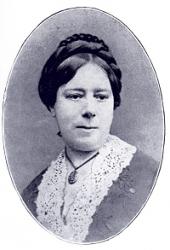 Catherine Winkworth (b. Holborn, London, England, 1827; d. Monnetier, Savoy, France, 1878) is well known for her English translations of German hymns; her translations were polished and yet remained close to the original. Educated initially by her mother, she lived with relatives in Dresden, Germany, in 1845, where she acquired her knowledge of German and interest in German hymnody. After residing near Manchester until 1862, she moved to Clifton, near Bristol. A pioneer in promoting women's rights, Winkworth put much of her energy into the encouragement of higher education for women. She translated a large number of German hymn texts from hymnals owned by a friend, Baron Bunsen. Though often altered, these translations continue to be used i… Go to person page >
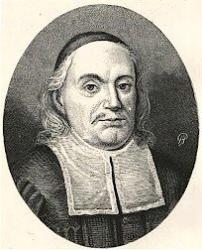 Paul Gerhardt (b. Gräfenheinichen, Saxony, Germany, 1607; d. Lubben, Germany, 1676), famous author of Lutheran evangelical hymns, studied theology and hymnody at the University of Wittenberg and then was a tutor in Berlin, where he became friends with Johann Crüger. He served the Lutheran parish of Mittenwalde near Berlin (1651-1657) and the great St. Nicholas' Church in Berlin (1657-1666). Friederich William, the Calvinist elector, had issued an edict that forbade the various Protestant groups to fight each other. Although Gerhardt did not want strife between the churches, he refused to comply with the edict because he thought it opposed the Lutheran "Formula of Concord," which condemned some Calvinist doctrines. Consequently, he was r… Go to person page >