
The shepherds keep their flocks by night

Translator: J. M. Neale

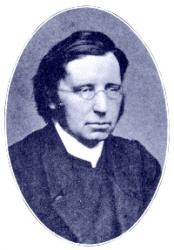
John M. Neale's life is a study in contrasts: born into an evangelical home, he had sympathies toward Rome; in perpetual ill health, he was incredibly productive; of scholarly tem­perament, he devoted much time to improving social conditions in his area; often ignored or despised by his contemporaries, he is lauded today for his contributions to the church and hymnody. Neale's gifts came to expression early–he won the Seatonian prize for religious poetry eleven times while a student at Trinity College, Cambridge, England. He was ordained in the Church of England in 1842, but ill health and his strong support of the Oxford Movement kept him from ordinary parish ministry. So Neale spent the years between 1846 and 1866 as a warden of Sackvi… Go to person page >

Author: St. Cosmas, the Melodian

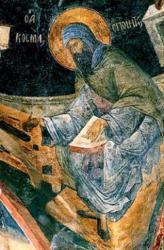
Cosmas, St., The Melodist. (Died circ. A.D. 760.) The second among the Greek ecclesiastical poets. He was adopted by the father of St. John of Damascus, and educated with him by a Sicilian monk also named Cosmas, who had been redeemed from slavery by his adopted father. The two foster-brothers retired together to St. Sabas, and there stimulated, assisted and vied witii one another in the composition of hymns. It is not certain whether some of the Canons, Triodia, and Idiomela under the name of Cosmas may not be the work of the elder Cosmas. He was elected Bishop of Maiuma in A.D. 743, and is commemorated in the Greek Calendar on Oct. 14. The story of Cosmas the elder is beautifully told in Milman's Lat. Christ., vol. ii. 364. Daniel, vol. i… Go to person page >

Text Information

First Line: The shepherds keep their flocks by night
Translator: J. M. Neale
Author: St. Cosmas, the Melodian
Language: English
Copyright: Public Domain

Tune

[Das neugeborne Kindelein]

Also known as JENA, DAS NEUGEBORNE KINDELEIN was originally a chorale melody for Cyriacus Schneegass' text "Das neugeborne Kindelein." Composed by Melchior Vulpius (PHH 397) and published in his Ein Schön Geistlich Gesangbuch (Jena, 1609), the tune was introduced to English congregations primarily…

Go to tune page >


Timeline

Instances in all hymnals

Instances (1 - 2 of 2)
Page Scan

The St. Cecilia Hymnal (2nd rev. ed.) #11

The St. Cecilia Hymnal. 4th ed. #d111

Suggestions or corrections? Contact us
It looks like you are using an ad-blocker. Ad revenue helps keep us running. Please consider white-listing Hymnary.org or getting Hymnary Pro to eliminate ads entirely and help support Hymnary.org.