You help make Hymnary.org possible. More than 10 million people from 200+ countries found hymns, liturgical resources and encouragement on Hymnary.org in 2025, including you. Every visit affirms the global impact of this ministry.

If Hymnary has been meaningful to you this year, would you take a moment today to help sustain it? A gift of any size—paired with a note of encouragement if you wish—directly supports the server costs, research work and curation that keep this resource freely available to the world.

Give securely online today, or mail a check to:
Hymnary.org
Calvin University
3201 Burton Street SE
Grand Rapids, MI 49546

Thank you for your partnership, and may the hope of Advent fill your heart.

Person Results

Text Identifier:"^just_as_i_am_without_one_plea$"
In:people

Planning worship? Check out our sister site, ZeteoSearch.org, for 20+ additional resources related to your search.
Showing 11 - 20 of 105Results Per Page: 102050

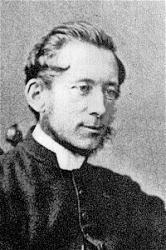
John Bacchus Dykes

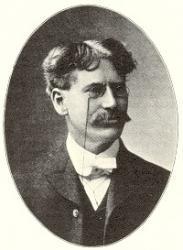
1823 - 1876 Person Name: J. B. Dykes, Mus. Doc. Composer of "ST. BARNABAS" in Worship Song As a young child John Bacchus Dykes (b. Kingston-upon-Hull' England, 1823; d. Ticehurst, Sussex, England, 1876) took violin and piano lessons. At the age of ten he became the organist of St. John's in Hull, where his grandfather was vicar. After receiving a classics degree from St. Catherine College, Cambridge, England, he was ordained in the Church of England in 1847. In 1849 he became the precentor and choir director at Durham Cathedral, where he introduced reforms in the choir by insisting on consistent attendance, increasing rehearsals, and initiating music festivals. He served the parish of St. Oswald in Durham from 1862 until the year of his death. To the chagrin of his bishop, Dykes favored the high church practices associated with the Oxford Movement (choir robes, incense, and the like). A number of his three hundred hymn tunes are still respected as durable examples of Victorian hymnody. Most of his tunes were first published in Chope's Congregational Hymn and Tune Book (1857) and in early editions of the famous British hymnal, Hymns Ancient and Modern. Bert Polman

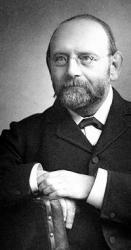
Joseph Barnby

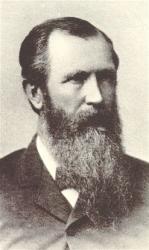
1838 - 1896 Composer of "JUST AS I AM" in The Hymnal Joseph Barnby (b. York, England, 1838; d. London, England, 1896) An accomplished and popular choral director in England, Barnby showed his musical genius early: he was an organist and choirmaster at the age of twelve. He became organist at St. Andrews, Wells Street, London, where he developed an outstanding choral program (at times nicknamed "the Sunday Opera"). Barnby introduced annual performances of J. S. Bach's St. John Passion in St. Anne's, Soho, and directed the first performance in an English church of the St. Matthew Passion. He was also active in regional music festivals, conducted the Royal Choral Society, and composed and edited music (mainly for Novello and Company). In 1892 he was knighted by Queen Victoria. His compositions include many anthems and service music for the Anglican liturgy, as well as 246 hymn tunes (published posthumously in 1897). He edited four hymnals, including The Hymnary (1872) and The Congregational Sunday School Hymnal (1891), and coedited The Cathedral Psalter (1873). Bert Polman

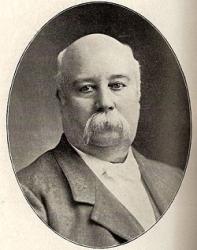
H. L. Gilmour

1836 - 1920 Person Name: H. L. G. Author (Chorus) of "My Only Plea" in The Voice of Triumph (19th ed.) Henry Lake Gilmour United Kingdom 1836-1920. Born at Londonderry, Ireland, he emigrated to America as a teenager, thinking he wanted to learn navigation. When he reached the U.S., he arrived in Philadelphia and decided to seek his fortune in America. He started working as a painter, then served in the American Civil War, where he was captured and spent several months in Libby Prison, Richmond, VA. He married Letitia Pauline Howard in 1858. After the war he trained as a dentist and did that for many years. In 1869 he moved to Wenonah, NJ, and helped found the Methodist church there in 1885. He served as Sunday school superintendent and, for four decades, directed the choir at the Pittman Grove Camp Meeting, also working as song leader at camp meetings in Mountain Lake Park, MD, and Ridgeview Park, PA. He was an editor, author, and composer. He edited and/or published 25 gospel song books, along with John Sweney, J Lincoln Hall, John J Hood, Howard Entwistle, Joshua Gill, E L Hyde, Milton S Rees and William J Kirkpatrick. He died in Delair, NJ, after a buggy accident. John Perry

Charlotte Elliott

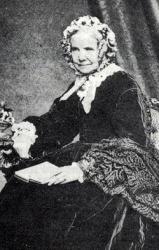
1789 - 1871 Author of "Just as I Am, without One Plea" in Psalter Hymnal (Gray) Elliott, Charlotte, daughter of Charles Elliott, of Clapham and Brighton, and granddaughter of the Rev. H. Venn, of Huddersfield, was born March 18, 1789. The first 32 years of her life were spent mostly at Clapham. In 1823 she removed to Brighton, and died there Sept. 22, 1871. To her acquaintance with Dr. C. Malan, of Geneva, is attributed much of the deep spiritual-mindedness which is so prominent in her hymns. Though weak and feeble in body, she possessed a strong imagination, and a well-cultured and intellectual mind. Her love of poetry and music was great, and is reflected in her verse. Her hymns number about 150, a large percentage of which are in common use. The finest and most widely known of these are, "Just as I am” and "My God, my Father, while I stray." Her verse is characterized by tenderness of feeling, plaintive simplicity, deep devotion, and perfect rhythm. For those in sickness and sorrow she has sung as few others have done. Her hymns appeared in her brother's Psalms & Hymns and elsewhere as follows:— (1) Psalms and Hymns for Public, Private, and Social Worship; selected by the Rev. H. V. Elliott, &c., 1835-48. In this Selection her signature is "C. E." (2) The Christian Remembrancer Pocket Book. This was originally edited by Miss Kiernan, of Dublin. Miss Elliott undertook the editorship in 1834. (3) The Invalid's Hymn Book. This was originally compiled by Miss Kiernan, but before publication was re-arranged by Miss Elliott, who also added 23 hymns in the first edition., 1834. These were increased in the following edition to the sixth in 1854, when her contributions amounted to 112. From that date no change was made in the work. (4) Hours of Sorrow Cheered and Comforted; or, Thoughts in Verse, 1836. (5) Morning and Evening Hymns for a Week, printed privately in 1839 for sale for a benevolent institution in Brighton, and published in 1842. (6) Thoughts in Verse on Sacred Subjects, 1869. Miss Elliott's Poems were published, with a Memoir by her sister, Mrs. Babington, in 1873, and an additional volume of Leaves from her unpublished Journals and Poems, also appeared in 1870. In addition to her more important hymns, which are annotated under their respective first lines, there are in common use:— i. From The Invalid's Hymn-book, 1834-1841:— 1. Clouds and darkness round about thee. (1841.) Resignation. 2. Not willingly dost Thou afflict [reject]. (1841.) Divine Chastisement. 3. O God, may I look up to Thee. (1841.) Teach us to Pray. 4. This is enough; although 'twere sweet. (1834.) On being debarred from Divine Worship. 5. With tearful eyes I look around. (1841.) The Invitation "Come Unto Me." ii. From H. V. Elliott's Psalms & Hymns, 1835-1839:— 6. Glorious was that primal light. Christmas. 7. Hail, holy day, most blest, most dear. Easter. 8. My only Saviour, when I feel. Jesus His people's Rest. 9. Now let our heavenly plants and flowers. Monday Morning. 10. The Sabbath-day has reached its close. Sunday Evening. iii. From Miss Elliott's Hours of Sorrow, 1836:— 11. Father, when Thy child is dying. Prayer for a Departing Spirit. 12. Leaning on Thee, my Guide, my Friend. Death Anticipated. 13. My God, is any hour so sweet? The Hour of Prayer. 14. O faint and feeble-hearted. Resignation enforced. 15. There is a holy sacrifice. The Contrite Heart. iv. From her Hymns for a Week, 1839:— 16. Guard well thy lips; none, none can know. Thursday Morning. 17. There is a spot of consecrated ground. Pt. i. 18. This is the mount where Christ's disciples see. Pt. ii. Monday Evening. 19. This is the day to tune with care. Saturday Morning. v. From Thoughts in Verse on Sacred Subjects, 1869:— 20. As the new moons of old were given. On a Birthday. 21. I need no other plea. Pt. i. 22. I need no prayers to saints. Pt. ii. Christ, All in All. 23. Jesus, my Saviour, look on me. Christ, All in All. Several of the earlier of these hymns were repeated in the later works, and are thus sometimes attributed to the wrong work. [Rev. James Davidson, B.A.] -- John Julian, Dictionary of Hymnology (1907) ================ Elliott, Charlotte, p. 328, i. Other hymns are:— 1. O how I long to reach my home. Heaven desired. From the Invalid's Hymn Book, 1834. 2. The dawn approaches, golden streaks. Second Advent. From Thoughts in Verse, &c, 1869. Of her hymns noted on p. 328, Nos. 6, 7, 8, 9, 10,11, and 13, all appeared in the 1st edition of Elliott's Psalms & Hymns, 1835. --John Julian, Dictionary of Hymnology, Appendix, Part II (1907) ======================== Elliott, Charlotte, pp. 328, i.; 1561, ii. Further research enables us to give amended dates to some of her hymns as follows:— 1. With tearful eyes I look around (No. 5). This is in the 1835 Appendix to The Invalid's Hymn Book. 2. My only Saviour, when I feel (No. 8). Also in the 1835 Appendix. 3. Father, when Thy child is dying (No. 11). In the 1833 Appendix. 4. I want that adorning divine, p. 559, i. In the Christian Remembrancer 1848, p. 22. --John Julian, Dictionary of Hymnology, New Supplement (1907)

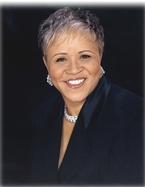
Evelyn Simpson-Curenton

b. 1953 Person Name: Evelyn Simpson-Curenton, b. 1953 Adapter of "JUST AS I AM" in African American Heritage Hymnal Evelyn Simpson Curenton (born 1953) is a leading African-American composer, pianist, organist, and vocalist. Simpson Curenton began piano lessons at age 5, began to perform with the Singing Simpsons of Philadelphia, a family group, and earned a B.M., Music Education and Voice from Temple University. She has been commissioned to write works for the American Guild of Organists, George Shirley, the late Duke Ellington, and her sister, the late Joy Simpson, arranged music for Kathleen Battle, Jessye Norman, and the Porgy and Bess Chorus of the New York Metropolitan Opera, and has performed with musical organizations such as Philadelphia's National Opera Ebony (later renamed Opera North). Based in the Washington, D.C., area, Curenton is Music Director of the Washington Performing Arts Society's Men and Women of the Gospel and an associate of the Smithsonian Institution. She has given lectures and participated in workshops on early 18th-century black religious music and the music of African-Americans during the Civil Rights era. --en.wikipedia.org

L. O. Emerson

1820 - 1915 Composer of "SESSIONS" in The New Jubilee Harp Luther Orlando Emerson was born at Parsonsfield, Maine, August 3, 1820. He descended from distinguished English ancestry. His parents were quite musical, and while the family circle were together, they had a choir and orchestra of their own. The father played the violoncello, the mother was an excellent singer, the flute and violin added their sweet tones, till the quiet homestead rang with melody. Mr. Emerson's education was obtained at the district school, Parsonsfield Seminary and Effingham Academy. He was full of energy, quick and versatile, an apt scholar, and with a view to entering the profession of medicine he entered Dracut Academy, Mass. But his great love for music swerved him from that course, and now, having far better opportunities for cultivating and enjoying this taste and ability, he soon determined upon music as the profession of his choice. He accordingly commenced a course of musical instruction under the late I. B. Woodbury, then a popular teacher of music. After several years of study on the voice, piano, organ and in harmony, Mr. Emerson went to Salem, Mass., began teaching, and took charge of his first choir at a salary of one hundred dollars per year. Here he commenced the composition of music for his own choir, whiich was so popular with its members and the congregation, that Mr. Emerson was encouraged to seek a larger hearing by publishing a collection of church music. Among the tunes was that of Sessions, named after his pastor, which was destined to have a perennial popularity, and is often used in worship in the place of Old Hundred, for the Doxology. At the great Peace Jubilee it was received with applause when sung by a chorus of ten thousand voices, accompanied by an orchestra of two hundred instruments and a great pipe organ. The effect was sublime beyond expression. In 1847 occurred the marriage of Mr. Emerson to Miss Mary Gore, daughter of a prominent Boston merchant. She was a lady of much musical taste and ability. In 1853 he decided to make an effort to put his music before the public, and accordingly went to Boston in search of a publisher. Like most young and unknown authors, he met with but little encouragement, but finally found a publisher in the person of Mr. B. B. Muzzy. Thus was the Romberg Collection published. The book was not pushed — hence it found no market. After a residence of eight years in Salem, Mr. Emerson removed to Boston, accepting the position of organist and musical director at the Bulfinch Street Church, then under the pastoral care of Rev. Wm. R. Alger, which he filled for four years. He eagerly improved the rare means of culture which were once more enjoyed, meanwhile teaching and composing music. In 1857 he formed the connection with Oliver Ditson Company, of Boston, of author and publisher, which has continued to the present time with but one interruption (a single volume brought out by another firm), the Golden Wreath, which at once became popular, and sold forty thousand during the first year, this being the initial volume in the long series since brought out by these publishers. In 1858 came the Golden Harp, which was also a success. These successes gave him not only encouragement, but reputation. Mr. Emerson now entered upon a career of usefulness and popularity for which he had been preparing during the years of self-denying struggle and discipline. He was called to take charge of the music in the Second Congregational Church, Greenfield, Mass., and also of the musical department of Power's Institute, at Bernardston. Amid nature's most beautiful surroundings, he had a quiet retreat for the pursuit of his true vocation, the composition of church music. The first fruit of his genius here was the Sabbath Harmony, in 1860. This book was also a success. In 1863 followed the Harp of Judah, which had the remarkable sale of nearly fifty thousand copies in the first three months. This book probably gave Mr. Emerson his preeminence as a composer of church music, containing as it did his anthem, Guide Me, O Thou Great Jehovah, and many of his finest compositions. Having declined the solicitations of Dr. Lowell Mason to become his associate in music, Mr. Emerson started forth on his own plans, and attained the highest rank among those who loved the pure and beautiful in song. Mr. W. S. B. Mathews, a musical critic, pronounces him the best melodist of all the psalmodic writers. In 1866 the equally successful Jubilate appeared, followed by the Choral Tribute, the Standard and the Leader. In the last two Dr. I. R. Pahner was associated with him. Later on came the Salutation, Voice of Worship, Herald of Praise, etc. The diligence with which Mr. Emerson plied his pen can be estimated when one recalls the fact that he has made seventy-two collections of music, embracing music for churches, singing schools, public schools, choral societies and conventions, instruction books for voice, organ, etc. He has also composed and published scores of songs, quartets and instrumental pieces. The great amount of work this represents can only be appreciated by those who have undertaken similar labors. Some years ago the degree of Doctor of Music was conferred upon Professor Emerson by the Faculty of Findlay College, Findlay, Ohio. For many years past. Dr. Emerson has devoted his energies to the grand purpose of elevating the general character of music in our churches, and thus largely advancing the interests of true worship. He places great stress upon the mission of church music. He regards sacred music as the best expression of devotional feeling that exists. He looks upon sacred song as prayer, and believes that it inspires and intensifies prayer. With this view he has taken an active and prominent part in musical festivals and conventions, of which he has conducted over three hundred throughout the United States and Canada. As a conductor, he stands in the front rank. As a teacher. Dr. Emerson has an exceedingly happy faculty of imparting in a concise manner to his classes. His very pleasing address enables him to command the undivided attention of his pupils. As a singer, he has always held high rank, and has sung much in public. His voice is a baritone of great compass, and quite powerful. As a lecturer upon music, Dr. Emerson has attracted much attention. His most popular lecture is entitled The World of Music, in which he traces its origin and progress, and gives some excellent traits of the lives of the great composers. In this lecture he also shows the design of music, and how it has been prized in every age of the world, among all nations — its power in the Church and State, and the need of its influence in the family — in joy and sorrow — for this life and the life to come. -Biography of Gospel Song and Hymn Writers

William B. Bradbury

1816 - 1868 Composer of "WOODWORTH" in Psalter Hymnal (Gray) William Batchelder Bradbury USA 1816-1868. Born at York, ME, he was raised on his father's farm, with rainy days spent in a shoe-shop, the custom in those days. He loved music and spent spare hours practicing any music he could find. In 1830 the family moved to Boston, where he first saw and heard an organ and piano, and other instruments. He became an organist at 15. He attended Dr. Lowell Mason's singing classes, and later sang in the Bowdoin Street church choir. Dr. Mason became a good friend. He made $100/yr playing the organ, and was still in Dr. Mason's choir. Dr. Mason gave him a chance to teach singing in Machias, ME, which he accepted. He returned to Boston the following year to marry Adra Esther Fessenden in 1838, then relocated to Saint John, New Brunswick. Where his efforts were not much appreciated, so he returned to Boston. He was offered charge of music and organ at the First Baptist Church of Brooklyn. That led to similar work at the Baptist Tabernacle, New York City, where he also started a singing class. That started singing schools in various parts of the city, and eventually resulted in music festivals, held at the Broadway Tabernacle, a prominent city event. He conducted a 1000 children choir there, which resulted in music being taught as regular study in public schools of the city. He began writing music and publishing it. In 1847 he went with his wife to Europe to study with some of the music masters in London and also Germany. He attended Mendelssohn funeral while there. He went to Switzerland before returning to the states, and upon returning, commenced teaching, conducting conventions, composing, and editing music books. In 1851, with his brother, Edward, he began manufacturring Bradbury pianos, which became popular. Also, he had a small office in one of his warehouses in New York and often went there to spend time in private devotions. As a professor, he edited 59 books of sacred and secular music, much of which he wrote. He attended the Presbyterian church in Bloomfield, NJ, for many years later in life. He contracted tuberculosis the last two years of his life. John Perry

J. Jefferson Cleveland

1937 - 1986 Person Name: J. Jefferson Cleveland, 1937- Arranger of "WOODWORTH" in Songs of Zion Judge Jefferson Cleveland (1937-1986) was one of the most important scholars and editors of African-American congregational song of the 20th century. Along with Verogla Nix, he edited what is arguably the most groundbreaking collection of African-American song in the last half of the 20th century, Songs of Zion (1981/1982). Lutheran hymnologist Marilyn Stulken provides a biographical sketch of Cleveland’s life and accomplishments. Born in Georgia, Cleveland graduated from Clark College (Atlanta), Illinois Wesleyan University and received his doctorate in education from Boston University. He served on the faculty of three historically black Christian colleges: Claflin College (South Carolina), Langston University (Oklahoma), and Jarvis Christian College (Texas), before teaching at the University of Massachusetts and Wesley Theological Seminary in Washington, D.C. Cleveland’s musical arrangements, historical research and scholarship on the performance practice of African-American song have proven invaluable for the advancement of black gospel song, not only among African Americans, but also in Anglo hymnals to the present day. For example, Cleveland’s essay, “A Historical Account of the Hymn in the Black Worship Experience,” in Songs of Zion is a helpful introduction for laypersons and scholars alike. In addition to serving as a hymnody consultant for the United Methodist General Board of Discipleship, he toured the United States and Africa in 1981 and Europe in 1984 as a teacher, lecturer and performer. --www.umportal.org/

J. B. Herbert

1852 - 1927 Arranger of "[Just as I am, without one plea]" in The New Praiseworthy

R. M. McIntosh

1836 - 1889 Composer of "FARMVILLE" in Words of Truth Used Pseudonym: Robert M. McIntosh ========== Rigdon (Robert) McCoy McIntosh USA 1836-1899 Born at Maury County, TN, into a farming family, he attended Jackson College in Columbia, TN, graduating in 1854. He studied music under Asa Everett in Richmond, VA, and became a traveling singing school teacher. He also served briefly in the Civil War. He wrote several hymns during this period of his life. In 1860 he married Sarah McGlasson, and they had a daughter, Loulie Everett. In 1875 he was appointed head of the Vanderbilt University Music Department in Nashville, TN. In 1877 he joined the faculty of Emory College, Oxford, GA. In 1895 he left Emory College to devote his time to the R M McIntosh Publishing Company. He also served as music editor of the Methodist Episcopal Church South Publishing House for over 30 years. His song book publications include: “Good news” (1876), “Light & life” (1881), “Prayer & praise” (1883), “New life” (1879), “New life #2” (1886), and “Songs of service” (1896). He died in Atlanta, GA. John Perry

Pages


Export as CSV
It looks like you are using an ad-blocker. Ad revenue helps keep us running. Please consider white-listing Hymnary.org or getting Hymnary Pro to eliminate ads entirely and help support Hymnary.org.