

 My Starred Hymns
 My FlexScores
 My Hymnals
 My Purchased Files
Planning worship?
Check out our sister site, ZeteoSearch.org,
for 20+ additional resources related to your search.
- |
User Links
Person Results
Augustus Toplady
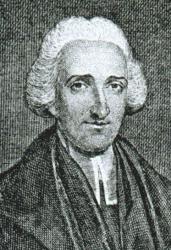
1740 - 1778 Person Name: A. M. Toplady Meter: 8.6.8.6 Alterer of "Father, whate'er of earthly bliss" in The Hymnal Toplady, Augustus Montague, the author of "Rock of Ages," was born at Farnham, Surrey, November 4, 1740. His father was an officer in the British army. His mother was a woman of remarkable piety. He prepared for the university at Westminster School, and subsequently was graduated at Trinity College, Dublin. While on a visit in Ireland in his sixteenth year he was awakened and converted at a service held in a barn in Codymain. The text was Ephesians ii. 13: "But now, in Christ Jesus, ye who sometimes were far off are made nigh by the blood of Christ." The preacher was an illiterate but warm-hearted layman named Morris. Concerning this experience Toplady wrote: "Strange that I, who had so long sat under the means of grace in England, should be brought nigh unto God in an obscure part of Ireland, amidst a handful of God's people met together in a barn, and under the ministry of one who could hardly spell his name. Surely this is the Lord's doing, and it is marvelous." In 1758, through the influence of sermons preached by Dr. Manton on the seventeenth chapter of John, he became an extreme Calvinist in his theology, which brought him later into conflict with Mr. Wesley and the Methodists. He was ordained to the ministry in the Church of England in 1762, and in 1768 he became vicar of Broadhembury, a small living in Devonshire, which he held until his death. The last two or three years of his life he passed in London, where he preached in a chapel on Orange Street. His last sickness was of such a character that he was able to make a repeated and emphatic dying testimony. A short time before his death he asked his physician what he thought. The reply was that his pulse showed that his heart was beating weaker every day. Toplady replied with a smile: "Why, that is a good sign that my death is fast approaching; and, blessed be God, I can add that my heart beats stronger and stronger every day for glory." To another friend he said: "O, my dear sir, I cannot tell you the comforts I feel in my soul; they are past expression. . . . My prayers are all converted into praise." He died of consumption August 11, 1778. His volume of Psalms and Hymns for Public and Private Worship was published in 1776. Of the four hundred and nineteen hymns which it contained, several were his own productions.
If on a quiet sea 446
Rock of ages, cleft for me 279
Hymn Writers of the Church, 1915 by Charles S. Nutter
===============================================
Toplady, Augustus Montague, M.A. The life of Toplady has been repeatedly and fully written, the last, a somewhat discursive and slackly put together book, yet matterful, by W. Winters (1872). Summarily, these data may be here given: he was born at Farnham, in Surrey, on November 4, 1740. His father, Richard Toplady, was a Major in the British array, and was killed at the siege of Carthagena (1741) soon after the birth of his son. His widowed mother placed him at the renowned Westminster school, London. By-and-by circumstances led her to Ireland, and young Augustus was entered at Trinity College, Dublin, where he completed his academical training, ultimately graduating M.A. He also received his "new birth" in Ireland under remarkable conditions, as he himself tells us with oddly mixed humility and lofty self-estimate, as "a favourite of heaven," common to his school:—
"Strange that I who had so long sat under the means of grace in England should be brought right unto God in an obscure part of Ireland, midst a handful of people met together in a barn, and by the ministry of one who could hardly spell his own name. Surely it was the Lord's doing and is marvellous. The excellency of such power must be of God and cannot be of man. The regenerating spirit breathes not only on whom but likewise, when and where and as He listeth."
Toplady received orders in the Church of England on June 6, 1762, and after some time was appointed to Broadhembury. His Psalms and Hymns of 1776 bears that he was then “B.A." and Vicar of Broadhembury. Shortly thereafter be is found in London as minister of the Chapel of the French Calvinists in Leicester Fields. He was a strong and partizan Calvinist, and not well-informed theologically outside of Calvinism. We willingly and with sense of relief leave unstirred the small thick dust of oblivion that has gathered on his controversial writings, especially his scurrilous language to John Wesley because of his Arminianism, as we do John Wesley's deplorable misunderstanding and misrepresentation of Calvinism.
Throughout Toplady lacked the breadth of the divine Master's watchword "Forbid him not, for he that is not against us is for us" (St. Luke ix. 50). He was impulsive, rash-spoken, reckless in misjudgment; but a flame of genuine devoutness burned in the fragile lamp of his overtasked and wasted body. He died on August 11, 1778. The last edition of his works is in 6 vols., 8 vo., 1825. An accurate reproduction of most of his genuine hymns was one of the reprints of Daniel Sedgwick, 1860. His name occurs and recurs in contemporary memoirs and ecclesiastical histories, e.g., in Tyerman's Life of John Wesley. The reader will find in their places annotations on the several hymns of Toplady, and specially on his "Rock of Ages,” a song of grace that has given him a deeper and more inward place in millions of human hearts from generation to generation than almost any other hymnologist of our country, not excepting Charles Wesley. Besides the "Rock of Ages" must be named, for power, intensity, and higher afflatus and nicer workmanship, "Object of my first desire,” and "Deathless principle arise." It is to be regretted that the latter has not been more widely accepted. It is strong, firm, stirring, and masterful. Regarded critically, it must be stated that the affectionateness with which Toplady is named, and the glow and passion of his faith and life, and yearning after holiness, have led to an over-exaltation of him as a hymnwriter. Many of his hymns have been widely used, and especially in America, and in the Evangelical hymnbooks of the Church of England. Year by year, however, the number in use is becoming less. The reason is soon found. He is no poet or inspired singer. He climbs no heights. He sounds no depths. He has mere vanishing gleams of imaginative light. His greatness is the greatness of goodness. He is a fervent preacher, not a bard. [Rev. A. B. Grosart, D.D., LL.D.]
Toplady's hymns and poetical pieces were published in his:—
(1) Poems on Sacred Subjects wherein The Fundamental Doctrines of Christianity, with many other interesting Points, are occasionally introduced. . . Dublin: Printed by S. Powell, in Crane-lane, MDCCLIX.; (2) his Psalms & Hymns for Public and Private Worship, 1776; (3) in The Gospel Magazine, 1771-1776; and (4) in Hymns and Sacred Poems on a variety of Divine Subjects, &c. D. Sedgwick's reprint, 1860. His Works, with a Memoir by W. Row, were published in 6 volumes, in 1794. Walter How was also the editor of the 2nd and some later editions of the Psalms & Hymns. He was a most careless editor, and attributed several hymns by C. Wesley and others to Toplady.
The following additional hymns in common use together with centos indicated in the sub-lines, are from:—
i. His Poems on Sacred Subjects, 1759.
1. Can my heaven-born soul submit? All for Christ.
2. Come from on high, my King and God. Holiness desired.
(1.) 0 might this worthless heart of mine.
3. Earnest of future bliss. The Witness of the Spirit.
4. From Thy supreme tribunal, Lord. Christ's Righteousness a Refuge.
(1.) The spotless Saviour lived for me.
5. Great God, Whom heaven, and earth, and sea. For Peace.
6. I saw, and lo! a countless throng. Saints' Days. Revised form in the Gospel Magazine, 1774, p. 449.
7. Immovable our hope remains. Divine Faithfulness.
8. Jesus, God of love, attend. Divine Worship. Pt. ii. is "Prayer can mercy's door unlock."
9. Jesus, Thy power I fain would feel. Lent.
10. Lord, I feel a carnal mind. Mind of Christ desired.
11. My yielding heart dissolves as wax. On behalf of Arians, &c.
(1.) 0 Jesus, manifest Thy grace.
12. Not to myself I owe. Praise for Conversion,
(1.) Not to ourselves we owe.
(2.) The Father's grace and love.
13. 0 that my heart was right with Thee. Dedication to God desired.
14. 0 Thou that hearest the prayer of faith. Christ the Propitiation.
15. 0 Thou Who didst Thy glory leave. Thanksgiving for Redemption.
16. 0 when wilt Thou my Saviour be. Trust in Jesus.
(1.) Jesus, the sinner's Rest Thou art.
17. Redeemer, whither should I flee? Safety in the Cross.
18. Remember, Lord, that Jesus bled. Pardon.
19. Surely Christ thy griefs hath borne. Redemption. Revised text in Gospel Magazine, 1774, p. 548.
(1.) Weary sinner, keep thine eyes.
(2.) Weeping soul, no longer mourn.
ii. From the Gospel Magazine.
20. Compared with Christ, in all besides. Christ All in All. Feb. 1772.
21. Eternal Hallelujahs Be to the Father given. Holy Trinity, Dec. 1774.
22. From whence this fear and unbelief. Reviving Faith, Feb. 1772.
23. How vast the benefits divine. Redemption. Dec. 1774. From this "Not for the works which we have done" is taken.
24. Whom have I in heaven but Thee? Christ All and in All, Feb. 1772. From this "If my Lord Himself reveal" is taken.
25. Jesus, immutably the same. Jesus, the True Vine. June, 1771.
All these hymns, together with "O precious blood, 0 glorious death" (Death of Christ), are in D. Sedgwick's reprint of Toplady's Hymns, &c, 1860. We have met with several other hymns to which Toplady's name is appended, but for this we can find no authority whatever.
-- Excerpts from John Julian, Dictionary of Hymnology (1907)
Augustus Toplady
James G. Deck
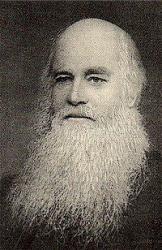
1802 - 1884 Meter: 8.6.8.6 Author of "Lord Jesus, Are We One with Thee?" in The Cyber Hymnal Deck, James George, eldest son of John Deck, of Bury St. Edmunds, was born in 1802 and educated for the army, and became an officer in the Indian service. Retiring from the army, and having joined the Plymouth Brethren, he undertook, in 1843, the charge of a congregation of that body, at Wellington, Somerset. In 1852 be went abroad and settled in New Zealand. His hymns were published in Hymns for the Poor of the Flock, 1837-1838; Psalms and Hymns, &c, London, Walther (containing those in the former collection), 1842; the Wellington Hymn Book, 1857; Hymns and Spiritual Songs, 1860. Of his hymns now in use outside his own denomination, the greater part appeared in the 1837-1838 book, and are found in his brother-in-law's (Dr. Walker's) Cheltenham Psalms & Hymns, 1855. His compositions are marked by directness of aim, simplicity of language, and great earnestness. The rhythm is good, and an expressive tenderness pervades many of them. Although dealing mainly with the "Second Advent," there are several on other subjects which are of more than average merit. In a collected form they were published in his Hymns and Sacred Poems, Melbourne, H. Seelenmeyer, 1876. The more important of his hymns are annotated under their respective first lines. Of the rest we have:—
i. From Hymns for the Poor of the Flock, 1838.
1. Behold yon bright and countless throng. All Saints. Repeated in Maurice's Choral Hymnbook, 1861.
2. How long, O Lord our Saviour. Second Advent desired. In the Parish Hymnbook., 1803 and 1875, this is altered to "How long, O Lord, Beloved."
3. Jesus, spotless Lamb of God. Good Friday.
4. Lord Jesus, are we [we are] one with Thee? One with Christ. In Walker's Psalms and Hymns, 1855-1880, and several American hymn-books.
5. Lord, we are Thine, our God Thou art. One with Christ. Originally in 4 st. of 8 1., it appeared, in a re-written form in 3 st. in Walker's Psalms and Hymns, 1855, as " Lord, we are Thine, in Thee we live."
6. 0 happy day when first we felt. The Day of Peace.
7. 0 Jesus Christ, the Saviour. Jesus All in All. In Walker's Psalms and Hymns, it begins: "0 Jesus Christ, our Saviour."
8. 0 Jesus, gracious Saviour." The Advocate.
9. 0 Lord, when we the path retrace. Christ our Example.
10. 0 Lord, who now art seated. Christ in glory.
11. Saviour, haste; our souls are waiting. Second Advent desired. This is given in Walker's Psalms and Hymns, in a rewritten form as "Saviour, hasten Thine appearing."
12. Soon shall our Master come. Waiting for Christ.
13. There is a place of endless joy. Heaven.
14. We're not of the world that fadeth away. Christ's Sheep.
15. When along life's thorny road. Passiontide.
ii. From Appendix, to the 1841 edition of the Hymns for the Poor of the Flock.
16. Lamb of God, our souls adore Thee. Praise to Christ. Sometimes it begins with st. ii.," Lamb of God, Thy Father's bosom."
17. Lamb of God, Thou now art seated. 2nd Part. of No. 10.
iii. From Psalms and Hymns, in Two Parts, Lond., D. Waither, 1842.
18. Again we meet in Jesus' name. Divine Worship.
19. Great Captain of Salvation. Burial. In the Irish Church Hymnal, and other collections.
20. Jesus, Thy name indeed is sweet. Hope of the Resurrection.
21. O blessed Jesus, Lamb of God. Praise to Jesus.
22. 0 Lamb of God, still keep me [us]. Christ's Presence desired. This hymn is somewhat popular in America.
23. 0 Lord, in nothing would I boast. Christ All in All.
24. Oft we, alas! forget the love. Holy Communion.
25. The veil is rent! lo, Jesus stands [our souls draw near]. The Intercessor.
26. We bless our Saviour's name. Thanksgiving for Forgiveness.
iv. From Psalms and Hymns for Public and Social Worship (Dr. Walker's Collection), 1855.
27. Father, to seek Thy face. Public Worship.
28. Jesus, [I] we rest in [on] Thee. Joy in Forgiveness.
29. 0 Lord, 'tis joy to look above. Joy in the service of Christ.
30. Thou hast stood here, Lord Jesus. Burial.
31. 'Twas Thy love, 0 God, that knew us. Praise to God.
32. When first o'erwhelm ed with sin and shame. Peace with God.
All these hymns, except No. 1, are given in Dr. Walker's Collection, 1855-1880, and most of them are also found in other collections.
-- John Julian, Dictionary of Hymnology (1907)
======================
Deck, James George, p. 285, ii. He died circa 1884. His hymn, noted on p. 286, No. 28, "Jesus [I] we rest in [on] Thee," should be dated 1842. Additional hymns in common use are:—(1) "Lord Jesus, when I think of Thee," 1856 (Jesus, All and in All); (2) "The day of glory, bearing," 1838 (Passiontide).
--John Julian, Dictionary of Hymnology, Appendix, Part II (1907)
====================
Deck, J. G., pp. 285, ii.; 1559, ii. Miss M. O. Deck, of Motueka, Nelson, New Zealand, informs us that her father, Mr. J. G. Deck, died at the village of Motueka, near Nelson, N.Z., on the 14th of August, 1884.
--John Julian, Dictionary of Hymnology, New Supplement (1907)
====================
James Deck wrote of his youth, "I hoped there were no God," yet his mother's training pursued after him. "She read to me of Jesus, Of all his grace and love." After his conversion, the study of scripture revealed the doctrinal error of his Anglican upbringing. Forsaking all, he set his heart to follow God "at any cost." Later, his son testified this determination was "a trust never disappointed."
- Psalms and Hymns and Spiritual Songs (2018)
James G. Deck
John Fawcett
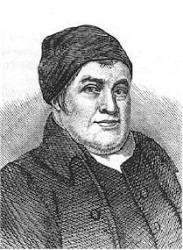
1740 - 1817 Meter: 8.6.8.6 Author of "How Precious Is the Book Divine" in Trinity Hymnal (Rev. ed.) An orphan at the age of twelve, John Fawcett (b. Lidget Green, Yorkshire, England, 1740; d. Hebden Bridge, Yorkshire, 1817) became apprenticed to a tailor and was largely self-educated. He was converted by the preaching of George Whitefield at the age of sixteen and began preaching soon thereafter. In 1765 Fawcett was called to a small, poor, Baptist country church in Wainsgate, Yorkshire. Seven years later he received a call from the large and influential Carter's Lane Church in London, England. Fawcett accepted the call and preached his farewell sermon. The day of departure came, and his family's belongings were loaded on carts, but the distraught congregation begged him to stay. In Singers and Songs of the Church (1869), Josiah Miller tells the story associated with this text:
This favorite hymn is said to have been written in 1772, to commemorate the determination of its author to remain with his attached people at Wainsgate. The farewell sermon was preached, the wagons were loaded, when love and tears prevailed, and Dr. Fawcett sacrificed the attraction of a London pulpit to the affection of his poor but devoted flock.
Fawcett continued to serve in Wainsgate and in the nearby village of Hebden Bridge for the remainder of his active ministry.
Bert Polman
===============
Fawcett, John, D.D., was born Jan. 6, 1739 or 1740, at Lidget Green, near Bradford, Yorks. Converted at the age of sixteen under the ministry of G. Whitefield, he at first joined the Methodists, but three years later united with the Baptist Church at Bradford. Having begun to preach he was, in 1765, ordained Baptist minister at Wainsgate, near Hebden Bridge, Yorks. In 1772 he was invited to London, to succeed the celebrated Dr. J. Gill, as pastor of Carter's Lane; the invitation had been formally accepted, the farewell sermon at Wainsgate had been preached and the wagons loaded with his goods for removal, when the love and tears of his attached people prevailed and he decided to remain. In 1777 a new chapel was built for him at Hebden Bridge, and about the same time he opened a school at Brearley Hall, his place of residence. In 1793 he was invited to become President of the Baptist Academy at Bristol, but declined. In 1811 he received from America the degree of D.D., and died in 1817, at the age of 78. Dr. Fawcett was the author of a number of prose works on Practical Religion, several of which attained a large circulation. His poetical publications are:—
(1) Poetic Essays, 1767; (2) The Christian's Humble Plea, a Poem, in answer to Dr. Priestley against the Divinity of our Lord Jesus Christ, 1772; (3) Three hymns, in the Gospel Magazine, 1777; (4) The Death of Eumenio, a Divine Poem, 1779; (5) Another poem, suggested by the decease of a friend, The Reign of Death, 1780; and (6) Hymns adapted to the circumstances of Public Worship and Private Devotion, Leeds, G. Wright & Son. 1782. They are 166 in number, and were mostly composed to be sung after sermons by the author.
Whilst not attaining a high degree of excellence as poetry, they are "eminently spiritual and practical," and a number of them are found in all the Baptist and Congregational hymn-books that have appeared during the last 100 years. The best known of these are, “Infinite excellence is Thine;" "How precious is the Book divine;" "Thus far my God hath led me on;" "Religion is the chief concern;" "Blest be the tie that binds;" “I my Ebenezer raise;" and "Praise to Thee, Thou great Creator." These hymns, together with others by Fawcett, are annotated under their respective first lines. [Rev. W. R. Stevenson, M.A.]
In addition the following hymns, also by Fawcett, but of less importance, are in common use:
1. Behold the sin-atoning Lamb. Passiontide. No. 60 of his Hymns, 1782, in 7 stanzas of 4 lines. In several hymnals in Great Britain and America.
2. I my Ebenezer raise. Birthday. No. 102 of his Hymns, in 10 stanzas of 4 lines. Usually given in an abbreviated form.
3. Infinite excellence is Thine. Jesus the Desire of Nations. No. 42 of his Hymns, in 12 stanzas of 4 lines. In several hymn-books in Great Britain and America in an abridged form.
4. Jesus, the heavenly Lover, gave. Redemption in Christ. No. 10 of his Hymns, &c., 1782, in 7 stanzas of 4 lines, and headed, "The marriage between Christ and the Soul." In Snepp's Songs of Grace & Glory, 1872, it reads, “Jesus, the heavenly Bridegroom, gave," and stanza v. is omitted.
5. Lord, hast Thou made me know Thy ways? Perseverance. No. 122 of his Hymns, &c., 1782, in 8 stanza of 4 lines. In the Baptist Hymnal, 1879, No. 451, stanzas iv.-vii. are omitted.
6. 0 God, my Helper, ever near. New Year. No. 108 of his Hymns, &c., 1782, in 6 stanzas of 4 lines. The New Congregational Hymn Book, 1859-69 omits st. vi.
7. 0, my soul, what means this sadness? Sorrow turned to Joy. No. 111 of his Hymns, &c., 1782, in 5 stanzas of 6 lines, and based upon the words, "Why art Thou cast down, O my soul?" &c. It is in common use in America, and usually with the omission of stanza ii. as in Dr. Hatfield's Church Hymn Book, 1872.
8. Sinners, the voice of God regard. Invitation to Repentance. No. 63 of his Hymns, &c., 1782, in 7 stanzas of 4 lines on Isaiah lv. 7, "Let the wicked forsake his way," &c. It is in common use in America, but usually in an abbreviated form.
9. Thy presence, gracious God, afford. Before Sermon. No 165 in his Hymns, &c., in 4 stanzas of 4 lines, and a chorus of two lines. In Dr. Hatfield's Church Hymnbook, 1872, No. 126, the chorus is omitted. Fawcett has another hymn on the same subject (No. 79) and beginning, "Thy blessing, gracious God, afford," but this is not in common use.
10. Thy way, 0 God, is in the sea. Imperfect Knowledge of God. No. 66 in his Hymns, &c., 1782, in 7 stanzas of 4 lines on 1 Corinthians xiii. 9, "We know in part," &c. It is in several American collections, usually abbreviated, and sometimes as, "Thy way, O Lord, is in the sea." In this form it is in The Sabbath Hymn Book, 1858, &c.
11. With humble heart and tongue. Prayer for Guidance in Youth. No. 86 in his Hymns, &c., 1782, in 7 stanzas of 4 lines on Psalms cxix. 9. "Wherewith shall a young man cleanse his way." It is No. 954 in the Baptist Psalms and Hymns, 1858-80.
About 20 of Fawcett's hymns are thus still in common use. Two hymns which have been ascribed to him from time to time, but concerning which there are some doubts, are fully annotated under their respective first lines. These are," Humble souls that seek salvation," and "Lord, dismiss us with Thy blessing."
-- John Julian, Dictionary of Hymnology (1907)
John Fawcett
Emily R. Brink

b. 1940 Meter: 8.6.8.6 Arranger of "NEW BRITAIN" in Songs for Life Emily R. Brink is a Senior Research Fellow of the Calvin Institute of Christian Worship and Adjunct Professor of Church Music and Worship at Calvin Theological Seminary, Grand Rapids, Michigan. Her main areas of responsibility are conference planning and global resources. She is program manager of the annual Calvin Symposium on Worship, which draws more than 70 presenters and 1600 participants from around the world. She also travels widely to lecture and to learn about worship in different parts of the world, especially in Asia, where she has lectured in Bangladesh, China, Hong Kong, India, Indonesia, Japan, Nepal, Pakistan, Philippines, Singapore, and Taiwan.
Her areas of interest include congregational song from all times and places; psalmody; hymnal editing. She was editor of four hymnals and consults with a wide range of churches on worship renewal issues. Dr. Brink is active in the American Guild of Organists, serving in both local and national offices, as well as in the Hymn Society in the United States and Canada (president from 1990 1992) and named a Fellow of the Hymn Society in 2004 in recognition of distinguished services to hymnody and hymnology.
--internal.calvinseminary.edu/
Emily R. Brink
Tom Fettke
b. 1941 Meter: 8.6.8.6 Arranger (last stanza setting and choral ending) of "AZMON" in The Celebration Hymnal Thomas E. Fettke (b. Bronx, New York City, 1941) Educated at Oakland City College and California State University, in Hayward, CA, Fettke has taught in several public and Christian high schools and served as minister of music in various churches, all in California. He has published over eight hundred compositions and arrangements (some under the pseudonyms Robert F. Douglas and David J. Allen) and produced a number of recordings. Fettke was the senior editor of The Hymnal for Worship and Celebration (1986).
Bert Polman
Tom Fettke
William Walker
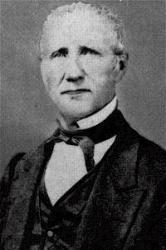
1809 - 1875 Person Name: Wm. Walker Meter: 8.6.8.6 Arranger of "SWEET PROSPECT" in The Southern Harmony, and Musical Companion (New ed. thoroughly rev. and much enl.)
William Walker
Wolfgang Amadeus Mozart
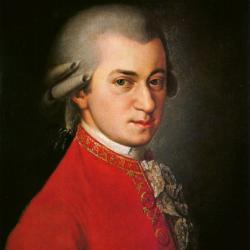
1756 - 1791 Person Name: Mozart Meter: 8.6.8.6 Composer of "BELMONT" in Sacred Songs and Solos Wolfgang Amadeus Mozart Austria 1756-1791. Born at Salzburg, Austria, the son of Leopold Mozart, a minor composer and violinist, and youngest of seven children, he showed amazing ability on violin and keyboard from earliest childhood, even starting to compose music at age four when his father would play a piece and Mozart would play it exactly as did his father. At five, he composed some of his own music, which he played to his father, who wrote it down. When Mozart was eight, he wrote his first symphony, probably transcribed by his father. In his early years his father was his only teacher, teaching his children languages and academic subjects, as well as fundamentals of their strict Catholic faith. Some of his early compositions came as a surprise to his father, who eventually gave up composing himself when he realized how talented his son was. His family made several European journeys and he and his sister, Nanneri, performed as child prodigies, at the court of Prince-elector Maximillian II of Bavaria in Munich, and at the Imperial Courts in Vienna and Prague. A long concert tour followed, for 3.5 years, taking the family to courts in Munich, Mannheim, Paris, London, Dover, The Hague, Amsterdam, Utrecht, Mechelen, and again to Paris, and back home via Zurich, Donaueschingen, and Munich. During these trips Mozart met many musicians, acquainting himself with the works of other composers. He met Johann Christian Bach in London in 1764. Family trips were challenging, and travel conditions were primitive. They had to wait for invitations and reimbursements from nobility, and they endured long, near-fatal illnesses far from home. First Leopold (1764) got sick, then both children (1765). They traveled again to Vienna in 1767 and stayed there over a year. After a year back in Salzburg, Leopold and Wolfgang went to Italy (1769-1771), Leopold wished to display his son’s abilities as a performer and maturing composer. In Bologna, Italy, Wolfgang was accepted as a member of the famous Academia Filamonica. In Rome he heard Gregorio Allegri’s Miserere twice in performance. Back in the Sistine Chapel, Mozart wrote the whole performance out from memory, thus producing the first unauthorized copy of this closely guarded property of the Vatican. In the next few years Mozart wrote several operas performed with success in Italy, but his father’s hopes of securing a professional appointment for his son were not realized. At age 17 he was engaged as a musician at the Salzburg court, but grew restless and traveled in search of a better position. After returning to Salzburg, Mozart was employed as a court musician by the ruler of Salzburg, Prince Archbishop Hieronymus Colloredo. This gave Mozart ample opportunity to develop relationships with other musicians and his admirers, resulting in his development of new symphonies, sonatas, string quartets, masses, serenades, and some minor operas. In 1775 he wrote his only violin concertos, five in all. Again, he was discontent with work in Salzburg and traveled to find more opportunity to write operas. He and his father again visited Munich and Vienna, but neither visit was successful with the exception of his opera ‘La finta giardiniera’ in Munich. In 1777 he resigned his Salzburg position and went to Augsburg, Mannheim, Paris, and Munich again. In Mannheim he met and fell in love with Aloysia Weber, one of four daughters of a musical family. He could find no real employment there and left for Paris in 1778. He might have had a position as organist at Versailles, but he was not interested in that. He fell into debt and started pawning valuables. During these events his mother died. Meanwhile his father was still trying to find him a position in Salzburg. After checking out several other European cities and Munich, he again encountered Aloysia, but she was no longer interested in him, so he returned to Salzburg, having written another symphony, concerto, and piano sonata, and took the new appointment his father had found. However, he was still in discontent. Visiting Vienna in 1781, he was dismissed from his Salzburg position. He wrote another opera, ‘Idomeneo’, in 1781, that was successful in Munich. Two months later he was summoned to Vienna, where his employer, Archbishop Colloredo, wanted him around due to his notoriety. Mozart wished to meet the emperor and perform for him, and finally got that opportunity. It resulted in a part-time position and substantial commissions. Colloredo became a nemesis to Mozart’s career, finally releasing Mozart from his employ with a literal kick in the pants, much against his father’s wishes. However, he was now independent. Mozart then decided to settle in Vienna as a free lance performer and composer. He lived with the Fridolin Weber family, who had moved from Mannheim to Vienna. Fridolin, the father, had died, and they were taking in lodgers to make ends meet. His career there went well, and he performed as a pianist before the Emperor, establishing himself as the finest keyboard player in Vienna. He wrote another opera in 1782, again achieving success. Mozart had now become a prolific and influential composer of the Classical period and was known throughout Europe. Aloysia was now married to actor, Joseph Lange, and Mozart’s interest shifted to her sister, Constanze. In 1782 he married Constanze Weber Mozart Nissen. The marriage started out with a brief separation, and there was a problem getting Mozart’s father’s permission, which finally came. They had six children, but only two survived infancy: Carl and Franz. He lived in Vienna and achieved some notoriety, composing many of his best-known symphonies, concertos, and operas. In 1782-83 he became intimately acquainted with Johann Sebastian Bach and George Friederic Handel, as his friend, Gottfried van Swieten, owned many manuscripts of the Baroque masters, which Mozart studied intently. He altered his style of composition as a result. That year Mozart and his wife visited his father and sister, and he composed a liturgical piece, a Mass, with a singing part for his wife. He also met Joseph Hadyn in Vienna in 1784 and they became friends. They even played together in a string quartet from time to time. Mozart wrote six quartets dedicated to Hadyn. In 1785 Hadyn told Leopold Mozart, “Your son is the greatest composer known to me by person and repute, he has taste, and what is more, the greatest skill in composition”. Over the next several years Mozart booked several piano concertos in various places as a sole performer to delighted audiences, making substantial remuneration for his work. He and his wife then adopted a more luxurious lifestyle. They moved to an expensive apartment and he bought a fine fortepiano and billiard table. They sent their son, Karl, to an expensive boarding school and also kept servants. In 1784 Mozart became a Freemason and even composed Masonic music. Over the next several years he did little operatic writing and focused on his career as a piano soloist and writer of concertos. He again began operatic collaboration in 1785, creating ‘The marriage of Figaro’, then ‘Don Giovanni’ in 1787. That year his father died. Also that year he obtained a steady post under Emperor Joseph II as his chamber composer. This was part-time employment that was important when hard times arrived. However, Joseph aimed at keeping Mozart from leaving Vienna for better work. The Austrio-Turkish War made life difficult for musicians, and his aristocracy support had declined. He moved to save on expenses, but that did not help much, and he was reduced to borrowing funds from his friends, and pleading for loans. During this period he produced his last three symphonies. In 1789 he then set up on a journey to Leipzig, Dresden, and Berlin hoping to improve his fortunes. In 1790 he was highly productive, producing concertos, an opera, ‘The magic flute’, a series of string quintets, a motet, and an (unfinished) Requiem. Finances began to improve and he begin paying back his debts. Public reaction to his works also brought him great satisfaction. In 1791, while in Prague for the premiere of his opera, ‘La clemenza di Tito’, he fell ill. He continued professional functions for a short time, but had to go home and be nursed by his wife over the next couple of months. He died at Vienna, Austria, at the age of 35, a small thin man with undistinguishing characteristics. He was buried in a modest grave, having had a small funeral. Beethoven composed his early works in the shadow of Mozart, and Joseph Hadyn wrote “posterity will not see such a talent (as Mozart) again in 100 years”. 600+ works. Side note: Mozart enjoyed billiards, dancing, and had a pet canary, a starling, a dog, and a horse for recreational riding. He liked off-color humor. He wore elegant clothing when performing and had a modest tenor voice.
John Perry
Wolfgang Amadeus Mozart
Michael Forster
b. 1946 Person Name: Michael Forster, b. 1946 Meter: 8.6.8.6 Adapter of "All hail the power of Jesus' name" in Complete Anglican Hymns Old and New
Michael Forster
William Bright
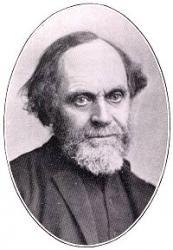
1824 - 1901 Person Name: William Bright, 1824-1901 Meter: 8.6.8.6 Author of "And now the wants are told that brought" in The Book of Praise Bright, William, D.D., born at Doncaster, Dec. 14, 1824, and educated at University College, Oxford, where he graduated B.A. (first class in Lit. Hum.) in 1846, M.A. in 1849. In 1847 he was Johnson's Theological Scholar: and in 1848 he also obtained the Ellerton Theological Essay prize. He was elected Fellow in 1847, and subsequently became Tutor of his College. Taking Holy Orders in 1848, he was for some time Tutor at Trinity College, Glenalmond; but in 1859 he returned to Oxford, and in 1868 became Regius Professor of Ecclesiastical History and Canon of Christ Church. His publications include:—
(1) Ancient Collects, selected from various Rituals, 1857, 2nd ed., 1862; (2) History of the Church from the Edict of Milan to the Council of Chalcedon, 1860; (3) Sermons of St. Leo the Great on the Incarnation, translated with notes, 1862; (4) Faith and Life, 1864-66; (5) Chapters of Early English Church History, 1877; (6) Private Prayers for a Week; (7) Family Prayers for a Week; (8) Notes on the Canons of the First tour Councils. He has also edited (9) Eusebius' Ecclesiastical History, 1872; (10) St. Athanasius's Oration against the Arians, &c, 1873; (11) Socrates' Ecclesiastical Hist.; (12) with the Rev. P. G. Medd, Latin Version of the Prayer Book, 1865-69. His poetical works are, (13) Athanasius and other Poems, by a Fellow of a College, 1858; and (14) Hymns & Other Poems, 1866; revised and enlarged, 1874. The last two works contain original hymns and translations. To the hymn-books he is known through his original compositions, seven of which are given in the revised edition of Hymns Ancient & Modern and some are found elsewhere. In addition to “And now the wants are told," and "At Thy feet, O Christ, we lay" (q.v.), there are:—
1. And now, 0 Father, mindful of the love. Holy Communion. Published in Hymns Ancient & Modern1875. Part of a composition in his Hymns, &c.
2. Behold us, Lord, before Thee met. Confirmation. Printed in the Monthly Packet, Nov. 1867, and, in a revised form, in the Appendix to Hymns Ancient & Modern, 1868.
3. How oft, O Lord, Thy face hath shone. St. Thomas. Published in Hymns Ancient & Modern, 1875.
4. Once, only once, and once for all. Holy Communion. Written in 1865, and published in his Hymns, &c, 1866, in 6 stanzas of 4 lines. It was given in the Appendix to Hymns Ancient & Modern, 1868; the new edition, 1875, and several other collections.
5. We know Thee, Who Thou art. Prayer after Pardon. Written in 1865, and published in his Hymns , &c, 1866, in 5 stanzas of 4 lines. It was included in the Appendix to Hymns Ancient & Modern, 1868, &c.
Canon Bright's hymns merit greater attention than they have received at the hands of compilers. He died March 6, 1901.
-- John Julian, Dictionary of Hymnology (1907)
===================
Bright, William, p. 182, i. Other hymns in common use are:—
1. God the Father, God the Son. Litany of the Resurrection. Second stanza, "Risen Lord, victorious King." From Iona, &c, 1886.
2. Pie sat to watch o'er customs paid. St. Matthew. In the 1889 Supplemental Hymns to Hymns Ancient & Modern.
3. Holy Name of Jesus. Name of Jesus. From Iona, &c., 1886.
4. Now at the night's return we raise. Evening. Rugby School Hymn Book, 1876, and others.
5. Thou the Christ for ever one. Mission to the Jews. In the 1889 Supplemental Hymns to Hymns Ancient & Modern.
--John Julian, Dictionary of Hymnology, Appendix, Part II (1907)
William Bright
Felice Giardini
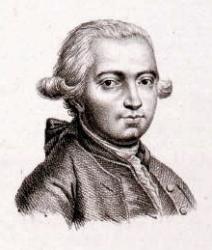
1716 - 1796 Meter: 8.6.8.6 Composer of "ATHENS" in The National Hymn Book of the American Churches Felice Giardini, born in Italy. When young, he studied singing, harpsichord, and violin. He became a composer and violin virtuoso. By age 12 he was playing in theatre orchestras. His most instructive lesson: While playing a solo passage during an opera, he decided to show off his skills by improvising several bravura variations that the composer, Jommelli, had not written . Although the audience applauded loudly, Jomelli, who happened to be there, went up and slapped Giardini in the face. He learned a lesson from that. He toured Europe as a violinist, considered one of the greatest musical artists of his time. He served as orchestra leader and director of the Italian Opera in London, giving concerts. He tried to run a theatre in Naples, but encountered adversity. He went to Russia, but had little fortune there, where he died.
John Perry
Felice Giardini
Pages