

 My Starred Hymns
 My FlexScores
 My Hymnals
 My Purchased Files
Planning worship?
Check out our sister site, ZeteoSearch.org,
for 20+ additional resources related to your search.
- |
User Links
Person Results
Frederick Lucian Hosmer
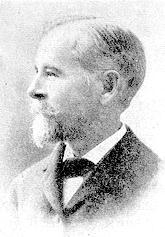
1840 - 1929 Person Name: Frederick Lucian Hosmer, 1840-1929 Meter: 8.6.8.6 with repeat Author of "From Age to Age" in Singing the Living Tradition Hosmer, Frederick Lucian, B.A., was born at Framingham, Mass., in 1840, and educated at Harvard, where he graduated B.A. in 1869. Entering the Unitarian Ministry in 1872 he has held charges in Quincy, Ill., 1872-77; Cleveland, Ohio, 1878-92; St. Louis, 1894-99; and since 1899, at Berkeley, Cal. His Way of Life, 1877, was a compilation of Prayers and Responsive Services for Sunday Schools. Of Unity Hymns and Carols, 1880, he was joint editor with W. C. Gannett and J. V. Blake. His hymns were published jointly by him and W. C. Gannett (q.v.), as The Thought of God in Hymns and Poems (Boston: Little, Brown & Co.), 1st Series, 1885; 2nd Series, 1894. Of his 56 hymns in this work the following have come into common use, for the most part during the past ten years:—
1. Father, to Thee we look in all our sorrow. [Trust in God.] Written in 1881 upon the death of a member of the author's congregation, and published in The Thought of God, 1st Series, 1885.
2. From age to age how grandly rise. [Unity.] Written for the annual festival of the Free Religious Assoc, Boston, June 2, 1899, and first published in Souvenir Festival Hymns, 1899. Subsequently altered by the author to "From age to age the prophet's vision."
3. From age to age they gather, all the brave of heart and strong. [Victory of Truth.] "Written in 1891 for the Dedication of Unity Church, Decorah, Iowa, and published in The Thought of God, 2nd Series, 1894.
4. From many ways and wide apart. [College or School Reunion.] Dated in The Thought of God, 2nd Series, 1894, as having been written in 1890.
5. Go not, my soul, in search of Him. [God Within.] Written in 1879, printed in the Boston Christian Register, May 31, 1879, and included in The Thought of God, 1st Series, 1885, with the title, "The Indwelling God."
6. I cannot think of them as dead. [Eternal Life.] Written in 1882, and first published in The Thought of God, 1st Series, 1885, and entitled "My Dead." in the English collections it is usually given as "We cannot think of them as dead."
7. I little see, I little know. [Trust.] "A Psalm of Trust," written in 1883, first appeared in the Boston Christian Register, and again in The Thought of God, 1st Series, 1885.
8. Immortal by their deed and word. [The Spirit of Jesus.] Written in 1880, and first published in Unity Hymns and Carols, Chicago, Ill., 1880, and then in The Thought of God, 1st Series, 1885.
9. Many things in life there are. [Mystery in all Things.] Written in 1885, and first published in The Thought of God, 1st Series, 1885, with the title "Passing Understanding," and the quotation "The Peace of God which passeth all understanding."
10. Not always on the mount may we. [On the Mount.] This lesson from the Transfiguration was written in 1882, and published in the Chicago Unity, April 1, 1884. After revision by the author, it was included in the 1st Series of The Thought of God, 1885.
11. Not when, with self dissatisfied. [Lent.] Written in 1891, and given in The Thought of God, 2nd series, 1894, p. 33. It is in The Public School Hymn Book, 1903, and others.
12. O beautiful, my country. [National Hymn.] As “Our Country," written in 1884, and published in the Chicago Unity Festivals, 1884; and again in The Thought of God, 1885.
13. O Light, from age to age the same. [Dedication Anniversary.] Written in 1890 for the fiftieth anniversary of the Second Congregational Church (Unitarian), Quincy, 111. Included in The Thought of God, 2nd Series, 1894, and entitled "From Generation to Generation."
14. O Lord of Life, where'er they be. [Life in God.] "Written in 1888 for Easter service in Author's own church," and first published in the Chicago Unit, and again in The Thought of God, 2nd Series, 1894. The "Alleluia!" refrain, which is added in some collections to each verse, is appended, in the original, to the last verse only.
15. O Name, all other names above. [Trust in God.] Under the title "Found. 'They that know Thy name will put their trust in Thee!’ this hymn, written in 1878, was given in The Thought of God, 1st Series, 1885.
16. O Prophet souls of all the years. [Unity.] “Written in 1893 for, and sung at, the Unitarian gathering in connection with The World's Parliament of Religions (World's Fair), Chicago, Sep., 1893," and included in The Thought of God, 2nd Series, 1894, and entitled "One Law, One Life, one Love."
17. O Thou, in all Thy might so far. [God All in All.] This hymn, given in The Thought of God, 1st Series, 1885, with the title "The Mystery of God," was written in 1876, and first published in the New York Inquirer.
18. O thou in lonely vigil led. This encouragement for lonely workers was written for the "Emerson Commemoration, W. U. C, 1888," and included in The Thought of God, 2nd Series, 1894.
19. O Thou, Who art of all that is. [Divine Guidance.] Under the title "Through unknown paths," this hymn was included in The Thought of God, 1st Series, 1885. It was written in 1877.
20. O Thou, Whose Spirit witness bears. [Dedication of a Place of Worship.] Written for the Dedication of First Unitarian Church, Omaha, Feb. 6, 1891, and published in The Thought of God, 2nd Series, 1894, with the title "The Inward Witness," and the subscription "For T. K., Omaha, 1801."
21. On eyes that watch through sorrow's night. [Easter] A Carol for Easter Morn, written in 1890 for the author's congregation, and published in The Thought of God, 2nd Series, 1894.
22. One thought I have, my ample creed. [The Thought of God.] This is the initial hymn to the collection The Thought of God, 1st Series, 1885, and supplies the title to the work. It was written in 1880, and first published in the Chicago Unity Hymns and Carols, 1880, and then in The Thought of God, 1885.
23. The rose is queen among the flowers. [Flower Service.] "Written in 1875, first published in The Sunnyside, a song book for Sunday Schools, and again in The Thought of God, 1st Series, 1885, under the title "Flower Sunday."
24. Thy kingdom come, — on bended knee. [Missions.] "Written in 1891 for the Commencement of the Meadville Theological School (Meadville, Pa.), June 12, 1891, and published in The Thought of God, 2nd Series, 1894," under the title "The Day of God," and the subscription, "M. T. S., June 12, 1891."
25. We pray no more, made lowly wise, For miracle and sign. [Greater Faith Desired.] Written in 1879, and first published in The Christian Register (Boston), Mar. 22 of that year, under the title 'The Larger Faith.'" Included under the same title in The Thought of God, 1st Series, 1885. Sometimes given as "Made lowly wise, we pray no more."
26. When courage fails, and faith burns low. [Victory of Truth.] Under the title "Loyalty," this hymn was given in The Thought of God, 1st Series, 1885. It was written in 1881.
27. Where men on mounts of vision Have passed the veil within. [Dedication of a Place of Worship.] "Written in 1891 for the Dedication of First Unitarian Church, Oakland, California." Included in The Thought of God, 2nd Series, 1894, entitled "Holy Places," and subscribed " For C. W. W., Oakland, Cal., 1891."
These annotations are from manuscript notes supplied to us by the author. Of these hymns all are in common use in America, and more than one half in Great Britain, mainly by Unitarians and Congregationalists. Amongst Unitarian hymn-writers of the last twenty years Mr. Hosmer is the most powerful and original known to us.
--John Julian, Dictionary of Hymnology, New Supplement (1907)
Frederick Lucian Hosmer
George Gascoigne
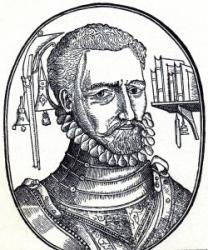
1525 - 1577 Person Name: George Gascoigne, 1540-1577 Meter: 8.6.8.6 with repeat Author of "You That Have Spent the Silent Night" in Singing the Living Tradition Gascoigne, George, son and heir of Sir John Gascoigne. The date and place of his birth are unknown, but it is probable that he was born about 1525, and from a statement in the Address to Queen Elizabeth prefixed to one of his works, he seems to have spent a part of his early life in Westmoreland. He was educated at Trinity College, Cambridge, from whence he entered the Middle Temple as a student of law before 1548; but neglecting his studies he led a life of reckless extravagance and dissipation, on account of which he was disinherited by his father. In 1555 he migrated to Gray's Inn, but seems to have left it also. In 1557-58 he represented Bedford in Parliament. In 1565 he returned to Gray's Inn, and there, in the following year, two plays by him were represented, The Supposes, translated from the Italian of Ariosto, and Jocasta, adapted from the Phoenissae of Euripides. To the latter Gascoigne contributed three acts. In 1572 he was returned to Parliament as member for the borough of Midhurst: but objections being made to his character he appears not to have taken his seat, and not long afterwards went to the Low Countries and took service with William of Orange, from whom he received a captain's commission. His gallant conduct in the field obtained the favourable notice of that Prince, but after some time he was taken prisoner by the Spaniards and sent back to England.
During Gascoigne's absence his first book, A Hundredth sundrie Floures bound up in one small Poesie, the manuscript of which he had left in the hands of a friend, was printed in 1572 or 1573 without his permission, and after his return from Holland, he published in 1575 a corrected and enlarged edition of his Poesies. Thenceforward he seems to have led a literary life, and is said to have been in some way attached to the court. On the occasion of Elizabeth's celebrated visit to Kenilworth in the summer of 1575, Gascoigne was commissioned by Leicester to devise the masques, &c, performed for the Queen's entertainment. He died at Stamford, Lincolnshire, Oct. 7, 1577, and was probably buried by his friend George Whetstone in the family vault of the Whetstones at Barnack, but this id not certainly known. At some time between 1558 and 1568 Gascoigne married Elizabeth Breton, mother, by her first husband, of the poet Nicholas Breton, and by her had a son. His widow survived until 1585. Gascoigne is noticeable as being one of the earliest English dramatists, the first English satirist, and the first English critic in poetry. In 1869 his poems were collected and edited for the Roxburghe Library by W. C. Hazlitt, and in 1868 his Notes of Instruction in English Verse; The Steele Glas; and The Complaynt of Philomene were included in English reprints edited by Edward Arber, together with Whetstone's metrical life of Gascoigne. To modern hymnody he is known by "We that have passed in slumber sweet," an altered version of his morning hymn, "Ye that have spent the silent night;" and other religious poems. [George Arthur Crawford, M.A.]
-- John Julian, Dictionary of Hymnology (1907)
George Gascoigne
Benjamin Beddome
1717 - 1795 Person Name: Benjamin Beddome, 1717-1795 Meter: 8.6.8.6 with repeat Author of "How Great the Wisdom" in Our Great Redeemer's Praise Benjamin Beddome was born at Henley-in Arden, Warwickshire, January 23, 1717. His father was a Baptist minister. He studied at various places, and began preaching in 1740. He was pastor of a Baptist society at Bourton-on-the-Water, Gloucestershire, until his death in 1795. In 1770, he received the degree of M.A. from the Baptist College in Providence, Rhode Island. He published several discourses and hymns. "His hymns, to the number of 830, were published in 1818, with a recommendation from Robert Hall." Montgomery speaks of him as a "writer worthy of honour both for the quantity and the quality of his hymns."
--Annotations of the Hymnal, Charles Hutchins, M.A. 1872.
=========================
Beddome, Benjamin , M.A. This prolific hymnwriter was born at Henley-in-Arden, Warwickshire, Jan. 23, 1717, where his father, the Rev. John Beddome, was atthat time Baptist Minister. He was apprenticed to a surgeon in Bristol, but removing to London, he joined, in 1739, the Baptist church in Prescott St. At the call of this church he devoted himself to the work of the Christian ministry, and in 1740 began to preach at Bourton-on-the-Water, in Gloucestershire. Declining invitations to remove to London or elsewhere, he continued pastor at Bourton until his death, on Sep. 3, 1795, at the age of 78. Mr. Beddome was for many years one of the most respected Baptist ministers in the West of England. He was a man of some literary culture. In 1770 he received the degree of M.A. from Providence College, Rhode Island. He was the author of an Exposition of the Baptist Catechism, 1752, in great repute at the time, and reprinted by Dr. C. Evans in 1772. It was his practice to prepare a hymn every week to be sung after his Sunday morning sermon. Though not originally intended for publication, he allowed thirteen of these to appear in the Bristol Baptist Collection of Ash & Evans (1769), and thirty-six in Dr. Rippon's Baptist Selection (1787), whence a number of them found their way into the General Baptist Hymn Book of 1793 and other collections. In 1817, a posthumous collection of his hymns was published, containing 830 pieces, with an introduction by the Rev. Robert Hall, and entitled "Hymns adapted to Public Worship or Family Devotion, now first published from the Manuscripts of the late Rev. B. Beddome, M.A."
Preface dated "Leicester, Nov. 10, 1817." Some of the early copies bear the same date on the title page. Copies bearing both the 1817 and 1818 dates are in the British Museum. The date usually given is 1818. Some hymns are also appended to his Sermons, seven volumes of which were published l805—1819; and over twenty are given in the Baptist Register of various dates.
Beddome's hymns were commended by Montgomery as embodying one central idea, "always important, often striking, and sometimes ingeniously brought out." Robert Hall's opinion is just, when in his "Recommendatory Preface" to the Hymns, &c, he says, p. vii.:—
"The man of taste will be gratified with the beauty and original turns of thought which many of them ex¬hibit, while the experimental Christian will often perceive the most secret movements of his soul strikingly delineated, and sentiments pourtrayed which will find their echo in every heart."
With the exception of a few composed for Baptisms and other special occasions, their present use in Great Britain is limited, but in America somewhat extensive. One of the best is the Ordination Hymn, "Father of Mercies, bow Thine ear." Another favourite is “ My times of sorrow and of joy," composed, by a singular coincidence, to be sung on Sunday, Jan. 14, 1778, the day on which his son died, most unexpectedly, in Edinburgh. "Let party names no more," is very popular both in Great Brit, and America. "Faith, His a precious gift," "Witness, ye men and angels, now," and the hymn for Holy Baptism, "Buried beneath the yielding wave," are also found in many collections. Beddome's popularity is, however, now mainly in America.
[Rev. W. R. Stevenson, M.A.]
Beddome is thus seen to be in common use to the extent of about 100 hymns. In this respect he exceeds every other Baptist hymnwriter; Miss Steele ranking second.
The authorities for Beddome's hymns are: (1) A Collection of Hymns adapted to Public Worship, Bristol, W. Pine, 1769, the Collection of Ash & Evans; (2) Dr. Rippon's Selections 1787, and later editions; (3) Sermons printed from the Manuscripts of the late Rev. Benjamin Beddome, M.A.,... with brief Memoir of the Author, Dunstable & Lond., 1805-1819; (4) Dr. Rippon's Baptist Register, 1795, &c.; (5) The Beddome Manuscripts, in the Baptist College, Bristol; (6) and Hymns adapted to Public Worship, or Family Devotion now first published, from Manuscripts of the late Rev. B. Beddome, A.M. With a Recommendatory Preface by the Rev. R. Hall, A.M. Lond., 1817. In his Preface, Mr. Hall gives this account of the Beddome Manuscript:— "The present Editor was entrusted several years ago with the MSS, both in prose and verse, with permission from the late Messrs. S. & B. Beddome, sons of the Author, to publish such parts of them as he might deem proper. He is also indebted to a descendant of the Rev. W. Christian, formerly pastor of the Baptist Church at Sheepshead, Leicestershire, for some of the Author's valuable hymns, which had been carefully preserved in the family. From both these sources, as well as others of less consequence, the present interesting volume has been derived."
-- Excerpts from John Julian, Dictionary of Hymnology (1907)
=======================
Beddome, Benjamin, pp. 121-124. Other hymns in common use:—
1. Great God, before Thy mercy-seat. (1817). Lent.
2. Great God, oppressed with grief and fear. (1787.) Reading H. Scripture.
3. How glorious is Thy word, 0 God. Holy Scripture. From "When Israel, &c," p. 124, i.
4. In God I ever will rejoice. Morning. From his Hymns, &c, 1817.
5. Jesus, my Lord, divinely fair. (1817.) Jesus the King of Saints. Begins with stanza ii. of “Listen, ye mortals, while I sing."
6. Rejoice, for Christ the Saviour reigns. Missions. Altered form of "Shout, for the blessed, &c," p. 123, ii.
7. Satan, the world, and sin. (1817.) In Temptation.
8. Thou, Lord of all above. (1817.) Lent.
9. Unto Thine altar, Lord. (1787.) Lent.
10. Ye saints of every rank, with joy. (1800.) Public Worship.
The dates given above are, 1787 and 1800, Rippon's Selection; and 1817 Beddome's Hymns.
--John Julian, Dictionary of Hymnology, Appendix, Part II
Benjamin Beddome
Robert Campbell
1814 - 1868 Meter: 8.6.8.6 with repeat Translator of "Sing, Choirs of New Jerusalem" in Trinity Hymnal (Rev. ed.) Robert Campbell was an advocate residing in Edinburgh. He is not much known as an author, but some of his hymns have been adopted in several hymnals. He was Roman Catholic. His death occurred in 1868.
--Annotations of the Hymnal, Charles Hutchins, M.A. 1872.
====================
Campbell, Robert. Advocate, of Sherrington, Scotland, was born at Trochmig, Ayrshire, Dec. 19, 1814. When quite a boy he attended the University of Glasgow. Though showing from his earliest years a strong predilection for Theological studies, eventually he fixed upon the Scottish law as a profession. To this end he entered the Law Classes of the University of Edinburgh, and in due course entered upon the duties of an advocate. Originally a Presbyterian, at an early age he joined the Episcopal Church of Scotland. He became a zealous and devoted Churchman, directing his special attention to the education of the children of the poor. His classical attainments were good, and his general reading extensive. In 1848 he began a series of translations of Latin hymns. These he submitted to Dr. Neale, Dr. Mills of Ely, and other competent judges. In 1850, a selection therefrom, together with a few of his original hymns, and a limited number from other writers, was published as Hymns and Anthems for Use in the Holy Services of the Church within the United Diocese of St. Andrews, Dunkeld, and Dunblane. Edinburgh, R. Lendrum & Co.
This collection, known as the St. Andrews Hymnal, received the special sanction of Bishop Torry, and was used throughout the Diocese for some years. Two years after its publication he joined the Roman Catholic Church. During the next sixteen years he devoted much time to the young and poor. He died at Edinburgh, Dec. 29, 1868.
From his collection of 1850, four translations were given in Hymns Ancient & Modern, 1861, "At the Lamb's high feast we sing;" “Come, pure hearts, in sweetest measures;" "Ye Choirs of New Jerusalem;" " Ye servants of a martyr'd God" (altered). Attention was thereby directed to his translations. They are smooth, musical, and well sustained. A large number, not included in his 1850 collection, were left by him in manuscript. From these Mr. O.Shipley has printed several in his Annus Sanctus, 1884. (C. MSS.)
--John Julian, Dictionary of Hymnology (1907)
Robert Campbell
Henry Rosevear
1903 - 2003 Person Name: Henry Rosevear, b.1903 Meter: 8.6.8.6 with repeat Harmonizer of "ANTIOCH" in The Book of Praise
Henry Rosevear
John Morison
1750 - 1798 Meter: 8.6.8.6 with repeat Author of "The People That in Darkness Sat" in Trinity Psalter Hymnal Morison, John, D.D., was born in Aberdeenshire in 1749. He studied at the University of Aberdeen (King's College), where he graduated M.A. in 1771. In 1780 he became parish minister of Canisbay, Caithness. He received the degree of D.D. from the University of Edinburgh in 1792. He died at Canisbay, June 12, 1798. He was one of the members added on May 26, 1781, to the Committee appointed by the General Assembly of 1775 to revise the Translations and Paraphrases of 1745. To him are ascribed Nos. 19, 21, 29, 30 and 35, in the 1781 collection, and he is said to have been joint author with John Logan of Nos. 27 and 28. [Rev. James Mearns, M.A.]
--John Julian, Dictionary of Hymnology (1907)
John Morison
Nikolaus Hermann

1500 - 1561 Person Name: Nikolaus Hermann (c. 1480-1561) Meter: 8.6.8.6 with repeat Composer of "LOBT GOTT, IHR CHRISTEN ALL ZUGLEICH" in The Summit Choirbook Nikolaus Herman was a German Lutheran cantor and teacher, creating numerous Protestant hymns. Some of them are contained in hymnals in several languages.
Nikolaus Hermann
Thomas Benjamin
b. 1940 Person Name: Thomas Benjamin, 1940- Meter: 8.6.8.6 with repeat Composer of "BENNINGTON" in Singing the Living Tradition Thomas Benjamin was born in 1940 in Bennington, Vermont. He received degrees from Bard College, Bradeis, Harvard and Eastman. He has taught at the National Music Camp at Interlochen, the University of Houston's School of Music, and the Peabody Conservatory of The John Hopkins University. He is the co-author of three music theory texts and the author of two books on counterpoint. He has composed music for violin, piano, viola, orchestra, chamber orchestras and choir. He has also written oratorios, cantatas, operas, and a number of hymn tunes for the Unitarian church.
Dianne Shapiro from "A digital library of Unitarian Universalist biographies, books, and media," Harvard Square Library, accessed online 8/9/2020
Thomas Benjamin
Robert Bennett
1787 - 1819 Meter: 8.6.8.6 with repeat Composer of "EASTGATE" in The Presbyterian Book of Praise Robert Bennett was born at Bakewell, Derbyshire in 1787. His family moved to Cambridge when he was young and he became a chorister at King's College. He took music lessons from Dr. Clarke Whitfield. In 1811 he was appointed organist of the parish church in Sheffield. He was a close friend of William Sterndale, who he named his son after. (See William Sterndale Bennett) Robert Bennett composed several hymn tunes.
Dianne Shapiro, from "Hymn-Tunes and Their Story" by James T. Lightwood (London: Charles H. Kelly, 1905)
Robert Bennett
Oliver Holden
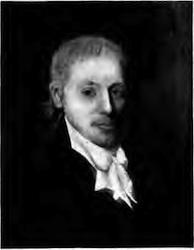
1765 - 1844 Meter: 8.6.8.6 with repeat Composer of "CORONATION" in The Worshiping Church Holden, Oliver, one of the pioneers of American psalmody, was born in 1765, and was brought up as a carpenter. Subsequently he became a teacher and music-seller. He died at Charlestown, Massachusetts, 1844. His published works are American Harmony, 1793; the Worcester Collection, 1797; and other Tune books. One of his most popular tunes is "Coronation." It is thought that he edited a small hymn-book, published at Boston before 1808, in which are 21 of his hymns with the signature "H." A single copy only of this book is known, and that is without title-page. Of his hymns the following are in common use:—
1. All those who seek a throne of grace. [God present where prayer is offered.] Was given in Peabody's Springfield Collection, 1835, No. 92, in a recast form as, “They who seek the throne of grace." This form is in extensive use in America, and is also in a few collections in Great Britain.
2. With conscious guilt, and bleeding heart. [Lent.] This, although one of the best of Holden's hymns, has passed out of use. It appeared, with two others, each bearing bis signature, in the Boston Collection (Baptist), 1808.
3. Within these doors assembled now. [Divine Worship.] [Rev. F. M. Bird, M.A.]
-- John Julian, Dictionary of Hymnology
Oliver Holden
Pages




