You help make Hymnary.org possible. More than 10 million people from 200+ countries found hymns, liturgical resources and encouragement on Hymnary.org in 2025, including you. Every visit affirms the global impact of this ministry.

If Hymnary has been meaningful to you this year, would you take a moment today to help sustain it? A gift of any size—paired with a note of encouragement if you wish—directly supports the server costs, research work and curation that keep this resource freely available to the world.

Give securely online today, or mail a check to:
Hymnary.org
Calvin University
3201 Burton Street SE
Grand Rapids, MI 49546

Thank you for your partnership, and may the hope of Advent fill your heart.

Person Results

Topics:comfort and consolation
In:people

Planning worship? Check out our sister site, ZeteoSearch.org, for 20+ additional resources related to your search.
Showing 11 - 20 of 159Results Per Page: 102050

S. Baring-Gould

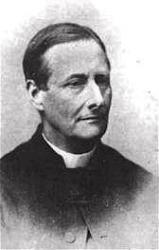
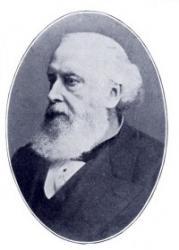
1834 - 1924 Person Name: Sabine Baring-Gould Topics: Comfort/Consolation Author of "Now the Day Is Over" in Voices United Baring-Gould, Sabine, M.A., eldest son of Mr. Edward Baring-Gould, of Lew Trenchard, Devon, b. at Exeter, Jan. 28, 1834, and educated at Clare College, Cambridge, B.A. 1857, M.A. 1860. Taking Holy Orders in 1864, he held the curacy of Horbury, near Wakefield, until 1867, when he was preferred to the incumbency of Dalton, Yorks. In 1871 he became rector of East Mersea, Essex, and in 1881 rector of Lew Trenchard, Devon. His works are numerous, the most important of which are, Lives of the Saints, 15 vols., 1872-77; Curious Myths of the Middle Ages, 2 series, 1866-68; The Origin and Development of Religious Belief, 2 vols., 1869-1870; and various volumes of sermons. His hymns, original and translated, appeared in the Church Times; Hymns Ancient & Modern, 1868 and 1875; The People's Hymnal, 1867, and other collections, the most popular being "Onward, Christian soldiers," "Daily, daily sing the praises," the translation "Through the night of doubt and sorrow," and the exquisite Easter hymn, "On the Resurrection Morning." His latest effort in hymnology is the publication of original Church Songs, 1884, of which two series have been already issued. In the Sacristy for Nov. 1871, he also contributed nine carols to an article on "The Noels and Carols of French Flanders.” These have been partially transferred to Chope's and Staniforth's Carol Books, and also to his Church Songs. --John Julian, Dictionary of Hymnology (1907) ================== Baring-Gould, S., p. 114, i. Other hymns in common use are:— 1. Forward! said the Prophet. Processional. Appeared in the New Mitre Hymnal, 1874. 2. My Lord, in glory reigning. Christ in Glory. In Mrs. Brock's Children's Hymn Book, 1881. 3. Now severed is Jordan. Processional. Appeared in the S. Mary, Aberdeen, Hymnal, 1866, the People's Hymnal, 1867, &c. --John Julian, Dictionary of Hymnology, Appendix, Part II (1907)

Sarah Flower Adams

1805 - 1848 Topics: Comfort/Consolation Author of "Nearer, My God, to Thee ( Mon Dieu, plus près de toi)" in Voices United Adams, Sarah, nee Flower. born at Harlow, Essex, Feb. 22nd, 1805; died in London, Aug. 14, 1848, and was buried at Harlow, Aug. 21,1848. She was the younger daughter of Mr. Benjamin Flower, editor and proprietor, of The Cambridge Intelligencer; and was married, in 1834, to William B. Adams, a civil engineer. In 1841 she published Vivia Perpetua, a dramatic poem dealing with the conflict of heathenism and Christianity, in which Vivia Perpetua suffered martyrdom; and in 1845, The Flock at the Fountain; a catechism and hymns for children. As a member of the congregation of the Rev. W. J. Fox, an Unitarian minister in London, she contributed 13 hymns to the Hymns and Anthems, published by C. Fox, Lond., in 1841, for use in his chapel. Of these hymns the most widely known are— "Nearer,my God,to Thee," and "He sendeth sun, He sendeth shower." The remaining eleven, most of which have come into common use, more especially in America, are:— Creator Spirit! Thou the first. Holy Spirit. Darkness shrouded Calvary. Good Friday. Gently fall the dews of eve. Evening. Go, and watch the Autumn leaves. Autumn. O hallowed memories of the past. Memories. O human heart! thou hast a song. Praise. O I would sing a song of praise. Praise. O Love! thou makest all things even. Love. Part in Peace! is day before us? Close of Service. Sing to the Lord! for His mercies are sure. Praise. The mourners came at break of day. Easter. Mrs. Adams also contributed to Novello's musical edition of Songs for the Months, n. d. Nearly all of the above hymns are found in the Unitarian collections of Great Britain, and America. In Martineau's Hymns of Praise & Prayer, 1873, No. 389, there is a rendering by her from Fenelon: —" Living or dying, Lord, I would be Thine." It appeared in the Hymns and Anthems, 1841. -John Julian, Dictionary of Hymnology (1907)

James Edmeston

1791 - 1867 Person Name: John Edmeston Topics: Comfort and Consolation; Comfort and Consolation Author of "Savior Breathe an Evening Blessing" in The Majestic Hymnal, number two Edmeston, James, born Sept. 10, 1791. His maternal grandfather was the Rev. Samuel Brewer, who for 50 years was the pastor of an Independent congregation at Stepney. Educated as an architect and surveyor, in 1816 he entered upon his profession on his own account, and continued to practice it until his death on Jan. 7, 1867. The late Sir G. Gilbert Scott was his pupil. Although an Independent by descent he joined the Established Church at a comparatively early age, and subsequently held various offices, including that of churchwarden, in the Church of St. Barnabas, Homerton. His hymns number nearly 2000. The best known are “Lead us, Heavenly Father, lead us” and "Saviour, breathe an evening blessing." Many of his hymns were written for children, and from their simplicity are admirably adapted to the purpose. For many years he contributed hymns of various degrees of merit to the Evangelical Magazine, His published works are:— (1) The Search, and other Poems, 1817. (2) Sacred Lyrics, 1820, a volume of 31 hymns and one poem. This was followed by a second Series, 1821, with 35; and a third Series, 1822, with 27 pieces respectively. (3) The Cottage Minstrel; or, Hymns for the Assistance of Cottagers in their Domestic Worship, 1821. This was published at the suggestion of a member of the Home Missionary Society, and contains fifty hymns. (4) One Hundred Hymns for Sunday Schools, and for Particular Occasions, 1821. (5) Missionary Hymns, 1822. (6) Patmos, a Fragment, and Other Poems, 1824. (7) The Woman of Shunam, and Other Poems, 1829. (8) Fifty Original Hymns, 1833. (9) Hymns for the Chamber of Sickness, 1844. (10) Closet Hymns and Poems, 1844. (11) Infant Breathings, being Hymns for the Young, 1846. (12) Sacred Poetry, 1847. In addition to those of his hymns which have attained to an extensive circulation, as those named above, and are annotated in this work under their respective first lines, there are also the following in common use in Great Britain and America:— 1. Along my earthly way. Anxiety. In his Sacred Lyrics, third set, 1822, in 8 stanzas of 4 lines. It is given in several collections, but usually in an abbreviated form, and generally somewhat altered. 2. Dark river of death that is [art] flowing. Death Anticipated. Given in his Sacred Lyrics, 3rd set, 1822, p. 39, in 9 stanzas of 4 lines. It is usually given in an abbreviated form, and sometimes as, "Dark river of death that art flowing." 3. Come, sacred peace, delightful guest. Peace. Appeared in his Closet Hymns, &c, 1844, in 4 stanzas of 4 lines. 4. Eternal God, before thy throne, Three nations. National Fast. 5. For Thee we pray and wait. Second Advent. 6. God intrusts to all. Parable of the Talents. This is No. 13 of his Infant Breathings, 1846, in 5 stanzas of 4 lines. It is a simple application of the parable to the life of a child. It is widely used. 7. God is here; how sweet the sound. Omnipresence. Given as No. 9 in his Sacred Lyrics, 1st set, 1820, in 6 stanzas of 4 lines. In the Baptist Hymnal, 1879, No. 45. St. i.-iii. are from this text, and iv. and v. are from another source. 8. How sweet the light of Sabbath eve. Sunday Evening. No. 10 in theCottage Minstrel, 1821, slightly altered. 9. Is there a time when moments flow. Sunday Evening. No. 5 of his Sacred Lyrics, 1st set, 1820, in 7 stanzas of 4 lines. 10. Little travellers Zionward. Burial of Children. No. 25 of his Infant Breathings, &c, 1846, in 3 stanzas of 8 lines. In the Leeds Hymn Book, 1853, it begins with stanza ii., "Who are they whose little feet?" 11. May we, Lord, rejoicing say. National Thanksgiving. Dated 1849 by the author in Spurgeon's Our Own Hymnbook, No. 1008. 12. Music, bring thy sweetest treasures. Holy Trinity. Dated 1837 by the author in Spurgeon's Our Own Hymnbook, No. 167. It is in his Sacred Poetry, 1847. 13. Roll on, thou mighty ocean. Departure of Missionaries. In his Missionary Hymns, 1822, in 4 stanzas of 4 lines. It is in common use in America. 14. Sweet is the light of Sabbath eve. Sunday Evening. In 5 stanzas of 41., from the Cottage Minstrel, 1821, where it is given as No. 10, and entitled "The Cottager's Reflections upon the Sabbath Evening." 15. The light of Sabbath eve. Sunday Evening. In 5 stanzas of 4 lines, as No. 11 in the Cottage Minstrel, 1821, p. 14, and headed, "Solemn Questions for the Sabbath Evening." 16. Wake, harp of Zion, wake again. Missions to the Jews. Dated 1846 by the author in Spurgeon's Our Own Hymnbook. It is in his Sacred Poetry, 1847. 17. When shall the voice of singing? In his Missionary Hymns, 1822. It is in a few American collections. 18. When the worn spirit wants repose. Sunday. No. 18, of his Sacred Lyrics, 1st set, 1820, in 4 stanzas of 4 lines. It is somewhat popular, and is given in several collections in Great Britain and America, as the Baptist Psalms & Hymns, 1858-80; the Church Praise Book, N. Y., 1881, &c. 19. Why should I, in vain repining? Consolation. No. 14 in the 1st set of his Sacred Lyrics, 1820, in 4 stanzas of 4 lines. -- John Julian, Dictionary of Hymnology (1907) ========================= Edmeston, James, p. 321, ii. Other hymns are:— 1. O Thou Whose mercy guides my way. Resignation. In his Sacred Lyrics, 1st set, 1820, p. 24, in 3 stanzas of 4 lines, and again in his Hymns for the Chamber of Sickness, 1844. 2. Parting soul, the flood awaits thee. Death anticipated. In his Sacred Lyrics, 1st set, 1820, p. 18, in 3 stanza of 8 lines, and based upon the passage in the Pilgrim's Progress:—"Now I further saw that betwixt them and the gate was a river, but there was no bridge to go over, and the river was very deep." 3. 'Tis sweet upon our pilgrimage. Praise. In hi3 Closet Hymns and Poems, 1846, in 3 stanzas of 4 lines, and headed "An Ebenezer Raided." 4. Welcome, brethren, enter in. Reception of Church Officers. Miller says, in his Singers and Songs, 1869, p. 420:—"This is No. 1 of five hymns supplied by Mr. Edmeston, at the request of a friend, for insertion in a provincial hymn-book, on the subject of admitting members," but he does not give the name of the book, neither have we identified It. The hymn, as given in the New Congregational Hymn Book, 1859, No. 840, is in 5 stanzas of 4 lines, of which Millet says stanza iii. is by another hand. --John Julian, Dictionary of Hymnology, Appendix, Part II (1907)

W. D. Cornell

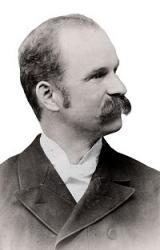
1858 - 1936 Topics: Choir and Special; Comfort and Guidance; Consolation Author of "Wonderful Peace" in Soul-stirring Songs and Hymns (Rev. ed.) Rv Warren Donald Cornell USA 1858-1936. Born in Whiteford, MI, he trained as a school teacher and began teaching in Dallas Public Schools at age 19. Licensed by the Southern Methodist conference in 1879, he was appointed to preach in Denton and Gainesville, TX, for a year in each place. He married Jennie Estelle Roberts in 1880, and they five sons: Warren, Louis, William, Robert, and Donald, and a daughter, Florence. In 1881 he removed to the Oshkosh, WI, area and spent most of his career preaching at various pastorates and in Berlin, WI. He was an eloquent precher, poet, and evangelist. In 1894 he became minister of the People's Christian Assn., in Fond du Lac, WI. The group met for 10 years and disbanded. Cornell pastored an independent church there. In 1905, after pastoring, he entered real estate. He took an interest in political and social issues, and became secretary of the Paving Cutter's Union, and leader of the 'Anti-Tramp Society”. He became a lecturer, and a founding member of the anti-socialist Constitutional Defense League, spending much of his time in this cause. He was no longer a member of clergy, but a touring lecturer for several years. By 1925 he and his family had moved to NY state, where he eventually died. He was buried in Fond du Lac, WI. John Perry

Frank E. Graeff

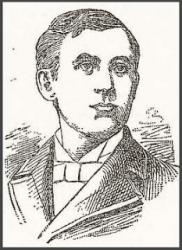
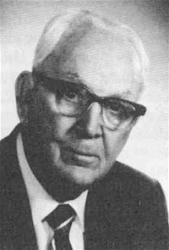
1860 - 1919 Topics: Comfort and Consolation; Comfort and Consolation Author of "Does Jesus Care?" in The Majestic Hymnal, number two Frank E. Graeff was a minister in the Philadelphia Conference of the Methodist Episcopal Church. He was a prolific writer of hymns, stories, poems and articles. Dianne Shapiro, from "The Singers and Their Songs: sketches of living gospel hymn writers" by Charles Hutchinson Gabriel (Chicago: The Rodeheaver Company, 1916)

Richard Frederick Littledale

1833 - 1890 Topics: Comfort/Consolation Translator of "Come Down, O Love Divine" in Voices United Richard Frederick Littledale (b. Dublin, 1833; d. London, 1890) entered Trinity College, Dublin, as a foundation scholar, graduated with a bachelors degree in classics, a Masters of Divinity in 1858, then a Bachelors and Doctorate in Civil Law at Oxford in 1862. From 1856 to 1857 he was the curate of St. Matthew in Thorpe Hamlet, Norfolk, and from 1857 to 1861 was the curate of St. Mary the Virgin, in Soho, London. For the remainder of his life he suffered from chronic illness and spent most of his time writing. He authored many books and pamphlets on Anglican liturgy, theology, and the church’s engagement with society, and completed his good friend John Mason Neale’s work on the psalms after Neale died in 1866. Laura de Jong ================ Littledale, Richard Frederick, LL.D., D.C.L., son of John Richard Littledale, merchant, was born at Dublin on the 14th of Sept, 1833, and was educated at Bective House Seminary, and Trinity College, Dublin. His University course was distinguished. In 1852 he became a University Scholar; in 1854 he was first class in Classics and gold medallist; in 1856 he won the Berkeley gold medal (for Greek), and other honours. He graduated B.A., 1855, M.A., 1858, LL.D., 1862, and D.C.L. at Oxford, 1862. Taking Holy Orders in 1856, he was Curate of St. Matthew's, in Thorpe Hamlet, Norwich, from 1856 to 1857, and of St. Mary the Virgin, Soho, London, from 1857 to 1861. Through ill-health he retired from parochial work in 1861, and devoted himself to literature. Dr. Littledale's publications amount to about fifty in all, and embrace Theological, Historical, Liturgical, and Hymnological subjects chiefly. His prose works include:— (1) Application of Colour to the Decoration of Churches, 1857; (2) Religious Communities of Women in the Early Church, 1862; (3) Catholic Ritual in the Church of England, 1861; (4) Continuation of Dr. Neale's Commentary on the Psalms, vols. ii., iii., iv., 1868-74; (5) Commentary on the Song of Songs, 1869; (6) The Petrine Claims, 1878-84; (7) Plain Reasons against joining the Church of Rome, 1880, &c.; (8) Short History of the Council of Trent; and several articles in the Encyclopaedia Britannica, 1882-88. His contributions to periodical literature have been also extensive and valuable. Dr. Littledale's Liturgical, Devotional, and Hymnological works include:— (1) Offices of the Holy Eastern Church, in the Original Greek, with translation into English, Notes, &c, 1863; (2) Carols for Christmas and Other Seasons, 1863; (3)The Priest's Prayer Book, with hymns, 1864, and with Brief Pontifical in 1870 and later editions; (4)The People's Hymnal, 1867 ; (5) The Children's Bread. A Communion Office for the Young, with hymns, 1868; (6) Primitive Liturgies and Translations, 1868-69; (7) Children at Calvary: being The Stations of the Cross in Metre for Singing, 1872; (8) the Christian Passover, 1873; (9) The Altar Manual, 1863-77. He was joint Editor of Nos. 3, 4, 8 and 9 with the Rev. J. E. Vaux; and of No. 6 with Dr. Neale. In addition to a large number of hymns, original and translated, in the above works, Dr. Littledale has also directly contributed original and translated hymns to:— (1) Lyra Eucharistica, 1863; (2) Lyra Messianica, 1864; (3) Lyra Mystica, 1865; (4) The Eucharistic Hymnal, 1877; (5) The Roman Breviary in English, by the Marquess of Bute, 1879; (6) The Altar Hymnal, 1884; (7) Supplement to Hymns Ancient & Modern, 1889; (8) to the Night Hours of the Church; (9) to the St. Margaret's Hymnal [East Grinstead], 1875; and (10) to the Church Times, The Guardian, &c, &c. Dr. Littledale's Hymnological works in verse consist of translations of Danish, Swedish, Greek, Latin, Syriac, German, and Italian hymns, together with original Carols, Hymns, and Metrical Litanies. His original hymns remain to be noted. These include the following:— i. In the Priest's Prayer Book, 1864 :— 1. Captain of Salvation. Christian Warfare. 2. Christ, on Whose Face the soldiers. Passiontide. 3. Christ, Who hast for sinners suffered. Passiontide. 4. God the Father, from on high. For the Sick. 5. Lord Jesu, by Thy passion. Passiontide. 6. Lord, Who in pain and weariness. Passiontide. 7. 0 Jesu, in Thy torture. Passiontide. In Meditations and Prayers on the Passion of Our Lord Jesus Christ, 1863. 8. 0 Lord, to Whom the spirits live. All Souls. 9. The clouds of sorrow rest upon mine eyes. For the Sorrowing. ii. In the People's Hymnal, 1867:— 10. Christ, our song we lift to Thee. Blessed Virgin Mary. 11. Christ, our Sun, on us arose. Whitsuntide. In Carols for Christmas, &c, 3rd series, 1864. 12. Christ, the Lord, Whose mighty hand. Prayer for Peace. 13. Day is past and gone. Evening. In the Church Times, Feb. 17, 1866. 14. Eternal Shepherd, God most high. Vacancy of a See or Parish. 15. Eternal Wisdom, God most high. Common of Doctors. 16. God eternal, infinite. Septuagesima. 17. Hidden Saviour, great High Priest. Holy Communion. 18. I believe in God the Father. The Creed. 19. I worship Thee, Lord Jesu. Holy Communion. In the Church Times, May 10, 1865. 20. In Paradise reposing. Burial of a Child. 21. In songs of glad thanksgiving. General Thanksgiving. 22. Lord, Whose goodwill is ever sure. In time of Famine. 23. Now the sun is in the skies. Morning. In the Church Times, Jan. 27, 1866. 24. 0 God of mercy, God of love. For Rain. 25. 0 God, Who metest in Thine hand. For those at Sea. 26. 0 God, Whose Sole-Begotten left. Almsgiving. 27. 0 sing to the Lord, Whose bountiful hand. Thanksgiving for Rain. 28. Set upon Sion's wall. Ember Days. 29. The Cedar of Lebanon, Plant of renown. Christmas. First published in Sedding's Christmas Carols, 1863. 30. The fight is o'er, the crown is won. Burial of a Sister of Mercy. 31. The wintry time hath ended. Thanksgiving for Fair Weather. 32. We are marching through the desert. Processional. 33. When the day hath come at last. The Judgment. In addition to these, a few of the more widely used of Dr. Littledale's original hymns, as "From hidden source arising," and others, are annotated under their respective first lines. In the People's Hymnal, 1867, Dr. Littledale adopted the following signatures:— A. L. P., i.e., A London Priest. B., i.e., An initial of a former address. B. T., i.e., The initials of a former address. D. L., i.e. Dr. Littledale. F., i.e., Frederick. F. R., i.e., Frederick Richard. L., i.e., Littledale. P. C. E., i.e., Priest of the Church of England. P. P. Bk., i.e., Priest's Prayer Book. Taken as a whole, Dr. Littledale's translations from the seven languages named above are characterised by general faithfulness to the originals, great simplicity of diction, good metre, smooth rhythm, and deep earnestness. His original compositions are usually on special subjects, for which, at th$ time they were written, there were few hymns, and are marked by the same excellent features of a good hymn as his translations. His main object throughout is to teach through Praise and Prayer. --John Julian, Dictionary of Hymnology (1907) ====================== Littledale, Richard F., p. 679, ii. He died at Red Lion Square, London, Jan. 11, 1890. --John Julian, Dictionary of Hymnology, Appendix, Part II (1907)

William Henry Monk

1823 - 1889 Person Name: William Henry Monk (1823-1889) Topics: Comfort and Consolation Adapter and Harmonizer of "RAVENSHAW" in Ancient and Modern William H. Monk (b. Brompton, London, England, 1823; d. London, 1889) is best known for his music editing of Hymns Ancient and Modern (1861, 1868; 1875, and 1889 editions). He also adapted music from plainsong and added accompaniments for Introits for Use Throughout the Year, a book issued with that famous hymnal. Beginning in his teenage years, Monk held a number of musical positions. He became choirmaster at King's College in London in 1847 and was organist and choirmaster at St. Matthias, Stoke Newington, from 1852 to 1889, where he was influenced by the Oxford Movement. At St. Matthias, Monk also began daily choral services with the choir leading the congregation in music chosen according to the church year, including psalms chanted to plainsong. He composed over fifty hymn tunes and edited The Scottish Hymnal (1872 edition) and Wordsworth's Hymns for the Holy Year (1862) as well as the periodical Parish Choir (1840-1851). Bert Polman

Tillit S. Teddlie

1885 - 1987 Topics: Comfort and Consolation; Comfort and Consolation Composer of "[To the harvest fields I will gladly go]" in The Majestic Hymnal, number two Tillit Sidney Teddlie was born on June 3, 1885 at Swan, Texas. He was a leader in the Churches of Christ denomination in the 20th Century. In addition to singing schools which he taught for 61 years, he also preached and taught across Texas and the southwest. For one period of time (two years) he sang only with Foy E. Wallace, Jr., (a well-known, conservative Churches of Christ preacher around World War II) while they conducted meetings across the country. Teddlie was honored by many people in many places. On June 2, 1985, 630 churches across the land proclaimed Sunday “Tillit S. Teddlie Day” and sang his songs. Teddlie had composed 130 songs and published 14 song books. One of his song books, "Golden Harvest Hymns" included 100 of his best-known hymns. He attended a song fest in his name at the Preston Crest Church of Christ in Dallas where more than 1,200 gathered. Teddlie's 100th birthday was honored by President Reagan who sent a telegram, and Sen. Phil Graham among others. The Briar, Texas, Church of Christ gave him a bronze statue worth $6,000. His songs published in hymnals from Churches of Christ include “Worthy Art Thou,” “Heaven Holds All to Me,” “When We Meet in Sweet Communion, “Oft We Come Together,” “Singing Redemption’s Song,” “Hear Me When I Call,” “O God of Infinite Mercy,” and many more. While Teddlie had success as a publisher of many of his own smaller hymnals, his contributions as a composer to every major hymnal published in Churches of Christ since 1921 have left an indelible imprint on the denomination’s hymnody. Teddlie died August 17, 1987 at the age of 102. He is remembered for his preaching, teaching, and music and his good influence upon all the people that he met and worked with. D. J. Bulls, from "In Memoriam" by Gussie Lambert, 1988; "Our Garden of Song" by G. C. Finley, Howard Publishing, 1984; "Tillit S. Teddlie, A Centennial Celebration" Program, June 2, 1985, Dallas, TX, http://www.therestorationmovement.com/_states/texas/teddlie,ts.htm

George Herbert

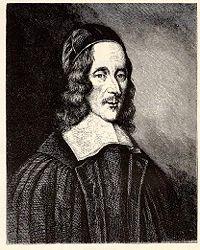
1593 - 1633 Person Name: George Herbert (1593-1633) Topics: Comfort and Consolation Author of "The God of love my shepherd is" in Ancient and Modern Herbert, George, M.A., the fifth son of Richard Herbert and Magdalen, the daughter of Sir Richard Newport, was born at his father's seat, Montgomery Castle, April 3, 1593. He was educated at Westminster School, and at Trinity College, Cambridge, graduating B.A. in 1611. On March 15, 1615, he became Major Fellow of the College, M.A. the same year, and in 1619 Orator for the University. Favoured by James I., intimate with Lord Bacon, Bishop Andrewes, and other men of influence, and encouraged in other ways, his hopes of Court preferment were somewhat bright until they were dispelled by the deaths of the Duke of Richmond, the Marquis of Hamilton, and then of King James himself. Retiring into Kent, he formed the resolution of taking Holy Orders. He was appointed by the Bishop of Lincoln to the Prebend of Lcighton Ecclesia and to the living of Leighton Bromswold, Hunts, July 15, 1626. He remained until 1629, when an attack of ague obliged him to remove to his brother's, house at Woodford, Essex. Not improving in health at Woodford, he removed to Dantsey, in Wiltshire, and then as Rector to Bemerton, to which he was inducted, April 26, 1630, where he died Feb. 1632. The entry in the register of Bemerton is "Mr. George Herbert, Esq., Parson of Foughleston and Bemerton, was buried 3 day of March 1632." His life, by Izaak Walton, is well known; another Memoir, by Barnabas Oley, is forgotten. Herbert's prose work, Priest to the Temple, appeared several years after his death: but The Temple, by which he is best known, he delivered to Nicholas Ferrar (q.v.), about three weeks before his death, and authorized him to publish it if he thought fit. This was done iu 1633. The work became popular, and the 13th edition was issued in 1709. It is meditative rather than hymnic in character, and was never intended for use in public worship. In 1697 a selection from The Temple appeared under the title Select Hymns Taken out of Mr. Herbert's Temple & turned into the Common Metre To Be Sung In The Tunes Ordinarily us'd in Churches. London, Parkhurst, 1697. In 1739, J. & C. Wesley made a much more successful attempt to introduce his hymns into public worship by inserting over 40 in a much-altered form in their Hymns & Sacred Poems. As some few of these came into their collection of Psalms & Hymns, 1741, revised 1743, they were long sung by the Methodists, but do not now form part of the Wesleyan Hymn Book. No further attempt seems to have been made to use the Temple poems as hymns until 1853, when some altered and revised by G. Rawson were given in the Leeds Hymn Book of that year. From that time onward more attention was paid to Herbert alike by Churchmen and Nonconformists, and some of his hymns are now widely accepted. Many editions of his works have been published, the most popular being that of the Rev. Robert Aris Wilmott, Lond., Geo. Routledge & Son, 1857; but Dr. Grosart's privately printed edition issued in his Fuller Worthies Library in 1874, in three volumes, is not only the most complete and correct, but included also his psalms not before reprinted, and several poems from a ms. in the Williams Library, and not before published. The Temple has also been pub¬lished in facsimile by Elliott Stock, 1876, with preface by Dr. Grosart; and in ordinary type, 1882, by Wells Gardner, with preface by J. A. Shorthouse. The quaintness of Herbert's lyrics and the peculiarity of several of their metres have been against their adoption for congregational purposes. The best known are: "Let all the world in every corner sing"; "My stock lies dead, and no increase"; "Throw away Thy rod"; "Sweet day, so cool, so calm"; and "Teach me, my God, and King." [William T. Brooke] --John Julian, Dictionary of Hymnology (1907)

Frederick William Faber

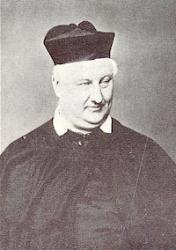
1814 - 1863 Topics: Comfort/Consolation Author of "There's a Wideness in God's Mercy" in Voices United Raised in the Church of England, Frederick W. Faber (b. Calverly, Yorkshire, England, 1814; d. Kensington, London, England, 1863) came from a Huguenot and strict Calvinistic family background. He was educated at Balliol College, Oxford, and ordained in the Church of England in 1839. Influenced by the teaching of John Henry Newman, Faber followed Newman into the Roman Catholic Church in 1845 and served under Newman's supervision in the Oratory of St. Philip Neri. Because he believed that Roman Catholics should sing hymns like those written by John Newton, Charles Wesley, and William Cowpe, Faber wrote 150 hymns himself. One of his best known, "Faith of Our Fathers," originally had these words in its third stanza: "Faith of Our Fathers! Mary's prayers/Shall win our country back to thee." He published his hymns in various volumes and finally collected all of them in Hymns (1862). Bert Polman ================= Faber, Frederick William, D.D., son of Mr. T. H. Faber, was born at Calverley Vicarage, Yorkshire, June 28, 1814, and educated at Balliol College, Oxford, graduating B.A. in 1836. He was for some time a Fellow of University College, in the same University. Taking Holy Orders in 1837, he became Rector of Elton, Huntingdonshire, in 1843, but in 1846 he seceded to the Church of Rome. After residing for some time at St. Wilfrid's, Staffordshire, he went to London in 1849, and established the London "Oratorians," or, "Priests of the Congregation of St. Philip Neri," in King William Street, Strand. In 1854 the Oratory was removed to Brompton. Dr. Faber died Sept. 26, 1863. Before his secession he published several prose works, some of which were in defence of the Church of England; and afterwards several followed as Spiritual Conferences, All for Jesus, &c. Although he published his Cherwell Waterlily and Other Poems, 1840; The Styrian Lake, and Other Poems, 1842; Sir Lancelot, 1844; and The Rosary and Other Poems, 1845; and his Lives of the Saints, in verse, before he joined the Church of Rome, all his hymns were published after he joined that communion. They were included in his:— (1) A small book of eleven Hymns1849, for the School at St. Wilfrid's, Staffordshire. (2) Jesus and Mary: or, Catholic Hymns for Singing and Reading, London 1849. In 1852 the 2nd edition was published with an addition of 20 new hymns. (3) Oratory Hymns, 1854; and (4) Hymns, 1862, being a collected edition of what he had written and published from time to time. Dr. Faber's account of the origin of his hymn-writing is given in his Preface to Jesus & Mary. After dwelling on the influence, respectively, of St. Theresa, of St. Ignatius, and of St. Philip Neri, on Catholicism; and of the last that "sanctity in the world, perfection at home, high attainments in common earthly callings…was the principal end of his apostolate," he says:— “It was natural then that an English son of St. Philip should feel the want of a collection of English Catholic hymns fitted for singing. The few in the Garden of the Soul were all that were at hand, and of course they were not numerous enough to furnish the requisite variety. As to translations they do not express Saxon thought and feelings, and consequently the poor do not seem to take to them. The domestic wants of the Oratory, too, keep alive the feeling that something of the sort was needed: though at the same time the author's ignorance of music appeared in some measure to disqualify him for the work of supplying the defect. Eleven, however, of the hymns were written, most of them, for particular tunes and on particular occasions, and became very popular with a country congregation. They were afterwards printed for the Schools at St. Wilfrid's, and the very numerous applications to the printer for them seemed to show that, in spite of very glaring literary defects, such as careless grammar and slipshod metre, people were anxious to have Catholic hymns of any sort. The manuscript of the present volume was submitted to a musical friend, who replied that certain verses of all or nearly all of the hymns would do for singing; and this encouragement has led to the publication of the volume." In the same Preface he clearly points to the Olney Hymns and those of the Wesleys as being the models which for simplicity and intense fervour he would endeavour to emulate. From the small book of eleven hymns printed for the schools at St. Wilfrid's, his hymn-writing resulted in a total of 150 pieces, all of which are in his Hymns, 1862, and many of them in various Roman Catholic collections for missions and schools. Few hymns are more popular than his "My God, how wonderful Thou art," "O come and mourn with me awhile," and "Sweet Saviour, bless us ere we go." They excel in directness, simplicity, and pathos. "Hark, hark, my soul, angelic songs are swelling," and "O Paradise, O Paradise," are also widely known. These possess, however, an element of unreality which is against their permanent popularity. Many of Faber's hymns are annotated under their respective first lines; the rest in common use include:— i. From his Jesus and Mary, 1849 and 1852. 1. Fountain of love, Thyself true God. The Holy Ghost. 2. How shalt thou bear the Cross, that now. The Eternal Years. 3. I come to Thee, once more, O God. Returning to God. 4. Joy, joy, the Mother comes. The Purification. 5. My soul, what hast thou done for God? Self-Examination 6. O how the thought of God attract. Holiness Desired. 7. O soul of Jesus, sick to death. Passiontide. Sometimes this is divided into two parts, Pt. ii. beginning, “My God, my God, and can it be." ii. From his Oratory Hymns, 1854. 8. Christians, to the war! Gather from afar. The Christian Warfare. 9. O come to the merciful Saviour that calls you. Divine Invitation. In many collections. 10. O God, Thy power is wonderful. Power and Eternity of God. 11. O it is sweet to think, Of those that are departed. Memory of the Dead. 12. O what are the wages of sin? The Wages of Sin. 13. O what is this splendour that beams on me now? Heaven. 14. Saint of the Sacred Heart. St. John the Evangelist. iii. From his Hymns, 1862. 15. Father, the sweetest, dearest Name. The Eternal Father. 16. Full of glory, full of wonders, Majesty Divine. Holy Trinity. 17. Hark ! the sound of the fight. Processions. 18. How pleasant are thy paths, 0 death. Death Contemplated. 19. O God, Whose thoughts are brightest light. Thinking no Evil. 20. O why art thou sorrowful, servant of God? Trust in God. 21. Souls of men, why will ye scatter? The Divine Call. 22. The land beyond the sea. Heaven Contemplated. 23. The thought of God, the thought of thee. Thoughts of God. 24. We come to Thee, sweet Saviour. Jesus, our Rest. In addition to these there are also several hymns in common use in Roman Catholic hymn-books which are confined to those collections. In the Hymns for the Year, by Dr. Rawes, Nos. 77, 110, 112, 117, 120, 121, 122, 125, 127, 128, 131, 140, 152, 154,169, 170, 174, 179, 180, 192, 222, 226, 230, 271, 272, are also by Faber, and relate principally to the Blessed Virgin Mary. Several of these are repeated in other Roman Catholic collections. --John Julian, Dictionary of Hymnology (1907 ================== Faber, Frederick William, p. 361, i. To this article the following additions have to be made:— 1. Blood is the price of heaven. Good Friday. (1862.) 2. Exceeding sorrowful to death. Gethsemane. This in the Scottish Ibrox Hymnal, 1871, is a cento from "O soul of Jesus, sick to death," p. 362, i., 7. 3. From pain to pain, from woe to woe. Good Friday. (1854.) 4. I wish to have no wishes left. Wishes about death. (1862.) 5. Why is thy face so lit with smiles? Ascension. (1849.) The dates here given are those of Faber's works in which the hymns appeared. In addition to these hymns there are also the following in common use:— 6. Dear God of orphans, hear our prayer. On behalf of Orphans. This appeared in a miscellaneous collection entitled A May Garland, John Philip, n.d. [1863], No. 1, in 7 stanzas of 4 lines. In the Roman Catholic Parochial Hymn Book, 1880, it begins, "O God of orphans, hear our prayer." 7. Sleep, sleep my beautiful babe. Christmas Carol. This carol we have failed to trace. 8. By the Archangel's word of love. Pt. i. Life of our Lord. This, and Pt. ii., “By the blood that flowed from Thee"; Pt. iii., "By the first bright Easter day"; also, "By the word to Mary given"; "By the name which Thou didst take"; in The Crown Hymn Book and other Roman Catholic collections, we have seen ascribed to Dr. Faber, but in the Rev. H. Formby's Catholic Hymns, 1853, they are all signed "C. M. C," i.e. Cecilia M. Caddell (p. 200, i.). --John Julian, Dictionary of Hymnology, Appendix, Part II (1907) ====================== Faber, F. W., pp. 361, i.; 1562, ii. We are informed by members of Dr. Faber's family that his father was Mr. Thomas Henry Faber, sometime Lay Secretary of the Bishop of Durham. In addition to his hymns already noted in this Dictionary, the following are found in various Roman Catholic collections, viz.:— i. From St. Wilfrid's Hymns, 1849:— 1. Dear Father Philip, holy Sire. S. Philip Neri. 2. Hail, holy Joseph, hail. S. Joseph. 3. Mother of Mercy, day by day. Blessed Virgin Mary. ii. Jesus and Mary, 1849:— 4. Ah ! dearest Lord! I cannot pray. Prayer. 5. Dear Husband of Mary. S. Joseph. 6. Dear Little One, how sweet Thou art. Christmas. 7. Father and God! my endless doom. Predestination. 8. Hail, holy Wilfrid, hail. S. Wilfrid. 9. O Jesus, if in days gone by. Love of the World. 10. O turn to Jesus, Mother, turn. B. V. M. 11. Sing, sing, ye angel bands. Assum. B. V. M. iii. Jesus and Mary, 1852:— 12. All ye who love the ways of sin. S. Philip Neri. 13. Day set on Rome! its golden morn. S. Philip Neri. 14. Hail, bright Archangel! Prince of heaven. S. Michael. 15. Hail, Gabriel, hail. S. Gabriel. 16. O Flower of Grace, divinest Flower. B. V. M. 17. Saint Philip! 1 have never known. S. Philip Neri. 18. Sweet Saint Philip, thou hast won us. S. Philip Neri. Previously in the Rambler, May, 1850, p. 425. iv. Oratory Hymns, 1854:— 19. Day breaks on temple roofs and towers. Expect. of B. V. M. 20. How gently flow the silent years. S. Martin and S. Philip. 21. How the light of Heaven is stealing. Grace. 22. Like the dawning of the morning. Expect. of B. V. M. 23. Mother Mary ! at thine altar. For Orphans. 24. My God! Who art nothing but mercy and kindness. Repentance. 25. O blessed Father! sent by God. S. Vincent of Paul. 26. O do you hear that voice from heaven? Forgiveness. 27. The chains that have bound me. Absolution. 28. The day, the happy day, is dawning. B. V. M. 29. The moon is in the heavens above. B. V. M. 30. Why art thou sorrowful, servant of God? Mercy. v. Hymns, 1862:— 31. At last Thou art come, little Saviour. Christmas. 32. By the spring of God's compassions. S. Raphael. 33. Fair are the portals of the day. B. V. M. 34. Father of many children. S. Benedict. 35. From the highest heights of glory. S. Mary Magdalene. 36. Like the voiceless starlight falling. B. V. M. 37. Mary! dearest mother. B. V. M. 38. Mother of God, we hail thy heart. B. V. M. 39. O Anne! thou hadst lived through those long dreary years. S. Anne. Previously in Holy Family Hymns, 1860. 40. O balmy and bright as moonlit night. B. V. M. 41. O Blessed Trinity! Thy children. Holy Trinity. 42. O dear Saint Martha, busy saint. S. Martha 43. O Mother, will it always be. B. V. M. 44. O vision bright. B. V. M. 45. Summer suns for ever shining. B. V. M. 46. There are many saints above. S. Joseph. Previously in Holy Family Hymns, 1860. vi. Centos and altered forms:— 47. Confraternity men to the fight. From "Hark the sound of the fight," p. 362, i. 48. Hail, sainted Mungo, hail. From No. 8. 49. I bow to Thee, sweet will of God. From "I worship Thee," p. 559, ii. 50. They whom we loved on earth. From "0 it is sweet to think," p. 362, i. 51. Vincent! like Mother Mary, thou. From No. 25. When Dr. Faber's hymns which are in common use are enumerated, the total falls little short of one hundred. In this respect he outnumbers most of his contemporaries. [Rev. James Mearns] --John Julian, Dictionary of Hymnology, New Supplement (1907) -------------- See also in: Hymn Writers of the Church

Pages


Export as CSV
It looks like you are using an ad-blocker. Ad revenue helps keep us running. Please consider white-listing Hymnary.org or getting Hymnary Pro to eliminate ads entirely and help support Hymnary.org.