You help make Hymnary.org possible. More than 10 million people from 200+ countries found hymns, liturgical resources and encouragement on Hymnary.org in 2025, including you. Every visit affirms the global impact of this ministry.

If Hymnary has been meaningful to you this year, would you take a moment today to help sustain it? A gift of any size—paired with a note of encouragement if you wish—directly supports the server costs, research work and curation that keep this resource freely available to the world.

Give securely online today, or mail a check to:
Hymnary.org
Calvin University
3201 Burton Street SE
Grand Rapids, MI 49546

Thank you for your partnership, and may the hope of Advent fill your heart.

Person Results

Topics:life and service
In:people

Planning worship? Check out our sister site, ZeteoSearch.org, for 20+ additional resources related to your search.
Showing 11 - 20 of 1,240Results Per Page: 102050

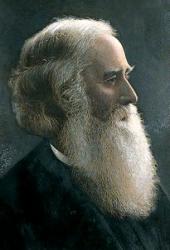
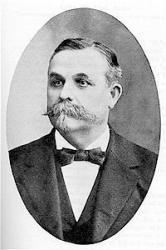
James Mountain

1844 - 1933 Topics: Christian Life and Service Composer of "WYE VALLEY" in Redemption Songs Rv James Mountain United Kingdom 1844-1933. Born at Leeds, Yorkshire, England, he attended Gainford Academy, Rotherham College, Nottingham Institute, and Cheshunt College. He became pastor at Great Marlow, Buckinghamshire. Leaving the clerical field due to ill health, he conducted evangelistic campaigns in Britain (1874-82) and worldwide (1882-1889). An author, he wrote a number of books. He published a hymn book, “Hymns of consecration and faith”,and “Sacred songs for missions, prayer, and praise meetings” (1876). He died at Tunbridge Wells, Kent, England. John Perry

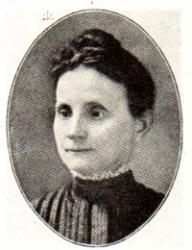
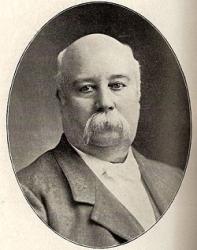
Ada Blenkhorn

1858 - 1927 Topics: Christian Life and Service Author of "Let the Sunshine In" in Redemption Songs Ada Jane Blenkhorn Canada 1858-1927 Born in Cobourg, Ontario, the 10th of 11 children, she emigrated with her family to the U.S. In 1884 and settled in Cleveland, OH.. She was raised a Methodist, and began writing hymn lyrics at age 34. A prolific writer of hymn lyrics, she was about to give it up when a friend encouraged her to continue, telling her some soul might be saved by a hymn she would write. She worked for many years as secretary to her brother, Henry's, real estate company. After his death in 1923, she became president of the company. She never married. John Perry

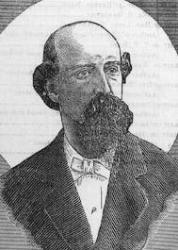
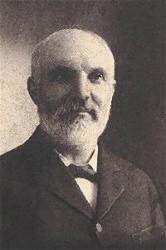
Edgar Page

1836 - 1921 Person Name: Edgar Page Stites Topics: Christian Life and Service Author of "Beulah Land" in Redemption Songs Real name Edgar Page Stites. Used Edgar Page ====================== Page, Edgar, is set forth in I. D. Sankey's Sacred Songs & Solos, 1878-81, as the author of (1) "I've reached the land of corn and wine" (Peace with God); (2) ”Simply trusting every day" (Trust in Jesus). --John Julian, Dictionary of Hymnology, Appendix, Part II (1907) ===================== Page, Edgar, p. 1585, i. In his Sacred Songs, &c, Mr. Sankey attributes the hymns "I've reached the land of corn and wine," and "Simply trusting every day," to "Edgar Page," as stated on p. 1585, i.; but in his My Life and Sacred Songs, 1906, he gives both to "E. P. Stites," together with some details concerning them, but without any reference to the change in his ascription of authorship. --John Julian, Dictionary of Hymnology, New Supplement (1907)

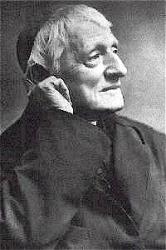
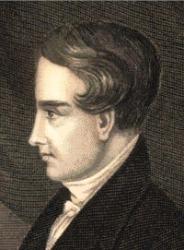
John Henry Newman

1801 - 1890 Person Name: J. H. Newman Topics: Christian Life and Service Author of "Lead, kindly Light" in Redemption Songs Newman, John Henry , D.D. The hymnological side of Cardinal Newman's life and work is so small when compared with the causes which have ruled, and the events which have accompanied his life as a whole, that the barest outline of biographical facts and summary of poetical works comprise all that properly belongs to this work. Cardinal Newman was the eldest son of John Newman, and was born in London, Feb. 21, 1801. He was educated at Ealing under Dr. John Nicholas, and at Trinity College, Oxford, where he graduated in honours in 1820, and became a Fellow of Oriel in 1822. Taking Holy Orders in 1824, he was for a short time Vice-Principal of St. Alban's Hall, and then Tutor of Oriel. His appointment to St. Mary's, Oxford, was in the spring of 1828. In 1827 he was Public Examiner, and in 1830 one of the Select University Preachers. His association with Keble, Pusey, and others, in what is known as "The Oxford Movement," together with the periodical publication of the Tracts for the Times, are matters of history. It is well known how that Tract 90, entitled Bernards on Certain Passages in the Thirty-nine Articles, in 1841, was followed by his retirement to Littlemore; his formal recantation, in February, 1843, of all that he had said against Rome; his resignation in September of the same year of St. Mary's and Littlemore; and of his formal application to be received into the communion of the Church of Rome, Oct. 8, 1845. In 1848 he became Father Superior of the Oratory of St. Philip Neri, at Birmingham; in 1854 Rector of the newly founded Roman Catholic University at Dublin; and in 1858 he removed to the Edgbaston Oratory, Birmingham. In 1879 he was created a Cardinal, and thus received the highest dignity it is in the power of the Pope to bestow. Cardinal Newman's prose works are numerous, and his Parochial Sermons especially being very popular. His Apologia pro Vita Sua, 1864, is a lucid exposition and masterly defence of his life and work. Cardinal Newman's poetical work began with poems and lyrical pieces which he contributed to the British Magazine, in 1832-4 (with other pieces by Keble and others), under the title of Lyra Apostolica. In 1836 these poems were collected and published under the same title, and Greek letters were added to distinguish the authorship of each piece, his being δ. Only a few of his poems from this work have come into use as hymns. The most notable is, "Lead, kindly Light". His Tract for the Times, No. 75, On the Roman Breviary, 1836, contained translations of 14 Latin hymns. Of these 10 were repeated in his Verses on Religious Subjects, 1853, and his Verses on Various Occasions, 1865, and translations of 24 additional Latin hymns were added. Several of these translations are in common use, the most widely known being "Nunc Sancte nobis" ("Come, Holy Ghost, Who ever One"). His collection of Latin hymns from the Roman and Paris Breviaries, and other sources was published as Hymni Ecclesiae, in 1838, and again in 1865. His Dream of Gerontius, a poem from which his fine hymn, "Praise to the Holiest in the height," is taken, appeared in his Verses on Various Occasions, in 1868. Cardinal Newman's influence on hymnology has not been of a marked character. Two brilliant original pieces, and little more than half a dozen translations from the Latin, are all that can claim to rank with his inimitable prose. --John Julian, Dictionary of Hymnology (1907) ================= Newman, John Henry, p. 822, ii. He died at Edgbaston, Birmingham, Aug. 11, 1890. --John Julian, Dictionary of Hymnology, Appendix, Part II (1907) ============== Newman, Card. J. H., pp. 802, ii.; 1581, ii. The following are also in use at the present time, but, except No. 13, almost exclusively in R. C. collections. The dates in brackets are those given in Newman's Verses, 1868; all thus marked were composed in the Birmingham Oratory at these dates:— i. In the Rambler, 1850. 1. In the far North our lot is cast. [S. Philip Neri.] (1850.) March, 1850, p. 250. In the Birmingham Oratory Hymn Book, 1857 and 1906, it begins, " On Northern coasts," and in the Parochial Hymn Book, 1880, with st. ii. " Founder and Sire! to mighty Rome." 2. The Angel-lights of Christmas morn. [Candlemas.] (1849.) March, 1850, p. 251. 3. There sat a Lady all on the ground. [B. V. M.] (1849.) May, 1850, p. 425. ii. Verses, 1853. 4. All is Divine which the Highest has made. [For an inclement May.] (1850.) 1853, p. 128. 5. Green are the leaves, and sweet the flowers. [May.] (1850.) 1853, p. 125. 6. My oldest friend, mine from the hour. [Guardian Angel] (1853.) 1853, p. 12. 7. The holy monks conceal'd from men. [S. Philip Neri.] (1850.) 1853, p. 134. 8. The one true Faith, the ancient Creed. [The Catholic Faith.] 1853, p. 140. 9. This is the saint of sweetness and compassion. [S. Philip Neri.] 1853, p. 136. Rewritten (1857) as "This is the saint of gentleness and kindness" in the Birmingham Oratory Hymn Book, 1857, No. 49. iii. Birmingham Oratory Hymn Book, 1857. 10. Help, Lord, the souls which Thou hast made. [The Faithful Departed.] (1857.) 1857, No. 76. iv. Birmingham Oratory H. Book, 1862. 11. I ask not for fortune, for silken attire. [S. Philip Neri.] (1857.) 1862, No. 54. 12. Thou champion high. [S. Michael.] (1862.) 1862, No. 41. v. Dream of Gerontius, 1866. 13. Firmly I believe and truly. [The Faith of a Christian.] 1866, p. 9; Verses, 1868, p. 318; The English Hymnal 1906. [Rev. James Mearns, M.A.] --John Julian, Dictionary of Hymnology, New Supplement (1907) ----- John Henry Newman was born in London, in 1801. He studied at Trinity College, Oxford, graduating B.A. in 1820, and was subsequently Fellow of Oriel College. In 1825, he became Vice Principal of S. Alban's Hall, and was Tutor of his college for several years. In 1828, he became incumbent of S. Mary's, Oxford, with the chaplaincy of Littlemore. In 1842, he went to preside over a Brotherhood he had established at Littlemore. He was the author of twenty-four of the "Tracts for the Times," amongst them the celebrated Tract No. 90, which brought censure upon its author. In 1845, he left the Church of England and entered the Church of Rome. He was appointed Father Superior of the Oratory of S. Philip Neri, at Birmingham, and in 1854, Rector of the new Roman Catholic University at Dublin, an office he filled till 1858. He has published a large number of works. --Annotations of the Hymnal, Charles Hutchins, M.A. 1872. ====================

James McGranahan

1840 - 1907 Person Name: James M'Granahan Topics: Christian Life and Service Composer of "[When the storms of life are raging]" in Redemption Songs James McGranahan USA 1840-1907. Born at West Fallowfield, PA, uncle of Hugh McGranahan, and son of a farmer, he farmed during boyhood. Due to his love of music his father let him attend singing school, where he learned to play the bass viol. At age 19 he organized his first singing class and soon became a popular teacher in his area of the state. He became a noted musician and hymns composer. His father was reluctant to let him pursue this career, but he soon made enough money doing it that he was able to hire a replacement farmhand to help his father while he studied music. His father, a wise man, soon realized how his son was being used by God to win souls through his music. He entered the Normal Music School at Genesco, NY, under William B Bradbury in 1861-62. He met Miss Addie Vickery there. They married in 1863, and were very close to each other their whole marriage, but had no children. She was also a musician and hymnwriter in her own right. For a time he held a postmaster’s job in Rome, PA. In 1875 he worked for three years as a teacher and director at Dr. Root’s Normal Music Institute. He because well-known and successful as a result, and his work attracted much attention. He had a rare tenor voice, and was told he should train for the operatic stage. It was a dazzling prospect, but his friend, Philip Bliss, who had given his wondrous voice to the service of song for Christ for more than a decade, urged him to do the same. Preparing to go on a Christmas vacation with his wife, Bliss wrote McGranahan a letter about it, which McGranahan discussed with his friend Major Whittle. Those two met in person for the first time at Ashtubula, OH, both trying to retrieve the bodies of the Bliss’s, who died in a bridge-failed train wreck. Whittle thought upon meeting McGranahan, that here is the man Bliss has chosen to replace him in evangelism. The men returned to Chicago together and prayed about the matter. McGranahan gave up his post office job and the world gained a sweet gospel singer/composer as a result. McGranahan and his wife, and Major Whittle worked together for 11 years evangelizing in the U.S., Great Britain, and Ireland. They made two visits to the United Kingdom, in 1880 and 1883, the latter associated with Dwight Moody and Ira Sankey evangelistic work. McGranahan pioneered use of the male choir in gospel song. While holding meetings in Worcester, MA, he found himself with a choir of only male voices. Resourcefully, he quickly adapted the music to those voices and continued with the meetings. The music was powerful and started what is known as male choir and quartet music. Music he published included: “The choice”, “Harvest of song”, “Gospel Choir”,, “Gospel hymns #3,#4, #5, #6” (with Sankey and Stebbins), “Songs of the gospel”, and “Male chorus book”. The latter three were issued in England. In 1887 McGranahan’s health compelled him to give up active work in evangelism. He then built a beautiful home, Maplehurst, among friends at Kinsman, OH, and settled down to the composition of music, which would become an extension of his evangelistic work. Though his health limited his hours, of productivity, some of his best hymns were written during these days. McGranahan was a most lovable, gentle, modest, unassuming, gentleman, and a refined and cultured Christian. He loved good fellowship, and often treated guests to the most delightful social feast. He died of diabetes at Kinsman, OH, and went home to be with his Savior. John Perry

H. L. Gilmour

1836 - 1920 Topics: Christian Life and Service Composer of "[When Israel out of bondage came]" in Redemption Songs Henry Lake Gilmour United Kingdom 1836-1920. Born at Londonderry, Ireland, he emigrated to America as a teenager, thinking he wanted to learn navigation. When he reached the U.S., he arrived in Philadelphia and decided to seek his fortune in America. He started working as a painter, then served in the American Civil War, where he was captured and spent several months in Libby Prison, Richmond, VA. He married Letitia Pauline Howard in 1858. After the war he trained as a dentist and did that for many years. In 1869 he moved to Wenonah, NJ, and helped found the Methodist church there in 1885. He served as Sunday school superintendent and, for four decades, directed the choir at the Pittman Grove Camp Meeting, also working as song leader at camp meetings in Mountain Lake Park, MD, and Ridgeview Park, PA. He was an editor, author, and composer. He edited and/or published 25 gospel song books, along with John Sweney, J Lincoln Hall, John J Hood, Howard Entwistle, Joshua Gill, E L Hyde, Milton S Rees and William J Kirkpatrick. He died in Delair, NJ, after a buggy accident. John Perry

César Malan

1787 - 1864 Person Name: C. Malan Topics: Christian Life and Service Composer of "SILCHESTER" in Redemption Songs Rv Henri Abraham Cesar Malan, 1787-1864. Born in Geneva, Switzerland, into a bourgeois family that moved to Switzerland to escape religious persecution during the French Revolution, he attended the university in Marseilles, France, intending to become a businessman. Although having some grounding in religious faith by his mother, he decided to attend the Academy at Geneva (founded by Calvin) in preparation for ministry. He was ordained in 1810, after being appointed a college master (teaching Latin) in 1809. Malan was in accord with the National Church of Geneva as a Unitarian, but the Reveil Movement caused him to become a dissident (evangelical) instead of a proponent of the Reformed Church (believing works, not faith, was what mattered). In 1811 he married (wife’s name not found). They had at least two children (one son was Solomon, referenced below). From 1813 on Malan slowly became an evangelical, after being given an understanding of true salvation through grace (not works) in 1816 by two German Lutherans from Geneva. He became saved upon this realization and was so changed that he burned his prized collection of classical authors and manuscripts. In 1817 he preached around Geneva, and one sermon in particular, “Man only justified by faith alone” created a firestorm and brought him into conflict with religious authorities of the region. From then on he wished to help reform the national church from within, but the forces of the Venerable Company were too strong for him and excluded him from the pulpits and caused his dismissal from his regentsship at the college in 1818. Others in agreement with Malan were Charles Spurgeon, Robert Wilcox, Robert Haldane, and Henry Drummond. In 1820 he built a chapel in his garden and obtained the license of the State for it as a separatist place of worship. He preached in that chapel 43 years. In 1823 he was formally deprived of his status as a minister of the national Church. Various events caused his congregation to diminish over the next few years, and he began long tours of evangelization subsidized by religious friends in his land, Belgium, France, England and Scotland. He often preached to large congregations. Malan also authorized a hymn book, “Chants de Sion” (1841). A strong Calvinist, Malan lost no opportunity to evangelize. On one occasion an old man he visited pulled Malan’s hymnal out and told him he had prayed to see the author of it before he died. On a visit to England Malan also inspired author, Charlotte Elliott, to write the hymn lyrics for “Just as I am”, when seeking an answer to her conversion she asked and he advised her to come to Christ ‘just as she was’. Malan published a score of books and also produced many religious tracts and pamphlets largely on questions in dispute between the National and evangelical churches of Rome. He also wrote articles in the “Record” and in American reviews. His hymns were set to his own melodies. He was an artist, a mechanic, a carpenter, a metal forger, and a printer. He had his own workshop, forge and printing press. One of his greatest joys was the meeting of the evangelical alliance at Geneva in 1861 which helped change church views. He retired to his home, Vandoeuvres, in the countryside near Geneva in 1857, dying there seven years later.. He was honored by a visit from the Queen of Holland two years before his death. He is mainly remembered as a hymn writer, having written 1000+ hymn lyrics and tunes. One son, Solomon, a gifted linguist and theologian, became Vicar of Broadwindsor. About a dozen of his hymns appeared translated in the publication “Friendly visitor” (1826). He was an author, creator, composer, editor, correspondent, contributor, translator, owner, and performer. John Perry ================= Malan, Henri Abraham César. The family of Malan traces its origin to the valleys of Piedmont. A branch of it settled at Mérindol, in Dauphiné, but was driven from France by the persecutions that followed the Revocation of the Edict of Nantes. Pierre Malan [Cesar's father], after seeing his sister fall a victim to persecution, left Mérindol (1714), and arrived at Geneva (1722). Henri Abraham César Malan was born at Geneva in 1787. After an education at the College, he went to Marseilles, with the intention of learning business: but, soon after, entered the Academy at Geneva, as a preparation for the ministry, to which he was ordained in 1810. He had been appointed one of the masters at the College in the previous year. The National Church of Geneva was at that time almost Unitarian, and Malan's convictions were in accord with it. But the great movement known as the Réveil, of which the first products were the dissident church of Bourg de Four and at a later date that founded by Malan himself, and which finally imbued the whole Swiss Church with its spirit, was silently preparing itself. The germ of the movement may be traced in the Société des Amis (1810), of which Empeytaz and A. Bost were leaders; and in Malan's independent attainment to the doctrines of the Divinity of the Saviour and the free gifts of salvation through Him (1816). But the human agency, which gave it force, and determined its Calvinistic direction, was the visit of Robert Haldane (in the autumn of 1816), to whom not only these pioneers of the movement, but F. Monod, E. Rieu, Guers, Gonthier, Merle d'Aubigné, and others, always pointed as their spiritual father. Empeytaz and others sought to attain enfranchisement by the establishment of the "petite Eglise of Bourg de Four." Malan wished to reform the national Church from within: and a sermon at Geneva, which brought on him the obloquy of the professors and theologians that composed his audience, and which Haldane characterized as a republication of the Gospel, was his first overt act (Jan. 19, 1817). But the opposing forces were far too strong for him. The Venerable Company excluded him from the pulpits, and achieved his dismissal from his regentship at the College (1818). In 1820 he built a chapel (Chapelle du Temoignage) in his garden, and obtained the licence of the State for it, as a separatist place of worship. In 1823 he was formally deprived of his status as a minister of the national Church. The seven years that succeeded were the palmy days of the little chapel. Strangers, especially from England, mingled with the overflowing Swiss congregation. But (in 1830) a secession to Bourg de Four, and then the foundation of the Oratoire and the Société Evangelique, which in 1849 absorbed the congregation of Bourg de Four under the title of the Église Evangélique, thinned more and more the number of his adherents. His burning zeal for the conversion of souls found a larger outlet in long tours of evangelization, subsidized by religious friends, in his own land and Belgium and France, and also in Scotland and England, where he had friends among many religious bodies, and where he preached to large congregations. The distinguishing characteristic of these tours was his dealing with individuals. On the steamboat or the diligence, in the mountain walk, at the hotel, no opportunity was lost. On one occasion an old,man whom he visited drew from under his pillow a copy of his great hymnbook, Chants de Sion, 1841, and told him how he had prayed to see the author of it before he died. It is as the originator of the modern hymn movement in the French Reformed Church that Malan's fame cannot perish. The spirit of his hymns is perpetuated in the analysis of Christian experience, the never-wearied delineation of the hopes and fears, the joys and sorrows of the believer's soul, which are still the staple of French Protestant hymns. To this was added, in Malan himself, a marked didactic tone, necessitated by the great struggle of the Réveil for Evangelical doctrine; and an emphatic Calvinism, expressing itself with all the despondency of Newton and Cowper, but, in contrast with them, in bright assurance, peace and gladness. French criticism has pronounced his hymns unequal, and full of literary defects; but their unaffected freshness and fervent sincerity are universally allowed. In the Chants de Sion, hymns 20, ”Hosanna! Béni soit"; 165, “Mon coeur joyeux, plein d'espérance"; 199, "Du Rocher de Jacob"; 200, "Agneau de Dieu"; 239, "Trois fois Jehovah," are in every Protestant French hymnbook; and several others are very widely used. Besides his hymns Malan produced numberless tracts and pamphlets on the questions in dispute between the National and Evangelical Churches and the Church of Rome, as well as articles in the Record and in American reviews. He was a man of varied acquirements. His hymns were set to his own melodies. He was an artist, a mechanic: his little workshop had its forge, its carpenter's bench, its printing press. To the end of his life his strong Calvinism, and his dread of mere external union in church government, kept him distinct from all movements of church comprehension, though freely joining in communion with all the sections of Evangelical thought in Geneva and Scotland. At one time there seemed a prospect of his even rejoining the national Church, which had driven him from her. One of his greatest joys was the meeting of the Evangelical Alliance at Geneva (1861). He left no sect; one of his latest orders was the demolition of his decayed chapel, in which he had preached for 43 years. He died at Vandoeuvres, near Geneva, in 1864, leaving a numerous family, one of whom, the Rev. S. C. Malan, D.D., sometime Vicar of Broadwindsor, is well known as a linguist and a theologian of the English Church. To English readers Malan is chiefly known as a hymn-writer through translations of his "Non, ce n'est pas mourir" (q.v.): "It is not death to die", &c. About a dozen of his hymns appear in a translated form in the Friendly Visitor for 1826. [Rev. H. Leigh Bennett, M.A.] -- John Julian, Dictionary of Hymnology (1907) ================= http://en.wikipedia.org/wiki/César_Malan

R. E. Hudson

1843 - 1901 Topics: Christian Life and Service Composer of "THE HALF NOT TOLD" in Redemption Songs Ralph Hudson (1843-1901) was born in Napoleon, OH. He served in the Union Army in the Civil War. After teaching for five years at Mt. Union College in Alliance he established his own publishing company in that city. He was a strong prohibitionist and published The Temperance Songster in 1886. He compiled several other collections and supplied tunes for gospel songs, among them Clara Tear Williams' "All my life long I had panted" (Satisfied). See 101 More Hymn Stories, K. Osbeck, Grand Rapids, MI: Kregel Publications, 1985). Mary Louise VanDyke

Robert Murray M'Cheyne

1813 - 1843 Person Name: R. M. M'Cheyne Topics: Christian Life and Service Author of "Jehovah Tsidkenu" in Redemption Songs McCheyne, Robert Murray, son of Adam McCheyne, W. S., was b. at Edinburgh, May 21, 1813, and educated at Edinburgh University. In 1835 he became Assistant at Larbert,near Stirling, and was ordained in 1836 Minister of St. Peter's Established Church, Dundee. In 1839 he went to Palestine as one of the Mission of Enquiry to the Jews from the Church of Scotland. He d. at Dundee, March 25, 1843. His hymns, a few of which were written in Palestine, appeared in his Songs of Zion to cheer and guide Pilgrims on their way to the New Jerusalem, By the late Rev. B. M. McCheyne....Dundee, W. Middleton, 1843. These hymns were reprinted in his Memoir and Remains, edited by Dr. Andrew A. Bonar, 1844. The Songs as reprinted in 1844 number 14, and date from 1831 to 1841. The best known are, "I once was a stranger to grace and to God;" and, "When this passing world is done." In addition, "Beneath Moriah's rocky side," written at the "Foot of Carmel, June, 1839" (Sent from God); "Like mist on the mountains," written "Jan. 1st, 1831" (Children called to Christ), and "Ten Virgins, clothed in white" (The Ten Virgins), dated 1841, are in common use. [Rev. James Mearns, M. A.] --John Julian, Dictionary of Hymnology (1907)

George Hews

1806 - 1873 Topics: Christian Life and Service Composer of "HOLLEY" in Redemption Songs Born: January 6, 1806, Weston, Massachusetts. Died: July 6, 1873, Boston, Massachusetts.

Pages


Export as CSV
It looks like you are using an ad-blocker. Ad revenue helps keep us running. Please consider white-listing Hymnary.org or getting Hymnary Pro to eliminate ads entirely and help support Hymnary.org.