You help make Hymnary.org possible. More than 10 million people from 200+ countries found hymns, liturgical resources and encouragement on Hymnary.org in 2025, including you. Every visit affirms the global impact of this ministry.

If Hymnary has been meaningful to you this year, would you take a moment today to help sustain it? A gift of any size—paired with a note of encouragement if you wish—directly supports the server costs, research work and curation that keep this resource freely available to the world.

Give securely online today, or mail a check to:
Hymnary.org
Calvin University
3201 Burton Street SE
Grand Rapids, MI 49546

Thank you for your partnership, and may the hope of Advent fill your heart.

Person Results

Topics:trusting+in+providence
In:people

Planning worship? Check out our sister site, ZeteoSearch.org, for 20+ additional resources related to your search.
Showing 101 - 110 of 271Results Per Page: 102050

W. F. Lloyd

1791 - 1853 Person Name: W. F. Lloyd, 1791-1853 Topics: The Christian Life The Inner Life; Trust, in God ; Providence; Submission; Resignation Author of ""My times are in Thy hand"" in Methodist Hymn and Tune Book Lloyd, William Freeman, was born at Uley, Gloucestershire, Dec. 22, 1791. As he grew up he took great interest in Sunday school work, and was engaged in teaching both at Oxford and at London. In 1810 he was appointed one of the Secretaries of the Sunday School Union. He also became connected with the Religious Tract Society in 1816. Miller (to whom we are indebted for these details) says in his Singers and Songs of the Church, 1869, p. 418:— "He commenced the Sunday School Teacher's Magazine, conducted for years the Child's Companion and the Weekly Visitor, and suggested the preparation of a large number of books for children and adults. His own literary productions were various, including several useful books for Sunday School teachers and scholars, and numerous tracts. He was also much engaged in compilation and revision." Mr. Lloyd died at the residence of his brother, the Rev. Samuel Lloyd, at Stanley Hall, Gloucestershire, April 22, 1853. Several of his hymns and poetical pieces were given in the Religious Tract Society Child's Book of Poetry (N.D.), and the Royal Tract SocietyMy Poetry Book (N.D.). In 1853 he collected his pieces and published them as, Thoughts in Rhyme, By W. F. Lloyd, London, Hamilton & Co., and Nisbet & Co. Of his hymns the following are common use:— 1. Come, poor sinners, come to Jesus. Invitation. (1835.) 2. Give thy young heart to Christ. A Child’s Dedication to Christ. 3. My [our] times are in Thine hand. My God, I Wish them there. Resignation. (1835.) 4. Sweet is the time of spring. Spring. 5. Wait, my soul, upon the Lord. In Affliction. (1835.) The date given above, 1835, is from Spurgeon's 0ur Own Hymn Book, 1866, and was supplied to the editor by D. Sedgwick. We have no other authority for that date. The earliest we can find is No. 3, which is in Hymns for the Poor of the Flock, 1838. That hymn is very popular. --John Julian, Dictionary of Hymnology (1907), p. 680

Marcos Antônio da Fonseca Portugal

1762 - 1830 Person Name: Marc Antoine Portogallo (1763-1830) Topics: Trust In Providence Composer of "PROTUGUESE HYMN" in Many Voices; or, Carmina Sanctorum, Evangelistic Edition with Tunes Also known as Marco Antonio Simao Portogallo

Jeremiah Clarke

1669 - 1707 Person Name: Jeremiah Clarke, 1660-1707 Topics: Anniversaries; Biblical Names and Places Moses; Church Year Ash Wednesday; Church Year Transfiguration; Daily Prayer Morning Prayer; Elements of Worship Confession (Individual); Faith; God Obedience to; God Trust in; God as Refuge; God as Creator; God as Creator; God's Seeing; God's Sovereignty; God's Sustaining Power; God's Will; God's Word; God's Armor; God's Face; God's Love; God's Power; God's Providence; Grace; Humanity Redeemed by God; Humanity Sustained by God; Joy; Judgment; Labor; Life Stages Death; Life Stages Generations; Life Stages Old Age; Occasional Services Funerals; Occasional Services New Year; Occasional Services Ordination and/or Installation; Pain; People of God / Church Renewal; Suffering; Temptation And Trial; The Creation; Year A, Ordinary Time after Pentecost, November, 13-19; Year A, Ordinary Time after Pentecost, October 23-29; Year B, Ordinary Time after Pentecost, October 9-15 Composer of "ST. MAGNUS" in Psalms for All Seasons

Clarence A. Walworth

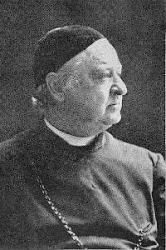
1820 - 1900 Person Name: Clarence Alphonsus Walworth, 1820-1900 Topics: Adoration and Praise; General Petition; Jesus Christ Incarnation; Majesty of God; People of God; Providence; Salvation; Sin; Trinity Sunday; Trust in God; Worship Earthly and Heavenly Translator of "Holy God, we praise your name" in Together in Song Walworth, Clarence Alphonsus, born in 1820, graduated at Union College, 1838, admitted to the Bar 1841, studied for the ministry of Protestant Episcopal Church, but subsequently was ordained as a priest of the Roman Catholic communion, and became Rector of St. Mary's, Albany, in 1864. He was one of the founders of the Order of the Paulists in the U.S.A. He published The Gentle Skeptic, N.Y., 1863, and Andiatoroctè, or the Eve of Lady Day, &c, N.Y., 1888. His paraphrase of the Te Deum, "Holy God, we. praise Thy name," p. 1133, ii. 7, is in the Catholic Psalmist, Dublin, 1858, p. 170. In the American Episcopal Hymnal, 1892, it begins with stanza ii., slightly altered, as "Hark, the loud celestial hymn." He died in 1900. [Rev. L. F. Benson, D.D.] --John Julian, Dictionary of Hymnology, New Supplement (1907)

William J. Irons

1812 - 1883 Topics: Trust In Providence Author of "Unfaltering trust" in Hymnal of the Methodist Episcopal Church Irons, William Josiah, D.D., son of Joseph Irons, was born at Hoddesdon, Herts, Sep. 12, 1812, and educated at Queen's College, Oxford (B.A. 1833, D.D. 1854), and took Holy Orders 1835. In 1837 he became Incumbent of St. Peter's, Walworth, and was subsequently Vicar of Barkway, Incumbent of Brompton, Rector of Wadingham; and in 1872, Rector of St. Mary-Woolnoth, formerly held by his father's friend, John Newton. He was also Bampton Lecturer in 1870, and Prebendary of St. Paul's Cathedral. He died June 18, 1883. Dr. Irons took a somewhat prominent part in the ecclesiastical controversies of his day, and published extensively thereon in the form of Sermons, Letters, Pamphlets, &c. His important work, the Bampton Lectures, 1870, was on Christianity as taught by St. Paul. His hymnwriting and translating began during his Curacy at St. Mary, Newington, 1835-1837, and was continued to his death. Many were first printed as broadsheets, and subsequently included in the Rev. R. T. Lowe's (Rector of Lea, Lincolnshire) Hymns for the Christian Seasons, Gainsburgh, 1st ed., 1854, and in his own collections. Of these separate publications the most important were his translation of the Dies Irae, and Quicumque vult, and a few special Hymns (Hayes) in 1867. His hymnological works, in addition to these, were:— (1) Metrical Psalter, 1857; (2) Appendix to the Brompton Metrical Psalter, 1861 (22 hymns); (3) Hymns for Use in Church, 1866 (100 hymns). These contained hymns by Dr. Irons, and others. The next contains his Translations and Original Hymns only. (4) Psalms and Hymns for the Church, 1st ed., 1873 (126 h.); 2nd ed., 1875 (190 h.); 3rd ed., 1883 (308 h.). The principal object of this last work was to supply special hymns on the Collects, Epistles, and Gospels, and for Advent and Lent, together with special hymns for the Festivals; and this to a great extent Dr. Irons was enabled to accomplish. His versions of individual Psalms are directly from the Hebrew, line for line. In addition to those of Dr. Irons's hymns and translations, which are annotated under their respective first lines, the following are in common use outside of his own collections, the details appended being from his MS. notes:— 1. Blest voice of love, 0 Word divine. Confirmation. Written for a Confirmation at Brompton, and published in Lowe's Hymns for the Christian Seasons, 1854, No. 184; in the Appendix to the Brompton Metrical Psalter, 1861; and the author's later collections. 2. Can earthly voices fitly sing. Public Opening of a School. Written at Brompton on the occasion of the opening of a School, and published in the 1861Appendix as above, and in the author's later collections. 3. Children of earth, for heaven we seek. Epiphany. A meditation on the Collect for the first Sunday after the Epiphany, and published in his Psalms & Hymns, 1875. 4. Eternal Spirit, God of Grace. Whitsuntide. Written in 1865, and published in his Hymns for Use in Church, 1866, and in a revised form in his Psalms & Hymns, 1873. 5. Faithful Creator, Lord Divine. Consecration to God. Published in his Psalms & Hymns, &c, 1873. 6. Father of love, our Guide and Friend. Confirmation. Written for a large Confirmation at Brompton, in 1844, and published in Lowe's Hymns for the Christian Seasons, 1854, No. 185, and in the 1861 Appendix as above, and the author's later collections. 7. Hail, holy rest, calm herald of that day. Sunday. Published in his Psalms & Hymns, &c, 1873. 8. Is not this our King and Prophet? Palm Sunday. Published in his Psalms & Hymns, &c, 1873. 9. It is not finished, Lord of grace. Preparation for Heaven. Written in 1850. It is No. 45 of his Hymns, 1866, in 6 stanzas of 5 lines. 10. Jesu, Who for us didst bear. Words from the Cross. In his Hymns, 1866, No. 42. 11. Joy of joys, He lives, He lives. Easter. Written in 1873. In the New Mitre, 1875; and the author's Hymns, 1875. 12. Lord, hear my prayer, bow down Thine ear. Lent. Published in Psalms & Hymns, 1873. 13. Lord, in Thy wrath Thou thinkest yet. Lent. In his Hymns, 1866, No. 91. 14. Lord, Thy voice hath spoken. The Beatitudes. In Hymns for use in the Church of Saint Ethelburga, Bishopsgate, 1873, and Dr. Irons's Psalms & Hymns, 1875. 15. No sorrow and no sighing. Heaven. Published in his Psalms & Hymns, 1873, in 5 stanzas of 4 lines. In Thring's Collection 1882, stanzas i.-iii. were given from the 1875 text, and a new stanza was added by Dr. Irons at Prebendary Thring's request. 16. 0 God with us, the Saviour. For use during a Retreat. Given in Psalms & Hymns, 1873. 17. 0 how long, how long. Ps. xiii. Appeared in his Psalms & Hymns, &c, 1873. 18. 0 Saviour, now at God's right hand. Jesus the High Priest. Published in the 1861 Appendix as above, and revised in the author's latter collections. In the Psalms & Hymns, 1873., stanzas i., ii., v. are from 1861, iv. from 1866; and iii. is new. 19. 0 who are they so pure and bright? Holy Innocents . Written on the death of Infants in the Epidemic of 1837, and published in Lowe's Hymns for the Christian Seasons, 1854, No. 20, and in the 1861 Appendix as above, in 3 stanzas of 8 lines. In the 1866 Hymns it was divided into 6 stanzas of 4 lines, and this arrangement was repeated in the 1873 Psalms & Hymns. 20. Sing with all the sons of men. Easter. Given in his Psalms & Hymns, 1873. 21. Thanks be to God for meet and right. Processional. Published in his Hymns, &c, 1866, and again in his Psalms & Hymns, 1873. 22. To whom but Thee, 0 God of Grace. Passiontide. Appeared in his Hymns, &c, 1866; and in his Psalms & Hymns, 1873. 23. Triumphant Lord, Thy work is done. Ascension. Published in the 1861 Appendix as above, in 3 st. of 4 1. In the 1866 Hymns the st. (iii.) “0 by Thy spotless, wondrous birth " was added; and in this enlarged form the hymn was repeated in the Psalms & Hymns, 1873. 24. We praise Thee, 0 our God--to Thee. Children's Hymn of Praise to the Holy Trinity. Written for the Schools at St. Mary's Newington, and published in the 1861 Appendix as above, and repeated in the Hymns, &c, 1866, and the Psalms & Hymns, 1873. 25. Who is this from Bethlehem coming? Purification of Blessed Virgin Mary. Appeared in the Psalms & Hymns, 1873. 26. Why art thou weary, 0 my soul? Ps. lxi. Given in his Hymns, &c, 1866, and his Psalms & Hymns, 1873, in 6 stanzas of 7 lines. In Thring's Collection, 1882, stanza iii. is omitted. Amongst modern hymnwriters, Dr. Irons ranks with the first. His hymns have not been largely used outside of his own congregation; but their high excellence, variety of subjects and metres, intense earnestness, powerful grasp of the subject, and almost faultless rhythm must commend them to the notice of hymnbook compilers. Prebendary Thring has enriched his Collection (1882) with most of those named above. They are of more than usual excellence, and others remain of equal merit. -- John Julian, Dictionary of Hymnology (1907) ====================== Irons, W. J., p. 571, ii. Of the hymns noted under his name, Nos. 13, 21, and 26, appeared in Chope's Hymnal, 1862. --John Julian, Dictionary of Hymnology, Appendix, Part II (1907)

Matthias Greiter

1495 - 1550 Person Name: Matthäus Greiter Topics: Creation; Healing; Living and Dying in Christ; Praise; Providence; Social Concerns; Trusting in the Promises of God Composer (attributed to) of "OLD 113TH" in Glory to God Greitter, Matthäus, was a monk and chorister of Strassburg Cathedral, but in 1524 espoused the cause of the Reformation. In 1528 he was appointed assistant pastor of St. Martin's Church, and afterwards at St. Stephen's. When the Interim [Agricola] was forced on Strassburg, he was the only one of the Lutheran pastors that sought to further it, a course which he afterwards deeply regretted. His death is dated by Wetzel, i. 349, as Dec. 20, 1550; by the Allgemeine Deutsche Biographie, ix. 636, as Nov. 20, 1550; while Koch, ii. 104, says he died of the pestilence in 1552. Greitter was a distinguished musician, and with his friend Dachstein (q.v.) edited the Strassburg Kirchen ampt, 1524-5. Four psalm tunes by Greitter, and one by Dachstein were inserted by Calvin in his first Hymnbook published at Strassburg, 1539. All these were transferred to the first edition of the French-Genevan Psalter in 1542, and two of them, both by Greitter (the tunes to psalms 36 and 91), were retained in the final edition of 1562. Of his seven Psalm versions 4 have been translated into English :— i. Ach Gott, wie lang vergissest mein. Ps. xiii. 1524. Wackernagel, iii. p. 89, in 4 st. Translated as, "O Lord, how lang forever wil thow foirget," in the Gude and Godly Ballates, ed. 1568, folio 46 (1868, p. 78). ii. Da Israel aus Egypten zog. Ps. cxiv. In Die Zwen Psalmen: In exitu Israel, &c, Strassburg, 1527, thence in Wackernagel, iii. p. 93, in 2 stanzas. Translated as, "Quhen, fra Egypt departit Israeli," In the Gude & Godly Ballates, ed. 1568, folio 56 (1868, p. 95). iii. Nicht uns, nicht uns, o ewiger Herr. Ps. cxv, 1527, as ii., and Wackernagel, iii. p. 93, in 4 st. Translated as, “Not unto us, not unto us, O Lord," in the G. & G. Ballates, ed. 1568, folio 56 (1868, p. 95). iv. 0 Herre Gott, begnade mich. Ps. li. 1525. Wackernagel, iii. p. 90, in 5 st. Translated as, "O Lorde God, have mercy on me," by Bishop Coverdale, 1539 (Remains, 1846, p. 574). [Rev.James Mearns, M.A.] --John Julian, Dictionary of Hymnology (1907)

James Leith Macbeth Bain

1840 - 1925 Person Name: J. L. Macbeth Bain, 1840-1925 Topics: Assurance; Blessing; Church Year All Saints' Day; Church Year Maundy Thursday; Church Year Transfiguration; Comfort and Encouragement; Daily Prayer Evening Prayer; Daily Prayer Night Prayer; Darkness; Discipleship; Elements of Worship Baptism; Elements of Worship Lord's Supper; Emmaus Road; Enemies; Evil; Fear; Freedom from Fear; God as Shepherd; God's Forgiveness; God's Goodness; God's House; God's Love; God's Name; God's Presence; God's Protection; God's Providence; God's Strength; God's Way; Grace; Jesus Christ Confidence in; Jesus Christ Good Shepherd; Joy; Life Stages Death; Love; New Creation; Occasional Services Funerals; Peace; People of God / Church Citizens of Heaven; People of God / Church Suffering; Rest; Temple; Trust; Year A, B, C, Easter, 4th Sunday; Year A, Ordinary Time after Pentecost, October 9-15; Year B, Ordinary Time after Pentecost, June 17-23; Texts in Languages Other than English Spanish Composer of "BROTHER JAMES' AIR" in Psalms for All Seasons James Leith Macbeth Bain (b. Scotland, c. 1840; d. Liverpool, England, 1925), was a healer, mystic, and poet known simply as Brother James. The tune BROTHER JAMES AIR was first published in his volume The great peace: being a New Year's greeting ... (1915). Born in a devout Christian home, Bain came to doubt the faith but later regained a mystical belief with the aid of the Christo Theosophic Society. He founded the Brotherhood of Healers, and he and his fellow healers often sang to their patients during healing sessions. In the latter years of his life he worked among the poor in the slums of Liverpool. He published a book on healing entitled The Brotherhood of Healers ... (1906). Psalter Hymnal Handbook, 1988

John Cole

1774 - 1855 Person Name: John Cole (1774-1853) Topics: Trust In Providence Composer of "GENEVA" in Songs of Praise with Tunes John Cole, author of "Geneva," was born in Tewksbury, Eng., 1774, and came to the United States in his boyhood (1785). Baltimore, Md. became his American home, and he was educated there. Early in life he became a musician and music publisher. At least twleve of his principle song collections from 1800 to 1832 are mentioned by Mr. Hubert P. Main, most of them sacred and containing many of his own tunes. He continued to compose music till his death, Aug. 17, 1855. Mr. Cole was leader of the regimental band known as "The Independent Blues," which played in the War of 1812, and was present at the "North Point" fight, and other battles. The story of hymns and tunes; by Theron Brown and Hezekiah Butterworth, New York: The American Track Society, 1906

Bernadette Farrell

b. 1957 Topics: Creation; Hope; Providence; Sovereignty of God; Trusting in the Promises of God Author of "O God, You Search Me (Psalm 139)" in Glory to God

Oscar Ahnfelt

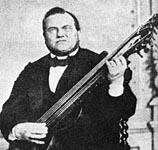
1813 - 1882 Topics: Assurance; Difficult Times; Fear; God As Father; God's Providence; Holy Spirit; Jesus Christ Presence; New Heaven and Earth; Trials; Trust in God; Unity and Fellowship Composer of "BLOTT EN DAG" in Lift Up Your Hearts Oscar Ahnfelt (1813 -1882) was a Swedish singer and composer. He wrote the music for many of Lina Sandell’s hymns. A pietist, he raised some concern in the State-church, but his music was apparently so popular, King Karl XV gave him permission to play and sing in both of his kingdoms. Ahnfelt’s music has spread throughout the world; two of his best-known songs are “Children of the Heavenly Father” and “Day by Day.” Laura de Jong

Pages


Export as CSV
It looks like you are using an ad-blocker. Ad revenue helps keep us running. Please consider white-listing Hymnary.org or getting Hymnary Pro to eliminate ads entirely and help support Hymnary.org.