

 My Starred Hymns
 My FlexScores
 My Hymnals
 My Purchased Files
Planning worship?
Check out our sister site, ZeteoSearch.org,
for 20+ additional resources related to your search.
- |
User Links
Person Results
Frederick C. Maker
1844 - 1927 Topics: Commitment, Dedication, Consecration, Devotion Composer of "REST (ELTON)" in Baptist Hymnal 2008 Frederick C. Maker (b. Bristol, England, August 6, 1844; d. January 1, 1927) received his early musical training as a chorister at Bristol Cathedral, England. He pursued a career as organist and choirmaster—most of it spent in Methodist and Congregational churches in Bristol. His longest tenure was at Redland Park Congregational Church, where he was organist from 1882-1910. Maker also conducted the Bristol Free Church Choir Association and was a long-time visiting professor of music at Clifton College. He wrote hymn tunes, anthems, and a cantata, Moses in the Bulrushes.
Bert Polman
Frederick C. Maker
Adam Geibel
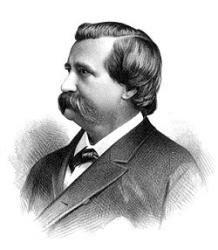
1855 - 1933 Topics: Commitment, Dedication, Consecration, Devotion Composer of "GEIBEL" in Baptist Hymnal 2008 Born: September 15, 1855, Neuenheim, Germany.
Died: August 3, 1933, Philadelphia, Pennsylvania.
Though blinded by an eye infection at age eight, Geibel was a successful composer, conductor, and organist. Emigrating from Germany probably around 1864, he studied at the Philadelphia Institute for the Blind, and wrote a number of Gospel songs, anthems, cantatas, etc. He founded the Adam Geibel Music Company, later evolved into the Hall-Mack Company, and later merged to become the Rodeheaver Hall-Mack Company. He was well known for secular songs like "Kentucky Babe" and "Sleep, Sleep, Sleep." In 1885, Geibel organized the J. B. Stetson Mission. He conducted the Stetson Chorus of Philadelphia, and from 1884-1901, was a music instructor at the Pennsylvania Institution for the Instruction of the Blind. His works include:
Evening Bells, 1874
Saving Grace, with Alonzo Stone (Philadelphia, Pennsylvania: Stone & Bechter, Publishers, 1898)
Consecrated Hymns, (Philadelphia, Pennsylvania: Geibel & Lehman, 1902)
Uplifted Voices, co-editor with R. Frank Lehman (Philadelphia, Pennsylvania: Geibel & Lehman, 1901)
World-Wide Hosannas, with R. Frank Lehman (Philadelphia, Pennsylvania: Geibel & Lehman, 1904)
Hymns of the Kingdom, co-editor with R. Frank Lehman et al. (Philadelphia, Pennsylvania: Geibel & Lehman, 1905)
--www.hymntime.com/tch/
Adam Geibel
Phoebe Palmer Knapp
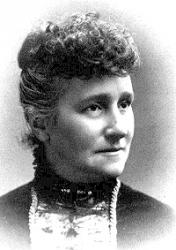
1839 - 1908 Person Name: Phoebe P. Knapp Topics: Commitment Composer of "ASSURANCE" in Chalice Hymnal As a young girl Phoebe Palmer Knapp (b. New York, NY, 1839; d. Poland Springs, ME, 1908) displayed great musical talent; she composed and sang children’s song at an early age. The daughter of the Methodist evangelist Walter C. Palmer, she was married to John Fairfield Knapp at the age of sixteen. Her husband was a founder of the Metropolitan Life Insurance Company, and after his death, she shared her considerable inherited wealth with various charitable organizations. She composed over five hundred gospel songs, of which the tunes for “Blessed Assurance” and “Open the Gates of the Temple” are still popular today.
Bert Polman
Phoebe Palmer Knapp
Samuel Sebastian Wesley
1810 - 1876 Topics: Commitment Composer of "WINSCOTT" in Voices United Samuel Sebastian Wesley (b. London, England, 1810; d. Gloucester, England, 1876) was an English organist and composer. The grandson of Charles Wesley, he was born in London, and sang in the choir of the Chapel Royal as a boy. He learned composition and organ from his father, Samuel, completed a doctorate in music at Oxford, and composed for piano, organ, and choir. He was organist at Hereford Cathedral (1832-1835), Exeter Cathedral (1835-1842), Leeds Parish Church (1842-1849), Winchester Cathedral (1849-1865), and Gloucester Cathedral (1865-1876). Wesley strove to improve the standards of church music and the status of church musicians; his observations and plans for reform were published as A Few Words on Cathedral Music and the Music System of the Church (1849). He was the musical editor of Charles Kemble's A Selection of Psalms and Hymns (1864) and of the Wellburn Appendix of Original Hymns and Tunes (1875) but is best known as the compiler of The European Psalmist (1872), in which some 130 of the 733 hymn tunes were written by him.
Bert Polman
Samuel Sebastian Wesley
George Frideric Handel
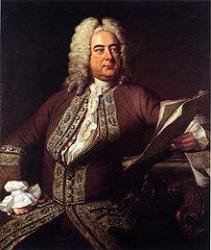
1685 - 1759 Person Name: Georg Friedrich Handel Topics: Commitment Composer of "JUDAS MACCABEUS" in The Hymnbook George Frideric Handel (b. Halle, Germany, 1685; d. London, England, 1759) became a musician and composer despite objections from his father, who wanted him to become a lawyer. Handel studied music with Zachau, organist at the Halle Cathedral, and became an accomplished violinist and keyboard performer. He traveled and studied in Italy for some time and then settled permanently in England in 1713. Although he wrote a large number of instrumental works, he is known mainly for his Italian operas, oratorios (including Messiah, 1741), various anthems for church and royal festivities, and organ concertos, which he interpolated into his oratorio performances. He composed only three hymn tunes, one of which (GOPSAL) still appears in some modern hymnals. A number of hymnal editors, including Lowell Mason, took themes from some of Handel's oratorios and turned them into hymn tunes; ANTIOCH is one example, long associated with “Joy to the World.”
Bert Polman
George Frideric Handel
W. G. Fischer
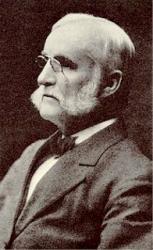
1835 - 1912 Person Name: William G. Fischer (1835-1912) Topics: Commitment Composer of "COMING TO THE CROSS" in The Hymnbook William Gustavus Fischer In his youth, William G. Fischer (b. Baltimore, MD, 1835; d. Philadelphia, PA, 1912) developed an interest in music while attending singing schools. His career included working in the book bindery of J. B. Lippencott Publishing Company, teaching music at Girard College, and co-owning a piano business and music store–all in Philadelphia. Fischer eventually became a popular director of music at revival meetings and choral festivals. In 1876 he conducted a thousand-voice choir at the Dwight L. Moody/Ira D. Sankey revival meeting in Philadelphia. Fischer composed some two hundred tunes for Sunday school hymns and gospel songs.
Bert Polman
W. G. Fischer
E. J. Hopkins
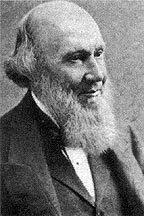
1818 - 1901 Person Name: Edward J. Hopkins Topics: Commitment and Consecration Composer of "ELLERS" in The Hymnal for Worship and Celebration Dr Edward John Hopkins MusDoc United Kingdom 1818-1901. Born at Westminster, England, the son of a clarinetist with the Royal Opera House orchestra, he became an organist (as did two of his brothers) and a composer. In 1826 he became a chorister of the Chapel Royal and sang at the coronation of King William IV in Westminster Abbey. He also sang in the choir of St. Paul’s Cathedral, a double schedule requiring skill and dexterity. On Sunday evenings he would play the outgoing voluntary at St. Martin’s in-the-field. He left Chapel Royal in 1834 and started studying organ construction at two organ factories. He took an appointment at Mitcham Church as organist at age 16, winning an audition against other organists. Four years later he became organist at the Church of St. Peter, Islington. In 1841 he became organist at St. Luke’s, Berwick St., Soho. Two Years later he was organist at Temple Church, which had a historic organ (built in 1683). He held this position for 55 years. In 1845 he married Sarah Lovett, and they had four sons and five daughters. He was closely associated with the Bach Society and was organist for the first English performances of Bach’s St. Matthew Passion. In 1855 he collaborated with Edward Rimbault publishing “The organ, its history and construction” (3 editions 1855-70-77). In 1864 he was one of the founders of the “College of organists”. In 1882 he received an honorary Doctorate of Music from the Archbishop of Canterbury. He composed 30+ hymn tunes and some psalm chants, used by the Church of England. He died in London, England.
John Perry
E. J. Hopkins
Felice Giardini
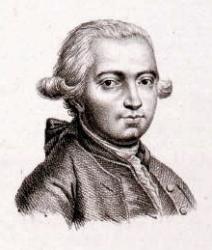
1716 - 1796 Person Name: Felice de Giardini Topics: Commitment Composer of "ITALIAN HYMN" in Glory to God Felice Giardini, born in Italy. When young, he studied singing, harpsichord, and violin. He became a composer and violin virtuoso. By age 12 he was playing in theatre orchestras. His most instructive lesson: While playing a solo passage during an opera, he decided to show off his skills by improvising several bravura variations that the composer, Jommelli, had not written . Although the audience applauded loudly, Jomelli, who happened to be there, went up and slapped Giardini in the face. He learned a lesson from that. He toured Europe as a violinist, considered one of the greatest musical artists of his time. He served as orchestra leader and director of the Italian Opera in London, giving concerts. He tried to run a theatre in Naples, but encountered adversity. He went to Russia, but had little fortune there, where he died.
John Perry
Felice Giardini
Thomas Haweis
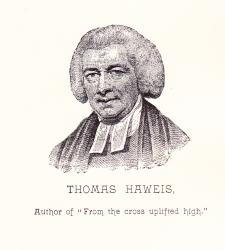
1734 - 1820 Person Name: T. Haweis (1734-1820) Topics: God's Church Commitment and Character Composer of "RICHMOND" in Hymns for Today's Church (2nd ed.) Thomas Haweis (b. Redruth, Cornwall, England, 1734; d. Bath, England, 1820) Initially apprenticed to a surgeon and pharmacist, Haweis decided to study for the ministry at Oxford and was ordained in the Church of England in 1757. He served as curate of St. Mary Magdalen Church, Oxford, but was removed by the bishop from that position because of his Methodist leanings. He also was an assistant to Martin Madan at Locke Hospital, London. In 1764 he became rector of All Saints Church in Aldwinkle, Northamptonshire, and later served as administrator at Trevecca College, Wales, a school founded by the Countess of Huntingdon, whom Haweis served as chaplain. After completing advanced studies at Cambridge, he published a Bible commentary and a volume on church history. Haweis was strongly interested in missions and helped to found the London Mission Society. His hymn texts and tunes were published in Carmino Christo, or Hymns to the Savior (1792, expanded 1808).
Bert Polman
============================
Haweis, Thomas, LL.B., M.D., born at Truro, Cornwall, 1732. After practising for a time as a Physician, he entered Christ's College, Cambridge, where he graduated. Taking Holy Orders, he became Assistant Preacher to M. Madan at the Lock Hospital, London, and subsequently Rector of All Saints, Aldwincle, Northamptonshire. He was also Chaplain to Lady Huntingdon, and for several years officiated at her Chapel in Bath. He died at Bath, Feb. 11, 1820. He published several prose works, including A History of the Church, A Translation of the New Testament, and A Commentary on the Holy Bible. His hymns, a few of which are of more than ordinary merit, were published in his
Carmina Christo; or, Hymns to the Saviour. Designed for the Use and Comfort of Those who worship the Lamb that was slain. Bath, S. Hayward, 1792 (139 hymns), enlarged. London, 1808 (256 hymns). In 1794, or sometime after, but before the enlarged edition was published, two hymns "For the Fast-day, Feb. 28, 1794," were added to the first edition. These were, "Big with events, another year," and "Still o'er the deep the cannon's roar."
The most popular and widely used of his hymns are, "Behold the Lamb of God, Who bore," &c.; "Enthroned on high, Almighty Lord"; and “O Thou from Whom all goodness flows." The rest, all being from Carmina Christo, first edition 1792, are:—
1. Dark was the night and cold the ground. Gethsemane.
2. From the cross uplifted high. Christ in Glory.
3. Great Spirit, by Whose mighty power. Whitsuntide.
4. Submissive to Thy will, my God. Resignation.
5. The happy morn is come. Easter.
6. Thou Lamb of God, that on the tree. Good Friday. The hymn, "Thy Head, the crown of thorns that wears," in Stryker & Main's Church Praise Book, N. Y., 1882, begins with st. ii. of this hymn.
7. To Thee, my God and Saviour, My heart, &c. Praise for Redemption.
--John Julian, Dictionary of Hymnology (1907)
Thomas Haweis
Nolan Williams
Person Name: Nolan Williams, Jr., b.1969 Topics: Commitment Arranger of "YOUR ALL" in Lead Me, Guide Me (2nd ed.)
Nolan Williams
Pages




