

 My Starred Hymns
 My FlexScores
 My Hymnals
 My Purchased Files
Planning worship?
Check out our sister site, ZeteoSearch.org,
for 20+ additional resources related to your search.
- |
User Links
Person Results
Charles Albert Tindley
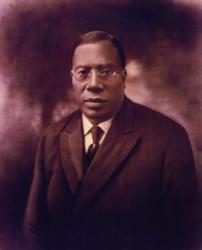
1851 - 1933 Person Name: Charles A. Tindley, 1851-1933 Topics: Kingdom of God on Earth Missions Composer of "HARK THE VOICE" in African Methodist Episcopal Church Hymnal
Charles Albert Tindley
W. G. Fischer
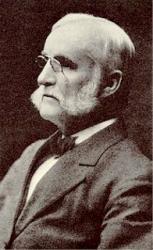
1835 - 1912 Person Name: William G. Fischer, 1835-1912 Topics: The Kingdom of God on Earth Missions and World Fellowship Composer of "HANKEY" in The Hymnal William Gustavus Fischer In his youth, William G. Fischer (b. Baltimore, MD, 1835; d. Philadelphia, PA, 1912) developed an interest in music while attending singing schools. His career included working in the book bindery of J. B. Lippencott Publishing Company, teaching music at Girard College, and co-owning a piano business and music store–all in Philadelphia. Fischer eventually became a popular director of music at revival meetings and choral festivals. In 1876 he conducted a thousand-voice choir at the Dwight L. Moody/Ira D. Sankey revival meeting in Philadelphia. Fischer composed some two hundred tunes for Sunday school hymns and gospel songs.
Bert Polman
W. G. Fischer
Gottfried W. Fink
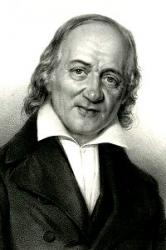
1783 - 1846 Person Name: Gottfried W. Fink, 1783-1846 Topics: The Kingdom of God on Earth Home, Marriage, Parents Composer of "BETHLEHEM" in The Hymnal Rv Gottfried Wilhelm Fink PhD Germany 1783-1846. Born at Sulza, Thuringa, Germany, he was a German composer, music theorist, poet, and a protestant clergyman. From 1804-1808 he studied at the University of Leipzig, where he joined the Corps Lusatia, where he made his first attempts at composition and poetry. In 1811 he was appointed Vicar in Leipzig for some years, where he also founded an educational institution, leading it until 1829. Around 1800 he worked for the “Allgemeine musikalische Zeitschrift” (General musical mazazine). In 1827 he became the magazine's editor-in-chief for 15 years. From 1838 he was a lecturer at the University of Leipzig. In 1841 he became a Privatdozent of musicology at the university. That year he became a member of the Prussian Academy of Arts in Berlin, and a year later was appointed university Music Director. He was highly esteemed throughout his life as a music theorist and composer, receiving numberous honors and awards, both at home and abroad. The Faculty of Philosophy at Leipzig University awarded him an honorary doctorate. He wrote mostly Songs and ballads and collected songs as well. He authored important words on music theory and history, but was best known as editor of the “Musikalischer Hausschatz der Deutschen”, a collection of about 1000 songs and chants, as well as the “Deutsche Liedertafel” (German song board), a collection of polyphonic songs sung by men. He died at Leipzig, Saxony.
John Perry
Gottfried W. Fink
Martin Shaw
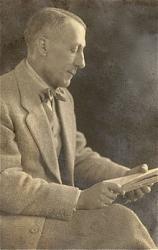
1875 - 1958 Topics: Kingdom of God on Earth, The Missions Composer of "PURPOSE" in The Hymnbook Martin F. Shaw was educated at the Royal College of Music in London and was organist and choirmaster at St. Mary's, Primrose Hill (1908-1920), St. Martin's in the Fields (1920-1924), and the Eccleston Guild House (1924-1935). From 1935 to 1945 he served as music director for the diocese of Chelmsford. He established the Purcell Operatic Society and was a founder of the Plainsong and Medieval Society and what later became the Royal Society of Church Music.
Author of The Principles of English Church Music Composition (1921), Shaw was a notable reformer of English church music. He worked with Percy Dearmer (his rector at St. Mary's in Primrose Hill); Ralph Vaughan Williams, and his brother Geoffrey Shaw in publishing hymnals such as Songs of Praise (1925, 1931) and the Oxford Book of Carols (1928). A leader in the revival of English opera and folk music scholarship, Shaw composed some one hundred songs as well as anthems and service music; some of his best hymn tunes were published in his Additional Tunes in Use at St. Mary's (1915).
Bert Polman
Martin Shaw
W. E. Hickson
1803 - 1870 Person Name: William E. Hickson Topics: The Kingdom of God on Earth The Nation Author (Stanza 3) of "God bless our native land" in The Hymnal William Edward Hickson [also known as Richman Hopson] United Kingdom 1803-1870. Born at London, England, the son of a boot maker, he studied at schools in Germany and the Netherlands. In 1830 he married Jane Brown. He became a businessman and an educational writer, retiring from his business in his late 30s to concentrate on philanthropic pursuits, particularly the cause of elementary education. He authored six books on various business and social topics. Of Baptist faith and having musical interest he authored: “The singing master” (1836), “Dutch & German schools” (1840), “Part singing” (1842), “Time and faith” (2 volumnes-1857), and “Try again”. In 1839 he visited North Germany, the Netherlands and Belgium to study the national school systems of those countries and provided the outlines of a scheme to adopt educational practices found in those countries considered superior. He was proprietor and editor of the Westminster Review” (1840-1852, noted for its commitment to legislative reform and popular education. He published his findings of the education study. In 1840 he looked into the unemployed handloom weavers situation in Great Britain and Ireland and prepared a report of his findings, recommending repeal of the corn laws and improving the educational system. He wrote part of the Official Peace Version of the British national anthem, approved by the Privy Council. He died at Fairseat, Sevenoaks, Kent, England. His published motto: If at first you don’t succeed, try, try again.
John Perry
===============
Hickson, William Edward, son of William Hickson, boot manufacturer, of Smithfield, London, was b. Jan. 7, 1803; retired from business 1840; d. March 22,1870, at Fairseat, Sevenoaks, Kent. Three pieces from his Singing Master, 1836, have come into somewhat extensive use.
1. God bless our native land (p. 1566, ii.)
2. Join now in praise, and sing. [Praise to God.] 1836, as above (ed. 1840, pt. v., No. 62). It was rewritten by the Rev. C. H. Bateman as "Come, children, join to sing " (p. 244, ii.).
3. Now to heav'n our cry [prayers] ascending, God spead the right . [National.] 1836, as above (reprint on cards, No. 85). This is repeated in W. B. Bradbury's Young Melodist, 1845, p. 122, and many later American books.
With regard to "God bless our native land," we find that in the 1st ed. of the Singing Master, 1836, Hickson's hymn was in 3 stanzas only (p. 1566, ii.). [Rev. James Mearns, M.A.]
--John Julian, Dictionary of Hymnology, New Supplement (1907)
W. E. Hickson
Frank Mason North
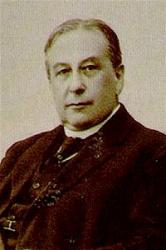
1850 - 1935 Person Name: Rev. Frank Mason North Topics: The Kingdom of God on Earth The City Author of "Where cross the crowded ways of life" in The Hymnal North, Frank Mason, D.D., b. at New York, Dec. 3, 1850, graduated at Wesleyan University 1872, and entered the ministry of the Methodist Episcopal Church 1872. In 1892 he became Correspondence Secretary of the New York City Church Extension and Missionary Society, and is now (1905) editor of The Christian City. His hymns in common use include:—
1. Jesus, the calm that fills my breast. [Peace.] In The Plymouth Hymnal,1894; Sursum Corda, 1898; The Methodist Hymnal, 1905, &c.
2. When cross the crowded ways of life. [City Missions.] In The Methodist Hymnal, 1905. [Rev. L. F. Benson, D.D.]
--John Julian, Dictionary of Hymnology, New Supplement (1907)
=================
North, Frank Mason, D.D. (December 3, 1850--December 17, 1935). The Appendix Index reference, p.1607 in Julian, to Dr. North is to John Post Attwater who used "Frank North" as his nom de plume. In addition to the information included in the short biographical sketch at p.1677 it should be added that Dr. North continued his studies at Wesleyan University, advancing to the M.A. degree in 1875, later being honored by that institution's D.D., 1894, and L.L.D., 1918. He was a member of the New York East Conference of the Methodist Episcopal Church and served several pastorates in New York State and City as well as one at Middletown, Connecticut, 1887-1892. During the years 1892-1912, while Corresponding Secretary of the New York City Extension and Missionary Society and the editor of The Christian City, he was also Corresponding Secretary of the National City Evangelical Union of the Methodist Episcopal Church. From 1912 to 1924 he was the Secretary of the Board of Foreign Missions of his church and through these years he served as Chairman of its Executive Committee. He was also Secretary, Chairman of the Executive Committee, and President of the Federal Council of the Churches of Christ in America. It was largely through his efforts and influence that the Federal Council was organized.
Trustee and member of governing boards of numerous institutions in the United States, China, and Japan, among the additional honors which came to him were Chevalier Legion of Honor and "Officer de l'Instruction Publique," France; Officer of the Royal Order of George I, Greece. He was one of the great Protestant leaders of his generation. The leading article in The Hymn, 30 April 1950, was an excellent appreciation of Dr. North and his work.
Sources: Handbooks of various hymnals; Who Was Who I; Foote, Henry Wilder, Three Centuries of American Hymnody; Ninde, Edward S., Story of the American Hymn; Bailey, ALbert E., The Gospel in Hymns; Pratt, John Barnes, Present Day Hymns; correspondence.
--Robert G. McCutchan, DNAH Archives
Frank Mason North
Lewis Edson
1748 - 1820 Person Name: Lewis Edson, 1748-1820 Topics: The Kingdom of God on Earth Home, Marriage, Parents Composer of "LENOX" in The Hymnal Lewis EdsonBorn in Massachusetts,he began working as a blacksmith and farmer. After marrying, he became a singing teacher, notable in his day. He taught singing in MA NY and CN, moving to NY in 1817. He was also an author. His 35 works consist of tunebooks, anthems, Psalm music, music scores and chants for choir use.
John Perry
Lewis Edson
Samuel Wolcott
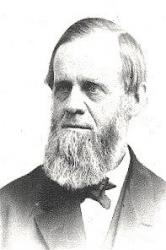
1813 - 1886 Person Name: Rev. Samuel Wolcott Topics: The Kingdom of God on Earth Missions Author of "Christ for the world we sing" in The Hymnal Wolcott, Samuel, D.D., was born at South Windsor, Connecticut, July 2, 1813, and educated at Yale College, 1833, and Andover Theological Seminary, 1837. From 1840 to 1842 he was a missionary in Syria. On his return to America he was successively pastor of several Congregational congregations, including Belchestown, Massachusetts; Providence, Rhode Island; Chicago, &c. He was also for some time Secretary of the Ohio Home Missionary Society. He died at Longmeadow, Massachusetts, Feb. 24, 1886. His hymnwriting began late in life, but has extended to more than 200 hymns, many of which are still in manuscript. Those of his hymns which have come into common use include:—
1. All thy realms in midnight shrouded. Mission. In the Oberlin Manual of Praise, 1880.
2. Christ for the world we sing. Missions. Written Feb. 7, 1869. Its origin is thus recorded by the author: "The Young Men's Christian Associations of Ohio met in one of our Churches, with their motto, in evergreen letters over the pulpit, ‘Christ for the World, and the World for Christ.' This suggested the hymn 'Christ for the world we sing.'" It was when on his way home from that service that he composed the hymn. It is in several American collections, including Laudes Domini, 1884, &c.
3. Father, I own Thy voice. Trust and Aspiration. This, his first hymn, was written in 1868, more as an experiment in hymn-writing than anything else. It was published in the Rev. Darius E. Jones's Songs for the New Life. Chicago, 1869. It has since passed into other collections.
4. Goodly were thy tents, 0 Israel. Missions. Written May 31, 1881, and included in Laudes Domini, 1884.
5. Lo! the faith which crossed the ocean. Missions. In the Oberlin Manual of Praise, 1880.
6. O gracious Redeemer! O Jesus our Lord. The Love of Jesus. Written in 1881.
7. On the works of His creation, God the Creator.
In the Ohio Evangelical Association's Hymn Book, 1881.
8. Pitying Saviour, look with blessing. Prayer for the Penitent. In the Ohio Evangelical Association's Hymn Book, 1881.
9. Tell me Whom my soul doth love. Opening of Divine Service. A paraphrase of Cant. i. 8. Written Feb. 6, 1870. Included in Laudes Domini, N. Y., 1884.
10. To us have distant ages. Saints Days. In Dale's English Hymn Book, 1874.
11. This house, most holy Lord, is Thine. Opening of a Place of Worship. In Dale's English Hymn Book, 1874.
For most of the information given above we are indebted to Duffield's English Hymns, N. Y., 1886.
-- John Julian, Dictionary of Hymnology (1907)
================
See also in:
Hymn Writers of the Church
Samuel Wolcott
H. S. Cutler
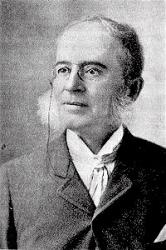
1825 - 1902 Person Name: Henry S. Cutler Topics: Kingdom of God on earth Composer of "ALL SAINTS" in Elmhurst Hymnal Henry Stephen Cutler (b. Boston, MA, 1824; d. Boston, 1902) studied music in Frankfurt, Germany, in 1844. He moved to England, where he listened with interest to the cathedral choirs and came under the influence of the Oxford Movement. Returning to Boston in 1846, Cutler became organist of the Episcopal Church of the Advent and formed a choir of men and boys, to whom he introduced the wearing of liturgical robes. When he took a position at Trinity Church in New York City, he removed women from the choir and used the occasion of a visit by the Prince of Wales to the church to introduce his newly vested men and boys' choir. He also moved the choir from the gallery to the chancel and initiated the chanting of the psalms and the singing of part of the worship service. Cutler compiled The Psalter, with Chants (1858) and published The Trinity Psalter (1864) and Trinity Anthems (1865).
Bert Polman
H. S. Cutler
John White Chadwick
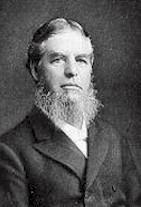
1840 - 1904 Person Name: Rev. John W. Chadwick Topics: The Kingdom of God on Earth Brotherhood Author of "Eternal Ruler of the ceaseless round" in The Hymnal Chadwick, John White, was born at Marblehead, Mass., U.S., Oct. 19, 1840; graduated at the Cambridge Divinity School, July 19, 1864, and ordained minister of the Second Unitarian Church, Brooklyn, N.Y., Dec. 21, 1864. A frequent contributor to the Christian Examiner; The Radical; Old and New; Harper's Magazine; and has published many poems in American periodicals. His hymn on Unity, "Eternal Ruler of the ceaseless round," was written for the graduating class of the Divinity School, Cambridge, June 19, 1864. It is in Horder's Congregational Hymns, 1884. It is a hymn of superior merit. [Rev. W. Garrett Horder]
--John Julian, Dictionary of Hymnology (1907)
========================
Chadwick, J. W, p. 216, i. Mr. Chadwick's important prose works were the Life of Theodore Parker, 1890, and that of William Ellery Channing, 1903; and his poetical productions A Book of Poems, 1876, and In Nazareth Town and other Poems, 1883. He received his M.A. from Harvard in 1888; and d. Dec. 11, 1901. In addition to "Eternal Ruler of the ceaseless round," already noted on p. 216, ii., Mr. Chadwick's widow has supplied us with the following data concerning his hymns:—
1. A gentle tumult in the earth. [Easter.] Dated 1876.
2. Another year of setting suns. [New Year.] Written as a New Year's Hymn for 1873, and originally began "That this shall be a better year." In The Pilgrim Hymnal, Boston, 1904.
3. Come, let us sing a tender song, [Communion of Saints.] Dated 1901, and included in The Pilgrim Hymnal, 1904.
4. Everlasting Holy One. [Invocation.] 1875.
5. It singeth low in every heart. [In Memoriam.] Written in 1876, for the 25th Anniversary of the Dedication of his Church at Brooklyn. It has passed into a great many collections in America, and a few in Great Britain, including Horder's Worship Song, 1905.
6. Now sing we a song for the harvest. [Harvest.]
Written for a Harvest Thanksgiving Service in 1871. Given in The Pilgrim Hymnal, 1904, and others.
7. 0 God, we come not as of old. [Perfect Law of Liberty.] Written in 1874, and entitled "The Perfect Law."
8. 0 Love Divine of all that is. [Trust.] Written in 1865, and included in his Book of Poems, 1876, as "A Song of Trust." In several American collections.
9. 0 Thou, Whose perfect goodness crowns. [For an Anniversary.] "Written for the 23th Anniversary of his Installation, Dec. 21, 1889." In The Pilgrim Hymnal, and other collections.
10. Thou Whose Spirit dwells in all. [Easter.] Written in 1890.
11. What has drawn us thus apart? [For Unity.] Undated, in the Boston Unitarian Hymns for Church and Home, 1895.
During the past ten years Mr. Chadwick's hymns have become very popular in America, and especially with the compilers of Congrega¬tional and Unitarian collections.
--John Julian, Dictionary of Hymnology, New Supplement (1907)
John White Chadwick
Pages