

 My Starred Hymns
 My FlexScores
 My Hymnals
 My Purchased Files
Planning worship?
Check out our sister site, ZeteoSearch.org,
for 20+ additional resources related to your search.
- |
User Links
Person Results
George F. Root
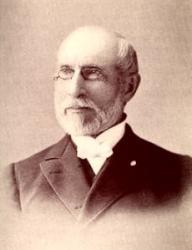
1820 - 1895 Topics: Easter Composer of "[The Lord is risen indeed] (Root)" in Christian Service Songs Root, George F., MUS. DOC, born in Sheffield, Berkshire County, Mass., Aug. 30, 1820. He is much more widely known as a composer of popular music than as a hymn writer. Four of his hymns are in I. D. Sankey's Sacred Songs & Solos, 1878. Nos. 16, 100, 293, and 297. A sympathetic biographical sketch, with portrait, is in The Tonic Sol-Fa Reporter, Sep. 1886. He died Aug. 6, 1895.
--John Julian, Dictionary of Hymnology, Appendix, Part II (1907)
=====================
George Frederick Root was born in Sheffield, Mass., August 30, 1820. His father moved to North Reading, near Boston, when the boy was six years old, and there his youth was spent.
He was always fond of music— not singing at all as a boy, but played upon every kind of instrument that came in his way. At thirteen it was his pride that he could "play a tune" on as many instruments as he was years old. His dream of life was to be a musician, although such an ambition was looked down upon by all his relatives and friends, excepting a fond mother. In the fall of 1838 he went to Boston and made an engagement to work for Mr. A. N. Johnson and take lessons on the piano.
His father and one of the brothers were at the time in South America, and the mother, with six younger children, was at home on the farm. When he secured the engagement with Mr. Johnson to receive three dollars a week and board and lessons, the neighbors became interested and encouraged him to go ahead, they promising to help look after the farm and see that the family got along. The young man's happiness over these events can better be imagined than described.
On the second day of October, 1838, he entered upon his duties in his new heaven on earth located at Harmony Hall, Mr. Johnson's music-room, in Boston. His duties were to see to the fires, care for the room, answer callers, give information about Mr. Johnson when he was out, and practice his lessons when not otherwise engaged. He worked industriously and made steady progress. It was but a few weeks till Mr. Johnson had him playing for the prayer-meeting, and but a few more till he began turning over pupils to him. In about seven weeks' time Mr. Johnson encouraged him by a considerable increase of salary. A most important event to him was meeting Dr. Lowell Mason and being accepted as a bass singer in the celebrated Bowdoin Street choir. Also, on Mr. Johnson's recommendation, he began taking private voice lessons of Mr. Geo. Jas. Webb, the then celebrated voice teacher of Boston. He continued at least a year with Mr. Webb.
His first real singing class was taught the following fall, 1839, at the North End. It lasted nearly through the winter, and on the closing night his class made him a present of a silver goblet, suitably engraved, which he kept among his treasures.
Before the first year was up Mr. Johnson proposed a five year partnership, by which Mr. Root was to receive one-third of their earnings, and the former was to have the privilege of visiting Germany part of the time if he chose. They then changed their quarters to three rooms in the basement of Park Street Church. The annual rental was six hundred dollars. They were kept quite busy.
At this time Dr. Mason's music teaching in the public schools was a growing success, and Messrs. Johnson and Root were employed to assist him. Drs. Mason and Webb had introduced what is now called Musical Conventions a year or two previous to this. They called them "The Teachers' Class." Teachers and singers were called to Boston from surrounding territory to study and practice pretty much as they do now at normals.
In 1841 Mr. Root became one of the teachers in this class. He taught vocal training and continued this work for years afterward in Dr. Mason's teachers' classes, and later incorporated the same method in his own normals. During this year Mr. Johnson went to Germany, and left the two large church choirs (Winter Street and Park Street) in charge of Mr. Root. One of the organs was played by a pupil — Mr. S. A. Bancroft.
Everything went smoothly during Mr. Johnson's absence as it did also after his return. During the last year of the five-year partnership, Mr. Root was called to take the organ at Bowdoin Street, Mr. Mason changing to Winter Street. An amicable settlement was made between Messrs. Johnson and Root, and the partnership dissolved.
In 1811, Mr. Jacob Abbott (father of Lyman Abbott)and his three brothers had established a young ladies' school in New York City. They wanted a music teacher, and offered the position to Mr. Root. They also secured him the organ and choir of the Mercer Street Church, with prospects for other good work. It required pretty strong persuasive arguments to tempt Mr. Root to leave Boston, he was doing well there, and as the sequel shows, there was an attraction in Boston that held him in too tight a grasp to be relinquished by the mere offer of greater power and place. He made up his mind, however, only after getting the consent of the powders of Boston to take with him this [to him] the greatest attraction of the city — Miss Mary Olive Woodman — an accomplished lady, a sweet singer, and a member of a prominent family of musicians. He went to New York first to prepare a home, and in August, 1845, returned for his bride, who took her place in his New York choir as leading soprano, and through his long and eventful career she was ever at his side, a true helpmeet.
He was soon employed at Rutger's Female Institute, Miss Haines' School for Young Ladies, Union Theological Seminary and the New York State Institution for the Blind. Within six weeks after he arrived in New York his time was fully occupied. He continued with Mr. Abbott's young ladies' school ten years.
While teaching in New York he continued his summer work with Messrs. Mason and Webb in Teachers' Classes. Up to the year 1849 he had written but little music; only a few hymn tunes while in Boston. He needed more music for the young ladies of his schools, so he made his first book, The Young Ladies' Choir, of which he had enough copies made for his own use, as he had no thought of offering it to the public. Then in connection with Mr. J. E. Sweetser, they compiled the Root and Sweetser's Collection.
Mr. Root did work enough for two men, hence broke down in health. Mr. Abbott suggested that he take a trip to Paris. After weighing the matter carefully, in December, 1853, he sailed, and in due time arrived at Paris, where he began studying French, voice culture and piano under celebrated teachers. After spending nearly a year abroad, he returned home in improved health and ready for active work. He began to feel the need of new music for his classes, and after some thought decided upon a musical play ; the subject and title, The Flower Queen.
At the Institution for the Blind was a young lady, a former pupil, but now a teacher who had shown some poetical talent. He asked her to help him with the words. He would suggest in prose what the flowers might say and she would put it into rhyme. She did it so well that it seldom needed any alteration. This lady was the now famous Fanny Crosby. The cantata became very popular. About this time Mr. Root wrote a half dozen simple songs for the people. They all sold pretty well, but Hazel Dell and Rosalie, the Prairie Flower, became the most popular, and had a large sale.
It was in the summer of 1853 that the first real normal was held. Mr. Root originated it, and held it in New York. The principal teachers were Messrs. Mason, Root, Hastings, and Bradbury. This school became famous. Sessions were also held at North Reading, Mass., a village near Mr. Root's "Willow Farm Home," with Dr. Mason, Mr. Webb, Mr. Bradbury and himself as principal teachers.
About this time Mr. Root decided to give up his work in New York, and devote himself entirely to conventions, normal work and authorship. He was eminently successful. Among the most eminent teachers and composers of our country have been students in Dr. Geo. F. Root's Normal Musical Institute.
In 1860 Dr. Root settled in Chicago and entered the music publishing business with his brother E. T. Root, and C. M. Cady, as "Root & Cady," Mr. Root's reputation being the most important capital of the firm. His books and popular songs soon made the new firm prosperous. Then came the war with its horror. Dr. Root wielded his musical sword in the way of writing war songs, which made him famous. The Battle Cry of Freedom, Just Before the Battle, Mother, and others, made thousands of dollars for the music house.
In the great Chicago fire of 1871 the interests of the firm of Root & Cady became engulfed in the general ruin. Their loss was upward of a quarter of a million dollars. They then sold their book catalogue, plates and copyrights to John Church & Co., of Cincinnati, and the sheet music plates and copyrights to S. Brainard's Sons, Cleveland. These sales realized about §130,000. The final result was that Dr. Root, his talented son F. W., and others became connected with John Church & Co. Under this new business relationship Mr. Root went right on with his normal and convention work; also issued a great many new books and cantatas. In 1872 the Chicago University very worthily conferred upon him the degree Doctor of Music.
In 1886 he made a trip to Scotland and England, and arranged with publishers to issue some of his cantatas. He was royally received.
Dr. Root was the author of about seventy-five books, nearly two hundred songs in sheet form, and many popular gospel songs. Dr. Root occupies a prominent place in the musical history of this country. It was Dr. Mason who lifted music from almost nothing and gave it an impetus, but he left no better follower than Dr. Root to carry on his work. He was a man of spotless integrity and high Christian character, and to know him was to love him.
At the time of Dr. Root's death he was at Bailey Island, Maine, a summer resort, where he and other relatives had cottages. On August 6, 1895, he was seized with neuralgia of the heart — and died within one hour. He was buried at North Reading, Mass., his old home.
--Hall, J. H. (c1914). Biographies of Gospel Song and Hymn Writers. New York: Fleming H. Revell Company.
George F. Root
Jean Tisserand
? - 1494 Topics: The Christian Year Easter; Christian Year Easter; Easter 1 Year A; Easter 2 Year A; Easter 3 Year A; Easter 1 Year B; Easter 2 Year B; Easter 1 Year C; Easter 2 Year C; Easter Evening Year ABC Author of "O Sons and Daughters, Let Us Sing" in Voices United Died: 1494, Paris, France.
A Franciscan monk, Tisserand founded an order for penitent women. He is also said to have written a worship service commemorating Franciscans martyred in Morocco in 1220.
Lyrics: O FILII ET FILIAE, Rex coelestis, Rex gloriae
O Sons and Daughters, Let Us Sing!
Young Men and Maids, Rejoice and Sing
www.hymntime.com/tch
Jean Tisserand
Harry Dixon Loes
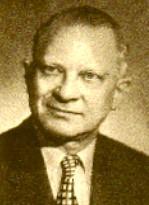
1895 - 1965 Person Name: Harry Dixon Loes, 1892-1965 Topics: Easter Composer of "REDEEMER" in Rejoice Hymns Pseudonyms:
Deal
Bartells
Born Harold Loes, the American gospel song writer took the middle name Dixon in honour of A. C. Dixon, the pastor of Moody Church at the time. Harry Dixon Loes studied at Moody Bible Institute, and after extensive training in music he served a number of churches with a ministry of music. From 1939 until his retirement he was a member of the music faculty of Moody Bible Institute. He wrote the lyrics for 1,500 gospel songs, and composed 3,000 tunes.
One day in 1915, Paul Rader preached a sermon in Moody Church, in Chicago. His theme was, “All that I want is in Jesus.” In the congregation was young Harry Dixon Loes, then a senior at Moody Bible Institute, where he would eventually teach. Inspired by Dr. Rader’s message, Harry Loes wrote the words and music for a song he called "All Things in Jesus." It was first sung by the church’s youth group.
Friends all around me are trying to find
What the heart yearns for, by sin undermined;
I have the secret, I know where ’tis found:
Only true pleasures in Jesus abound.
All that I want is in Jesus.
He satisfies, joy He supplies;
Life would be worthless without Him;
All things in Jesus I find.
Some carry burdens whose weight has for years
Crushed them with sorrow and blinded with tears.
Yet One stands ready to help them just now,
If they will humbly in penitence bow.
--http://wordwisehymns.com/2010/02/09/
==================
Harry Dixon Loes was born in Kalamazoo, Michigan, on October 20, 1892. After serving several churches as music director and later being active for more than twelve years in evangelist work, he joined the music faculty of Moody Bible Institute, in 1939, where he remained as a popular music teacher until his death in 1965. Mr. Loes was the writer of numerous gospel songs and choruses.
One day, while listening to a sermon on the subject of Christ's atonement entitled “Blessed Redeemer,” Mr. Loes was inspired to compose this tune. He then sent the melody with the suggested title to Mrs. Christiansen, a friend for many years, asking her to write the text. The hymn first appeared in Songs of Redemption, compiled by Marin and Jelks, in 1920, and published by the Baptist Home Mission Board, Atlanta, Georgia.
--http://www.gracecommunitycog.org/
Harry Dixon Loes
Phillips Brooks
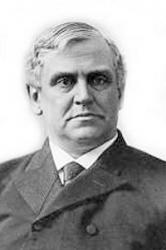
1835 - 1893 Topics: Easter Author of "Angels, sing his triumph, as you sang his birth" in Elmhurst Hymnal Brooks, Phillips, D.D., was born at Boston, Dec. 13, 1835, graduated at Harvard College 1855, and was ordained in 1859. Successively Rector of the Church of the Advent, Philadelphia, and Trinity Church, Boston, he became Bishop of Mass. in 1891, and died at Boston in Jan., 1893. His Carol, "O little town of Bethlehem," was written for his Sunday School in 1868, the author having spent Christmas, 1866, at Bethlehem. His hymn, "God hath sent His angels to the earth again," is dated 1877.
--John Julian, Dictionary of Hymnology, New Supplement (1907)
Phillips Brooks
Samuel Webbe
1740 - 1816 Person Name: S. Webbe Topics: Easter Adapter of "O FILII ET FILIAE" in The Book of Common Praise Samuel Webbe (the elder; b. London, England, 1740; d. London, 1816) Webbe's father died soon after Samuel was born without providing financial security for the family. Thus Webbe received little education and was apprenticed to a cabinetmaker at the age of eleven. However, he was determined to study and taught himself Latin, Greek, Hebrew, French, German, and Italian while working on his apprenticeship. He also worked as a music copyist and received musical training from Carl Barbant, organist at the Bavarian Embassy. Restricted at this time in England, Roman Catholic worship was freely permitted in the foreign embassies. Because Webbe was Roman Catholic, he became organist at the Portuguese Chapel and later at the Sardinian and Spanish chapels in their respective embassies. He wrote much music for Roman Catholic services and composed hymn tunes, motets, and madrigals. Webbe is considered an outstanding composer of glees and catches, as is evident in his nine published collections of these smaller choral works. He also published A Collection of Sacred Music (c. 1790), A Collection of Masses for Small Choirs (1792), and, with his son Samuel (the younger), Antiphons in Six Books of Anthems (1818).
Bert Polman
Samuel Webbe
Johann Walter
1496 - 1570 Person Name: Johann Walther, 1496-1570 Topics: Easter; Easter Adapter of "HERZLICH TUT MICH ERFREUEN" in Lutheran Book of Worship Johann Walther (b. Kahla, Thuringia, Germany, 1496: d. Torgau, Germany, 1570) was one of the great early influences in Lutheran church music. At first he seemed destined to be primarily a court musician. A singer in the choir of the Elector of Saxony in the Torgau court in 1521, he became the court's music director in 1525. After the court orchestra was disbanded in 1530 and reconstituted by the town, Walther became cantor at the local school in 1534 and directed the music in several churches. He served the Elector of Saxony at the Dresden court from 1548 to 1554 and then retired in Torgau.
Walther met Martin Luther in 1525 and lived with him for three weeks to help in the preparation of Luther's German Mass. In 1524 Walther published the first edition of a collection of German hymns, Geystliche gesangk Buchleyn. This collection and several later hymnals compiled by Walther went through many later editions and made a permanent impact on Lutheran hymnody.
Bert Polman
================
Walther, Johann, was born in 1496 at a village near Cola (perhaps Kahla, or else Colleda, near Sachsenburg) in Thuringia. In 1524 we find him at Torgau, as bassist at the court of Friedrich the Wise, Elector of Saxony. The Elector Johann of Saxony made him "Sengermeister" (choirmaster) in 1526. When the Electoral orchestra (Kapelle) at Torgau was disbanded in 1530, it was reconstituted by the town, and in 1534 Walther was also appointed cantor (singing-master) to the school at Torgau. On the accession of the Elector Moritz of Saxony, in 1548, Walther went with him to Dresden as his Kapellmeister. He was pensioned by decree of Aug. 7, 1554, and soon after returned to Torgau, still retaining the title of "Sengermeister." He died at Torgau, perhaps on March 25, or at least before April 24, 1570. (Monatshefte für Musikgeschichte, 1871, p. 8, and 1878, p. 85; Archiv für Litteraturgeschichte, vol. xii., 1884, p. 185; Dr. Otto Taubert's Pflege der Musilz in Torgau, 1868, and his Gymnasial Singe-Chor zu Torgau, n.d., 1870, &c.)
Walther was more distinguished as a musician than as a hymnwriter. In 1524 he spent three weeks in Luther's house at Wittenberg, helping to adapt the old church music to the Lutheran services, and harmonising the tunes in five parts for the Geystliche gesangk Bucklyn, published at Wittenberg in 1524. He was also present in the Stadtkirche at Wittenberg, when, on Oct. 29, 1525, the service for the Holy Communion, as rearranged by Luther and himself, was first used in German. His hymns appeared mostly in his Das christlich Kinderlied D. Martini Lutheri, Erhalt uns Herr, &c. Auffs new in sechs Stimmen gesetzt, und rait etlichen schönen Christlichen Texten, Lateinischen und Teutschen Gesengen gemehrt, &c, Wittenberg.
Those of Walther's hymns which have passed into English are:—
i. Herzlich Lieb hab ich dich, mein Gott. Trinity Sunday. First published in 1566 as above, and thence in Wackernage, iii. p. 204, in 4 stanzas of 8 lines. Translated as:—
0 God, my Rock! my heart on Thee. This is a good translation of stanza i., iii., iv., by A. T. Russell, as No. 133 in his Psalms & Hymns, 1851.
ii. Herzlich thut mich erfreuen. Eternal Life. First published separately, in 33 stanzas, at Wittenberg, in 1552, entitled "A beautiful spiritual and Christian new miner's song, of the Last Day and Eternal Life" [Konigsberg Library]. Thence in Wackernagel, iii. p. 187, in 34 stanzas, stanza 33 being added from the Dresden reprint of 1557. It is set to the melody of a popular song on the Joys of Summer. It is a fresh and beautiful hymn, but is only partially available on account of its length. Translated as:—
1. Now fain my joyous heart would sing. This is a translation of stanza 1, 4, 5, 17, 33, 34, by Miss Winkworth, in her Lyra Germanica 2nd Ser., 1858, p. 223. Her translations of stanzas 1, 4, 5, were included in the English Presbyterian Psalms & Hymns, 1867, No. 325.
2. Soon will the heavenly Bridegroom come. This is by Dr. Kennedy, in his Hymn. Christanza, 1863, No. 1009, and follows the text of the Geistliche Lieder omitting stanza 16, 18, 13. It is repeated in the Laudes Domini, N. Y., 1884, &c.
3. The Bridegroom soon will call us. By Dr. M. Loy, from the Geistliche Lieder, but omitting stanzas 18, 13, as No. 24 in the Ohio Lutheran Hymnal, 1880. [Rev. James Mearns, M.A. ]
--Excerpts from John Julian, Dictionary of Hymnology (1907)
Johann Walter
Frances Elizabeth Cox
1812 - 1897 Person Name: Frances Elizabeth Cox (1812-1897) Topics: Church Year Easter; Easter; Easter Day; The Fourth Sunday of Easter Year A; The Second Sunday of Easter Year C Translator of "Jesus lives! thy terrors now" in Ancient and Modern Cox, Frances Elizabeth, daughter of Mr. George V. Cox, born at Oxford, is well known as a successful translator of hymns from the German. Her translations were published as Sacred Hymns from the German, London, Pickering. The 1st edition, pub. 1841, contained 49 translations printed with the original text, together with biographical notes on the German authors. In the 2nd edition, 1864, Hymns from the German, London, Rivingtons, the translations were increased to 56, those of 1841 being revised, and with additional notes. The 56 translations were composed of 27 from the 1st ed. (22 being omitted) and 29 which were new. The best known of her translations are "Jesus lives! no longer [thy terrors] now" ; and ”Who are these like stars appearing ?" A few other translations and original hymns have been contributed by Miss Cox to the magazines; but they have not been gathered together into a volume.
-- John Julian, Dictionary of Hymnology (1907)
Frances Elizabeth Cox
John J. Husband
1760 - 1825 Topics: Easter Composer of "[Rejoice and be glad! The Redeemer has come!]" in Songs of Grace and Glory Rv John Jenkins Husband United Kingdom 1760-1825. Born in Plymouth, England, he worked as a clerk at Surrey Chapel. He emigrated to the U.S. in 1809 and taught music in Philadelphia, PA. It is surmised that he married Anna Elizabeth Kirkhum, but no other family information was found. An author and composer, he also worked as a clerk at St. Paul’s Protestant Episcopal Church. In 1807 he published “A collection of hymns & Psalms for the use of singing school & musical societies”. He died in Philadelphia, PA.
John Perry
John J. Husband
Justin Heinrich Knecht
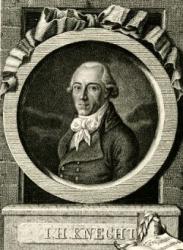
1752 - 1817 Person Name: J. H. Knecht, 1752-1817 Topics: Easter 6 Composer of "VIENNA" in Evangelical Lutheran Hymnary Justin Heinrich Knecht Germany 1752-1817. Born at Biberach Baden-Wurttemberg, Germany, he attended a Lutheran college in Esslingen am Neckar from 1768-1771. Having learned the organ, keyboard, violin and oratory, he became a Lutheran preceptor (professor of literature) and music director in Biberach. It was a free imperial city until 1803 and had a rich cultural life. He became organist of St. Martin’s Church in 1792, used by both Lutherans and Catholics, and was there for many years. He led an energetic, busy musical life, composing for both the theatre and church, organizing subscription concerts, teaching music theory, acoustics, aesthetics, composition, and instruments at the Gymnasium, affiliated to the Musikschule in 1806. He went to Stuttgart in 1806 in hopes of a post there as Kapellmeister, serving two years as Konzertmeister, but he was appointed Direktor Beim Orchester by the King of Wurttemberg in 1807. However, he returned to his former life in 1808 and remained there the rest of his life. He died at Biberach. He wrote 10 vocals, 11 opera and stage works, one symphony, 3 chamber music instrumentals, 7 organ works, 4 piano works, and 6 music theories. He was an author composer, editor, contributor, musician, compiler, and lyricist.
John Perry
Justin Heinrich Knecht
Ignaz Franz
1719 - 1790 Topics: Easter IV Evening Prayer Opening Author of "Holy God, we praise thy Name!" in The Hymnal of the Protestant Episcopal Church in the United States of America 1940 Ignaz Franz Poland 1719-1790. Born at Protzau, Silesia, he studied in Glaz andf Breslau. In 1742 he became a Roman Catholic priest. He served as chaplain at Gross-Glogau and vicar of Glogau in Silesia. In 1753 he was appointed archpriest at Schlawa, and assessor to the apostolic vicar's office in Breslau in 1766. He also functioned as the Assessor for Theological Affairs at the Apostolic Vicariate. He wrote hymn lyrics and compiled religious music. His works include “Katholisches Gesangbuch” (1744). He died at Breslau.
John Perry
Ignaz Franz
Pages