You help make Hymnary.org possible. More than 10 million people from 200+ countries found hymns, liturgical resources and encouragement on Hymnary.org in 2025, including you. Every visit affirms the global impact of this ministry.

If Hymnary has been meaningful to you this year, would you take a moment today to help sustain it? A gift of any size—paired with a note of encouragement if you wish—directly supports the server costs, research work and curation that keep this resource freely available to the world.

Give securely online today, or mail a check to:
Hymnary.org
Calvin University
3201 Burton Street SE
Grand Rapids, MI 49546

Thank you for your partnership, and may the hope of Advent fill your heart.

Person Results

Text Identifier:"^o_come_let_us_sing_unto_the_lord_chant$"
In:people

Planning worship? Check out our sister site, ZeteoSearch.org, for 20+ additional resources related to your search.
Showing 21 - 30 of 76Results Per Page: 102050

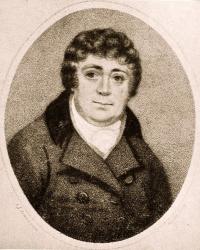
John Randall

1717 - 1799 Person Name: J. Randall Composer of "[O come let us sing unto the Lord] (Randall)" in The Church Hymnal

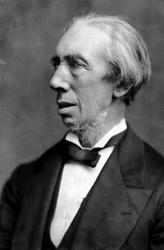
George A. Macfarren

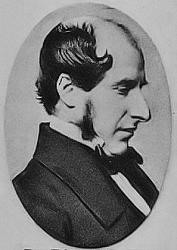
1813 - 1887 Person Name: George A. MacFarren, 1813-1887 Composer of "[Come, let us sing to the Lord]" in The Hymnal 1982 George Alexander Macfarren, Mus. Doc.; b. London, 1813; d. London, 1887 Evangelical Lutheran Hymnal, 1908 ======================= Born: March 2, 1813, Westminster, England. Died: October 31, 1887, St. Marylebone, England. Buried: Hampstead Cemetery, London, England. Brother of Walter Macfarren, George was a principal of the Royal Academy of Music; professor at Cambridge University; conductor at Covent Garden, London; program note writer for the Philharmonic Society; and editor of Handel and Purcell. He wrote 18 operas, 13 oratorios and cantatas, 9 symphonies, and 162 songs. He went blind in 1860, and was knighted in 1883. Sources: Frost, p. 681 Lightwood, p. 189 Nutter, p. 460 http://www.hymntime.com/tch/bio/m/a/c/macfarren_ga.htm =============================== http://en.wikipedia.org/wiki/George_Alexander_Macfarren

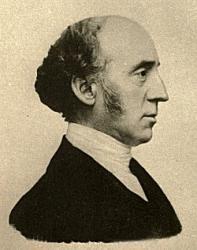
Edward Hodges

1796 - 1867 Person Name: E. Hodges Composer of "[O come, let us sing unto the Lord; let us heartily rejoice in the strength of our salvation]" in Common Praise Born: Ju­ly 20, 1796, Bris­tol, Eng­land. Died: Sep­tem­ber 1, 1867, Clif­ton, Bris­tol, Eng­land. Buried: Church of St. Mary the Vir­gin, Stan­ton Drew (about eight miles south of Bristol). Hodges’ mu­sic­al gift showed it­self at an ear­ly age; by 1819, he was play­ing the or­gan at St. James’ Church in Bris­tol, and at St. Nicholas’, 1821-1838. He al­so had an in­ter­est­ing me­chan­ic­al bent, and spurred sev­er­al tech­ni­cal im­prove­ments in or­gan de­sign. He com­posed a num­ber of serv­ic­es and an­them piec­es, and Cam­bridge Un­i­ver­si­ty award­ed him a doc­tor­ate in mu­sic in 1825. Hodges event­u­al­ly em­i­grat­ed, ac­cept­ing a post at the ca­thed­ral in To­ron­to, Ca­na­da, in 1838. The next year, he be­came mu­sic di­rect­or at Trin­i­ty Par­ish in New York Ci­ty. He be­came the or­gan­ist at Trin­i­ty Church when it opened in 1846 (the church had its or­gan built to his spe­ci­fi­ca­tions). He re­tired for health rea­sons in 1859, and re­turned to his native Eng­land in 1863. Hodges’ works in­clude: An Apol­o­gy for Church Mu­sic and Mu­sic­al Fes­tiv­als, in Ans­wer…to the Stan­dard and the Re­cord (Lond­on: 1834) Essays on the Ob­jects of Mu­sic­al Study (Bris­tol, Eng­land: 1838) An Es­say on the Cul­ti­va­tion of Church Mu­sic (New York: 1841) Contributions to the Quar­ter­ly Mu­sic­al Mag­a­zine & Mu­sic­al World Trin­i­ty Col­lect­ion of Church Mu­sic (Bos­ton, Mass­a­chu­setts: 1864) (ed­it­or) Music-- BRISTOL GLOUCESTER HABAKKUK HYMN TO JOY --www.hymntime.com/

Garret Colley Wellesley, Earl of Mornington

1735 - 1781 Person Name: Garret Wellesley, Earl of Mornington, 1735 - 1781 Composer of "[O come, let us sing unto the Lord]" in The Book of Praise Garret Colley Wellesley, Earl of Mornington, father of the Duke of Wellington; b. Dongan, Ireland, 1735; d. there, 1781 Evangelical Lutheran Hymnal, 1908

Edward F. Rimbault

1816 - 1876 Person Name: Rimbault Composer of "[O come let us sing to the Lord]" in The Hymnal Edward Francis Rimbault PhD LLD United Kingdom 1816-1876. Born in Soho, London, England, son of an organist and composer of French descent, he was taught music by his father., Samuel Wesley, and Wiliam Crotch. At age 16 he became organist of the Swiss Church in Soho. He later became organist at various churches, including St Peter’s, Vere Street, and St John’s Wood Presbyterian Church. He edited many collections of music, journals, and publications of music, and arranged music compositions. In addition to editing or arranging contemporary operas, he had a strong interest in editing or arranging earlier English music. He studied the musical treatises in the library of Archbishop Tenison, one of the oldest public libraries in London. In 1838, At age 22 he began lecturing about the history of English music, and was in much demand due to the interest aroused. He did editorial work for the Percy Society, the Camden Society, the Motet Society, and the Handel Society. For the latter he edited the “Messiah”, “Saul”, and “Samson” He was elected a Fellow of the Society of Antiquaries, and was granted membership in the Academy of Music in Stockholm, Sweden. Gottingen University also conferred upon him a PhD. His reputation was such that he was offered a teaching position at Harvard University in the U.S., which he turned down. In 1848 he was given an honorary degree by the University of Oxford. In 1849 he published a collection of English nursery rhymes and the tunes to which they were sung. Rimbault authored 76 books, a few named here include : “Bibliotheca madrigaliana” (1847); “The pianoforte” (1860); “Early English organ builders and their works” (1865). In 1855 he co-authored “The organ- its history and construction” with John Hopkins. He did a small amount of composing as well. He wrote an operetta in 1838, and a musical drama. He also composed a large number of pianoforte scores for operas by others. He was an admirable harmonium player. Traveling to various auctions for years, he accumulated a rare collection of books. After his death his extensive collection was auctioned off in 1877, with many items going to the British Library. About 300 items were sold to an individual, and upon his death in 1888, the ‘Drexel collection’ was bequeathed to the Lenox Library (precursor of the New York Public Library). Today, the collection is part of the Music Division of the NY Public Library for the Performing Arts. He was an author, editor, arranger, composer, lithographer, translator, scribe, adapter, and bookseller. He died at London, England. No information found regarding a family. John Perry

Robert Cooke

1768 - 1814 Person Name: R. Cooke, 1768-1814 Composer of "[O come, let us sing unto the Lord]" in The Hymnary

John Robinson

1682 - 1762 Person Name: J. Robinson, 1682 - 1762 Composer of "[O come, let us sing unto the Lord] (Robinson)" in The Hymnary

Richard Woodward

1743 - 1777 Person Name: Richard Woodward, 1744-1777 Composer of "[O come, let us sing unto the Lord] (Woodward)" in The Hymn Book of the Anglican Church of Canada and the United Church of Canada Woodward, Richard, jr; b. 1743?; d. Dublin, 22 Nov. 1777; Anglo-Irish organist and composer LOC Name Authority File

Samuel Arnold

1740 - 1802 Person Name: Samuel Arnold, 1740-1802 Composer of "[O come, let us sing unto the Lord] (Arnold)" in The Hymn Book of the Anglican Church of Canada and the United Church of Canada Dr. Samuel Arnold, an English musician and composer; born in London, Aug. 10, 1739; composed for the theatre, the church, and also oratorio music; succeeded Dr. Nares as organist; died at Westminster, Oct. 22, 1802. A Dictionary of Musical Information by John W. Moore, Boston: Oliver, Ditson & Company, 1876

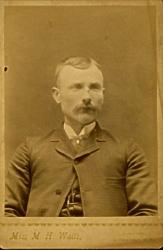
John S. Norris

1844 - 1907 Person Name: John Norris Composer of "VENITE, EXULTEMUS DOMINO NO. 2" in The Church School Hymnal Rv John Samuel Norris United Kingdom/USA 1844-1907. Born at West Cowes, Isle of Wight, UK, he emigrated to the US when young and attended school in Canada. He was ordained a Methodist minister in Oshawa, ON, in 1868. Over the next decade he pastored at churches in Canada, NY, and WI. He switched to the Congregationalist denomination in 1878, serving churches in Mondovi, Shullsburg, and Hixton, WI, and Grand Rapids, MI. From 1882 -1901 he held pastorates at Ames, Webster City, Parkersburg, Peterson, and Tripoli, IA.. He died in Chicago, IL. John Perry

Pages


Export as CSV
It looks like you are using an ad-blocker. Ad revenue helps keep us running. Please consider white-listing Hymnary.org or getting Hymnary Pro to eliminate ads entirely and help support Hymnary.org.