You help make Hymnary.org possible. More than 10 million people from 200+ countries found hymns, liturgical resources and encouragement on Hymnary.org in 2025, including you. Every visit affirms the global impact of this ministry.

If Hymnary has been meaningful to you this year, would you take a moment today to help sustain it? A gift of any size—paired with a note of encouragement if you wish—directly supports the server costs, research work and curation that keep this resource freely available to the world.

Give securely online today, or mail a check to:
Hymnary.org
Calvin University
3201 Burton Street SE
Grand Rapids, MI 49546

Thank you for your partnership, and may the hope of Advent fill your heart.

Person Results

Text Identifier:"^till_he_come_o_let_the_words$"
In:people

Planning worship? Check out our sister site, ZeteoSearch.org, for 20+ additional resources related to your search.
Showing 21 - 30 of 42Results Per Page: 102050

A. H. Mann

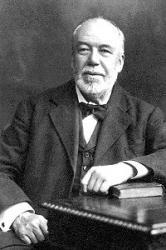
1850 - 1929 Person Name: Dr. A. H. Mann Composer of "TILL HE COME" in The Church Missionary Hymn Book Arthur Henry ‘Daddy’ Mann MusB MusD United Kingdom 1850-1929. Born at Norwich, Norfolk, England, he graduated from New College, Oxford. He married Sarah Ransford, and they had five children: Sarah, Francis, Arthur, John, and Mary. Arthur died in infancy. Mann was a chorister and assistant organist at Norwich Cathedral, then, after short stints playing the organ at St Peter’s, Wolverhampton (1870-71); St. Michael’s Tettenhall Parish Church (1871-75); and Beverley Minster (1875-76); he became organist at King’s College Chapel, Cambridge (1876-1929), Cambridge University organist (1897-1929), and music master and organist at the Leys School, Cambridge (1894-1922). In addition to composing an oratorio and some hymn tunes, he was music editor of the Church of England Hymnal (1894). In 1918 he directed the music and first service of “Nine lessons & carols” at King’s College Chapel. He was an arranger, author, composer, and editor. His wife, Sarah, died in 1918. He died at Cambridge, England. John Perry

Timothy R. Matthews

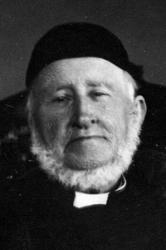
1826 - 1910 Person Name: Timothy Richard Matthews, 1826-1910 Composer of "REYNOLDSTONE" in The Hymnary of the United Church of Canada Timothy Richard Matthews MusB United Kingdom 1826-1910. Born at Colmworth, England, son of the Colmworth rector, he attended the Bedford and Gonville Schools and Caius College, Cambridge. In 1853 he became a private tutor to the family of Rev Lord Wriothesley Russell, a canon of St. George’s Chapel, Windsor Castle, where he studied under organist, George Elvey, subsequently a lifelong friend. He married Margaret Mary Thompson, and they had 11 children: Norton, Mary, George, Cecil, Evelyn, Eleanor, Anne, Arthur, Wilfred, Stephen, and John. Matthews served as Curate and Curate-in-Charge of St Mary’s Church, Nottingham (1853-1869). While there, he founded the Nottingham Working Men’s Institute. He became Rector at North Coates, Lincolnshire (1869-1907). He retired in 1907 to live with his eldest son, Norton, at Tetney vicarage. He edited the “North Coates supplemental tune book” and “Village organist”. An author, arranger, and editor, he composed morning and evening services, chants, and responses, earning a reputation for simple but effective hymn tunes, writing 100+. On a request he wrote six tunes for a children’s hymnal in one day. He composed a Christmas carol and a few songs. His sons, Norton, and Arthur, were also known as hymn tune composers. He died at Tetney, Lincolnshire, England. John Perry

John Richardson

1816 - 1879 Composer of "TICHFIELD" in The Hymnal

George J. Elvey

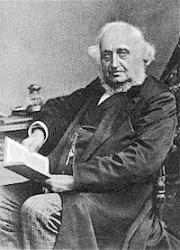
1816 - 1893 Person Name: G. J. Elvey Composer of "ROCK OF AGES" in The Home and School Hymnal George Job Elvey (b. Canterbury, England, 1816; d. Windlesham, Surrey, England, 1893) As a young boy, Elvey was a chorister in Canterbury Cathedral. Living and studying with his brother Stephen, he was educated at Oxford and at the Royal Academy of Music. At age nineteen Elvey became organist and master of the boys' choir at St. George Chapel, Windsor, where he remained until his retirement in 1882. He was frequently called upon to provide music for royal ceremonies such as Princess Louise's wedding in 1871 (after which he was knighted). Elvey also composed hymn tunes, anthems, oratorios, and service music. Bert Polman

R. H. Cornelius

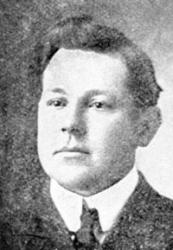
1872 - 1933 Composer of "["Till he come!" O let the words]" in Victory Songs R.H. Cornelius, known as Rufus Cornelius by his friends, was born in Blount Co., AL., January 24, 1872. He was educated in the public schools of Oneonta, the county seat. He began teaching in the public schools at an early age and at one time was associate Principle of the Oneonta High School. It was while teaching in the high school that he became interested in church music and began to study with some of the best teachers of the time. His first major teacher was the late A J showalter in one of his normals at Eden, AL. He continued his study with this wellknown teacher until he had finished the courses a second time. He soon felt that the study of harmony was his first love in his study and soon became one of the best harmon teachers of his time. Near the close of the century, he moved to Texas and settled in Midlothian, Ellis Co., where he established a publishing house and published many fine gospel song books that sold by the thousands. However, before coming to Texas, he was associated with The Showalter-Patton Co. who published his first compositions. Soon after coming to Texas, he devoted much time to teaching singing schools (Cornelius Normal Musical Institute) and soon became one of the best known teachers of that great state, often having many more calls for schools than he could have time for. In many cases his schools were dated years ahead. he had possessed a beautiful tenor voice and was of a very pleasant personality. This caused his to be loved by all who knew him. About 1914 he was called to Southwestern Baptist Seminary as head of the music department. After several years here in the Baptist School in Ft Worth, Texas, he felt he was more needed back in the field of teaching and songbook publishing. Soon after coming to Texas, he married Maycon Temperance Burleson, who was a fine singer and musician and wrote many songs.During the first 32 years of the 20th Century, this couple of musicians blessed the State of Texas with their singing and teaching. Of all the fine song written by Mr. Cornelius, "Oh, I want to See Him" will carry his memory for years to come. The Cornelius' were members of the Baptist Church and were devoted Christians. Mr. Cornelius passed away in 1932. Mrs. Cornelius lived only about two years, passing away in 1934. In the passing of these fine gospel singer and teachers, church music suffered a great loss. By C C Stafford --www.findagrave.com/cgi-bin/ (excerpts)

Frederick W. Kücken

1810 - 1882 Person Name: F. W. Kuecken Composer of "KUECKEN" in Immanuel Hymnal

John H. Gower

1855 - 1922 Person Name: John Henry Gower Composer of "RELIANCE" in The New Christian Hymnal

Carrie B. Adams

1859 - 1940 Composer of "["Till He come!" oh, let the words]" in Young Men's Chorus Adams, Carrie Belle (Wilson). (Oxford, Ohio, July 28, 1859-1940). Father, David Wilson, song writer, teacher of music. Married, 1880 to Allyn G. Adams, moved to Terre Haute, Indiana. Director and organist, First Congregational Church; Central Christian Church. Teacher (1887-1895), Indiana State Normal School. Wrote many anthems and cantatas, secular and religious, many published by Lorenz. --Keith C. Clark, DNAH Archives =================== Mrs. Carrie B. (Wilson) Adams was born in Oxford, Ohio, July 28, 1859. Her father, Mr. David Wilson, was author of a number of songs and books, also a singing teacher of note in his day, and her mother was quite musically inclined. Her experience with her father in elementary and advanced class work, in children's and harmony classes, her years of musical participation in solo work and in accompanying, in the organization and leadership, not only of choirs, but also of great choral organizations, her close touch with singers of elementary grade, as well as those of great skill and reputation, have given her a breadth of musical thought and practical power of adaptation that constantly enrich her work of composition. Miss Carrie B. Wilson became Mrs. Allyn G. Adams in 1880, and soon after located in Terre Haute, Ind., where her husband was a leading bass singer and interested in large commercial enterprises. Mrs. Adams soon became a leading figure in the musical life of that enterprising city, and has been actively identified with the Choral Club, Treble Clef Club, Rose Polytechnic Glee Club, First Congregational Church and Central Christian Church choirs, as director, chorister and organist. From 1887 to 1895 she occupied the chair of music in the Indiana State Normal School. Her first anthem was published in 1876. Among her best known publications are four anthem books — "Anthem Annual, Nos. 1 and 2," and " Royal Anthems, Nos. 1 and 2" ; "Music for Common Schools"; two sacred cantatas, "Redeemer and King " and "Easter Praise" ; an operetta for church and school use, "The National Flower"; a group of Shakespeare songs from "As You Like it," and a large number of anthems, male choruses, ladies' quartets and miscellaneous pieces in octavo form. http://archive.org/stream/biographyofgospe00hall/biographyofgospe00hall_djvu.txt

W. T. Dale

1845 - 1924 Person Name: Rev. W. T. Dale Composer of "["Till He come!" O, let the words]" in The Harp of Glory

T. C. O'Kane

1830 - 1912 Composer of "["Till he come" O let the words]" in Heart Songs O'Kane, Tullius Clinton, an American writer, born March 10, 1830, is the author of "O sing of Jesus, Lamb of God" (Redemption); and "Who, who are these beside the chilly wave?" (Triumph in Death), in I. D. Sankey's Sacred Songs and Solos, 1878 and 1881. --John Julian, Dictionary of Hymnology, Appendix, Part II (1907) =========================== Tullius Clinton O'Kane was born in Fairfield County, Ohio, March 10, 1830. He resided with his parents in this vicinity until the spring of 1849, when he went to Delaware, Ohio, and entered the Ohio Wesleyan University, from which he graduated in 1852, with the degree A. B., and received his A. M. degree three years later from his Alma Mater. Immediately upon his graduation, he was tendered a position in the Faculty as Tutor of Mathematics, which he accepted and successfully filled for five years. The students always called him "Professor," by which title he is known to the present day. His musical abilities were early recognized in the University, and for years he was the musical precentor in the daily chapel devotions. He organized and maintained a Choral Society in the College, and was the first musical instructor in the Ohio Wesleyan Female College, which a few years ago was incorporated into the University. In 1857 he was elected to a principalship in the Cincinnati public schools, and served in that capacity until 1861, when he resigned his position to accept a place in the piano establishment of Philip Phillips & Co. He remained with this house until its removal to New York City in 1867, when, although urged to be transferred with the house to that city, he preferred to remove with his family back to Delaware, Ohio. For the ensuing six years he traveled over the state of Ohio as the general agent for the Smith American Organ Co., of Boston, Mass. During this time he visited conferences, Sunday-school conventions, both State and County, introducing his Sunday-school singing books, and in this way became well known throughout his native state, and quite extensively in some of the adjoining states. His musical compositions were first published in Philip Phillips' Musical Leaves, in 1865, and since then but few Sunday-school singing books have appeared without one or more of his compositions. His first music book, Fresh Leaves, was issued in 1868. This was followed at intervals by Dew Drops, Songs of Worship, Every Sabbath, Jasper and Gold, Redeemer's Praise, Glorious Things and Morning Stars. In connection with his son, Edward T. O'Kane, who is himself a most excellent composer and a very skillful organist, in 1882 he issued Selected Anthems, a book designed for use by the more advanced choirs. In association with J. R. Sweney and "Chaplain" McCabe, he issued Joy to the World, a song book for prayer-meetings, and the same editors, with the addition of W. J. Kirkpatrick, compiled Songs of Redeeming Love, No. 1, in 1882, and No. 2 in 1884. He also issued Songs of Praises, Unfading Treasures and Forward Songs. Some of Professor O'Kane's best known songs are Glorious Fountain, The Home Over There, On Jordan's Stormy Banks, Say, are You Ready? and many others. With Mr. O'Kane, music and musical composition have ever been a recreation, rather than a profession. He is an excellent leader of choirs, but his forte seems to be in leading large congregations, Sunday-schools and social religious meetings in sacred song. He sings "with the spirit and the understanding also " — with a due appreciation of both words and music — and very naturally infuses his enthusiasm into his audiences so that they cannot "keep from singing." In his music he endeavors to catch the spirit of the hymn, and then give it expression in the music he composes for it. This sometimes seems to have been almost an inspiration, and could be illustrated by a reference to the circumstances under which many of his compositions have been made. One of his earlier and more widely known pieces is that entitled, Over There. He says he cut this hymn out of some newspaper and put it with others in his portfolio, intending some time when he felt like it to give it a musical setting. One Sunday afternoon, after studying his lesson for the next session of his Sunday-school, he opened his portfolio, and turning over the selections, found these words, and something seemed to say, "Now's your time." He sat down at the organ, studied the hymn intently for a few moments, and then, as his fingers touched the keys of the instrument, melody and harmony were in every movement, and when the stanza was ended, melody and harmony found their expression in the chorus, and Over There was finished. Another of his well known songs is Sweeping Through the Gates. One cold, blustery day he had occasion to go from his residence to the railroad depot, about a mile distant, and in his route had to cross the river on a suspension foot-bridge. As he came down to the bridge, he thought of the "river of death," so cold, with no bridge, and then the words of the dying Cookman came to his mind, and he exclaimed to himself: 'Who, who are these beside the chilly wave? " Words, melody and refrain seemed to come all at once and all together, so that by the time he arrived back at his home, the composition was complete. Professor O'Kane is a genial, modest Christian gentleman, who carries sunshine wherever he goes. His greatest joy comes from the consciousness that his music has cheered and comforted the hearts of Christian people all over the world, and has been the means of winning thousands from the pleasures of the world to the higher enjoyments of the Christian religion. His song, Sweeping Through the Gates, will be sung till all the ransomed are gathered Over There. -Hall, J. H. (c1914). Biographies of Gospel Song and Hymn Writers. New York: Fleming H. Revell Company. ======================== O'Kane, Tullius Clinton. Died 10 February 1912, Delaware, Ohio. Buried in Oak Grove Cemetery, Delaware, Ohio. --DNAH Archives

Pages


Export as CSV
It looks like you are using an ad-blocker. Ad revenue helps keep us running. Please consider white-listing Hymnary.org or getting Hymnary Pro to eliminate ads entirely and help support Hymnary.org.