

 My Starred Hymns
 My FlexScores
 My Hymnals
 My Purchased Files
Planning worship?
Check out our sister site, ZeteoSearch.org,
for 20+ additional resources related to your search.
- |
User Links
Person Results
Percy Dearmer
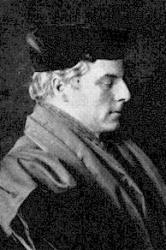
1867 - 1936 Topics: Advent 2 Collect Author of "Book of books, our people's strength" in Magnify the Lord Dearmer, Percy, M.A., son of Thomas Dearmer, was born in London, Feb. 27, 1867, and educated at Westminster School and at Christ Church, Oxford (B.A. 1890, M.A. 1896). He was ordained D. 1891, P. 1892, and has been since 1901 Vicar of S. Mary the Virgin, Primrose Hill, London. He has been Secretary of the London Branch of the Christian Social Union since 1891, and is the author of The Parson's Handbook, 1st edition, 1899, and other works. He was one of the compilers of the English Hymnal, 1906, acting as Secretary and Editor, and contributed to it ten translations (38, 95, 150, 160, 165, 180, 215, 237, 352, 628) and portions of two others (242, 329), with the following originals:—
1. A brighter dawn is breaking. Easter. Suggested by the Aurora lucis, p. 95, but practically original.
2. Father, Who on man dost shower. Temperance.
3. God, we thank Thee, not in vain. Burial.
4. Holy God, we offer here. Holy Communion.
5. Jesu, good above all other. For Children.
6. Lord, the wind and sea obey Thee. For those at Sea.
7. The winter's sleep was long and deep. St. Philip and St. James. [Rev. James Mearns, M.A.]
--John Julian, Dictionary of Hymnology, New Supplement (1907)
Percy Dearmer
Nikolaus Herman
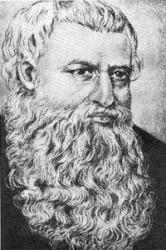
1500 - 1561 Person Name: Nikolaus Herman, 1480-1561 Topics: Biblical Names and Places Jacob; Blessing; Church Year Advent; Church Year All Saints' Day; Church Year Ascension of the Lord; Church Year Christ the King; Church Year Passion/Palm Sunday; Church Year Transfiguration; Earth; Elements of Worship Call to Worship; Elements of Worship Gathering; Elements of Worship Lord's Supper; Elements of Worship Preparation for Worship; Enthronement Psalms; Faith; Freedom; God Trust in; God as Creator; God as King; God's Sovereignty; God's Armor; God's Face; God's Majesty; God's Strength; Guilt; Hope; Idols and Idolatry; Innocence; Processions; Temple; Ten Commandments 2nd Commandment (do not make graven emages); The Creation; Unity and Fellowship; Worship; Year A, B, C, Presentation of the Lord, February 2; Year B, All Saints' Day, November 1; Year B, Ordinary Time after Pentecost, July 10-16 Adapter of "LOBT GOTT, IHR CHRISTEN" in Psalms for All Seasons Herman, Nicolaus, is always associated with Joachimsthal in Bohemia, just over the mountains from Saxony. The town was not of importance till the mines began to be extensively worked about 1516. Whether Herman was a native of this place is not known, but he was apparently there in 1518, and was certainly in office there in 1524. For many years he held the post of Master in the Latin School, and Cantor or Organist and Choirmaster in the church. Towards the end of his life he suffered greatly from gout, and had to resign even his post as Cantor a number of years before his death. He died at Joachimsthal, May 3, 1561. (Koch, i. 390-398; Allgemeine Deutsche Biographie, xii. 186-188, &c.)
He was a great friend and helper of J. Mathesius (q.v.) (who in 1532 became rector of the school, but in 1541 diaconus and in 1545 pastor of the church), and it was said that whenever Mathesius preached a specially good sermon Herman straightway embodied its leading ideas in a hymn. His hymns, however, were not primarily written for use in church, but were intended for the boys and girls in the schools, to supplant profane songs in the mouths of the young men and women, or for the daily life of the “housefathers and housemothers" in Joachimsthal, at home, and in their work in the mines. He is a poet of the people, homely, earnest, and picturesque in style; by his naiveté reminding us of Hans Sachs. He was an ardent lover of music and a very good organist. The chorales which he published with his hymns are apparently all of his own composition, and are among the best of the Reformation period.
Many of Herman's hymns soon passed into Church use in Germany, and a number are found in almost all books in present use. About 190 in all, they appeared principally in:—
(1) Die Sontags Evangelia uber des gantze Jar, in Gesenge verfasset, für die Kinder und christlichen Haussvetter, &c, Wittenberg, 1560 (dedication by Herman dated Trinity Sunday, 1559), with 101 hymns and 17 melodies. The best are those interspersed specially meant for children and not directly founded on the Gospel for the day. (2) Die Historien von der Sindfludt, Joseph, Mose, Helia, Elisa und der Susanna, sampt etlichen Historien aus den Evangelisten, &c., Wittenberg, 1562 (preface by Herman dated St. Bartholomew's Day, 1560), with 73 hymns and 20 melodies. In this case also the general hymns are the best. A selection of 60 (really 61) of his hymns, with a memoir by K. F. Ledderhose, was published at Halle, 1855.
One of Herman's hymns is noted under “Wenn mein Stündlein vorhanden ist." The others which have passed into English are:—
i. Bescher uns, Herr, das täglioh Brod. Grace before Meat. 1562, as above, and thence in Wackernagel, iii. p. 1228, in 6 stanzas of 4 lines; in Ledderhose, p. 70; and in the Berlin Geistliche Lieder, ed. 1863, No. 1133. Translated as:—
1. Thou art our Father and our God. This, by P. H. Molther, a translation of stanza vi., as No. 180 in the Moravian Hymn Book, 1789 (1849, No. 220, st. v.).
2. As children we are owned by Thee, a translation of stanza vi., as st. iii. of No. 191 in the Moravian Hymn Book, 1801 (1849, No. 220, stanza iii.).
ii. Die helle Sonn leucht jetzt herfür. Morning. 1560, as above, and thence in Wackernagel, iii. p. 1184, in 4 stanzas of 4 lines, in Ledderhose, p. 87; and in the Unverfälschter Liedersegen, 1851, No. 450. Translated as:—
The morning beam revives our eyes, a good and full translation by. A. T. Russell, as No. 71 in the Dalston Hospital Hymn Book 1848.
iii. Erschienen ist der herrliche Tag. Easter. 1560, as above, in 14 stanzas of 4 lines, entitled, "A new Spiritual Song of the Joyful Resurrection of our Saviour Jesus Christ; for the maidens of the girls' school in Joachimsthal”; and thence in Wackernagel, iii. p. 1175; in Ledderhose p. 23, and Unverfälschter Liedersegen, 1851, No. 134. It has reminiscences of the "Erstanden ist der heil'ge Christ". Translated as:—
The day hath dawn'd—-the day of days, a good translation by A. T. Russell of stanzas i., ii., xiii., xiv., as No. 113 in his Psalms & Hymns, 1851.
Another tr. is, "At length appears the glorious day," by Dr. G. Walker, 1860, p. 28.
iv. Hinunter ist der Sonnen Schein. Evening. 1560, as above, and thence in Wackernagel, iii. p. 1184, in 4 stanzas of 4 lines; in Ledderhose, p. 88; and in the Unverfälschter Liedersegen1851, No. 523. Some of the phrases may have been suggested by the "Christe qui lux es et dies" (q. v.). Translated as:—
1. Sunk is the sun's last beam of light, a full and good translation by Miss Cox in her Sacred Hymns from the German, 1841, p. 57. Included in Alford's Psalms & Hymns, 1844, and Tear of Praise, 1867; in Dale's English Hymn Book, 1875; in the Pennsylvania Lutheran Church Book, 1868, and others. It is also given considerably altered and beginning, "Sunk is the Sun! the daylight gone," in W. J. Blew's Church Hymn and Tune Book, 1851-55.
2. The happy sunshine all is gone, in full, by Miss Winkworth in her Lyra Germanica, 1st Ser., 1855, p. 225; repeated in her Chorale Book for England, 1863, and the Ohio Lutheran Hymnal, 1880.
Other translations are: (1) "Did I perhaps Thee somewhat grieve," a translation of stanza iii. in the Moravian Hymn Book, 1789, No. 756. In the 1801 and later eds. (1886, No. 1181, st. iii.), it begins, "Where'er I Thee this day did grieve." (2) "The sun’s fair sheen is past and gone," by H. J. Buckoll, 1842, p. 68. (3) "The sun hath run his daily race," by Lady E. Fortescue, 1843, p. 14.
v. Lobt Gott, ihr Christen alle gleich. Christmas. Written c. 1554, but first published 1560 as above, as the first of "Three Spiritual Christmas Songs of the new-born child Jesus, for the children in Joachimsthal." Thence in Wackernagel iii. p. 1169, in 8 stanzas of 4 lines; in Ledderhose, p. 1; and in the Unverfälschter Liedersegen, 1851, No. 47. It is one of the most popular German Christmas hymns. The melody set to it in 1560 is also by Herman; in 1554 to his "Kommt her ihr liebsten Schwesterlein" [in the Hymnal Companioncalled "St. George's (old)"]. Translated as :—
1. Let all together praise our God, a good translation of stanzas i., iii., vi., viii., by A. T. Russell, as No. 52 in his Psalms & Hymns, 1851. Repeated in Kennedy, 1863, adding a translation of st. ii., and beginning, "Let all creation praise our God."
2. Praise ye the Lord, ye Christians I yea, in full, by E. Cronenwett, as No. 31 in the Ohio Lutheran Hymnal 1880.
Other translations are: (1) "A wondrous change He with us makes," a tr. of stanza viii., ix. as No. 438 in pt. i. of the Moravian Hymn Book, 1754, repeated 1789-1826. (2) "Come, brethren, lets the song arise," by Dr. G. Walker, 1860, p. 26. (3) "Praise God, now Christians, all alike," by Miss Manington, 1864, p. 9. (4) "Praise God, upon His throne on high," in the Sunday Magazine, 1874, p. 384, signed "P. J." The hymn “Shepherds rejoice, lift up your eyes," given by J. C. Jacobi in his Psalmodia Germanica, 1722, p. 8, to Herman's melody (which was first published 1554) is, as stated in his Preface, taken from Bk. i. of Isaac Watts's Horse Lyricae
vi. So wahr ich leb, spricht Gott der Herr. Absolution. 1560, as above, in 11 stanzas of 4 lines, entitled "A hymn on the power of the keys and the virtue of holy absolution; for the children in Joachimsthal." Thence in Wackernagel, iii. p. 1183; in Ledderhose, p. 47; and the Unverfälschter Liedersegen, 1851, No. 429. It probably suggested the better known hymn, "So wahr ich lebe," q. v., by Johann Heermann. Translated as:—
Yea, as I live, Jehovah saith, I do not wish the sinner's death, in full, by Dr. M. Loy, as No. 245, in the Ohio Lutheran Hymnal, 1880. [Rev. James Mearns, M.A.]
--John Julian, Dictionary of Hymnology (1907)
Nikolaus Herman
John Zundel
1815 - 1882 Topics: Year C Advent 2 Composer of "BEECHER" in The New Century Hymnal John Zundel; b. 1815, near Stuttgart, Germany; organist in Brooklyn, N. Y., from 1847 to 1878; d. Cannstadt, Germany, 1882
Evangelical Lutheran Hymnal, 1908
John Zundel
Henry Thomas Smart

1813 - 1879 Person Name: Henry Smart Topics: Advent 2 Epistle Composer of "LANCASHIRE" in Magnify the Lord Henry Smart (b. Marylebone, London, England, 1813; d. Hampstead, London, 1879), a capable composer of church music who wrote some very fine hymn tunes (REGENT SQUARE, 354, is the best-known).
Smart gave up a career in the legal profession for one in music. Although largely self taught, he became proficient in organ playing and composition, and he was a music teacher and critic. Organist in a number of London churches, including St. Luke's, Old Street (1844-1864), and St. Pancras (1864-1869), Smart was famous for his extemporizations and for his accompaniment of congregational singing. He became completely blind at the age of fifty-two, but his remarkable memory enabled him to continue playing the organ. Fascinated by organs as a youth, Smart designed organs for important places such as St. Andrew Hall in Glasgow and the Town Hall in Leeds. He composed an opera, oratorios, part-songs, some instrumental music, and many hymn tunes, as well as a large number of works for organ and choir. He edited the Choralebook (1858), the English Presbyterian Psalms and Hymns for Divine Worship (1867), and the Scottish Presbyterian Hymnal (1875). Some of his hymn tunes were first published in Hymns Ancient and Modern (1861).
Bert Polman
Henry Thomas Smart
Marie J. Post
1919 - 1990 Topics: Biblical Names and Places David; Biblical Names and Places Egypt; Biblical Names and Places Israel; Biblical Names and Places Mount Hermon; Biblical Names and Places Rahab; Biblical Names and Places Tabor; Church Year Advent; Church Year Baptism of the Lord; Covenant; Discipleship; Doxologies; Earth; Elements of Worship Call to Worship; Elements of Worship Gathering; God as Shield; God as King; God's Wonders; God's Armor; God's Compassion; God's Deeds; God's Faithfulness; God's Justice; God's Love; God's Majesty; God's People (flock, sheep); Happiness; Joy; Judgment; Lament Community; Love; New Creation; Occasional Services Dedication / Consecration / Anniversary; Occasional Services Funerals; Occasional Services New Year; People of God / Church Citizens of Heaven; Royal Psalms; Truth; Unity and Fellowship; Witness; Year A, Ordinary Time after Pentecost, June 26-July 2; Year B, Advent, 4th Sunday; Year B, Ordinary Time after Pentecost, July 17-23 Author (st. 2) of "I Will Sing of the Mercies of the LORD" in Psalms for All Seasons Marie (Tuinstra) Post (b. Jenison, MI, 1919; d. Grand Rapids, MI, 1990) While attending Dutch church services as a child, Post was first introduced to the Genevan psalms, which influenced her later writings. She attended Calvin College, Grand Rapids, Michigan, where she studied with Henry Zylstra. From 1940 to 1942 she taught at the Muskegon Christian Junior High School. For over thirty years Post wrote poetry for the Grand Rapids Press and various church periodicals. She gave many readings of her poetry in churches and schools and has been published in a number of journals and poetry anthologies. Two important collections of her poems are I Never Visited an Artist Before (1977) and the posthumous Sandals, Sails, and Saints (1993). A member of the 1987 Psalter Hymnal Revision Committee, Post was a significant contributor to its array of original texts and paraphrases.
Bert Polman
Marie J. Post
David Willcocks
1919 - 2015 Topics: The Christian Year C; Annunciation; Biblical Characters David; Biblical Characters Mary, Mother of Jesus; Children Praising; Christian Year Christmas; Heaven(s)/Paradise; Jesus Christ Birth and Infancy; Jesus Christ Example; Jesus Christ Reign; Jesus Christ Second Coming; Obedience; Second Coming; Advent 4 Year A; Christmas Eve Year A; Christmas 1 Year A; Christmas 2 Year A; Epiphany Year A; Epiphany 5 Year A; Epiphany 6 Year A; Advent 4 Year B; Christmas Eve Year B; Christmas 1 Year B; Advent 3 Year C; Christmas 1 Year C Composer (Descant) of "IRBY" in Voices United
David Willcocks
Robert Davis
Topics: The Christian Year Christmas; Biblical Narrative; Biblical Places Bethlehem; Christian Year Christmas; Jesus Christ Birth and Infancy; Jesus Christ Brother; Jesus Christ Friend; Jesus Christ Images of; Jesus Christ Incarnation; Advent 4 Year A; Christmas 2 Year C Translator of "Jesus, Our Brother" in Voices United
Robert Davis
Robert Bridges
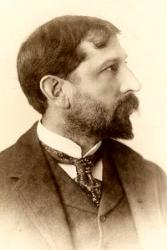
1844 - 1930 Person Name: Robert Bridges, 1844-1930 Topics: Faith, Trust and Commitment; Grace and Providence; Hope and Consolation; Protection; Year A Easter 3; Year A Fourth Sunday Before Advent; Year A Lent 2; Year A Second Sunday Before Lent; Year A Second Sunday Before Lent; Year A Proper 24; Year A Proper 6; Year B Proper 12; Year B Proper 17; Year C Lent 1; Year C Proper 17; Year C Proper 21; Year C Proper 23; Year C Proper 24; Year C Proper 7; Years A, B, and C Day of Thanksgiving for Holy Communion; Years A, B, and C Easter Vigil; Years A, B, and C Maundy Thursday Paraphraser of "All my hope on God is founded" in Complete Anglican Hymns Old and New Robert S. Bridges (b. Walmer, Kent, England, 1844; d. Boar's Hill, Abingdon, Berkshire, England, 1930) In a modern listing of important poets Bridges' name is often omitted, but in his generation he was considered a great poet and fine scholar. He studied medicine and practiced as a physician until 1881, when he moved to the village of Yattendon. He had already written some poetry, but after 1881 his literary career became a full-time occupation, and in 1913 he was awarded the position of poet laureate in England. Bridges published The Yattendon Hymnal (1899), a collection of one hundred hymns (forty-four written or translated by him with settings mainly from the Genevan psalter, arranged for unaccompanied singing. In addition to volumes of poetry, Bridges also published A Practical Discourse on Some Principles of Hymn-Singing (1899) and About Hymns (1911).
Bert Polman
===================
Bridges, Robert Seymour, M.A., son of J. J. Bridges, of Walmer, Kent, was b. Oct. 23, 1844, and educated at Eton and at Corpus Christi College, Oxford (B.A. 1867, M.A. 1874). He took his M.A. in 1874, but retired from practice in 1882, and now (1906) resides at Yattendon, Berks. He is the author of many poems and plays. He edition and contributed to the Yattendon Hymnal, 1899 (originally printed at the Oxford Univ. Press in parts—Nos. 1-25, 1895; 26-50, 1897; 51-75, 1898; 76-100, 1899). [Rev. James Mearns, M.A.]
--John Julian, Dictionary of Hymnology, New Supplement (1907)
Robert Bridges
Peter Cutts
1937 - 2024 Person Name: Peter Cutts (born 1937) Topics: Advent 2 The Word of God in the Old Testament Composer of "BIRABUS" in Hymns for Today's Church (2nd ed.)
Peter Cutts
William Henry Monk
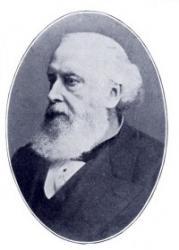
1823 - 1889 Person Name: W. H. Monk Topics: Advent 2 Year A Adapter of "CRÜGER" in Voices United William H. Monk (b. Brompton, London, England, 1823; d. London, 1889) is best known for his music editing of Hymns Ancient and Modern (1861, 1868; 1875, and 1889 editions). He also adapted music from plainsong and added accompaniments for Introits for Use Throughout the Year, a book issued with that famous hymnal. Beginning in his teenage years, Monk held a number of musical positions. He became choirmaster at King's College in London in 1847 and was organist and choirmaster at St. Matthias, Stoke Newington, from 1852 to 1889, where he was influenced by the Oxford Movement. At St. Matthias, Monk also began daily choral services with the choir leading the congregation in music chosen according to the church year, including psalms chanted to plainsong. He composed over fifty hymn tunes and edited The Scottish Hymnal (1872 edition) and Wordsworth's Hymns for the Holy Year (1862) as well as the periodical Parish Choir (1840-1851).
Bert Polman
William Henry Monk
Pages




