

 My Starred Hymns
 My FlexScores
 My Hymnals
 My Purchased Files
Planning worship?
Check out our sister site, ZeteoSearch.org,
for 20+ additional resources related to your search.
- |
User Links
Person Results
George Duffield
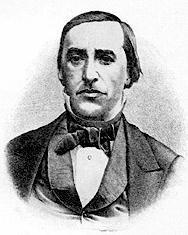
1818 - 1888 Person Name: G. Duffield Topics: Missionary Author of "Stand Up for Jesus" in Tabernacle Hymns Duffield, George, Jr., D.D., son of the Rev. Dr. Duffield, a Presbyterian Minister, was born at Carlisle, Pennsylvania, Sept. 12, 1818, and graduated at Yale College, and at the Union Theological Seminary, New York. From 1840 to 1847 he was a Presbyterian Pastor at Brooklyn; 1847 to 1852, at Bloomfield, New Jersey; 1852 to 1861, at Philadelphia; 1861 to 1865, at Adrian, Michigan; 1865 to 1869, at Galesburg, Illinois; 1869, at Saginaw City, Michigan; and from 1869 at Ann Arbor and Lansing, Michigan. His hymns include;—
1. Blessed Saviour, Thee I love. Jesus only. One of four hymns contributed by him to Darius E. Jones's Temple Melodies, 1851. It is in 6 stanzas of 6 lines. In Dr. Hatfield's Church Hymnbook it is given in 3 stanzas. The remaining three hymns of the same date are:—
2. Parted for some anxious days. Family Hymn.
3. Praise to our heavenly Father, God. Family Union.
4. Slowly in sadness and in tears. Burial.
5. Stand up, stand up for Jesus. Soldiers of the Cross. The origin of this hymn is given in Lyra Sac. Americana, 1868, p. 298, as follows:—
"I caught its inspiration from the dying words of that noble young clergyman, Rev. Dudley Atkins Tyng, rector of the Epiphany Church, Philadelphia, who died about 1854. His last words were, ‘Tell them to stand up for Jesus: now let us sing a hymn.' As he had been much persecuted in those pro-slavery days for his persistent course in pleading the cause of the oppressed, it was thought that these words had a peculiar significance in his mind; as if he had said, ‘Stand up for Jesus in the person of the downtrodden slave.' (Luke v. 18.)"
Dr. Duffield gave it, in 1858, in manuscript to his Sunday School Superintendent, who published it on a small handbill for the children. In 1858 it was included in The Psalmist, in 6 stanzas of 8 lines. It was repeated in several collections and in Lyra Sac. Amer., 1868, from whence it passed, sometimes in an abbreviated form, into many English collections. [Rev. F. M. Bird, M.A.]
- John Julian, Dictionary of Hymnology (1907)
See also in:
Hymn Writers of the Church
George Duffield
John R. Clements
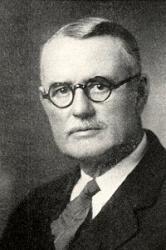
1868 - 1946 Topics: Missionary Author of "Somebody" in The Popular Hymnal John R. Clements was born in County Armagh, Ireland 28 November 1868 and was brought to the United States at the age of two years. He worked at the age of thirteen as a retail grocery clerk and had a successful wholesale grocery business. He began writing poetry when he was young.
Dianne Shapiro, from "The Singers and Their Songs: sketches of living gospel hymn writers" by Charles Hutchinson Gabriel (Chicago: The Rodeheaver Company, 1916)
John R. Clements
Washington Gladden

1836 - 1918 Person Name: W. Gladden Topics: Missionary Consecration Author of "O Master, let me walk with Thee" in Life Songs Washington Gladden (1836-1918) was called to the First Congregational Church in Columbus, OH in 1882 and remained there for 32 years. In 1883-84 he was known for his success in fighting the corrupt Tweed Ring, for arbitrating the Telegraphers' Strike and the Hocking Valley Coal Strike. He attacked John D. Rockefeller, Sr. for giving $100,000 of "tainted money" to the Congregational Church's Foreign Missions program. Throughout his ministry he emphasized applying the gospel to life in America. He wrote "O Master, let me walk with thee" in 1879.
Mary Louise VanDyke
===================
Gladden, Washington, was born at Pottsgrove, Pennsylvania, Feb. 11, 1836; was educated at Williams College: and entered the Congregational Ministry. He was for some time editor of the New York Independent, and of the Sunday Afternoon. In the Sunday Afternoon, his hymn, "O Master, let me walk with Thee" (Walking with God), appeared in 3 stanzas of 8 lines, in March 1879. Of these stanzas i. and iii. are in Laudes Domini, 1884, and others.
--John Julian, Dictionary of Hymnology, Appendix, Part II (1907)
==================
Gladden, W., p. 1565, ii. Dr. Gladden has been Pastor of the First Congregational Church, Columbus, Ohio, since 1882. His hymn-writing has not been extensive. The most popular of his hymns is "0 Master, let me walk with Thee," noted on p. 1565, ii. It has come into somewhat extensive use during the last ten years. Additional hymns in common use include:—
1. Behold a Sower from afar. [The Kingdom of God.] In the Boston Pilgrim Hymnal, 1904, this is dated 1897.
2. Forgive, 0 Lord, the doubts that break Thy promises to me. [Doubting repented of.] Dated 1879, in The Pilgrim Hymnal, 1904.
--John Julian, Dictionary of Hymnology, New Supplement (1907)
Washington Gladden
Lydia Baxter
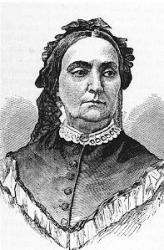
1809 - 1874 Topics: Missionary Author of "Take the Name of Jesus with You" in The New National Baptist Hymnal (21st Century Edition) Baxter, Lydia, an American Baptist, was b. at Petersburg, N. York, Sep. 2, 1800, married to Mr. Baxter, and d. in N. Y. June 22, 1874. In addition to her Gems by the Wayside, 1855, Mrs. Baxter contributed many hymns to collections for Sunday Schools, and Evangelistic Services. Of these, the following are the best known:—
1. Cast thy net again, my brother. Patient toil. Given in the Royal Diadem, N. Y., 1873.
2. Go, work in my vineyard. Duty. Also given in the Royal Diadem, 1873, and Mr. Sankey's S. & Solos, No. 4.
3. I'm kneeling, Lord, at mercy's gate. Lent. In Coronation Hymns, &c, N. Y., 1879.
4. I'm weary, I'm fainting, my day's work is done. Longing for rest. Royal Diadem. 1873.
5. In the fadeless spring-time. Heavenly Reunion. In the Royal Diadem, 1873, I. D. Sankey's S. S. & Solos, No. 256, and others. It was written for Mr. H. P. Main in 1872.
6. One by one we cross the river. Death. In Songs of Salvation, N. Y., 1870, I. D. Sankey's S. S. & Solos, No. 357, &c. It dates cir. 1866.
7. Take the name of Jesus with you. Name of Jesus. Written late in 1870, or early in 1871, for W. H. Doane, and pub. in Pure Gold, 1871. It is No. 148 of I. D. Sankey's S. S. & Solos.
8. The Master is coming. Invitation. In Songs of Salvation, 1870, No. 38.
9. There is a gate that stands ajar. Mercy. In New Hallowed Songs, and also the Gospel Songs of P. Bliss, 1874. It was written for S. J. Vail about 1872. It has attained to some popularity. It is given in Mr. Sankey's S. & Solos, No. 2.
-John Julian, Dictionary of Hymnology (1907)
Lydia Baxter
Ernest Warburton Shurtleff
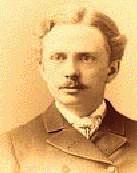
1862 - 1917 Person Name: Ernest W. Shurtleff Topics: Missionary Author of "Lead On, O King Eternal" in The New National Baptist Hymnal (21st Century Edition) Before studying at Andover, Ernest W. Shurtleff (Boston, MA, 1862; d. Paris, France, 1917) attended Harvard University. He served Congregational churches in Ventura, California; Old Plymouth, Massachusetts; and Minneapolis, Minnesota, before moving to Europe. In 1905 he established the American Church in Frankfurt, and in 1906 he moved to Paris, where he was involved in student ministry at the Academy Vitti. During World War I he and his wife were active in refugee relief work in Paris. Shurtleff wrote a number of books, including Poems (1883), Easter Gleams (1885), Song of Hope (1886), and Song on the Waters (1913).
Bert Polman
===============
Shurtleff, Ernest Warburton, b. at Boston, Mass., April 4, 1862, and educated at Boston Latin School, Harvard University, and Andover Theo. Seminary (1887). Entering the Congregational Ministry, he was Pastor at Palmer and Plymouth, Mass., and is now (1905) Minister of First Church, Minneapolis, Minn. His works include Poems, 1883, Easter Gleams, 1883, and others. His hymn, "Lead on, O King Eternal" (Christian Warfare), was written as a parting hymn to his class of fellow students at Andover, and was included in Hymns of the Faith, Boston, 1887. It has since appeared in several collections. [M. C. Hazard, Ph.D].
--John Julian, Dictionary of Hymnology, New Supplement (1907)
Ernest Warburton Shurtleff
Cecil Frances Alexander
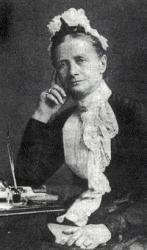
1818 - 1895 Person Name: Mrs. Cecil F. Alexander Topics: Missionary and Brotherhood Author of "Jesus Calls Us" in The Cokesbury Worship Hymnal As a small girl, Cecil Frances Humphries (b. Redcross, County Wicklow, Ireland, 1818; Londonderry, Ireland, 1895) wrote poetry in her school's journal. In 1850 she married Rev. William Alexander, who later became the Anglican primate (chief bishop) of Ireland. She showed her concern for disadvantaged people by traveling many miles each day to visit the sick and the poor, providing food, warm clothes, and medical supplies. She and her sister also founded a school for the deaf. Alexander was strongly influenced by the Oxford Movement and by John Keble's Christian Year. Her first book of poetry, Verses for Seasons, was a "Christian Year" for children. She wrote hymns based on the Apostles' Creed, baptism, the Lord's Supper, the Ten Commandments, and prayer, writing in simple language for children. Her more than four hundred hymn texts were published in Verses from the Holy Scripture (1846), Hymns for Little Children (1848), and Hymns Descriptive and Devotional ( 1858).
Bert Polman
==================
Alexander, Cecil Frances, née Humphreys, second daughter of the late Major John Humphreys, Miltown House, co. Tyrone, Ireland, b. 1823, and married in 1850 to the Rt. Rev. W. Alexander, D.D., Bishop of Derry and Raphoe. Mrs. Alexander's hymns and poems number nearly 400. They are mostly for children, and were published in her Verses for Holy Seasons, with Preface by Dr. Hook, 1846; Poems on Subjects in the Old Testament, pt. i. 1854, pt. ii. 1857; Narrative Hymns for Village Schools, 1853; Hymns for Little Children, 1848; Hymns Descriptive and Devotional, 1858; The Legend of the Golden Prayers 1859; Moral Songs, N.B.; The Lord of the Forest and his Vassals, an Allegory, &c.; or contributed to the Lyra Anglicana, the S.P.C.K. Psalms and Hymns, Hymns Ancient & Modern, and other collections. Some of the narrative hymns are rather heavy, and not a few of the descriptive are dull, but a large number remain which have won their way to the hearts of the young, and found a home there. Such hymns as "In Nazareth in olden time," "All things bright and beautiful," "Once in Royal David's city," "There is a green hill far away," "Jesus calls us o'er the tumult," "The roseate hues of early dawn," and others that might be named, are deservedly popular and are in most extensive use. Mrs. Alexander has also written hymns of a more elaborate character; but it is as a writer for children that she has excelled.
- John Julian, Dictionary of Hymnology (1907)
===============
Alexander, Cecil F., née Humphreys, p. 38, ii. Additional hymns to those already noted in this Dictionary are in common use:—
1. Christ has ascended up again. (1853.) Ascension.
2. His are the thousand sparkling rills. (1875.) Seven Words on the Cross (Fifth Word).
3. How good is the Almighty God. (1S48.) God, the Father.
4. In [a] the rich man's garden. (1853.) Easter Eve.
5. It was early in the morning. (1853.) Easter Day.
6. So be it, Lord; the prayers are prayed. (1848.) Trust in God.
7. Saw you never in the twilight? (1853.) Epiphany.
8. Still bright and blue doth Jordan flow. (1853.) Baptism of Our Lord.
9. The angels stand around Thy throne. (1848.) Submission to the Will of God.
10. The saints of God are holy men. (1848.) Communion of Saints.
11. There is one Way and only one. (1875.) SS. Philip and James.
12. Up in heaven, up in heaven. (1848.) Ascension.
13. We are little Christian children. (1848.) Holy Trinity.
14. We were washed in holy water. (1848.) Holy Baptism.
15. When of old the Jewish mothers. (1853.) Christ's Invitation to Children.
16. Within the Churchyard side by side. (1848.) Burial.
Of the above hymns those dated 1848 are from Mrs. Alexander's Hymns for Little Children; those dated 1853, from Narrative Hymns, and those dated 1875 from the 1875 edition of Hymns Ancient & Modern.
Several new hymns by Mrs. Alexander are included in the 1891 Draft Appendix to the Irish Church Hymnal.
--John Julian, Dictionary of Hymnology, Appendix, Part II (1907)
=============
Alexander, Cecil F. , p. 38, ii. Mrs. Alexander died at Londonderry, Oct. 12, 1895. A number of her later hymns are in her Poems, 1896, which were edited by Archbishop Alexander.
--John Julian, Dictionary of Hymnology, New Supplement (1907)
See also in:Hymn Writers of the Church
Cecil Frances Alexander
Jeremiah Eames Rankin
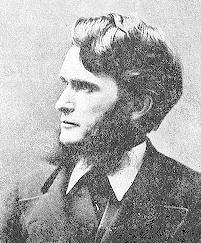
1828 - 1904 Person Name: Jeremiah E. Rankin, 1828–1904 Topics: Missionary Work Author of "God Be with You Till We Meet Again" in Hymns of the Church of Jesus Christ of Latter-day Saints Pseudonym: R. E. Jeremy.
Rankin, Jeremiah Eames, D.D., was born at Thornton, New Haven, Jan. 2, 1828, and educated at Middleburg College, Vermont, and at Andover. For two years he resided at Potsdam, U.S. Subsequently he held pastoral charges as a Congregational Minister at New York, St. Albans, Charlestown, Washington ( District of Columbia), &c. In 1878 he edited the Gospel Temperance Hymnal, and later the Gospel Bells. His hymns appeared in these collections, and in D. E. Jones's Songs of the New Life, 1869. His best known hymn is "Labouring and heavy laden" (Seeking Christ). This was "written [in 1855] for a sister who was an inquirer," was first printed in the Boston Recorder, and then included in Nason's Congregational Hymn Book, 1857. Another of his hymns is "Rest, rest, rest, brother rest." He died in 1904. [Rev. F. M. Bird, M.A.]
--John Julian, Dictionary of Hymnology (1907)
========================
Rankin, J. 33., p. 951, ii. Dr. Rankin, b. in N. H. (not New Haven), and received his D.D. 1869, LL.D. 1889 from his Alma Mater. He was President for several years of Howard University, Washington, D.C. His publications included several volumes of Sermons, German-English Lyrics, Sacred and Secular, 1897; 2nd ed. 1898, &c. In addition to his hymns noted on p. 951, ii., he has written and published mainly in sheet form many others, the most important and best-known being:—
1. God be with you till we meet again. [Benediction.] Dr. Rankin's account of this hymn, supplied to us, in common with Mr. Brownlie, for his Hymns and H. Writers of The Church Hymnary, 1899, is: "It was written as a Christian good-bye, and first sung in the First Congregational Church, of which I was minister for fifteen years. We had Gospel meetings on Sunday nights, and our music was intentionally of the popular kind. I wrote the first stanza, and sent it to two gentlemen for music. The music which seemed to me to best suit the words was written by T. G. Tomer, teacher of public schools in New Jersey, at one time on the staff of General 0. 0. Howard. After receiving the music (which was revised by Dr. J. W. Bischoff, the organist of my church), I wrote the other stanzas." The hymn became at once popular, and has been translated into several languages. In America it is in numerous collections; and in Great Britain, in The Church Hymnary, 1898, Horder's Worship Song, 1905, The Methodist Hymn Book, 1904, and others. It was left undated by Dr. Rankin, but I.D. Sankey gives it as 1882.
2. Beautiful the little hands. [Little ones for Jesus.] Given without date in Gloria Deo, New York, 1900.
Dr. Rankin's translations include versions of German, French, Latin, and Welsh hymns. His contributions to the periodical press have been numerous.
--John Julian, Dictionary of Hymnology, New Supplement (1907)
Jeremiah Eames Rankin
Joseph Haydn
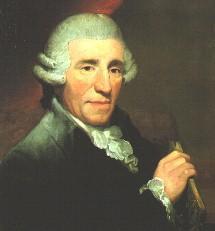
1732 - 1809 Person Name: F. J. Haydn Topics: Missionary Hymns Composer of "AUSTRIA" in The Book of Common Praise Franz Joseph Haydn (b. Rohrau, Austria, 1732; d. Vienna, Austria, 1809) Haydn's life was relatively uneventful, but his artistic legacy was truly astounding. He began his musical career as a choirboy in St. Stephen's Cathedral, Vienna, spent some years in that city making a precarious living as a music teacher and composer, and then served as music director for the Esterhazy family from 1761 to 1790. Haydn became a most productive and widely respected composer of symphonies, chamber music, and piano sonatas. In his retirement years he took two extended tours to England, which resulted in his "London" symphonies and (because of G. F. Handel's influence) in oratorios. Haydn's church music includes six great Masses and a few original hymn tunes. Hymnal editors have also arranged hymn tunes from various themes in Haydn's music.
Bert Polman
Joseph Haydn
D. B. Towner

1850 - 1919 Topics: Missionary Composer of "[Anywhere with Jesus I can safely go]" in Alexander's Hymns No. 4 Used pseudonyms Robert Beverly, T. R. Bowden
==============================
Towner, Daniel B. (Rome, Pennsylvania, 1850--1919). Attended grade school in Rome, Penn. when P.P. Bliss was teacher. Later majored in music, joined D.L. Moody, and in 1893 became head of the music department at Moody Bible Institute. Author of more than 2,000 songs.
--Paul Milburn, DNAH Archives
D. B. Towner
William F. Sherwin
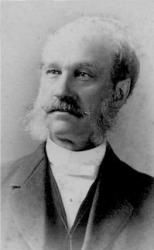
1826 - 1888 Person Name: W. F. Sherwin Topics: Missionary Hymns Composer of "CUTTING" in The Broadman Hymnal Sherwin, William Fisk, an American Baptist, was born at Buckland, Massachusetts, March 14,1826. His educational opportunities, so far as schools were concerned, were few, but he made excellent use of his time and surroundings. At fifteen he went to Boston and studied music under Dr. Mason: In due course he became a teacher of vocal music, and held several important appointments in Massachusetts; in Hudson and Albany, New York County, and then in New York City. Taking special interest in Sunday Schools, he composed carols and hymn-tunes largely for their use, and was associated with the Rev. R. Lowry and others in preparing Bright Jewels, and other popular Sunday School hymn and tune books. A few of his melodies are known in Great Britain through I. D. Sankey's Sacred Songs and Solos, where they are given with his signature. His hymnwriting was limited. The following pieces are in common use:—
1. Grander than ocean's story (1871). The Love of God.
2. Hark, bark, the merry Christmas bells. Christmas Carol.
3. Lo, the day of God is breaking. The Spiritual Warfare.
4. Wake the song of joy and gladness. Sunday School or Temperance Anniversary.
5. Why is thy faith, 0 Child of God, so small. Safety in Jesus.
Mr. Sherwin died at Boston, Massachusetts, April 14, 1888.
-- John Julian, Dictionary of Hymnology (1907)
==================
Sherwin, W. F., p. 1055, i. Another hymn from his Bright Jewels, 1869, p. 68, is "Sound the battle cry" (Christian Courage), in the Sunday School Hymnary, 1905, and several other collections.
--John Julian, Dictionary of Hymnology, New Supplement (1907)
William F. Sherwin
Pages




