You help make Hymnary.org possible. More than 10 million people from 200+ countries found hymns, liturgical resources and encouragement on Hymnary.org in 2025, including you. Every visit affirms the global impact of this ministry.

If Hymnary has been meaningful to you this year, would you take a moment today to help sustain it? A gift of any size—paired with a note of encouragement if you wish—directly supports the server costs, research work and curation that keep this resource freely available to the world.

Give securely online today, or mail a check to:
Hymnary.org
Calvin University
3201 Burton Street SE
Grand Rapids, MI 49546

Thank you for your partnership, and may the hope of Advent fill your heart.

Person Results

Topics:commitment
In:people

Planning worship? Check out our sister site, ZeteoSearch.org, for 20+ additional resources related to your search.
Showing 21 - 30 of 1,645Results Per Page: 102050

Mary Brown

1856 - 1918 Topics: Personal Commitment Author of "I'll Go Where You Want Me To Go" in Hymns of Grace From the Norwich Bulletin, Norwich, Connecticut, January 23, 1918: The death of Miss Mary M. Brown at Backus Hospital Tuesday morning saddened a host of friends and the different pupils who have had the benefit of her instruction for so many years. Miss Brown was born in Natick, R. I., May 19, 1856. She was the daughter of Lydia A. Higgins and Joseph R. C. Brown. Her common and high school education was received in Rockport, Mass. At the time there was a normal school in Norwich over twenty years ago, she took the course there and was graduated, after which she taught in the Model School in Norwich. Miss Brown has taught in the Jewett City schools for twenty years. A teacher more faithful to the interests of the scholars and school cannot be found. Her interest in the welfare of her pupils did not cease after they went out from under her care. Her everready pen in poetical compositions for occasions of various kinds was in great demand and the verses were always of a beautiful sentiment, expressed in the best of language. The words for the Christian Endeavor Consecration hymn, "I'll Go Where You Want Me to Go" known and sung wherever sacred music is used, where written by Miss Brown. Her artistic ability was developed in many lines. She was a woman unusually gifted with literary talent. Miss Brown was a member of the Baptist Church. She was one of the original ten members forming Whatsoever Circle of The King's Daughters and has served as its leader. She was a member of the Ladies' Aid Society and Mission Circle, and had been a teacher in the Sunday school. A woman faithful in many things has gone to her reward. She is survived by a sister, Mrs. Nettie Johnson of Jewett City, a brother, E. Frank Brown of Woonsocket, R. I., and niece, Miss Marion H. Johnson of Willimantic. --Submitted to Leonard Ellinwood by Lillian Cathcart, local historian of Norwich, Connecticut. DNAH Archives Excerpt from letter from Julia Bair to Leonard Ellinwood, 22 August 1977: I just talked with Mrs. Samuel Cathcart, our local historian, about Mary Brown. She did live in Jewett City in the late 1800's and wrote that hymn around 1890 as you indicated. However, someone changed one word in her original poem and had it copyrighted. She was never known as Charles Gabriel. She was a teacher here in Jewett City and I talked yesterday with one of her pupils! The music of this hymn (Mary Brown's original) was written by an officer in the Jewett City Savings Bank at that time. --DNAH Archives

Cleland Boyd McAfee

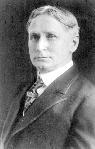
1866 - 1944 Person Name: Cleland B. McAfee Topics: Commitment Author of "Near to the heart of God" in Baptist Hymnal (1975 ed) Cleland Boyd McAfee (September 25, 1866 – February 4, 1944) was an American theologian, Presbyterian minister and hymn writer, best known for penning the gospel hymn, "Near to the Heart of God," and its tune called "McAfee". He wrote the song after the concurrent deaths of two of his young nieces, caused by diphtheria. McAfee was born in Ashley Missouri, in 1866, as one of five children. His father, John A. McAfee, was the founder of Park College in Parkville, Missouri. The younger McAfee graduated from Park College in 1884, and later graduated from Union Theological Seminary in New York. McAfee went on to serve as a professor of philosophy, choir director, pastor and dean of Park College until 1901, when he left to minister at the First Presbyterian Church of Chicago. McAfee moved from First Presbyterian in 1904, to pastor the Lafayette Avenue Church of Brooklyn, in Brooklyn, New York. McAfee also taught systematic theology at McCormick Theological Seminary, from 1912 to 1930. In 1912, McAfee authored the treatise, "The Greatest English Classic: A Study Of The King James Version Of The Bible." He was moderator of the General Assembly of Presbyterian Church in the United States, and led the Pres­by­ter­i­an Board of Foreign Mis­sions from 1930 to 1936. He died in 1944. On August 10, 1892, McAfee married Harriet "Hattie" Lawson Brown; they had three children, Ruth Myrtle, Katharine Agnes, and Mildred Helen. Mildred Helen McAfee Horton went on to become the first director of WAVES (Women Accepted for Volunteer Emergency Service) in the United States Navy. --en.wikipedia.org/wiki/Cleland_Boyd_McAfee

Henry Alford

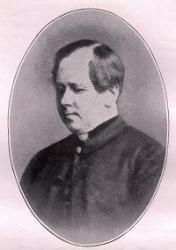
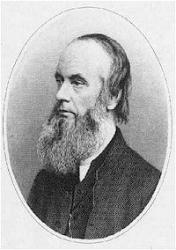
1810 - 1871 Topics: Commitment Author of "We Walk by Faith and Not by Sight" in Baptist Hymnal (1975 ed) Alford, Henry, D.D., son of  the Rev. Henry Alford, Rector of Aston Sandford, b. at 25 Alfred Place, Bedford Row, London, Oct. 7, 1810, and educated at Trinity College, Cambridge, graduating in honours, in 1832. In 1833 he was ordained to the Curacy of Ampton. Subsequently he held the Vicarage of Wymeswold, 1835-1853,--the Incumbency of Quebec Chapel, London, 1853-1857; and the Deanery of Canterbury, 1857 to his death, which took. place  at  Canterbury, Jan. 12, 1871.  In addition he held several important appointments, including that of a Fellow of Trinity, and the Hulsean Lectureship, 1841-2. His literary labours extended to every department of literature, but his noblest undertaking was his edition of the Greek Testament, the result of 20 years' labour.    His hymnological and poetical works, given below, were numerous, and included the compiling of collections, the composition of original hymns, and translations from other languages.    As a hymn-writer he added little to his literary reputation. The rhythm of his hymns is musical, but the poetry is neither striking, nor the thought original.   They are evangelical in their teaching,   but somewhat cold  and  conventional. They vary greatly in merit, the most popular being "Come, ye thankful  people, come," "In token that thou  shalt  not fear," and "Forward be our watchword." His collections, the Psalms and Hymns of 1844, and the Year of Praise, 1867, have not achieved a marked success.  His poetical and hymnological works include— (1) Hymns in the Christian Observer and the Christian Guardian, 1830. (2) Poems and Poetical Fragments (no name), Cambridge, J.   J.  Deighton, 1833.  (3) The School of the Heart, and other Poems, Cambridge, Pitt Press, 1835. (4) Hymns for the Sundays and Festivals throughout the Year, &c.,Lond., Longman ft Co., 1836. (5) Psalms and Hymns, adapted for the Sundays and Holidays throughout the year, &c, Lond., Rivington, 1844. (6) Poetical Works, 2 vols., Lond., Rivington, 1845. (7) Select Poetical Works, London, Rivington, 1851. (8) An American ed. of his Poems, Boston, Ticknor, Reed & Field, 1853(9) Passing away, and Life's Answer, poems in Macmillan's Magazine, 1863. (10) Evening Hexameters, in Good Words, 1864. (11) On Church Hymn Books, in the Contemporary Review, 1866. (12) Year of Praise, London, A. Strahan, 1867. (13) Poetical Works, 1868. (14) The Lord's Prayer, 1869. (15) Prose Hymns, 1844. (16) Abbot of Muchelnaye, 1841. (17) Hymns in British Magazine, 1832.   (18) A translation of Cantemus cuncti, q.v. -- John Julian, Dictionary of Hymnology (1907) ================== Alford, Henry, p. 39, ii. The following additional hymns by Dean Alford are in common use:— 1. Herald in the wilderness. St. John Baptist. (1867.) 2. Let the Church of God rejoice. SS. Simon and Jude. (1844, but not in his Psalms & Hymns of that year.) 3. Not in anything we do. Sexagesima. (1867.) 4. O Thou at Whose divine command. Sexagesima. (1844.) 5. 0 why on death so bent? Lent. (1867.) 6. Of all the honours man may wear. St. Andrew's Day. (1867.) 7. Our year of grace is wearing to a close. Close of the Year. (1867.) 8. Saviour, Thy Father's promise send. Whit-sunday. (1844.) 9. Since we kept the Saviour's birth. 1st Sunday after Trinity. (1867.) 10. Thou that art the Father's Word. Epiphany. (1844.) 11. Thou who on that wondrous journey. Quinquagesima. (1867.) 12. Through Israel's coasts in times of old. 2nd Sunday after Epiphany. (1867.) 13. Thy blood, O Christ, hath made our peace. Circumcision . (1814.) 14. When in the Lord Jehovah's name. For Sunday Schools. (1844.) All these hymns are in Dean Alford's Year of Praise, 1867, and the dates are those of their earliest publication, so far as we have been able to trace the same. --Excerpts from John Julian, Dictionary of Hymnology, Appendix, Part II (1907)

Elvina M. Hall

1820 - 1889 Person Name: Elvina M. Hall, 1820-1889 Topics: Commitment Author of "Jesus Paid It All" in Ambassador Hymnal Hall, Elvina Mable, was born at Alexandria, Virginia, in 1818; and was married, first to Mr. Richard Hall, and then, in 1885, to the Rev. Thomas Myers. Her hymn, "I hear the Saviour say" (Christ All and in All), in I. D. Sankey's Sacred Songs and Solos, 1878, is somewhat popular in Great Britain and America. It was "written on the fly-leaf of the New Lute of Zion, in the choir of the Methodist Episcopal Church, Baltimore, in the spring of 1865." --John Julian, Dictionary of Hymnology, Appendix, Part II (1907)

George P. Simmonds

1890 - 1991 Person Name: George P. Simmonds, 1890-1991 Topics: Commitment Translator of "A Living Faith (Fe Santa Que Nos Dio Jesús)" in Oramos Cantando = We Pray In Song Used pseudonyms G Paul S., J. Paul Simon, and J. Pablo Símon

H. W. Baker

1821 - 1877 Person Name: Henry W. Baker, 1821-1877 Topics: Commitment Translator of "On This Day, the First of Days" in Worship (3rd ed.) Baker, Sir Henry Williams, Bart., eldest son of Admiral Sir Henry Loraine Baker, born in London, May 27, 1821, and educated at Trinity College, Cambridge, where he graduated, B.A. 1844, M.A. 1847. Taking Holy Orders in 1844, he became, in 1851, Vicar of Monkland, Herefordshire. This benefice he held to his death, on Monday, Feb. 12, 1877. He succeeded to the Baronetcy in 1851. Sir Henry's name is intimately associated with hymnody. One of his earliest compositions was the very beautiful hymn, "Oh! what if we are Christ's," which he contributed to Murray's Hymnal for the Use of the English Church, 1852. His hymns, including metrical litanies and translations, number in the revised edition of Hymns Ancient & Modern, 33 in all. These were contributed at various times to Murray's Hymnal, Hymns Ancient & Modern and the London Mission Hymn Book, 1876-7. The last contains his three latest hymns. These are not included in Hymns Ancient & Modern. Of his hymns four only are in the highest strains of jubilation, another four are bright and cheerful, and the remainder are very tender, but exceedingly plaintive, sometimes even to sadness. Even those which at first seem bright and cheerful have an undertone of plaintiveness, and leave a dreamy sadness upon the spirit of the singer. Poetical figures, far-fetched illustrations, and difficult compound words, he entirely eschewed. In his simplicity of language, smoothness of rhythm, and earnestness of utterance, he reminds one forcibly of the saintly Lyte. In common with Lyte also, if a subject presented itself to his mind with striking contrasts of lights and shadows, he almost invariably sought shelter in the shadows. The last audible words which lingered on his dying lips were the third stanza of his exquisite rendering of the 23rd Psalm, "The King of Love, my Shepherd is:"— Perverse and foolish, oft I strayed, But yet in love He sought me, And on His Shoulder gently laid, And home, rejoicing, brought me." This tender sadness, brightened by a soft calm peace, was an epitome of his poetical life. Sir Henry's labours as the Editor of Hymns Ancient & Modern were very arduous. The trial copy was distributed amongst a few friends in 1859; first ed. published 1861, and the Appendix, in 1868; the trial copy of the revised ed. was issued in 1874, and the publication followed in 1875. In addition he edited Hymns for the London Mission, 1874, and Hymns for Mission Services, n.d., c. 1876-7. He also published Daily Prayers for those who work hard; a Daily Text Book, &c. In Hymns Ancient & Modern there are also four tunes (33, 211, 254, 472) the melodies of which are by Sir Henry, and the harmonies by Dr. Monk. He died Feb. 12, 1877. --John Julian, Dictionary of Hymnology (1907)

Martin Madan

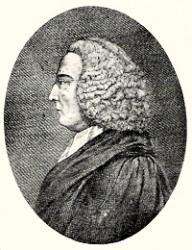
1726 - 1790 Person Name: Martin Madan, 1726-1790 Topics: Faith, Trust and Commitment Author of "Hark, the herald-angels sing" in Complete Anglican Hymns Old and New Madan, Martin, son of Colonel Martin Madan, and brother of Dr. Spencer Madan, sometime Bishop of Peterborough, was born in 1726. He was to have qualified for the Bar, but through a sermon by J. Wesley on the words "Prepare to meet thy God," the whole current of his life was changed. After some difficulty he received Holy Orders, and subsequently founded and became chaplain of the Lock Hospital, Hyde Park Corner. He was popular as a preacher, and had no inconsiderable reputation as a musical composer. He ceased preaching on the publication of his work Thelyphthora, in which he advocated the practice of polygamy. He died in 1790. He published A Commentary on the Articles of the Church of England; A Treatise on the Christian Faith, &c, and:- A Collection of Psalms and Hymns Extracted from Various Authors, and published by the Reverend Mr. Madan. London, 1760. This Collection contained 170 hymns thrown together without order or system of any kind. In 1763 he added an Appendix of 24 hymns. This Collection, referred to as Madam’s Psalms & Hymns, had for many years a most powerful influence on the hymnody of the Church of England. Nearly the whole of its contents, together with its extensively altered texts, were reprinted in numerous hymnbooks for nearly one hundred years. At the present time many of the great hymns of the last century are in use as altered by him in 1760 and 1763. Although several hymns have been attributed to him, we have no evidence that he ever wrote one. His hymnological labours were employed in altering, piecing, and expanding the work of others. And in this he was most successful. -- John Julian, Dictionary of Hymnology (1907) ============================

Kate Hankey

1834 - 1911 Person Name: Katherine Hankey, 1834-1911 Topics: Commitment Author of "I Love to Tell the Story" in Hymns of the Saints Arabella Katherine Hankey (b. Clapham, England, 1834; d. Westminster, London, England, 1911) was the daughter of a wealthy banker and was associated with the Clapham sect of William Wilberforce, a group of prominent evangelical Anglicans from the Clapham area. This group helped to establish the British and Foreign Bible Society, promoted the abolition of slavery, and was involved in improving the lot of England's working classes. Hankey taught Bible classes for shop girls in London, visited the sick in local hospitals, and used the proceeds of her writings to support various mission causes. Her publications include Heart to Heart (1870) and The Old, Old Story and Other Verses (1879). Bert Polman =============== Hankey, Katharine, has published several hymns of great beauty and simplicity which are included in her:— (1) The Old, Old Story, 1866; (2) The Old, Old Story, and other Verses, 1879; (3) Heart to Heart, 1870, enlarged in 1873 and 1876. In 1878 it was republished with music by the author. Miss Hankey's hymns which have come into common use are:— 1. Advent tells us, Christ is near. The Christian Seasons. Written for the Sunday School of St. Peter's, Eaton Square, London, and printed on a card with music by the author. 2. I love to tell the story Of unseen things above. The love of Jesus. This is a cento from No. 3, and is given in Bliss's Gospel Songs, Cincinnati, 1874, and other American collections. 3. I saw Him leave His Father's throne. Lovest than Me? Written in 1868. It is No. 33 of the Old, Old Story, and other Verses, 1879. 4. Tell me the old, old story. This Life of Jesus in verse was written in two parts. Pt. i., "The Story Wanted," Jan. 29; and Pt. ii., "The Story Told," Nov. 18, 1866. It has since been published in several forms, and sometimes with expressive music by the author, and has also been translated into various languages, including Welsh, German, Italian, Spanish, &c. The form in which it is usually known is that in I. P. Sankey's Sacred Songs & Solos. This is Part i. slightly altered. Miss Hankey's works contain many suitable hymns for Mission Services and Sunday Schools, and may be consulted both for words and music with advantage. --John Julian, Dictionary of Hymnology (1907)

Herman G. Stuempfle

1923 - 2007 Person Name: Herman G. Stuempfle, Jr., 1923-2007 Topics: Commitment Author of "For All the Faithful Women" in RitualSong Rev. Dr. Herman G. Stuempfle, Jr., 83, died Tuesday, March 13, 2007, after a long illness. Born April 2, 1923, in Clarion, he was the son of the late Herman G. and Helen (Wolfe) Stuempfle, Sr. Stuempfle lived most of his life in Gettysburg, PA. He served as President of the Lutheran Theological Seminary in Gettysburg. He attended Hughesville public schools, and was a graduate of Susquehanna University and the Lutheran Theological Seminary at Gettysburg. He received additional advanced degrees from Union Theological Seminary in New York and a doctoral degree at Southern California School of Theology at Claremont. He retired in 1989. Rev. Dr. Stuempfle was the author of several books and numerous articles and lectures on preaching, history, and theology. He was also among the most honored and respected hymn writers of the 20th and 21st centuries. Rev. Dr. Stuempfle was known for his leadership in community and civic projects. Always taking an active stance on social issues, he participated in the creation of day care centers, served on the Gettysburg interchurch social action committee, helped create and support prison ministries and a homeless shelter, and tutored young people in the after school program of Christ Lutheran Church, where he was a long time member. --Excerpts from his obituary published in Evening Sun from Mar. 15 to Mar. 16, 2007

John H. Stockton

1813 - 1877 Person Name: John H. Stockton, 1813-1877 Topics: Commitment and Submission Author of "Only Trust Him" in Total Praise Stockton, John Hart, a Methodist minister, was born in 1813, and died in 1877. He was a member of the New Jersey Annual Conference of the Methodist Episcopal Church, and the successive pastoral charges that he filled as a member of that Conference are found in the Conference Journal. He was not only a preacher, but a musician and composer of tunes, as well as hymn writer. He published two gospel song books: Salvation Melodies, 1874, and Precious Songs, 1875. Hymn Writers of the Church by Charles Nutter, 1911 =============== Stockton, John Hart, b. April 19, 1813, and d. March 25, 1877, was the author of "Come, every soul by sin oppressed" (Invitation), in I.D. Sankey's Sacred Songs and Solos, 1878, and of "The Cross, the Cross, the blood¬stained Cross" (Good Friday) in the same collection. --John Julian, Dictionary of Hymnology, Appendix, Part II (1907) =============== Stockton, John Hart. (New Hope, Pennsylvania, April 19, 1813--March 25, 1877). Born of Presbyterian parents, he was converted at a Methodist camp meeting in 1838, being received into full membership in the New Jersey Conference in 1857. Because of ill health he twice took the "supernumerary relations." He withdrew from actual pastoral work in 1874 and engaged in compiling and publishing gospel hymn books, issuing Salvation Melodies that year and Precious Songs in 1875, writing both words and music for a number of the songs. He died suddenly after attending a Sunday morning service at Arch Street Church, Philadelphia. Our Hymnody, McCutchan, has, perhaps, the fullest account of him readily available. --Robert G. McCutchan, DNAH Archives

Pages


Export as CSV
It looks like you are using an ad-blocker. Ad revenue helps keep us running. Please consider white-listing Hymnary.org or getting Hymnary Pro to eliminate ads entirely and help support Hymnary.org.