You help make Hymnary.org possible. More than 10 million people from 200+ countries found hymns, liturgical resources and encouragement on Hymnary.org in 2025, including you. Every visit affirms the global impact of this ministry.

If Hymnary has been meaningful to you this year, would you take a moment today to help sustain it? A gift of any size—paired with a note of encouragement if you wish—directly supports the server costs, research work and curation that keep this resource freely available to the world.

Give securely online today, or mail a check to:
Hymnary.org
Calvin University
3201 Burton Street SE
Grand Rapids, MI 49546

Thank you for your partnership, and may the hope of Advent fill your heart.

Person Results

Text Identifier:"^rock_of_ages_cleft_for_me_let_me_hide$"
In:people

Planning worship? Check out our sister site, ZeteoSearch.org, for 20+ additional resources related to your search.
Showing 31 - 40 of 83Results Per Page: 102050

Russell Kelso Carter

1849 - 1928 Person Name: R. Kelso Carter Composer of "[Rock of Ages! cleft for me]" in The Silver Trumpet Russel Kelso Carter was a professor in the Pennsylvania Military College of Chester. While there he was licensed to preach by the Methodist Episcopal Church. He became very active in leading camp meetings and revivals. After failing health forced him to abandon this work, he studied and became a medical doctor as well as a writer. He wrote novels as well as hymns. Dianne Shapiro, from "The Singers and Their Songs: sketches of living gospel hymn writers" by Charles Hutchinson Gabriel (Chicago: The Rodeheaver Company, 1916)

John R. Sweney

1837 - 1899 Person Name: Jno. R. Sweney Composer of "[Rock of Ages, cleft for me]" in The Royal Fountain No. 4 John R. Sweney (1837-1899) was born in West Chester, Pennsylvania, and exhibited musical abilities at an early age. At nineteen he was studying with a German music teacher, leading a choir and glee club, and performing at children’s entertainments. By twenty-two he was teaching at a school in Dover, Delaware. Soon thereafter, he was put in charge of the band of the Third Delaware Regiment of the Union Army for the duration of the Civil War. After the war, he became Professor of Music at the Pennsylvania Military Academy, and director of Sweney’s Cornet Band. He eventually earned Bachelor and Doctor of Music degrees at the Academy. Sweney began composing church music in 1871 and became well-known as a leader of large congregations. His appreciators stated “Sweney knows how to make a congregation sing” and “He had great power in arousing multitudes.” He also became director of music for a large Sunday school at the Bethany Presbyterian Church in Philadelphia of which John Wanamaker was superintendent (Wanamaker was the founder of the first major department store in Philadelphia). In addition to his prolific output of hymn melodies and other compositions, Sweney edited or co-edited about sixty song collections, many in collaboration with William J. Kirkpatrick. Sweney died on April 10, 1899, and his memorial was widely attended and included a eulogy by Wanamaker. Joe Hickerson from "Joe's Jottings #9" used by permission

Thoro Harris

1874 - 1955 Composer of "MONTAGU" in Echoes of Paradise Born: March 31, 1874, Washington, DC. Died: March 27, 1955, Eureka Springs, Arkansas. Buried: International Order of Odd Fellows Cemetery, Eureka Springs, Arkansas. After attending college in Battle Creek, Michigan, Harris produced his first hymnal in Boston, Massachusetts, in 1902. He then moved to Chicago, Illinois at the invitation of Peter Bilhorn, and in 1932, to Eureka Springs, Arkansas. He composed and compiled a number of works, and was well known locally as he walked around with a canvas bag full of handbooks for sale. His works include: Light and Life Songs, with William Olmstead & William Kirkpatrick (Chicago, Illinois: S. K. J. Chesbro, 1904) Little Branches, with George J. Meyer & Howard E. Smith (Chicago, Illinois: Meyer & Brother, 1906) Best Temperance Songs (Chicago, Illinois: The Glad Tidings Publishing Company, 1913) (music editor) Hymns of Hope (Chicago, Illinois: Thoro Harris, undated, circa 1922) --www.hymntime.com/tch

Joseph P. Holbrook

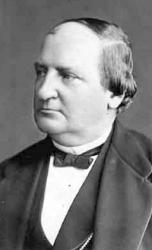
1822 - 1888 Person Name: J. P. Holbrook Composer of "[Rock of Ages, cleft for me]" in Singing on the Way Joseph P. Holbrook was a tune writer in the parlor music style, and used the popular melodies of Mason and Hastings, Bradbury and Root, Greatorex and Kingsley in his collections. He furnished settings for the choir hymns in Songs for the Sanctuary in his Quartet and chorus Choir (New York, 1871, and sought more recogniation than had been given him in a hymnal of his own, Worship in Song (New York, 1880); a book that found no welcome. from The English hymn: its development and use in worship By Louis FitzGerald Benson

Chester G. Allen

1838 - 1878 Composer of "[Rock of Ages, cleft for me]" in The Crown Chester Gilbert Allen (Feb. 15, 1838 – Oct. 18, 1878) was an American music educator, compiler, and hymn composer. He taught music in the Cleveland, Ohio, public schools and edited or co-edited Sunday-school songbooks that shaped the gospel repertoire of his day. Allen is best remembered for the tune Joyful Song, written for Fanny J. Crosby’s hymn Praise Him! Praise Him! Jesus, our blessed Redeemer and first published in Bright Jewels (1869). His lively, march-like melodies typify mid-nineteenth-century American gospel hymnody and remain in use today. J. S. McDuff (from nineteenth-century American hymn collections and public-domain historical notices, retrieved 9/15/2025)

Franz Abt

1819 - 1885 Composer of "HOMEWARD" in The Praise Hymnary Franz Abt, born Dec. 21, 1819 at Eilenburg in the Prussian provinces of Saxony. His father was a musician and clergyman of the Lutheran Church. Franz studied music at Leipsic, and became known as a song-writer in 1838. In September, 1841, he married, and was leader of the orchesta at the Zuric theatre; became a teacher in 1842, but was litle known until his song "When the Swallows Homeward fly" carried his name to all parts of the civilized world. In 1865 was concert-master at Brunswick, and conducted the great festival at Dresden. He came to the United States in 1872, and was present at teh Peace Jubilee, Boston, where he directed the performance of some of his own music, arriving in New York May w, wher a testimonial concert was given for his benefit at Steinway Hall, May 18. He was received at Philadelphia by the German societies, with torch-light processions and cannonade, May 15, 1872. A Dictionary of Musical Information by John W. Moore, Boston: Oliver, Ditson & Company, 1876

Jean-Jacques Rousseau

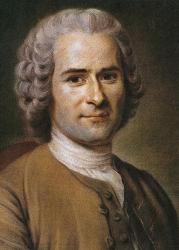
1712 - 1778 Person Name: Rousseau Composer of "[Rock of Ages, cleft for me]" in The Gospel Trumpeter Jean Jacques Rousseau; b. 1712, Geneva; d. 1778, Paris. Born in the city-state of Geneva in the Swiss Confederacy, his mother died whenhe was 9 days old. Rousseau's father was a watchmaker, but got into trouble with local officials and left the town, leaving his son with an uncle who had Rousseau and his own son board with a Calvinist minister for 2 years. He was later apprenticed to a notary and then to an engraver, who beat him. He ran away from Geneva at 16. In nearby Savoy, he sheltered with a Roman Catholic priest. He was sent to Italy to convert to Catholicism. He supported himself as a servant, secretary, and tutor. His life was filled with personal and political upheaval, and his writings infuriated many, to the point he had to leave several habitations. He had many friends and enemies due to his philosophies on life, religion, and God. He was concerned with decay of society (having experienced the French Revolution) and became a philosopher, writer, botanist, and composer, he influenced the Enlightenment period through his political philosophy, both in France and across Europe, including aspects of the French Revolution and overall development of modern political and educational thought. A member of the Jacobin Club, he was the most popular of philosophers. He believed that self-preservation was the highest virtue and that we should study to understand how society operates and where pitfalls lie. His personal family life was very chaotic as a result of his outspoken opinions and writings. He returned to his Calvinistic beliefs in later life, but digressed from them on several issues important to that church. John Perry

J. Sebastian B. Hodges

1830 - 1915 Person Name: John S. B. Hodges Composer of "MEMORIAL" in Book of Worship with Hymns and Tunes Born: 1830, Bristol, Gloucestershire, England. Died: May 1, 1915, Baltimore, Maryland. Buried: Allegheny Cemetery, Pittsburgh, Pennsylvania. Son of composer Edward Hodges, John emigrated to America in 1845, and attended Columbia University and the General Theological Seminary in New York City. Ordained an Episcopal minister in 1854, he served at the Grace/Second Episcopal Church, Newark, New Jersey (1860-70), and was Rector of St. Paul’s, Baltimore, Maryland, for 35 years. His works include: The Book of Common Praise, 1869 The revised edition of Hymn Tunes, 1903 --www.hymntime.com/tch

George C. Hugg

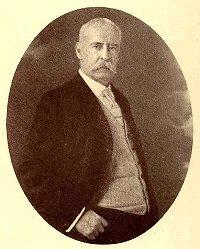
1848 - 1907 Person Name: Geo. C. Hugg Composer of "[Rock of ages, cleft for me]" in Garlands of Praise George Crawford Hugg USA 1848-1907. Born near Haddonfield, NJ, he became choirmaster at the Berlin, NJ, Presbyterian Church at age 12. At age 14 he published his first song, “Walk in the light”, which became very popular. He married Anne E Ketchum, and they had a daughter, Evangeline. He served as choirmaster of the Tabernacle Presbyterian Church in Philadelphia, and also the Broad Street and Arch Street Methodist Episcopal Churches there. He was also closely associated with the Harper Memorial Presbyterian Church there. He was a prolific composer with over 2000 works, publishing 18 books of revival and Sunday school music, and 90 songs for special occasions (Christmas, Easter, etc.). He died in Philadelphia, PA. John Perry

W. E. M. Hackleman

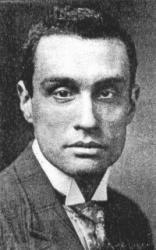
1868 - 1927 Arranger of "[Rock of Ages, cleft for me]" in The Gospel Call, Part Two William Edward Michael Hackleman USA 1868-1927. Born at Orange, IN, he grew up on a farm. At age 17 he was teaching singing classes and leading singing in meetings. He later taught public school for four years and studied music in Toronto, Canada, at the Conservatory of Music, under Italian composer, Francesco d'Auria, and also with other private teachers in New York City. He married Pearl C MNU, and they had four children: Edwin, Florence, Grace, and Gladys. He edited songbooks, composed music and lead music at state and national conventions of the Christian Church. He was an evangelist and served as president of the National Association of Church Musicians, and for five years was secretary to the Indiana Missionary Society. He led singing at the Centennial Convention in 1909 at Forbes Field in Pittsburgh, PA, for an estimated crowd of 30,000. He also ran the Hackleman Music Company in Indianapolis, IN. He published 15 religious songbooks, some lyrics and many tunes. He died in an auto accident in St. Elmo, IL, enroute to a church convention. John Perry

Pages


Export as CSV
It looks like you are using an ad-blocker. Ad revenue helps keep us running. Please consider white-listing Hymnary.org or getting Hymnary Pro to eliminate ads entirely and help support Hymnary.org.