You help make Hymnary.org possible. More than 10 million people from 200+ countries found hymns, liturgical resources and encouragement on Hymnary.org in 2025, including you. Every visit affirms the global impact of this ministry.

If Hymnary has been meaningful to you this year, would you take a moment today to help sustain it? A gift of any size—paired with a note of encouragement if you wish—directly supports the server costs, research work and curation that keep this resource freely available to the world.

Give securely online today, or mail a check to:
Hymnary.org
Calvin University
3201 Burton Street SE
Grand Rapids, MI 49546

Thank you for your partnership, and may the hope of Advent fill your heart.

Person Results

Topics:advent ii
In:person

Planning worship? Check out our sister site, ZeteoSearch.org, for 20+ additional resources related to your search.
Showing 31 - 40 of 75Results Per Page: 102050

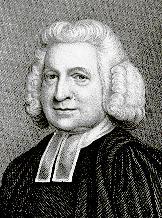
Charles Wesley

1707 - 1788 Person Name: Charles Wesley, 1707-88 Topics: Advent II Alterer of "Lo! He Comes with Clouds Descending" in Worship Supplement Charles Wesley, M.A. was the great hymn-writer of the Wesley family, perhaps, taking quantity and quality into consideration, the great hymn-writer of all ages. Charles Wesley was the youngest son and 18th child of Samuel and Susanna Wesley, and was born at Epworth Rectory, Dec. 18, 1707. In 1716 he went to Westminster School, being provided with a home and board by his elder brother Samuel, then usher at the school, until 1721, when he was elected King's Scholar, and as such received his board and education free. In 1726 Charles Wesley was elected to a Westminster studentship at Christ Church, Oxford, where he took his degree in 1729, and became a college tutor. In the early part of the same year his religious impressions were much deepened, and he became one of the first band of "Oxford Methodists." In 1735 he went with his brother John to Georgia, as secretary to General Oglethorpe, having before he set out received Deacon's and Priest's Orders on two successive Sundays. His stay in Georgia was very short; he returned to England in 1736, and in 1737 came under the influence of Count Zinzendorf and the Moravians, especially of that remarkable man who had so large a share in moulding John Wesley's career, Peter Bonier, and also of a Mr. Bray, a brazier in Little Britain. On Whitsunday, 1737, [sic. 1738] he "found rest to his soul," and in 1738 he became curate to his friend, Mr. Stonehouse, Vicar of Islington, but the opposition of the churchwardens was so great that the Vicar consented that he "should preach in his church no more." Henceforth his work was identified with that of his brother John, and he became an indefatigable itinerant and field preacher. On April 8, 1749, he married Miss Sarah Gwynne. His marriage, unlike that of his brother John, was a most happy one; his wife was accustomed to accompany him on his evangelistic journeys, which were as frequent as ever until the year 1756," when he ceased to itinerate, and mainly devoted himself to the care of the Societies in London and Bristol. Bristol was his headquarters until 1771, when he removed with his family to London, and, besides attending to the Societies, devoted himself much, as he had done in his youth, to the spiritual care of prisoners in Newgate. He had long been troubled about the relations of Methodism to the Church of England, and strongly disapproved of his brother John's "ordinations." Wesley-like, he expressed his disapproval in the most outspoken fashion, but, as in the case of Samuel at an earlier period, the differences between the brothers never led to a breach of friendship. He died in London, March 29, 1788, and was buried in Marylebone churchyard. His brother John was deeply grieved because he would not consent to be interred in the burial-ground of the City Road Chapel, where he had prepared a grave for himself, but Charles said, "I have lived, and I die, in the Communion of the Church of England, and I will be buried in the yard of my parish church." Eight clergymen of the Church of England bore his pall. He had a large family, four of whom survived him; three sons, who all became distinguished in the musical world, and one daughter, who inherited some of her father's poetical genius. The widow and orphans were treated with the greatest kindness and generosity by John Wesley. As a hymn-writer Charles Wesley was unique. He is said to have written no less than 6500 hymns, and though, of course, in so vast a number some are of unequal merit, it is perfectly marvellous how many there are which rise to the highest degree of excellence. His feelings on every occasion of importance, whether private or public, found their best expression in a hymn. His own conversion, his own marriage, the earthquake panic, the rumours of an invasion from France, the defeat of Prince Charles Edward at Culloden, the Gordon riots, every Festival of the Christian Church, every doctrine of the Christian Faith, striking scenes in Scripture history, striking scenes which came within his own view, the deaths of friends as they passed away, one by one, before him, all furnished occasions for the exercise of his divine gift. Nor must we forget his hymns for little children, a branch of sacred poetry in which the mantle of Dr. Watts seems to have fallen upon him. It would be simply impossible within our space to enumerate even those of the hymns which have become really classical. The saying that a really good hymn is as rare an appearance as that of a comet is falsified by the work of Charles Wesley; for hymns, which are really good in every respect, flowed from his pen in quick succession, and death alone stopped the course of the perennial stream. It has been the common practice, however for a hundred years or more to ascribe all translations from the German to John Wesley, as he only of the two brothers knew that language; and to assign to Charles Wesley all the original hymns except such as are traceable to John Wesley through his Journals and other works. The list of 482 original hymns by John and Charles Wesley listed in this Dictionary of Hymnology have formed an important part of Methodist hymnody and show the enormous influence of the Wesleys on the English hymnody of the nineteenth century. -- Excerpts from John Julian, Dictionary of Hymnology (1907) ================== Charles Wesley, the son of Samuel Wesley, was born at Epworth, Dec. 18, 1707. He was educated at Westminster School and afterwards at Christ Church, Oxford, where he graduated M.A. In 1735, he took Orders and immediately proceeded with his brother John to Georgia, both being employed as missionaries of the S.P.G. He returned to England in 1736. For many years he engaged with his brother in preaching the Gospel. He died March 29, 1788. To Charles Wesley has been justly assigned the appellation of the "Bard of Methodism." His prominence in hymn writing may be judged from the fact that in the "Wesleyan Hymn Book," 623 of the 770 hymns were written by him; and he published more than thirty poetical works, written either by himself alone, or in conjunction with his brother. The number of his separate hymns is at least five thousand. --Annotations of the Hymnal, Charles Hutchins, M.A., 1872.

William Henry Monk

1823 - 1889 Person Name: W. H. Monk, 1825-1889 Topics: Advent II Year A; Advent II Year B Composer of "MERTON" in Common Praise William H. Monk (b. Brompton, London, England, 1823; d. London, 1889) is best known for his music editing of Hymns Ancient and Modern (1861, 1868; 1875, and 1889 editions). He also adapted music from plainsong and added accompaniments for Introits for Use Throughout the Year, a book issued with that famous hymnal. Beginning in his teenage years, Monk held a number of musical positions. He became choirmaster at King's College in London in 1847 and was organist and choirmaster at St. Matthias, Stoke Newington, from 1852 to 1889, where he was influenced by the Oxford Movement. At St. Matthias, Monk also began daily choral services with the choir leading the congregation in music chosen according to the church year, including psalms chanted to plainsong. He composed over fifty hymn tunes and edited The Scottish Hymnal (1872 edition) and Wordsworth's Hymns for the Holy Year (1862) as well as the periodical Parish Choir (1840-1851). Bert Polman

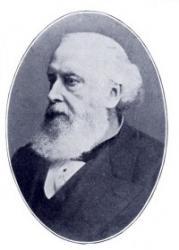
William Walsham How

1823 - 1897 Topics: Advent II Morning Prayer Opening; Advent II The Holy Communion Opening Author of "O Word of God incarnate" in The Hymnal of the Protestant Episcopal Church in the United States of America 1940 William W. How (b. Shrewsbury, Shropshire, England, 1823; d. Leenane, County Mayo, Ireland, 1897) studied at Wadham College, Oxford, and Durham University and was ordained in the Church of England in 1847. He served various congregations and became Suffragan Bishop in east London in 1879 and Bishop of Wakefield in 1888. Called both the "poor man's bishop" and "the children's bishop," How was known for his work among the destitute in the London slums and among the factory workers in west Yorkshire. He wrote a number of theological works about controversies surrounding the Oxford Movement and attempted to reconcile biblical creation with the theory of evolution. He was joint editor of Psalms and Hymns (1854) and Church Hymns (1871). While rector in Whittington, How wrote some sixty hymns, including many for chil­dren. His collected Poems and Hymns were published in 1886. Bert Polman =============== How, William Walsham, D.D., son of William Wybergh How, Solicitor, Shrewsbury, was born Dec. 13, 1823, at Shrewsbury, and educated at Shrewsbury School and Wadham College, Oxford (B.A. 1845). Taking Holy Orders in 1846, he became successively Curate of St. George's, Kidderminster, 1846; and of Holy Cross, Shrewsbury, 1848. In 1851 he was preferred to the Rectory of Whittington, Diocese of St. Asaph, becoming Rural Dean in 1853, and Hon. Canon of the Cathedral in 1860. In 1879 he was appointed Rector of St. Andrew's Undershaft, London, and was consecrated Suffragan Bishop for East London, under the title of the Bishop of Bedford, and in 1888 Bishop of Wakefield. Bishop How is the author of the Society for Promoting Christian Knowledge Commentary on the Four Gospels; Plain Words , Four Series; Plain Words for Children; Pastor in Parochia; Lectures on Pastoral Work; Three All Saints Summers, and Other Poems , and numerous Sermons , &c. In 1854 was published Psalms and Hymns, Compiled by the Rev. Thomas Baker Morrell, M.A., . . . and the Rev. William Walsham How, M.A. This was republished in an enlarged form in 1864, and to it was added a Supplement in 1867. To this collection Bishop How contributed several hymns, and also to the S. P. C. K. Church Hymns , of which he was joint editor, in 1871. The Bishop's hymns in common use amount in all to nearly sixty. Combining pure rhythm with great directness and simplicity, Bishop How's compositions arrest attention more through a comprehensive grasp of the subject and the unexpected light thrown upon and warmth infused into facia and details usually shunned by the poet, than through glowing imagery and impassioned rhetoric. He has painted lovely images woven with tender thoughts, but these are few, and found in his least appreciated work. Those compositions which have laid the firmest hold upon the Church, are simple, unadorned, but enthusiastically practical hymns, the most popular of which, "O Jesu, Thou art standing"; "For all the Saints who from their labours rest," and "We give Thee but Thine own," have attained to a foremost rank. His adaptations from other writers as in the case from Bishop Ken, "Behold, the Master passeth by," are good, and his Children's hymns are useful and popular. Without any claims to rank as a poet, in the sense in which Cowper and Montgomery were poets, he has sung us songs which will probably outlive all his other literary works. The more important of Bishop How's hymns, including those already named, and "Lord, Thy children guide and keep"; "O Word of God Incarnate"; "This day at Thy creating word"; "Who is this so weak and helpless"; and others which have some special history or feature of interest, are annotated under their respective first lines. The following are also in common use:— i. From Psalms & Hymns, 1854. 1. Before Thine awful presence, Lord. Confirmation. 2. Jesus, Name of wondrous love [priceless worth]. Circumcision. The Name Jesus . 3. Lord Jesus, when we stand afar. Passiontide. 4. O blessing rich, for sons of men. Members of Christ. 5. 0 Lord of Hosts, the earth is Thine. In time of War. 6. O Lord, Who in Thy wondrous love. Advent. ii. From Psalms & Hymns, enlarged, 1864. 7. Lord, this day Thy children meet. Sunday School Anniversary. iii. From Supplement to the Psalms & Hymns, 1867. 8. Hope of hopes and joy of joys. Resurrection. 9. 0 daughters blest of Galilee. For Associations of Women. 10. O happy feet that tread. Public Worship. 11. With trembling awe the chosen three. Transfiguration. iv. From Parish Magazine, 1871, and Church Hymns, 1871. 12. O Jesu, crucified for man. Friday. 13. Yesterday, with worship blest. Monday. v. From the S. P. C. K. Church Hymns. 1871. 14. Bowed low in supplication. For the Parish. 15. Great Gabriel sped on wings of light. Annunciation, of the Blessed Virgin Mary. 16. O blest was he, whose earlier skill. St. Luke. 17. O God, enshrined in dazzling light. Omnipresence. Divine Worship . 18. O heavenly Fount of Light and Love. Witsuntide. 19. O Lord, it is a blessed thing. Weekdays. 20. 0 One with God the Father. Epiphany. 21. O Thou through suffering perfect made. Hospitals. 22. Rejoice, ye sons of men. Purification of the B. V. M. 23. Summer suns are glowing. Summer. 24. The year is swiftly waning. Autumn. 25. Thou art the Christ, O Lord. St. Peter. 26. To Thee our God we fly. National Hymn. 27. Upon the holy Mount they stood. Transfiguration and Church Guilds. 28. We praise Thy grace, 0 Saviour. St. Mark. vi. From the S. P. C. K. Children's Hymns, 1872. 29. Behold a little child. Jesus the Child's Example. 30. Come, praise your Lord and Saviour. Children's Praises. 31. It is a thing most wonderful. Sunday School Anniversary. 32. On wings of living light. Easter. Bishop How's hymns and sacred and secular pieces were collected and published as Poems and Hymns, 1886. The Hymns, 54 in all, are also published separately. He d. Aug. 10, 1897. --John Julian, Dictionary of Hymnology (1907) =================== How, W. W., p. 540, i. He died Aug. 10, 1897. His Memoir, by F. D. How, was published in 1898. --John Julian, Dictionary of Hymnology, New Supplement (1907)

William Tans'ur

1699 - 1783 Topics: Advent II Morning Prayer General Composer of "BANGOR" in The Hymnal of the Protestant Episcopal Church in the United States of America 1940 William Tansur, b. about 1700, Dunchurch of Barnes; d. 1783, St. Neots Evangelical Lutheran Hymnal, 1908 Also known as Tansur; Tanzer; le Tansur

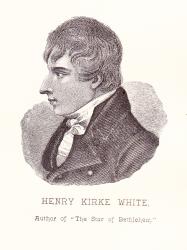
Henry Kirke White

1785 - 1806 Person Name: Henry Kirke White, 1785-1806 Topics: Lent II Year A; Lent III Year B; Proper 23 Year C; Second Sunday Before Advent Year B; Lent Author of "Oft in danger, oft in woe" in Common Praise White, Henry Kirke, a gifted English poet who died early in life, was born in Nottingham, England, March 21, 1785. Very early he manifested a remarkable love for books and a decided talent for composition. But his parents were poor, and he was apprenticed in early boyhood to a stocking weaver, from which uncongenial servitude he escaped as soon as he could and began the study of law; but later he was converted and felt called to the ministry. The story of his conversion from deism to Christianity is briefly but beautifully told in the poem titled "The Star of Bethlehem." He entered St. John's College, Cambridge, in 1805 as a servitor; but died October 19, 1806, in the second year of his college course, when only twenty-one years of age. In 1803 he published a small volume of poems. Some of them are very fine, but no doubt he would have produced others far better if he had lived to the ordinary age of man. His rare poetic genius, his victory over skepticism and subsequent faith and piety, his hard struggle with poverty and early death invest the story of his life with more than ordinary pathos. His hymns, ten in number, appeared in Collyer's Collection, 1812. Oft in danger, oft in woe 412 The Lord our God is clothed with 99 When marshaled on the mighty 124 Hymn Writers of the Church, 1911 ============================ White, Henry Kirk, remarkable both for the early development of his genius and for the untimely termination of his brief life of splendid promise, was born at Nottingham, March 21, 1785. His father was a butcher, but his mother must have been a superior woman, since for a number of years she successfully conducted a boarding-school for girls. The writing-master in her establishment was for some time Henry's teacher, and under his instruction he made remarkable progress in Latin and other subjects. At the age of 13 he composed the lines "To an early Primrose," which were subsequently printed with his poems. At 14 he left school, and was put to the stocking-frame in order to learn prac¬tically the business of a hosier; but, disliking the employment, he was removed to an attorney's office in Nottingham, with a view to the legal profession. All his spare time was now devoted to literary pursuits, the acquisition of languages, and the composition of poetical and other contributions for the periodicals of the day. At the age of 15 he obtained from the Monthly Preceptor a silver medal for a translation from Horace, and a pair of globes for the best description of an imaginary tour from London to Edinburgh. When only 17 he was encouraged to publish his Clifton Grove and other Poems, which were certainly excellent as the compositions of a mere boy. About this time he was inclined to scepticism, but. through the perusal of Scott's Force of Truth and the arguments and appeals of a young friend, R. W. Almond (afterwards Rector of St. Peter's, Nottingham), he was led to earnest faith in Christianity. His well-known hymn "When marshall'd on the nightly plain" is understood to be a figurative description of his spiritual experience at this period. He now desired to become a Christian minister, and through the generosity of his employers he was released from his articles in 1804. With the help of the Rev. C. Simeon and other friends, he became a student of St. John's College, Cambridge. There he speedily distinguished himself, and the highest honours seemed within his grasp; but over application to study destroyed his health, and he fell ill and died Oct. 19, 1806, in the 22nd year of his age. Universal regret was expressed at his untimely end. Southey published his Remains, accompanied by a short memoir. Lord Byron composed some beautiful lines on the sad event. Josiah Conder and others wrote commemorative verses. The entire literary young manhood of England and America seemed moved with sympathy. A monumental tablet, with a medallion by Chantrey, was erected in All Saints Church, Cambridge, at the expense of a citizen of Boston, in the United States. Ten hymns are ascribed to H. K. White, which were printed by the Rev. Dr. W. B. Collyer in his Supplement to Dr. Watts's Psalms & Hymns, London, 1812. Of these four of the most popular are annotated as follows: "Awake, sweet harp of Judah, wake"; "Christians, brethren, ere we part"; "Much in sorrow, oft in woe"; “When marshalled on the nightly plain." These are all in extensive use. The rest, all in common use at the present time, are:— 1. 0 Lord, another day has flown. Evening. From this the hymn "0 let Thy grace perform its part" is taken. 2. 0 Lord, my God, in mercy turn. Penitence and Faith. 3. The Lord our God is full [clothed in] of might. Divine Sovereignty. 4. The Lord our God is Lord of all. Divine Sovereignty. 5. Through sorrow's night and danger's path. The Resurrection. Sometimes given as "When sorrow's path and danger's road." 6. What is this passing scene? Human Frailty. This hymn consists of selected stanzas from his “Ode on Disappointment." [Rev. W. R. Stevenson, M.A.] -- John Julian, Dictionary of Hymnology (1907)

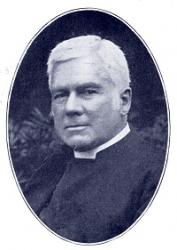
Richard Runciman Terry

1865 - 1938 Person Name: R. R. Terry, 1865-1938 Topics: Advent II Year A; Advent II Year C Composer of "BILLING" in Common Praise Terry, Richard R., was born at Morpeth, Jan. 3, 1868, and was Tate Choral Scholar at King's College, Cambridge. In 1896 he became organist and music-master at Downside R. C. College and Abbey, Bath; and in 1901 organist and director of the choir at Westminster Cathedral (R. C.) London. He contributed to A. E. Tozer's Catholic Hymns, 1898, thirteen tunes and the words of two hymns:— 1. Christ, the Lord, is my true Shepherd. Ps. xxiii. 2. Peaceful eve, so still and holy. Christmas Carol. It is marked as D. C. B., i.e. for Downside Coll., Bath. The tune by Mr. Tozor was published in 1881 to a carol beginning with the same first line, but otherwise entirely different. --John Julian, Dictionary of Hymnology, New Supplement (1907)

Johann Rudolf Ahle

1625 - 1673 Person Name: Johann Rudolph Ahle Topics: Advent II The Holy Communion Sequence Composer of "LIEBSTER JESU" in The Hymnal of the Protestant Episcopal Church in the United States of America 1940 Johann Rudolph Ahle, b. Mühlhausen, 1625; Ahle studied theology at Erfurt University. Little is known about his musical education, but be became well known as an organist while he was in Erfurt. He returned to Mühlhausen and became an organist at St. Blasius Church, he composed organ music but is know for his sacred choral music. He was the father of Johann Georg, who was also a composer and succeeded his father as organist at St. Blasius Church. Johann Rudolf became mayor of Mühlhausen late in his life and died there in 1673. Dianne Shapiro (from Bach Cantatas Website www.bach-cantatas.com/Lib/Ahle-Johann-Rudolf.htm)

Frederick William Faber

1814 - 1863 Topics: National Days; Missions; Conversion St. Paul Morning Prayer General; Epiphany II Evening Prayer Opening; Heritage; Loyalty; Sunday next before Advent Evening Prayer General; The Church as God's gift; Trinity VIII Evening Prayer Closing; Trinity XIV Evening Prayer General Author of "Faith of our fathers! living still" in The Hymnal of the Protestant Episcopal Church in the United States of America 1940 Raised in the Church of England, Frederick W. Faber (b. Calverly, Yorkshire, England, 1814; d. Kensington, London, England, 1863) came from a Huguenot and strict Calvinistic family background. He was educated at Balliol College, Oxford, and ordained in the Church of England in 1839. Influenced by the teaching of John Henry Newman, Faber followed Newman into the Roman Catholic Church in 1845 and served under Newman's supervision in the Oratory of St. Philip Neri. Because he believed that Roman Catholics should sing hymns like those written by John Newton, Charles Wesley, and William Cowpe, Faber wrote 150 hymns himself. One of his best known, "Faith of Our Fathers," originally had these words in its third stanza: "Faith of Our Fathers! Mary's prayers/Shall win our country back to thee." He published his hymns in various volumes and finally collected all of them in Hymns (1862). Bert Polman ================= Faber, Frederick William, D.D., son of Mr. T. H. Faber, was born at Calverley Vicarage, Yorkshire, June 28, 1814, and educated at Balliol College, Oxford, graduating B.A. in 1836. He was for some time a Fellow of University College, in the same University. Taking Holy Orders in 1837, he became Rector of Elton, Huntingdonshire, in 1843, but in 1846 he seceded to the Church of Rome. After residing for some time at St. Wilfrid's, Staffordshire, he went to London in 1849, and established the London "Oratorians," or, "Priests of the Congregation of St. Philip Neri," in King William Street, Strand. In 1854 the Oratory was removed to Brompton. Dr. Faber died Sept. 26, 1863. Before his secession he published several prose works, some of which were in defence of the Church of England; and afterwards several followed as Spiritual Conferences, All for Jesus, &c. Although he published his Cherwell Waterlily and Other Poems, 1840; The Styrian Lake, and Other Poems, 1842; Sir Lancelot, 1844; and The Rosary and Other Poems, 1845; and his Lives of the Saints, in verse, before he joined the Church of Rome, all his hymns were published after he joined that communion. They were included in his:— (1) A small book of eleven Hymns1849, for the School at St. Wilfrid's, Staffordshire. (2) Jesus and Mary: or, Catholic Hymns for Singing and Reading, London 1849. In 1852 the 2nd edition was published with an addition of 20 new hymns. (3) Oratory Hymns, 1854; and (4) Hymns, 1862, being a collected edition of what he had written and published from time to time. Dr. Faber's account of the origin of his hymn-writing is given in his Preface to Jesus & Mary. After dwelling on the influence, respectively, of St. Theresa, of St. Ignatius, and of St. Philip Neri, on Catholicism; and of the last that "sanctity in the world, perfection at home, high attainments in common earthly callings…was the principal end of his apostolate," he says:— “It was natural then that an English son of St. Philip should feel the want of a collection of English Catholic hymns fitted for singing. The few in the Garden of the Soul were all that were at hand, and of course they were not numerous enough to furnish the requisite variety. As to translations they do not express Saxon thought and feelings, and consequently the poor do not seem to take to them. The domestic wants of the Oratory, too, keep alive the feeling that something of the sort was needed: though at the same time the author's ignorance of music appeared in some measure to disqualify him for the work of supplying the defect. Eleven, however, of the hymns were written, most of them, for particular tunes and on particular occasions, and became very popular with a country congregation. They were afterwards printed for the Schools at St. Wilfrid's, and the very numerous applications to the printer for them seemed to show that, in spite of very glaring literary defects, such as careless grammar and slipshod metre, people were anxious to have Catholic hymns of any sort. The manuscript of the present volume was submitted to a musical friend, who replied that certain verses of all or nearly all of the hymns would do for singing; and this encouragement has led to the publication of the volume." In the same Preface he clearly points to the Olney Hymns and those of the Wesleys as being the models which for simplicity and intense fervour he would endeavour to emulate. From the small book of eleven hymns printed for the schools at St. Wilfrid's, his hymn-writing resulted in a total of 150 pieces, all of which are in his Hymns, 1862, and many of them in various Roman Catholic collections for missions and schools. Few hymns are more popular than his "My God, how wonderful Thou art," "O come and mourn with me awhile," and "Sweet Saviour, bless us ere we go." They excel in directness, simplicity, and pathos. "Hark, hark, my soul, angelic songs are swelling," and "O Paradise, O Paradise," are also widely known. These possess, however, an element of unreality which is against their permanent popularity. Many of Faber's hymns are annotated under their respective first lines; the rest in common use include:— i. From his Jesus and Mary, 1849 and 1852. 1. Fountain of love, Thyself true God. The Holy Ghost. 2. How shalt thou bear the Cross, that now. The Eternal Years. 3. I come to Thee, once more, O God. Returning to God. 4. Joy, joy, the Mother comes. The Purification. 5. My soul, what hast thou done for God? Self-Examination 6. O how the thought of God attract. Holiness Desired. 7. O soul of Jesus, sick to death. Passiontide. Sometimes this is divided into two parts, Pt. ii. beginning, “My God, my God, and can it be." ii. From his Oratory Hymns, 1854. 8. Christians, to the war! Gather from afar. The Christian Warfare. 9. O come to the merciful Saviour that calls you. Divine Invitation. In many collections. 10. O God, Thy power is wonderful. Power and Eternity of God. 11. O it is sweet to think, Of those that are departed. Memory of the Dead. 12. O what are the wages of sin? The Wages of Sin. 13. O what is this splendour that beams on me now? Heaven. 14. Saint of the Sacred Heart. St. John the Evangelist. iii. From his Hymns, 1862. 15. Father, the sweetest, dearest Name. The Eternal Father. 16. Full of glory, full of wonders, Majesty Divine. Holy Trinity. 17. Hark ! the sound of the fight. Processions. 18. How pleasant are thy paths, 0 death. Death Contemplated. 19. O God, Whose thoughts are brightest light. Thinking no Evil. 20. O why art thou sorrowful, servant of God? Trust in God. 21. Souls of men, why will ye scatter? The Divine Call. 22. The land beyond the sea. Heaven Contemplated. 23. The thought of God, the thought of thee. Thoughts of God. 24. We come to Thee, sweet Saviour. Jesus, our Rest. In addition to these there are also several hymns in common use in Roman Catholic hymn-books which are confined to those collections. In the Hymns for the Year, by Dr. Rawes, Nos. 77, 110, 112, 117, 120, 121, 122, 125, 127, 128, 131, 140, 152, 154,169, 170, 174, 179, 180, 192, 222, 226, 230, 271, 272, are also by Faber, and relate principally to the Blessed Virgin Mary. Several of these are repeated in other Roman Catholic collections. --John Julian, Dictionary of Hymnology (1907 ================== Faber, Frederick William, p. 361, i. To this article the following additions have to be made:— 1. Blood is the price of heaven. Good Friday. (1862.) 2. Exceeding sorrowful to death. Gethsemane. This in the Scottish Ibrox Hymnal, 1871, is a cento from "O soul of Jesus, sick to death," p. 362, i., 7. 3. From pain to pain, from woe to woe. Good Friday. (1854.) 4. I wish to have no wishes left. Wishes about death. (1862.) 5. Why is thy face so lit with smiles? Ascension. (1849.) The dates here given are those of Faber's works in which the hymns appeared. In addition to these hymns there are also the following in common use:— 6. Dear God of orphans, hear our prayer. On behalf of Orphans. This appeared in a miscellaneous collection entitled A May Garland, John Philip, n.d. [1863], No. 1, in 7 stanzas of 4 lines. In the Roman Catholic Parochial Hymn Book, 1880, it begins, "O God of orphans, hear our prayer." 7. Sleep, sleep my beautiful babe. Christmas Carol. This carol we have failed to trace. 8. By the Archangel's word of love. Pt. i. Life of our Lord. This, and Pt. ii., “By the blood that flowed from Thee"; Pt. iii., "By the first bright Easter day"; also, "By the word to Mary given"; "By the name which Thou didst take"; in The Crown Hymn Book and other Roman Catholic collections, we have seen ascribed to Dr. Faber, but in the Rev. H. Formby's Catholic Hymns, 1853, they are all signed "C. M. C," i.e. Cecilia M. Caddell (p. 200, i.). --John Julian, Dictionary of Hymnology, Appendix, Part II (1907) ====================== Faber, F. W., pp. 361, i.; 1562, ii. We are informed by members of Dr. Faber's family that his father was Mr. Thomas Henry Faber, sometime Lay Secretary of the Bishop of Durham. In addition to his hymns already noted in this Dictionary, the following are found in various Roman Catholic collections, viz.:— i. From St. Wilfrid's Hymns, 1849:— 1. Dear Father Philip, holy Sire. S. Philip Neri. 2. Hail, holy Joseph, hail. S. Joseph. 3. Mother of Mercy, day by day. Blessed Virgin Mary. ii. Jesus and Mary, 1849:— 4. Ah ! dearest Lord! I cannot pray. Prayer. 5. Dear Husband of Mary. S. Joseph. 6. Dear Little One, how sweet Thou art. Christmas. 7. Father and God! my endless doom. Predestination. 8. Hail, holy Wilfrid, hail. S. Wilfrid. 9. O Jesus, if in days gone by. Love of the World. 10. O turn to Jesus, Mother, turn. B. V. M. 11. Sing, sing, ye angel bands. Assum. B. V. M. iii. Jesus and Mary, 1852:— 12. All ye who love the ways of sin. S. Philip Neri. 13. Day set on Rome! its golden morn. S. Philip Neri. 14. Hail, bright Archangel! Prince of heaven. S. Michael. 15. Hail, Gabriel, hail. S. Gabriel. 16. O Flower of Grace, divinest Flower. B. V. M. 17. Saint Philip! 1 have never known. S. Philip Neri. 18. Sweet Saint Philip, thou hast won us. S. Philip Neri. Previously in the Rambler, May, 1850, p. 425. iv. Oratory Hymns, 1854:— 19. Day breaks on temple roofs and towers. Expect. of B. V. M. 20. How gently flow the silent years. S. Martin and S. Philip. 21. How the light of Heaven is stealing. Grace. 22. Like the dawning of the morning. Expect. of B. V. M. 23. Mother Mary ! at thine altar. For Orphans. 24. My God! Who art nothing but mercy and kindness. Repentance. 25. O blessed Father! sent by God. S. Vincent of Paul. 26. O do you hear that voice from heaven? Forgiveness. 27. The chains that have bound me. Absolution. 28. The day, the happy day, is dawning. B. V. M. 29. The moon is in the heavens above. B. V. M. 30. Why art thou sorrowful, servant of God? Mercy. v. Hymns, 1862:— 31. At last Thou art come, little Saviour. Christmas. 32. By the spring of God's compassions. S. Raphael. 33. Fair are the portals of the day. B. V. M. 34. Father of many children. S. Benedict. 35. From the highest heights of glory. S. Mary Magdalene. 36. Like the voiceless starlight falling. B. V. M. 37. Mary! dearest mother. B. V. M. 38. Mother of God, we hail thy heart. B. V. M. 39. O Anne! thou hadst lived through those long dreary years. S. Anne. Previously in Holy Family Hymns, 1860. 40. O balmy and bright as moonlit night. B. V. M. 41. O Blessed Trinity! Thy children. Holy Trinity. 42. O dear Saint Martha, busy saint. S. Martha 43. O Mother, will it always be. B. V. M. 44. O vision bright. B. V. M. 45. Summer suns for ever shining. B. V. M. 46. There are many saints above. S. Joseph. Previously in Holy Family Hymns, 1860. vi. Centos and altered forms:— 47. Confraternity men to the fight. From "Hark the sound of the fight," p. 362, i. 48. Hail, sainted Mungo, hail. From No. 8. 49. I bow to Thee, sweet will of God. From "I worship Thee," p. 559, ii. 50. They whom we loved on earth. From "0 it is sweet to think," p. 362, i. 51. Vincent! like Mother Mary, thou. From No. 25. When Dr. Faber's hymns which are in common use are enumerated, the total falls little short of one hundred. In this respect he outnumbers most of his contemporaries. [Rev. James Mearns] --John Julian, Dictionary of Hymnology, New Supplement (1907) -------------- See also in: Hymn Writers of the Church

Edward Miller

1735 - 1807 Topics: Holy Communion; Missions; Advent I The Holy Communion Communion; Trinity II The Holy Communion Communion; Trinity XX The Communion Communion Adapter of "ROCKINGHAM" in The Hymnal of the Protestant Episcopal Church in the United States of America 1940 Edward Miller, Born in the United Kingdom. The son of a pavior (stone paver), Miller left home to study music at King's Lynn. He was a flautist in Handel's orchestra. In 1752 he published “Six Solos for the German Flute”. In 1756 he was appointed organist of St. George Minster Doncaster, continuing in that post for 50 years. He also gave pianoforte lessons. He published hymns and sonatas for harpsichord, 16 editions of “The Institues of Music”, “Elegies for Voice & Pianoforte”, and Psalms of David set to music, arranged for each Sunday of the year. That work had over 5000 subscribers. He published his thoughts on performance of Psalmody in the Church of England, addressed to clergy. In 1801 he published the Psalms of Watts and Wesley for use by Methodists, and in 1804 the history and antiques of Doncaster with a map. John Perry

Carl P. Daw Jr.

b. 1944 Person Name: Carl P. Daw, Jr., b. 1944 Topics: Advent II A; Advent II C Author of "Wild and Lone the Prophet's Voice" in Worship (4th ed.) Carl P. Daw, Jr. (b. Louisville, KY, 1944) is the son of a Baptist minister. He holds a PhD degree in English (University of Virginia) and taught English from 1970-1979 at the College of William and Mary, Williamsburg, Virginia. As an Episcopal priest (MDiv, 1981, University of the South, Sewanee, Tennesee) he served several congregations in Virginia, Connecticut and Pennsylvania. From 1996-2009 he served as the Executive Director of The Hymn Society in the United States and Canada. Carl Daw began to write hymns as a consultant member of the Text committee for The Hymnal 1982, and his many texts often appeared first in several small collections, including A Year of Grace: Hymns for the Church Year (1990); To Sing God’s Praise (1992), New Psalms and Hymns and Spiritual Songs (1996), Gathered for Worship (2006). Other publications include A Hymntune Psalter (2 volumes, 1988-1989) and Breaking the Word: Essays on the Liturgical Dimensions of Preaching (1994, for which he served as editor and contributed two essays. In 2002 a collection of 25 of his hymns in Japanese was published by the United Church of Christ in Japan. He wrote Glory to God: A Companion (2016) for the 2013 hymnal of the Presbyterian Church (U.S.A.). Emily Brink

Pages


Export as CSV
It looks like you are using an ad-blocker. Ad revenue helps keep us running. Please consider white-listing Hymnary.org or getting Hymnary Pro to eliminate ads entirely and help support Hymnary.org.