

 My Starred Hymns
 My FlexScores
 My Hymnals
 My Purchased Files
Planning worship?
Check out our sister site, ZeteoSearch.org,
for 20+ additional resources related to your search.
- |
User Links
Person Results
H. W. Cragin
1885 - 1947 Topics: Recursos Para el Culto Doxologías Translator of "Te loamos, oh Dios" in Mil Voces para Celebrar Howard Whittemore Cragin, Pentecostal missionary in Peru.
Dianne Shapiro
Brother of J. Paul Cragin (Melodias Evangélicas: Nuevo Cantos y Coros de Despertamiento Cristiano, #181).
H. W. Cragin
G. W. Kitchin

1827 - 1912 Person Name: George William Kitchin Topics: Recursos Para el Culto Procesionales Author of "Alzad la cruz" in Mil Voces para Celebrar A scholar and Anglican clergyman, George W. Kitchin (b. Naughton, Suffolk, England, 1827; d. Durham, England, 1912) spent most of his life in academic institutions. Educated at Christ Church, Oxford, England, he was ordained in the Church of England in 1852. He served initially as a headmaster in Twyford, Hampshire, and then as a tutor at Oxford (1863-1883). Later he served as Dean of Winchester Cathedral from 1883 to 1894 and of Durham Cathedral from 1894 to 1912; Kitchin was also chancellor of Durham University the last few years of his life. His publications include A Life of Pope Pius II (1881), a three volume work entitled A History of France (1877), and archeological writings.
Bert Polman
G. W. Kitchin
Edward Hodges
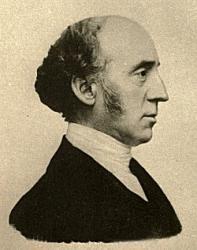
1796 - 1867 Topics: Recursos Para el Culto Procesionales Arranger of "HYMN TO JOY" in Mil Voces para Celebrar Born: July 20, 1796, Bristol, England.
Died: September 1, 1867, Clifton, Bristol, England.
Buried: Church of St. Mary the Virgin, Stanton Drew (about eight miles south of Bristol).
Hodges’ musical gift showed itself at an early age; by 1819, he was playing the organ at St. James’ Church in Bristol, and at St. Nicholas’, 1821-1838. He also had an interesting mechanical bent, and spurred several technical improvements in organ design. He composed a number of services and anthem pieces, and Cambridge University awarded him a doctorate in music in 1825.
Hodges eventually emigrated, accepting a post at the cathedral in Toronto, Canada, in 1838. The next year, he became music director at Trinity Parish in New York City. He became the organist at Trinity Church when it opened in 1846 (the church had its organ built to his specifications). He retired for health reasons in 1859, and returned to his native England in 1863. Hodges’ works include:
An Apology for Church Music and Musical Festivals, in Answer…to the Standard and the Record (London: 1834)
Essays on the Objects of Musical Study (Bristol, England: 1838)
An Essay on the Cultivation of Church Music (New York: 1841)
Contributions to the Quarterly Musical Magazine & Musical World
Trinity Collection of Church Music (Boston, Massachusetts: 1864) (editor)
Music--
BRISTOL
GLOUCESTER
HABAKKUK
HYMN TO JOY
--www.hymntime.com/
Edward Hodges
Sra. de F. F. D.
Person Name: Sra. F. F. D. Topics: Recursos Para el Culto Oraciones de invitación Translator of "Puedo oír tu voz llamando" in Mil Voces para Celebrar
Sra. de F. F. D.
George Lockwood
b. 1946 Topics: Recursos Para el Culto Oraciones de invitación; Recursos Para el Culto Oraciones de invitación Translator of "Tú has venido a la orilla (Pescador de hombres) (Lord, You Have Come to the Lakeshore)" in Mil Voces para Celebrar Rev. George Lockwood was born in 1946 and has been a missionary to Costa Rica. He has pastored Spanish-speaking congregations in both Arizona and California and served on the editorial committee for the Methodist hymnal supplement Celebremos II. In addition, Lockwood has traveled throughout Central and South America interviewing church musicians and gathering new hymns from both Spanish and Portuguese cultures which he then presents at conferences and workshops.
The Presbyterian Hymnal Companion, 1993
George Lockwood
Juan Bautista Cabrera Ivars
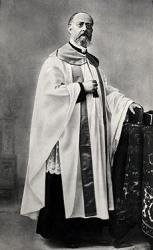
1837 - 1916 Person Name: Juan Bautista Cabrera Topics: Recursos Para el Culto Doxologías; Recursos Para el Culto Procesionales Translator of "¡Santo! ¡Santo! ¡Santo!" in Mil Voces para Celebrar Juan Bautista Cabrera Ivars was born in Benisa, Spain, April 23, 1837. He attended seminary in Valencia, studying Hebrew and Greek, and was ordained as a priest. He fled to Gibraltar in 1863 due to religious persecution where he abandoned Catholicism. He worked as a teacher and as a translator. One of the works he translated was E.H. Brown's work on the thirty-nine articles of the Anglican Church, which was his introduction to Protestantism. He was a leader of a Spanish Reformed Church in Gibraltar. He continued as a leader in this church when he returned to Spain after the government of Isabel II fell, but continued to face legal difficulties. He then organized the Spanish Reformed Episcopal Church and was consecrated as bishop in 1894. He recognized the influence of music and literature on evangelism which led him to write and translate hymns.
Dianne Shapiro, from Real Academia de la Historia (https://dbe.rah.es/biografias/39825/juan-bautista-cabrera-ivars) and Himnos Cristanos (https://www.himnos-cristianos.com/biografia-juan-bautista-cabrera/) (accessed 7/30/2021)
Juan Bautista Cabrera Ivars
C. G. Gläser
1784 - 1829 Person Name: Carl G. Gläser Topics: Recursos Para el Culto Procesionales Composer of "AZMON" in Mil Voces para Celebrar Carl Gotthelf Gläser Germany 1781-1829. Born at Weissenfels, Burgenlandkreis, Sachsen-Anhalt, Germany, he received musical training from his father, after which he attended St. Thomas school in Leipzig. He became an author and composer. At Barmen he taught voice, piano, and violin. He also wrote and conducted chorale music. He died at Barmen.
John Perry
C. G. Gläser
Charles Wesley
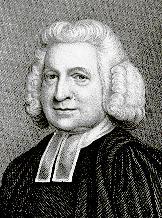
1707 - 1788 Topics: Recursos Para el Culto Procesionales Author of "Mil voces para celebrar" in Mil Voces para Celebrar Charles Wesley, M.A. was the great hymn-writer of the Wesley family, perhaps, taking quantity and quality into consideration, the great hymn-writer of all ages. Charles Wesley was the youngest son and 18th child of Samuel and Susanna Wesley, and was born at Epworth Rectory, Dec. 18, 1707. In 1716 he went to Westminster School, being provided with a home and board by his elder brother Samuel, then usher at the school, until 1721, when he was elected King's Scholar, and as such received his board and education free. In 1726 Charles Wesley was elected to a Westminster studentship at Christ Church, Oxford, where he took his degree in 1729, and became a college tutor. In the early part of the same year his religious impressions were much deepened, and he became one of the first band of "Oxford Methodists."
In 1735 he went with his brother John to Georgia, as secretary to General Oglethorpe, having before he set out received Deacon's and Priest's Orders on two successive Sundays. His stay in Georgia was very short; he returned to England in 1736, and in 1737 came under the influence of Count Zinzendorf and the Moravians, especially of that remarkable man who had so large a share in moulding John Wesley's career, Peter Bonier, and also of a Mr. Bray, a brazier in Little Britain. On Whitsunday, 1737, [sic. 1738] he "found rest to his soul," and in 1738 he became curate to his friend, Mr. Stonehouse, Vicar of Islington, but the opposition of the churchwardens was so great that the Vicar consented that he "should preach in his church no more." Henceforth his work was identified with that of his brother John, and he became an indefatigable itinerant and field preacher. On April 8, 1749, he married Miss Sarah Gwynne. His marriage, unlike that of his brother John, was a most happy one; his wife was accustomed to accompany him on his evangelistic journeys, which were as frequent as ever until the year 1756," when he ceased to itinerate, and mainly devoted himself to the care of the Societies in London and Bristol. Bristol was his headquarters until 1771, when he removed with his family to London, and, besides attending to the Societies, devoted himself much, as he had done in his youth, to the spiritual care of prisoners in Newgate. He had long been troubled about the relations of Methodism to the Church of England, and strongly disapproved of his brother John's "ordinations." Wesley-like, he expressed his disapproval in the most outspoken fashion, but, as in the case of Samuel at an earlier period, the differences between the brothers never led to a breach of friendship. He died in London, March 29, 1788, and was buried in Marylebone churchyard. His brother John was deeply grieved because he would not consent to be interred in the burial-ground of the City Road Chapel, where he had prepared a grave for himself, but Charles said, "I have lived, and I die, in the Communion of the Church of England, and I will be buried in the yard of my parish church." Eight clergymen of the Church of England bore his pall. He had a large family, four of whom survived him; three sons, who all became distinguished in the musical world, and one daughter, who inherited some of her father's poetical genius. The widow and orphans were treated with the greatest kindness and generosity by John Wesley.
As a hymn-writer Charles Wesley was unique. He is said to have written no less than 6500 hymns, and though, of course, in so vast a number some are of unequal merit, it is perfectly marvellous how many there are which rise to the highest degree of excellence. His feelings on every occasion of importance, whether private or public, found their best expression in a hymn. His own conversion, his own marriage, the earthquake panic, the rumours of an invasion from France, the defeat of Prince Charles Edward at Culloden, the Gordon riots, every Festival of the Christian Church, every doctrine of the Christian Faith, striking scenes in Scripture history, striking scenes which came within his own view, the deaths of friends as they passed away, one by one, before him, all furnished occasions for the exercise of his divine gift. Nor must we forget his hymns for little children, a branch of sacred poetry in which the mantle of Dr. Watts seems to have fallen upon him. It would be simply impossible within our space to enumerate even those of the hymns which have become really classical. The saying that a really good hymn is as rare an appearance as that of a comet is falsified by the work of Charles Wesley; for hymns, which are really good in every respect, flowed from his pen in quick succession, and death alone stopped the course of the perennial stream.
It has been the common practice, however for a hundred years or more to ascribe all translations from the German to John Wesley, as he only of the two brothers knew that language; and to assign to Charles Wesley all the original hymns except such as are traceable to John Wesley through his Journals and other works.
The list of 482 original hymns by John and Charles Wesley listed in this Dictionary of Hymnology have formed an important part of Methodist hymnody and show the enormous influence of the Wesleys on the English hymnody of the nineteenth century.
-- Excerpts from John Julian, Dictionary of Hymnology (1907)
==================
Charles Wesley, the son of Samuel Wesley, was born at Epworth, Dec. 18, 1707. He was educated at Westminster School and afterwards at Christ Church, Oxford, where he graduated M.A. In 1735, he took Orders and immediately proceeded with his brother John to Georgia, both being employed as missionaries of the S.P.G. He returned to England in 1736. For many years he engaged with his brother in preaching the Gospel. He died March 29, 1788. To Charles Wesley has been justly assigned the appellation of the "Bard of Methodism." His prominence in hymn writing may be judged from the fact that in the "Wesleyan Hymn Book," 623 of the 770 hymns were written by him; and he published more than thirty poetical works, written either by himself alone, or in conjunction with his brother. The number of his separate hymns is at least five thousand.
--Annotations of the Hymnal, Charles Hutchins, M.A., 1872.
Charles Wesley
Federico J. Pagura

1923 - 2016 Topics: Recursos Para el Culto Procesionales Translator of "Mil voces para celebrar" in Mil Voces para Celebrar Federico José Pagura was an Argentine Methodist bishop and author and translator of hymns.
Leland Bryant Ross
Federico J. Pagura
J. Alfonso Lockward
Topics: Recursos Para el Culto Oraciones de petición Translator (estrs. 2-6) of "Tal como soy" in Mil Voces para Celebrar
J. Alfonso Lockward
Pages