

 My Starred Hymns
 My FlexScores
 My Hymnals
 My Purchased Files
Planning worship?
Check out our sister site, ZeteoSearch.org,
for 20+ additional resources related to your search.
- |
User Links
Person Results
Eleanor Farjeon
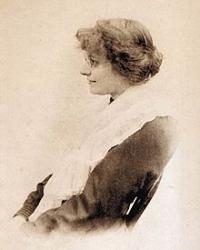
1881 - 1965 Topics: Recursos Para el Culto Aperturas del culto Author of "Despunta el alba" in Mil Voces para Celebrar Eleanor Farjeon, (born Feb. 13, 1881, London--died June 5, 1965, Hampstead, London), English writer for children whose magical but unsentimental tales, which often mock the behaviour of adults, earned her a revered place in many British nurseries.
The daughter of a British novelist and granddaughter of a U.S. actor, Eleanor Farjeon grew up in the bohemian literary and dramatic circles of London. Attending opera and theatre at 4 and writing on her father’s typewriter at 7, Farjeon came to public attention at 16 as the librettist of an opera, with music by her brother Harry, which was produced by the Royal Academy of Music.
Her success with Nursery Rhymes of London Town (1916), simple tunes originally for adults but adapted and sung in junior schools throughout England, spurred her writing. In addition to such favourites as Martin Pippin in the Apple Orchard (1921) and The Little Bookroom (1955), which won the Carnegie Medal and the first Hans Christian Anderson Award, Farjeon’s prolific writings include children’s educational books, among them Kings and Queens (1932; with Herbert Farjeon); adult books; and memoirs, notably A Nursery in the Nineties (1935; rev. ed. 1960).
--www.britannica.com/EBchecked/topic/201881/Eleanor-Farjeon
Eleanor Farjeon
George William Warren

1828 - 1902 Person Name: George W. Warren Topics: Recursos Para el Culto Procesionales Composer of "NATIONAL HYMN" in Mil Voces para Celebrar George W. Warren (b. Albany, NY, 1828; d. New York, 1902) received his general education at Racine College in Wisconsin, but as a musician he was largely self-trained. An organist in a number of Episcopal churches, he played the organ for thirty years (1870-1900) at St. Thomas Church in New York City. Warren composed anthems and liturgical service music; his hymn tunes were collected in Warren's Hymns and Tunes as Sung in St. Thomas Church (1888).
Bert Polman
George William Warren
Mary D. James
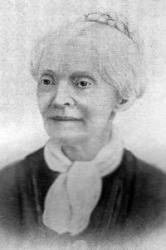
1810 - 1883 Topics: Recursos Para el Culto Ofertorio Author of "Mi espíritu, alma y cuerpo" in Mil Voces para Celebrar Mary Dagworthy Yard James USA 1810-1883. Born at Trenton, NJ, she began teaching Sunday school at age 13 in the Methodist Episcopal Church. She married Henry B James, and they had four children: Joseph, Mary, Ann, and Charles.. She became a prominent figure in the Wesleyan Holiness movement of the early 1800s, assisting Phoebe Palmer (also a hymnist) and often leading meetings at Ocean Grove, NJ, and elsewhere. She wrote articles that appeared in the “Guide to holiness”, “The New York Christian advocate”, “The contributor”, “The Christian witness:, “The Christian woman”, “The Christian standard”, and the “Ocean Grove record”. She wrote a biography of Edmund J Yard entitled, “The soul winner” (1883). She strived to live a life as close to Christ as possible. She died in New York City.
John Perry
Mary D. James
Ira David Sankey

1840 - 1908 Person Name: Ira D. Sankey Topics: Recursos Para el Culto Ofertorio Composer of "THE CROSS OF JESUS" in Mil Voces para Celebrar Sankey, Ira David, was born in Edinburgh, Pennsylvania, in 1840, of Methodist parents. About 1856 he removed with his parents to New Castle, Pennsylvania, where he became a member of the Methodist Episcopal Church. Four years afterwards he became the Superintendent of a large Sunday School in which he commenced his career of singing sacred songs and solos. Mr. Moody met with him and heard him sing at the International Convention of the Young Men's Christian Association, at Indianapolis, and through Mr. Moody's persuasion he joined him in his work at Chicago. After some two or three years' work in Chicago, they sailed for England on June 7, 1872, and held their first meeting at York a short time afterwards, only eight persons being present. Their subsequent work in Great Britain and America is well known.
Mr. Sankey's special duty was the singing of sacred songs and solos at religious gatherings, a practice which was in use in America for some time before he adopted it. His volume of Sacred Songs and Solos is a compilation from various sources, mainly American and mostly in use before. Although known as Sankey and Moody’s Songs, only one song, "Home at last, thy labour done" is by Mr. Sankey, and not one is by Mr. Moody. Mr. Sankey supplied several of the melodies. The English edition of the Sacred Songs & Solos has had an enormous sale; and the work as a whole is very popular for Home Mission services. The Songs have been translated into several languages.
--John Julian, Dictionary of Hymnology (1907)
Pseudonymns:
Harry S. Lower
Rian A. Dykes
====================
Sankey, I. D., p. 994, i. During the past fifteen years Mr. Sankey's Sacred Songs and Solos have had a very large sale, which has justified him in increasing the number of songs and hymns, including " New Hymns and Solos," to 1200. In 1906 he published My Life and Sacred Songs (London : Morgan & Scott). In addition to the "Story of his Own Life," the work contains an account of the most popular of his solos, with interesting reminiscences of the spiritual awakening of many who were influenced through his singing of them in public. In this respect it corresponds in some measure with G. J. Stevenson's Methodist Hymn Book, &c, 1883 (p. 1094, i.). It is an addition to the Sacred Songs and Solos, which will be held in esteem by many. In addition to his hymn, noted on p. 994, ii., Mr. Sankey gives details of the following:—
1. Out of the shadow-land into the sunshine. [Heaven Anticipated.] Mr. Sankey's account of this hymn is:—
"I wrote this hymn specially for the memorial service held for Mr. Moody in Carnegie Hall, where 1 also sang it as a solo. It is the last sacred song of which I wrote both the words and music. The idea was suggested by Mr. Moody's last words, 'Earth recedes; heaven opens before me . . . God is calling me, and I must go.' On account of its peculiar association with my fellow-labourer in the Gospel for so many years, the words are here given in full."
The hymn follows on p. 185, in 3 stanzas of 4 lines and a chorus.
2. Rejoice! Rejoice! our King is coming, [Advent.] Mr. Sankey writes concerning this hymn:—
"During one of my trips to Great Britain on the SS. City of Rome a storm raged on the sea. The wind was howling through the rigging, and waves like mountains of foam were breaking over the bow of the vessel. A great fear had fallen upon the passengers. When the storm was at its worst, we all thought we might soon go to the bottom of the sea. The conviction came to me that the Lord would be with us iu the trying hour, and sitting down in the reading room, I composed this hymn. Before reaching England the tune had formed itself in my mind, and on arriving in London I wrote it out, and had it published in Sacred Songs and Solos, where it is No. 524 in the edition. of 1888.
From Mr. Sankey's autobiographical sketch we gather that he was born at Edinburgh, in Western Pennsylvania, Aug. 28, 1840, joined Mr. Moody in 1871, and visited England for the first time in 1873. The original of the Sacred Songs, &c, of 23 pieces only, was offered as a gift to the London publishers of P. Phillips's Hallowed Song, and declined by them. It was subsequently accepted by Mr. K. O. Morgan, of Morgan & Scott, and is now a volume of 1200 hymns.
From a return kindly sent us by Messrs. Morgan & Scott, we find that the various issues of the Sacred Songs and Solos were:—
In 1873, 24 pp.; 1874, 72 pp. ; 1876, 153 hymns; 1877, 271 hymns; 1881, 441 hymns; 1888, 750 hymns; 1903, 1200 hymns.
In addition, The Christian Choir, which is generally associated with the Sacred Songs and Solos, was issued in 1884 with 75 hymns, and in 1896 with 281. The New Hymns & Solos, by the same firm, were published in 1888.
--John Julian, Dictionary of Hymnology, New Supplement (1907)
Ira David Sankey
Pablo D. Sosa
1933 - 2020 Person Name: Pablo Sosa Topics: Recursos Para el Culto Saludo de paz Author of "¡Miren qué bueño!" in Mil Voces para Celebrar Pablo Sosa (b. 1933 - d. 2020) grew up and was educated in Argentina, the U.S. (Westminster Choir College), and Germany. For years he pastored a large Methodist congregation in Buenos Aires, Argentina while composing songs, leading choirs, editing hymnals, producing religious broadcasts, and teaching liturgy and hymnology at a seminary.
Meanwhile, life in Argentina pushed him to question his assumptions about what’s best for congregational singing. During Argentina’s “dirty war,” two young women from his church were disappeared, possibly for working among the poor. As Catholic and Protestant churches hesitated whether to speak out, remain silent, or support the government, many people lost faith. Economic meltdown after the war plunged many middle-class Argentinians into poverty. Sosa’s growing social awareness widened his vision for “lifting up hope with a song.” He often describes worship as “the fiesta of the faithful,” where all are welcome and all music is seen as “part of the ‘song of the earth,’ which answers the psalmist’s call ‘Sing joyfully to God, all the earth!’ (Psalm 98:4).”
Whether in his home church, Iglesia Evangélica Metodista La Tercera (Third Methodist Church) in Buenos Aires, or at churches or conferences around the world, he urges people, “Put your body into worship!” And he reminds them of the biblical connection between justice and worship.
CICW Website Bio (http://www.calvin.edu/worship)
Pablo D. Sosa
James R. Murray
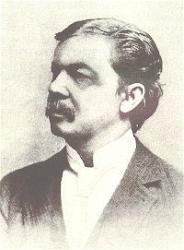
1841 - 1905 Person Name: James A. R. Murray Topics: Recursos Para el Culto Saludo de paz Composer of "OVER JORDAN" in Mil Voces para Celebrar L.P.M. (1905, April 12). Obituary. New Church Messenger, p.209.
Murray.--At Cincinnati, March 10, 1905, James Ramsey Murray. Funeral services in the Church of the New Jersualem, March 13th.
James R. Murray was widely known in the musical world as the author of many songs and song books, and in the New Church in Chicago and Cincinnati as an affectionate, intelligent, and loyal New Churchman.
He was born in Andover (Ballard Vale), Mass., March 17, 1841. In early life he developed musical talent, and composed many minor pieces for local and special occasions. Later at North Reading, Mass., he attended Dr. George F. Root's School of Music, and was associated with William Bradbury and Dr. Lowell Mason. He enlisted in the Fourteenth Regiment of infantry, commonly known as the Essex County Regiment, and afterwards was changed to the First Regiment, Massachusetts Heavy Artillery, which was engaged in most of the battles fought by the Second Army Corps up to the surrender of General Lee.
"Daisy Deane," the first and most popular of his early song successes, was composed in 1863 in Virginia while in camp, words by his cousin, Thomas F. Winthrop. This song is known all over the world, and the Salvation Army is using an arrangement of it for one of their war cry songs.
In 1868 Mr. Murray married Isabella Maria Taylor of Andover; and they removed to Chicago. Here three children were born to them, two passing early to their heavenly home, the youngest, Winthrop Root Murray, is still living. It was during these first years in Chicago that Mr. and Mrs. Murray became interested in the New Church, while he was engaged with Root and Cady as editor of the Long Visitor, afterwards merged with the Musical Visitor. After the great fire of 1871 Mr. and Mrs. Murray returned East, where he was engaged in teaching in Lawrence and Andover, and as organist at the Old South Church in Andover. In 1881 they removed to Cincinnati and Mr. Murray became the editor of the Musical Viistor [sic] and head of the publication department of the John Church Company. Among the most popular of his books are "Pure Diamonds," "Royal Gems," "The Prize" and "Murray's Sacred Songs." The following titles will recall some of his best loved sacred songs: "At Last," "Calm on the Listening Ear of Night," "I Shall Be Satisfied," "There Shall No Evil Befall Thee," "Thine, O Lord, Is the Greatness," "The Way Was Mine," "How Beautiful Upon the Mountains," "Angels from the Realms of Glory."
His last great labor in the publishing department of the John Church Company was the seeing through the press five volumes of Wagner's music dramas, with full score and original German text, and an English translation. The immense and careful labor involved in the preparation of these volumes, with a really smooth and excellent English translation, had perhaps, as it was done under pressure, something to do with Mr. Murray's breakdown. Although for some reason Mr. Murray's name does not appear on the title page of these volumes, his friends knew of the place the work held in his affections and ambition.
Mr. Murray was a member of the Church Council of the Cincinnati Society for the last four years and took a deep interest in the building of the New Church, and in the inauguration of services, with all the changes looking to the improvement of the musical part of the service. The vested choir, organized by Mr. and Mrs. Lawson, which Mr. Murray as councilman had urged from the beginning, in their entrance to the church each Sunday singing the processional hymn participated in the funeral service, with a congregation of brethren and friends, all moved by deep love and profound respect for the consistent life and faith of a worthy Churchman and beloved friend.
--DNAH Archives
===================================
For a discussion of Murray and the tune MUELLER, see: Stulken, M.K. (1981). Hymnal companion to the Lutheran Book of Worship. Philadelphia : Fortress Press, p.170.
===================================
Also available in the DNAH Archives:
1. An excerpt from Christie, George A. (1927). New Free Church. In Music in Andover. Papers read at "Fagot Party" of the Andover Natural History Society.
2. Unsourced essay about Murray written soon after his death, likely from Andover, Mass., perhaps authored by Charlotte Helen Abbott.
James R. Murray
Doris Akers
1923 - 1995 Topics: Recursos Para el Culto Llamado a la adoración Author of "Dulce espíritu" in Mil Voces para Celebrar Doris Mae Akers USA 1923-1995. Born at Brookfield, MO, one of nine siblings, her (inter-racial) parents divorced when she was age three. She then lived with her mother, who remarried when she was age six. They lived in Kirksville, MO. Some of her brothers lived with her father after the divorce. The family attended the Bethel AME Church in Kirksville, where she learned to play piano by ear at age six. She wrote her first song at age 10. In the 1930s she formed a singing gospel group with siblings, Edward, Marian, and Donald, who went by the name ‘Dot and the Swingsters’. Early in her career (1938) she moved to Los Angeles, CA. There she became known for her work with the ‘Sky Pilot Choir’, an integrated group that made recordings and appeared on Radio and TV across the country. Her fresh, modern arrangements of traditional negro spirituals drew large crowds from far and near, and increased her church’s attendance dramatically. Her choir group released three record albums. She recorded solos in 1963 and also collaborated with the Statemen Quartet in 1964. She ended working with the choir in 1965, but reunited with it again in 1974 to make a 4th recording for RCA Victor. In 1970 she moved to Columbus, OH, where she continued composing, recording, and traveling. In the 1980s she released a new gospel album each year on a regional Midwest label. She also released a few albums in Canada (not distributed in the U S). In the 1990s she began recording for the Gaither label and appeared in some of their TV productions and concerts. She was affectionately known as ‘Miss Gospel Music’, respected and admired by everyone in the gospel music business. By this time, she had mastered vocalization, keyboards, choir directing, arranging, composing, and publishing. She worked with many of the early pioneers in gospel music and authored gospel compositions, some selling millions of records for other performers and evangelists. In her final years she was Minister of Music at Grace Temple Deliverance Center, Minneapolis, MN. In 1994 she broke her ankle, and also discovered she had spinal cancer. She died at Edina, MN. She never married. She wrote 500+ songs. She received many awards over the years, including ‘Gospel Music Composer of the Year’ (for both years 1960 and 1961). In 1976, the city of Kirksville, MO, held “Doris Akers’ Day’, featuring her as the headline act, as part of the bicentennial celebration. Over 20,000 attended the celebration there. In 1992 she was honored by the Smithsonian Institution as ‘The Foremost Gospel Writer in the U S’. Her works include eight collections of music. In 2001 she was inducted into the Gospel Music Hall of Fame. In 2011 she was inducted into the Southern Gospel Music Hall of Fame.
John Perry
Doris Akers
Kurt Kaiser
1934 - 2018 Topics: Recursos Para el Culto Responsos Author of "Cuánto nos ama" in Mil Voces para Celebrar Kurt Kaiser was born December 17, 1934, in Chicago. He attended American Conservatory of Music and Northwestern University. He moved to Waco, Texas in 1959 in order to join Word Music, where he later worked as vice president and director of music. He arranged and produced several albums. He composed more than 300 songs, and with Ralph Carmichael developed Christian youth musicals. He was a longtime member of the Seventh & James Baptist Church in Waco, Texas. He later helped start Dayspring Baptist Church in Waco. He was an acclaimed pianist who accompanied George Beverly Shea at Billy Graham crusades. He received the Lifetime Achievement Award from the American Society of Composers, Authors and Publishers and was elected to the Gospel Music Hall of Fame. He died November 12, 2018, in Waco.
Dianne Shapiro, from obituary in "Baptist Standard" (https://www.baptiststandard.com/news/obituaries/obituary-kurt-kaiser/) and "Gospel Music Hall of Fame" (http://gospelmusichalloffame.org/kurt-kaiser/) accessed 2-8-2019
Kurt Kaiser
Communauté de Taizé
Person Name: La Comunidad de Taizé Topics: Recursos Para el Culto Oraciones de petición Composer of "REMEMBER ME" in Mil Voces para Celebrar
Communauté de Taizé
Daniel Iverson
1890 - 1977 Topics: Recursos Para el Culto Oraciones de iluminación Author of "Ven, Espíritu de Dios" in Mil Voces para Celebrar Daniel Iverson (b. Brunswick, GA, 1890; d. Asheville, NC, 1977) wrote the first stanza and tune of this hymn after hearing a sermon on the Holy Spirit during an evangelism crusade by the George Stephens Evangelistic Team in Orlando, Florida, 1926. The hymn was sung at the crusade and then printed in leaflets for use at other services. Published anonymously in Robert H. Coleman's Revival Songs (1929) with alterations in the tune, this short hymn gained much popularity by the middle of the century. Since the 1960s it has again been properly credited to Iverson.
Iverson studied at the University of Georgia, Moody Bible Institute, Columbia Theological Seminary, and the University of South Carolina. Ordained in the Presbyterian Church in 1914, he served congregations in Georgia and in North and South Carolina. In 1927 he founded the Shenandoah Presbyterian Church in Miami, Florida, and served there until his retirement in 1951. An evangelist as well as a preacher, Iverson planted seven new congregations during his ministry in Miami.
--www.hymnary.org/hymn/PsH/424
Daniel Iverson
Pages