

 My Starred Hymns
 My FlexScores
 My Hymnals
 My Purchased Files
Planning worship?
Check out our sister site, ZeteoSearch.org,
for 20+ additional resources related to your search.
- |
User Links
Person Results
John Darwall
1732 - 1789 Person Name: John Darwall, 1731-89 Topics: Close of Service; Close of Service Composer of "DARWALL’S 148TH" in Christian Worship (1993) John Darwall (b. Haughton, Staffordshire, England, 1731; d. Walsall, Staffordshire, England, 1789) The son of a pastor, he attended Manchester Grammar School and Brasenose College, Oxford, England (1752-1756). He became the curate and later the vicar of St. Matthew's Parish Church in Walsall, where he remained until his death. Darwall was a poet and amateur musician. He composed a soprano tune and bass line for each of the 150 psalm versifications in the Tate and Brady New Version of the Psalms of David (l696). In an organ dedication speech in 1773 Darwall advocated singing the "Psalm tunes in quicker time than common [in order that] six verses might be sung in the same space of time that four generally are."
Bert Polman
John Darwall
Richard Mant
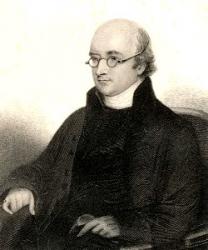
1776 - 1848 Person Name: Bp. Richard Mant (1776-1848) Topics: Opening and Closing of Service Author of "Round the Lord in glory seated" in Carmina Sanctorum, a selection of hymns and songs of praise with tunes Mant, Richard D.D., son of the Rev. Richard Mant, Master of the Grammar School, Southampton, was born at Southampton, Feb. 12, 1776. He was educated at Winchester and Trinity, Oxford (B.A. 1797, M.A., 1799). At Oxford he won the Chancellor's prize for an English essay: was a Fellow of Oriel, and for some time College Tutor. On taking Holy Orders he was successively curate to his father, then of one or two other places, Vicar of Coggeshall, Essex, 1810; Domestic Chaplain to the Archbishop of Canterbury, 1813, Rector of St. Botolph, Bishopsgate, London. 1816, and East Horsley, 1818, Bishop of Killaloe, 1820, of Down and Connor, 1823, and of Dromore, 1842. He was also Bampton Lecturer in 1811. He died Nov. 2, 1848. His prose works were numerous, and although now somewhat obsolete, they were useful and popular in their day. His poetical works, and other works which contain poetical pieces, are:—
(1) The Country Curate, 1804; (2) Poems in three Parts, 1806; (3) The Slave, 1807; (4) The Book of Psalms in an English Metrical Version, &c, 1824; (5) The Holydays of the Church; or Scripture Narratives of Our Blessed Lord's Life and Ministry, and Biographical Notices of the Apostles, Evangelists, and Other Saints, with Reflections, Collects, and Metrical Sketches, vol. i., 1828; vol. ii., 1831; (6) The Gospel Miracles in a series of Poetical Sketches, &c., 1832; (7) The British Months, 2 vols., 1836; (8) Ancient Hymns from the Roman Breviary, for Domestick Use. . . .To which are added Original Hymns, principally of Commemoration and Thanksgiving for Christ's Holy Ordinances, 1837: new ed., 1871. (9) The Happiness of the Blessed Dead, 1847.
Bishop Mant is known chiefly through his translations from the Latin. He was one of the earliest of the later translators, I. Williams and J. Chandler being his contemporaries. Concerning his translations, Mr. Ellerton, in his Notes on Church Hymns, 1881, p. xlviii. (folio ed.), says justly that:—
"Mant had little knowledge of hymns, and merely took those of the existing Roman Breviary as he found them: consequently he had to omit many, and so to alter others that they have in fact become different hymns: nor was he always happy in his manipulation of them. But his book has much good taste and devout feeling, and has fallen into undeserved neglect."
His metrical version of the Psalms has yielded very few pieces to the hymnals, the larger portion of his original compositions being from his work of 1837. The most popular of these is "Come Holy Ghost, my soul inspire, Spirit of," &c, and its altered forms; "Bright the vision that delighted," and its altered form of "Round the Lord in glory seated;" and "For all Thy saints, O Lord." His hymns in common use which are not annotated under their respective first lines are:—
i. From his Metrical Version of the Psalms, 1824.
1. God, my King, Thy might confessing. Ps. cxlv.
2. Lord, to Thee I make my vows. Ps. xxvii.
3. Blessed be the Lord most High. Ps. xxviii. Pt. ii.
4. My trust is in the highest Name. Ps. xi.
5. Reign, Jehovah, King supreme. Ps. xcix.
6. Thy listening ear, O Lord, incline. Ps. Ixxxvi.
7. To God my earnest voice I raise. Ps. cxlii.
8. To Jehovah hymn the lay. Ps. cxviii. Two centos in Spurgeon's Our Own Hymn Book, 1866. (1) st. i., ii., v.; and (2) "Thee, Jehovah, will I bless" from st. vii.-x.
ii. From his Holydays of the Church, &c, 1828-31.
9. Lo, the day the Lord hath made. Easter.
10. There is a dwelling place above. All Saints.
iii. From his Ancient Hymns, &c, 1837.
11. Before Thy mercy's throne. Lent.
12. Father of all, from Whom we trace. Unity.
13. For these who first proclaimed Thy word. Apostles.
14. No! when He bids me seek His face. Holy Communion.
15. Oft as in God's own house we sit. Divine Worship.
16. Put off thy shoes, 'tis holy ground. The House of God .
17. Saviour of men, our Hope [Life] and Rest. The Greater Festivals.
18. Thy House each day of hallowed rest. Holy Communion.
19. We bless Thee for Thy Church, 0 Lord. Thanksgiving for the Church.
26. We deem and own it, Lord, a proof. Divine Grace.
When all Bishop Mant's translations of original hymns, and versions of the Psalms in common use are taken into account, it is found that he is somewhat strongly represented in modern hymnody.
-- John Julian, Dictionary of Hymnology (1907)
====================
http://en.wikipedia.org/wiki/Richard_Mant
Richard Mant
Melchior Vulpius
1570 - 1615 Person Name: Melchior Vulpius, c. 1570-1615 Topics: Close of Service; Close of Service Composer of "CHRISTUS, DER IST MEIN LEBEN" in Christian Worship (1993) Born into a poor family named Fuchs, Melchior Vulpius (b. Wasungen, Henneberg, Germany, c. 1570; d. Weimar, Germany, 1615) had only limited educational opportunities and did not attend the university. He taught Latin in the school in Schleusingen, where he Latinized his surname, and from 1596 until his death served as a Lutheran cantor and teacher in Weimar. A distinguished composer, Vulpius wrote a St. Matthew Passion (1613), nearly two hundred motets in German and Latin, and over four hundred hymn tunes, many of which became popular in Lutheran churches, and some of which introduced the lively Italian balletto rhythms into the German hymn tunes. His music was published in Cantiones Sacrae (1602, 1604), Kirchengesangund Geistliche Lieder (1604, enlarged as Ein schon geistlich Gesanglmch, 1609), and posthumously in Cantionale Sacrum (1646).
Bert Polman
Melchior Vulpius
Harriet Auber
1773 - 1862 Person Name: Miss Harriet Auber (1773-1862) Topics: Opening and Closing of Service Author of "Sweet is the work, O Lord" in Carmina Sanctorum, a selection of hymns and songs of praise with tunes Auber, Harriet, daughter of Mr. James Auber, b. in London, Oct. 4, 1773. During the greater part of her quiet and secluded life she resided at Broxbourne and Hoddesdon, Herts, and died at the latter place on the 20th Jan., 1862. Miss Auber wrote devotional and other poetry, but only a portion of the former was published in her Spirit of the Psalms, in 1829. This collection is mainly her work, and from it some useful versions of the Psalms have been taken and included in modern hymn-books, about 20 appearing in Spurgeon's Our Own Hymn Book, 1866. Miss Auber's name is widely known, but it is principally through her exquisite lyric, "Our blest Redeemer, ere He breathed," and the Epiphany hymn, "Bright was the guiding star that led." (For criticism of her work, see English Psalters, §. 17.)
In addition to these and other hymns by Miss Auber, which are annotated under their respective first lines, the following are also in C. V., but principally in America:—
1. Arise, ye people, and adore. Easter.
2. As Thy chosen people, Lord. Ps. lxciii.
3. Can guilty man indeed believe? Ps. xciv.
4. Delightful is the task to sing. Ps. cxlvii.
5. Father of Spirits, Nature's God. Ps. cxxxi.
6. Hail, gracious Source of every good. Ps. Ixv.
7. Hasten, Lord, the glorious time. Ps. lxxii.
8. Jehovah reigns, O earth, rejoice. Ps. xccii.
9. Join, all ye servants of the Lord. H. Scriptures.
10. Jesus, Lord, to Thee we sing. Ps. cx.
11. O all ye lands, rejoice in God. Ps. lxvi.
12. O God our Strength, to Thee the song. Ps. lIxxxi.
13. O praise our great and gracious Lord. Ps. lxxviii.
14. On thy church, O power divine. Ps. lxvii.
15. Sweet is the work, O Lord. Sunday.
16. That Thou, O Lord, art ever nigh. Ps. lxxv.
17. The Lord, Who hath redeemed our souls. Ps. xxxi.
18. When all bespeaks a Father's love. Ps. set.
19. When dangers press and fears invade. Ps. lxii.
20. Who, O Lord, when life is o'er. Ps. xv.
21. Whom have we Lord, in heaven, but Thee. Ps. lxxiii.
22. Wide, ye heavenly gates, unfold. Ascension.
23. With hearts in love abounding. Ps. xlv.
24. With joy we hail the sacred day. Sunday.
25. Vainly through the night the ranger. Ps. cxvii.
All these psalm-versions and hymns are from her Spirit of the Psalms, London, 1829.
- John Julian, Dictionary of Hymnology (1907)
=========================
Auber, Harriet, p. 90, ii. The following versions of psalms from her Spirit of the Psalms, 1829, are also in common use:-
1. Great God, wert Thou extreme to mark. Ps. cxxx. "Thy servants in the temple watched," begins with stanza ii. of this.
2. How blest are they who daily prove. Ps. xli.
3. How blest the children of the Lord. Altered from Ps. cxii.
4. Jehovah, great and awful name. Part of Ps. Ixxviii.
5. 0 Thou Whom heaven's bright host revere. Ps. Ixxxiv.
6. Praise the Lord, our mighty King. Ps. cxxxv.
7. Spirit of peace, Who as a [celestial] Dove. Ps. cxxxiii.
8. Thou by Whose strength the mountains stand. Ps. Ixv.
9. To heaven our longing eyes we raise. Ps. cxxi.
10. Vainly through night's weary hours. Ps. cxxvii. Sometimes "Vainly through the night the ranger."
11. While all the golden harps above. Easter.
--John Julian, Dictionary of Hymnology, Appendix, Part II (1907)
See also in:Hymn Writers of the Church
Harriet Auber
John Hughes
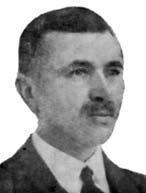
1873 - 1932 Person Name: John Hughes, 1873-1932 Topics: Close of Service Composer of "CWM RHONDDA" in Lutheran Service Book John Hughes (b. Dowlais, Glamorganshire, Wales, 1873; d. Llantwit Fardre, Wales, 1932) received little formal education; at age twelve he was already working as a doorboy at a local mining company in Llantwit Fardre. He eventually became an official in the traffic department of the Great Western Railway. Much of his energy was devoted to the Salem Baptist Church in Pontypridd, where he served as both deacon and precentor. Hughes composed two anthems, a number of Sunday school marches, and a few hymn tunes, of which CWM RHONDDA is universally known, the tune was composed in 1905 Baptist Cymanfa Ganu (song festival) in Capel Rhondda, Pontypridd, Wales.
Bert Polman
John Hughes
Frances Elizabeth Cox
1812 - 1897 Person Name: Frances E. Cox, 1812-1897 Topics: Close of Service Author of "Sing Praise to God, the Highest Good" in Lutheran Book of Worship Cox, Frances Elizabeth, daughter of Mr. George V. Cox, born at Oxford, is well known as a successful translator of hymns from the German. Her translations were published as Sacred Hymns from the German, London, Pickering. The 1st edition, pub. 1841, contained 49 translations printed with the original text, together with biographical notes on the German authors. In the 2nd edition, 1864, Hymns from the German, London, Rivingtons, the translations were increased to 56, those of 1841 being revised, and with additional notes. The 56 translations were composed of 27 from the 1st ed. (22 being omitted) and 29 which were new. The best known of her translations are "Jesus lives! no longer [thy terrors] now" ; and ”Who are these like stars appearing ?" A few other translations and original hymns have been contributed by Miss Cox to the magazines; but they have not been gathered together into a volume.
-- John Julian, Dictionary of Hymnology (1907)
Frances Elizabeth Cox
Johann Jakob Schütz
1640 - 1690 Person Name: Johann J. Schütz, 1640-1690 Topics: Close of Service Author of "Sing Praise to God, the Highest Good" in Lutheran Book of Worship Schütz, Johann Jakob, was born Sept. 7, 1640, at Frankfurt am Main. After studying at Tübingen (where he became a licentiate in civil and canon law), he began to practise as an advocate in Frankfurt, and in later years with the title of Rath. He seems to have been a man of considerable legal learning as well as of deep piety. He was an intimate friend of P. J. Spener; and it was, in great measure, at his suggestion, that Spener began his famous Collegia Pietatis. After Spener left Frankfurt, in 1686, Schütz came under the influence of J. W. Petersen; and carrying out Petersen's prin¬ciples to their logical conclusion, he became a Separatist, and ceased to attend the Lutheran services or to communicate. He died at Frankfurt, May 22, 1690 (Koch, iv. 220; Blätter fur Hymnologie, Feb. 1883).
Schütz is known as an author by two tractates; one being his Christliche Lebensregeln, Frankfurt, 1677; the other, that which contains his hymns, Christliches Gedenckbüchlein, zu Beforderung eines anfangenden neuen Lebens, &c, Frankfurt am Main, 1675 [Library of the Predigerministerium at Frankfurt]. This work includes 5 hymns, in a separate section, which is headed, “Hierauf folgen etliche Gesänge." These hymns are:—
i. Die Wollust dieser Welt.
ii. Was inich auf dieser Welt betrübt.
iii. So komm, geliebte Todes-Stund.
iv. Scheuet ihr, ihr matten Glieder.
v. Sei Lob und Ehr dem höchsten Gut.
Of these No. v. is undoubtedly by Schütz, and the other four exhibit much the same style of thought as, and frequent parallels to, the prose portions of the work. None of these have been traced earlier than 1675; and until this has been done, it is pretty safe to ascribe them all to Schütz.
Three of these hymns have passed into English, viz.:—
i. Sei Lob und Ehr dem höchsten Gut. Praise and Thanksgiving. First published in 1675, as above, No. v. It is founded on Deut. xxxii. 3; entitled, "Hymn of Thanksgiving ;" and is in 9 stanzas of 6 lines, and the refrain, "Gebt unserm Gott die Ehre”.
Koch, iv. 220, speaks of this hymn as "outweighing many hundred others; and a classical hymn, which, from its first appearance, attracted unusual attention." And Lauxmann, in Koch, viii. 334-339, relates how delighted J. J. Moser was, when, on entering church the first Sunday after his captivity at Hohentwiel, he heard this hymn, and how heartily he joined in it; how it comforted the dying G. C. Rieger, of Stuttgart, on Tuesday, in Easter Week, 1743, and many other incidents.
Translations in common use:—
1. All Glory to the Sov'reign Good. This is a full and good translation by J. OJacobi, in his Psalter Germanica, 2nd ed., 1732, p. 151, where it is entitled, "The Malabarian Hymn."
2. All glory be to God most high. A good translation by A. T. Russell, of st. i., iv., viii., for the Dalston Hospital Hymn Book, 1848, No. 59.
3. All praise and thanks to God most high. This is a good tr., omitting st. ix., by Miss Winkworth, in her Lyra Germanica, 2nd Ser., 1858, p. 146.
4. Sing praise to God Who reigns above. A good tr., omitting st. ix., contributed by Miss Cox to Lyra Eucharistica, 1864, p. 33, and included in her Hymns from the German, 1864, p. 235.
5. To God a joyful anthem raise. A good tr. of st. i., ii., iv., v., viii., by J. M. Sloan, as No. 314, in J. H. Wilson's Service of Praise, 1865.
The following are also translated into English:—
ii. So komm, geliebte Todes-Stund. For the Dying. First published in 1675, as above, No. iii., in 11 st. of 8 1., entitled, "The thoughts on Death of a Royal Princess, after the usual interpretation of Job xix. 25." This Princess was Sophie Elisabethe. daughter of Duke Philipp Ludwig, of Holstein-Sonderburg (b. at Homburg vor der Hohe, May 4, 1653; married, in 1676. to Duke Moritz, of Sachse-Zeitz; d. at Schleusingen, Aug. 19, 1684), who had been a regular attender at Spener's conferences at Frankfurt, and thus associated with Schütz. This hymn has often been ascribed to her; and she had already chosen Job xix. 25, as the text of her funeral sermon. But it is more probable that both hymns were written by Schütz for her use, or in her honour. The trs. are :—(1) "Come, happy hour of death, and close." By Dr. G. Walker, 1860, p. 56. (2) "O come, delightful hour of death." By Dr. G. Walker, 1860, p. 106.
iii. Was mich auf dieser Welt betriibt. Earthly Vanities. This hymn, on Renunciation of the World, first appeared in 1675, as above, No. ii., in 4 st. of 10 1., and entitled "From the World to God." It has sometimes been erroneously ascribed to Michael Franck. It is tr. as "The woes that weigh my body down." By Miss Manington, 1863, p. 32. [Rev. James Mearns, M.A.]
--Excerpts from John Julian, Dictionary of Hymnology (1907)
Johann Jakob Schütz
W. G. Fischer
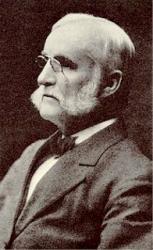
1835 - 1912 Person Name: William E. Fischer, 1849 - 1936 Topics: The Church Worship - The Close of Service Composer of "LAUS REGIS" in Service Book and Hymnal of the Lutheran Church in America William Gustavus Fischer In his youth, William G. Fischer (b. Baltimore, MD, 1835; d. Philadelphia, PA, 1912) developed an interest in music while attending singing schools. His career included working in the book bindery of J. B. Lippencott Publishing Company, teaching music at Girard College, and co-owning a piano business and music store–all in Philadelphia. Fischer eventually became a popular director of music at revival meetings and choral festivals. In 1876 he conducted a thousand-voice choir at the Dwight L. Moody/Ira D. Sankey revival meeting in Philadelphia. Fischer composed some two hundred tunes for Sunday school hymns and gospel songs.
Bert Polman
W. G. Fischer
A. H. Mann
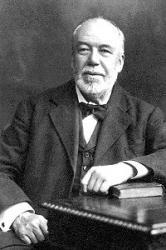
1850 - 1929 Person Name: Arthur Henry Mann, 1850 - 1929 Topics: The Church Worship - The Close of Service Composer of "ANGEL'S STORY" in Service Book and Hymnal of the Lutheran Church in America Arthur Henry ‘Daddy’ Mann MusB MusD United Kingdom 1850-1929. Born at Norwich, Norfolk, England, he graduated from New College, Oxford. He married Sarah Ransford, and they had five children: Sarah, Francis, Arthur, John, and Mary. Arthur died in infancy. Mann was a chorister and assistant organist at Norwich Cathedral, then, after short stints playing the organ at St Peter’s, Wolverhampton (1870-71); St. Michael’s Tettenhall Parish Church (1871-75); and Beverley Minster (1875-76); he became organist at King’s College Chapel, Cambridge (1876-1929), Cambridge University organist (1897-1929), and music master and organist at the Leys School, Cambridge (1894-1922). In addition to composing an oratorio and some hymn tunes, he was music editor of the Church of England Hymnal (1894). In 1918 he directed the music and first service of “Nine lessons & carols” at King’s College Chapel. He was an arranger, author, composer, and editor. His wife, Sarah, died in 1918. He died at Cambridge, England.
John Perry
A. H. Mann
Robert Bridges
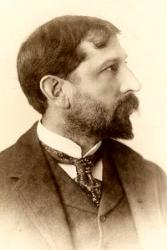
1844 - 1930 Person Name: Robert Bridges, 1844 - 1930 Topics: The Church Worship - The Close of Service Translator of "When morning gilds the skies" in Service Book and Hymnal of the Lutheran Church in America Robert S. Bridges (b. Walmer, Kent, England, 1844; d. Boar's Hill, Abingdon, Berkshire, England, 1930) In a modern listing of important poets Bridges' name is often omitted, but in his generation he was considered a great poet and fine scholar. He studied medicine and practiced as a physician until 1881, when he moved to the village of Yattendon. He had already written some poetry, but after 1881 his literary career became a full-time occupation, and in 1913 he was awarded the position of poet laureate in England. Bridges published The Yattendon Hymnal (1899), a collection of one hundred hymns (forty-four written or translated by him with settings mainly from the Genevan psalter, arranged for unaccompanied singing. In addition to volumes of poetry, Bridges also published A Practical Discourse on Some Principles of Hymn-Singing (1899) and About Hymns (1911).
Bert Polman
===================
Bridges, Robert Seymour, M.A., son of J. J. Bridges, of Walmer, Kent, was b. Oct. 23, 1844, and educated at Eton and at Corpus Christi College, Oxford (B.A. 1867, M.A. 1874). He took his M.A. in 1874, but retired from practice in 1882, and now (1906) resides at Yattendon, Berks. He is the author of many poems and plays. He edition and contributed to the Yattendon Hymnal, 1899 (originally printed at the Oxford Univ. Press in parts—Nos. 1-25, 1895; 26-50, 1897; 51-75, 1898; 76-100, 1899). [Rev. James Mearns, M.A.]
--John Julian, Dictionary of Hymnology, New Supplement (1907)
Robert Bridges
Pages




