

 My Starred Hymns
 My FlexScores
 My Hymnals
 My Purchased Files
Planning worship?
Check out our sister site, ZeteoSearch.org,
for 20+ additional resources related to your search.
- |
User Links
Person Results
G. W. Briggs
1875 - 1959 Person Name: George Wallace Briggs (1875-1959) Topics: Justice and Peace Author of "Christ is the world's true light" in Ancient and Modern George Wallace Briggs is a Canon of Worcester Cathedral and one of the most distinguished British hymn writers and hymnologists of today. Six of his hymns appear in the Episcopal Hymnal of 1940 (American). Another hymn on the Bible entitled "Word of the living God" was written for the 25th Anniversary of the British Bible Reading Fellowship and was sung in Westminster Abbey on June 5, 1947. It has been widely used since that time. Canon Briggs is a leading member of the Hymn Society of Great Britain and Ireland. He is also the composer of several hymn times, six of which have appeared in British hymnals. In addition to his work as a clergy man of the Church of England and an hymnologist, he has interest himself actively in the field of religious education, being largely responsible for two books with wide circulation in Britain, "Prayers and Hymns for used in Schools" and "The Daily Service." These books have had great influence on the worship practices of British schools, public and private. It is of historic interest that he is the author of one of the prayers used at the time of the famous meeting of Churchill and Roosevelt on H.M.S. Prince of Wales in 1941 when the Atlantic Charter was framed.
--Ten New Hymns on the Bible, 1952. Used by permission.
G. W. Briggs
Sven-Erik Bäck
1919 - 1994 Topics: World and Society Justice and Peace Composer of "BABEL" in New Church Praise
Sven-Erik Bäck
John Dykes Bower
1905 - 1981 Person Name: J. Dykes Bower (1905-1981) Topics: God's World Nations, Justice, and Peace Composer (descant) of "UNSER HERRSCHER" in Hymns for Today's Church (2nd ed.) Sir John Dykes Bower CVO (13 August 1905 – 1981) was an English cathedral organist, who served in Truro Cathedral, Durham Cathedral and St Paul's Cathedral.
John Dykes Bower was born on 13 August 1905 in Gloucester. He was one of four brothers. Stephen Dykes Bower became a famous church architect.
He was educated at Cheltenham College and studied organ under Herbert Brewer, and was organ scholar at Corpus Christi College, Cambridge from 1922.
He was organist of:
Truro Cathedral 1926 - 1929
New College, Oxford 1929 - 1933
Durham Cathedral 1933 - 1936
St Paul's Cathedral 1936 - 1968
--en.wikipedia.org/wiki/
John Dykes Bower
William H. Walter
1825 - 1893 Person Name: William H. Walter, 1825-1893 Topics: Justice and Peace Composer of "FESTAL SONG" in The Covenant Hymnal
William H. Walter
Aleksēi Federovich L'vov
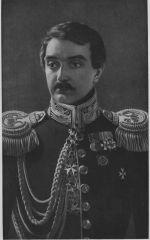
1798 - 1870 Person Name: Alexis F. Lvov Topics: Justice and Peace Composer of "RUSSIAN HYMN" in The New Century Hymnal Alexis Federovich L’vov Estonia 1798-1870. Born at Reval, Estonia, son of the St. Petersburg imperial court chapel director, he learned violin as a child and gave regular concerts in his home at age 9. Studying under a number of teachers until age 19, he then studied independently and developed his own personal style of playing. He entered the Russian army in 1818, became a civil engineer there eventually a General in 1828, when he was appointed Aide-de-camp to Tsar Nicholas I. He married Praskovya Aggeyevna, and they had a son and two daughters. He eventually took over his father’s post after he died in 1837 and stayed at that position for 24 years. He formed a string quartet in St. Petersburg and held weekly concerts at his private residence, which were attended by members of high society, including Franz Liszt, Robert and Clara Schumann, and Berlioz. In charge of the Russian chapel choir, it was described by Berlioz as of exceptional quality, expressing regret that Europeans were unable to hear the extraordinary sounds of the chapel choir (80 singers). L’vov took his quartet on several European tours where he could play to public audiences. He met Mendelssohn, Meyerbeer, and Spontini, who became personal friends. L’vov codified the Russian liturgical musical style ‘Obikhod’, the standard repertory of most Russian Orthodox churches in the world. L’vov was a member of the Russian musical establishment. Two of his friends who attained musical fame were Glinka and Berlioz, both impressed with L’vov’s superb violin playing and composing abilities. He composed violin music, operas and various religious pieces. His opera “Undine” (1846) became famous. In 1850 he founded the Russian Concert Society. His musical style was eclectic, combining traditions of Russian culture with Italian and German influences. He retired in 1867 due to deafness. He died near Kovno, Lithuania.
John Perry
Aleksēi Federovich L'vov
Orlando Gibbons
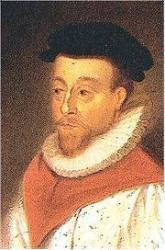
1583 - 1625 Person Name: Orlando Gibbons, 1583-1625 Topics: Justice and Peace Composer of "SONG 1" in Singing the Faith Orlando Gibbons (baptised 25 December 1583 – 5 June 1625) was an English composer, virginalist and organist of the late Tudor and early Jacobean periods. He was a leading composer in the England of his day.
Gibbons was born in Cambridge and christened at Oxford the same year – thus appearing in Oxford church records.
Between 1596 and 1598 he sang in the Choir of King's College, Cambridge, where his brother Edward Gibbons (1568–1650), eldest of the four sons of William Gibbons, was master of the choristers. The second brother Ellis Gibbons (1573–1603) was also a promising composer, but died young. Orlando entered the university in 1598 and achieved the degree of Bachelor of Music in 1606. James I appointed him a Gentleman of the Chapel Royal, where he served as an organist from at least 1615 until his death. In 1623 he became senior organist at the Chapel Royal, with Thomas Tomkins as junior organist. He also held positions as keyboard player in the privy chamber of the court of Prince Charles (later King Charles I), and organist at Westminster Abbey. He died at age 41 in Canterbury of apoplexy, and a monument to him was built in Canterbury Cathedral. A suspicion immediately arose that Gibbons had died of the plague, which was rife in England that year. Two physicians who had been present at his death were ordered to make a report, and performed an autopsy, the account of which survives in The National Archives:
We whose names are here underwritten: having been called to give our counsels to Mr. Orlando Gibbons; in the time of his late and sudden sickness, which we found in the beginning lethargical, or a profound sleep; out of which, we could never recover him, neither by inward nor outward medicines, & then instantly he fell in most strong, & sharp convulsions; which did wring his mouth up to his ears, & his eyes were distorted, as though they would have been thrust out of his head & then suddenly he lost both speech, sight and hearing, & so grew apoplectical & lost the whole motion of every part of his body, & so died. Then here upon (his death being so sudden) rumours were cast out that he did die of the plague, whereupon we . . . caused his body to be searched by certain women that were sworn to deliver the truth, who did affirm that they never saw a fairer corpse. Yet notwithstanding we to give full satisfaction to all did cause the skull to be opened in our presence & we carefully viewed the body, which we found also to be very clean without any show or spot of any contagious matter. In the brain we found the whole & sole cause of his sickness namely a great admirable blackness & syderation in the outside of the brain. Within the brain (being opened) there did issue out abundance of water intermixed with blood & this we affirm to be the only cause of his sudden death.
His death was a shock to peers and the suddenness of his passing drew comment more for the haste of his burial – and of its location at Canterbury rather than the body being returned to London. His wife, Elizabeth, died a little over a year later, aged in her mid-30s, leaving Orlando's eldest brother, Edward, to care for the children left orphans by this event. Of these children only the eldest son, Christopher Gibbons, went on to become a musician.
One of the most versatile English composers of his time, Gibbons wrote a quantity of keyboard works, around thirty fantasias for viols, a number of madrigals (the best-known being "The Silver Swan"), and many popular verse anthems. His choral music is distinguished by his complete mastery of counterpoint, combined with his wonderful gift for melody. Perhaps his most well known verse anthem is This is the record of John, which sets an Advent text for solo countertenor or tenor, alternating with full chorus. The soloist is required to demonstrate considerable technical facility at points, and the work at once expresses the rhetorical force of the text, whilst never being demonstrative or bombastic. He also produced two major settings of Evensong, the Short Service and the Second Service. The former includes a beautifully expressive Nunc dimittis, while the latter is an extended composition, combining verse and full sections. Gibbons's full anthems include the expressive O Lord, in thy wrath, and the Ascension Day anthem O clap your hands together for eight voices.
He contributed six pieces to the first printed collection of keyboard music in England, Parthenia (to which he was by far the youngest of the three contributors), published in about 1611. Gibbons's surviving keyboard output comprises some 45 pieces. The polyphonic fantasia and dance forms are the best represented genres. Gibbons's writing exhibits full mastery of three- and four-part counterpoint. Most of the fantasias are complex, multisectional pieces, treating multiple subjects imitatively. Gibbons's approach to melody in both fantasias and dances features a capability for almost limitless development of simple musical ideas, on display in works such as Pavane in D minor and Lord Salisbury's Pavan and Galliard.
In the 20th century, the Canadian pianist Glenn Gould championed Gibbons's music, and named him as his favorite composer. Gould wrote of Gibbons's hymns and anthems: "ever since my teen-age years this music ... has moved me more deeply than any other sound experience I can think of." In one interview, Gould compared Gibbons to Beethoven and Webern:
...despite the requisite quota of scales and shakes in such half-hearted virtuoso vehicles as the Salisbury Galliard, one is never quite able to counter the impression of music of supreme beauty that lacks its ideal means of reproduction. Like Beethoven in his last quartets, or Webern at almost any time, Gibbons is an artist of such intractable commitment that, in the keyboard field, at least, his works work better in one's memory, or on paper, than they ever can through the intercession of a sounding-board.
To this day, Gibbons's obit service is commemorated every year in King's College Chapel, Cambridge.
--wikipedia.org
Orlando Gibbons
John Bacchus Dykes
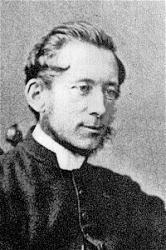
1823 - 1876 Person Name: John B. Dyke, 1823-1876 Topics: Justice and Peace Composer of "VOX DILECTI" in The Covenant Hymnal As a young child John Bacchus Dykes (b. Kingston-upon-Hull' England, 1823; d. Ticehurst, Sussex, England, 1876) took violin and piano lessons. At the age of ten he became the organist of St. John's in Hull, where his grandfather was vicar. After receiving a classics degree from St. Catherine College, Cambridge, England, he was ordained in the Church of England in 1847. In 1849 he became the precentor and choir director at Durham Cathedral, where he introduced reforms in the choir by insisting on consistent attendance, increasing rehearsals, and initiating music festivals. He served the parish of St. Oswald in Durham from 1862 until the year of his death. To the chagrin of his bishop, Dykes favored the high church practices associated with the Oxford Movement (choir robes, incense, and the like). A number of his three hundred hymn tunes are still respected as durable examples of Victorian hymnody. Most of his tunes were first published in Chope's Congregational Hymn and Tune Book (1857) and in early editions of the famous British hymnal, Hymns Ancient and Modern.
Bert Polman
John Bacchus Dykes
Henry Purcell
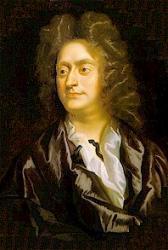
1659 - 1695 Topics: Justice and Peace Composer of "WESTMINSTER ABBEY" in The New Century Hymnal Henry Purcell (b. Westminster, London, England, 1659; d. Westminster, 1695), was perhaps the greatest English composer who ever lived, though he only lived to the age of thirty-six. Purcell's first piece was published at age eight when he was also a chorister in the Chapel Royal. When his voice changed in 1673, he was appointed assistant to John Hingston, who built chamber organs and maintained the king's instruments. In 1674 Purcell began tuning the Westminster Abbey organ and was paid to copy organ music. Given the position of composer for the violins in 1677, he also became organist at Westminster Abbey in 1679 (at age twenty) and succeeded Hingston as maintainer of the king's instruments (1683). Purcell composed music for the theater (Dido and Aeneas, c. 1689) and for keyboards, provided music for royal coronations and other ceremonies, and wrote a substantial body of church music, including eighteen full anthems and fifty-six verse anthems.
Bert Polman
Henry Purcell
William Henry Monk
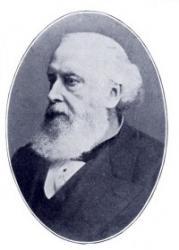
1823 - 1889 Person Name: William Henry Monk (1823-1889) Topics: Justice and Peace Harmonizer of "ALLELUIA DULCE CARMEN" in Ancient and Modern William H. Monk (b. Brompton, London, England, 1823; d. London, 1889) is best known for his music editing of Hymns Ancient and Modern (1861, 1868; 1875, and 1889 editions). He also adapted music from plainsong and added accompaniments for Introits for Use Throughout the Year, a book issued with that famous hymnal. Beginning in his teenage years, Monk held a number of musical positions. He became choirmaster at King's College in London in 1847 and was organist and choirmaster at St. Matthias, Stoke Newington, from 1852 to 1889, where he was influenced by the Oxford Movement. At St. Matthias, Monk also began daily choral services with the choir leading the congregation in music chosen according to the church year, including psalms chanted to plainsong. He composed over fifty hymn tunes and edited The Scottish Hymnal (1872 edition) and Wordsworth's Hymns for the Holy Year (1862) as well as the periodical Parish Choir (1840-1851).
Bert Polman
William Henry Monk
Henry Carey
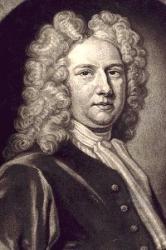
1687 - 1743 Person Name: Henry Carey (1692 ?-1743) Topics: World and Society Justice and Peace Composer of "OSBORNE" in New Church Praise Henry Carey, b. 1685 (?); d. London, 1743
Evangelical Lutheran Hymnal, 1908
Henry Carey
Pages




