

 My Starred Hymns
 My FlexScores
 My Hymnals
 My Purchased Files
Planning worship?
Check out our sister site, ZeteoSearch.org,
for 20+ additional resources related to your search.
- |
User Links
Person Results
B. K. Kaas
Person Name: Bergitte Kaas Topics: Tjueførste Søndag efter Trefoldigheds Fest Til Høimesse; Twenty First Sunday after Trinity Sunday; Tredje Søndag i Advent Til Høimesse; Third Sunday in Advent; Tredje Søndag efter Hellig 3 Kongers Dag Til Aftengudstjeneste - Til Sekund Tekstrækkes Epistel; Third Sunday after Epiphany; Fjerde Søndag efter Hellig 3 Kongers Dag Til Høimesse -Til Sekund Tekstrækkes Evangelium; Fourth Sunday after Epiphany; Første Søndag efter Paaske Til Aftengudstjeneste; First Sunday after Easter; Ansegtelse og Trøst; Occupation and Comfort; Jesus, vor Forbeder; Jesus, Our Forerunner; Den svage Tro; The Weak Faith; Troen; Belief Translator of "O høie Herre Gud" in Salmebog for Lutherske Kristne i Amerika
B. K. Kaas
N. Brorson
Person Name: Nils Brorson Topics: Tjueførste Søndag efter Trefoldigheds Fest Til Høimesse; Twenty-first Sunday after Trinity Sunday High Mass; Aandelig Strid; Frimodighed og Glæde; Mercy and Joy; Tredie Søndag efter Paaske Til Aftensang; Third Sunday after Easter For Evening; Fjerde Søndag efter Paaske Til Hoimesse; Fourth Sunday after Easter High Mass; 13 Søndag efter Trefoldigheds Fest Til Aftensang; Thirteenth Sunday after Trinity Sunday For Evening Translator of "Hjælp mig, o sødeste Jesu, at vinde!" in M. B. Landstads Kirkesalmebog og "Nokre Salmar" ved Professor Dr. E. Blix, samt følgende tillæg
N. Brorson
Ahasuer Fritsch
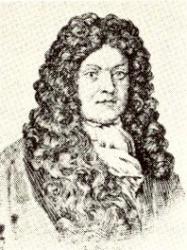
1629 - 1701 Person Name: Ahasv. Fritsch Topics: Fjerde Søndag efter Paaske Til Høimesse; Fourth Sunday after Easter; Søndag efter Jul Til Høimesse -Til Sekund Tekstrækkes Evangelium; Sunday after Christmas; Sjette Søndag efter Hellig 3 Kongers Dag Til Aftengudstjeneste; Sixth Sunday after Epiphany; Andre Søndag I Faste Til Høimesse -Til Sekund Tekstrækkes Evangelium; Second Sunday in Lent; Tredje Søndag efter Paaske Til Aftengudstjeneste - Til Tredje Tekstrækkes Epistel; Third Sunday after Easter; Alle Helgens Dag Til Aftengudstjeneste - Til Sekund Tekstrækkes Lextie; Alle Helgens Dag Til Aftengudstjeneste - Til Tredje Tekstrækkes Lextie; All Saints Day; All Saints Day; Tjuesjete Søndag efter Trefoldiheds Fest Til Aftengudstjeneste - Til Tredje Tekstrækkes Epistel; Twenty sixth Sunday after Trinity Sunday; Hengivelse til Jesus; Devotion to Jesus; Liv, det evige; Eternal Life; Pilgrimsvandring, de Kristnes; The Christian Pilgrimage Author of "Allevegne, hvor jeg vanker" in Salmebog for Lutherske Kristne i Amerika Born: December 16, 1629, Mücheln, Saxony.
Died: August 24, 1701, Rudolstadt, Germany.
With help from the family of a young noble he tutored, Fritsch received a good education, earning his law degree from the University of Jena in 1661. He later became chancellor of the university and president of the Consistory of Rudolstadt. He wrote on numerous subjects, including antiquities, law, and religion, and collected hymns.
Hymns--
"Liebster Immanuel, Herzog der Frommen"
"Dearest Immanuel, Prince of the Lowly"
Music--
WAS FRAG' ICH NACH DER WELT
--www.cyberhymnal.org/bio
Ahasuer Fritsch
Franz Xaver Schnyder von Wartensee
1786 - 1868 Person Name: Xavier Schnyder von Wartensee, 1786-1868 Topics: The Catechism The Redeemer; Fifth Sunday after Epiphany; Quinquagesima; Fourth Sunday after Easter; First Sunday after Trinity; Fifteenth Sunday after Trinity; Septuagesima; Thirteenth Sunday after Trinity; Twenty Second Sunday after Trinity Composer of "HORTON" in Evangelical Lutheran hymnal
Franz Xaver Schnyder von Wartensee
Wilhelm A. F. Schulthes
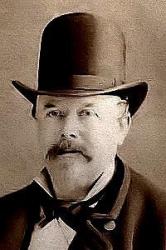
1816 - 1879 Topics: Christian Conduct and Services; Epiphany, Second Sunday; Epiphany, Fourth Sunday; Third Sunday after Easter; Trinity, First Sunday; Trinity, Eighteenth Sunday; Trinity, Twenty-second Sunday; God is Love; Prayer for Love Composer of "LAMBETH" in The Hymnal and Order of Service Wilhelm August Ferdinand Schulthes Germany 1816-1879. Born at Hesse Castle, Germany, son of a German army officer, he was raised Lutheran, but turned to Roman Catholicism around 1852. He directed the Brompton Oratory choir (1852-1872). He taught music at the Convent of the Sacred Heart, Roehampton (1868-1879). He also wrote poetry. No information found regarding family or other life events. He died at Bois-de-Colombes, France.
John Perry
Wilhelm A. F. Schulthes
Ernst Christoph Homburg
1605 - 1681 Person Name: Ernst Homburg Topics: Kristi Himmelfarts Dag Til Høimesse; Ascension; Septuagesima Sunday; Tredje Søndag efter Paaske Til Aftengudstjeneste; Third Sunday after Easter; Third Sunday after Easter; Ascension of Christ; Second Sunday after Trinity Sunday; Second Sunday after Trinity Sunday; Fjerde Søndag efter Trefoldiheds Fest Til Aftengudstjeneste; Fourth Sunday after Trinity Sunday; Nittende Søndag efter Trefoldiheds Fest Til Aftengudstjeneste - Til Tredje Tekstrækkes Epistel; Nineteenth Sunday after Trinity Sunday; Twenty fifth Sunday after Trinity Sunday; Twenty fifth Sunday after Trinity Sunday; Efterfølgelse, Jesu; Obedience of Jesus; Himmellængsel; Longing for Heaven; Jesus, vor Forbeder; Jesus, Our Forerunner; Anden Søndag efter Trefoldiheds Fest Til Høimesse -Til Anden Tekstrækkes Evangelium; Anden Søndag efter Trefoldiheds Fest Til Høimesse -Til Tredje Teksxtækkes Evangelium; Kristi Himmelfarts Dag Til Høimesse -Til Anden Tekstrækkes Evangelium; Søndag Septuagesima Til Høimesse -Til Anden Tekstrækkes Evangelium; Tjuefemte Søndag efter Trefoldiheds Fest Til Aftengudstjeneste - Til Anden Tekstrækkes Epistel; Tjuefemte Søndag efter Trefoldiheds Fest Til Høimesse -Til Tredje Tekstrækkes Evangelium; Tredje Søndag efter Paaske Til Aftengudstjeneste - Til Anden Tekstrækkes Epistel Author of "O seierrige Frelsermand!" in Salmebog for Lutherske Kristne i Amerika Ernst C. Homburg (b. Mihla, near Eisenach, Germany, 1605; d. Naumberg, Germany, 1681) wrote most of his hymns for his own devotions. He described this eight-stanza text as a "hymn of thanksgiving to his Redeemer and Savior for his bitter sufferings." In early life, Homburg was a writer of love and drinking songs. After a difficult time of family illness he experienced a religious conversion, and his poetry took a more serious turn. A lawyer by profession, he wrote hymns to express and strengthen his own faith rather than for public use. Some 150 of his hymn texts were published in his Geistliche Lieder.
Bert Polman
======================
Homburg, Ernst Christoph, was born in 1605, at Mihla, near Eisenach. He practised at Nauraburg, in Saxony, as Clerk of the Assizes and Counsellor. In 1648 ho was admitted a member of the Fruitbearing Society, and afterwards became a member of the Elbe Swan Order founded by Rist in 1660. He died at Naumburg, Juno 2, 1681. (Koch, iii. 388, 392; Allegemeine Deutsche Biographie, xiii. 43, 44.)
By his contemporaries Homburg was regarded as a poet of the first rank. His earlier poems, 1638-1653, were secular, including many love and drinking songs. Domestic troubles arising from the illnesses of himself and of his wife, and other afflictions, led him to seek the Lord, and the deliverances he experienced from pestilence and from violence led him to place all his confidence on God. The collected edition of his hymns appeared in two parts at Jena and Naumburg, 1659, pt. i. as his Geistlicher Lieder, Erster Theil, with 100 hymns [engraved title, Naumburg, 1658]; and pt. ii. as the Ander Theil with 50 hymns. In the preface he speaks of them as his "Sunday labours," and says, "I was specially induced and compelled" to their composition" by the anxious and sore domestic afflictions by which God.....has for some time laid me aside." They are distinguished for simplicity, firm faith, and liveliness, but often lack poetic vigour and are too sombre.
Two of his hymns have passed into English, viz.:—
i. Ach wundergrosser Sieges-Held. Ascension. 1659, pt. i. p. 400, in 6 stanzas of 11 lines, entitled, "On the Ascension of Jesus Christ." In the Berlin Geistliche Lieder, ed. 1863, No. 327.
The translations are: (l) “O wondrous Conqueror and Great," by Miss Burlingham, in the British Herald, Oct. 1865, p. 153, and Reid's Praise Book, 1872, No. 445. (2) "O glorious Saviour, conquering King," by N. L. Frothingham, 1870, p. 272.
ii. Jesu meines Lebens Leben. Passiontide. 1659, pt. i. p. 318, in 8 stanzas of 8 lines, entitled, "Hymn of Thanksgiving to his Redeemer and Saviour for His bitter Sufferings." This is his most popular hymn, and has passed into many recent collections, including the Berlin Geistliche Lieder, ed. 1863. Translated as:—
1. Jesu! life! the life of heaven. Translation of stanzas i., ii., vi.-viii., by A. T. Russell, for his Psalms & Hymns, 1851, No. 88.
2. Of my life the Life, 0 Jesus. A good translation of stanzas i., ii., v., vii., viii., contributed by R. Massie to the 1857 edition of Mercer's The Church Psalter & Hymnbook, No. 404 (Ox. ed. 1864, No. 185), repeated in the Methodist New Connexion Hymn Book, 1863.
3. Christ the life of all the living. A good translation of stanzas i., ii., v., vii., viii., by Miss Winkworth, in her Chorale Book for England, 1863, No. 49. Repeated in full in Dr. Thomas's Augustine Hymn Book, 1866, and the Ohio Lutheran Hymnal 1880; and abridged in the Pennsylvania Lutheran Ch. Book., 1868, the Hymnary , 1872, and others.
4. Thou eternal life bestowest. Translations of stanzas i.-iii., viii., by Miss Borthwick, contributed to Dr. Pagenstecher's Collection, 1864, No. 73, and repeated in Hymns from the Land of Luther, ed. 1884, p. 257.
Other translations are: (1) "Jesu, Source of my Salvation," by J. C. Jacobi, 1732, p. 29, repeated in the Moravian Hymn Book, 1754 (1886, No. 97). (2) "Jesus! Source of life eternal," by Miss Burlingham, in the British Herald, Aug. 1865, p. 120, and Reid's Praise Book, 1872, No. 389. (3) "Jesus, of my life the living," by N. L. Frothingham, 1870, p. 198.
[Rev. James Mearns, M.A.]
--John Julian, Dictionary of Hymnology (1907)
Ernst Christoph Homburg
August Hermann Francke
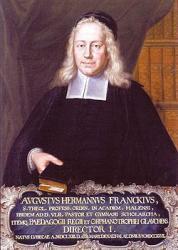
1663 - 1727 Person Name: August Hermann Franke, d. 1727 Topics: The Christian Life Trust; Epiphany, Fourth Sunday; Twenty Fifth Sunday after Trinity Author of "Lord, Thou art my Rock of strength" in Church Book Francke, August Hermann, son of Johann Francke, a lawyer in Lubeck, was born at Lubeck, March 22, 1663. He studied at the Universities of Erfurt, Kiel, and Leipzig, graduated M.A. at Leipzig, 1685, and thereafter lectured on Biblical subjects at Leipzig for some time. About Michaelmas, 1687, he went to Lüneburg to work under the pious superintendent C. H. Sandhagen; and there while composing his first sermon (on St. John xx. 31) he underwent that change which made him call Lüneburg his spiritual birthplace. After spending the greater part of 1688 at Hamburg, he stayed two months with P. J. Spener at Dresden, and then returned about Lent, 1689, to Leipzig, where he resumed his Biblical lectures until the old orthodox party procured an edict forbidding them in the beginning of 1690. On March 10, 1690, he received a call to become diaconus of the Augustine Church at Erfurt, and there, by his stirring exhortations to renewal of heart, living faith and holy life, he drew many, even Roman Catholics, around him, but by a combination of the old orthodox Lutherans with the Romanists he was expelled from Erfurt, Sept. 27, 1691. After a lengthened visit to P. J. Spener, then Probst of St Nicholas's Church, Berlin, he was appointed by the Elector of Brandenburg, Dec. 22, 1691, as professor of Greek and the Oriental languages, and in 1698 ordinary professor of Theology in the University of Halle; being also appointed in 1691 preacher at St. George's Church in Glaucha (suburb of Halle), a post which he exchanged in 1715 for the pastorate of St. Ulrich's, Halle. After his left side was paralysed in Nov. 1726, he patiently endured much suffering till his death on June 8, 1727, at Halle ( Koch , iv. 305-322; Allgemeine Deutsche Biographie, vii. 219-231).
Francke was the spiritual son of P. J. Spener, and became one of the leaders in the " Pietistic" movement which so powerfully influenced Germany, 1680-1750, raised the tone of the community after the depression of the Thirty Years' War, revived the educational system, began systematic provision for the poor, and refined and purified domestic life. Francke was the spiritual leader and teacher, and under him and the band of professors that gathered to Halle, Halle became the headquarters of Pietism. During his time Halle sent out some 6000 graduates in theology, men imbued with his spirit, good exegetes, and devoted pastors, who spread their doctrines all over Germany, and in the early decades of the 18th cent, occupied a majority of the pulpits.
The extensive buildings at Halle, which now bear the title of the "Francke Institutions," are a monument of his simple faith and philanthropic zeal. He began at Easter, 1695, by opening a room in his house for instructing the poor children of Glaucha, with a capital of about thirteen shillings. About Whitsuntide, 1695, were the beginnings of the Paedagogium, 1697 of the Latin School, 1698 of the bookselling and apothecary businesses, 1705 of the mission to the East Indies, 1710 of the Bible Society. On a place formerly occupied by beer and dancing gardens, the foundation stone of the great Orphanage was laid July 13, 1698, in a spirit of humble faith in God and fervent prayer, trusting to Him for the means to pay for the work as it progressed; and week by week as they were needed the supplies came in from far and near. In this work, as in regard to his sermons and lectures, Francke had great opposition to meet, but the Commission of Enquiry which his enemies procured resulted in a cabinet order of 1702, which is the Charter of his Institutions. In 1727 there were 134 orphans in the orphanage; and besides these 2207 scholars in the various training schools, of whom some 360, as well as 225 poor students, received daily rations; while in 1863 the value of the buildings was about £45,000., and nearly 3500 scholars received instruction.
Distinguished as a professor, as a philanthropist, as a pastor, and as a preacher of gospel simplicity and soul-stirring earnestness, Francke was not prolific as a hymnwriter. Only three hymns are known by him, two of which are:—
i. Gottlob em Schritt zur Ewigkeit. New Year, first published in his Schrifftmässige Anweisung recht und Gott wolgefällig zu beten, Halle, 1695, p. 534, in 12 st. of 7 l., as a "Morning and Evening" hymn, entitled "The Voice of the Bride (‘When shall I come and appear before God?’), which she raises as often as she completes a step of her mortal life; and may be used by an upright and believing soul instead of the [usual] morning and evening hymn, as also at other times."
Reprinted in the Geistreiches Gesang-Buch, Halle, 1697, p. 294, Freylinghausen's Gesang-Buch, 1704, &c, and is No. 623 in the Unverfälschter Liedersegen 1851.
According to Koch, viii. 176-179, it was written immediately after his expulsion from Erfurt, Sept 27, 1691, while on his way to his mother's house at Gotha, and "in the experience of the overflowing consolation of the Holy Spirit." In the spirit of his favourite motto, "Quocunque die ante aeternitatem uno stamus pede," and based on 2 Cor. v. 6 and Rev. xxii. 17-20, it is modelled on a hymn by J. V. Andreä, 1636.
"Gottlob ein Schritt zur Ewigkeit
Ist abermals vorbei."
Koch adds that in his lifetime Francke found cases where this hymn had been blessed, that two days before his death he caused the hymn to be read to him, and said, "My faithful Jesus, I have given myself to Thee, soul and body that is sure;" and that on the day on which he died, June 8, 1727, this hymn was one of those sung at the choir meeting at Herrnhut.
The translations in common use are :—
1. Thank God, that towards eternity, a full and good translation by Miss Winkworth, in her Lyra Germanica, 2nd series, 1858, p. 9. In 1860, 1 l. 1-4 of st. i., iv., vi., viii., greatly altered, and beginning, "Bless God, that towards eternity," were included as No. 74 in the American Episcopal Hymns for Church and Home.
2. Oh wouldst Thou in Thy glory come, a translation of st. iv., vii.-xi., founded by Miss Winkworth on her 1858 version, and given as No. 173 in her Chorale Book for England, 1863.
Other translations are: (1) "Another step is made with God," in the Supplement to German Psalmody, ed. 1765, p. 50. Previously in Select Hymns from German Psalmody, Tranquebar, 1754, p. 79. (2) "Thank God! towards Eternity," by J. Gambold, as No. 626 in pt. i. of the Moravian Hymnbook, 1754 (1886, No. 1232). (3) "Thank God! another stage of time," by Dr. H. Mills, 1856, p. 227.
ii. Was von aussen und von innen. Cross and Consolation. A fine hymn of trust in God, founded on Ps. lxii. 5-8. Written in memory of Eleonore, neé Kubitz, wife of J. H. Michaelis, professor at Halle, and appended to the funeral sermon preached by Francke on Ps. lxii. 2, in St. George's Church, Glaucha, Nov. 1, 1711. Included as No. 500 in Freylinghausen's Neues geistreiches Gesang-Buch, 1714, in 9 st. of 8 l., and recently as No. 2250 in Knapp's Evangelischer Lieder-Schatz, 1837 (1865, No. 1997). Lauxmann, in Koch, viii. 508-512, speaks of this lady as one who suffered severe afflictions, but "what from without or from within pressed on her soul she bore in quiet waiting on the help of the Lord, of Whom she could at last gratefully say 'He hath done all things well.'" Lauxmann adds, "This hymn is also a beautiful clear mirror of Francke's own thought and conversation, heart and life experiences." In his Segensvolle Fussstapfen, 1709, he was able already to relate thirty instances in which the Lord had enabled him to receive, exactly at the time when he needed it, pecuniary help in answer to his prayers during the building and conducting of the great Orphanage at Halle.
Of this hymn (which should be read with the history of his great work at Halle) the only translation in common use is:—
What within me and without, a good and full translation by Miss Winkworth in the first edition of her Lyra Germanica, 1855, p. 126 (st. iii. being added in the 2nd ed., 1856), and thence as No. 139 in her Chorale Book for England, 1863. With the altered first line, "Lord, Thou art my Rock of strength," three centos are in American common use:—
1. St. ii., iv., vii., ix. in Boardman's Selections, Philadelphia, 1861.
2. St. ii., vii., ix. in the Pennsylvania Lutheran Chorale Book, 1868, Dutch Reformed Hymns of the Church, 1869, and Bichards's Collection, 1881.
3. St. ii., iv., ix. in Robinson's Songs for the Sanctuary, 1865, and the Hymns & Songs of Praise, N. Y., 1874. [Rev. James Mearns, M.A.]
--John Julian, Dictionary of Hymnology
August Hermann Francke
Gottfried Wilhelm Sacer
1635 - 1699 Person Name: Godfred Sacer Topics: Pentecost; Fourth Sunday after Easter; Første Pinsedag Til Morgengudstjeneste og Høimesse - Til Tredje Tekstrækkes Evangelium; Pentecost; Tiende Søndag efter Trefoldiheds Fest Til Aftengudstjeneste; Tenth Sunday after Trinity Sunday; Tolvte Søndag efter Trefoldiheds Fest Til Aftengudstjeneste - Til Tredje Tekstrækkes Epistel; Twelfth Sunday after Trinity Sunday; Twenty second Sunday after Trinity Sunday; Fjerde Søndag efter Paaske Til Aftengudstjeneste - Til Anden Tekstrækkes Epistel; Anden Pinsedag Til Høimesse; Tjueanden Søndag efter Trefoldiheds Fest Til Aftengudstjeneste Author of "Den Idræt Gud er tækkelig" in Salmebog for Lutherske Kristne i Amerika Sacer, Gottfried Wilhelm, son of Andreas Sacer, senior burgomaster of Naumburg, in Saxony, was born atNaumburg, July 11, 1635. He entered the University of Jena in 1653, and remained there for four years as a student of law. He was thereafter for two years secretary to Geheimrath von Platen, in Berlin; and then tutor, first to a son of the Swedish Regierungsrath von Pohlen, and then to the sons of the Saxon Landhauptmann von Bünau. In 1665 he entered the military service under Herr von Mollison, commandant at Lüneberg, at first as regimental secretary, and afterwards as ensign. Soon tiring of this he went to Kiel in 1667, in order to graduate LL.D., but before doing so undertook a tour in Holland and Denmark with some young noblemen from Holstein. In 1670 he settled down as advocate at the appeal and chancery courts in Brunswick (graduating LL.D. at Kiel in 1671), and in 1683 removed to Wolfenbüttel as Kammer-und Amts-advocat, receiving the title of Kammer-Consulent in 1690. He died at Wolfenbüttel, Sept. 8 [18], 1699. (Weizel, iii. p. i.; Koch, iii. 398, iv. 562, &c.)
Sacer began early to write poetry, was admitted by Rist, in 1660, as one of his poetical order of Elbe Swans, and in hisNützliche Erinnerungen wegen der teutschen Poeterey, Altenstettin, 1661 [Wolfenbüttel Library], already described himself as " Kayserlicher Poët," i.e. as having been crowned as a poet by the Emperor of Austria. His hymns are among the best of the period immediately succeeding Gerhardt. They have a considerable measure of poetic glow, and sometimes of dramatic force, and are Scriptural and good in style. His earliest hymns seem to have appeared in hisBluttriefende, siegende und triumphirende Jesus, 1661, but no copy of this work is now known. Many are included in pt. ii. 1665, of the Stralsund Gesang-Buch (Ander Theil des erneuerten Gesang-Buchs), and in the other hymn-books of the period. They were collected and published by his son-in-law as his Geistliche, liebliche Lieder, at Gotha, 1714.
Those of Sacer's hymns which have passed into English are:—
i. Durch Trauera und durch Plagen. New Year. Included in 1665 as above, pt. ii. p. 35, in 7 stanzas of 8 lines; repeated 1714, p. 3, entitled "On the New Year." It is also in the Berlin Geistliche Lieder ed. 1863, No. 191. The translation in common use is:—
Through many changeful morrows. This is a good tr. by Dr. F. W. Gotch, in the Baptist Magazine, Jan. 1857, p. 19, repeated in the 1880 Supplement to the Baptist Psalms & Hymns.
ii. Gott fähret auf gen Himmel. Ascension. Founded on Ps. xlvii. 6-7. Included in 1665, as above, pt. ii. p. 147, in 7 st. of 8 1., and repeated 1714, p. 27, entitled "On the Ascension of Christ." It is also in the Berlin Geistliche Lieder, ed. 1863, No. 336. In the Württemberg Gesang-Buch, 1842, it begins, "Der Herr faint auf." The translations in common use are:—
1. Lo! God to heaven ascendeth. This is a good tr., omitting st. vi., by Miss Cox, in her Sacred Hymns from the German, 1841, p. 39 (Hymns from the German, 1864, p. 63). Repeated, abridged, in Alford's Psalms & Hymns, 1844, and his Year of Praise, 1867; in Dale's English Hymn Book, 1874, &c.
2. While up to Heaven God goeth. A spirited version, omitting st. vi., by W. J. Blew, printed as a leaflet for choir use in 1846, and included in his Church Hymn & Tune Book, 1852 ; in Rice's Selection from Blew, 1870, No. 67, and in Lyra Messianica, 1864, p. 3fr2.
Other hymns by Sacer are:—
iii. Gott, der du aller Himmel Heer. For those at Sea. Included in J. Crülger's Erneuerte Gesangbüchlein ...von Peter Sohren , Frankfurt am Main, 1670, No. 878, in 10 st., and repeated, 1714, p. 75, in 11 St., entitled “Hymn for Seafarers." Recently in Knapp's Evangelischer Lieder-Schatz 1837 and 1865. Translated as, "Thou who hast stretched the heaven's blue sky." In L. Rehfuess's Church at Sea, 1868, p. 34.
iv. Lass mich nicht in Irrthum fallen. Christ for all. Included, 1714, as above, p. 53, in 10 st. of 8 1., founded on Ps. li. 13, and repeated in the Hannover Gesang-Buch, 1740, No. 848. Tr. as "Lord, forbid that e'er such error." By Dr. J. Guthrie, 1869, p. 117.
v. 0 dass ich könnte Thränen gnug vergiessen. Passiontide. Included in 1665 as above, pt. ii. p. 60, in 16 st. of 4 1., and repeated, 1714, p. 20, entitled "Contemplation of the piteous death of Jesus Christ." In the Berlin Gesang-Buch, 1829, st. xiv.-xvi. altered and beginning, “Mein Herr und Heiland, lass mirs gehn zu Herzen," are included as No. 189. This form is tr. as, “Lord, touch my heart with that great Consummation," by N. L. Frothingham, 1870, p. 143.
vi. So hab' ich obgesieget. Funeral of a Child. Included in 1665 as above, pt. ii. p. 665, in 13 st. of 8 1., st. i.-xii. being given as spoken by the child in Paradise, and xiii. as the answer of the bereaved parents. Re¬peated,in 1714, p. 91, entitled "Comfort from the de¬parted to those left behind," the 13th stanza being entitled “Farewell of the sorrowing ones." Recently as No. 855 in the Evangelischer Lieder-Schatz, 1851. Translated as (1) "Lo! now the victory's gain'd me," by Miss Cox, 1841, p. 77. In her edition of 1864, p. 87, it is altered and begins, "My race is now completed." (2) "Then I have conquer'd; then at last," by Miss Winkworth, 1855, p. 243. (3) "My course is run; in glory," by Dr. J. Guthrie, 1869, p. 105. [Rev. James Mearns, M.A.]
--John Julian, Dictionary of Hymnology (1907)
Gottfried Wilhelm Sacer
Bartholomaüs Ringwaldt
1532 - 1599 Person Name: Bart. Ringwald Topics: Første Pinsedag Til Morgengudstjeneste og Høimesse; Pentecost; Fourth Sunday in Advent; Second Sunday after Epiphany; Fifth Sunday after Epiphany; Søndag Seksagesima Til Høimesse -Til Sekund Tekstrækkes Evangelium; Sexagesima Sunday; Sjette Søndag efter Paaske Til Aftengudstjeneste - Til Tredje Tekstrækkes Epistel; Sixth Sunday after Easter; Sixth Sunday after Easter; Trinity Sunday; Fjortende Søndag efter Trefoldiheds Fest Til Høimesse -Til Tredje Teksxtækkes Evangelium; Fjortende Søndag efter Trefoldiheds Fest Til Aftengudstjeneste; Fourteenth Sunday after Trinity Sunday; Fourteenth Sunday after Trinity Sunday; Seventeenth Sunday after Trinity Sunday; All Saints Day; Twenty third Sunday after Trinity Sunday; Vandring I Lyset; Walking in the Light; Alle Helgens Dag Til Høimesse -Til Anden Tekstrækkes Evangelium; Anden Søndag efter Hellig 3 Kongers Dag Til Aftengudstjeneste - Til Anden Tekstrækkes Epistel; Femte Søndag efter Hellig 3 Kongers Dag Til Høimesse -Til Anden Tekstrækkes Evangelium; Fjerde Søndag I Advent Til Aftengudstjeneste - Til Andend Tekstrækkes Epistel; Sjette Søndag efter Paaske Til Høimesse -Til Tredje Teksttækkes Evangelium; Syttende Søndag efter Trefoldiheds Fest Til Høimesse -Til Tredje Teksttækkes Evangelium; Tjuetredje Søndag efter Trefoldiheds Fest Til Høimesse -Til Tredje Teksttækkes Evangelium; Trefoldigheds-Fest Til Aftengudstjeneste - Til Anden Tekstrækkes Epistel Author of "O Helligaand, du Skat saa skjøn" in Salmebog for Lutherske Kristne i Amerika Bartholomew Ringwaldt was born at Frankfort-on-the-Oder, in 1530, and was a Lutheran pastor at Langfield, in Prussia, where he died, 1598. His hymns resemble Luther's in their simplicity and power. Several of them were written to comfort himself and others in the sufferings they endured from famine, pestilence, fire and floods. In 1581, he published "Hymns for the Sundays and Festivals of the whole Year."
--Annotations of the Hymnal, Charles Hutchins, M.A. 1872.
============================
Ringwaldt, Bartholomäus (Ringwalt, Ringwald), was born Nov. 28, 1532, at Frankfurt a. Oder. He was ordained in 1557, and was pastor of two parishes before he settled in 1566 as pastor of Langfeld (or Langenfeld), near Sonnenburg, Brandenburg. He was still there in 1597, but seems to have died there in 1599, or at least not later than 1600. (Koch, ii. 182; Goedeke's Grundriss, vol. ii. 1886, p. 512; Blätter fur Hymnologie, 1885.
Ringwaldt exercised a considerable influence on his contemporaries as a poet of the people, as well as by his hymns properly so called. He was a true German patriot, a staunch Lutheran, and a man who was quite ready to face the consequences of his plain speaking. His style is as a rule clear and good, though his rhymes are often enough halting; and he possessed considerable powers of observation and description. After 1577 he published various didactic poems, the most important being, (1) Newezeittung: So Hanns Fromman mit sich auss der Hellen unnd dem Himel bracht, Amberg, 1582, and the later editions enlarged and rewritten as Christliche Warnung des Trewen Eckarts, &c, Frankfurt a. Oder, 1588. In various forms and abridgments it passed through at least 34 editions up to 1700. This work is a mirror of the times and of the morals of the people. (2) Die Lauter Warheit, darinnen angezeiget, wie sich ein Weltlicher und Geistlicher Kriegsman in seinen Beruff vorhalten soil, &c, Erfurt, 1586. Of this again at least 18 eds. appeared up to 1700. In it he gives lively pictures of the life of the various ranks and orders of his time, and shows the temptations and failings of each, not by any means sparing his own class, i.e. the Lutheran clergy.
As a hymnwriter Ringwaldt was also of considerable importance. He was one of the most prolific hymn-writers of the 16th century. Wackernagel, iv. pp. 906-1065, gives 208 pieces under his name, about 165 of which may be called hymns. A selection of 59 as his Geistliche Lieder, with a memoir by H. Wendebourg, was published at Halle in 1858. A number appeared in the various eds. of his Trewer Echart and Lauter Warheit as above. The rest appeared principally in his
(1) Der 91. Psalm neben Siben andern schönen Liedern, &c, Frankfurt,a. Oder, 1577. (2) Evangelia, Auffalle Sontag unnd Fest, Durchs gantze Jahr, &c, Frankfurt a. Oder, N.D. The earliest edition now known is undated, but Wackernagel, i., p. 523, gives it as of 1582. It is marked as a 2nd edition, and has a preface dated Nov. 28, 1581. It contains hymns founded on the Gospels for Sundays and Festivals, &c. (3) Handbüchlin: geistliche Lieder und Gebetlein, Auff der Reiss, &c, Frankfurt a. Oder, 1586 (preface, Feb. 21, 1582). A good many of his hymns passed into German collections of the 16th and 17th centuries, and a number are still in German common use.
Those of Ringwaldt's hymns which have passed into English are:—
i. Es ist gewisslich an derZeit. Second Advent. The anonymous original of this hymn is one of Zwey schöne Lieder, printed separately circa 1565, and thence in Wackernagel, iv. p. 344. W. von Maltzahn, in his Bücherschatz, 1875, No. 616, p. 93, cites it as in an undated Nürnberg broadsheet, circa 1556. Wackernagel also gives along with the original the revised form in Ringwaldt's Handbüchlin, 1586. Both forms are also in the Unverfälschter Liedersegen, 1851, No. 746, in 7 stanzas of 7 lines. It is based on the "Dies Irae," but can hardly be called a version of it. The original has a picturesqueness and force which are greatly lost in Ringwaldt's revision. It was much used in Germany during the Thirty Years' War, when in these distressful times men often thought the Last Day was at hand. The translations are all, except No. 2, from Ringwaldt's text. They are:—
1. 'Tis sure that awful time will come. In full, by J. C. Jacobi, in his Psalter Germanica, 1722, p. 95 (1732, p. 202). Repeated, altered and abridged, in the Moravian Hymn Book, 1754 to 1886. It is also found in two centos.
(1) The waking trumpets all shall hear (st. ii.), in Montgomery's Christian Psalmist, 1825.
(2) When all with awe shall stand around (st. v.), from the Moravian Hymn Book, 1801, in the Pennsylvania Lutheran Church Book, 1868.
2. Most surely at th' appointed time. By A. T. Russell, as No. 38 in his Psalms & Hymns, 1851, repeated in the College Hymnal, N. Y., 1876. It is marked a translation from the "Dies Irae," but is really a good translation of st. i., ii., v. of the German of 1565,
3. Behold that awful day draws nigh. A translation of st. i., ii.. v., by W. Sugden, as No. 129 in the Methodist Scholars' Hymn Book, 1870.
4. The day is surely drawing near. In full by P. A. Peter as No. 457 in the Ohio Lutheran Hymnal, 1880.
5. Surely at the appointed time. By H. L. Hastings, made in 1878, and included as No. 722 in his Songs of Pilgrimage, 1886. It condenses iii., iv. as iii.
6. Tho time draws near with quickening pace. By Miss Fry, in her Hymns of the Reformation, 1845, p. 56.
A hymn which has been frequently but erroneously called a translation from Ringwaldt's text, is noted as “Great God, what do I see and hear" (p. 454, i.).
Hymns not in English common use:--
ii. Allein auf Gott setzt dein Vertraun. The Christian Life. In many of the older Gorman hymnbooks this is ascribed to Ringwaldt, but it is not found in any of his works now extant. Wackernagel, v. p. 327, gives it as anonymous from the Greifswald Gesang-Buch, 1597, where it is entitled "The golden A. B. C. wherein is very in¬geniously comprised what a man needs to know in order to lead an honourable and godly life." It is in 24 stanzas of 4 lines, each stanza beginning with successive letters of the alphabet. Also in Porst's Gesang-Buch, ed. 1855, No. 784. Bäumker, ii. p. 276, cites it as in the manuscript collection of a nun called Catherine Tirs, written in 1588, in the nunnery of Niesing, Münster. There it is in Low German, and begins "Allene up godt hope und truwe." Bäumker thinks Ringwaldt may possibly be the person who made the High German version. Translated as (1) "Alone in God put thou thy trust." By J. C. Jacobi, 1725, p. 29 (1732, p. 110).
iii. Der Herr ist mein getreuer Hirt, Hält mich in seiner Hute. Ps. xxiii. Wackernagel, iv. p. 944, prints it from Ringwaldt's Evangelia, N.D., 1582 as above, in 7 st. of 7 1. The first four-lines of st. i. are taken from the older version, "Der Herre ist mein treuer Hirt." In the Minden Kavensberg Gesang-Buch, 1854, No. 512. Translated as (i.) "The Lord He is my Shepherd kind." By Miss Manington, 1863, p. 20.
iv. Herr Jesu Christ, du höchstes Gut, Du Brunnquell der Genaden. Lent. One of the finest of German penitential hymns. Wackernagel, iv. p. 1028, gives it, in 8 st. of 7 1., from Ringwaldt's Christliche Warnung, 1588, where it is entitled "A fine hymn [of supplication] for the forgiveness of sins." In Burg's Gesang-Buch, Breslau, 1746, No. 1574. The translations are (1) “Lord Saviour Christ, my sovereign good." In the Supplement to German Psalmody, ed. 1765, p. 39. Rewritten as (2) "Lord Jesus Christ, my sov'reign good," as No. 226 in the Moravian Hymn Book , 1789. In the edition of 1886, No. 278, it begins "Jesus, thou source of every good." (3) "O Christ, thou chiefest good, thou spring." By Dr. G. Walker, 1860, p. 76. (4) "Lord Jesus Christ, thou highest good." By F. W. Young, in the Family Treasury, 1877, p. 653. [Rev. James Mearns, M.A.]
--John Julian, Dictionary of Hymnology (1907)
Bartholomaüs Ringwaldt
Henry Mills
1786 - 1867 Person Name: Rev. Henry Mills, D. D. Topics: Sexagesima; Third Sunday after Trinity; Twenty First Sunday after Trinity; Fourth Sunday after Epiphany; Sixth Sunday after Easter; Fifth Sunday after Trinity; Christian Life and Hope The Walk of Godliness: Cross and Consolation; Christian Life and Hope The Walk of Godliness: Cross and Consolation Author of "Commit thy way, confiding" in Evangelical Lutheran hymnal Mills, Henry, D.D., son of John Mills, was born at Morriston, New Jersey, March 12, 1786, and educated at the New Jersey College, Princeton, where he graduated in 1802. After being engaged in teaching for some time at Morristown and elsewhere, he was ordained Pastor of the Presbyterian Church of Woodbridge, New Jersey, in 1816. On the opening of the Auburn Theological Seminary in 1821, he was appointed Professor of Biblical Criticism and Oriental Languages, from which he retired in 1854. He died at Auburn, June 10, 1867. In 1845 he published Horae Germanicae; A Version of German Hymns. This was enlarged in 1856. The translations are not well done, and very few are now in common use, although 18 and 9 doxologies were given in the Lutheran General Synod's Collection, 1850. Many are noted in the articles on German hymnwriters and hymns throughout this Dictionary. [Rev. F. M. Bird, M.A.]
--John Julian, Dictionary of Hymnology (1907)
Henry Mills
Pages




