You help make Hymnary.org possible. More than 10 million people from 200+ countries found hymns, liturgical resources and encouragement on Hymnary.org in 2025, including you. Every visit affirms the global impact of this ministry.

If Hymnary has been meaningful to you this year, would you take a moment today to help sustain it? A gift of any size—paired with a note of encouragement if you wish—directly supports the server costs, research work and curation that keep this resource freely available to the world.

Give securely online today, or mail a check to:
Hymnary.org
Calvin University
3201 Burton Street SE
Grand Rapids, MI 49546

Thank you for your partnership, and may the hope of Advent fill your heart.

Search Results

Text Identifier:"^let_every_voice_for_praise_awake$"

Planning worship? Check out our sister site, ZeteoSearch.org, for 20+ additional resources related to your search.

Texts

text icon
Text authorities

Let every voice for praise awake

Author: Thomas Davis Appears in 5 hymnals

Tunes

tune icon
Tune authorities
Page scansAudio

HANFORD

Appears in 172 hymnals Composer and/or Arranger: Arthur Sullivan (1842- ) Incipit: 55555 43266 66654 Used With Text: Let every voice for praise awake
Page scansAudio

RISEHOLME

Appears in 26 hymnals Composer and/or Arranger: Henry J. Gauntlett Incipit: 55611 12212 44322 Used With Text: Our God is Love!
Page scans

HANFORD

Appears in 3 hymnals Composer and/or Arranger: J. D. Macey Incipit: 51715 61536 55313 Used With Text: Let every voice for praise awake

Instances

instance icon
Published text-tune combinations (hymns) from specific hymnals
Page scan

Let every voice for praise awake

Author: T. Davis Hymnal: The Congregational Mission Hymnal #1 (1890) Languages: English Tune Title: HANFORD
Page scan

Let every voice for praise awake

Author: T. Davis Hymnal: Plymouth Sunday-School Hymnal #199b (1892) Languages: English Tune Title: HANFORD

Let every voice for praise awake

Author: T. Davis Hymnal: The Canadian Baptist Hymnal for the use of Churches and Families #d346 (1889)

People

person icon
Authors, composers, editors, etc.

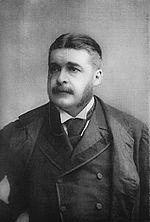
Arthur Sullivan

1842 - 1900 Person Name: Arthur Sullivan (1842- ) Composer of "HANFORD" in Plymouth Sunday-School Hymnal Arthur Seymour Sullivan (b Lambeth, London. England. 1842; d. Westminster, London, 1900) was born of an Italian mother and an Irish father who was an army band­master and a professor of music. Sullivan entered the Chapel Royal as a chorister in 1854. He was elected as the first Mendelssohn scholar in 1856, when he began his studies at the Royal Academy of Music in London. He also studied at the Leipzig Conservatory (1858-1861) and in 1866 was appointed professor of composition at the Royal Academy of Music. Early in his career Sullivan composed oratorios and music for some Shakespeare plays. However, he is best known for writing the music for lyrics by William S. Gilbert, which produced popular operettas such as H.M.S. Pinafore (1878), The Pirates of Penzance (1879), The Mikado (1884), and Yeomen of the Guard (1888). These operettas satirized the court and everyday life in Victorian times. Although he com­posed some anthems, in the area of church music Sullivan is best remembered for his hymn tunes, written between 1867 and 1874 and published in The Hymnary (1872) and Church Hymns (1874), both of which he edited. He contributed hymns to A Hymnal Chiefly from The Book of Praise (1867) and to the Presbyterian collection Psalms and Hymns for Divine Worship (1867). A complete collection of his hymns and arrangements was published posthumously as Hymn Tunes by Arthur Sullivan (1902). Sullivan steadfastly refused to grant permission to those who wished to make hymn tunes from the popular melodies in his operettas. Bert Polman

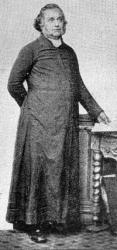
Henry J. Gauntlett

1805 - 1876 Composer of "RISEHOLME" in Songs of the Christian Life Henry J. Gauntlett (b. Wellington, Shropshire, July 9, 1805; d. London, England, February 21, 1876) When he was nine years old, Henry John Gauntlett (b. Wellington, Shropshire, England, 1805; d. Kensington, London, England, 1876) became organist at his father's church in Olney, Buckinghamshire. At his father's insistence he studied law, practicing it until 1844, after which he chose to devote the rest of his life to music. He was an organist in various churches in the London area and became an important figure in the history of British pipe organs. A designer of organs for William Hill's company, Gauntlett extend­ed the organ pedal range and in 1851 took out a patent on electric action for organs. Felix Mendelssohn chose him to play the organ part at the first performance of Elijah in Birmingham, England, in 1846. Gauntlett is said to have composed some ten thousand hymn tunes, most of which have been forgotten. Also a supporter of the use of plainchant in the church, Gauntlett published the Gregorian Hymnal of Matins and Evensong (1844). Bert Polman

T. Davis

Author of "Let every voice for praise awake" in Plymouth Sunday-School Hymnal
It looks like you are using an ad-blocker. Ad revenue helps keep us running. Please consider white-listing Hymnary.org or getting Hymnary Pro to eliminate ads entirely and help support Hymnary.org.