You help make Hymnary.org possible. More than 10 million people from 200+ countries found hymns, liturgical resources and encouragement on Hymnary.org in 2025, including you. Every visit affirms the global impact of this ministry.

If Hymnary has been meaningful to you this year, would you take a moment today to help sustain it? A gift of any size—paired with a note of encouragement if you wish—directly supports the server costs, research work and curation that keep this resource freely available to the world.

Give securely online today, or mail a check to:
Hymnary.org
Calvin University
3201 Burton Street SE
Grand Rapids, MI 49546

Thank you for your partnership, and may the hope of Advent fill your heart.

Search Results

Text Identifier:"^med_straalekrans_om_tinde$"

Planning worship? Check out our sister site, ZeteoSearch.org, for 20+ additional resources related to your search.

Texts

text icon
Text authorities
TextPage scans

Med Straale-Krans om tinde

Author: Grundtvig Appears in 4 hymnals Lyrics: 1 Med Straale-Krans om Tinde Forklaret Jesus stod, Det varmer os herinde Ved dybest Hjerterod. 2 Thi naar han aabenbares I Støvets Egn paany, Skal vi med ham forklares, Ham møde Høit i Sky. 3 Han stod paa Tabors Høie, Den Guds og Davids Søn, Som Solen var hans Øie, Som Lys hans Klædning skjøn. 4 Med Venner fra Guds Bolig Vor Frelser skifted Ord Om Kors og Død fuld rolig, Om Seng i forten Jord. 5 O hør mig, Herre kjære, Udbrød da Peder glad, Her er saa godt at være, Ei mer vi skilles ad! 6 Vi sidde i det Lave, Vor Frelser over Sol, Vi sidde mellem Grave, Han paa sin Kongestol. 7 Dog godt er her at være, Det volder Herrens Ord, Som Aanden til hans Ære Os trøster med paa Jord. 8 Som Venner i Guds Bolig Med ham vi skifte Ord Om Kors og Død fuld rolig, Om Seng i forten Jord. 9 Vort Kors er uden Jammer, Vor Død er uden Braad, Vor Grav et Sovekammer, Vor Herres Liv vor Lod. 10 Hans Aand er her tilstede, Hans ord er i vor Mund, Ham selv vi se med Glæde Nu om en liden Stund. 11 Til Jesu Kristi Ære Det tone høit i Sky: O her er godt at være I Herrens Kirkely! Topics: Sjette Søndag efter Hellig 3 Kongers Dag Til Høimesse; Sixth Sunday after Epiphany; Second Sunday in Advent; Fifth Sunday after Epiphany; Skjærtorsdag Til Aftengudstjeneste - Til Tredje Tekstrækkes Lektie; Maundy Thursday; Femte Søndag efter Paaske Til Høimesse -Til Sekund Tekstrækkes Evangelium; Fifth Sunday after Easter; Pentecost; Syttende Søndag efter Trefoldiheds Fest Til Aftengudstjeneste; Seventeenth Sunday after Trinity Sunday; Glæde og Hvile I Herren; Joy and Rest in the Lord; Menighedens Gudstjeneste; The Church Service; Helliges Samfund; Holy Society; Kirken, Guds Tempel; The Church, God's Temple; Kirken, Naademidlernes Bærer; Anden Pinsedag Til Aftengudstjeneste - Til Anden Tekstrækkes Epistel; Anden Søndag I Advent Til Aftengudstjeneste; Femte Søndag efter Hellig 3 Kongers Dag Til Aftengudstjeneste - Til Anden Tekstrækkes Epistel

Tunes

tune icon
Tune authorities
Page scans

[Med Straale-Krans om Tinde]

Appears in 3 hymnals Composer and/or Arranger: Ludv. M. Lindeman Tune Key: G Major or modal Incipit: 11231 55653 13254 Used With Text: Med Straale-Krans om Tinde

Instances

instance icon
Published text-tune combinations (hymns) from specific hymnals
TextPage scan

Med Straale-Krans om Tinde

Hymnal: Kirkesalmebog #237 (1893) Lyrics: 1 Med Straale-Krans om Tinde Forklaret Jesus stod, Det varmer os herinde Ved dybest Hjerterod. 2 Thi naar han aabenbares I Støvets Egn paany, Skal vi med ham forklares, Ham møde Høit i Sky. 3 Han stod paa Tabors Høie, Den Guds og Davids Søn, Som Solen var hans Øie, Som Lys hans Klædning skjøn. 4 Med Venner fra Guds Bolig Vor Frelser skifted Ord Om Kors og Død fuld rolig, Om Seng i forten Jord. 5 O hør mig Drot, du kjære, Udbrød da Peder glad, Her er saa godt at være, Ei mer vi skilles ad! 6 Vi sidde i det Lave, Vor Frelser over Sol, Vi sidde mellem Grave, Han paa sin Kongestol. 7 Dog godt er her at være, Det volder Herrens Ord, Som Aanden til hans Ære Os trøster med paa Jord. 8 Som Venner i Guds Bolig Med ham vi skifte Ord Om Kors og Død fuld rolig, Om Seng i forten Jord. 9 Vort Kors er uden Jammer, Vor Død er uden Brod, Vor Grav et Sovekammer, Vor Herres Liv vor Lod. 10 Hans Aand er her tilstede, Hans ord er i vor Mund, Ham selv vi se med Glæde Nu om en liden Stund. 11 Til Jesu Kristi Ære Det tone høit i Sky: O her er godt at være I Herrens Kirkely! Topics: Sjette Søndag efter Hellig Tre-Kongers Dag Til Høimesse; Sixth Sunday after Holy Three Kings Day High Mass; Herliggjørelsen; Glorification; 27 Søndag efter Trefoldigheds Fest; Twenty-seventh Sunday after Trinity Sunday Languages: Norwegian Tune Title: [Med Straale-Krans om Tinde]
Text

Med Straale-Krans om Tinde

Author: Grundtvig Hymnal: M. B. Landstads Kirkesalmebog og "Nokre Salmar" ved Professor Dr. E. Blix, samt følgende tillæg #237 (1897) Lyrics: 1 Med Straale-Krans om Tinde Forklaret Jesus stod, Det varmer os herinde Ved dybest Hjerterod. 2 Thi naar han aabenbares I Støvets Egn paany, Skal vi med ham forklares, Ham møde Høit i Sky. 3 Han stod paa Tabors Høie, Den Guds og Davids Søn, Som Solen var hans Øie, Som Lys hans Klædning skjøn. 4 Med Venner fra Guds Bolig Vor Frelser skifted Ord Om Kors og Død fuld rolig, Om Seng i forten Jord. 5 O hør mig Drot, du kjære, Udbrød da Peder glad, Her er saa godt at være, Ei mer vi skilles ad! 6 Vi sidde i det Lave, Vor Frelser over Sol, Vi sidde mellem Grave, Han paa sin Kongestol. 7 Dog godt er her at være, Det volder Herrens Ord, Som Aanden til hans Ære Os trøster med paa Jord. 8 Som Venner i Guds Bolig Med ham vi skifte Ord Om Kors og Død fuld rolig, Om Seng i forten Jord. 9 Vort Kors er uden Jammer, Vor Død er uden Brod, Vor Grav et Sovekammer, Vor Herres Liv vor Lod. 10 Hans Aand er her tilstede, Hans ord er i vor Mund, Ham selv vi se med Glæde Nu om en liden Stund. 11 Til Jesu Kristi Ære Det tone høit i Sky: O her er godt at være I Herrens Kirkely! Topics: Sjette Søndag efter Hellig Tre-Kongers Dag Til Høimesse; Sixth Sunday after Holy Three Kings Day High Mass; Herliggjørelsen; Glorification; 27 Søndag efter Trefoldigheds Fest; Twenty-seventh Sunday after Trinity Sunday Languages: Norwegian
TextPage scan

Med Straale-Krans om tinde

Author: Grundtvig Hymnal: Salmebog for Lutherske Kristne i Amerika #237 (1919) Lyrics: 1 Med Straale-Krans om Tinde Forklaret Jesus stod, Det varmer os herinde Ved dybest Hjerterod. 2 Thi naar han aabenbares I Støvets Egn paany, Skal vi med ham forklares, Ham møde Høit i Sky. 3 Han stod paa Tabors Høie, Den Guds og Davids Søn, Som Solen var hans Øie, Som Lys hans Klædning skjøn. 4 Med Venner fra Guds Bolig Vor Frelser skifted Ord Om Kors og Død fuld rolig, Om Seng i forten Jord. 5 O hør mig, Herre kjære, Udbrød da Peder glad, Her er saa godt at være, Ei mer vi skilles ad! 6 Vi sidde i det Lave, Vor Frelser over Sol, Vi sidde mellem Grave, Han paa sin Kongestol. 7 Dog godt er her at være, Det volder Herrens Ord, Som Aanden til hans Ære Os trøster med paa Jord. 8 Som Venner i Guds Bolig Med ham vi skifte Ord Om Kors og Død fuld rolig, Om Seng i forten Jord. 9 Vort Kors er uden Jammer, Vor Død er uden Braad, Vor Grav et Sovekammer, Vor Herres Liv vor Lod. 10 Hans Aand er her tilstede, Hans ord er i vor Mund, Ham selv vi se med Glæde Nu om en liden Stund. 11 Til Jesu Kristi Ære Det tone høit i Sky: O her er godt at være I Herrens Kirkely! Topics: Sjette Søndag efter Hellig 3 Kongers Dag Til Høimesse; Sixth Sunday after Epiphany; Second Sunday in Advent; Fifth Sunday after Epiphany; Skjærtorsdag Til Aftengudstjeneste - Til Tredje Tekstrækkes Lektie; Maundy Thursday; Femte Søndag efter Paaske Til Høimesse -Til Sekund Tekstrækkes Evangelium; Fifth Sunday after Easter; Pentecost; Syttende Søndag efter Trefoldiheds Fest Til Aftengudstjeneste; Seventeenth Sunday after Trinity Sunday; Glæde og Hvile I Herren; Joy and Rest in the Lord; Menighedens Gudstjeneste; The Church Service; Helliges Samfund; Holy Society; Kirken, Guds Tempel; The Church, God's Temple; Kirken, Naademidlernes Bærer; Anden Pinsedag Til Aftengudstjeneste - Til Anden Tekstrækkes Epistel; Anden Søndag I Advent Til Aftengudstjeneste; Femte Søndag efter Hellig 3 Kongers Dag Til Aftengudstjeneste - Til Anden Tekstrækkes Epistel Languages: Norwegian

People

person icon
Authors, composers, editors, etc.

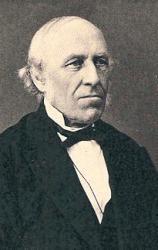
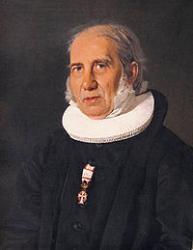
N. F. S. Grundtvig

1783 - 1872 Person Name: Grundtvig Author of "Med Straale-Krans om Tinde" in M. B. Landstads Kirkesalmebog og "Nokre Salmar" ved Professor Dr. E. Blix, samt følgende tillæg Nicolai Frederik Severin Grundtvig was the son of a pastor, and was born at Udby, in Seeland, in 1783. He studied in the University of Copenhagen from 1800-1805; and, like some other eminent men, did not greatly distinguish himself; his mind was too active and his imagination too versatile to bear the restraint of the academic course. After leaving the university he took to teaching; first in Langeland, then (1808) in Copenhagen. Here he devoted his attention to poetry, literature, and Northern antiquities. In 1810 he became assistant to his father in a parish in Jutland. The sermon he preached at his ordination, on the subject "Why has the Lord's word disappeared from His house," attracted much attention, which is rarely the case with "probationers'" sermons. On his father's death, in 1813, he returned to Copenhagen, and for eight years devoted himself mainly to literature. The poetry, both secular and religious, that he produced, drew from a friend the remark that "Kingo's harp had been strung afresh." In 1821 King Frederik vi. appointed him pastor of Prasloe, a parish in Seeland, from which he was the next year removed to Copenhagen, and made chaplain of St. Saviour's church in Christianshavn. From the time of his ordination he had been deeply impressed with Evangelical church sentiments, in opposition to the fashionable Rationalism and Erastianism of the day; and adhered to the anti-rationalist teaching of Hauge, whose death at this time (1824) seemed to be a call to Grundtvig to lift up his voice. An opportunity soon presented itself; Professor Clausen brought out a book entitled Katholicismens og Protestantismens Forfatning, Ldre, og Ritus ("The condition, teaching, and ritual of Catholicism and Protestantism"). This book was replete with the Erastian Rationalism which was so especially distasteful to Grundtvig, who forthwith, in his Kirkens Gjenmsele ("The Church's Reply," 1825), strongly opposed its teaching, and laid down truer principles of Christian belief, and sounder views of the nature of the Church. This caused a sensation: Grandtvig (who had not spared his opponent) was fined 100 rixdollars, and the songs and hymns which he had written for the coming celebration of the tenth centenary of Northern Christianity were forbidden to be used. On this he resigned his post at St. Saviour's, or rather was forced to quit it by a sentence of suspension which was pronounced in 1826, and under which he was kept for 13 years. He took the opportunity of visiting England in 1829, 30, and 31, and consulting its libraries, mainly with a view to a further insight into Northern antiquities, and to help his studies in the early English tongue. His edition of Cynewulfs beautiful poem of the Phenix from the Codex Exoniensis, the Anglo-Saxon (so-called) text, with a preface in Danish, and a fri Fordanskning (free rendering in Danish), published in 1840*, is a result of this journey and enforced leisure. Tired of his long silence, his numerous friends and admirers proposed to erect a church for him, and form themselves into an independent congregation, but this was not permitted. He was allowed, however, to hold an afternoon service in the German church at Christianshavn. There ho preached for eight years, and compiled and wrote his hymn-book, Sang-Vdrk til den Danske Kirkce ("Song-work for the Danish Church"). He still worked on towards his object of raising the Christian body to which ho belonged from the condition of a mere slate establishment to the dignity of a gospel-teaching national church. In 1839 (the year of the death of King Frederik vr., and the accession of his cousin Chrisliem vni.) the suspension was removed, and he was appointed chaplain of the hospital Vartou, a position which he held till his death. In 1863 the king (Frederik vn.) conferred on him the honorary title of bishop. The good old man died suddenly, in his 89th year, on Sept. 2, 1872, having officiated the day before. As Kingo is the poet of Easter, and Brorson of Christmas, so Grundtvig is spoken of as the poet of Whitsuntide. --John Julian, Dictionary of Hymnology,, p. 1001 (1907)

Ludvig Mathias Lindeman

1812 - 1887 Person Name: Ludv. M. Lindeman Composer of "[Med Straale-Krans om Tinde]" in Kirkesalmebog Ludvig M. Lindeman (b. 1812; d. 1887) was a Norwegian composer and organist. Born in Trondheim, he studied theology in Oslo where he remained the rest of his life. In 1839 he succeeded his brother as the organist and cantor of Oslo Cathedral, a position he held for 48 years up until his death. Lindeman was appointed Knight of the Royal Norwegian Order of St. Olav, and was invited to both help christen the new organ in Royal Albert Hall in London, as well as compose for the coronation of King Oscar II and Queen Sophie of Sweden. In 1883, he and his son started the Organist School in Oslo. Lindeman is perhaps best known for his arrangements of Norwegiam folk tales; over the course of his life he collected over 3000 folk melodies and tunes. Laura de Jong
It looks like you are using an ad-blocker. Ad revenue helps keep us running. Please consider white-listing Hymnary.org or getting Hymnary Pro to eliminate ads entirely and help support Hymnary.org.