You help make Hymnary.org possible. More than 10 million people from 200+ countries found hymns, liturgical resources and encouragement on Hymnary.org in 2025, including you. Every visit affirms the global impact of this ministry.

If Hymnary has been meaningful to you this year, would you take a moment today to help sustain it? A gift of any size—paired with a note of encouragement if you wish—directly supports the server costs, research work and curation that keep this resource freely available to the world.

Give securely online today, or mail a check to:
Hymnary.org
Calvin University
3201 Burton Street SE
Grand Rapids, MI 49546

Thank you for your partnership, and may the hope of Advent fill your heart.

Search Results

Text Identifier:"^no_human_eyes_thy_face_may_see$"

Planning worship? Check out our sister site, ZeteoSearch.org, for 20+ additional resources related to your search.

Texts

text icon
Text authorities
Page scans

No human eyes thy face may see

Author: T. W. Higginson Appears in 23 hymnals Used With Tune: MELCOMBE

Tunes

tune icon
Tune authorities
Page scansAudio

WALTHAM

Appears in 569 hymnals Composer and/or Arranger: J. B. Calkin Incipit: 13233 43445 17665 Used With Text: No human eye Thy face may see
Page scansAudio

WAREHAM

Appears in 575 hymnals Composer and/or Arranger: William Knapp Incipit: 11765 12171 23217 Used With Text: No human eyes Thy face may see
Page scansAudio

ROCKINGHAM

Appears in 556 hymnals Composer and/or Arranger: Edward Miller Incipit: 13421 35655 17655 Used With Text: No human eye Thy face may see

Instances

instance icon
Published text-tune combinations (hymns) from specific hymnals
TextAudio

No Human Eyes Thy Face May See

Author: Thomas W. Higginson Hymnal: The Cyber Hymnal #11735 Meter: 8.8.8.8 Lyrics: 1 No human eyes Thy face may see; No human thought Thy form may know; But all creation dwells in Thee, And Thy great life through all doth flow. 2 And yet, O strange and wondrous thought: Thou art a God who hearest prayer, And every heart with sorrow fraught To seek Thy present aid may dare. 3 And though most weak our efforts seem Into one creed these thoughts to bind, And vain the intellectual dream, To see and know the Eternal Mind— 4 Yet Thou wilt turn them not aside, Who cannot solve Thy life divine, But would give up all reason’s pride, To know their hearts approved by Thine. 5 And Thine unceasing love gave birth To our dear Lord, Thy holy Son, Who left a perfect proof on earth, That duty, love, and truth are one. 6 So, though we faint on life’s dark hill, And thought grow weak, and knowledge flee, Yet faith shall teach us courage still, And love shall guide us on to Thee! Languages: English Tune Title: EATON
Page scan

No human eyes thy face may see

Author: T. W. Higginson Hymnal: Hymns of the Church Universal #35 (1890) Languages: English
Page scan

No human eyes Thy face may see

Author: Thomas W. Higginson Hymnal: College Hymnal #50 (1897) Languages: English Tune Title: WAREHAM

People

person icon
Authors, composers, editors, etc.

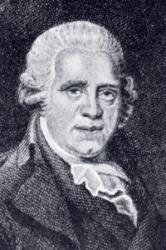
Samuel Webbe

1740 - 1816 Composer of "MELCOMBE" in Isles of Shoals Hymn Book and Candle Light Service Samuel Webbe (the elder; b. London, England, 1740; d. London, 1816) Webbe's father died soon after Samuel was born without providing financial security for the family. Thus Webbe received little education and was apprenticed to a cabinet­maker at the age of eleven. However, he was determined to study and taught himself Latin, Greek, Hebrew, French, German, and Italian while working on his apprentice­ship. He also worked as a music copyist and received musical training from Carl Barbant, organist at the Bavarian Embassy. Restricted at this time in England, Roman Catholic worship was freely permitted in the foreign embassies. Because Webbe was Roman Catholic, he became organist at the Portuguese Chapel and later at the Sardinian and Spanish chapels in their respective embassies. He wrote much music for Roman Catholic services and composed hymn tunes, motets, and madrigals. Webbe is considered an outstanding composer of glees and catches, as is evident in his nine published collections of these smaller choral works. He also published A Collection of Sacred Music (c. 1790), A Collection of Masses for Small Choirs (1792), and, with his son Samuel (the younger), Antiphons in Six Books of Anthems (1818). Bert Polman

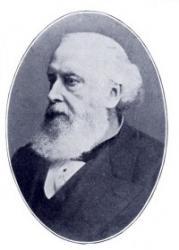
William Henry Monk

1823 - 1889 Person Name: W. H. Monk Composer of "MELCOMBE" in Isles of Shoals Hymn Book and Candle Light Service William H. Monk (b. Brompton, London, England, 1823; d. London, 1889) is best known for his music editing of Hymns Ancient and Modern (1861, 1868; 1875, and 1889 editions). He also adapted music from plainsong and added accompaniments for Introits for Use Throughout the Year, a book issued with that famous hymnal. Beginning in his teenage years, Monk held a number of musical positions. He became choirmaster at King's College in London in 1847 and was organist and choirmaster at St. Matthias, Stoke Newington, from 1852 to 1889, where he was influenced by the Oxford Movement. At St. Matthias, Monk also began daily choral services with the choir leading the congregation in music chosen according to the church year, including psalms chanted to plainsong. He composed over fifty hymn tunes and edited The Scottish Hymnal (1872 edition) and Wordsworth's Hymns for the Holy Year (1862) as well as the periodical Parish Choir (1840-1851). Bert Polman

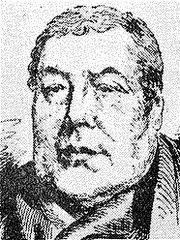
Edward Miller

1735 - 1807 Composer of "ROCKINGHAM" in The Students' Hymnal Edward Miller, Born in the United Kingdom. The son of a pavior (stone paver), Miller left home to study music at King's Lynn. He was a flautist in Handel's orchestra. In 1752 he published “Six Solos for the German Flute”. In 1756 he was appointed organist of St. George Minster Doncaster, continuing in that post for 50 years. He also gave pianoforte lessons. He published hymns and sonatas for harpsichord, 16 editions of “The Institues of Music”, “Elegies for Voice & Pianoforte”, and Psalms of David set to music, arranged for each Sunday of the year. That work had over 5000 subscribers. He published his thoughts on performance of Psalmody in the Church of England, addressed to clergy. In 1801 he published the Psalms of Watts and Wesley for use by Methodists, and in 1804 the history and antiques of Doncaster with a map. John Perry
It looks like you are using an ad-blocker. Ad revenue helps keep us running. Please consider white-listing Hymnary.org or getting Hymnary Pro to eliminate ads entirely and help support Hymnary.org.