You help make Hymnary.org possible. More than 10 million people from 200+ countries found hymns, liturgical resources and encouragement on Hymnary.org in 2025, including you. Every visit affirms the global impact of this ministry.

If Hymnary has been meaningful to you this year, would you take a moment today to help sustain it? A gift of any size—paired with a note of encouragement if you wish—directly supports the server costs, research work and curation that keep this resource freely available to the world.

Give securely online today, or mail a check to:
Hymnary.org
Calvin University
3201 Burton Street SE
Grand Rapids, MI 49546

Thank you for your partnership, and may the hope of Advent fill your heart.

Search Results

Text Identifier:"^sing_praise_to_god_who_reigns_above$"

Planning worship? Check out our sister site, ZeteoSearch.org, for 20+ additional resources related to your search.

Texts

text icon
Text authorities
TextPage scansFlexScoreFlexPresentAudio

Sing Praise to God Who Reigns Above

Author: Johann J. Schütz; Frances Cox Meter: 8.7.8.7.8.8.7 Appears in 205 hymnals Lyrics: 1 Sing praise to God who reigns above, the God of all creation, the God of power, the God of love, the God of our salvation. My soul with comfort rich he fills, and every grief he gently stills: to God all praise and glory! 2 What God’s almighty power has made, in mercy he is keeping; by morning glow or evening shade his eye is never sleeping. And where he rules in kingly might, there all is just and all is right: to God all praise and glory! 3 We sought the Lord in our distress; O God, in mercy hear us. Our Savior saw our helplessness and came with peace to cheer us. For this we thank and praise the Lord, who is by one and all adored: to God all praise and glory! 4 Let all who name Christ’s holy name give God the praise and glory. Let all who know his power proclaim aloud the wondrous story. Cast every idol from its throne; the Lord is God, and he alone: to God all praise and glory! Topics: God Savior; God Sustainer; God Comforter; God Justice; God Power; God Savior; God Sustainer; Music and Singing; Praise of God Scripture: Deuteronomy 32:3 Used With Tune: MIT FREUDEN ZART

Tunes

tune icon
Tune authorities
Page scansFlexScoreAudio

MIT FREUDEN ZART

Meter: 8.7.8.7.8.8.7 Appears in 174 hymnals Tune Sources: Bohemian Brethren, Kirchengeseng, 1566 Tune Key: E Flat Major Incipit: 13451 76565 43234 Used With Text: Sing Praise to God Who Reigns Above
FlexScoreAudio

LUTHER

Appears in 382 hymnals Tune Sources: Geistliche Lieder Incipit: 11321 22313 45321 Used With Text: Sing praise to God who reigns above
Page scansFlexScoreAudio

ES IST DAS HEIL UNS KOMMEN HER

Appears in 109 hymnals Tune Key: E Major Incipit: 55557 65453 13456 Used With Text: Sing praise to God who reigns above

Instances

instance icon
Published text-tune combinations (hymns) from specific hymnals
TextPage scan

Sing Praise to God Who Reigns Above

Author: Johann J. Schütz; Frances E. Cox Hymnal: Sing Joyfully #45 (1989) Lyrics: 1 Sing praise to God who reigns above, The God of all creation, The God of pow'r, the God of love, The God of our salvation; With healing balm my soul He fills, And ev'ry faithless murmur stills: To God all praise and glory. 2 What God's almighty pow'r hath made His gracious mercy keepeth; By morning glow or evening shade His watchful eye ne'er sleepeth; Within the kingdom of His might, Lo! all is just and all is right: To God all praise and glory. 3 The Lord is never far away, But, through all grief distressing, An ever-present help and stay, Our peace, and joy and blessing; As with a mother's tender hand, He leads His own, His chosen band: To God all praise and glory. 4 Thus all my gladsome way along, I sing aloud Thy praises, That men may hear the grateful song My voice unwearied raises, Be joyful in the Lord, my heart, Both soul and body bear your part: To God all praise and glory. Amen. Topics: Worship; God Providence; Guidance; Joy Languages: English Tune Title: [Sing praise to God who reigns above]
Text

높 이 계 신 주 찬 양 해 (Sing Praise to God who Reigns Above)

Author: Johann J. Schütz; Frances E Cox Hymnal: 찬송과 예배 = Chansong gwa yebae = Come, Let Us Worship #60 (2001) Meter: 8.7.8.7.8.8.7 Lyrics: 1 Sing praise to God who reigns above, the God of all creation, the God of power, the God of love, the God of our salvation. With healing balm my soul is filled and every faithless murmur stilled: to God all praise and glory. 2 The Lord is never far away, but through all grief distressing, an ever present help and stay, our peace and joy and blessing. As with a mother's tender hand, God gently leads the chosen band: to God all praise and glory. 3 Thus, all my toilsome way along, I sing aloud thy praises, that earth may hear the grateful song my voice unwearied raises. Be joyful in the Lord, my heart, both soul and body bear your part: to God all praise and glory. 4 Let all who name Christ's holy name give God all praise and glory; let all who own his power proclaim aloud the wondrous story! Cast each false idol from its throne, for Christ is Lord, and Christ alone: to God all praise and glory. Topics: 예 배 시 작; 예 수 의 이 름; 하 나 님; Adoration and Praise; Creation; God; Grief; Jesus Christ Lordship; Jesus Christ Name of; Opening Hymns; Providence; 경배와 찬양; 창조; 예수의 주권; 개 회 찬송; 섭리 Scripture: Deuteronomy 32:3 Languages: English; Korean Tune Title: MIT FREUDEN ZART

Sing Praise to God Who Reigns Above

Author: Johann J. Schutz; Frances E. Cox Hymnal: Hymns of Grace #1 (2015) Topics: God the Father Adoration and Praise Languages: English Tune Title: [Sing praise to God who reigns above]

People

person icon
Authors, composers, editors, etc.

Johann Jakob Schütz

1640 - 1690 Author of "Sing Praise to God Who Reigns Above" in Psalter Hymnal (Gray) Schütz, Johann Jakob, was born Sept. 7, 1640, at Frankfurt am Main. After studying at Tübingen (where he became a licentiate in civil and canon law), he began to practise as an advocate in Frankfurt, and in later years with the title of Rath. He seems to have been a man of considerable legal learning as well as of deep piety. He was an intimate friend of P. J. Spener; and it was, in great measure, at his suggestion, that Spener began his famous Collegia Pietatis. After Spener left Frankfurt, in 1686, Schütz came under the influence of J. W. Petersen; and carrying out Petersen's prin¬ciples to their logical conclusion, he became a Separatist, and ceased to attend the Lutheran services or to communicate. He died at Frankfurt, May 22, 1690 (Koch, iv. 220; Blätter fur Hymnologie, Feb. 1883). Schütz is known as an author by two tractates; one being his Christliche Lebensregeln, Frankfurt, 1677; the other, that which contains his hymns, Christliches Gedenckbüchlein, zu Beforderung eines anfangenden neuen Lebens, &c, Frankfurt am Main, 1675 [Library of the Predigerministerium at Frankfurt]. This work includes 5 hymns, in a separate section, which is headed, “Hierauf folgen etliche Gesänge." These hymns are:— i. Die Wollust dieser Welt. ii. Was inich auf dieser Welt betrübt. iii. So komm, geliebte Todes-Stund. iv. Scheuet ihr, ihr matten Glieder. v. Sei Lob und Ehr dem höchsten Gut. Of these No. v. is undoubtedly by Schütz, and the other four exhibit much the same style of thought as, and frequent parallels to, the prose portions of the work. None of these have been traced earlier than 1675; and until this has been done, it is pretty safe to ascribe them all to Schütz. Three of these hymns have passed into English, viz.:— i. Sei Lob und Ehr dem höchsten Gut. Praise and Thanksgiving. First published in 1675, as above, No. v. It is founded on Deut. xxxii. 3; entitled, "Hymn of Thanksgiving ;" and is in 9 stanzas of 6 lines, and the refrain, "Gebt unserm Gott die Ehre”. Koch, iv. 220, speaks of this hymn as "outweighing many hundred others; and a classical hymn, which, from its first appearance, attracted unusual attention." And Lauxmann, in Koch, viii. 334-339, relates how delighted J. J. Moser was, when, on entering church the first Sunday after his captivity at Hohentwiel, he heard this hymn, and how heartily he joined in it; how it comforted the dying G. C. Rieger, of Stuttgart, on Tuesday, in Easter Week, 1743, and many other incidents. Translations in common use:— 1. All Glory to the Sov'reign Good. This is a full and good translation by J. OJacobi, in his Psalter Germanica, 2nd ed., 1732, p. 151, where it is entitled, "The Malabarian Hymn." 2. All glory be to God most high. A good translation by A. T. Russell, of st. i., iv., viii., for the Dalston Hospital Hymn Book, 1848, No. 59. 3. All praise and thanks to God most high. This is a good tr., omitting st. ix., by Miss Winkworth, in her Lyra Germanica, 2nd Ser., 1858, p. 146. 4. Sing praise to God Who reigns above. A good tr., omitting st. ix., contributed by Miss Cox to Lyra Eucharistica, 1864, p. 33, and included in her Hymns from the German, 1864, p. 235. 5. To God a joyful anthem raise. A good tr. of st. i., ii., iv., v., viii., by J. M. Sloan, as No. 314, in J. H. Wilson's Service of Praise, 1865. The following are also translated into English:— ii. So komm, geliebte Todes-Stund. For the Dying. First published in 1675, as above, No. iii., in 11 st. of 8 1., entitled, "The thoughts on Death of a Royal Princess, after the usual interpretation of Job xix. 25." This Princess was Sophie Elisabethe. daughter of Duke Philipp Ludwig, of Holstein-Sonderburg (b. at Homburg vor der Hohe, May 4, 1653; married, in 1676. to Duke Moritz, of Sachse-Zeitz; d. at Schleusingen, Aug. 19, 1684), who had been a regular attender at Spener's conferences at Frankfurt, and thus associated with Schütz. This hymn has often been ascribed to her; and she had already chosen Job xix. 25, as the text of her funeral sermon. But it is more probable that both hymns were written by Schütz for her use, or in her honour. The trs. are :—(1) "Come, happy hour of death, and close." By Dr. G. Walker, 1860, p. 56. (2) "O come, delightful hour of death." By Dr. G. Walker, 1860, p. 106. iii. Was mich auf dieser Welt betriibt. Earthly Vanities. This hymn, on Renunciation of the World, first appeared in 1675, as above, No. ii., in 4 st. of 10 1., and entitled "From the World to God." It has sometimes been erroneously ascribed to Michael Franck. It is tr. as "The woes that weigh my body down." By Miss Manington, 1863, p. 32. [Rev. James Mearns, M.A.] --Excerpts from John Julian, Dictionary of Hymnology (1907)

Frances Elizabeth Cox

1812 - 1897 Translator of "Sing Praise to God Who Reigns Above" in Psalter Hymnal (Gray) Cox, Frances Elizabeth, daughter of Mr. George V. Cox, born at Oxford, is well known as a successful translator of hymns from the German. Her translations were published as Sacred Hymns from the German, London, Pickering. The 1st edition, pub. 1841, contained 49 translations printed with the original text, together with biographical notes on the German authors. In the 2nd edition, 1864, Hymns from the German, London, Rivingtons, the translations were increased to 56, those of 1841 being revised, and with additional notes. The 56 translations were composed of 27 from the 1st ed. (22 being omitted) and 29 which were new. The best known of her translations are "Jesus lives! no longer [thy terrors] now" ; and ”Who are these like stars appearing ?" A few other translations and original hymns have been contributed by Miss Cox to the magazines; but they have not been gathered together into a volume. -- John Julian, Dictionary of Hymnology (1907)

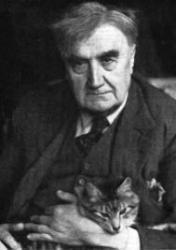
Ralph Vaughan Williams

1872 - 1958 Person Name: Ralph Vaughan Williams, 1872-1958 Harmonizer of "MIT FREUDEN ZART" in The Hymnal 1982 Through his composing, conducting, collecting, editing, and teaching, Ralph Vaughan Williams (b. Down Ampney, Gloucestershire, England, October 12, 1872; d. Westminster, London, England, August 26, 1958) became the chief figure in the realm of English music and church music in the first half of the twentieth century. His education included instruction at the Royal College of Music in London and Trinity College, Cambridge, as well as additional studies in Berlin and Paris. During World War I he served in the army medical corps in France. Vaughan Williams taught music at the Royal College of Music (1920-1940), conducted the Bach Choir in London (1920-1927), and directed the Leith Hill Music Festival in Dorking (1905-1953). A major influence in his life was the English folk song. A knowledgeable collector of folk songs, he was also a member of the Folksong Society and a supporter of the English Folk Dance Society. Vaughan Williams wrote various articles and books, including National Music (1935), and composed numerous arrange­ments of folk songs; many of his compositions show the impact of folk rhythms and melodic modes. His original compositions cover nearly all musical genres, from orchestral symphonies and concertos to choral works, from songs to operas, and from chamber music to music for films. Vaughan Williams's church music includes anthems; choral-orchestral works, such as Magnificat (1932), Dona Nobis Pacem (1936), and Hodie (1953); and hymn tune settings for organ. But most important to the history of hymnody, he was music editor of the most influential British hymnal at the beginning of the twentieth century, The English Hymnal (1906), and coeditor (with Martin Shaw) of Songs of Praise (1925, 1931) and the Oxford Book of Carols (1928). Bert Polman
It looks like you are using an ad-blocker. Ad revenue helps keep us running. Please consider white-listing Hymnary.org or getting Hymnary Pro to eliminate ads entirely and help support Hymnary.org.