You help make Hymnary.org possible. More than 10 million people from 200+ countries found hymns, liturgical resources and encouragement on Hymnary.org in 2025, including you. Every visit affirms the global impact of this ministry.

If Hymnary has been meaningful to you this year, would you take a moment today to help sustain it? A gift of any size—paired with a note of encouragement if you wish—directly supports the server costs, research work and curation that keep this resource freely available to the world.

Give securely online today, or mail a check to:
Hymnary.org
Calvin University
3201 Burton Street SE
Grand Rapids, MI 49546

Thank you for your partnership, and may the hope of Advent fill your heart.

Person Results

Text Identifier:"^stars_and_planets_flung_in_orbit$"
In:people

Planning worship? Check out our sister site, ZeteoSearch.org, for 20+ additional resources related to your search.
Showing 1 - 3 of 3Results Per Page: 102050

Herman G. Stuempfle

1923 - 2007 Person Name: Herman G. Stuempfle, Jr. Author of "Stars and Planets Flung in Orbit" in The New Century Hymnal Rev. Dr. Herman G. Stuempfle, Jr., 83, died Tuesday, March 13, 2007, after a long illness. Born April 2, 1923, in Clarion, he was the son of the late Herman G. and Helen (Wolfe) Stuempfle, Sr. Stuempfle lived most of his life in Gettysburg, PA. He served as President of the Lutheran Theological Seminary in Gettysburg. He attended Hughesville public schools, and was a graduate of Susquehanna University and the Lutheran Theological Seminary at Gettysburg. He received additional advanced degrees from Union Theological Seminary in New York and a doctoral degree at Southern California School of Theology at Claremont. He retired in 1989. Rev. Dr. Stuempfle was the author of several books and numerous articles and lectures on preaching, history, and theology. He was also among the most honored and respected hymn writers of the 20th and 21st centuries. Rev. Dr. Stuempfle was known for his leadership in community and civic projects. Always taking an active stance on social issues, he participated in the creation of day care centers, served on the Gettysburg interchurch social action committee, helped create and support prison ministries and a homeless shelter, and tutored young people in the after school program of Christ Lutheran Church, where he was a long time member. --Excerpts from his obituary published in Evening Sun from Mar. 15 to Mar. 16, 2007

John Goss

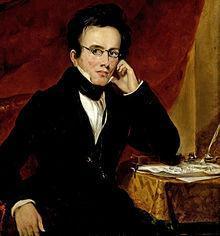
1800 - 1880 Composer of "LAUDA ANIMA" in The New Century Hymnal John Goss (b. Fareham, Hampshire, England, 1800; d. London, England, 1880). As a boy Goss was a chorister at the Chapel Royal and later sang in the opera chorus of the Covent Garden Theater. He was a professor of music at the Royal Academy of Music (1827-1874) and organist of St. Paul Cathedral, London (1838-1872); in both positions he exerted significant influence on the reform of British cathedral music. Goss published Parochial Psalmody (1826) and Chants, Ancient and Modern (1841); he edited William Mercer's Church Psalter and Hymn Book (1854). With James Turle he published a two-volume collection of anthems and Anglican service music (1854). Bert Polman

Henry J. Gauntlett

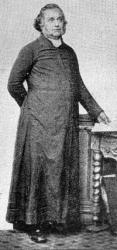
1805 - 1876 Person Name: Henry John Gauntlett, 1805-76 Composer of "TRIUMPH" in Together in Song Henry J. Gauntlett (b. Wellington, Shropshire, July 9, 1805; d. London, England, February 21, 1876) When he was nine years old, Henry John Gauntlett (b. Wellington, Shropshire, England, 1805; d. Kensington, London, England, 1876) became organist at his father's church in Olney, Buckinghamshire. At his father's insistence he studied law, practicing it until 1844, after which he chose to devote the rest of his life to music. He was an organist in various churches in the London area and became an important figure in the history of British pipe organs. A designer of organs for William Hill's company, Gauntlett extend­ed the organ pedal range and in 1851 took out a patent on electric action for organs. Felix Mendelssohn chose him to play the organ part at the first performance of Elijah in Birmingham, England, in 1846. Gauntlett is said to have composed some ten thousand hymn tunes, most of which have been forgotten. Also a supporter of the use of plainchant in the church, Gauntlett published the Gregorian Hymnal of Matins and Evensong (1844). Bert Polman

Export as CSV
It looks like you are using an ad-blocker. Ad revenue helps keep us running. Please consider white-listing Hymnary.org or getting Hymnary Pro to eliminate ads entirely and help support Hymnary.org.