You help make Hymnary.org possible. More than 10 million people from 200+ countries found hymns, liturgical resources and encouragement on Hymnary.org in 2025, including you. Every visit affirms the global impact of this ministry.

If Hymnary has been meaningful to you this year, would you take a moment today to help sustain it? A gift of any size—paired with a note of encouragement if you wish—directly supports the server costs, research work and curation that keep this resource freely available to the world.

Give securely online today, or mail a check to:
Hymnary.org
Calvin University
3201 Burton Street SE
Grand Rapids, MI 49546

Thank you for your partnership, and may the hope of Advent fill your heart.

Search Results

Text Identifier:"^theres_a_place_where_we_may_labor$"

Planning worship? Check out our sister site, ZeteoSearch.org, for 20+ additional resources related to your search.

Texts

text icon
Text authorities

Idle Stand Not All the Day

Author: Jeremiah Eames Rankin Appears in 6 hymnals First Line: There's a place where we may labor Refrain First Line: Why delay, haste away

Tunes

tune icon
Tune authorities
Page scans

[There's a place where we may labor]

Appears in 5 hymnals Composer and/or Arranger: W. A. Ogden Incipit: 55111 11532 17122 Used With Text: Idle Stand Not All the Day
Page scans

[There's a place where we may labor]

Appears in 1 hymnal Composer and/or Arranger: L. L. Pickett Incipit: 51333 33212 15722 Used With Text: Why Delay?

Instances

instance icon
Published text-tune combinations (hymns) from specific hymnals
Page scan

Idle Stand Not All the Day

Author: J. E. Rankin, D. D. Hymnal: Gospel Songs of Grace and Glory #90 (1896) First Line: There's a place where we may labor Refrain First Line: Why delay? haste away Languages: English Tune Title: [There's a place where we may labor]
Page scan

Idle Stand Not All the Day

Author: J. E. Rankin, D.D. Hymnal: Pentecostal Hymns No. 1 #111 (1894) First Line: There's a place where we may labor Refrain First Line: Why delay? haste away Languages: English Tune Title: [There's a place where we may labor]
Page scan

Why Delay?

Author: Rev. J. E. Rankin Hymnal: Tears and Triumphs No. 2 #137 (1897) First Line: There's a place where we may labor Refrain First Line: Why delay? haste away Languages: English Tune Title: [There's a place where we may labor]

People

person icon
Authors, composers, editors, etc.

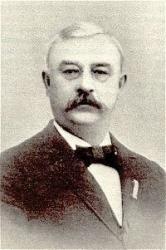
W. A. Ogden

1841 - 1897 Composer of "[There's a place where we may labor]" in Pentecostal Hymns No. 2 William Augustine Ogden USA 1841-1897. Born at Franklin County, OH, his family moved to IN when he was age six. He studied music in local singing schools at age 8, and by age 10 could read church music fairly well. Later, he could write out a melody by hearing it sung or played. He enlisted in the American Civil War in the 30th IN Volunteer Infantry. During the war he organized a male choir which became well known throughout the Army of the Cumberland. After the war, he returned home, resumed music study, and taught school. He married Jennie V Headington, and they had two children: Lowell and Marian. He worked for the Iowa Normal School, Toledo Public School System. Among his teachers: Lowell Mason, Thomas Hastings, E E Baily and B F Baker, president of the Boston Music School. He wrote many hymns, both lyrics and/or music. He later issued his first song book, “The silver song” (1870). It became quite popular, selling 500,000 copies. He went on to publish other song books. Ogden also taught music at many schools in the U S and Canada. In 1887 he became superintendent of music in the public schools of Toledo, OH. His works include: “New silver songs for Sunday school” (1872), “Crown of life” (1875), “Notes of victory” (1885), “The way of life” (1886), “Gathering jewels” (1886). He was known as a very enthusiastic person in his work and a very congenial one as well. He died at Toledo, OH. John Perry

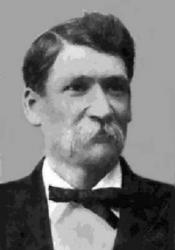
L. L. Pickett

1859 - 1928 Composer of "[There's a place where we may labor]" in Tears and Triumphs No. 2 Rv Leander Lycurgus Pickett USA 1859-1928. Born at Burnsville, MS, he became a Methodist evangelist. He held meetings in several states and at Holiness campgrounds. After marrying Ludie, they served pastorates in northeast TX, and Columbia, SC, before moving to Wilmore, KY. Pickett married Pruvy Melviney Dorough in 1878, and they had a son, James, in 1880. After her death in 1887, he married Ludie in 1888. He was a renowned speaker, leader, minister, author, hymnwriter, and patriot, prominent in the Holiness Movement, and helped found Asbury College (now University), at Wilmore, KY, where he also served as the financial agent of the board of trustees for many years. The Picketts boarded m,inistry students attending Asbury, among whom was missionary E Stanley Jones. In 1905 a student prayer meeting at the Pickett home spilled out to the Asbury campus in a revival that spread around the town of Wilmore. Between 1891 and 1926 Pickett published 11 song books, some with others, including John Sweney, William J Kirkpatrick, John Bryant, Martin Knapp, Elisha A Hoffman, Burke Culpepper, William Marks, Benjamin Butts, and Robert McNeill. He died at Middlesboro, KY. John Perry

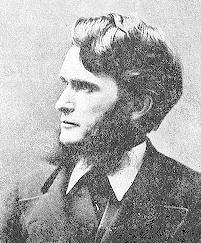
Jeremiah Eames Rankin

1828 - 1904 Person Name: J. E. Rankin Author of "Idle Stand Not All the Day" in Pentecostal Hymns No. 2 Pseudonym: R. E. Jeremy. Rankin, Jeremiah Eames, D.D., was born at Thornton, New Haven, Jan. 2, 1828, and educated at Middleburg College, Vermont, and at Andover. For two years he resided at Potsdam, U.S. Subsequently he held pastoral charges as a Congregational Minister at New York, St. Albans, Charlestown, Washington ( District of Columbia), &c. In 1878 he edited the Gospel Temperance Hymnal, and later the Gospel Bells. His hymns appeared in these collections, and in D. E. Jones's Songs of the New Life, 1869. His best known hymn is "Labouring and heavy laden" (Seeking Christ). This was "written [in 1855] for a sister who was an inquirer," was first printed in the Boston Recorder, and then included in Nason's Congregational Hymn Book, 1857. Another of his hymns is "Rest, rest, rest, brother rest." He died in 1904. [Rev. F. M. Bird, M.A.] --John Julian, Dictionary of Hymnology (1907) ======================== Rankin, J. 33., p. 951, ii. Dr. Rankin, b. in N. H. (not New Haven), and received his D.D. 1869, LL.D. 1889 from his Alma Mater. He was President for several years of Howard University, Washington, D.C. His publications included several volumes of Sermons, German-English Lyrics, Sacred and Secular, 1897; 2nd ed. 1898, &c. In addition to his hymns noted on p. 951, ii., he has written and published mainly in sheet form many others, the most important and best-known being:— 1. God be with you till we meet again. [Benediction.] Dr. Rankin's account of this hymn, supplied to us, in common with Mr. Brownlie, for his Hymns and H. Writers of The Church Hymnary, 1899, is: "It was written as a Christian good-bye, and first sung in the First Congregational Church, of which I was minister for fifteen years. We had Gospel meetings on Sunday nights, and our music was intentionally of the popular kind. I wrote the first stanza, and sent it to two gentlemen for music. The music which seemed to me to best suit the words was written by T. G. Tomer, teacher of public schools in New Jersey, at one time on the staff of General 0. 0. Howard. After receiving the music (which was revised by Dr. J. W. Bischoff, the organist of my church), I wrote the other stanzas." The hymn became at once popular, and has been translated into several languages. In America it is in numerous collections; and in Great Britain, in The Church Hymnary, 1898, Horder's Worship Song, 1905, The Methodist Hymn Book, 1904, and others. It was left undated by Dr. Rankin, but I.D. Sankey gives it as 1882. 2. Beautiful the little hands. [Little ones for Jesus.] Given without date in Gloria Deo, New York, 1900. Dr. Rankin's translations include versions of German, French, Latin, and Welsh hymns. His contributions to the periodical press have been numerous. --John Julian, Dictionary of Hymnology, New Supplement (1907)
It looks like you are using an ad-blocker. Ad revenue helps keep us running. Please consider white-listing Hymnary.org or getting Hymnary Pro to eliminate ads entirely and help support Hymnary.org.